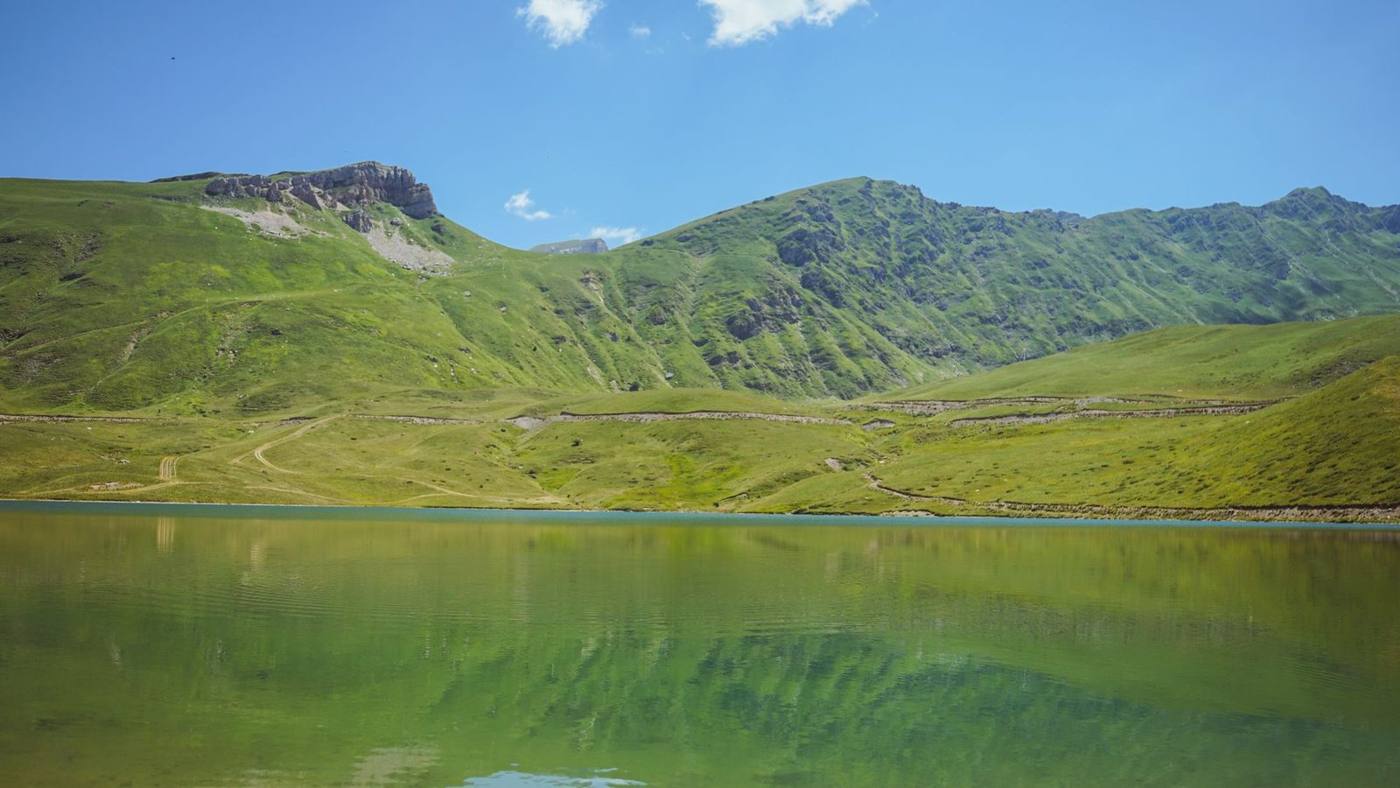
By motorbike through inland Albania: Dibër and the Drin valley
A motorbike raid far from the coast, on mountain roads between Burrel, Peshkopi and the Drin river, coming back through Shkodër.
- Durazzo
- Tirana
- Burrel
- Peshkopi
- Pukë
- Fierzë
- Scutari
Day by day
- Day 1
By ferry to Durrës
This motorcycle trip crosses inland Albania, the part that tourists on the coast never see: the Mat valley and Burrel, Peshkopi and the Dibër region on the border with North Macedonia, the Black Drin valley, Kukës, Pukë, Lake Fierzë and finally Shkodër. There are empty roads, mountain villages and gravel stretches, with few services beyond Burrel. The programme is open and the days are a guide.
Before you go: Italian citizens can enter Albania with an electronic identity card or a passport, valid for at least three months after leaving the country, without a visa for tourist stays. Italian paper identity cards are no longer valid for travel abroad from 3 August 2026. Other nationalities should check their own rules. The United States rates Albania at level 2 because of crime, with no areas to avoid. The biggest danger for motorcyclists is the road: potholes, animals, reckless overtaking and driving at night. For the bike, bring the registration document, your licence and the green card from your insurer, and check that it covers Albania.
The first day is for travelling. You board with your bike at one of the Italian ports with ferries to Durrës, such as Bari or Ancona, and cross the Adriatic, usually overnight.
On arrival in Durrës you go through the port checks with the bike and your documents, then reach your accommodation in town. If you arrive in daylight, take a ride along the seafront and eat something simple.
Overnight in Durrës.
Practical tip: on the ferry, tie the bike down firmly with the straps provided on board, or bring your own, and keep your documents and a light bag for the night with you in the cabin.
- Day 2
Preparing the bikes and transfer to Tirana
Devote the morning to the bike. Check tyre pressure, chain, brakes and lights after the sea crossing. If you have rented a bike locally, pick it up today and try it for a few kilometres in the light traffic on the outskirts.
Fill up and buy a local SIM card, useful for maps and for calling in case of a breakdown. Take out cash in lek: after Burrel cash machines become rare and many petrol stations do not take cards.
In the early afternoon, leave for Tirana, about an hour away on the dual carriageway. This is your first contact with Albanian driving: cars change lanes without indicating, pedestrians cross wherever they like and roundabouts are chaotic. Ride defensively and always keep a margin.
In Tirana, leave the bike in a supervised car park and walk into the centre. Go to Skanderbeg Square and visit Bunk'Art 2, the underground shelter devoted to the regime's secret police, useful for understanding the history you will find again in Burrel in the coming days. Check prices and times.
In the evening, have dinner in the New Bazaar district, Pazari i Ri, and go over the route with the group.
Overnight in Tirana.
Practical tip: fit a phone mount on the bike and download offline maps of the Mat, Dibër and Kukës regions, because there is often no signal in the mountains.
- Day 3
Climbing to the Mat and Burrel
Today you leave the plain. From Tirana, head towards Kruja and take the road that climbs to the Qafë Shtamë pass, in the national park of the same name, through pine and beech woods. The road is narrow and the surface changes often, with good stretches and damaged ones: ride calmly and stop at the roadside fountains to drink the mountain water.
From the pass you drop into the Mat valley, wide and green, with the river running along the bottom and villages scattered over the hills. Here inland Albania begins: low houses, maize fields, men playing dominoes outside the village bar.
In the afternoon you reach Burrel, the main town of the area. The town is known throughout the country for its prison, where many political prisoners, intellectuals, clergy and opponents were locked up under the communist regime. For Albanians the name of Burrel is still linked to those years.
Take a walk around the small, quiet centre and look for a simple restaurant to eat grilled meat and seasonal vegetables.
Overnight in Burrel, for two nights.
Practical tip: on mountain roads, watch out for shepherds' dogs, which sometimes chase motorcycles; slow down without braking hard and carry on.
- Day 4
Burrel and the Mat valley
Today you stay around Burrel and ride without luggage. It is a day for getting to know the minor roads.
In the morning, follow the Mat river to Lake Ulëz, a reservoir created with a dam in the 1950s, surrounded by green hills. The road runs along the shore, with bends and dips, and offers many places to stop and look at the water.
The Mat is also a land linked to the Kastrioti family, Skanderbeg's family, who ruled these valleys, and in the villages of the valley you will find monuments and plaques recalling the national hero. Ask the local people: here Skanderbeg's story is told with pride.
In the afternoon, try one of the gravel roads that climb from the villages to the pastures. If the surface is dry, it is good practice for the dirt stretches of the coming days. If it rains, stay on the tarmac: the earth turns to mud in minutes.
Return to Burrel before sunset. In the evening, sit in a cafe on the square and try the local raki, but only at the end of the day and with no more riding.
Overnight in Burrel.
Practical tip: always carry a small tool kit, a puncture kit and a spare inner tube, because motorcycle workshops are rare outside the towns.
- Day 5
Towards Peshkopi and the Dibër region
From Burrel, head east towards Bulqizë and then Peshkopi. The road climbs through the mountains and crosses the chrome mining area of Bulqizë, one of the country's sources of wealth, with its shafts, lorries and miners' villages. It is a harsh landscape, different from anything else you will see in Albania. In the fields along the road you will also see the regime's concrete bunkers, sometimes used today as shelters for animals.
After Bulqizë the road descends towards the valley of the Black Drin, the river that flows out of Lake Ohrid and runs north. In the distance you see the Korab mountains, on the border with North Macedonia, where Albania's highest peak stands.
In the afternoon you reach Peshkopi, the main town of the Dibër region, a small town on a plateau, with its tree-lined boulevard and a square full of people at the hour of the evening stroll. Visit the Dibër Museum, which tells the history and traditions of the region. Check prices and times.
In the evening, try the local dishes: mountain cheese, lamb and homemade pita.
Overnight in Peshkopi, for three nights.
Practical tip: on the Bulqizë road you meet many heavy lorries; do not overtake them on bends and watch out for the dust and gravel they drop on the tarmac.
- Day 6
The Peshkopi hot springs and the Korab mountains
In the morning, go to the Peshkopi hot springs, about two kilometres east of the town. The warm, sulphurous waters come out of the mountain and have long been used for healing. It is the right place to rest your back after three days in the saddle. Check prices and times.
Then set off towards the Korab mountains. The minor roads climb to stone villages such as Rabdisht, with houses built one above another on the mountainside. Higher up are the summer pastures, the bjeshkë, where shepherds take their flocks from June to September.
The Korab-Koritnik Nature Park protects forests, glacial lakes and peaks over two thousand metres. With the bike you stop where the road ends, then you can take a short walk on foot towards the meadows. Bears and wolves still live in this area, although it is rare to see them.
In the afternoon, return to Peshkopi via the Maqellara viewpoint, above the Black Drin valley, with a wide view over the border.
Overnight in Peshkopi.
Practical tip: on the roads to the mountain villages, fill up before climbing and plan to return with at least a quarter of a tank, because there are no petrol stations up high.
- Day 7
A day at leisure on the roads of Dibër
Today there is no fixed route. You can choose according to the weather, your energy and your bike.
Those who love dirt roads can climb towards Lura National Park, west of Peshkopi, with its glacial lakes among beech and pine woods. The roads are long and often in poor condition, with stretches of earth and stones; with an enduro bike and a dry surface it is one of the best days of the trip. Set off early and ask in the village about the state of the road.
Those who prefer tarmac can follow the Black Drin valley south, towards the area of the Macedonian border, through fields, orchards and small villages, and stop at Grezhdan castle, an ancient fortress above the valley.
Those who want to rest can stay in Peshkopi, go back to the hot springs and spend the afternoon in a cafe, watching the life of the town.
In the evening, meet the group for dinner and tell them about your day. In Dibër hospitality is taken seriously: if someone invites you home for a coffee, accept. Whatever you choose today, be back before dark.
Overnight in Peshkopi.
Practical tip: on the open days, never go alone on dirt roads, and tell the group or your accommodation where you are going and when you expect to be back.
- Day 8
Along the Black Drin to Kukës
Today the crossing to the north begins. From Peshkopi, follow the Black Drin valley, which runs down between the mountains towards Kukës. The road runs halfway up the slopes above the river, with narrow gorges, bridges and small farming villages.
It is a long and varied stretch: there are continuous bends, climbs and descents, and in some places the tarmac gives way to gravel. Stop often to look at the river, which here is clear and fast. Rafting also takes place in this valley in the warm months.
In the afternoon you reach Kukës, a modern town built on the shores of the Fierzë reservoir, where the Black Drin meets the White Drin coming from Kosovo. The old town disappeared under the water when the dam was built, and the new one was built higher up.
Kukës is famous in Albania for the welcome it gave in 1999 to tens of thousands of refugees from Kosovo. Today it is a quiet town, with its lakeside and the Gjallica mountains in the background.
In the evening, try lake fish or grilled meat.
Overnight in Kukës.
Practical tip: in the Black Drin gorges stones often fall onto the road, especially after rain; ride away from the mountainside edge and look carefully on bends.
- Day 9
From Kukës to Pukë, through woods and passes
From Kukës, head west to Pukë. You can take the Road of the Nation for a stretch, but the most beautiful road is the old main road that passes through the villages and mountain passes.
The old road climbs through pine and beech woods, with tight bends and little traffic. It was the main road between Kukës and Shkodër before the motorway: today it is used mostly by shepherds, timber lorries and the odd traveller. In some stretches the tarmac is old and broken, so ride carefully. Halfway, stop at a village bar for a coffee: motorcyclists are still a novelty, and someone will ask where you come from.
Stop at Fushë-Arrëz, a village that grew up around the timber industry, then continue to Pukë, a mountain town at about 800 metres, surrounded by woods. Here the air is cool even in summer.
In the afternoon, take a walk in the village and the nearby woods, where people gather mushrooms and berries. The Pukë region is also known for its honey and mountain herbs.
Overnight in Pukë, for two nights.
Practical tip: on the northern mountain roads, keep your lights on even by day, because under the trees the light changes and cars see you better.
- Day 10
Fierzë and the Drin reservoir
Today you head for Lake Fierzë, the large reservoir on the Drin, north of Pukë. The road drops through the mountains towards the dam, with hairpins and views over the valleys. Stop for photos only where there is room to pull off the road, because it is narrow and in many places has no barriers.
You reach the Fierzë dam, one of the largest in Albania, built in the 1970s to produce electricity. From here the lake stretches towards Kukës on one side and, beyond the dam, continues as Lake Koman towards Shkodër. It is a landscape of green water and steep mountains, with almost no roads.
The Lake Koman ferries arrive at the Fierzë pier. Look at the times for tomorrow: if the vehicle ferry is running, you can load the bike and go down to Koman by water instead of by road.
In the afternoon, if you still have energy, follow the road towards Bajram Curri, the main town of the Tropojë valley, and come back. It is a tarmac road with views of the Albanian Alps.
In the evening, return to Pukë for dinner.
Overnight in Pukë.
Practical tip: check the ferry times the day before, by asking at the pier or at your accommodation, because vehicle sailings are few and change often.
- Day 11
The descent to Shkodër
Today you leave the mountains. You have two ways to get down to Shkodër.
If the vehicle ferry is running, leave early for Fierzë and load the bike for Koman. The trip on the lake takes a few hours, through narrow gorges and rock walls, and it is one of the finest moments of the trip. From Koman you then ride down to Shkodër on a narrow mountain road full of bends, in about an hour and a half. Check prices and times.
If there is no ferry, you return from Pukë to Shkodër on the old main road, which descends via Vau i Dejës and the plain. It is quicker and easier, with good tarmac on the last stretch. Either way, set off with a full tank, water and something to eat, because there are few services along the road.
You reach Shkodër in the afternoon. Leave the bike at your accommodation and walk into the centre, along Kolë Idromeno street, the pedestrian street with colourful houses. At sunset, climb to Rozafa fortress, above the town, to see the lake and the rivers. Check prices and times.
In the evening, have dinner with baked lake carp.
Overnight in Shkodër.
Practical tip: on the ferry, ask the crew where to put the bike and tie it down well, because space is tight and the boat moves in the wind.
- Day 12
Back towards Durrës
Today is your last day in the saddle. From Shkodër to Durrës it is about two hours, almost all on the plain and on dual carriageways, so you can leave without hurrying.
In the morning, before leaving Shkodër, visit the Marubi National Museum of Photography, with pictures of northern Albania from the nineteenth and twentieth centuries: you will see the faces and villages you have passed through in recent days. Check prices and times.
Then set off south. After about an hour on the road you can stop at Lezhë, the town where the Skanderbeg memorial stands, built over the remains of the church where the hero was buried in 1468. Here, in 1444, the Albanian princes joined Skanderbeg in the League of Lezhë against the Ottomans. Then continue to Durrës.
In the afternoon, have the bike washed, check tyres and chain and prepare your luggage for the ferry. If your ferry leaves in the evening, you can board today.
In the evening, have dinner on the Durrës seafront with fish and raise a glass to the trip with the group.
Overnight in Durrës, or on board the ferry if it leaves in the evening.
Practical tip: arrive at the port well in advance, at least two or three hours before departure, because the checks for vehicles take time.
- Day 13
Boarding and return to Italy
It is the day you go home. You board with your bike in Durrës for Italy, usually with a night or day crossing to Bari or Ancona.
On board, rest and take a last look at the Albanian coast as it slips away. On arrival in Italy, go through the port checks and set off for home.
In thirteen days you have seen the Albania tourists do not see: the climb to the Qafë Shtamë pass, the Mat valley and Burrel, Lake Ulëz, the mines of Bulqizë, Peshkopi and its hot springs, the stone villages of Dibër, Korab, the Black Drin valley, Kukës, the woods of Pukë, Lake Fierzë, Shkodër and Rozafa fortress. You have ridden on empty roads, sometimes unpaved, and met genuine hospitality. It is a trip for motorcyclists who already know the coast and want to go deeper.
When to go: the best months are May and June, and September and October. The roads are dry, the mountains green and the temperature good for riding. In July and August the valleys are very hot. In winter and early spring snow and mud close many mountain roads.
Practical tip: before you leave, buy something to take home: honey from Pukë, mountain tea, vacuum-packed cheese from Dibër or a bottle of raki, well wrapped in the bike's luggage.
For riders who already know the coast and want the Albania tourists never see: mountain villages, empty roads, real hospitality. AnM rates it an easy raid and calls it experimental, so the programme is loose and the day split above is ours. The drawback is the roads: broken tarmac, gravel stretches and few services beyond Burrel. AnM has not yet published a price.
Before you go
- Documents and visa
- Electronic identity card or passport for EU citizens, valid for at least three months after leaving Albania. Italian paper identity cards are no longer valid for travel abroad from 3 August 2026. No visa is needed for tourist stays of up to 90 days.
- Health and vaccines
- No compulsory vaccinations. Outside Tirana medical facilities are limited: you need insurance covering medical costs and repatriation. Drink sealed bottled water. Emergencies: 127 ambulance, 129 police, 128 fire.
- Money and payments
- Albanian lek. Cash machines and cards work mainly in cities and tourist areas; in villages and small shops you need cash.
- Power sockets
- Types C and F, 230 volts: you need an adapter for British plugs.
- Time zone
- UTC+1, UTC+2 in summer, one hour ahead of the UK.
- Safety
- The United States rates Albania at level 2 because of crime, with no areas to avoid. The UK advises staying away from demonstrations in central Tirana. In winter mountain roads can be blocked by snow. Official advice: GOV.UK.
Information checked in November 2026 for Italian and EU citizens. Rules change: always check before you travel.
Variations
In 8 days: Durrës, Burrel, Peshkopi and Dibër, returning to Tirana through the same Mat valley.
In 16 days: add Theth and Valbona after Fierzë and two days on the southern coast before you board.
Frequently asked questions
What document do I need for Albania?
Italian citizens can enter with an electronic identity card or a passport, valid for at least three months after leaving, without a visa for tourist stays of up to 90 days. Other nationalities should check their own rules.
What bike do you need for inland Albania?
A touring bike or a road enduro is fine, with tyres that also suit gravel. The tarmac roads are good to ride, but in the mountains there are potholes, gravel and dirt stretches. For Lura and the highest roads you need an enduro.
What documents do you need for the bike?
Bring the registration document, your licence and your insurer's green card, checking that it covers Albania. If the bike is not yours, you need written authorisation from the owner. Check the rules before you leave.
Indicative itinerary written by World Atlas. Before booking, check timetables, seasonal openings, documents and safety.
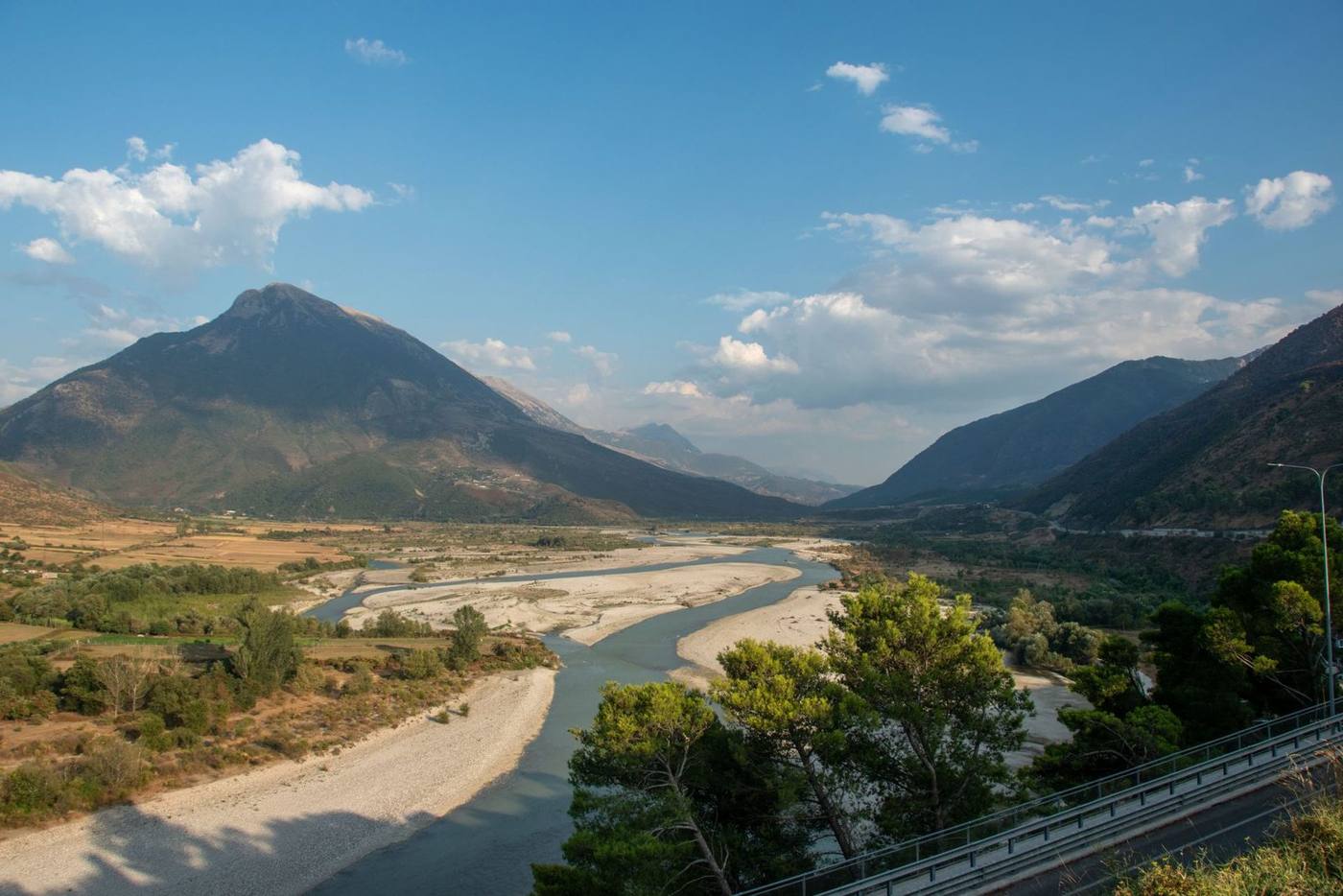 7 daysModerate
The Vjosa and Përmet, the wild river
Rafting in the Langarica canyon, the Benja hot springs, the villages of Zagoria and the Vjosa delta, in Europe's first wild river national park.
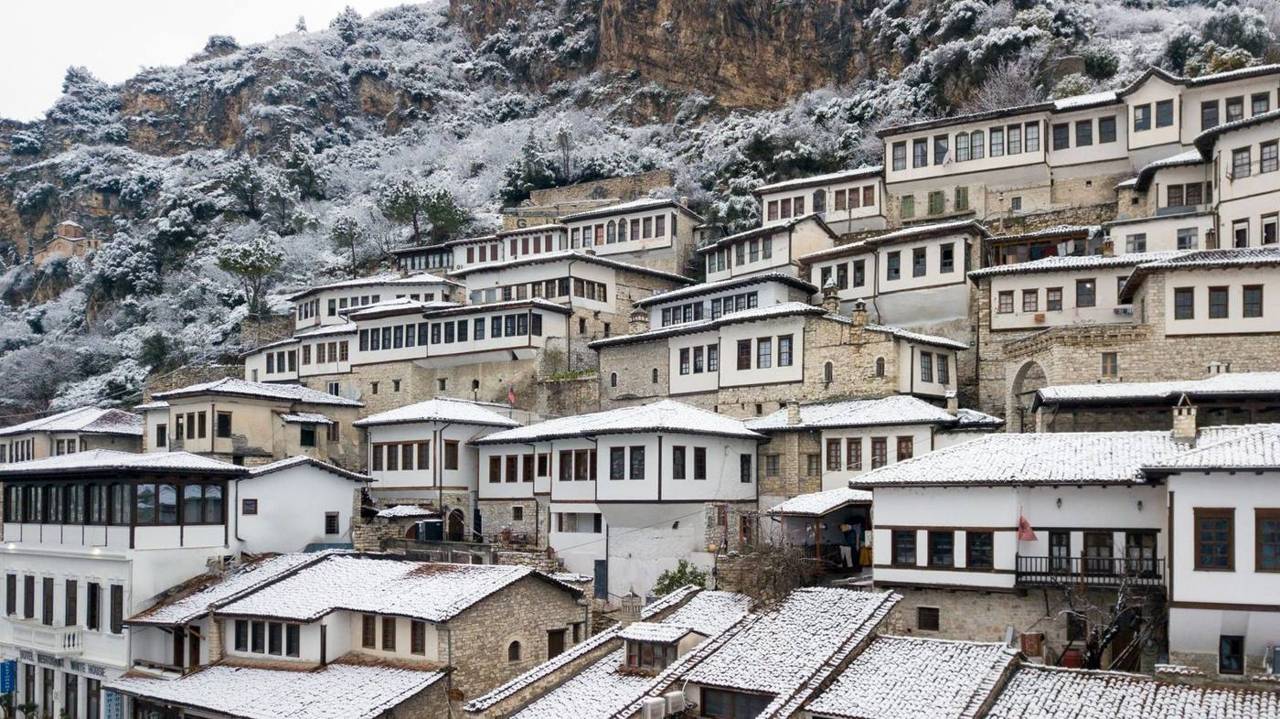 6 daysEasy
Albania in winter: Tirana, Berat and Korçë
A winter break in the towns, between Tirana's bunker museums, the white houses of Berat and the breweries and churches of snowy Korçë.
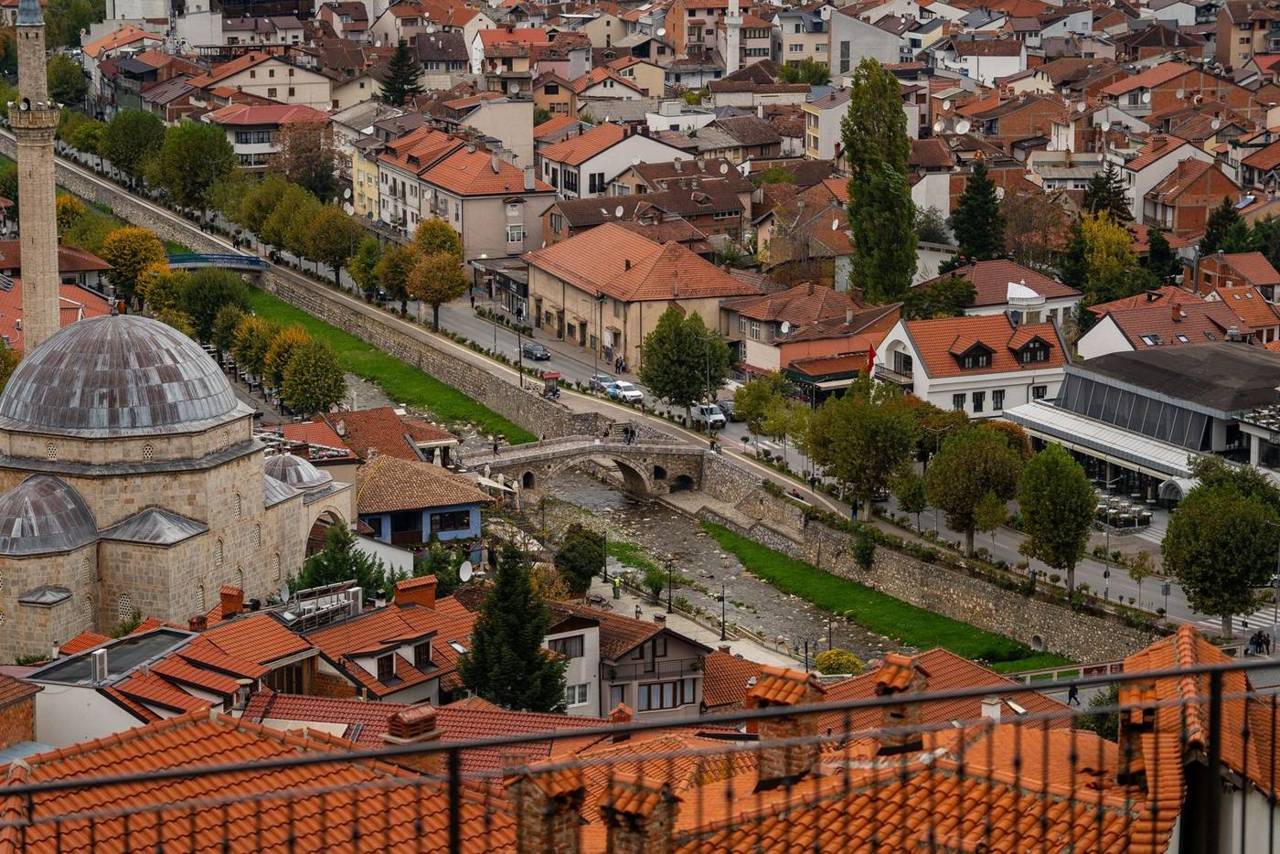 8 daysEasy
Albania and Kosovo: from Krujë to Prizren and Peja
The Road of the Nation into Kosovo, between Ottoman Prizren, the Serbian monasteries of Dečani and Gračanica and the Rugova gorge.