All of Australia: the west coast, Uluru, the Reef and Sydney
The continent in seventeen days: Perth and the Pinnacles, the red heart at Uluru, the Great Barrier Reef and the Daintree forest, ending in Sydney.
- Perth
- Pinnacles
- Rottnest
- Uluru
- Kata Tjuta
- Cairns
- Great Barrier Reef
- Daintree
- Sydney
Day by day
- Day 1
Arrival in Perth
This trip crosses the continent from west to east: Perth and the coast of Western Australia, the red desert of Uluru, the tropical north with the Great Barrier Reef and the Daintree rainforest, and finally Sydney. The distances are enormous, which is why there are four domestic flights.
Before you go: Italian citizens enter Australia with a passport and the eVisitor, an electronic authorisation applied for online on the official website of the Australian Department of Home Affairs before departure. Do not use intermediary websites that ask for money. Other nationalities should check their own rules. The authorities consider the risk of terrorist attacks to be real: stay alert in crowded places and follow local instructions. From November to February there is a risk of bushfires, and from November to April cyclones can strike Western Australia, the Northern Territory and Queensland. Connections in the Gulf can be delayed: check your flight with the airline.
You land in Perth, the capital of Western Australia, one of the most isolated cities in the world, on the Swan River and close to the Indian Ocean. In the afternoon go up to Kings Park, a large park above the centre, with eucalyptus woodland, a botanic garden devoted to the plants of Western Australia and a lookout over the river and the skyscrapers.
At sunset walk down to Elizabeth Quay, the modern riverfront, and stroll along the water.
Overnight in Perth, for three nights.
Practical tip: Perth is seven hours ahead of Italy in the Italian winter and six hours ahead in the Italian summer. At customs always declare food, seeds and natural products: checks are very strict and fines are high.
- Day 2
Perth and Fremantle
Today you discover the liveliest port town in the west.
In the morning take the train from Perth to Fremantle, about half an hour. Fremantle is Perth's historic port, with nineteenth-century houses, streets lined with verandas and a relaxed atmosphere.
Visit Fremantle Prison, built by convicts transported from Britain in the mid nineteenth century and used as a jail until 1991. It is part of the Australian Convict Sites, a UNESCO World Heritage Site. Guided tours tell the story of the prisoners' lives, and some go down into the tunnels under the hill. Check prices and times.
Then walk to the Round House, the oldest public building in Western Australia, above the sea, and go down to the fishing harbour, where you can eat fish and chips while watching the boats.
In the afternoon, if it is open, call in at Fremantle Markets, founded at the end of the nineteenth century, with fruit, crafts and street food. Also visit the Western Australian Maritime Museum or the Shipwrecks Museum, with the remains of the Dutch ship Batavia, wrecked off this coast in 1629. Check prices and times.
At sunset watch the sun sink into the Indian Ocean from a beach such as Cottesloe, between Fremantle and Perth.
Overnight in Perth.
Practical tip: on Perth's beaches only swim between the red and yellow flags, where there are lifeguards. The sun is very strong: use high-factor sunscreen, a hat and sunglasses, even when it is windy and feels cool.
- Day 3
Rottnest Island and the quokkas
Today you visit the island of the world's most smiling animals.
In the morning take the ferry to Rottnest Island, called Wadjemup by the Noongar, the Aboriginal people of this area. From Fremantle the crossing takes about 25 minutes, from Perth up to an hour and a half. Check prices and times.
Private cars are not allowed on the island: the best way to get around is by bike, which you can hire on arrival or bring on the ferry. A bus also runs around the island. The route around the island is about twenty kilometres long, with short climbs and plenty of wind.
Rottnest is famous for its quokkas, small marsupials the size of a cat, with a face that seems to smile. You see them easily near the settlement and in the woods, especially in the morning and the evening.
Cycle along the coast and stop at the bays with turquoise water, such as The Basin, Parakeet Bay and Little Salmon Bay, where you can snorkel close to the shore. To the west you reach Cape Vlamingh, the tip of the island, with a boardwalk above the cliffs: from here, between September and November, you can sometimes see whales.
In the afternoon head back towards the harbour and take the return ferry.
Overnight in Perth.
Practical tip: quokkas are wild and protected animals. Touching or feeding them is forbidden, and the fines are high. For selfies, crouch down to their level and keep your distance. Bring plenty of water: there is little shade on the island, and the sun reflects off the white sand.
- Day 4
The Pinnacles Desert and Lancelin
Today you head north, into a landscape that looks like another planet.
In the morning pick up your rental car and drive along Indian Ocean Drive, the road that runs close to the coast, through dunes, low scrub and white beaches. After about an hour and a half stop at Lancelin, a fishing town famous for the great white sand dunes behind the beach. Here you can slide down the dunes on a board, as if on snow. Check prices and times.
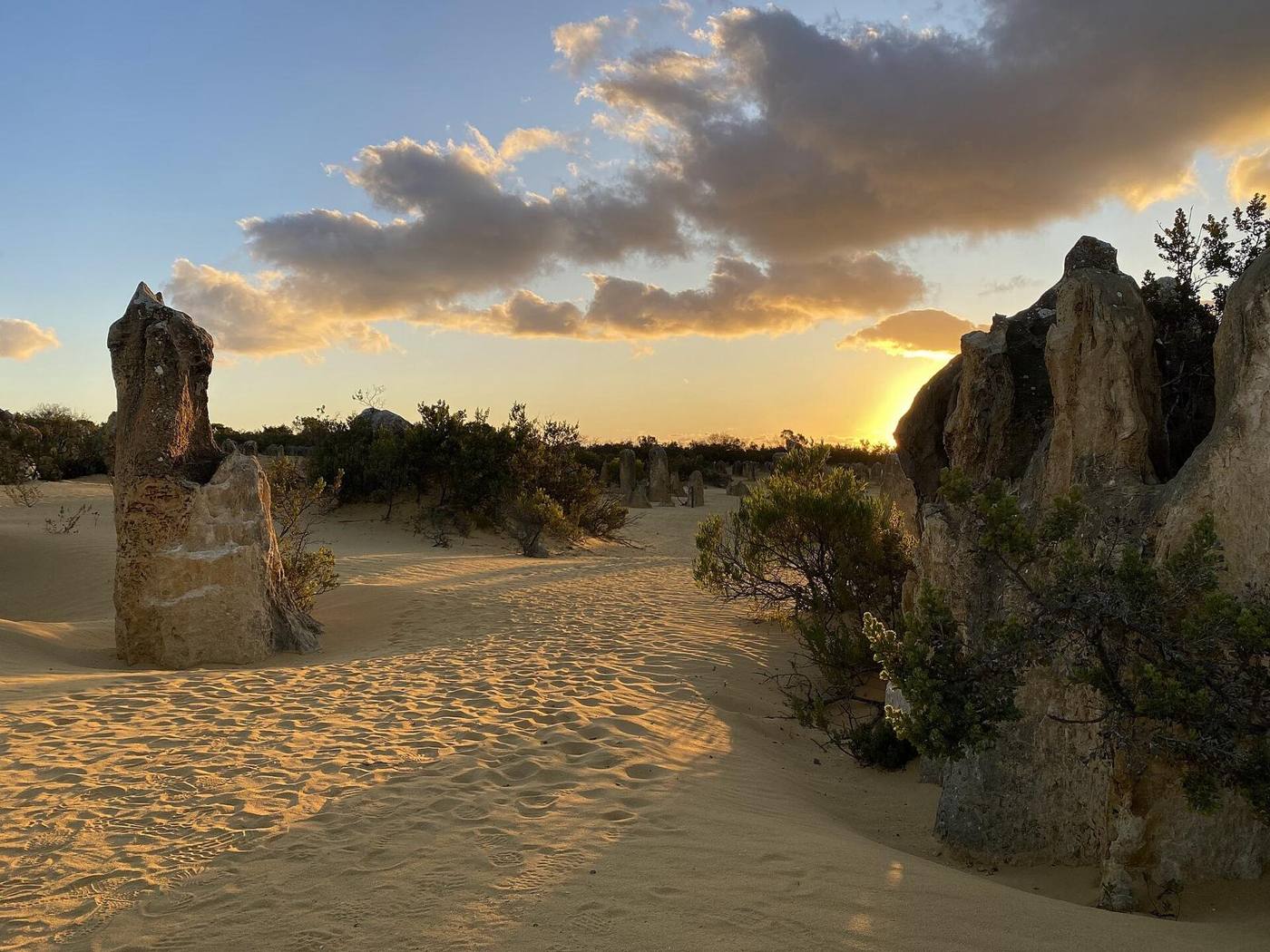
Then continue to Nambung National Park, about an hour away. This is where you find the Pinnacles Desert: thousands of limestone columns, some a few centimetres high, others more than three metres, rising out of the yellow sand. They formed over a very long time, from the remains of shells turned into stone and then carved by the wind. Follow the scenic drive by car and then walk the trails among the columns. At the visitor centre you find an explanation of how they came to be. Check the park's prices and times.
Stay until sunset, when the shadows of the pinnacles stretch across the sand and the light turns golden. Grey kangaroos and emus are often seen in the park.
In the evening stop in Cervantes, the nearby town, for a dinner of Western Australian rock lobster, or drive back to Perth, about two and a half hours.
Overnight in Perth or Cervantes.
Practical tip: do not drive the road back at night. After dark kangaroos jump onto the carriageway and are hard to see. If you want to stay for the sunset, sleep in Cervantes.
- Day 5
Flight to Uluru
Today you cross the continent to its centre.
In the morning return the car and take the flight from Perth to Ayers Rock airport, direct at certain times of year or with a connection. Check times. Below you, hours of desert, salt lakes and red earth go by, with no towns at all.
On arrival remember to change your watch: the Northern Territory is an hour and a half ahead of Perth.
Uluru is a huge sandstone monolith, about 350 metres high above the plain and more than three kilometres long. Together with Kata Tjuta it forms a national park that is a UNESCO World Heritage Site for both its nature and its culture, managed jointly with the Anangu people, the traditional owners of the land. To enter you need a park pass valid for several days: check prices and rules on the official website. Since 2019 the climb has been closed, out of respect for Anangu culture.
In the afternoon settle in at Yulara, the resort village near the park, where all the accommodation in the area is found, and collect the rental car you booked earlier.
At sunset go to the Uluru sunset viewing area. As the sun goes down, the rock changes colour, from ochre to orange, then to fiery red and purple.
In the evening look at the sky: far from any lights, the Milky Way stretches right across the desert sky.
Overnight in Yulara, for two nights.
Practical tip: in central Australia there are huge numbers of flies, especially in the hot months. Buy a net to wear over your hat: it does not cost much and makes walking far more pleasant.
- Day 6
Uluru at dawn and Kata Tjuta
Today you experience the desert from first light to sunset.
At dawn go to the sunrise viewing area, where you see the sun rise behind Uluru, with the domes of Kata Tjuta on the horizon.
Then walk around the base of Uluru, a flat trail of about ten kilometres, three or four hours. From a distance the rock looks smooth, but up close it is full of caves, grooves, rock paintings and waterholes, such as Mutitjulu, where water sometimes stays even in the dry months. Some sections are sacred sites for the Anangu: signs ask you not to photograph them, and this must be respected. If you prefer a short walk, take the Mala walk to Kantju Gorge.
Visit the park's cultural centre. Here the Anangu explain Tjukurpa, the system of stories and laws that tells of the creation of the landscape and governs the life of the community. You also find works of art by local artists.
In the afternoon drive to Kata Tjuta, about 50 kilometres from Uluru, a group of 36 domes of red rock. Walk the Valley of the Winds trail, a loop of about seven kilometres, with the Karu and Karingana lookouts among the domes. If it is too hot, choose the shorter Walpa Gorge walk.
At sunset return towards Uluru, or watch Kata Tjuta from its own viewing area.
Overnight in Yulara.
Practical tip: in the desert walk early, when the air is cool, and drink at least one litre of water for every hour of walking. On very hot days part of the trails close in the late morning, so plan the longest walks first.
- Day 7
Kings Canyon
Today you reach a great canyon of red rock.
Before dawn leave Yulara for Watarrka National Park, about three and a half hours on a sealed road. Along the way you see red dunes, desert oaks and Mount Conner, a large flat-topped mountain that many people mistake for Uluru. Sometimes you come across wild camels, descendants of those brought here in the nineteenth century.
Kings Canyon has red sandstone walls more than a hundred metres high. Walk the Rim Walk, a loop of about six kilometres along the edge of the canyon, three or four hours. At the start there is a steep climb on rock steps, then the trail becomes easier. You pass among the striped rock domes of the Lost City and go down to the Garden of Eden, a waterhole surrounded by ancient palms and ferns, at the bottom of a cool gorge. Then follow the edge of the sheer walls, with views over the canyon.
If the climb is too demanding, take the Kings Creek Walk, a trail of about two kilometres along the floor of the canyon, to a viewpoint.
In the afternoon drive back towards Yulara, or sleep near the canyon and leave tomorrow at dawn. Work out your timings carefully for the flight.
Overnight in Yulara or near Kings Canyon.
Practical tip: on days when temperatures of 36 degrees or more are forecast, the Rim Walk closes early in the morning. Start as soon as it opens. Fill up at Yulara and do not drive after sunset, because of the risk of animals on the road.
- Day 8
Flight to Cairns
Today you go from red earth to the green of the tropics.
In the morning return the car at Ayers Rock airport and take the flight to Cairns, direct or with a connection, depending on the day. Check times. Queensland is half an hour ahead of the Northern Territory.
Cairns is the tropical city of north-east Queensland, between forest-covered mountains and the sea. From here you set off for the Great Barrier Reef and for the Daintree rainforest, two UNESCO World Heritage Sites that meet along this coast. The climate is hot and humid almost all year round.
In the afternoon walk along the Esplanade, the seafront with lawns, fig trees and boardwalks. At low tide pelicans, herons and many seabirds arrive on the mudflats. Swim in the Esplanade Lagoon, a large outdoor saltwater pool with lifeguards. The sea in front of the city has no sandy beaches and in the hot months it is home to dangerous jellyfish, so here you swim in the lagoon.
At sunset sit on the lawn of the seafront and watch the light change on the green mountains behind the city.
In the evening have dinner with grilled barramundi or Queensland prawns.
Overnight in Cairns, for three nights.
Practical tip: book your trips to the reef and the forest a few days in advance, especially in high season. Keep a spare day: if the sea is rough, the boats change their plans or postpone departure.
- Day 9
The Great Barrier Reef: the outer reef
Today you explore the largest coral reef on Earth.
The Great Barrier Reef stretches for more than 2,300 kilometres along the coast of Queensland, with thousands of reefs and hundreds of islands. It is the largest structure built by living things on the planet.
In the morning leave Cairns by boat for the outer reef, about an hour and a half to two hours at sea. When the boat stops, the colour of the sea changes: from deep blue to turquoise above the corals. The boats visit two or three sites on the reef, or a pontoon moored on the reef.
In the water you see hard and soft corals of every colour, clownfish among the anemones, parrotfish nibbling the coral, rays, large Maori wrasse and, with a little luck, sea turtles and small reef sharks, harmless to people. If you have never dived, you can try with an instructor, without a certificate. Certified divers can do two or three dives. Choose a reputable operator and check prices and what is included, including the marine park fee.
In some areas the corals have suffered bleaching caused by warm seas. The guides explain what is happening and how to help the reef.
In the afternoon you return to Cairns.
Overnight in Cairns.
Practical tip: from November to May always wear the stinger suit provided on the boats. Never touch the corals and never stand on them with your fins. If you suffer from seasickness, take a tablet before you leave, as the crossing to the outer reef can be rough.
- Day 10
A reef island or diving
Today you stay on the sea, at a gentler pace.
In the morning take the ferry to Green Island, a small coral island covered in tropical forest, about 45 minutes from Cairns, inside the marine park. You can snorkel straight from the beach, over the corals and the seagrass beds where turtles graze, and walk the trail that crosses the island's forest. To see the reef without getting wet, there are also glass-bottom boats. Check prices and times.
Alternatively choose Fitzroy Island, larger and wilder, with a trail that climbs to the old lighthouse and a beach of white coral. If you are a certified diver, you can instead go back to the outer reef for a second day of diving.
In the afternoon return to Cairns and relax in the lagoon, or go up to the Atherton Tablelands, above the city, with volcanic lakes, the Millaa Millaa waterfall and great strangler figs, such as the Curtain Fig, with roots hanging down like a curtain.
In the evening call in at the Cairns night market, with its food and souvenir stalls.
Overnight in Cairns.
Practical tip: after diving you cannot fly for at least 24 hours. If you have a flight tomorrow or in the next few days, plan your dives in advance. On the sea the sun burns even when it is cloudy: wear a swim shirt and use reef-safe sunscreen.
- Day 11
Mossman Gorge and the Daintree River
Today you head north, into the rainforest.
In the morning leave Cairns along the Captain Cook Highway, a road that runs between forest-covered mountains and palm-lined beaches, with many lookouts over the sea. After about an hour you pass Port Douglas, a tropical town with the long Four Mile Beach, good for a break.
Then continue to Mossman Gorge, in the southern part of Daintree National Park. The Daintree rainforest, part of the Wet Tropics of Queensland World Heritage Site, is considered one of the oldest rainforests in the world. At Mossman the river runs clear between great granite boulders. The Kuku Yalanji people, traditional owners of the land, lead walks that explain how the forest plants are used for food, medicine and tools. Check prices and times.
In the afternoon reach the Daintree River and take a cruise among the mangroves. The guides show you saltwater crocodiles on the banks, colourful birds such as kingfishers and, sometimes, snakes in the trees. Check prices and times.
Cross the river on the small car ferry and climb to the Alexandra lookout, with views over the mouth of the Daintree and the coast.
Overnight in the Daintree or Cape Tribulation area.
Practical tip: beyond the river there is not always phone signal and petrol stations are few. Fill up before the ferry and download maps onto your phone before you cross.
- Day 12
Cape Tribulation, where the forest meets the reef
Today you visit one of the few places in the world where two World Heritage Sites meet.
Early in the morning walk on the beach at Cape Tribulation, a sandy bay enclosed between the forest and the headland. The trees come right down to the sand and, in front of you, in the sea, the coral reef begins. In the morning light the beach is almost deserted.
Then follow the boardwalks through the forest. The Dubuji trail crosses a mangrove swamp and a palm forest, with signs about the plants. The Marrdja trail follows a creek among mangroves and huge trees, with roots that look like walls.
This forest is home to the cassowary, a large flightless bird almost as tall as a person, with a crest on its head and a blue neck. It is rare and protected, and seeing one is a stroke of luck. If you meet one, stay well away and let it pass.
In the afternoon, if conditions allow, take a boat trip from Cape Tribulation to the reef close to the coast, or a guided night walk in the forest, to see frogs, insects and small marsupials. Check prices and times.
Alternatively drive back towards Port Douglas or Cairns, to be close to the airport.
Overnight in Cape Tribulation or Cairns.
Practical tip: never swim on the beaches or in the rivers of the Daintree. There are saltwater crocodiles and, in the hot months, jellyfish. Always respect the yellow warning signs, even if the water looks calm and clear.
- Day 13
Flight to Sydney
Today you leave the tropics for Australia's most famous city.
In the morning drive to Cairns airport, about two and a half hours from Cape Tribulation, or a few minutes if you slept in the city. Return the car and take the flight to Sydney, about three hours. Check times. During daylight saving time, from October to April, Sydney is an hour ahead of Queensland.
Sydney is the largest city in Australia, built around a natural harbour with dozens of bays, beaches and parks. In the afternoon, once you have settled in, go to Circular Quay, the ferry harbour, in the heart of the city.
Walk through The Rocks, the oldest district of Sydney, where in 1788 the First Fleet of settlers and convicts arrived from Britain. The narrow streets are full of stone houses, old pubs and small museums. At the weekend there is also a craft and food market.
At sunset go to the viewpoint beneath the Harbour Bridge, near the old wharf, to see the Opera House lit up across the water.
In the evening have dinner in The Rocks or along the harbour at Circular Quay, with views of the lights on the bridge.
Overnight in Sydney, for four nights.
Practical tip: on Sydney's ferries, trains and buses you can pay directly with a contactless credit card or your phone at the readers. There is a daily and weekly fare cap: check the rules on the official transport website before you travel.
- Day 14
The Opera House and the Harbour Bridge
Today you discover Sydney's two great symbols.
In the morning visit the Opera House on a guided tour of the interior. Designed by the Danish architect Jørn Utzon and opened in 1973, with its white sail-shaped roofs, it is a UNESCO World Heritage Site. The tour shows you the concert halls and the staircases, and tells the long story of its construction. Check prices and times.
Then enter the Royal Botanic Garden, next to the Opera House, with giant trees, lawns by the sea and tropical birds. Follow the path along the bay to the lookout at Mrs Macquarie's Chair, from where you see the Opera House and the bridge together.
In the afternoon cross the Harbour Bridge on foot, on the pedestrian path on the east side, with views over the harbour. The steel arch bridge opened in 1932. For an even higher view climb the south-east pylon, where there is a small museum and a terrace. If you wish, you can also climb the arch on an organised tour, in a harness and with a guide. Check prices and rules.
At sunset take any ferry from Circular Quay, for example to Barangaroo or Darling Harbour: it is the cheapest way to see the harbour from the water.
In the evening, if you like music, see a performance at the Opera House. Check the programme.
Overnight in Sydney.
Practical tip: for Opera House performances book ahead on the official website. If you do not want to see a show, sit on the great outdoor steps facing the harbour anyway, when the sails light up.
- Day 15
From Bondi to Coogee and Manly
Today you experience Sydney's beaches.
In the morning take the bus to Bondi, the most famous beach in Australia, a crescent of pale sand with surfing waves. Look at the rock pool at the southern end of the beach, where the ocean washes in with every wave.
From here the Bondi to Coogee coastal walk begins, about six kilometres, two or three hours with stops. The trail follows the sandstone cliffs and passes the bays of Tamarama, Bronte and Clovelly, with more pools cut into the rock, lookouts over the ocean and the historic Waverley Cemetery, above the sea. Between May and November you can sometimes see migrating whales from the coast.
In Coogee stop for lunch and a swim at the patrolled beach.
In the afternoon return to Circular Quay and take the ferry to Manly, about half an hour across the harbour, past villas, bays and cliffs. Manly has a long surf beach and a promenade lined with pines. Walk to Shelly Beach, a small sheltered bay, where you can snorkel among the fish.
At sunset take the ferry back to the city: the view of the Opera House in the last light is beautiful.
Overnight in Sydney.
Practical tip: on Sydney's beaches always swim between the red and yellow flags. Rip currents are the main danger, even for strong swimmers. If a current carries you out, do not fight it: stay afloat and raise one arm to call the lifeguards.
- Day 16
The Blue Mountains
Today you leave Sydney for the blue mountains.
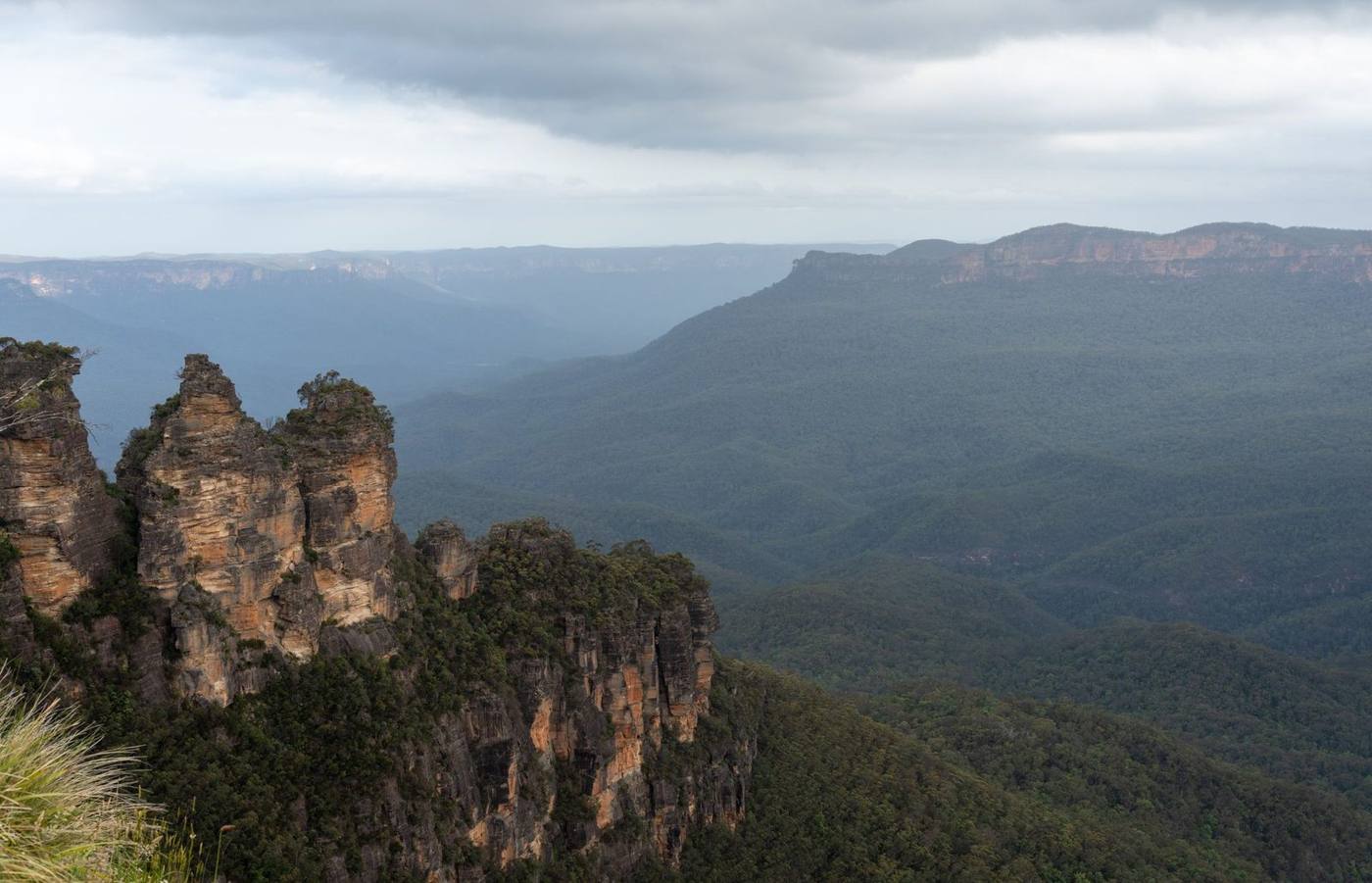
In the morning take the train from Central Station to Katoomba, about two hours, or go by car. The Blue Mountains are a sandstone plateau cut by deep valleys and covered in eucalyptus forest, a UNESCO World Heritage Site. The name comes from the blue haze over the valleys, caused by the oils of the eucalyptus trees in the air.
In Katoomba go to the Echo Point lookout, opposite the Three Sisters, three rock towers above the Jamison Valley, linked to an Aboriginal legend told in many versions. Go down the staircase to the base of the first sister and continue on the trails through the forest, among ferns and small waterfalls.
In the afternoon walk along the Prince Henry Cliff Walk, the trail on the edge of the cliff, with lookouts over the valley, or go to Wentworth Falls, where a path goes down the rock face. In the area there is also a park with a cable car and a very steep little railway that descends into the valley. Check prices and times.
In the evening return to Sydney and have dinner in Surry Hills or Darling Harbour. It is your last evening in Australia: raise a glass of wine from the Hunter Valley, the wine region north of Sydney.
Overnight in Sydney.
Practical tip: in the Blue Mountains it is cooler than in the city, and the weather changes quickly. Bring a jacket and walking shoes. In the hot months check the bushfire warnings: some trails may be closed.
- Day 17
Departure
Today you leave Australia.
In the morning, if you have time, take a last walk at Circular Quay or in the botanic garden. Then go to Sydney airport, about twenty minutes by train from the centre. The flight to Europe makes a connection in Asia or in the Gulf, and the journey takes more than a day.
In these seventeen days you have crossed an entire continent. In the west you saw Perth, the port of Fremantle with its old prison, the quokkas of Rottnest and the columns of the Pinnacles Desert. In the centre you watched Uluru at dawn and at sunset, walked among the domes of Kata Tjuta and along the rim of Kings Canyon. In the tropical north you swam over the Great Barrier Reef and explored the Daintree rainforest and Cape Tribulation. Finally Sydney, with the Opera House, the bridge, the walk from Bondi to Coogee and the Blue Mountains.
When to go: to have the whole route in good condition, the best months are May to October. In the tropical north it is the dry season, in the desert the days are mild, even if the nights are cold, and in Perth and Sydney it is cool but often sunny. September and October are a good compromise, with wildflowers in the west. From November to April the north has humid heat, rain, cyclones and jellyfish, and the centre is extremely hot.
Practical tip: with four domestic flights it pays to book early and to check the baggage included. Many cheap fares do not include a checked suitcase, so compare the real price of each flight.
The first big trip to Australia, with four internal flights: that's why it costs a lot. Distances are huge and you can't see everything, so this route picks the icons. Best time to get it all: May-October; in the tropical north from November to April there's humid heat and jellyfish.
Before you go
- Documents and visa
- Valid passport and an eVisitor, the no-cost electronic authorisation applied for online on the official Australian government website before departure.
- Health and vaccines
- No compulsory vaccines arriving from Europe. Very strong sun: high-factor sunscreen and a hat. Emergencies: 000.
- Money and payments
- Australian dollar. Contactless cards are used everywhere, even for small amounts and on public transport; cash is rarely needed.
- Power sockets
- Type I, 230 volts: you need an adapter for the angled flat-pin plugs.
- Time zone
- The country has several time zones. Sydney and Melbourne are UTC+10, UTC+11 with daylight saving from October to April.
- Safety
- One of the safest countries for travellers. The risks are natural: rip currents, bushfires especially from October to February, cyclones and floods in the north in the wet season. Official advice: GOV.UK.
Information checked in November 2026 for Italian and EU citizens. Rules change: always check before you travel.
Variations
In 13 days: drop the west coast and start from Uluru, then Cairns with the reef and the Daintree, and Sydney with the Blue Mountains.
In 21 days: add Melbourne and the Great Ocean Road after Sydney, with the Twelve Apostles and the koalas of Kennett River.
Frequently asked questions
What documents do I need to enter Australia?
Italian citizens enter with a passport and the eVisitor, an electronic authorisation applied for online on the official Australian government website before departure. Do not use intermediary websites that ask for money. Other nationalities should check their own rules.
Why is this trip so expensive?
Because Australia is the size of a continent and the route has four domestic flights: Perth, Uluru, Cairns and Sydney. Book early, compare dates and check the baggage included, which is often charged separately.
Can you touch the quokkas on Rottnest?
No. Quokkas are protected wild animals: touching or feeding them is forbidden, and the fines are high. You can photograph them up close while keeping your distance and crouching down to their level.
Indicative itinerary written by World Atlas. Before booking, check timetables, seasonal openings, documents and safety.
 7 daysEasy
Sydney and the Blue Mountains
A week of Sydney harbour, Bondi and Manly beaches and the canyons of the Blue Mountains. For such a long journey, two weeks is better.
 15 daysModerate
The Outback, the Great Barrier Reef and Sydney
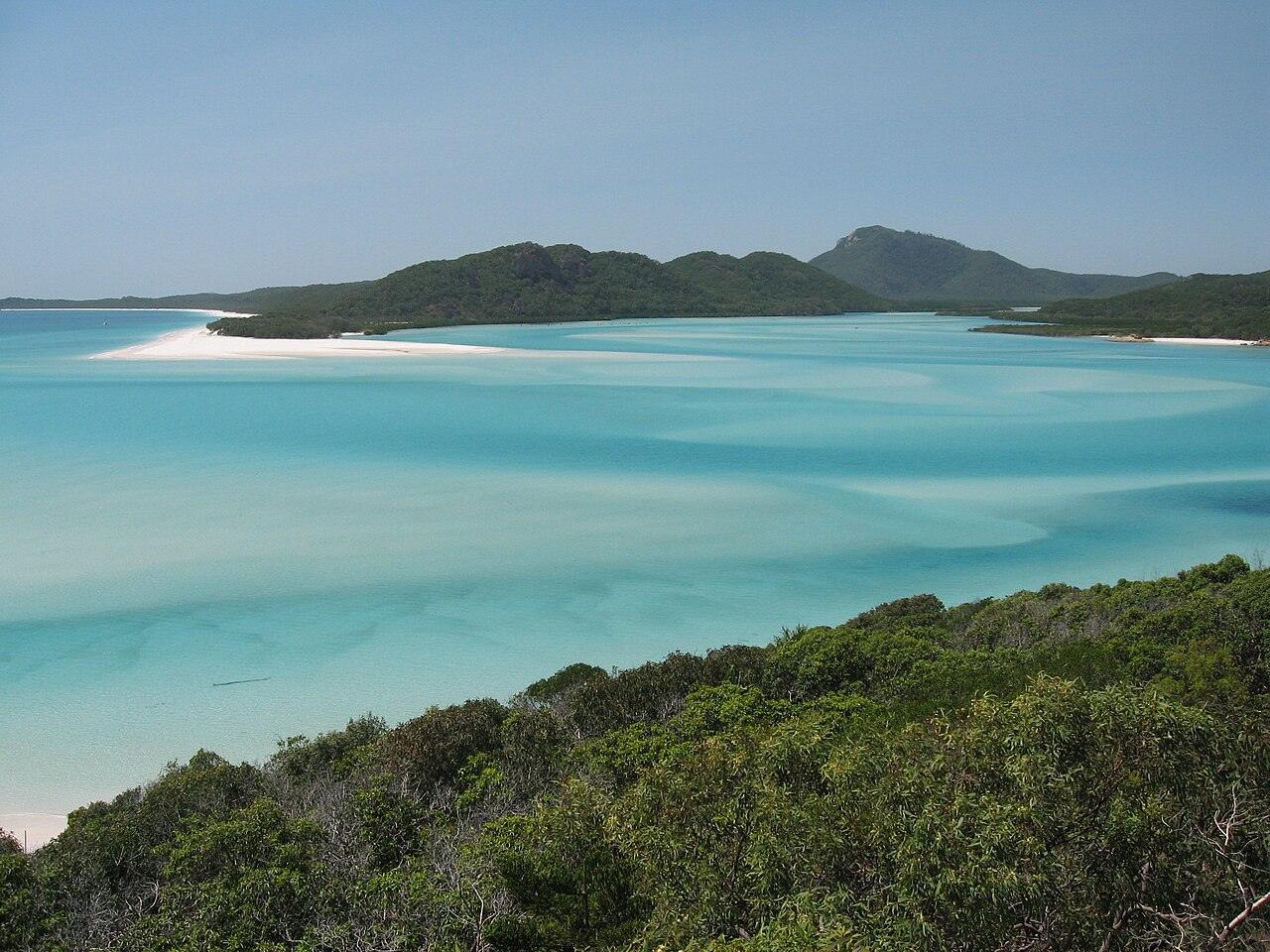
Australia's three faces: the red heart of Uluru, the reef and rainforest of Queensland, the great city.
 17 daysEasy
Natural Australia: the Great Ocean Road, Kangaroo Island, Uluru and the Reef
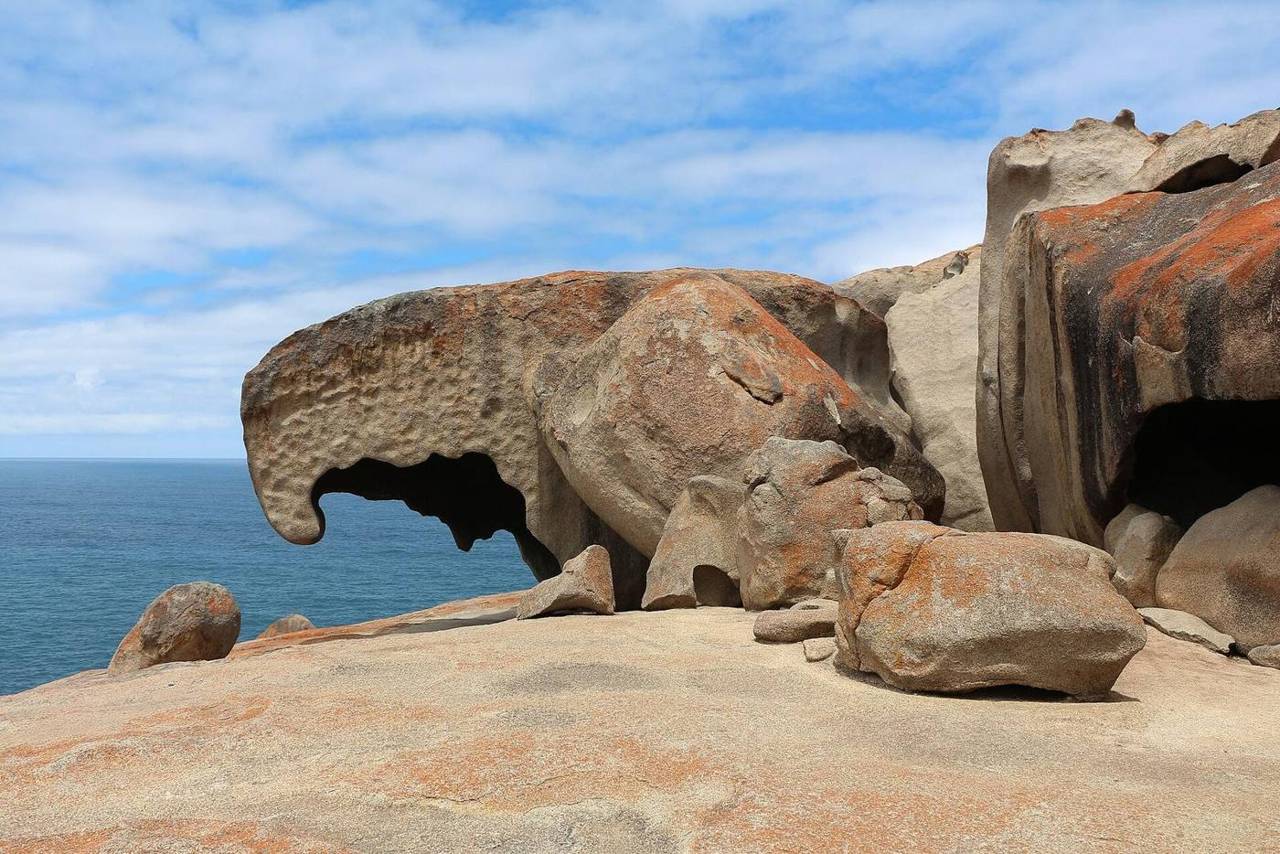
The wildlife and landscapes of the south and centre: the Twelve Apostles, the koalas and sea lions of Kangaroo Island, the Outback and the reef.