Natural Australia: the Great Ocean Road, Kangaroo Island, Uluru and the Reef
The wildlife and landscapes of the south and centre: the Twelve Apostles, the koalas and sea lions of Kangaroo Island, the Outback and the reef.
- Melbourne
- Great Ocean Road
- Grampians
- Adelaide
- Kangaroo Island
- Uluru
- Cairns
- Great Barrier Reef
Day by day
- Day 1
Arrival in Melbourne
This trip crosses the Australia of wildlife and great landscapes: the coast of Victoria with the Great Ocean Road, the mountains of the Grampians, Kangaroo Island with its sea lions and kangaroos, the red desert of Uluru and the tropical north with the Great Barrier Reef. In the south you travel by rental car, and between the centre and the north by domestic flights.
Before you go: Italian citizens enter Australia with a passport and the eVisitor, an electronic authorisation applied for online on the official website of the Australian Department of Home Affairs before the flight. Avoid intermediary websites that charge a fee. Other nationalities should check their own rules. In Australia the terrorist threat is considered real: stay alert in crowded places and follow the instructions of the authorities. From November to February there is a risk of bushfires in the south, and from November to April cyclones can hit Queensland. Connections in the Gulf can suffer delays: check your flight with the airline.
You land in Melbourne, Australia's second city, famous for its coffee, street art and the laneways of the centre. After the long flight, walk in the open air along the Yarra River to Federation Square, the large modern square opposite Flinders Street Station, with its yellow facade and its row of clocks.
In the evening, have dinner in one of the laneways of the centre.
Overnight in Melbourne, for two nights.
Practical tip: at Australian customs always declare food, seeds, wood and natural products. Checks are very strict and the fines are high, while declaring costs you nothing at all.
- Day 2
The laneways and Queen Victoria Market
Today you discover Melbourne on foot.
In the morning go to Queen Victoria Market, one of the great historic covered markets of Australia, opened at the end of the nineteenth century. Among the halls you find fruit, cheese, meat, fish and food stalls from all over the world. Have breakfast at the market and check the opening times, because it is not open every day.
Then head into the laneways of the centre, such as Degraves Street and Centre Place, narrow and full of cafés, and Hosier Lane, with walls covered in murals that change all the time. Walk through the historic arcades, such as the Block Arcade, with its mosaic floors.
In the afternoon choose between the National Gallery of Victoria, the city's great art museum, and the Royal Botanic Gardens, a huge park with lakes and trees from across the continent. Check prices and times.
At sunset take the tram to St Kilda, the seaside district. At the end of St Kilda pier, as evening falls, you can sometimes see the little penguins coming back among the rocks. Follow the volunteers' rules and do not use a flash.
In the evening, have dinner in St Kilda or in the Fitzroy district.
Overnight in Melbourne.
Practical tip: in central Melbourne there is a zone where you do not pay for the tram. Outside that zone you need the local transport card: ask your accommodation where to buy it and how to top it up before you set off for the day.
- Day 3
The Great Ocean Road: from Torquay to Apollo Bay
Today you start one of the most beautiful coastal roads in the world.
In the morning pick up your rental car and drive south-west to Torquay, about an hour and a half. This is where the Great Ocean Road begins, a road of about 240 kilometres built by soldiers who came back from the First World War, in memory of their fallen comrades. For this reason it is considered the largest war memorial in the world.
Stop at Bells Beach, the most famous surf beach in Australia, with long waves below the cliff. Then continue along the coast, with the road running between the hills and the sea, to the memorial arch at Eastern View, where everyone stops for a photo.
In Lorne, a quiet seaside town, take a short walk in the forest to Erskine Falls.
In the afternoon stop at Kennett River. Many wild koalas live in the eucalyptus trees along the road that climbs from the village: walk slowly and look up, among the branches. Here you also see colourful parrots that come close to visitors.
In the evening you reach Apollo Bay, a small fishing harbour among green hills.
Overnight in Apollo Bay.
Practical tip: in Australia you drive on the left. On the Great Ocean Road the bends are tight and the views are distracting: stop only in the lay-bys and never brake suddenly to take a photo. Do not feed the parrots or the koalas, as human food makes them ill.
- Day 4
The Otway forest and the Twelve Apostles
Today you go from the rainforest to the most famous cliffs in Australia.
In the morning enter Great Otway National Park. Take the short Maits Rest walk, a loop of about one kilometre on wooden boardwalks, among giant tree ferns, mosses and great myrtle beech trees. If you have time, take the side road towards Cape Otway lighthouse: koalas are often seen in the trees along the way.
Then return to the coast and continue to the Twelve Apostles, in Port Campbell National Park. They are tall limestone stacks rising from the sea, carved by the waves of the Southern Ocean. In fact there were never twelve: today only a few remain, because the sea wears them away and every so often one collapses. Walk along the boardwalks to the lookouts, and if the sea is calm go down the Gibson Steps to the beach at the foot of the cliffs.
In the afternoon visit Loch Ard Gorge, a small bay enclosed by rock walls, named after a ship that was wrecked here in 1878. Further on you see London Bridge, a rock arch whose link to the mainland collapsed in 1990.
At sunset go back to the Twelve Apostles, when the rock turns orange.
Overnight in Port Campbell or towards Warrnambool.
Practical tip: at sunset the Twelve Apostles lookouts are very crowded. Arrive early and bring a jacket: the wind from the ocean is cold even in summer.
- Day 5
The Grampians
Today you leave the coast and head up into the mountains.
In the morning drive north to Halls Gap, the village in the heart of Grampians National Park, called Gariwerd by the local Aboriginal peoples, about two and a half hours. The Grampians are sandstone ranges that rise suddenly from the plain, with rock walls, waterfalls and woodland. They are also one of the places in Victoria richest in Aboriginal rock art.
Walk up to The Pinnacle lookout, starting from the Sundial car park, the easier route, or from the Wonderland car park, the more demanding one, among rocks shaped by the wind. From the top you see the Halls Gap valley and the mountains all around.
In the afternoon go to MacKenzie Falls, among the largest waterfalls in Victoria. An easy path leads to a viewing platform; the one that goes down to the base is steep and slippery. Then drive up to Reeds Lookout and Boroka Lookout, high above the valley.
At sunset, in the fields around Halls Gap, you see dozens of grey kangaroos coming out to graze.
Overnight in Halls Gap.
Practical tip: in 2024 and 2025 bushfires hit part of the park, and some areas have stayed closed for recovery works. Before you set off, check on the Parks Victoria website which trails are open. After sunset drive slowly: kangaroos cross the road without warning, especially at dusk.
- Day 6
Adelaide
Today you cross the border and arrive in South Australia.
In the morning leave Halls Gap early and head west. The drive to Adelaide is long, about six hours with stops, through wheat fields, salt lakes and small country towns. Along the way you cross the border between Victoria and South Australia: there are checks here on fruit and vegetables, to protect crops from an insect, the fruit fly. Do not take fresh fruit across the border.
When you enter South Australia the clocks go back half an hour: Adelaide is in a different time zone from Victoria.
In the afternoon you reach Adelaide, a tidy and quiet city surrounded by a ring of parkland. Visit the Central Market, one of the largest covered markets in the southern hemisphere, with fruit, cheese and food from many countries. Then walk along North Terrace, the boulevard of museums and culture, with the South Australian Museum, which has a rich collection devoted to Aboriginal cultures. Check prices and times.
At sunset take the tram to Glenelg, the seaside district, with its beach and jetty.
In the evening have dinner with wine from the Barossa Valley or McLaren Vale, two of the most famous wine regions in Australia.
Overnight in Adelaide.
Practical tip: book the ferry to Kangaroo Island well in advance, especially if you are travelling with a car and in high season. Check whether your rental company allows you to take the car onto the island.
- Day 7
The ferry to Kangaroo Island
Today you reach the island of wildlife.
In the morning drive south along the Fleurieu Peninsula to Cape Jervis, about two hours, through hills, vineyards and glimpses of the sea. From here the ferry leaves for Penneshaw, on the east coast of Kangaroo Island. The crossing takes about 45 minutes: watch the water, because dolphins sometimes follow the boat.
Kangaroo Island is the third largest island in Australia, after Tasmania and Melville Island. For centuries it stayed cut off from the mainland, and for this reason many animals live here without the foxes and rabbits that have done damage elsewhere. Part of the island is protected by parks and reserves.
In the afternoon explore the north coast. Stop at Emu Bay, a long beach of white sand with turquoise water, and then at Stokes Bay, which you reach by passing between large boulders to a natural rock pool.
At sunset head back towards Penneshaw: around the town, after dark, you can see little penguins coming ashore, but only on authorised guided tours, when they are running. Check prices and times.
In the evening taste the island's produce: oysters, marron, a large freshwater crayfish, and honey from the Ligurian bees, which have lived here as a pure population since the late nineteenth century.
Overnight on Kangaroo Island, for three nights.
Practical tip: on the island distances are long and petrol stations are few. Fill up before the ferry and do not drive after dark: kangaroos and wallabies are everywhere on the roads.
- Day 8
Seal Bay and the sea lions
Today you walk among Australian sea lions.
In the morning go to Seal Bay Conservation Park, on the south coast of the island. This is home to one of the largest colonies of Australian sea lions, a rare species found only in Australia. Wooden boardwalks lead down through the dunes to the beach, where the animals sleep on the sand after days spent fishing at sea. On the rangers' guided tours you can walk on the beach, a few metres from the colony. Check prices and times.
Then go to Little Sahara, a large field of white dunes inland, where you can walk or slide down the dunes on a board. Check prices and times.
In the afternoon stop at Vivonne Bay, a long bay of pale sand with an old wooden jetty. The currents are strong: only swim in the sheltered area near the river, if conditions allow.
If you are interested in birds, the island's woodland is home to the glossy black cockatoo, a rare and protected species that feeds on the seeds of sheoak trees.
In the evening, on the way back to your accommodation, watch the roadsides: at dusk the Kangaroo Island kangaroos, a darker subspecies of the western grey kangaroo, come out to graze.
Overnight on Kangaroo Island.
Practical tip: on the beach at Seal Bay always stay behind the guide and at least ten metres from the animals. Sea lions look slow, but on the sand they move quickly and they can bite if they feel threatened.
- Day 9
Flinders Chase, Remarkable Rocks and the way back
Today you visit the far west of the island, its wildest corner.
In the morning drive to Flinders Chase National Park. In the summer of 2019 and 2020 a huge bushfire burned most of the park: today nature is growing back, with blackened trees sprouting new green leaves, and seeing this recovery is part of the journey.
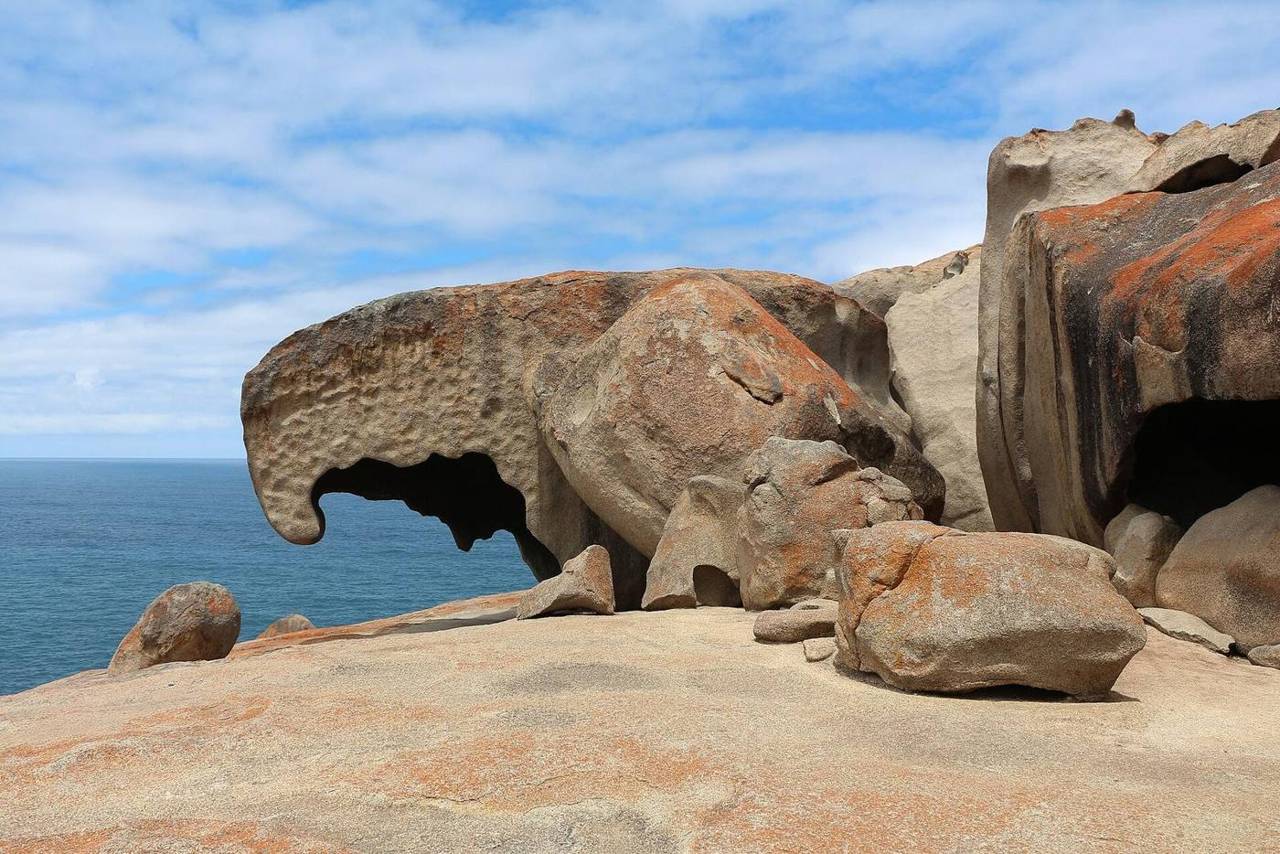
Go to Remarkable Rocks, large granite boulders sitting on top of a dome of rock above the sea. Wind and rain have carved them into strange shapes, like waves and caves, and lichens colour them orange.
Then walk down the boardwalks to Admirals Arch, a rock arch on the tip of Cape du Couedic, with stalactites on its ceiling. On the rocks below the arch live New Zealand fur seals, which sleep, swim and play among the waves.
In the park also look for wallabies, kangaroos, echidnas, small mammals covered in spines, and sometimes platypus in the ponds, easier to see at dawn.
In the late afternoon drive back to Penneshaw and take the evening ferry to Cape Jervis, then drive on to Adelaide, about two hours.
Overnight in Adelaide.
Practical tip: between Flinders Chase and Penneshaw there are more than two hours of driving. Leave early, bring lunch and water, and work out your timings carefully so you do not miss the ferry. Check the park's prices and times at the visitor centre when you arrive.
- Day 10
Flight to Uluru
Today you leave the south and fly into the red heart of Australia.
In the morning return the car and take the flight from Adelaide to Ayers Rock airport, direct or with a connection, depending on the season. Check times. From the window you watch the landscape change: the fields give way to white salt lakes, dry riverbeds and red earth, until the great rock of Uluru appears on the plain.
Uluru is a sandstone monolith that rises about 350 metres above the plain. Together with Kata Tjuta it forms Uluru-Kata Tjuta National Park, a UNESCO World Heritage Site for both its nature and its culture. The park is managed jointly with the Anangu people, who have lived on this land for tens of thousands of years. To enter you need a park pass valid for several days: check prices and rules on the official website. Since 2019 the rock can no longer be climbed, out of respect for the Anangu.
In the afternoon settle in at Yulara, the resort village near the park, where all the accommodation in the area is found. Collect the rental car you booked in advance.
At sunset go to the sunset viewing area and watch the rock change from orange to red and then to deep purple.
In the evening, far from the lights, look up: the desert sky is full of stars and the Southern Cross is easy to see.
Overnight in Yulara, for two nights.
Practical tip: the Northern Territory does not use daylight saving time. In winter the time is the same as in Adelaide, while in summer you are half an hour behind here.
- Day 11
Uluru at dawn and Kata Tjuta
Today is your fullest day in the desert.
Before dawn go to the sunrise viewing area, to see the first light setting Uluru aglow and, in the background, the domes of Kata Tjuta.
Then walk around the base of the rock. The full loop is about ten kilometres and flat, but it takes three or four hours. Along the way you see the smooth walls, caves with rock paintings, waterholes such as Mutitjulu and sacred sites, where signs ask you not to take photos: respect them. If you prefer a short walk, follow the Mala walk to Kantju Gorge. At certain times of year there are ranger-guided walks: ask at the cultural centre.
Visit the Uluru-Kata Tjuta Cultural Centre, where the Anangu tell of Tjukurpa, the body of stories and laws that explain the creation of the landscape and the way of living in the desert.
In the afternoon drive to Kata Tjuta, about 50 kilometres away, a group of 36 domes of red rock. The highest, Mount Olga, is taller than Uluru. Walk the Valley of the Winds trail, a loop of about seven kilometres, or the shorter Walpa Gorge walk, between two towering walls.
At sunset watch Kata Tjuta from the dune viewing area.
Overnight in Yulara.
Practical tip: on very hot days part of the Valley of the Winds trail closes in the late morning. Walk early, carry at least one litre of water for every hour of walking and wear a fly net over your hat.
- Day 12
Kings Canyon
Today you reach the most spectacular canyon in the central desert.
At dawn leave Yulara for Watarrka National Park, about three and a half hours on a sealed road. The landscape is made of red dunes covered in spinifex grass, desert oaks and great salt lakes. Sometimes you see wild camels, descendants of the animals brought to Australia in the nineteenth century to cross the desert.
Kings Canyon has red sandstone walls more than a hundred metres high. Walk the Rim Walk, a loop of about six kilometres along the edge of the canyon, three or four hours. It begins with a steep climb on rock steps, then the trail becomes easier and passes among the beehive-shaped domes of the Lost City. Halfway along, go down to the Garden of Eden, a waterhole shaded by ancient palms and ferns, an oasis in the heart of the desert. Then follow the edge of the sheer walls, with views over the whole canyon.
If the climb worries you, take the Kings Creek Walk, an easy trail of about two kilometres along the floor of the canyon, to a viewpoint below the walls.
In the afternoon rest in the shade. In the evening watch the sunset on the red walls.
Overnight near Kings Canyon.
Practical tip: on days when temperatures of 36 degrees or more are forecast, the Rim Walk closes early in the morning. Set off as soon as it opens. Fill up with petrol at Yulara and do not drive at night: on desert roads there are kangaroos, cattle and camels.
- Day 13
Flight to Cairns
Today you go from the desert to the tropics.
Early in the morning drive from Kings Canyon to Ayers Rock airport, about three and a half hours. Return the car and take the flight to Cairns, direct or with a connection, depending on the day. Check times and choose a flight that leaves you enough time for the drive.
Cairns lies on the north-east coast of Queensland, between forest-covered mountains and the sea. It is the base for the Great Barrier Reef and for the rainforest of the Wet Tropics, two UNESCO World Heritage Sites side by side. The air is hot and humid, and everything is green.
In the afternoon walk along the Esplanade, the seafront. At low tide, pelicans, herons and many seabirds arrive on the mudflats in front of the city. Swim in the Esplanade Lagoon, a large outdoor saltwater pool watched by lifeguards. The sea in front of Cairns has no sandy beaches and, in the hot months, there are dangerous jellyfish.
Call in at the night market or at Rusty's Market, if it is open, for tropical fruit such as mango and papaya.
In the evening have dinner with barramundi, Australia's best-loved fish, or with Queensland prawns.
Overnight in Cairns, for four nights.
Practical tip: book your boat to the outer reef a few days ahead. If the weather is bad, ask to move it to the following day: sea conditions make a big difference to the quality of the snorkelling.
- Day 14
The Great Barrier Reef
Today you swim over the largest coral reef in the world.
The Great Barrier Reef stretches for more than 2,300 kilometres along the coast of Queensland, with thousands of reefs and hundreds of islands. It is a protected marine park and a UNESCO World Heritage Site.
In the morning leave Cairns by boat for the outer reef, an hour and a half to two hours at sea. The boats stop at two or three sites, or at a pontoon moored on the reef. Here the water is clear and below you there are corals of every shape, clownfish, parrotfish, large Maori wrasse, rays and, with a little luck, sea turtles. You can snorkel, try an introductory dive with an instructor, even with no experience, or look at the reef from a glass-bottom boat. Choose a reputable operator and check prices and what is included, including the marine park fee.
In recent years warm seas have caused episodes of coral bleaching in some areas. Listen to the guides' explanations: they help you understand how to protect the reef.
In the afternoon you return to Cairns.
In the evening relax on the seafront or in the lagoon.
Overnight in Cairns.
Practical tip: use only reef-safe sunscreen, or better still a long-sleeved swim shirt. From November to May always wear the stinger suit provided on the boats. If you suffer from seasickness, take a tablet before you board, as the open sea can be choppy.
- Day 15
The Daintree and Cape Tribulation
Today you enter the oldest tropical forest on the planet.
The Daintree rainforest is part of the Wet Tropics of Queensland, a UNESCO World Heritage Site. It is considered one of the oldest rainforests on Earth, and it preserves plants that already existed at the time of the dinosaurs.
In the morning leave Cairns and head north along the Captain Cook Highway, the road that runs between the forest and palm-lined beaches, to Mossman Gorge, about an hour and a quarter. Here the river flows clear between great granite boulders, under the trees. The Kuku Yalanji people, traditional owners of these lands, run walks in the forest that explain the plants and the traditions. Check prices and times.
Then continue to the Daintree River. Take a river cruise to see saltwater crocodiles on the banks, birds and mangroves. Check prices and times. Cross the river on the small car ferry.
In the afternoon drive to Cape Tribulation, where the forest comes down to the beach and, offshore, lies the coral reef. Walk the Dubuji and Marrdja boardwalks, among mangroves and giant trees.
In the evening drive back towards Cairns, or stay in Port Douglas to shorten the journey.
Overnight in Cairns.
Practical tip: never swim in rivers, estuaries or on beaches near river mouths. Saltwater crocodiles are dangerous and also live close to the coast. Along the road watch out for cassowaries, large protected birds: do not approach them, even if they seem calm.
- Day 16
Kuranda or the reef islands
Today you choose between the forest above Cairns and a coral island.
If you prefer the forest, in the morning take the Skyrail cableway, which starts near Cairns and glides for about seven and a half kilometres over the rainforest. There are two stops where you can get off, walk on the boardwalks and look at the gorges of the Barron River. You arrive in Kuranda, a village in the forest with craft markets, Aboriginal art and a butterfly sanctuary. Return to the coast on the Kuranda Scenic Railway, a line built at the end of the nineteenth century through tunnels, bridges and waterfalls. Check prices and times.
If you prefer the sea, take the ferry to Green Island, a small coral island covered in forest, about 45 minutes from Cairns. You can snorkel from the beach over the corals and the seagrass beds where turtles feed. Alternatively choose Fitzroy Island, larger, with trails up to the lighthouse. Check prices and times.
In the afternoon, if you have time left, visit a wildlife park in the area, where you see koalas, wombats, cassowaries and crocodiles up close. Choose a park that cares for injured animals and respects their welfare. Check prices and times.
In the evening have your last dinner in Australia, with Queensland seafood and a glass of Australian wine.
Overnight in Cairns.
Practical tip: the Kuranda cableway and train can be combined on a single ticket, going one way and returning the other. Book ahead, because seats on the train are limited.
- Day 17
Departure
Today you leave Australia.
In the morning, if your flight leaves late, take one last walk along the Esplanade or one last swim in the lagoon. Then go to Cairns airport, a few minutes from the centre. The flight to Europe usually makes a connection in Australia, in Asia or in the Gulf, and the journey takes more than a day.
In these seventeen days you have seen many different Australias. You walked the laneways of Melbourne, drove the Great Ocean Road past the koalas of Kennett River, the Otway forest and the Twelve Apostles, and watched kangaroos at sunset in the Grampians. On Kangaroo Island you walked among the sea lions of Seal Bay, saw the fur seals below Admirals Arch and the Remarkable Rocks. Then the desert: Uluru at dawn and at sunset, Kata Tjuta and Kings Canyon. Finally the tropical north, with the Great Barrier Reef, the Daintree and Cape Tribulation.
When to go: the best months for this trip are September to November and March to May. The south, with Melbourne and Kangaroo Island, is most pleasant from October to April; the tropical north is drier from May to October, while from November to April there is humid heat, rain and jellyfish. November and April are a good compromise. In the desert, in summer, the heat is extreme.
Practical tip: domestic airlines often charge separately for checked baggage. Check the allowance on every flight, because with four legs the differences add up quickly and can change the real cost of the trip.
The right trip for seeing Australian wildlife in the wild: Kangaroo Island is a zoo without fences. The Great Ocean Road is perfect by car, driving on the left. October-April for the south; the north is best May-October: November and April are a good compromise.
Before you go
- Documents and visa
- Valid passport and an eVisitor, the no-cost electronic authorisation applied for online on the official Australian government website before departure.
- Health and vaccines
- No compulsory vaccines arriving from Europe. Very strong sun: high-factor sunscreen and a hat. Emergencies: 000.
- Money and payments
- Australian dollar. Contactless cards are used everywhere, even for small amounts and on public transport; cash is rarely needed.
- Power sockets
- Type I, 230 volts: you need an adapter for the angled flat-pin plugs.
- Time zone
- The country has several time zones. Sydney and Melbourne are UTC+10, UTC+11 with daylight saving from October to April.
- Safety
- One of the safest countries for travellers. The risks are natural: rip currents, bushfires especially from October to February, cyclones and floods in the north in the wet season. Official advice: GOV.UK.
Information checked in November 2026 for Italian and EU citizens. Rules change: always check before you travel.
Variations
In 12 days: Melbourne, the Great Ocean Road and Kangaroo Island, then a flight to Uluru, without the Grampians and without the tropical north.
In 21 days: add Tasmania after Melbourne, with Hobart and Freycinet National Park, and two nights in Port Douglas for the Daintree.
Frequently asked questions
What documents do I need for this trip to Australia?
Italian citizens enter with a passport and the eVisitor, an electronic authorisation applied for online on the official Australian government website before departure. Avoid intermediary websites that charge a fee. Other nationalities should check their own rules.
Where can you see Australian animals in the wild?
On the Great Ocean Road koalas live in the trees at Kennett River and around Cape Otway. In the Grampians kangaroos graze at sunset. Kangaroo Island has the sea lions of Seal Bay, the fur seals of Admirals Arch, kangaroos, wallabies and echidnas.
Do I need a rental car?
Yes, for the southern part, from Melbourne to Adelaide and on Kangaroo Island, and for Uluru and Kings Canyon. In Australia you drive on the left. Check that your rental allows the ferry to the island and do not drive after dark, because of animals on the road.
Indicative itinerary written by World Atlas. Before booking, check timetables, seasonal openings, documents and safety.
 7 daysEasy
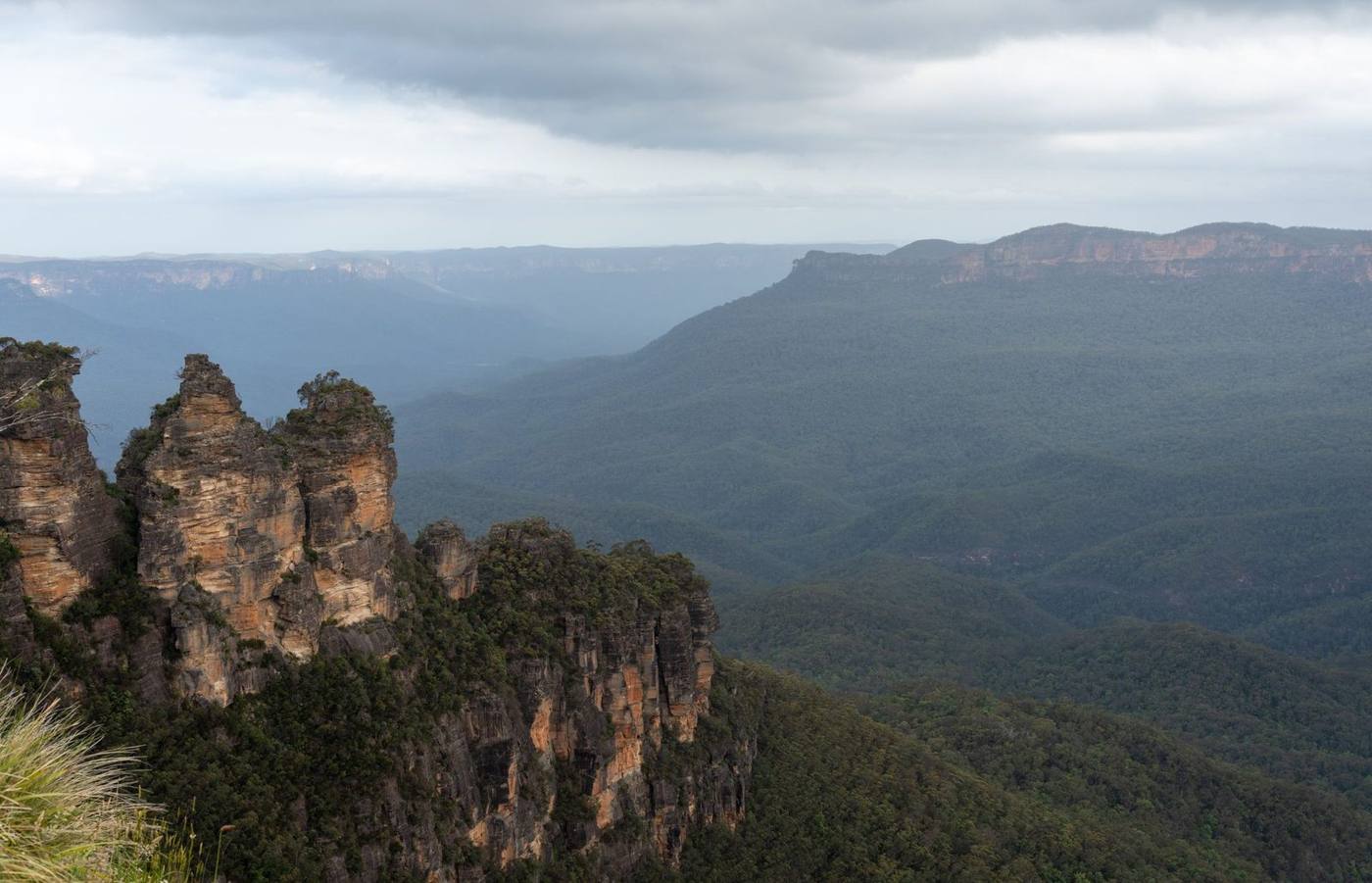
Sydney and the Blue Mountains
A week of Sydney harbour, Bondi and Manly beaches and the canyons of the Blue Mountains. For such a long journey, two weeks is better.
 15 daysModerate
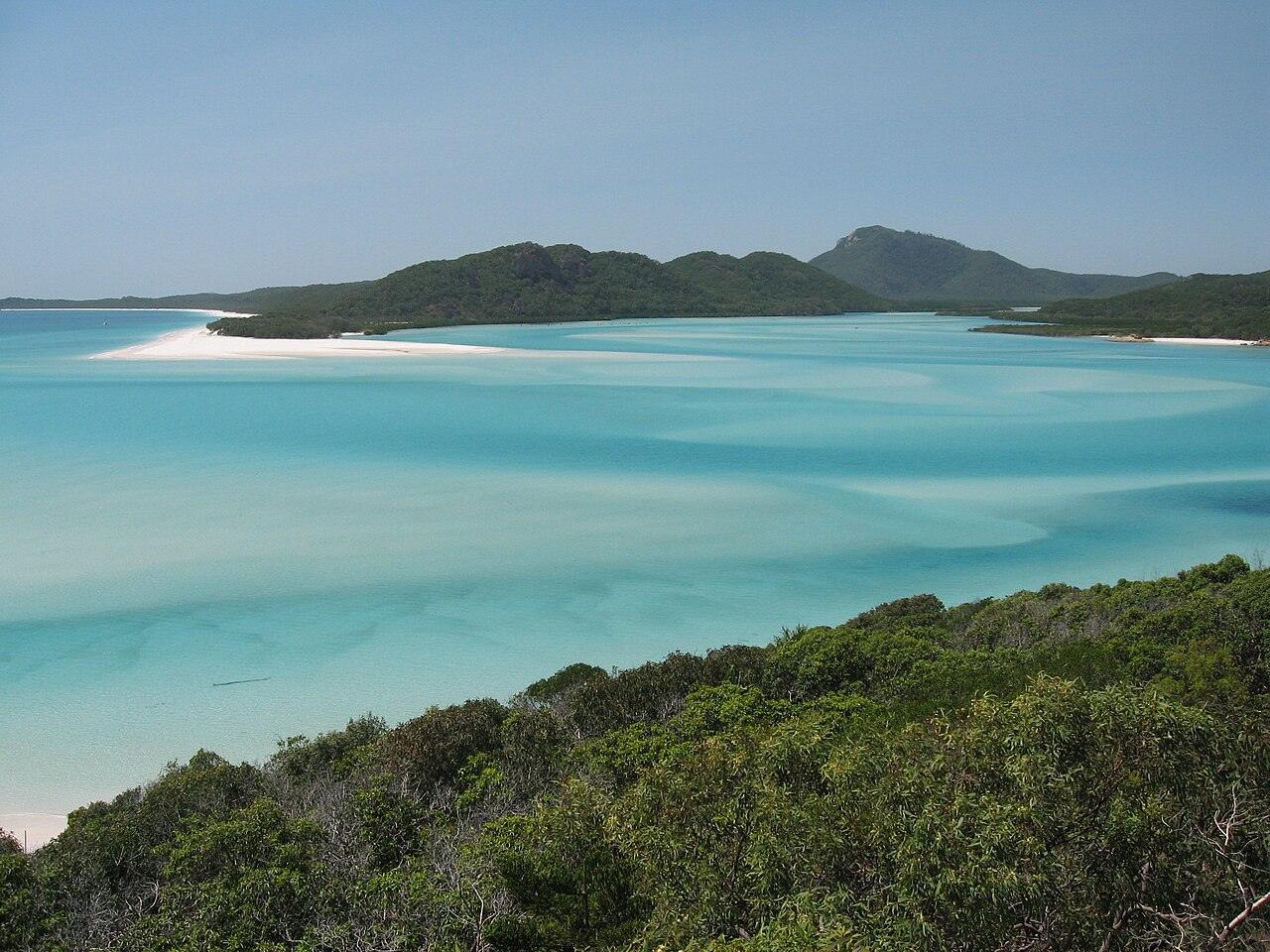
The Outback, the Great Barrier Reef and Sydney
Australia's three faces: the red heart of Uluru, the reef and rainforest of Queensland, the great city.
 17 daysEasy
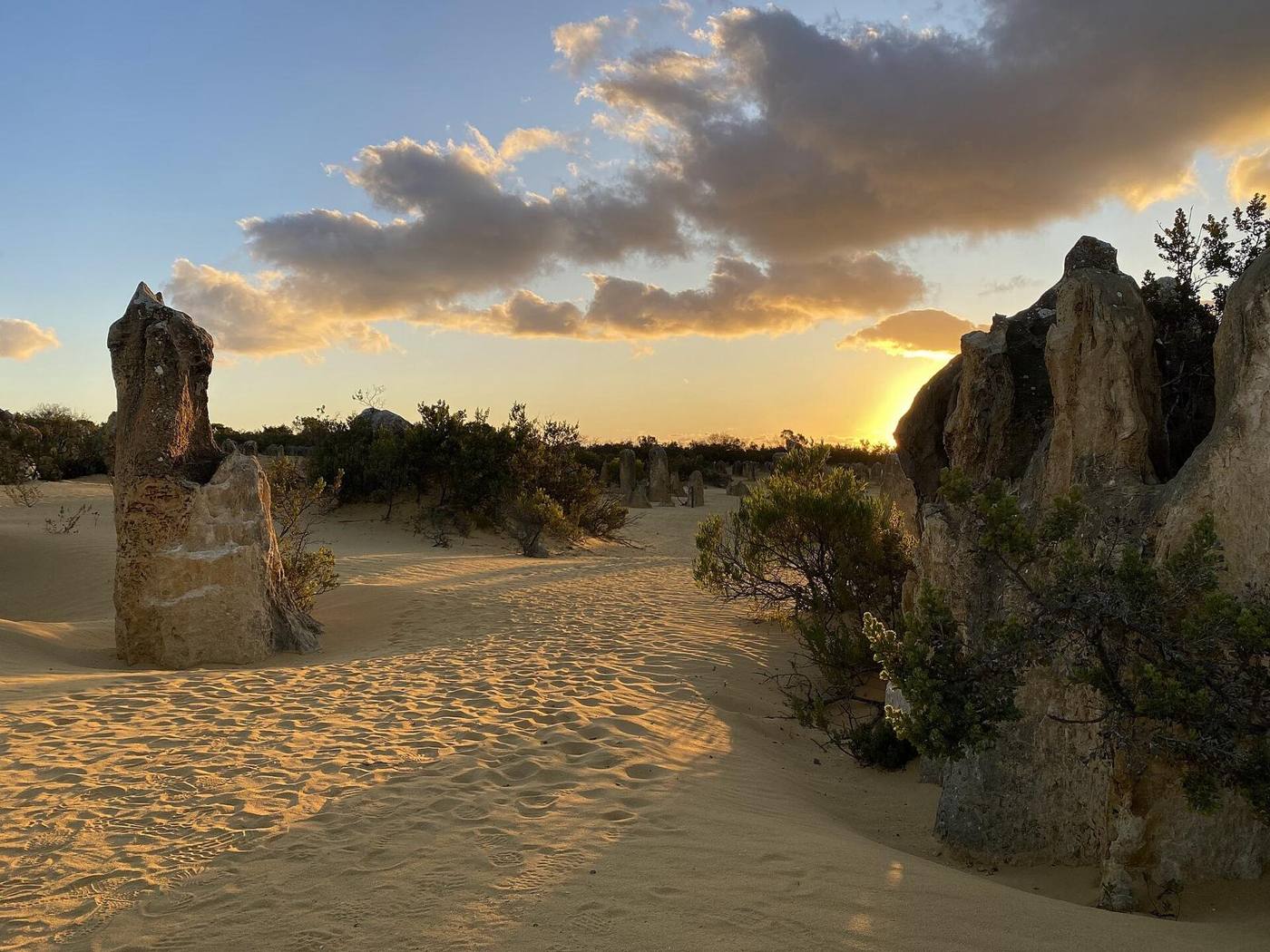
All of Australia: the west coast, Uluru, the Reef and Sydney
The continent in seventeen days: Perth and the Pinnacles, the red heart at Uluru, the Great Barrier Reef and the Daintree forest, ending in Sydney.