The Jesuit missions of Chiquitania
From Santa Cruz to the UNESCO-listed wooden churches of San Javier, Concepción, San Ignacio and San José, still alive with baroque music.
- Santa Cruz
- San Javier
- Concepción
- San Ignacio de Velasco
- San José de Chiquitos
- Santa Cruz
Day by day
- Day 1
Arrival in Santa Cruz de la Sierra
This seven-day trip takes you to the Chiquitania, the hot lowlands of eastern Bolivia, where in the seventeenth and eighteenth centuries the Jesuits founded missions for the indigenous Chiquitano peoples. You will see the wooden churches of San Javier, Concepción, San Ignacio, San Miguel and Santa Ana, and the stone church of San José de Chiquitos, a UNESCO World Heritage Site.
Before you go: Italian citizens enter Bolivia with a passport valid for at least six months, without a visa for tourist stays of up to three months; at the border officials often stamp 30 days, so check the stamp. Other nationalities should check their own rules. The yellow fever vaccine is strongly recommended for the department of Santa Cruz, at least ten days before departure, and there is dengue in the lowlands: always use repellent. Protests and road blockades are frequent and can also close the roads to the missions: keep a spare day. Use radio taxis called by your accommodation.
Santa Cruz is the largest and liveliest city in the country, at about 400 metres: altitude is not a problem here, but it is hot and humid. In the afternoon walk around Plaza 24 de Septiembre, the heart of the centre, in the shade of the trees, among benches, vendors and musicians. On the square stands the cathedral, a large brick basilica.
In the evening try the food of eastern Bolivia: majadito, rice with dried meat and egg, and cuñapé, a small cheese bread made with cassava flour.
Practical tip: book your driver for the mission days today, because distances are long and public transport is rare.
- Day 2
San Javier, the first mission
Leave early in the morning heading north east. The road crosses soya fields, pastures and dry forest, then climbs gently into the hills of the Chiquitania. After about four hours you reach San Javier, the oldest mission, founded at the end of the seventeenth century.
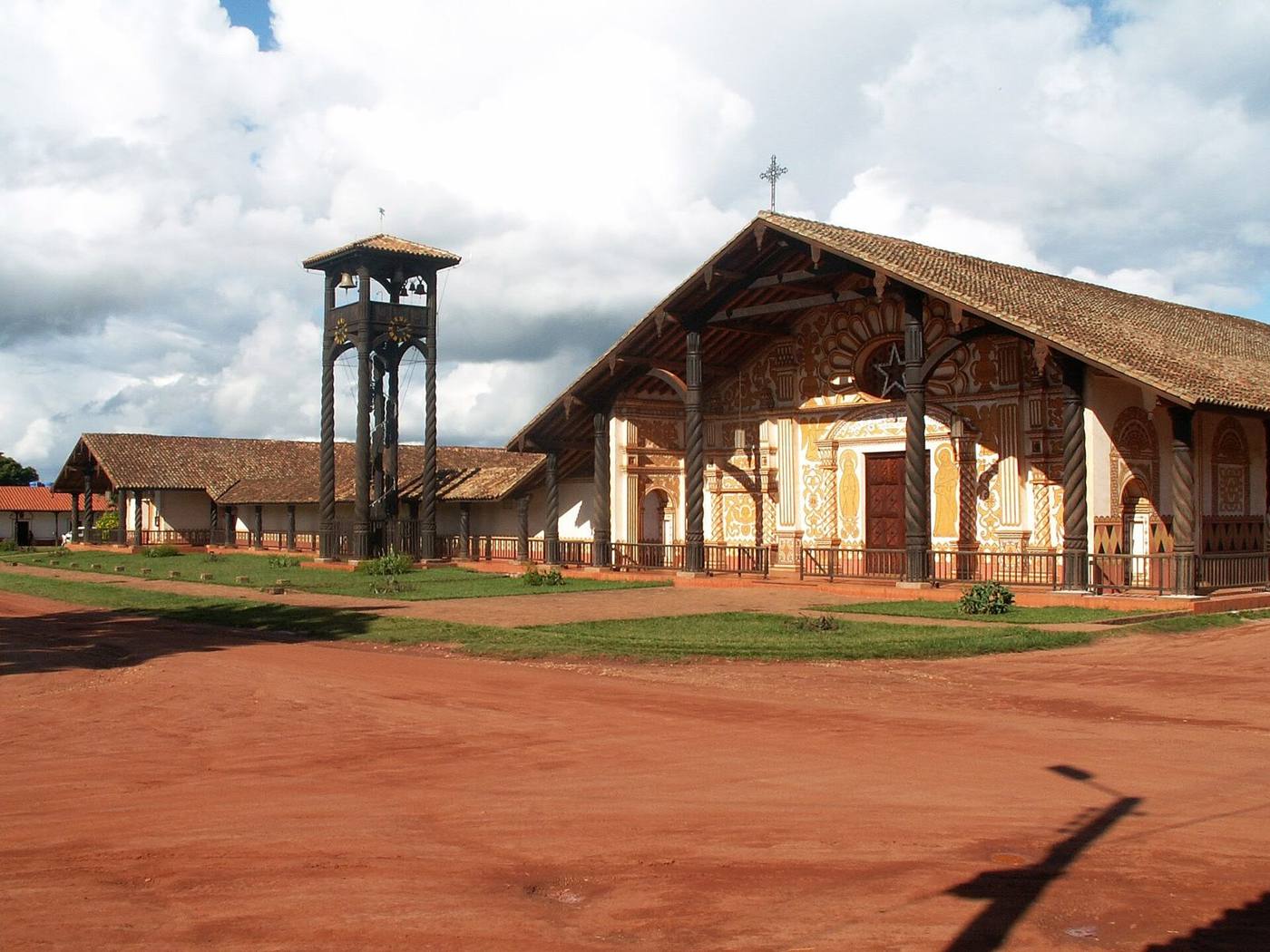
The church you see today was built in the eighteenth century under the direction of the Swiss Jesuit Martin Schmid, an architect and musician who also designed the churches of Concepción and San Rafael. The plan is simple and brilliant: a large tiled roof resting on whole tree trunks used as columns, walls of mud brick and a porch all around that protects from sun and rain. The façades are painted with flowers, spirals and angels in warm colours.
Go inside and look at the altar, the pulpits and the spiral columns carved by hand. After the Jesuits were expelled in 1767, the churches stayed with the Chiquitanos, who looked after them for more than two centuries. In the 1970s a long restoration project saved them.
In the afternoon walk around the village, around the large grassy square. Outside the centre there are hills and small viewpoints from which you can see the plain stretching away.
Practical tip: enter the churches with your shoulders covered, in silence, and always ask before taking photos during services.
- Day 3
Concepción, the workshop and the mission museum
Today you reach Concepción, about an hour and a half by road from San Javier. It is considered the cultural centre of the Chiquitania, a tidy village of low houses with porches around a very large square.
The church, also designed by Martin Schmid, is perhaps the most spectacular: the façade is decorated with geometric patterns and flowers, the wooden columns are carved and the interior glows with gilded altars. Around the square, in some of the mission buildings, there is the museum that tells the story of the Jesuit reductions and the restoration workshop, where local craftsmen repair statues, altars and decorations with the old techniques. Check prices and times for the visits.
In the missions the Jesuits taught the indigenous people to build violins, harps and organs, and to play European baroque music. The music archives found here contain thousands of scores. Even today many villages have music schools and youth orchestras: if you hear playing, go closer.
In the late afternoon, when the heat eases, walk to the workshops where wood is carved.
The international baroque music festival of the missions is not held every year: if you are interested, check the dates and book very early.
Practical tip: bring cash in bolivianos, because in the mission villages cards are rarely accepted and cash machines can be empty.
- Day 4
San Ignacio de Velasco
In the morning continue east to San Ignacio de Velasco, about four or five hours by road, partly on dirt tracks. In the dry season there is a lot of dust, after rain the mud slows everything down: leave early and keep the tank full.
San Ignacio is the largest town in the Chiquitania and the starting point for the eastern missions. The church you see today is a reconstruction, but it keeps the look of the Jesuit churches, with the large porch and wooden columns. On the square there are huge trees and wooden crosses.
In the afternoon walk to the Guapomó lagoon, a large artificial lake on the edge of town, where locals go for a stroll in the evening. At sunset you can see water birds and the sky turns red above the water.
Here you can really understand life on the plain: carts, motorbikes, small shops selling everything, and the market with tropical fruit, cheese and meat. The heat is strong in the middle of the day, so do as the locals do and rest in the central hours.
In the evening look for a simple place to try grilled chicken or river fish, with fried cassava and hot sauce.
Practical tip: drink plenty of water and wear a hat, because between one mission and the next you spend hours under the sun.
- Day 5
San Miguel and Santa Ana, the smallest
Today you make a day trip from San Ignacio to two nearby missions, reached on dirt roads.
The first is San Miguel, about half an hour away. The church has a façade painted in bright colours and an interior rich in altars and statues. In the village there are carving workshops where angels, saints and wooden frames are made, and you can often watch the craftsmen at work.
Then continue to Santa Ana, the smallest and most authentic mission. Here the church is the original eighteenth-century one, built by the indigenous people after the Jesuits had left, with a tiled roof, walls of mud and straw, a brick floor and an old organ. The village is tiny, with earth houses around a meadow and very few visitors. If the church is closed, ask in the village who keeps the key: usually someone from the community opens it and shows you around. Leave a donation for the upkeep.
If you have time, on the way back you can stop at San Rafael, with its church designed by Martin Schmid, but count your driving hours carefully before dark.
In the evening return to San Ignacio and rest: tomorrow there is another long transfer.
Practical tip: avoid driving at night on the roads of the Chiquitania, because there are animals, potholes and vehicles without lights.
- Day 6
San José de Chiquitos, the only stone church
In the morning head south to San José de Chiquitos, about four or five hours by road. The landscape changes: rocky hills appear and the dry forest becomes thicker.
San José is different from the other missions. The mission complex is the only one built in stone, with a tall, severe façade that recalls the baroque of the colonial cities. Next to the church are the chapel of the dead, the bell tower and the college, joined by a long wall. In front lies a huge square with toborochi trees, with bottle-shaped trunks, which in some months are covered in pink flowers. Check prices and times to enter the complex.
In the afternoon, if you have the energy, make a short trip to the hills south of the town, in the area of the Santa Cruz la Vieja historical park, where the first Santa Cruz was founded by the Spanish in the sixteenth century. There are trails, rocks and small viewpoints. Go only with a local guide and plenty of water.
In the evening return to the square, where children play football and families sit and talk as the heat fades.
Practical tip: buy your train or bus ticket to Santa Cruz here, and check the times, because they change often.
- Day 7
Return to Santa Cruz and departure
Today you return to Santa Cruz de la Sierra. San José lies on the railway that links Santa Cruz to the Brazilian border: the train is slow but comfortable and crosses farmland and small villages. Alternatively there are buses and cars with a driver, which are faster. In any case keep plenty of margin before your flight, because road blockades and traffic at the entrance to the city can make the journey much longer.
If you reach the city with a few spare hours, visit the centre calmly or look in the markets for a souvenir of the missions, such as a small carved wooden angel or a painted canvas. Buy only new objects and not antique pieces, which cannot be exported.
Trip summary: seven days in the Chiquitania, between Santa Cruz, the first mission of San Javier, Concepción with its restoration workshop and museum, San Ignacio de Velasco with its lagoon, San Miguel and tiny Santa Ana, and finally San José de Chiquitos with the only stone church. It is a quiet and rare journey, with almost no tourists, where baroque art still lives on in music and in the work of the craftsmen.
When to go: from May to September, in the dry season, when the dirt roads are in better condition and the heat is more bearable. From December to March it rains a lot and some roads can become difficult.
Practical tip: keep a spare day in Santa Cruz before your long-haul flight, so you do not risk missing it.
A rare and beautiful trip for lovers of art and history, with almost no tourists. Distances are long on partly unpaved roads, so a driver is advisable. It is hot all year. Check the dates of the International Baroque Music Festival, which is not held every year.
Before you go
- Documents and visa
- Passport valid for at least six months on arrival, with two blank pages; British citizens can visit without a visa for up to 90 days in a year, but border officials often stamp 30 days. Get an entry stamp, or you may be fined when leaving; if you cross overland, get stamps on both sides of the border. You may be asked for proof of accommodation for the first night.
- Health and vaccines
- A yellow fever certificate is required if you arrive from a risk country; the vaccine is strongly advised for the tropical areas of the departments of La Paz, Beni, Pando, Santa Cruz, Cochabamba, Chuquisaca and Tarija, at least 10 days before travel. The lowlands have mosquitoes and dengue: use repellent. La Paz, Lake Titicaca and Potosí lie between 3,600 and 4,000 metres: go up slowly and talk to your doctor before leaving, especially if you have heart problems or high blood pressure. Get insurance with medical cover and repatriation.
- Money and payments
- Boliviano. The exchange rate with the dollar has changed a lot in recent years: change money only at banks and authorised bureaux, never in the street. Cards work in cities and larger hotels; in villages, markets and the Amazon you need cash.
- Power sockets
- Types A and C, usually 230 volts (in some areas of La Paz also 115 volts): you need an adapter for British plugs.
- Time zone
- UTC-4 all year, four hours behind the UK in winter and five in summer.
- Safety
- The FCDO advises against all but essential travel to the Chapare region of Cochabamba Department, including Villa Tunari, and to routes 4 and 24 where they cross it; the United States says do not travel there. Protests and road blockades are frequent and start with little warning, even on roads to airports: allow spare days and never try to cross a blockade. Express kidnappings with fake taxis and fake police are reported in La Paz and on routes from the borders and Lake Titicaca: use radio taxis booked by your accommodation and never get into an unmarked police car. For the Yungas, Rurrenabaque and Madidi use reputable, licensed guides. Official advice: GOV.UK.
Information checked in November 2026 for Italian and EU citizens. Rules change: always check before you travel.
Variations
Shorter version: in 4 days, from Santa Cruz only San Javier and Concepción, the closest missions.
Longer version: in 10 days, add San Rafael at a calm pace and continue towards Samaipata and the Che Trail.
Frequently asked questions
Do I need a car with a driver?
It is the most comfortable choice: distances are long, roads are partly unpaved and buses are few. Agree the route, the stops and the price in advance, and do not drive at night.
Are the churches always open?
They are often open during the day, but times change. In the smallest villages ask on the square who has the key and leave a donation for the upkeep.
When can I hear the baroque music?
During Sunday mass and at rehearsals of the music schools. The mission festival is not held every year: check the dates before you leave.
Indicative itinerary written by World Atlas. Before booking, check timetables, seasonal openings, documents and safety.
 18 daysModerate
The complete Bolivia
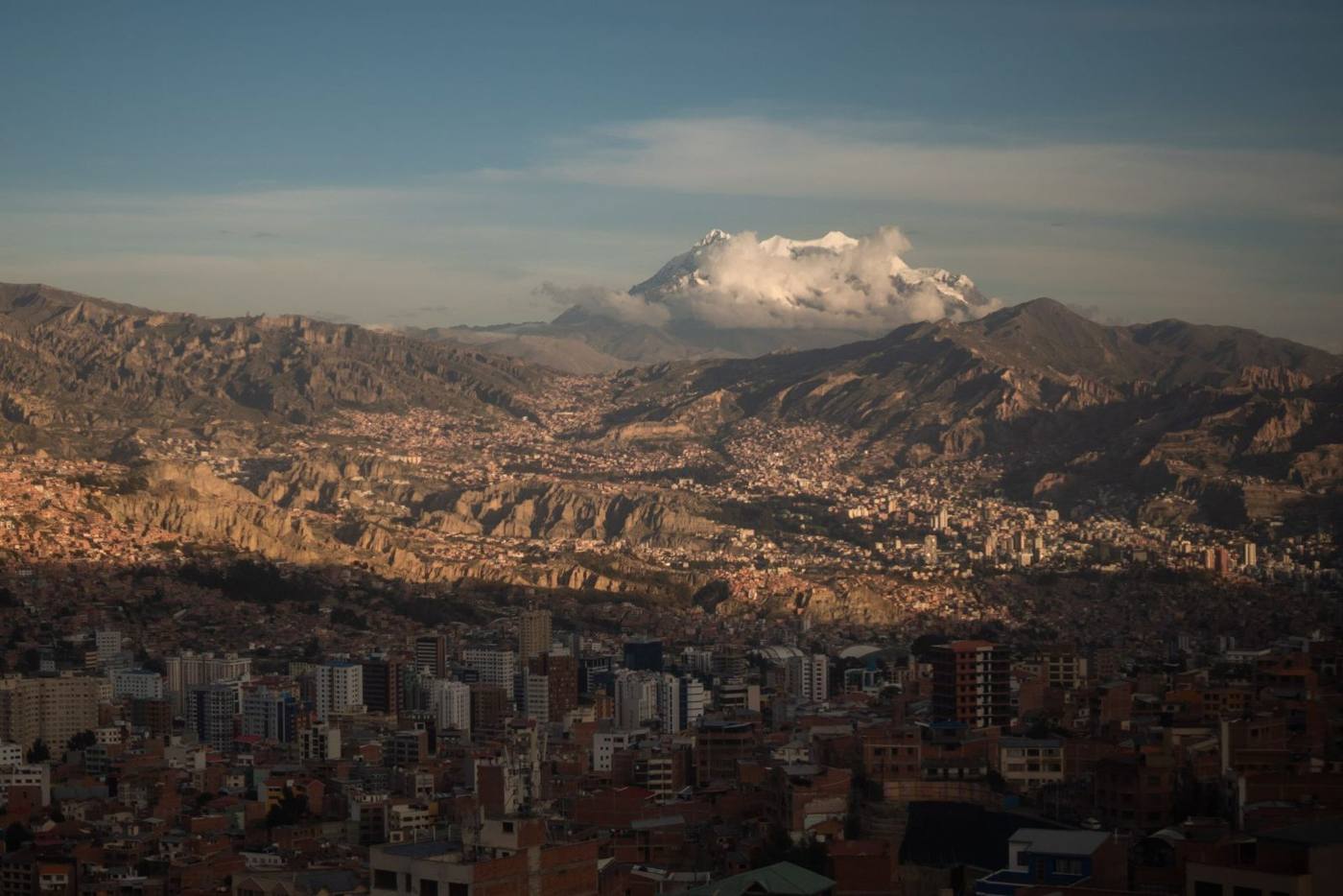
Lake Titicaca, La Paz, the Uyuni salt flat and Sud Lípez, Potosí and Sucre, ending in the Amazon at Rurrenabaque.
 5 daysModerate
The Yungas and Coroico
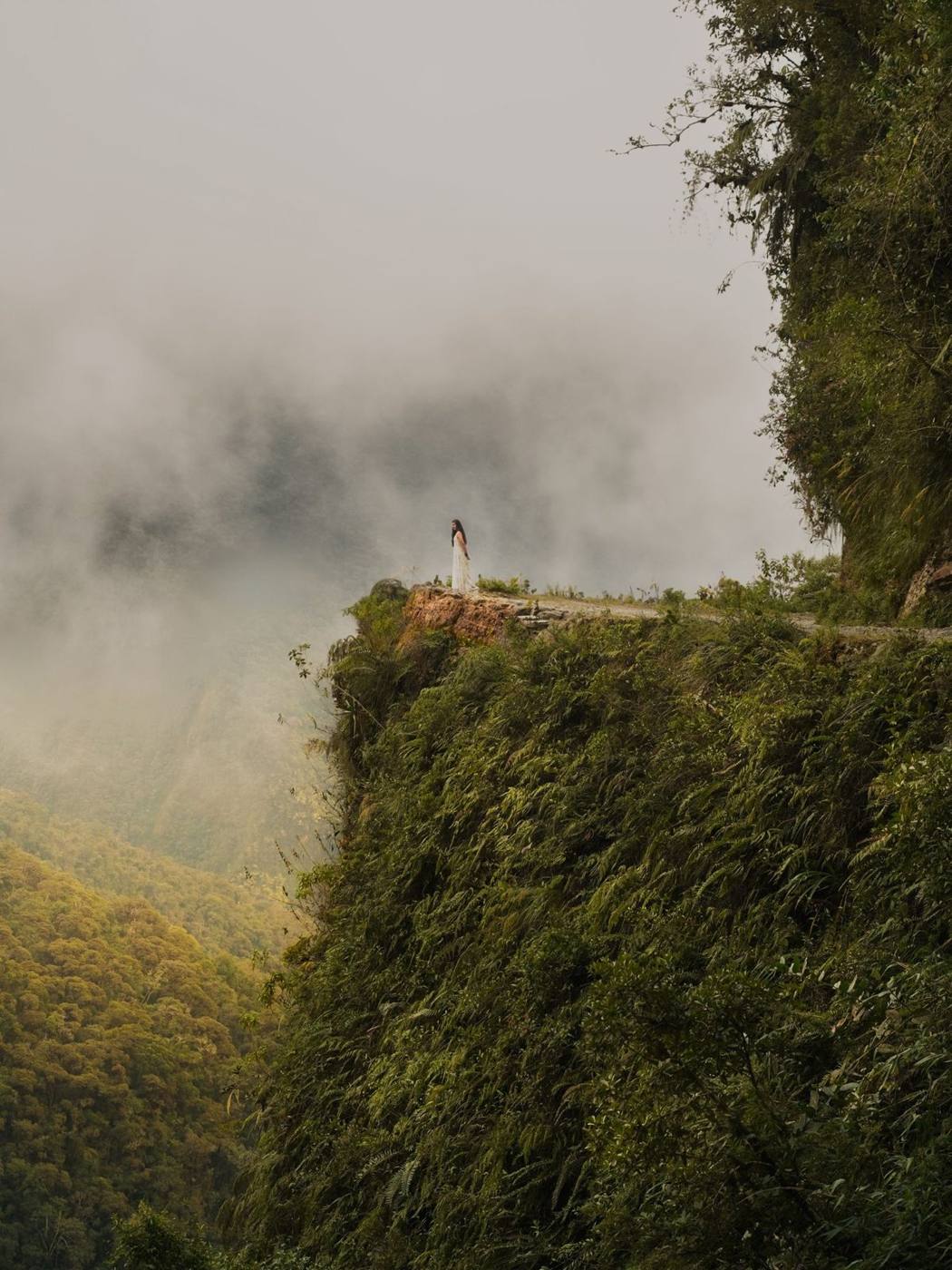
From Andean peaks to subtropical forest in a day: the old Death Road by bike and the village of Coroico among coffee and waterfalls.
 6 daysModerate
Samaipata and the Che Trail
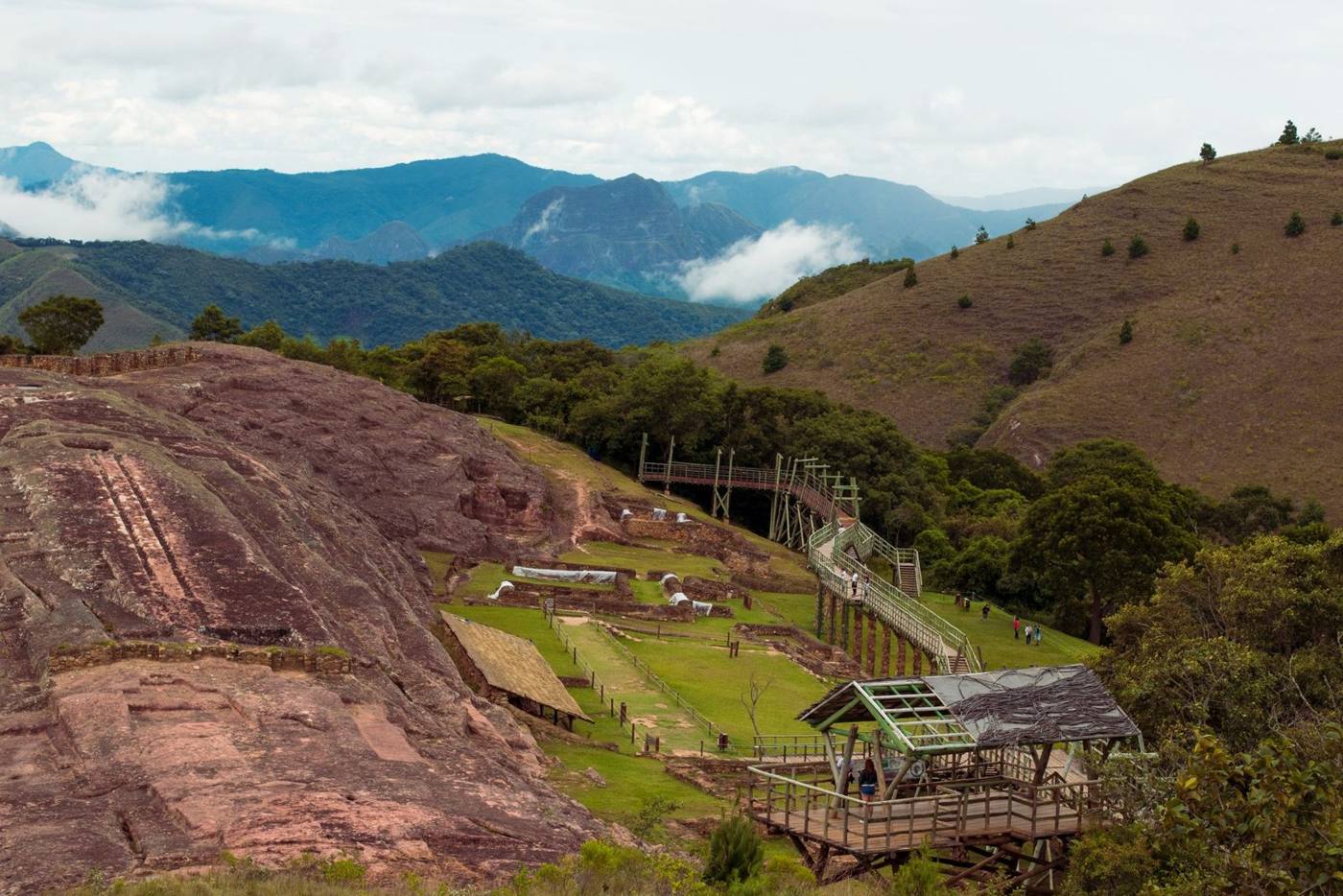
The pre-Inca fort of Samaipata, the giant ferns of Amboró park and the places of Che Guevara's last days in Vallegrande and La Higuera.