Okavango and Chobe
Africa's most exclusive safari: mokoro canoes through the delta channels and boats among Chobe's elephants.
- Maun
- Okavango Delta
- Moremi
- Kasane
- Chobe
Day by day
- Day 1
Arrival in Maun
This one-week trip packs in the best of northern Botswana: two days at a camp on the islands of the Okavango Delta, with mokoro trips and walking safaris, a day by jeep in the Moremi reserve and two days in Kasane, on the Chobe River, among huge herds of elephants. You travel mostly by small plane.
Before you go: Italian citizens enter Botswana without a visa for tourism, for stays of up to 90 days. The passport must be valid for at least six months from arrival and have blank pages for stamps; children travel with their full birth certificate. Other nationalities should check their own rules. The United States asks for increased caution, level 2, because of crime. The British government does not advise against any part of Botswana, but reports rising crime in Maun and thefts at some lodges in the Chobe area. The north of the country is a malaria area: ask your doctor. If on the last day you go to the Victoria Falls, in Zimbabwe, you also need a visa: check the rules for Italian citizens on Viaggiare Sicuri.
You land at Maun airport, in the small town on the banks of the Thamalakane River that is the gateway to the delta. Here you rest after the long journey, usually with a stop in Johannesburg. In the afternoon, take a walk along the river, where at sunset you see herons, storks and the odd hippo.
Pack for tomorrow: on the small planes of the delta weight is limited and only soft bags are accepted. Leave the rest in storage in Maun.
Practical tip: withdraw cash in pula in Maun, because there are no ATMs at the camps. Cards work at almost all lodges, but you need cash for tips for the guides.
- Day 2
A flight over the delta and a first mokoro trip
In the morning a small plane takes you from Maun to a dirt airstrip in the heart of the delta. The flight is short, but already a spectacle: below you are channels of clear water dividing between islands, round pools, game trails and sometimes a herd of elephants or buffalo.
The Okavango Delta, a UNESCO World Heritage Site, is a rare phenomenon: the river rises in the highlands of Angola and, instead of reaching the sea, spreads out and vanishes into the sand of the Kalahari. Water from the Angolan rains arrives here months later, so the delta is fullest in the dry season, between June and August.
The camp stands on an island, in a private concession that only guests of the few authorised camps may enter. After lunch and a rest, in the late afternoon you get into the mokoro, the traditional canoe. A poler standing at the stern pushes it with a long pole through the reeds and water lilies, in silence.
Sitting at water level you see the small painted reed frogs, kingfishers and lechwe antelopes leaping through the shallows. If there is a hippo, the poler changes course: hippos are the most dangerous animals in the delta.
Practical tip: in the mokoro stay seated and still, keep your hands inside the canoe and bring a light jacket for the return, when the temperature drops quickly.
- Day 3
A walking safari on the islands
Today you explore the delta on foot. At dawn, after a coffee by the fire, you reach one of the nearby islands by mokoro and walk with a qualified guide, in a small group and in single file.
On foot the safari changes completely. You are not just looking for big animals, but learning to read the bush: fresh tracks in the sand, dung that reveals who has passed, giant termite mounds where palms often grow, branches broken by elephants. With a little luck you see zebras, giraffes, wildebeest and impala, and feel the thrill of standing on the same ground as the animals.
The rules are simple and strict: walk quietly behind the guide, do not stop without reason and, if you see a dangerous animal, never run and do exactly what you are told. In the private concessions walking safaris are only allowed with licensed guides.
Mid-morning you return to camp for a late lunch and to rest in the hot hours, when the animals stop in the shade. In the afternoon, take another mokoro trip or, at camps where the water is deeper, a motorboat trip along the wide channels.
In the evening, around the fire, you listen to the sounds of the delta: frogs, grunting hippos and, far off, the roar of a lion.
Practical tip: for the walking safari wear neutral colours, such as green, beige or brown, and comfortable closed shoes. Avoid white, which can be seen from afar, and very dark colours, which attract insects.
- Day 4
The Moremi reserve by jeep
Today you leave the island and move to the Moremi reserve, the eastern part of the delta, where water meets dry land. It is one of the richest wildlife reserves in southern Africa and was created in the 1960s on the initiative of the Batawana people, who wanted to protect their hunting grounds.
The landscape is a mosaic of lagoons, flooded grasslands, mopane woodland and big trees along the channels. Here the safari is by open jeep with a guide, on sandy tracks. In the open areas zebras, wildebeest, tsessebe, impala and lechwe graze; in the woods you find kudu, giraffes and elephants. Moremi is also one of the best places in Africa to see wild dogs, which hunt in packs early in the morning.
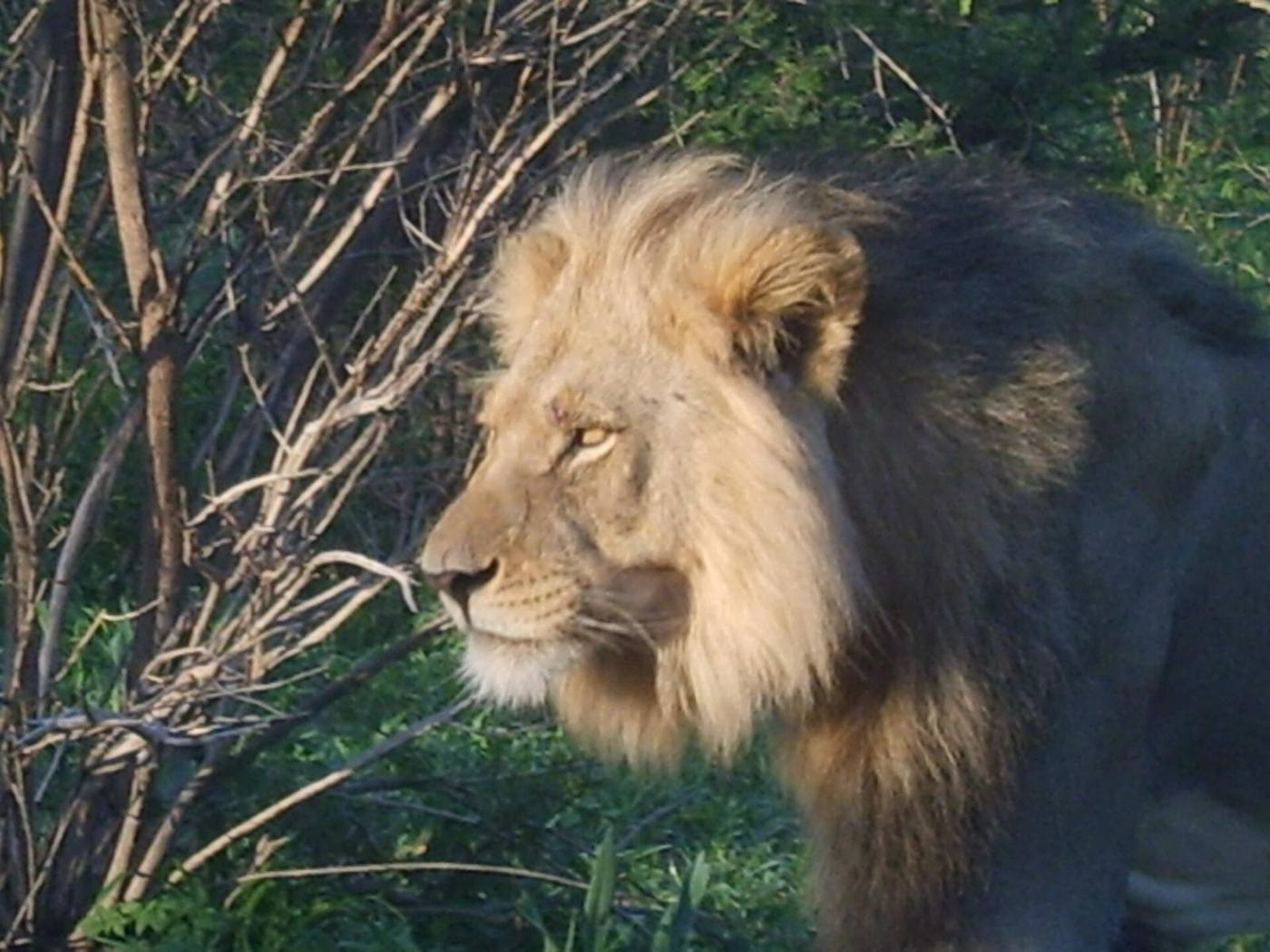
Lions often rest on the tracks after the night's hunt, while leopards hide among the branches. The guide reads the tracks and listens for the alarm calls of monkeys and impala to work out where the predators are.
In the hot hours, stop in the shade near a lagoon, where hippos and crocodiles sleep in the sun. In the afternoon, continue the drive until sunset. In the Moremi reserve it is forbidden to drive after dark or to leave the tracks: if you want a night drive, choose a camp in a private concession next to the reserve.
Practical tip: bring a pair of binoculars for each person. With binoculars you see details that escape the naked eye: a leopard on a distant branch or the smallest birds.
- Day 5
Kasane and the Chobe River at sunset
Early in the morning, take a last short drive in the bush, then a small plane flies you north-east to Kasane, the town on the Chobe River, near the point where four countries meet: Botswana, Namibia, Zambia and Zimbabwe.
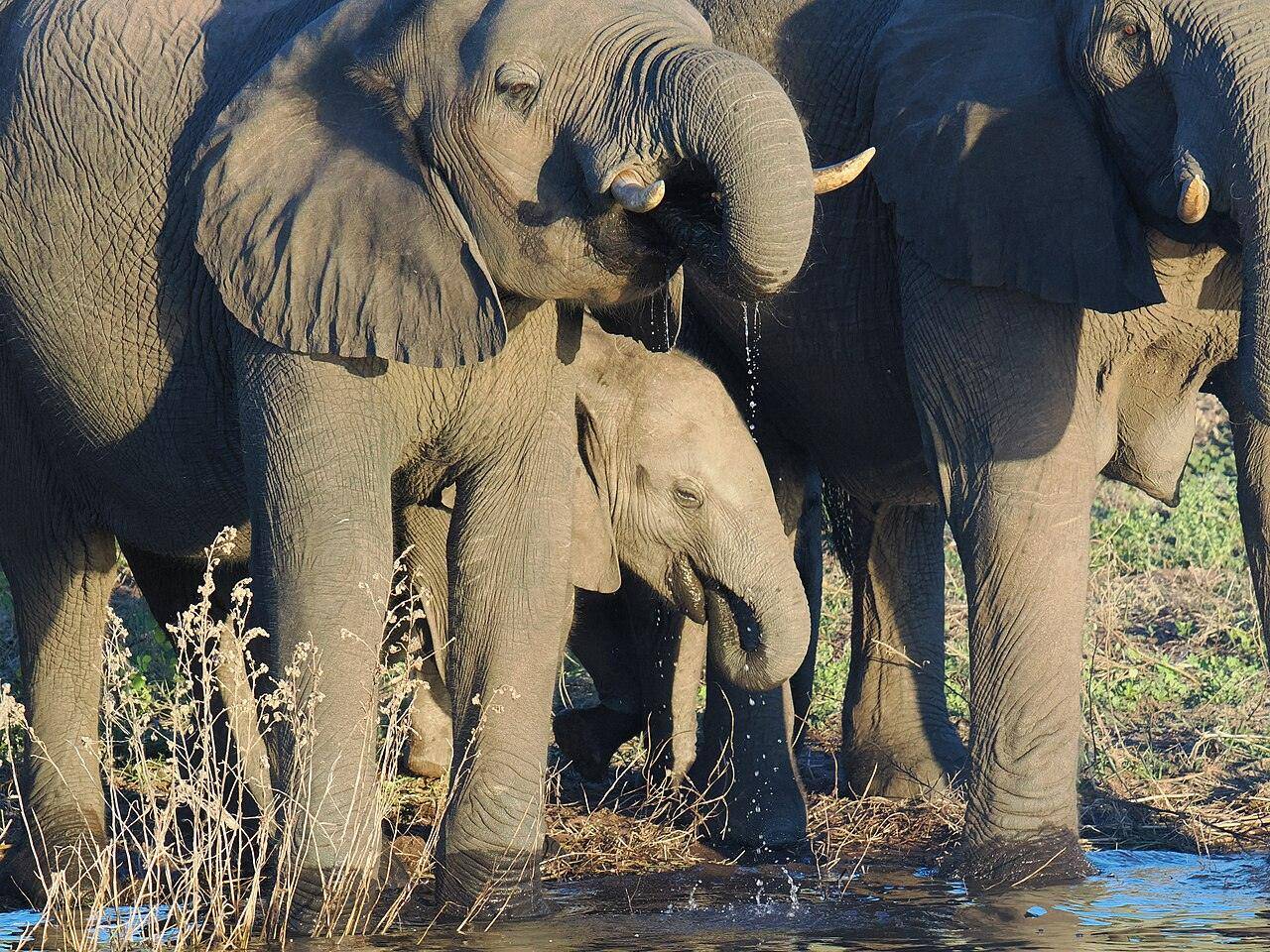
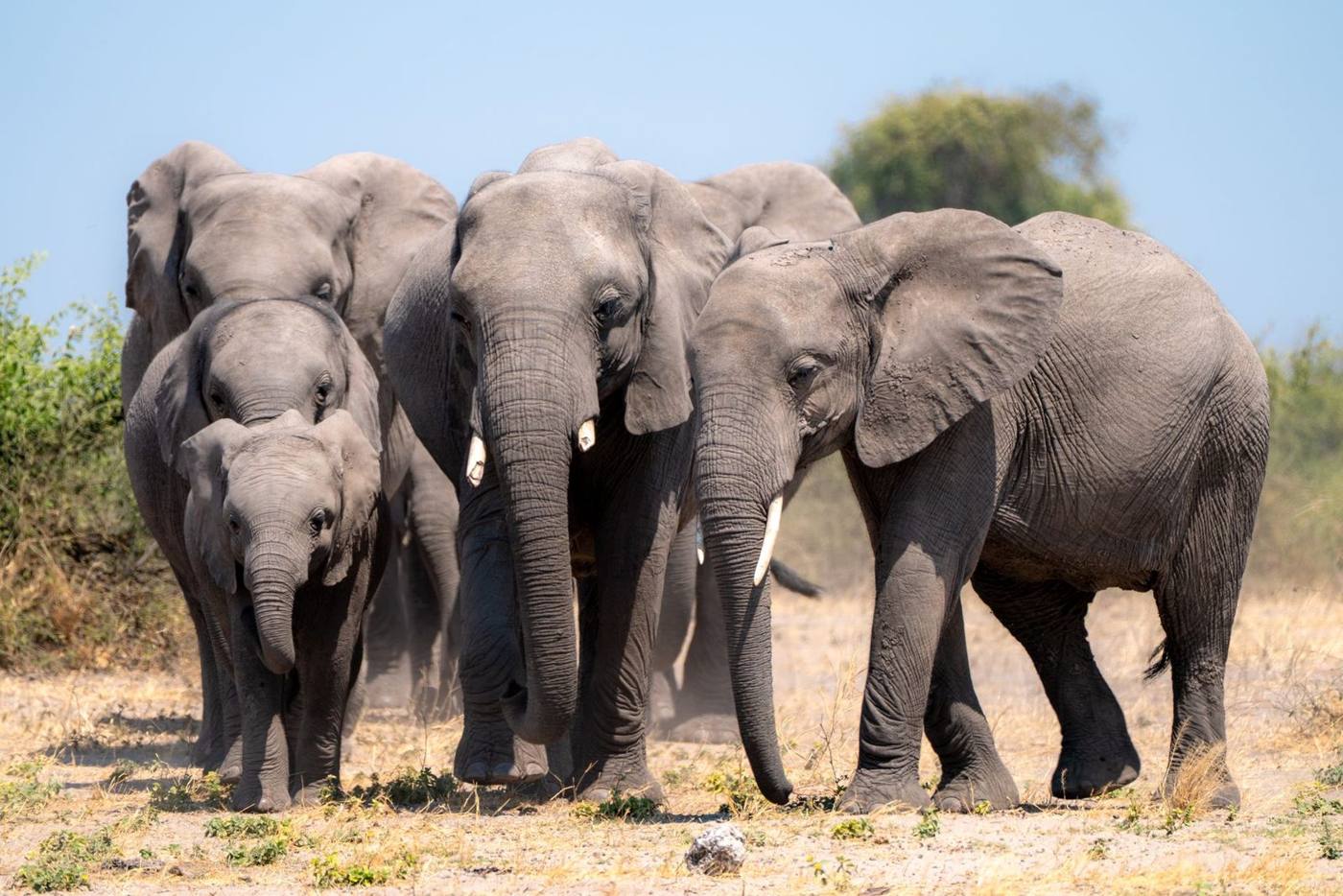
Chobe National Park, Botswana's first national park, is famous for having one of the largest elephant populations in Africa. In the dry season, when the pools inland dry up, thousands of elephants come down to the river to drink and bathe. The banks of the Chobe, the riverfront, are the area closest to Kasane and the easiest to visit.
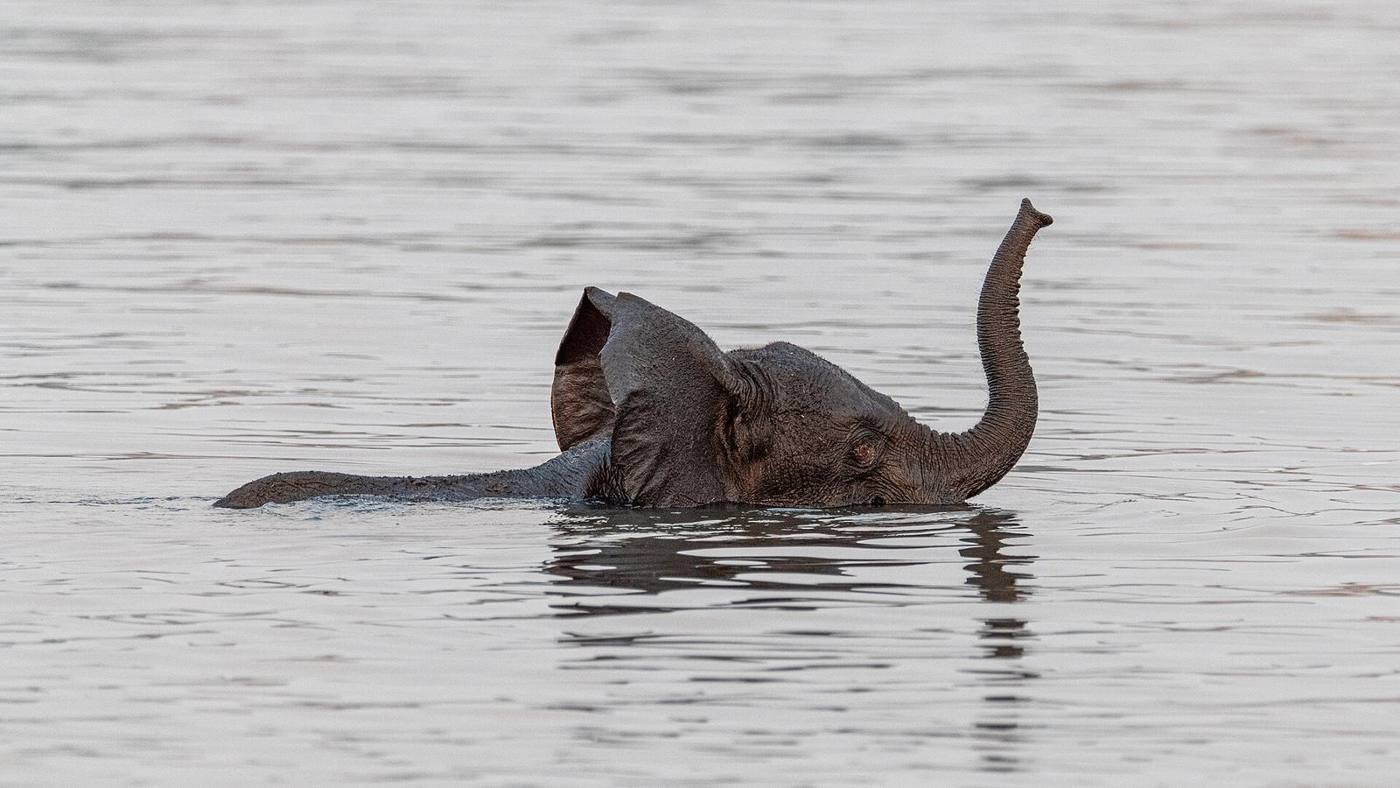
After lunch you board a boat for a sunset cruise. From the water you see elephants swimming across the river, trunks raised like snorkels, buffalo on the grassy islands, snorting hippos and crocodiles on the banks. Birds are everywhere: fish eagles, storks, herons, kingfishers and brightly coloured bee-eaters.
At sunset the sun sinks behind the flooded plains of Namibia, on the other bank, and the river turns orange. It is one of the finest moments of the trip.
In the evening, sleep in Kasane, at a lodge on the river.
Practical tip: smaller boats leave more room for photography and get closer to the bank. Ask for a boat with few passengers and sit on the side facing the bank.
- Day 6
A jeep safari on the Chobe
Today you experience the Chobe from land and water. At dawn you enter the park in an open jeep with a guide, through the gate near Kasane, and drive the sandy tracks along the river. Early morning is the best time for predators: lions returning from the hunt, sometimes leopards and hyenas.
Along the bank you see herds of elephants coming down to drink, giraffes among the trees, sable antelopes with long curved horns, kudu and puku, small golden-coated antelopes which in Botswana are found almost only here. In the muddy areas buffalo wallow and warthogs dig in the grass.
Mid-morning you return to Kasane for lunch and a rest. In the afternoon you can choose between a second boat cruise, to see the river in a different light, and another jeep safari. If you enjoy photography, some boats are fitted with swivel mounts for cameras.
In the evening, before dinner, watch the river from the lodge terrace and the lights of Namibia on the far bank.
Practical tip: the British government reports thefts at some lodges in the Chobe area, especially those on the river. Lock your door and windows when you go out, use the safe for your passport and money, and do not leave valuables on the terrace.
- Day 7
Departure from Kasane or the Victoria Falls
On the last day you have two options. If your flight leaves early, take a last trip on the river at dawn and head to Kasane airport. If you have time, you can make a day trip to the Victoria Falls, in Zimbabwe, about an hour and a half by road through the Kazungula border. For this trip you need a Zimbabwe visa: check the rules beforehand.
The falls, called Mosi-oa-Tunya, the smoke that thunders, are a UNESCO World Heritage Site. The Zambezi, about 1,700 metres wide, plunges into a narrow, deep gorge and throws up a cloud of spray visible from far away. A path through the rainforest runs opposite the falls, with many viewpoints. Check prices and times.
In a week you have seen the two faces of northern Botswana: the Okavango Delta by mokoro and on foot, Moremi with its predators, and the Chobe River with its elephants at sunset. It is one of the most exclusive safaris in Africa, with few visitors in each concession and a high price, but with an experience few other places offer.
When to go: the best period is June to October, in the dry season. The delta holds the most water from June to August, while September and October are the best months for wildlife on the Chobe, though it is very hot. From November to March it rains, the bush is green and full of young animals, and prices fall.
Practical tip: keep a few US dollars in small notes if you go to the Victoria Falls: in Zimbabwe the dollar is widely used.
Africa's most exclusive safari packed into one week: gliding through the delta in a mokoro is truly special. The drawbacks are the price, among the highest on the continent, and the light-aircraft transfers with strict luggage limits. The Chobe by boat at sunset, with elephants crossing the river, is the highlight.
Before you go
- Documents and visa
- Passport valid for at least six months from arrival, with blank pages for stamps. Italian citizens enter without a visa for tourism, for stays of up to 90 days. Children must carry their full birth certificate, original or certified copy, and if travelling without one parent, written consent with a copy of that parent's ID. Cash of 10,000 pula or more must be declared on arrival.
- Health and vaccines
- The north of the country, including the Okavango Delta and Chobe, is a malaria area: ask your doctor about antimalarials. A yellow fever vaccination certificate is required if you arrive from a country with a risk of transmission. You need insurance covering medical costs and evacuation, because the parks are far from hospitals. Emergencies: 999 police, 997 ambulance, 998 fire.
- Money and payments
- Botswana pula. Cards work in towns and lodges; there are no ATMs in the parks or remote areas, so withdraw cash in Maun or Kasane before you set off.
- Power sockets
- Types D and G, 230 volts: type G is the British plug, so British plugs fit those sockets.
- Time zone
- UTC+2 all year.
- Safety
- The United States asks travellers to exercise increased caution in Botswana, level 2, because of crime. The British government does not advise against any part of the country, but reports rising crime in Gaborone, Francistown and Maun and thefts at some lodges in the Chobe area. Wild animals and livestock cross the roads: do not drive at night outside towns and always follow park rules. Official advice: GOV.UK.
Information checked in November 2026 for Italian and EU citizens. Rules change: always check before you travel.
Variations
In 5 days: two nights in the delta and two in Kasane, without the day in Moremi.
In 10 days: add Savuti between Moremi and the Chobe, and a night at the Victoria Falls.
Frequently asked questions
What is a mokoro?
It is the traditional canoe of the Okavango Delta, today often made of fibreglass. A poler standing up pushes it with a long pole through shallow water, in silence, among reeds and water lilies. You sit still, with your hands inside the canoe.
How much luggage can you take on the small planes?
The limit is low, usually around 20 kilos per person including hand luggage, and only soft bags without rigid wheels are accepted. Check the exact limit when you book and leave the rest in storage in Maun.
Can you do a night drive?
In the national parks and the Moremi reserve driving after dark is forbidden. Night drives and walking safaris take place in the private concessions, with licensed guides: if they interest you, choose your camp there.
Indicative itinerary written by World Atlas. Before booking, check timetables, seasonal openings, documents and safety.
 15 daysChallenging
Botswana, Victoria Falls and the Kalahari
A dream journey: Victoria Falls, Chobe, the delta and the Makgadikgadi salt pans with their meerkats.
 12 daysModerate
Botswana express: Victoria Falls, Chobe and the Okavango
The best of Botswana in under two weeks: the falls, the Chobe elephants and the Okavango Delta by mokoro.
 17 daysChallenging
Botswana by 4x4: the Kalahari, the Okavango, Savuti and Chobe
The full crossing from Johannesburg to Victoria Falls, driving on sand and sleeping in the parks' unfenced camps.