The best of Africa: the Okavango, Victoria Falls and Tanzania
The three great symbols of the African safari in one trip: the Okavango Delta, Victoria Falls, the Serengeti and Ngorongoro Crater.
- Maun
- Okavango
- Moremi
- Chobe
- Victoria Falls
- Arusha
- Tarangire
- Serengeti
- Ngorongoro
Day by day
- Day 1
Arrival in Maun
This twenty-three-day trip brings together the great symbols of the African safari: the Okavango Delta, Moremi, Savuti and Chobe in Botswana, the Victoria Falls in Zimbabwe and then, in Tanzania, Tarangire, Lake Manyara, the Serengeti and the Ngorongoro Crater.
Before you go: Italian citizens enter Botswana without a visa for up to 90 days, with a passport valid for at least six months and blank pages. Zimbabwe requires a visa: Italy is in category B, which can also obtain it on arrival, but Viaggiare Sicuri advises completing the application in advance on the official portal evisa.gov.zw. In Zambia, if you also want to see the falls from that side, you enter without a visa with a 30-day stamp. You enter Tanzania with a passport: check the current requirements for the visa and for yellow fever, which may be required depending on the countries you arrive from or transit through. Other nationalities should check their own rules. The UK does not advise against any part of Botswana or Zimbabwe, and for Tanzania it advises only against the 20 kilometres along the border with Cabo Delgado, in Mozambique, far from this route. Viaggiare Sicuri reports political tension in Zimbabwe. Almost the whole route is in a malaria area: ask your doctor.
You land in Maun, the gateway to the delta, on the Thamalakane River. The British government reports rising crime in the town: use a booked transfer and do not leave belongings in view.
Practical tip: withdraw cash in pula in Maun, because there are no cash machines in the delta or the parks.
- Day 2
Flying over the Okavango Delta
Today you enter the Okavango Delta, a UNESCO World Heritage Site since 2014. In the morning you board a small plane in Maun and fly low over the delta. Below you lies a maze of blue channels, green islands, lagoons and flooded plains, with elephants and buffalo looking like small moving dots.
The delta is a rare phenomenon: the Okavango River flows down from the highlands of Angola and, instead of reaching the sea, disappears into the sands of the Kalahari. The rainwater takes months to arrive, which is why the delta is fullest in the dry season, between June and August, when everything around it is dry.
You land on a dirt airstrip in the middle of the savannah. A 4x4 takes you to the camp, set on an island among palms and fig trees. Here life follows the rhythm of nature: outings at dawn and at sunset, rest in the hot hours.
In the afternoon, go on your first outing with your guide. You see lechwe, reddish antelope that run through the shallow water, impala, zebras and giraffes. At sunset the sky turns pink over the lagoons and you hear the first calls of the hippos.
Practical tip: on small planes luggage is limited, usually to one light soft bag, with no wheels and no rigid frame. Check the limit before you leave home.
- Day 3
By mokoro through the channels
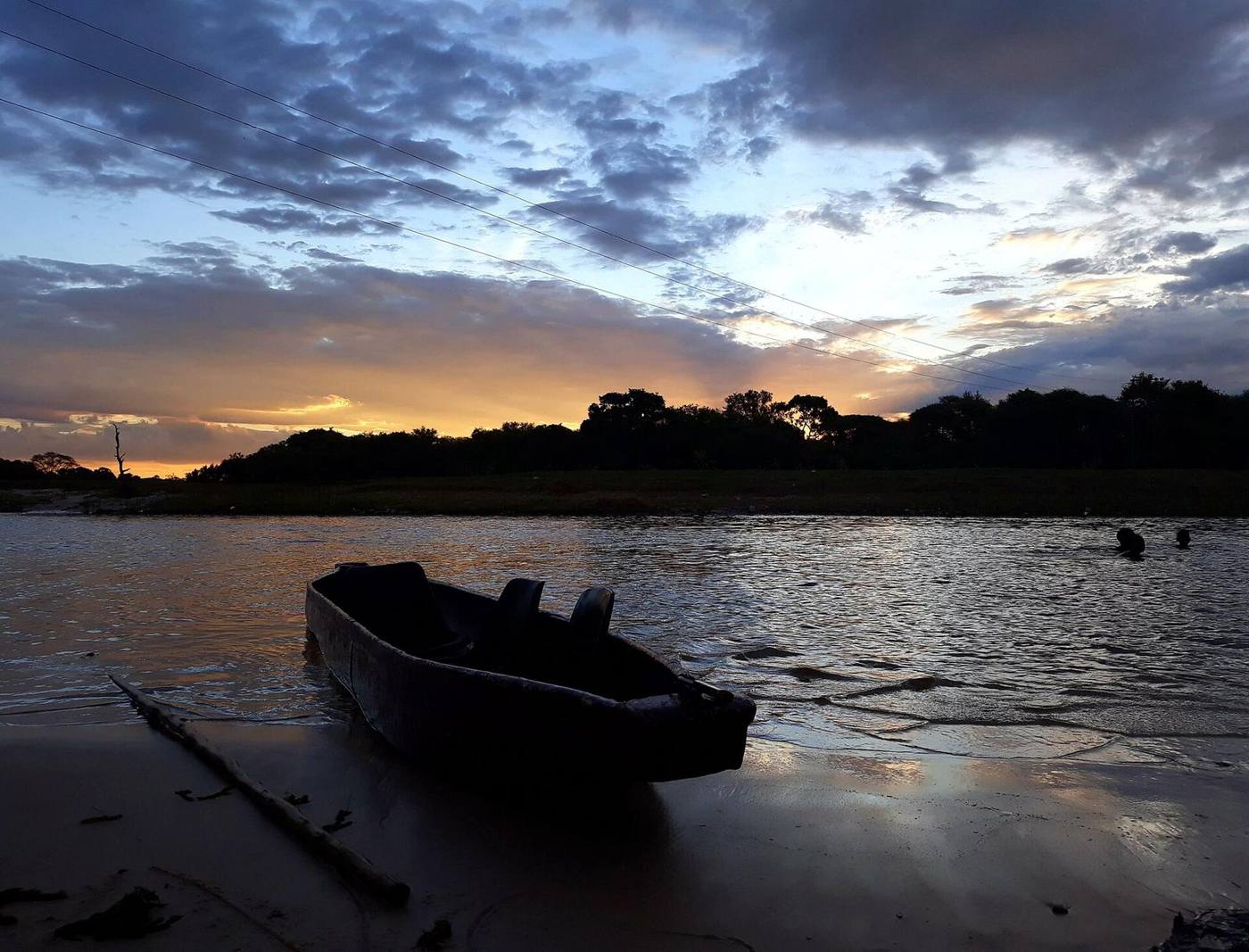
Today you discover the delta in the most traditional way: by mokoro, the canoe once carved from a tree trunk and today often made of fibreglass. The poler, the guide who stands at the stern, pushes it with a long pole against the sandy bottom, with no engine and no noise.
Set off early in the morning, when the water is smooth and the air is cool. You glide among papyrus and white and purple water lilies, so close to the water that you can touch it. Look at the small colourful frogs clinging to the stems, the kingfishers diving and the jacanas walking on the lily pads. Now and then the poler stops and points out an elephant on the bank or the head of a hippo breaking the surface.
Mid-morning, step onto an island and take a walk with your guide. On foot everything changes: you learn to read tracks in the sand, to recognise bird calls and to understand where the animals hide. The guide chooses the right distance and keeps the wind in mind: always follow the guide's instructions.
In the afternoon, rest at camp. At sunset you can take a second mokoro trip, with the sun reflecting on the lagoons.
Practical tip: in a mokoro, stay seated and still, do not lean out and keep your hands inside the canoe, because hippos and crocodiles live in the same channels.
- Day 4
Another day in the delta
Today you stay in the delta and see it in a different way. Depending on the water level, many camps offer 4x4 drives on the larger islands, motorboat trips on the deep channels or longer walks. Ask your guide what works best in the season you are travelling.
At dawn, set off in search of predators. Lions, leopards, hyenas and wild dogs, with their patched coats, all live in the delta. The delta lions are used to water and sometimes swim across the channels. With a bit of luck you see a leopard resting on a branch or a pack of wild dogs moving fast through the grass.
In the hot hours, rest in the shade and watch the life around camp: squirrels, mongooses, weaver birds building their nests. The delta is a paradise for birdwatchers, with hundreds of different species.
In the late afternoon, take a boat trip on the wider channels. At sunset the water turns golden and the fish eagles call from the trees. In the evening, around the fire, you hear lions roaring in the distance and hippos leaving the water to graze.
Practical tip: bring a pair of binoculars for each person: in the delta many birds and animals can only be seen well from a distance, and sharing a single pair means missing the best moments.
- Day 5
Moremi
Today you move into Moremi Game Reserve, which protects the eastern part of the delta. It was created in the 1960s on the initiative of the Batawana people, and it is one of the richest wildlife reserves on the continent. You reach it by small plane or by 4x4, depending on how your trip is organised.
Moremi joins two worlds: dry islands covered in mopane, and lagoons, channels and flooded plains. This variety of habitats attracts a great many animals. Along the tracks you see elephants, buffalo, giraffes, zebras, kudu and herds of impala. The open plains are the realm of the predators.
In the afternoon, go on your first game drive with your guide. Wooden posts show the names of places, but the tracks change with the water: sometimes a stretch is flooded and you have to find another way. Stop near the lagoons: herons, storks, spoonbills and kingfishers are everywhere, and crocodiles bask on the banks.
At sunset, when the light turns warm, the animals move towards the water. At night, from camp, you hear hyenas and lions calling in the dark.
Always follow the reserve rules: do not get out of the vehicle except where allowed and do not approach the animals.
Practical tip: between June and August it is cold at dawn and in the evening and hot at midday: dress in layers, with a jacket, a hat and light gloves.
- Day 6
At dawn among Moremi's predators
Today you go out at dawn, when the air is cold and the light is low and golden. It is the best time for predators: lions return from the night's hunt, hyenas go back to their dens and, with a bit of luck, you see a leopard climbing down from a tree. Moremi is one of the best places in Africa to see wild dogs, which hunt in packs at dawn and dusk.
Follow the tracks in the sand with your guide: the round prints of lions, the hyena prints with their claw marks, the huge prints of elephants. When you find an animal, switch off the engine and watch in silence. Often the most interesting behaviour comes after a few minutes of waiting: a cub playing, a mother feeding, a group setting off to hunt.
Mid-morning, return to camp for lunch and a rest. In the afternoon, if the water allows, take a boat trip on the deeper lagoons, among papyrus islands and colonies of birds nesting in the trees.
In the evening, around the fire, think back on the animals you have seen in the delta: elephants, lions, wild dogs, hundreds of birds. Tomorrow you leave the water behind and head for the dry savannah of Savuti.
Practical tip: keep your camera always ready with a charged battery, because the best encounters last a few seconds and do not happen again.
- Day 7
Towards Savuti
Today you leave Moremi and head for Savuti, in the western part of Chobe National Park. If you travel by 4x4, follow the track that runs near the Khwai River, on the edge of the reserve. The pools along the river attract hippos, elephants, impala and often predators too.
Then the track turns north-east, through a long mopane forest. The sand is deep and the vehicle moves slowly, swaying. The journey takes most of the day, but it is never boring: you meet elephants, kudu, giraffes and sometimes a large herd of buffalo crossing the track in a cloud of dust. If you prefer, you can make this transfer by small plane.
In the afternoon you reach Savuti. It is one of the wildest places in Botswana: no villages, just savannah, a few rocky hills and the Savuti Channel, a capricious watercourse that stayed dry for decades and then started flowing again. The landscape is very different from the delta: open and dry, with dead trees rising grey above the yellow grass.
In the evening, listen to the savannah. Savuti is famous for its lions and hyenas, and at night their calls come very close.
Practical tip: on long 4x4 transfers, keep water, sun cream, a scarf against the dust and something to eat within reach.
- Day 8
The lions and elephants of Savuti
Today you explore Savuti with your guide. Set off at dawn along the channel and across the open plains, where lions hunt zebras, wildebeest and sometimes even young elephants. The Savuti lions are famous for their strength and their large prides.
In the dry season the waterholes become the centre of life. Bull elephants come from far away to drink, often in large groups, and push each other for the best spot. Sit quietly near a waterhole and watch: before long you see elephants, kudu, jackals and birds of every kind arriving.
Mid-morning, visit the Gubatsa Hills, rocky outcrops rising above the plain. Here you find ancient rock paintings by the San, the people who lived on this land for thousands of years: figures of animals painted in red and white. Ask your guide where you can see them and follow the park rules.
In the afternoon, rest at camp, then go out for a last drive at sunset. In the low light the savannah turns golden and the animals start moving again.
Always follow the park rules: drive only in daylight and do not get out of the vehicle except where allowed.
Practical tip: never touch the rock paintings or wet them to see them better, because they are damaged for ever.
- Day 9
The Chobe River
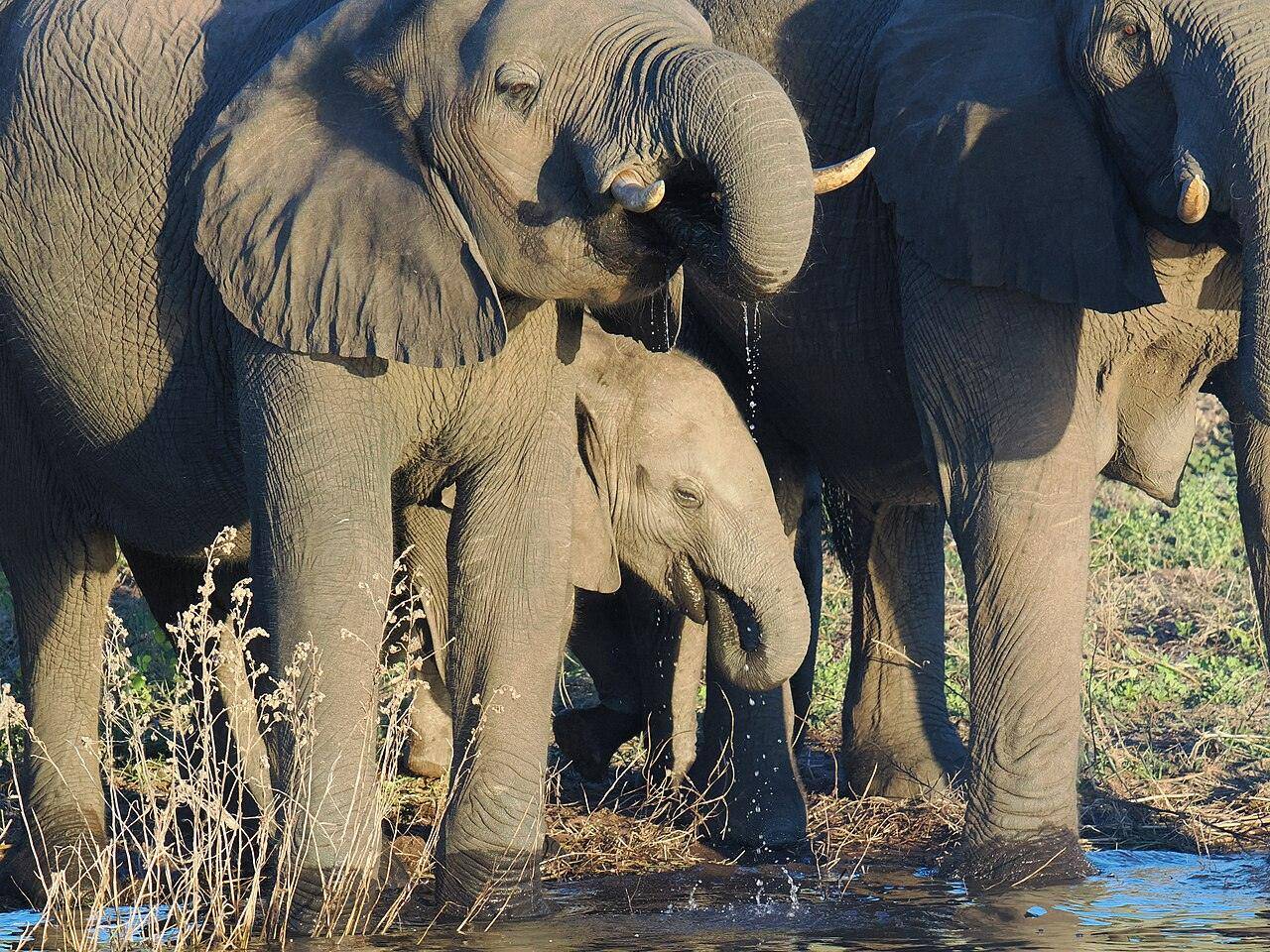
Today you cross Chobe National Park from south to north and reach the river, on the border with Namibia. Chobe, Botswana's first national park, is famous for one of the largest elephant populations in Africa. In the dry season, when the inland pools dry up, thousands of elephants come down to the river to drink, bathe and cover themselves in mud.
Along the river you drive on sandy tracks with the water always beside you. You see lines of elephants, giraffes, buffalo, kudu and puku, small golden antelope that in Botswana live almost only here. The grassy floodplains along the water also attract lions and hyenas.
In the afternoon you reach Kasane, the small town at the gates of the park. Here you find shops, cash machines and fuel, after days far from everything. The British government reports thefts at some accommodation in the Chobe area, especially along the river: lock doors and windows when you go out and use the safe.
At sunset, watch the river from the bank: the sun sinks behind the plains of Namibia and the water turns orange, while the hippos begin to come out for the night.
Practical tip: in Kasane, get some US dollars in small notes, which you will need for the Zimbabwe visa and for tips.
- Day 10
A cruise on the Chobe
Today you experience Chobe from the water and from land. At dawn, take a game drive along the riverbank, when the animals are active and the light is soft. Look for lions resting after the hunt, buffalo coming down to drink and fish eagles in the trees.
In the afternoon, board a boat for a river cruise. From the water you get closer to the animals than by car: elephants swimming with their trunks raised like periscopes, hippos snorting a few metres away, crocodiles lying still on the sandbanks. Birds are everywhere: carmine bee-eaters nesting in the banks, storks, herons, kingfishers and large flocks of waterbirds.
The grassy islands in the middle of the river are full of life. Here you can see herds of buffalo and groups of elephants crossing the channel one after another, with the calves holding on to their mothers' tails.
At sunset the boat stops and the river becomes a golden ribbon. It is one of the finest moments of the whole trip.
In the evening, prepare your documents for tomorrow: passport, Zimbabwe visa or completed form, and cash in dollars.
Practical tip: on the boat, sit on the side facing the bank and bring a long lens, but also a wide-angle lens for the elephants that come very close.
- Day 11
The Victoria Falls
Today you enter Zimbabwe at the Kazungula border, where Botswana, Zimbabwe, Zambia and Namibia meet. Formalities can take time: have your passport, visa or completed form and US dollars in cash ready. Viaggiare Sicuri reports political tension and possible protests in Zimbabwe: avoid crowds and demonstrations.
In about an hour you reach Victoria Falls. From far away you can already see the column of spray rising above the forest. The local name of the falls is Mosi-oa-Tunya, the smoke that thunders. They are a UNESCO World Heritage Site and mark the border between Zimbabwe and Zambia: the Zambezi, about 1,700 metres wide, plunges into a narrow, deep gorge.
In the afternoon, follow the path through the rainforest on the Zimbabwe side, with a series of viewpoints right in front of the drop: check prices and times. From here you see most of the face of the falls. Between April and June the water is at its peak and the spray can hide the view and soak you completely; at the end of the dry season some parts are almost dry.
At sunset, walk to the old iron bridge that links the two countries above the gorge, and watch the light changing on the water.
Practical tip: bring a light raincoat and a waterproof case for your phone, because near the falls the spray soaks everything.
- Day 12
A day on the Zambezi
Today you stay in Victoria Falls and discover the Zambezi in another way. In the morning, if you want to see the falls from the other side too, cross the bridge into Zambia: on the Zambian side you walk very close to the edge of the gorge and see the falls face on, from a different angle. Remember that every border has its formalities: ask in advance which documents you need to return to Zimbabwe.
If you prefer to stay on the Zimbabwe side, take a walk around the town of Victoria Falls and visit the craft market, where you find wood and stone carvings, baskets and fabrics, and bargain calmly and politely.
In the afternoon, board a boat for a sunset cruise on the Zambezi, above the falls. Here the river is wide and calm, with islands covered in palms. You see hippos, crocodiles, elephants on the banks and many birds. In the distance you hear the roar of the falls and see the cloud of spray rising into the sky.
In the evening, pack for tomorrow's flight to Tanzania. The southern part of the trip comes to an end: water, delta and great rivers. Now East Africa awaits, with its savannahs and the migration.
Practical tip: keep your passport, boarding passes and health certificates together in one folder, because you may be asked for all of them on entering Tanzania.
- Day 13
Flight to Arusha
Today you leave southern Africa and fly to Tanzania. The flight from Victoria Falls to Kilimanjaro International Airport usually involves at least one stop, often in Johannesburg or Nairobi. It is the most expensive flight of the trip, and it is worth booking well in advance: check prices and times.
Before you leave, check your documents for Tanzania again: visa, passport validity and, if needed, a yellow fever vaccination certificate. The rules can change depending on the countries you arrive from or transit through, so check the official website and Viaggiare Sicuri before the flight.
From the air, on clear days, you see the landscape change: the green and brown plains of southern Africa give way to the highlands and volcanoes of East Africa. With a bit of luck, as you arrive you see the snowy summit of Kilimanjaro above the clouds.
You land at Kilimanjaro airport and in about an hour you reach Arusha, the base town for the northern safaris, at the foot of Mount Meru. In the evening, meet the guide who will travel with you over the coming days, and taste nyama choma, grilled meat, with ugali and vegetables.
Practical tip: keep a change of clothes, your medicines and your documents in your hand luggage, because with connecting flights checked bags can arrive late.
- Day 14
Tarangire
Today the safari in northern Tanzania begins. With your guide, in a 4x4 with a pop-up roof, you leave Arusha and in about two hours reach Tarangire National Park. Register at the gate: check prices and times.
Tarangire is famous for two things: baobabs and elephants. The baobabs are enormous, with grey trunks and branches that look like roots turned towards the sky, and some are hundreds of years old. In the dry season the elephants arrive in their hundreds along the Tarangire River, the only reliable source of water in the area. You see them digging in the dry riverbed with their feet and trunks to find water.
Along the tracks you also see giraffes, zebras, wildebeest, buffalo, impala and tiny dik-diks, the smallest antelope. Among the branches, look for lions resting in the shade and pythons that sometimes coil around the trees. There are a great many birds, colourful and noisy.
At midday, have a packed lunch at a picnic site overlooking the valley. In the afternoon, continue the safari, then leave the park before closing time and spend the night in the Karatu area or near the park.
Practical tip: there are tsetse flies in Tarangire, which bite and are attracted to dark colours: wear beige or khaki and avoid blue and black.
- Day 15
Lake Manyara
Today you visit Lake Manyara National Park, small but very varied. It lies at the foot of the Rift Valley escarpment, a huge wall of rock that rises hundreds of metres above the lake.
At the entrance you go into a green, damp forest fed by underground springs. Large troops of baboons live among the trees, along with blue monkeys and, sometimes, elephants moving silently through the branches. Then the forest opens out and you reach the plains around the lake, with buffalo, wildebeest, zebras and giraffes.
Lake Manyara is salty and shallow. When there is water, its shores fill with birds: pelicans, storks, herons and, at certain times, pink flamingos. Hippos rest in the pools near the shore. The park is also famous for lions that sometimes climb trees, but seeing them is rare: do not count on it.
In the afternoon, leave the park and climb the escarpment towards Karatu. From the top, look down at the lake and the plain below you: it is one of the most beautiful views in northern Tanzania.
In the evening, sleep in the Karatu highlands, among coffee fields and green hills. The air is cooler and the night can be cold.
Practical tip: in the Manyara forest, never feed the baboons and keep the windows closed when you stop, because they are skilled thieves.
- Day 16
Into the Serengeti
Today you enter the Serengeti, Africa's most famous park and a UNESCO World Heritage Site. From Karatu the road climbs into the Ngorongoro highlands and runs along the rim of the crater: stop at the viewpoint and look down to the floor, which you will visit at the end of the trip. Then the road drops towards the great plains.
The landscape changes: after the green hills come plains of short grass, without trees, stretching to the horizon. The name Serengeti comes from the Maasai language and is explained as "endless plain". Along the road you see Maasai villages, with round huts and herders in red cloaks driving cattle and goats.
After the park entrance, the safari begins. On the southern plains you see gazelles, wildebeest, zebras and ostriches, and on the kopjes, the great granite boulders rising out of the grass, look for lions using them as lookouts.
In the afternoon you reach the central area and sleep at camp. Night in the Serengeti is full of sounds: the laughter of hyenas, the roar of lions, the heavy tread of wildebeest.
Practical tip: the roads to the Serengeti are unpaved and dusty. Keep your camera in a closed bag and bring wet wipes to clean your face and hands.
- Day 17
Seronera, the heart of the Serengeti
Today you explore the Seronera area, in the centre of the Serengeti. It is one of the best areas in Africa to see big cats, because the Seronera River has water all year round and attracts many animals, even when the migration is far away.
Set off at dawn with your guide. Along the river, among the acacias and bushes, look for the leopard, which spends the hot hours stretched out on acacia branches, its tail hanging down. On the open plains you see cheetahs, which hunt by day and sprint after gazelles at great speed. Lions are often on the kopjes or in the shade of the trees.
Serengeti guides talk to each other by radio: when someone spots a rare animal, many vehicles arrive at the same place. Ask your guide to keep a proper distance and not to leave the tracks: the park has strict rules.
At midday, have a packed lunch at a picnic site. In the afternoon, look for the large herds of buffalo, the elephants and the giraffes eating the highest leaves of the acacias.
At sunset the Serengeti sky glows orange and red, and the outlines of the acacias turn black against the light.
Practical tip: bring a small bag of rice or a little cushion to rest your lens on the edge of the vehicle: telephoto shots come out much steadier.
- Day 18
The great migration
Today your guide chooses the route according to where the great herds are. Every year more than a million wildebeest, together with zebras and gazelles, move in a circle between the Serengeti and the Masai Mara in Kenya, following the rains and the fresh grass. It is one of the greatest natural spectacles in the world.
The position of the herds changes with the seasons. Between July and September, the best period for this trip, most of the wildebeest are usually in the north of the Serengeti, near the Mara River, where the famous crossings take place. From Seronera the herds may be far away: ask your guide where they are and whether a long drive north or west is worth it.
If you find the herds, stop and watch: lines of wildebeest moving along the horizon, the sound of thousands of hooves, the nasal calls of the animals. Behind them come the predators: lions, hyenas, cheetahs and vultures circling overhead.
Even when the migration is far away, the central Serengeti remains rich in wildlife all year round. A day in the Seronera area still gives you lions, elephants, giraffes and much more.
Practical tip: long drives last all day. Bring water, a hat, sun cream and a jacket for the early morning, when it is cold in an open vehicle.
- Day 19
The last day in the Serengeti
Today is your last full day in the Serengeti. Use it to see what you are still missing, or simply to enjoy the savannah calmly. If your trip includes it, at dawn you can take a hot-air balloon flight over the plains: it is an expensive experience, to book in advance. Check prices and times.
After sunrise, explore the more distant kopjes with your guide. These granite boulders are small worlds of their own: among the rocks live hyraxes, colourful lizards, birds of prey and sometimes lions or leopards resting up high. Some kopjes still hold old paintings by Maasai herders and traces of human life from the past.
In the hot hours, rest at camp and watch the animals passing by. In the afternoon, take a last game drive along the Seronera River. Often the best sightings come in the final days: a cheetah with cubs, a leopard climbing down from a tree, a family of elephants crossing the track right in front of you.
In the evening, around the fire, think back on your days in the Serengeti. Tomorrow you leave the great plains and return towards the Ngorongoro highlands.
Practical tip: open vehicles are colder than you think, especially at dawn. Bring a fleece even if the afternoon is hot.
- Day 20
From the Serengeti to Ngorongoro
Today you leave the Serengeti and head back east. On the way, stop at Olduvai Gorge, one of the most important places in the world for the study of human origins. Remains of hominins and very old stone tools have been found here. A small museum tells the story of the discoveries and of the gorge: check prices and times.
Then the road climbs into the highlands of the Ngorongoro Conservation Area, a UNESCO World Heritage Site. It is a special territory: here the Maasai live with their herds alongside wild animals, in an ancient balance. Along the road you meet herders, children with goats and villages of round huts.
In the afternoon you reach the rim of the Ngorongoro Crater. It is a huge caldera, formed by the collapse of an ancient volcano, with high walls and a flat floor full of animals. From above you see the lake, the plains, the forests and the dark dots of animals on the floor.
In the evening, sleep on the crater rim or nearby. At this altitude it is cold, especially at night and early in the morning, and mist often rises from the crater.
Practical tip: keep a heavy jumper and a jacket within reach: on the crater rim the temperature drops sharply after sunset.
- Day 21
In the Ngorongoro Crater
Today you go down into the Ngorongoro Crater. Set off at dawn with your guide, as the mist slowly lifts from the walls. The road drops steeply down the side, through forest and meadows, to the crater floor. Register at the entrance: check prices and times.
The crater floor is a closed world, with grassy plains, a salt lake, marshes and small forests. Animals live here all year round: wildebeest, zebras, buffalo, gazelles, hyenas and many lions. Ngorongoro is also one of the few places in Tanzania where you can see the black rhino, though usually from a distance.
On the salt lake, when there is water, you see pink flamingos. In the marshes hippos wallow and bull elephants with long tusks move slowly through the tall grass. Hyenas and jackals follow the lions, hoping for the remains of a kill.
At midday, have a packed lunch at a picnic site near a pool. Watch out for the kites, birds of prey that swoop down to snatch food from your hands: eat inside the vehicle.
In the afternoon, climb back up to the rim and return towards Karatu. In the evening, look through the day's photos: in a few hours you have seen almost all of Africa's great animals.
Practical tip: there are many vehicles in the crater in the middle of the day. Go down as early as possible for the best light and less traffic.
- Day 22
Back to Arusha
Today you leave the highlands and return to Arusha. The road crosses maize fields, coffee plantations and colourful markets, and drops towards the Rift Valley. Along the way, stop in a village to see daily life: women selling fruit and vegetables, children walking to school, craftsmen working wood.
In Arusha, spend the afternoon at a relaxed pace. Visit the central market, where you find spices, tropical fruit, colourful fabrics and everyday objects. You can also visit the Natural History Museum, in an old building from the German period, which tells the story of human evolution and the nature of the region: check prices and times.
If you are interested in crafts, look for the markets selling wood carvings, baskets, painted canvases and Maasai beadwork jewellery. Bargain politely and always ask the price before buying.
In the evening, have your last dinner in Tanzania. Taste the local dishes: pilau, spiced rice, mishkaki, meat skewers, and chapati, flatbread. Say goodbye to the guide who has accompanied you on safari and thank them: a tip is much appreciated.
Practical tip: before buying objects made from animal parts, such as skins or ivory, remember that trading them is forbidden and they could be confiscated at customs.
- Day 23
Departure
Today is departure day. If your flight is in the afternoon, take a last walk in Arusha or enjoy the view of Mount Meru from your window. Then reach Kilimanjaro International Airport, about an hour away, with a booked transfer.
In twenty-three days you have crossed southern and eastern Africa and seen the great symbols of the safari. In Botswana you experienced water: the Okavango Delta by mokoro, the predators of Moremi, the lions and elephants of Savuti, the Chobe River full of life. In Zimbabwe you heard the roar of the Victoria Falls and sailed on the Zambezi. In Tanzania you saw the baobabs of Tarangire, Lake Manyara, the endless plains of the Serengeti and the Ngorongoro Crater, with its black rhinos.
It is a long and demanding trip, with many flights, many borders and long transfers, but it offers the best of two different worlds: water and delta in the south, savannah and migration in the east. The flight between the two regions is the biggest cost to budget for.
When to go: from June to October, in the dry season, the animals gather near water and the tracks are passable. The period that works best for both regions is July to September: the delta is full of water and in the Serengeti it is the season of the river crossings in the north. Book many months in advance.
Practical tip: check the baggage rules for your return flight and arrive at the airport in good time.
If you can only make one great trip to Africa in your life, this is it: water and delta in the south, savannah and migration in the east. The internal flight between the two regions is the biggest extra cost. The season that works for both is July-September.
Before you go
- Documents and visa
- Passport valid for at least six months from arrival, with blank pages for stamps. Italian citizens enter without a visa for tourism, for stays of up to 90 days. Children must carry their full birth certificate, original or certified copy, and if travelling without one parent, written consent with a copy of that parent's ID. Cash of 10,000 pula or more must be declared on arrival.
- Health and vaccines
- The north of the country, including the Okavango Delta and Chobe, is a malaria area: ask your doctor about antimalarials. A yellow fever vaccination certificate is required if you arrive from a country with a risk of transmission. You need insurance covering medical costs and evacuation, because the parks are far from hospitals. Emergencies: 999 police, 997 ambulance, 998 fire.
- Money and payments
- Botswana pula. Cards work in towns and lodges; there are no ATMs in the parks or remote areas, so withdraw cash in Maun or Kasane before you set off.
- Power sockets
- Types D and G, 230 volts: type G is the British plug, so British plugs fit those sockets.
- Time zone
- UTC+2 all year.
- Safety
- The United States asks travellers to exercise increased caution in Botswana, level 2, because of crime. The British government does not advise against any part of the country, but reports rising crime in Gaborone, Francistown and Maun and thefts at some lodges in the Chobe area. Wild animals and livestock cross the roads: do not drive at night outside towns and always follow park rules. Official advice: GOV.UK.
Information checked in November 2026 for Italian and EU citizens. Rules change: always check before you travel.
Variations
In 15 days: do only Botswana and the Victoria Falls, with the delta, Moremi, Savuti and Chobe, and fly home from Victoria Falls.
In 26 days: add three days on the island of Zanzibar at the end of the safari, to rest on the beach by the Indian Ocean.
Frequently asked questions
What is the best time for this trip?
From July to September, when the Okavango Delta is full of water and the Serengeti is in the dry season. Prices are higher in these months: book well in advance.
How do I get from the Victoria Falls to Tanzania?
By air, usually with one stop, often in Johannesburg or Nairobi, to Kilimanjaro airport. It is the biggest cost of the trip: check prices and times well in advance.
Do I need a different visa for each country?
Italian citizens enter Botswana without a visa. Zimbabwe requires a visa, and for Tanzania check the current requirements. Check everything on Viaggiare Sicuri before you go.
Indicative itinerary written by World Atlas. Before booking, check timetables, seasonal openings, documents and safety.
 7 daysChallenging
Okavango and Chobe
Africa's most exclusive safari: mokoro canoes through the delta channels and boats among Chobe's elephants.
 15 daysChallenging
Botswana, Victoria Falls and the Kalahari
A dream journey: Victoria Falls, Chobe, the delta and the Makgadikgadi salt pans with their meerkats.
 12 daysModerate
Botswana express: Victoria Falls, Chobe and the Okavango
The best of Botswana in under two weeks: the falls, the Chobe elephants and the Okavango Delta by mokoro.