Anjouan
The perfume island: the medina and citadel of Mutsamudu, the ylang-ylang distilleries, green valleys and the Dziancoundré waterfall falling towards the sea.
- Mutsamudu
- Dziancoundré
Day by day
- Day 1
The flight from Moroni and the medina of Mutsamudu
This three-day trip takes you to Anjouan, the most mountainous island of the Comoros, famous for the ylang-ylang flowers distilled for perfume. You visit the medina of Mutsamudu with its citadel, cross deep green valleys and reach the Dziancoundré waterfall. You start and finish in Moroni, on Grande Comore.
Before you go: Italian citizens need a visa, issued on arrival at the airport for about 30 euros, with a passport valid for at least six months. Other nationalities should check their own rules. Since May 2026 there have been protests and clashes over fuel price rises, especially in Moroni and on Anjouan, with at least one death in Mutsamudu: stay away from demonstrations and crowds and check the situation before leaving. Boat links between the islands are advised against: use domestic flights. Malaria and dengue are present: ask your doctor.
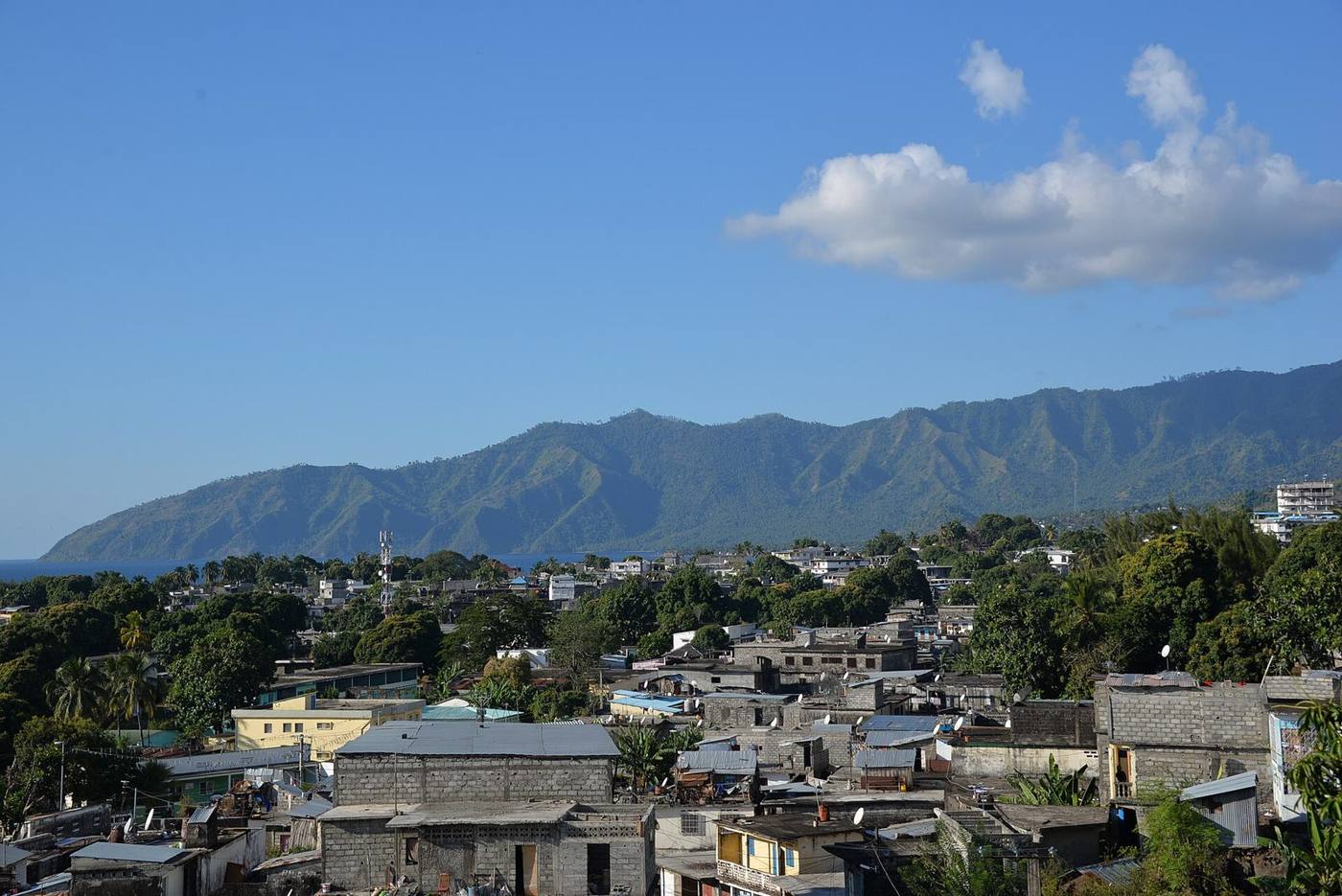
The flight from Moroni is short and lands at Ouani, near Mutsamudu, the island's main town. The town spreads between the sea and the mountains, with the harbour, the medina and, above, the citadel.
In the afternoon go into the medina: a maze of narrow alleys, houses of stone and coral, carved wooden doors, small mosques and hidden courtyards. Climb to the citadel, built by the sultans to defend the town from attacks from the sea, with views over the whole bay.
Practical tip: Anjouan is a Muslim and conservative island. Dress with shoulders and legs covered, always ask before photographing people and do not drink alcohol in public.
- Day 2
The ylang-ylang distilleries and the Dziancoundré waterfall
Today you explore the interior of the island with a car and driver. The road climbs from Mutsamudu through hairpin bends and forest to the central valleys, planted with bananas, cloves, vanilla and ylang-ylang. The mountains are steep and covered in vegetation, and clouds often rest on the summits.
On the way stop at a ylang-ylang distillery. The yellow flowers are picked by hand early in the morning, when the scent is strongest, and steam-distilled in large stills heated with wood. The essence gives an oil used by the great perfume houses: the Comoros are among the world's main producers. Ask to see the process and smell the different grades of oil.
Among the ylang-ylang fields you can also see Bambao, with the old palace of the sultans, a reminder of the time when the island was a sultanate.
Then continue to the Dziancoundré waterfall, one of the highest in the Comoros, which falls through tropical vegetation towards the coast. A short path leads to a point where you can see it well. After rain it is fuller and more spectacular.
In the evening return to Mutsamudu and taste the local food: fish with rice, boiled green bananas and mataba, cassava leaves cooked in coconut milk.
Practical tip: mountain roads are narrow and full of bends. Travel only by day, with a driver who knows the island, and carry cash, because cards hardly ever work.
- Day 3
A last morning on Anjouan and back to Moroni
On the last day, before your flight, take a final walk around Mutsamudu. In the morning the harbour and the market are full of life: fishermen selling fish, women with their faces covered in a pale mask of ground sandalwood, called msindzano, which protects the skin from the sun, and stalls of fruit, spices and colourful fabrics.
If you have time, take a taxi to one of the nearby beaches or go up into the hills above the town for a last view of the green mountains and the sea. Then go to Ouani airport for the flight to Moroni. Domestic flights are small and times can change: arrive early and keep your phone on.
In three days you have seen the island of perfumes: the medina and citadel of Mutsamudu, the valleys planted with ylang-ylang, the distilleries, the palace at Bambao and the Dziancoundré waterfall. It is an island with almost no tourists, simple services and a very lively Muslim and Swahili culture, to be visited with respect and a little patience.
When to go: the best months are May to October, in the dry and cooler season. From November to April it is hot and very rainy, and from January to March cyclones can arrive.
Practical tip: keep at least one spare day between your return to Moroni and your international flight, because domestic flights are often moved or cancelled.
A conservative Muslim island: modest dress and no alcohol in public. The United States is at level 2 for unrest, crime and health. Small, irregular domestic flights.
Before you go
- Documents and visa
- Passport valid for at least six months on entry. A visa is compulsory and is issued on arrival at the airport, for about 30 euros for one month.
- Health and vaccines
- No vaccinations are compulsory. Malaria is present almost everywhere and dengue is endemic: ask your doctor about prevention and protect yourself from mosquitoes. Cholera and typhoid are also present: drink only bottled water. Medical care is limited and serious cases need evacuation: you need insurance with repatriation.
- Money and payments
- Comorian franc, with a fixed exchange rate to the euro. You pay in cash; shopkeepers often accept euros in small notes. Cards are rarely accepted and cash machines are scarce.
- Power sockets
- Type C and E, 220 volts: you need an adapter for British plugs. Power cuts are frequent.
- Time zone
- UTC+3 all year.
- Safety
- There are no areas advised against, but since May 2026 there have been protests and clashes over fuel price rises, especially in Moroni and on Anjouan, with at least one death in Mutsamudu: stay away from demonstrations and crowds. Boat links between the islands are advised against: use domestic flights. Do not walk alone after dark. A conservative Muslim country: dress modestly. Official advice: GOV.UK.
Information checked in November 2026 for Italian and EU citizens. Rules change: always check before you travel.
Variations
In 2 days: flight from Moroni, the medina of Mutsamudu and a ylang-ylang distillery, returning on the second afternoon.
In 9 days: combine Anjouan with the Grande Comore and Mohéli trip, with Karthala and the turtles of Itsamia.
Frequently asked questions
Is Anjouan safe?
It is not an area advised against, but since May 2026 there have been protests and clashes, including in Mutsamudu. Check the situation before leaving, stay away from demonstrations and do not walk alone after dark.
How do you get to Anjouan?
On a domestic flight from Moroni to Ouani airport, near Mutsamudu. Boat links between the islands are advised against because of the poor safety of the vessels.
How should you dress on Anjouan?
It is a Muslim and conservative island: shoulders and legs covered, for men too away from the beaches. No alcohol in public, and always ask before photographing people.
Indicative itinerary written by World Atlas. Before booking, check timetables, seasonal openings, documents and safety.