Costa Rica coast to coast
From the Tortuguero canals to the Pacific: volcanoes, forests, turtles and the Osa Peninsula, the country's wildest corner.
- San José
- Tortuguero
- Arenal
- Rincón de la Vieja
- Monteverde
- Manuel Antonio
- Osa
Day by day
- Day 1
Arrival in San José
This trip crosses Costa Rica from one ocean to the other in fifteen days: the jungle canals of Tortuguero on the Caribbean Sea, Arenal volcano, the fumaroles of Rincón de la Vieja, the cloud forest of Monteverde, the beaches of Manuel Antonio and finally the Osa peninsula with Corcovado National Park, on the Pacific.
Before you go: Italian citizens enter Costa Rica without a visa for tourism for up to 180 days, with a passport valid for at least 90 days from the date of entry and a return air ticket. Other nationalities should check their own rules. Italy's official travel advice reports a sharp rise in crime, with greater risks in central San José, recommends avoiding the isolated areas on the border with Nicaragua, which this trip does not touch, and advises visiting parks with licensed guides and in a group. You can enter Corcovado only with an authorised guide and a booking paid to SINAC, the parks authority: check the rules on sinac.go.cr. Use only official taxis, red in the city and orange from the airport.
On arrival at the international airport take an official taxi to your accommodation. If you arrive early, walk around the centre of the capital in the afternoon. The Teatro Nacional, built at the end of the nineteenth century with coffee money, has gilded halls and painted ceilings. Next door, beneath the square, the pre-Columbian gold museum displays jewellery and small gold figures from the country's ancient cultures. Check prices and times.
In the evening try your first casado, the everyday dish of rice, black beans, fried plantain, salad and meat or fish.
Practical tip: tomorrow you leave for Tortuguero at dawn; pack a small bag for two nights and leave the rest of your luggage in storage.
- Day 2
By road and boat to Tortuguero
Today you reach Tortuguero, a village on the Caribbean coast where cars cannot go.
Early in the morning leave San José heading north-east. The road climbs into Braulio Carrillo National Park, through forested mountains, mist and waterfalls tumbling close to the roadside. Then you drop down to the Caribbean plain, among banana plantations and small villages.
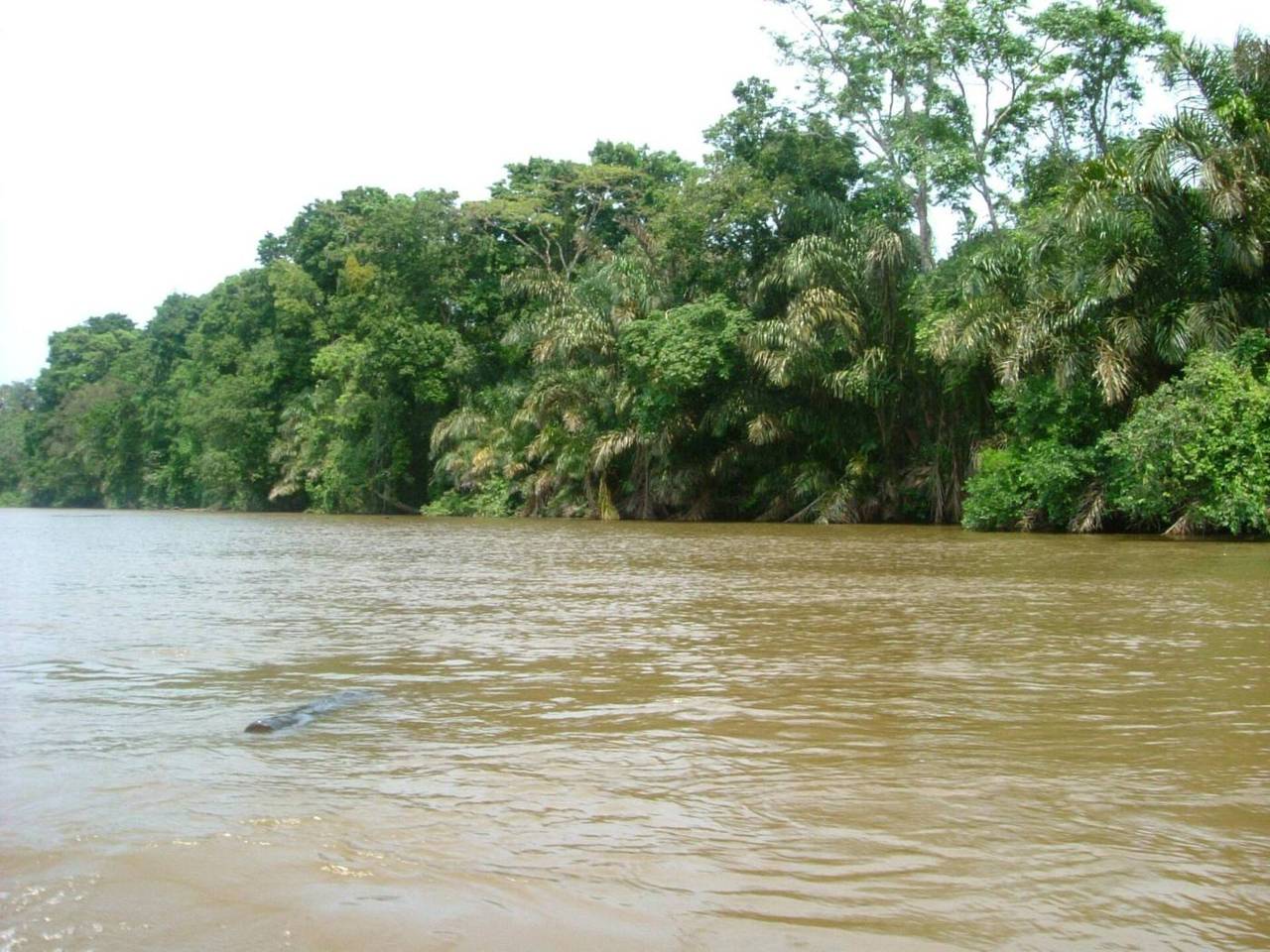
At the boat landing, after a few hours of travel, you board a motorboat. The journey along the rivers and canals takes more than an hour and is already an excursion: from the banks you are watched by herons, caimans, orange iguanas on the branches and sometimes a sloth hanging almost motionless.
Tortuguero is a narrow strip of land between the lagoon and the sea. The village has colourful wooden houses, a sandy path instead of a main street and a very long, dark beach. The sea here is dangerous, with strong currents and high waves: do not swim.
In the afternoon stroll around the village and stop at the small visitor centre devoted to sea turtles, which have been studied and protected on this beach for decades.
In the evening try rice and beans cooked in coconut milk, served with chicken in a spicy Caribbean sauce.
Practical tip: Tortuguero has few cash machines and they often do not work; bring cash in colones and dollars for guides and dinners.
- Day 3
The park canals and the turtles
Today you explore Tortuguero National Park by water and on foot.
At dawn board a canoe or a small electric boat with a licensed guide. In the narrow canals the water is still and dark and the forest closes overhead. This is when animals are most active: howler monkeys and spider monkeys, toucans, kingfishers, tiger herons and caimans on the banks. With luck you will also see a river otter. Check the park's prices and times.
After breakfast walk the park trail near the rangers' station. It is often flooded: wear rubber boots, which can usually be hired in the village. Among the leaves look for the small red and blue frogs.
In the afternoon rest in the shade or paddle a kayak on the lagoon in front of the village, staying within the marked areas.
From July to October, in the evening, green turtles come out of the sea to lay their eggs. Night visits are allowed only with licensed guides, in small groups and with limited places. No torches, flash or phones switched on: light confuses the females and the hatchlings. Out of season, take a short night walk with a guide instead to see frogs, insects and snakes.
Practical tip: even in the dry season it rains often in Tortuguero; keep a light poncho in your bag and a waterproof pouch for your phone.
- Day 4
From the Caribbean to Arenal volcano
Today you cross the north of the country, from the Caribbean canals to the foot of Arenal volcano.
In the morning take the boat back to the landing and say goodbye to the canals. Then continue by shuttle or car westwards across the northern plain, among pastures, pineapple plantations and strips of forest along the rivers. It is a long transfer day: break the journey halfway for lunch.
In the afternoon Arenal appears, a regular cone rising alone above the plain. In 1968 the volcano woke with a major eruption and for more than forty years had almost continuous lava flows and explosions. Since 2010 it has been calm, but it is still considered active.
You arrive in La Fortuna, the town at the foot of the volcano, with its square, its white church and the cone in the background when the clouds part. It is a very touristy place: Italy's travel advice lists it among the spots where tourists suffer thefts, so leave nothing in the car.
In the evening relax in the area's hot springs, warmed by the volcano's heat: there are pools set in gardens and stretches of warm river where local families also bathe. Check prices and times.
Practical tip: avoid driving after sunset on country roads, which are dark, narrow and poorly signposted; leave Tortuguero early.
- Day 5
Lava flows, a waterfall and hanging bridges
Today you stay around Arenal, among trails, water and forest.
Enter Arenal Volcano National Park early. The trails cross the lava flows of 1968 and 1992, now covered with shrubs and young trees. From a rocky viewpoint you see the cone up close and, on the other side, the large Lake Arenal. Along the way you meet coatis, toucans and big blue butterflies. Climbing towards the crater is forbidden. Check prices and times.
Late in the morning go to La Fortuna waterfall, a few kilometres from town. A long staircase leads down through the forest to a tall fall dropping into a green pool. Swim only in the marked area, away from the cascade. The climb back is tiring, so take your time. Check prices and times.
In the afternoon walk a circuit of hanging bridges in the rainforest. The metal walkways run at canopy height, where birds, bromeliads and orchids live that you cannot see from below. If you like, book a visit to a small cocoa farm to find out how chocolate is made.
In the evening try chifrijo, a bowl of rice, beans, crispy pork pieces and pico de gallo, the tomato and onion salsa.
Practical tip: Arenal's cone is easiest to see at dawn; in the middle of the day it is often hidden by clouds, so take your photos as soon as you wake up.
- Day 6
Rincón de la Vieja: fumaroles and mud
Today you drive to Guanacaste, the dry north-west of the country, as far as Rincón de la Vieja volcano.
Leave La Fortuna early and follow the shore of Lake Arenal, among green hills and wind turbines on the ridges. Then the landscape changes: the humid forest gives way to pastures, scattered trees and a wider sky. After about three hours you reach the Liberia area and take the road, partly unpaved, to the Las Pailas entrance.
Rincón de la Vieja National Park protects an active volcano and the forest around it. The Las Pailas loop trail, a few kilometres long, passes fumaroles puffing steam, pools of grey bubbling mud and small hot springs. The air smells of sulphur. Always stay on the trail: near the fumaroles the ground can be fragile and very hot. The crater erupts often and the path towards the summit is closed. Check prices, times and closing days.
Among the trees you will see howler monkeys, coatis and the guanacaste, the national tree, with a crown as wide as an umbrella.
In the late afternoon relax in one of the thermal areas at the foot of the volcano, with hot pools and volcanic mud to spread on your skin.
Practical tip: in Guanacaste the sun is strong and the air dry; bring a hat, sun cream and at least two litres of water for the trail.
- Day 7
Up to the Monteverde cloud forest
Today you climb into the Tilarán mountains, to the cloud forest of Monteverde.
In the morning leave Rincón de la Vieja and head south on the Pan-American Highway, across the hot plains of Guanacaste. Then turn inland and start climbing. The last stretch has many bends and some unpaved sections, with wide views over the Gulf of Nicoya. The journey takes about three hours.
Monteverde and the village of Santa Elena lie at about 1,400 metres. The air is cool, it is often windy and clouds drift through the trees. It is this constant moisture that creates the cloud forest: branches are covered with mosses, ferns, bromeliads and small orchids.
The community was founded in the 1950s by a group of Quakers from the United States. They farmed pastures, made cheese and protected part of the forest above the village, which is now a reserve.
In the afternoon walk around Santa Elena and visit a small hummingbird garden, where dozens of green and blue birds stop at the flowers.
In the evening take a night walk with a guide. By torchlight you discover tarantulas, red-eyed frogs, stick insects, sloths and kinkajous, a small mammal with a gripping tail.
Practical tip: Monteverde is cool in the evening; keep a jumper and a waterproof jacket at hand, even if it was hot on the coast.
- Day 8
Quetzals, mosses and walkways
Today you spend the whole day in the cloud forest.
At opening time enter the Monteverde Cloud Forest Biological Reserve or the Santa Elena reserve, smaller and quieter. The trails run beneath trees covered in plants, amid the sound of water and birdsong. Mist often comes down suddenly and then clears within minutes. Check prices and times.
With an experienced guide and a telescope you have a good chance of seeing the resplendent quetzal, metallic green with a red breast and long tail feathers. It was sacred to the Maya and the Aztecs. It is seen more often in spring, when it nests, but it is never guaranteed. Listen too for the three-wattled bellbird, whose call sounds like a strike on metal.
After lunch rest or visit a coffee farm in the area, where they explain how the beans are picked, dried and roasted. Coffee built the country's wealth in the nineteenth century.
In the late afternoon, if the sky is clear, look for a viewpoint facing west: on clear days you see the Gulf of Nicoya lit by the sunset.
In the evening taste the local cheese and a hot soup, olla de carne, with beef and vegetables.
Practical tip: wet trails and walkways are slippery; wear shoes with a good grip and keep your binoculars in a waterproof case.
- Day 9
Down to the Pacific
Today you leave the mountains and descend to the Pacific coast, at Manuel Antonio.
In the morning follow the mountain road down and then the motorway towards the coast, in about four hours. On the way stop at the bridge over the Tárcoles river. From the pavement you see large American crocodiles resting on the muddy banks. Stay on the bridge and do not go down towards the water.
Then continue along the coast, among oil palm plantations and surf beaches. You pass close to Jacó and Quepos, which Italy's travel advice lists among the places with crimes against tourists: leave nothing in the car, even for a short stop.
In the early afternoon drive up the forested hill of Manuel Antonio, where many places to stay look out over the sea and the park's islets.
Later go down to Espadilla beach, outside the park, long and pale. Swim only where there are flags and a lifeguard, because rip currents are strong here. Look at the trees behind the beach: you may see capuchin monkeys and iguanas.
At sunset the sky glows over the Pacific. In the evening have ceviche, white fish marinated in lime, served with crackers or patacones, green plantain flattened and fried.
Practical tip: buy tomorrow's park ticket online today on the SINAC website; places are limited and tickets are not sold at the entrance.
- Day 10
Manuel Antonio National Park
Today you visit Manuel Antonio National Park, small but full of life, between forest and beaches.
Arrive at opening time with your ticket already bought. Hire a licensed guide with a telescope: without one many animals stay invisible in the branches. The park closes one day a week: check prices and times.
The main trail crosses the coastal rainforest. In a few hours you can see two-toed and three-toed sloths, white-faced capuchin monkeys, tiny squirrel monkeys, iguanas, agoutis and birds such as toucans and woodpeckers. The guide also shows you frogs and bats sleeping under leaves.
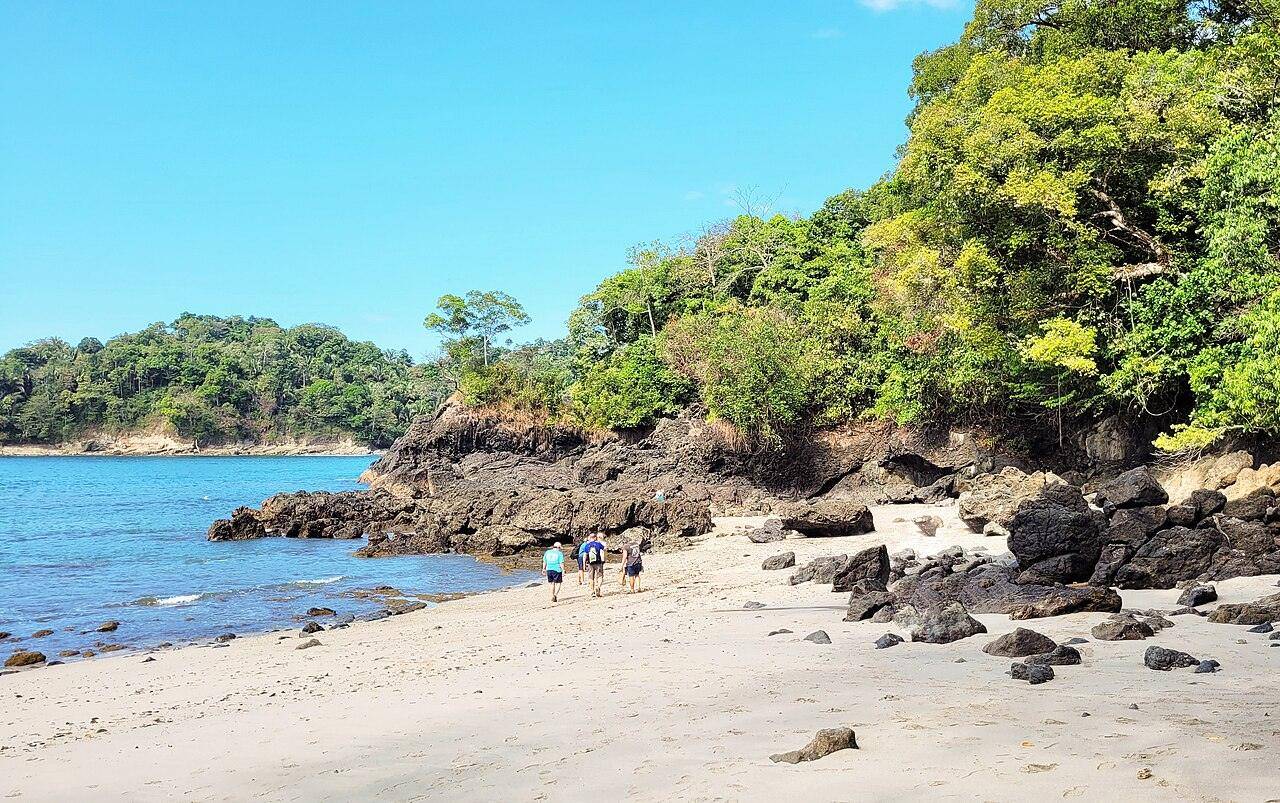
Then you reach Manuel Antonio beach, a bay of white sand with water that is often calm and forest running down to the shore. Swim and rest in the shade. Do not feed the animals and close your bag tightly: monkeys and raccoons steal anything.
If you still have energy, walk the Punta Catedral trail, a forested headland that was once an island, with viewpoints over the sea and the islets.
In the afternoon leave the park and rest: tomorrow the wildest part of the trip begins.
Practical tip: some foods, drinks and containers are not allowed in the park; read the rules on the SINAC website before packing your day bag.
- Day 11
The Sierpe river and Drake Bay
Today you reach the Osa peninsula, the most remote corner of Costa Rica.
In the morning drive south along the Costanera, the Pacific coast road, among beaches, hills and wide rivers. In about two and a half hours you reach Sierpe, a small town on the river of the same name. If you have a hire car, leave it in a guarded car park: from here you continue only by boat.
The boat runs down the Sierpe river through the largest mangroves in the country, with aerial roots rising from the water, white herons and sometimes crocodiles on the banks. At the mouth it crosses the waves where the river meets the sea: this is the bumpiest stretch, so keep your bag in a dry bag. Then it follows the peninsula to Drake Bay.
The village of Drake Bay is small, with dirt roads, a few wooden houses and places to stay scattered between the forest and the sea. You often land directly on the beach, with your feet in the water.
In the afternoon walk along the shore and watch the scarlet macaws flying in pairs over the palms, red, yellow and blue.
In the evening meet your authorised guide for Corcovado and check your SINAC booking, the boat times and your gear for tomorrow.
Practical tip: bring water sandals for the landings and keep your passport in a waterproof pouch in your hand luggage.
- Day 12
A day in Corcovado National Park
Today you enter Corcovado National Park, one of the places with the most animal species in Central America.
Leave at dawn by boat with your authorised guide. Trips from Drake Bay usually go to San Pedrillo station or, when it is open, to Sirena station, further away and richer in wildlife. Rules and available places change: check on sinac.go.cr which sectors are open and book well ahead.
Corcovado protects a large lowland rainforest on the Pacific, with giant trees, rivers, swamps and empty beaches. All four of the country's monkey species live here, along with Baird's tapir, peccaries, the anteater and the big cats, which are rarely seen.
Walk behind your guide, in silence. Guides can read tracks in the mud, hear spider monkeys before seeing them and find, through the telescope, a sloth sitting still at the top of a tree. With a little luck you meet a tapir resting near the water, the largest land mammal in the region.
The humid heat is intense and the trails are muddy. River mouths have crocodiles and sometimes sharks: never go into the water.
In the afternoon return by boat to Drake Bay and rest.
Practical tip: carry at least three litres of water, rehydration salts, insect repellent and shoes that can get wet; there are no shops in the park.
- Day 13
Snorkelling at Caño Island
Today you head out to sea towards Caño Island, a biological reserve off the Osa peninsula.
In the morning the boat leaves Drake Bay and in less than an hour reaches the island, covered in forest and surrounded by clear water. Access is limited and only possible on authorised trips: book ahead and check prices and times.
During the crossing watch the sea: pantropical spotted dolphins and bottlenose dolphins often swim alongside the boat. In the right months humpback whales also pass, migrating along this coast to give birth in the warm water.
Around the island there are coral reefs and rocks with plenty of fish. While snorkelling you see parrotfish, surgeonfish, shoals of silvery fish, rays and sometimes sea turtles and whitetip reef sharks, harmless to swimmers. The guide shows you the best spots according to the day's currents.
On the island you may land only in a small area near the rangers' station. The ancient peoples of the region left large stone spheres here and in other parts of the south, still a mystery to archaeologists.
In the early afternoon return to Drake Bay and rest in the shade. At sunset golden light falls on the bay.
Practical tip: use reef-safe sun cream and wear a long-sleeved top in the water; the sun on the sea burns quickly.
- Day 14
The coastal trail and the forest at night
Today is your last full day on the Osa peninsula, to be spent calmly between the coast and the forest.
In the morning follow the coastal trail that leaves the village heading south, along the sea. The path alternates small beaches, wooden bridges, rocks and shady stretches under the trees. You cross the Agujitas river and other streams. Along the way you see capuchin and howler monkeys, scarlet macaws, toucans and hermit crabs scurrying through the leaves. Stop at a quiet beach for a swim, only where the water is calm and never alone.
Alternatively paddle a kayak at the mouth of the Agujitas river, at high tide, among mangroves and forest.
In the afternoon rest: in the Osa heat it is the best choice.
In the evening take a night walk with an experienced guide. In the forest, by torchlight, you discover a different world: red-eyed frogs, huge spiders, scorpions that glow under ultraviolet light, snakes on branches and camouflaged insects that look like leaves. The guide knows which animals are dangerous and tells you where to put your feet.
Then have dinner with grilled fish, coconut rice and a tropical fruit smoothie.
Practical tip: for the night walk wear closed shoes and long trousers and do not touch plants or branches without looking carefully first.
- Day 15
Flight to San José and departure
Today you leave the Osa peninsula and Costa Rica.
In the morning go to the small Drake Bay airstrip and take a domestic flight to San José. The plane is small and flies over the forest, the mountains and the central valley in less than an hour, saving a whole day of boat and road travel. Then, depending on the time of your international flight, stay at the airport or take a last walk in the city.
In these fifteen days you have travelled the canals of Tortuguero among caimans and monkeys, perhaps seen green turtles lay their eggs, walked on Arenal's lava flows, among the fumaroles of Rincón de la Vieja and under Monteverde's misty canopy, met the sloths of Manuel Antonio and ended the trip in the Corcovado forest and the sea around Caño Island. This is the complete Costa Rica, from coast to coast.
When to go: from December to April, in the dry season, with the best roads and the clearest skies. From May to November it often rains in the afternoon, but the forest is greener and there are fewer visitors. Green turtles nest at Tortuguero from July to October. September and October are the wettest months on the Pacific side and some places on the Osa close.
Practical tip: domestic flights have a low baggage weight limit; check the allowance and leave a margin between the Drake Bay flight and your international one.
Costa Rica in full, with the Osa Peninsula alone worth the trip for real wildlife. Roads are slow and the country is pricier than people expect, close to European prices. Tortuguero makes most sense in turtle season.
Before you go
- Documents and visa
- Passport valid for at least 90 days from the date of entry and a return air ticket; no visa is needed for tourism for up to 180 days, but the immigration officer decides the exact period on arrival. Travellers arriving from a country at risk must show a yellow fever vaccination certificate. When you leave by air there is a departure tax, usually already included in the ticket.
- Health and vaccines
- Healthcare is good but expensive: you need insurance that covers medical costs and repatriation. There is a risk of dengue, rising in 2026 and higher in the rainy season, as well as chikungunya and Zika: use repellent during the day too. There are cases of malaria, mainly in Limón province. Drink bottled water. Emergencies: 911.
- Money and payments
- Costa Rican colón. US dollars are accepted almost everywhere and cards work in tourist areas; carry some cash in colones for villages and small purchases.
- Power sockets
- Types A and B, with flat pins as in the United States, 120 volts: you need an adapter, and check the voltage of your devices.
- Time zone
- UTC-6 all year.
- Safety
- Italy's official travel advice reports a sharp rise in crime: bag snatching, robbery, scams, and theft from cars and accommodation. The areas with the most murders are central San José, Limón district and some cantons such as Puntarenas, Alajuela and Matina; among the tourist areas at risk it lists Jacó, Quepos, Cahuita, Bahía Ballena, La Fortuna and Tamarindo. Avoid isolated areas on the border with Nicaragua, isolated beaches and the shore at night. Visit parks with licensed guides and in a group, use only official taxis, red or orange for the airport, and leave nothing in the car. Sea currents are strong and few beaches have lifeguards. Official advice: GOV.UK.
Information checked in November 2026 for Italian and EU citizens. Rules change: always check before you travel.
Variations
Shorter version: in ten days skip Rincón de la Vieja and the Osa peninsula and finish at Manuel Antonio.
Longer version: add two days in Puerto Viejo, on the southern Caribbean, after Tortuguero.
Frequently asked questions
Can you do this trip without a car?
Yes, with tourist shuttles between the main stops and the boat from Sierpe to Drake Bay; a car gives more freedom between Arenal, Rincón de la Vieja and Monteverde.
Do you need a guide for Corcovado?
Yes, you can enter the park only with an authorised guide and a SINAC booking; check the rules and open sectors on sinac.go.cr.
When can you see the turtles at Tortuguero?
Green turtles nest from July to October; night visits are only with licensed guides and limited places.
Indicative itinerary written by World Atlas. Before booking, check timetables, seasonal openings, documents and safety.
 7 daysEasy
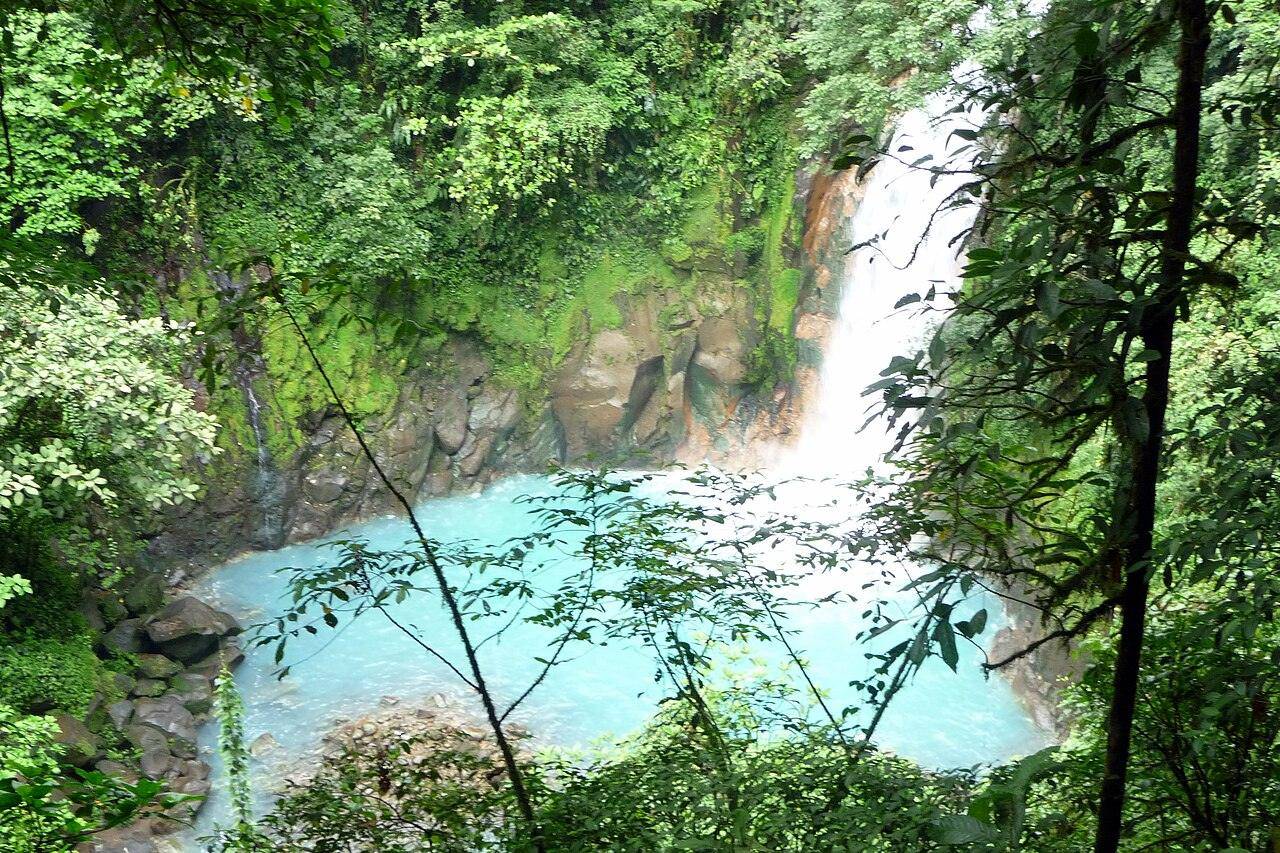
Volcanoes, cloud forests and the Pacific
Arenal and its hot springs, the hanging bridges of Monteverde and the sloths of Manuel Antonio.
 12 daysEasy
Costa Rica express: Tortuguero, Arenal and Manuel Antonio
The jungle canals of the Caribbean, Arenal volcano and its hot springs, the hanging bridges of the cloud forest and monkeys on the Pacific beach.
 16 daysModerate
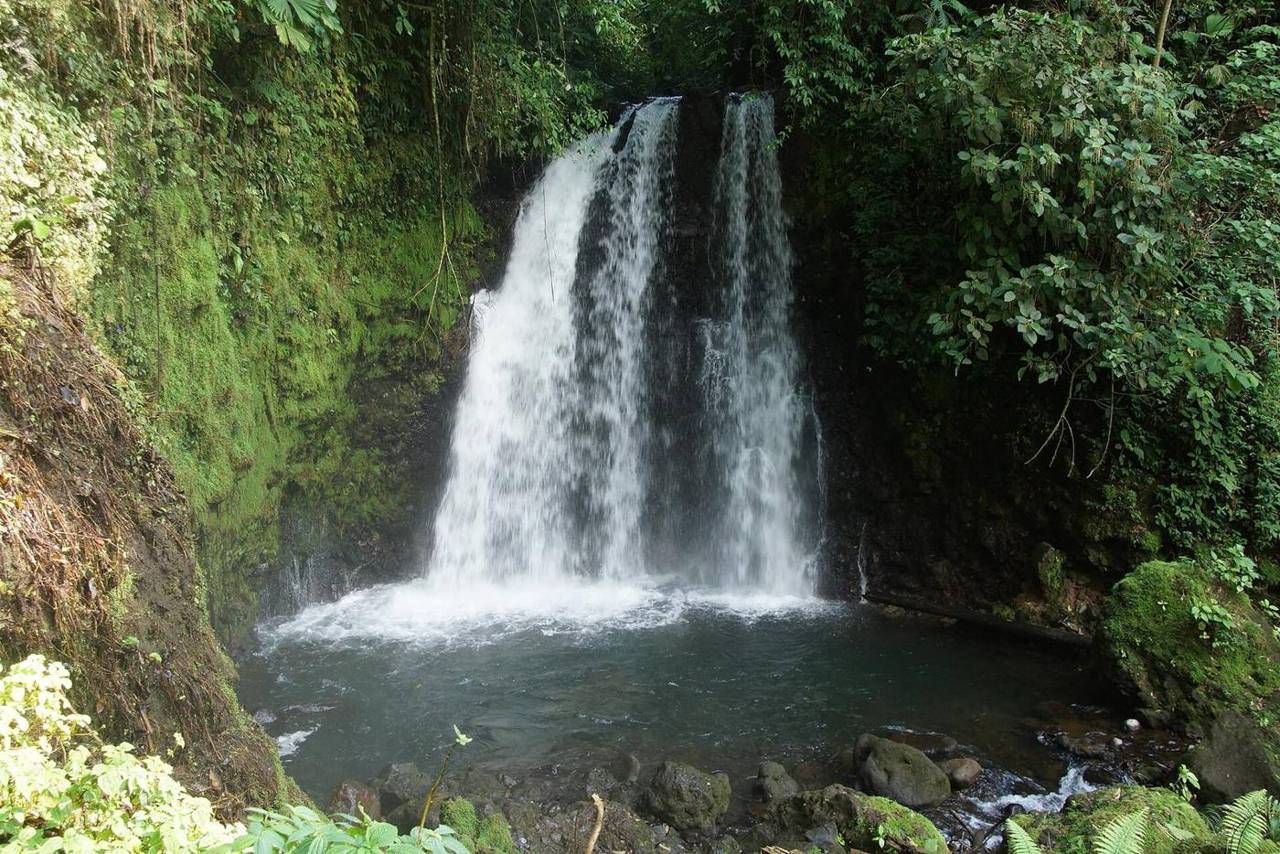
From the Caribbean to Corcovado: Costa Rica at its wildest
The Afro-Caribbean coast of Cahuita and Puerto Viejo, the turquoise Río Celeste, Arenal and the Corcovado forest, the most biodiverse place on the planet.