The Nicoya peninsula: Santa Teresa, Montezuma and surf
A week on the Pacific: the waves of Santa Teresa, the Montezuma waterfall, the Cabo Blanco reserve and Tortuga Island.
- San José
- Puntarenas
- Montezuma
- Cabo Blanco
- Santa Teresa
- Isla Tortuga
Day by day
- Day 1
Arrival in San José
This trip is a week on the Pacific in the Nicoya peninsula, the most relaxed side of Costa Rica: the Montezuma waterfall, the Cabo Blanco reserve, the waves of Santa Teresa for learning to surf and a boat trip to Tortuga Island.
Before you go: Italian citizens enter Costa Rica without a visa for tourism for up to 180 days, with a passport valid for at least 90 days from the date of entry and a return air ticket. Other nationalities should check their own rules. Italy's official travel advice reports a sharp rise in crime, with greater risks in central San José and in the canton of Puntarenas, and advises against isolated beaches and the shore at night. At sea, rip currents are strong and few beaches have lifeguards: according to the UK government, drowning is the second most common cause of accidental death in the country. Use only official taxis, red in the city and orange from the airport, and leave nothing in the car.
On arrival take an official taxi to your accommodation. If you have time, in the afternoon walk in the centre and visit the Teatro Nacional, opened at the end of the nineteenth century with money from coffee, and the pre-Columbian gold museum under the square next to it. Check prices and times.
In the evening try your first casado, the typical dish with rice, beans, meat or fish, plantain and salad.
Practical tip: if you arrive late, sleep near the airport; tomorrow the road to Puntarenas is shorter and you avoid the traffic in the centre.
- Day 2
The ferry from Puntarenas and Montezuma
Today you cross the Gulf of Nicoya and reach the peninsula.
In the morning leave San José for Puntarenas, about two hours, going down from the central valley to the Pacific coast. Puntarenas is a port town on a long spit of sand, with a seafront and fishermen. Do not stop for long in isolated areas and always keep an eye on the car.
From the port take the ferry to Paquera, a little over an hour at sea. Arrive early, especially at weekends, when the queue of cars is long. From the deck you see the islands of the gulf, pelicans and sometimes dolphins. Check prices and times.
From Paquera the road heads south through hills, pastures and dry forest to Montezuma, in about an hour. Montezuma is a small village by the sea, with a street of shops, wooden houses and a rocky beach with palm trees. The atmosphere is quiet and a little bohemian.
In the late afternoon walk on the beach north of the village, where the rocks form small pools. Swim only where the water is calm and ask the locals where the currents are.
In the evening eat grilled fish or a ceviche, raw fish marinated in lime.
Practical tip: on the ferry take a seat on the shady side; the sun on the gulf is strong even with the wind.
- Day 3
Montezuma waterfall and Cabo Blanco
Today you visit the village waterfall and the oldest reserve in Costa Rica.
Early in the morning walk to the Montezuma waterfall, a few minutes from the centre. The path follows the river among rocks and roots, sometimes in the water, to a large pool at the foot of the fall. You can swim here. Do not climb the rocks and do not jump from the top: there have been serious accidents, some fatal.
Then drive on towards Cabuya and the Cabo Blanco absolute nature reserve, at the tip of the peninsula. It was the country's first protected area, created in 1963 thanks to the efforts of a couple of Northern European immigrants, Nicolás Wessberg and Karen Mogensen, who fought to save the forest from logging.
In the reserve a trail of a few hours crosses the tropical dry forest, with ups and downs, to a wild beach. Along the way you see howler and capuchin monkeys, coatis, deer and many birds. The reserve closes on some days of the week: check prices and times.
In the afternoon, at low tide, you can walk to Cabuya island, in front of the village, where the village's small cemetery is. Come back before the water rises.
In the evening return to Montezuma and rest.
Practical tip: at Cabo Blanco carry at least two litres of water and start early; in the middle of the day the dry forest is very hot.
- Day 4
Santa Teresa and your first surf lesson
Today you move to Santa Teresa, on the west coast of the peninsula.
In the morning drive west from Montezuma, about an hour, on a road that is partly unpaved and dusty, with potholes and climbs. A high-clearance car helps, especially after rain.
Santa Teresa and nearby Mal País are a long line of light sandy beaches, with consistent waves almost all year. Along the only road there are shops, cafés, surf schools and yoga studios. It is considered one of the best places in the world to learn to surf, because the waves break over sandy bottoms and there are stretches suited to beginners.
In the afternoon take your first surf lesson with an instructor. You start on the sand: how to lie on the board, how to paddle and how to stand up in a single movement. Then you go into the water, where the wave arrives already broken and low. The first few times you will fall often: that is normal.
The instructor also explains rip currents, the strips of darker, calmer water that pull out to sea. If one catches you, do not swim against it: swim parallel to the shore until you are out, then come back in with the waves.
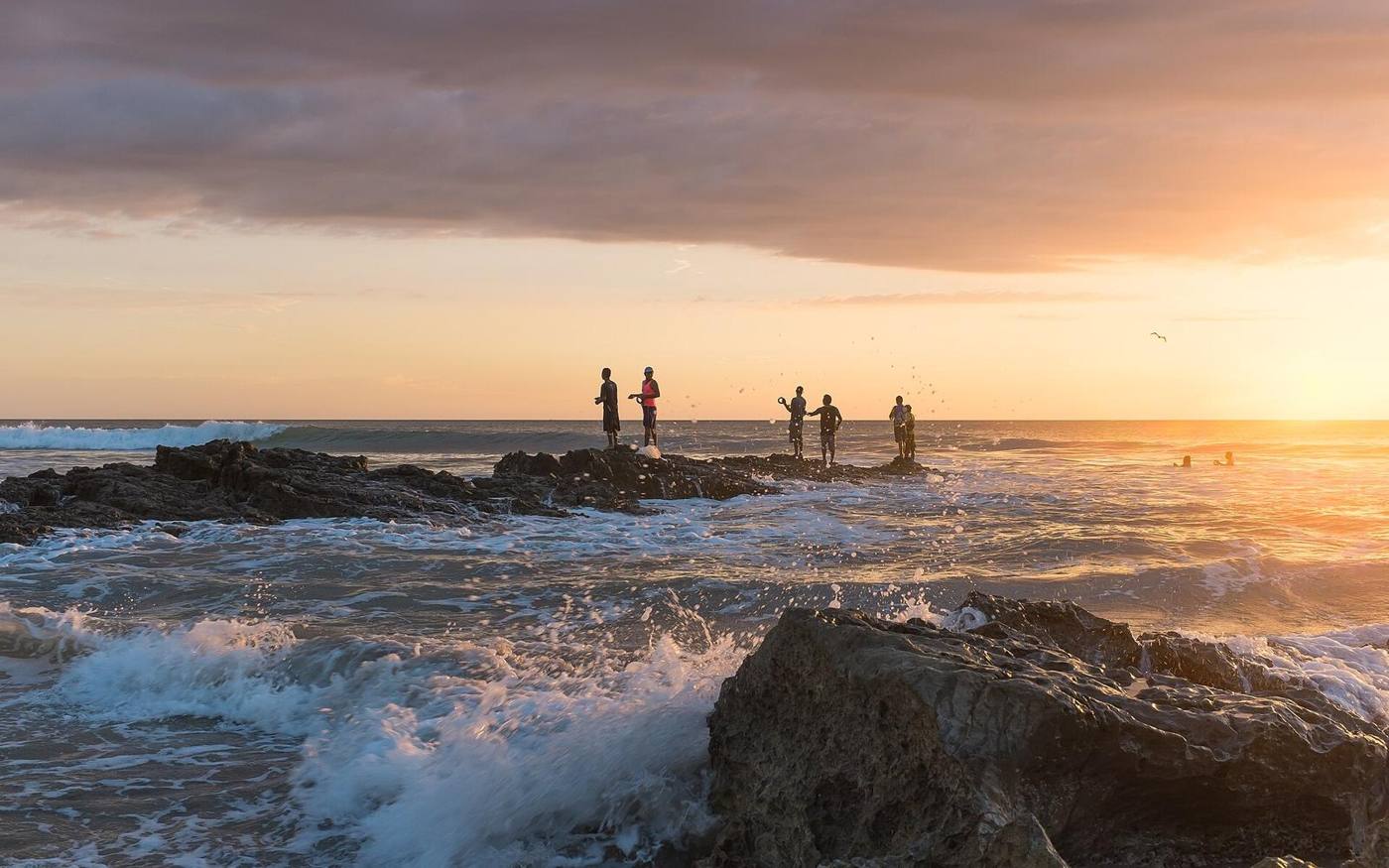
At sunset sit on the beach: the sun sinks into the Pacific, behind the surfers.
Practical tip: wear a lycra top against the sun and board rash; your skin burns in the water without you noticing.
- Day 5
Surfing at dawn and the pools of Mal País
Today you go back into the water and discover the southern side of the coast.
At dawn take your second surf lesson. Early in the morning the wind is light, the sea more orderly and the beaches less crowded. Today you try to catch a few waves on your own, always near the instructor. Remember the rules: whoever is closest to where the wave breaks has priority, and never let your board loose near other people.
After a big breakfast with tropical fruit, papaya, pineapple and mango, rest during the hottest hours. The sun here is very strong.
In the afternoon, at low tide, head south towards Mal País. Here the coast becomes rocky and natural pools form among the rocks, full of small fish, crabs and sea urchins. Walk in suitable shoes, because the rocks are sharp and slippery. Further south you reach the small fishing harbour, where the boats come ashore in the afternoon.
In the evening, if your legs are tired, book a massage or a stretching class. Then have dinner with a plate of the day's fish with rice and fried plantain.
Practical tip: do not go into the water after drinking alcohol and never alone; if you see no one else in the sea, ask an instructor first whether conditions are safe.
- Day 6
Yoga, Playa Hermosa and sunset
Today is a slow day, with yoga, sea and sand.
Early in the morning take a yoga class in one of the open-air studios, under thatched roofs, with birdsong and the sound of the waves. Many offer classes suited to beginners and surfers too, with exercises for shoulders and back.
Then, if you like, have your last surf session. If you feel confident, ask the instructor to take you towards Playa Hermosa, north of Santa Teresa, a long, wide beach with more regular waves and fewer people. Otherwise walk along the shore to Playa Hermosa at low tide, watching the pelicans fishing.
In the afternoon rest in the shade of the trees on the beach. Drink a fresh coconut water, opened in front of you with a machete.
At sunset climb one of the hills behind the village or stay on the beach: the sky turns orange and pink, and many people stop in silence to watch the sun go down into the ocean. It is the daily ritual of Santa Teresa.
In the evening the main road comes alive, with music and small bars. Always move around in a group and do not walk alone on dark beaches.
Practical tip: the road is dusty and has no pavements; in the evening walk with a torch and wear something light-coloured, because motorbikes pass fast.
- Day 7
Boat trip to Tortuga Island
Today you head out by boat towards Tortuga Island, in the Gulf of Nicoya.
In the morning drive east to the gulf coast. Boat trips usually leave from Montezuma or the Paquera area. Check prices and times and choose a boat with life jackets for everyone.
The crossing along the coast takes about an hour. Watch the sea: you often see dolphins, turtles and seabirds. Sometimes the boat stops near rocks and small islands where pelicans and frigatebirds nest.
Tortuga Island has a white sandy beach, palm trees and turquoise water, very different from the dark, rough beaches of Santa Teresa. Here the sea is calm and you can swim in peace. Snorkel around the rocks, among colourful fish, starfish and corals. Then rest in the shade of the palms and have lunch, often grilled fish or a plate of fruit brought by the boat.
In the afternoon the boat sets off back to the coast. Return to Santa Teresa and pack for tomorrow's journey.
On the last evening watch the sunset on the beach once more, perhaps after a short surf session, if you still feel like it.
Practical tip: bring a dry bag for your phone and money and a dry T-shirt; you always get wet on the boat.
- Day 8
Return and departure
Today you leave the Nicoya peninsula and Costa Rica.
Early in the morning leave Santa Teresa for Paquera, in about an hour and a half, and take the ferry to Puntarenas. Then drive to the international airport, about two hours. Alternatively you can take a short domestic flight from Tambor airport, near Paquera, which gets you to San José in a few minutes.
In these eight days you have crossed the Gulf of Nicoya by ferry, swum under the Montezuma waterfall, walked in the dry forest of Cabo Blanco, the oldest reserve in the country, learned to stand on a board at Santa Teresa, done yoga among the palms and swum in the calm water of Tortuga Island. It is the slowest Costa Rica, made of sea, sun and sunsets.
When to go: from December to April, in the dry season, with clear skies and easier dirt roads, though dusty. From May to November it often rains in the afternoon, the roads become muddy and some fords fill up, but the waves are often bigger and there are fewer people. September and October are the wettest months.
Practical tip: the ferry can be full; if you have an afternoon flight, take one of the first morning sailings and leave plenty of time.
Costa Rica at its most relaxed, for sea and slow living. Santa Teresa is one of the best places in the world to learn to surf. The coast road is unpaved and dusty: a high-clearance car helps. Best months: December-April.
Before you go
- Documents and visa
- Passport valid for at least 90 days from the date of entry and a return air ticket; no visa is needed for tourism for up to 180 days, but the immigration officer decides the exact period on arrival. Travellers arriving from a country at risk must show a yellow fever vaccination certificate. When you leave by air there is a departure tax, usually already included in the ticket.
- Health and vaccines
- Healthcare is good but expensive: you need insurance that covers medical costs and repatriation. There is a risk of dengue, rising in 2026 and higher in the rainy season, as well as chikungunya and Zika: use repellent during the day too. There are cases of malaria, mainly in Limón province. Drink bottled water. Emergencies: 911.
- Money and payments
- Costa Rican colón. US dollars are accepted almost everywhere and cards work in tourist areas; carry some cash in colones for villages and small purchases.
- Power sockets
- Types A and B, with flat pins as in the United States, 120 volts: you need an adapter, and check the voltage of your devices.
- Time zone
- UTC-6 all year.
- Safety
- Italy's official travel advice reports a sharp rise in crime: bag snatching, robbery, scams, and theft from cars and accommodation. The areas with the most murders are central San José, Limón district and some cantons such as Puntarenas, Alajuela and Matina; among the tourist areas at risk it lists Jacó, Quepos, Cahuita, Bahía Ballena, La Fortuna and Tamarindo. Avoid isolated areas on the border with Nicaragua, isolated beaches and the shore at night. Visit parks with licensed guides and in a group, use only official taxis, red or orange for the airport, and leave nothing in the car. Sea currents are strong and few beaches have lifeguards. Official advice: GOV.UK.
Information checked in November 2026 for Italian and EU citizens. Rules change: always check before you travel.
Variations
Shorter: five days, only Santa Teresa and Montezuma, without Tortuga Island.
Longer: add three days at Nosara and the Ostional refuge, further north, for more surf beaches and the turtles.
Frequently asked questions
Is Santa Teresa suitable for people who have never surfed?
Yes. There are stretches of beach with small waves and sandy bottoms. Take lessons with an instructor, at least at the start, and follow their advice on currents.
Do you need a 4x4?
It is not essential in the dry season, but a high-clearance car helps on the dusty dirt roads. In the rainy season it is strongly recommended.
Can you swim anywhere?
No. Rip currents are strong and few beaches have lifeguards. Swim where there are other people, never alone and never at night.
Indicative itinerary written by World Atlas. Before booking, check timetables, seasonal openings, documents and safety.
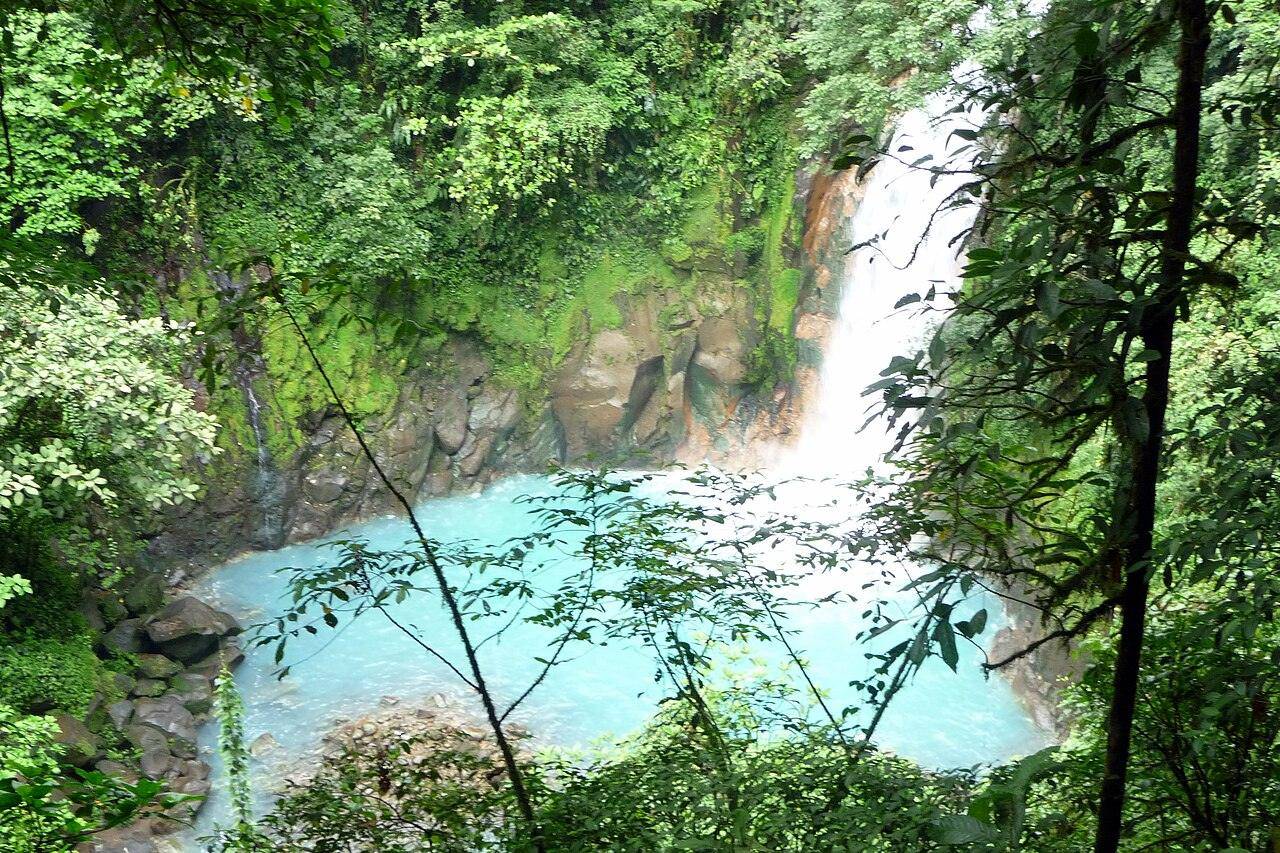 7 daysEasy
Volcanoes, cloud forests and the Pacific
Arenal and its hot springs, the hanging bridges of Monteverde and the sloths of Manuel Antonio.
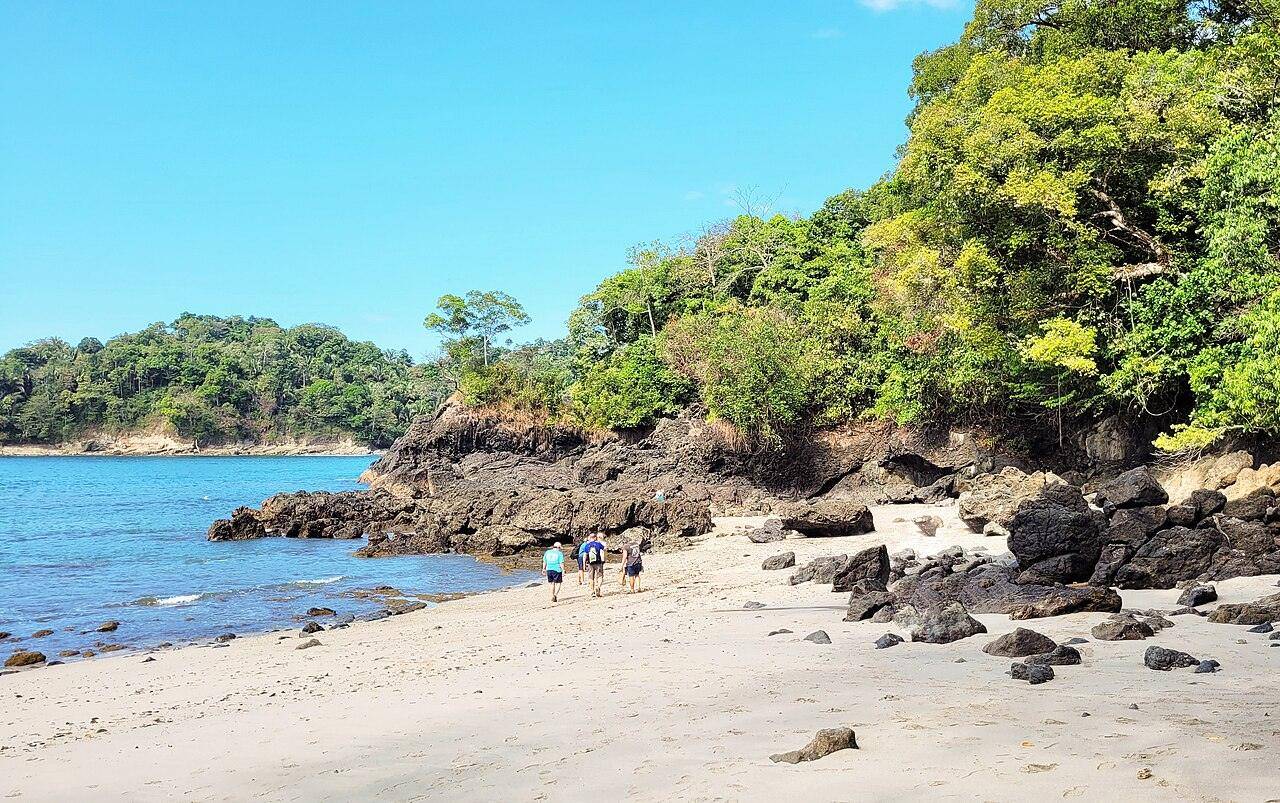 15 daysModerate
Costa Rica coast to coast
From the Tortuguero canals to the Pacific: volcanoes, forests, turtles and the Osa Peninsula, the country's wildest corner.
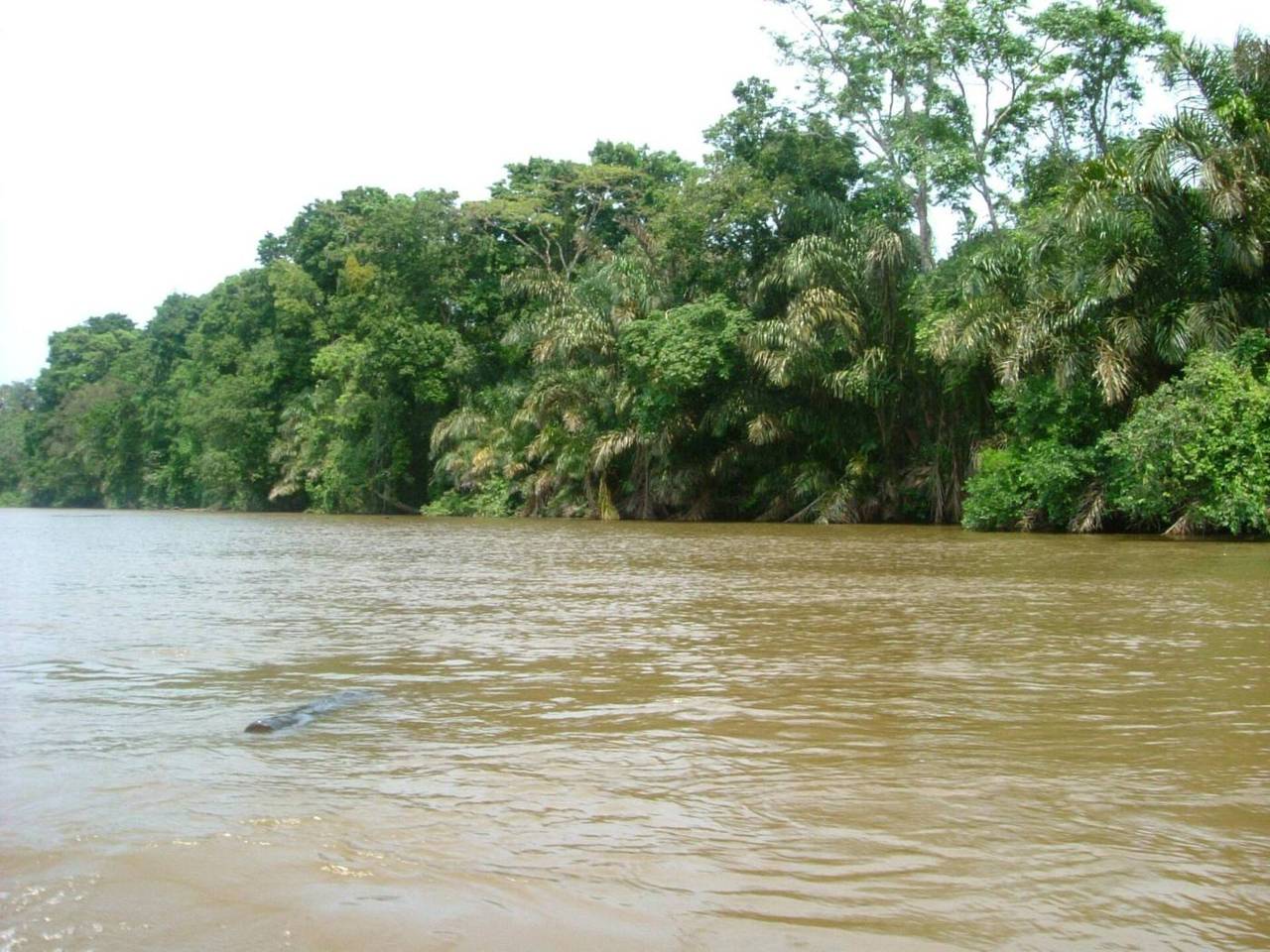 12 daysEasy
Costa Rica express: Tortuguero, Arenal and Manuel Antonio
The jungle canals of the Caribbean, Arenal volcano and its hot springs, the hanging bridges of the cloud forest and monkeys on the Pacific beach.