Odense and Funen
Hans Christian Andersen's city and his museum, the moated castle of Egeskov, the little town of Faaborg and the hills of south Funen.
- Odense
- Egeskov
- Faaborg
- Svendborg
Day by day
- Day 1
Odense: Hans Christian Andersen's museum and the old quarter
This trip takes you to Funen, the island at the centre of Denmark, between Jutland and Zealand: Odense, the city of Hans Christian Andersen, Egeskov water castle, the small town of Faaborg, the harbour of Svendborg and the hills of South Funen. You travel by train and rental car.
Before you go: Italian citizens can enter Denmark with an electronic identity card or a passport. Denmark is in the EU and the Schengen area; until 17 May 2027 it is running checks on its border with Germany, so keep your document with you. Other nationalities should check their own rules. The currency is the Danish krone, and cards are used almost everywhere. The country is very safe; in town watch out for bicycles on the cycle lanes.
You arrive in Odense by train, about an hour and a half from Copenhagen. Walk to H.C. Andersens Hus, the museum devoted to the writer, who was born here in 1805. The new building, opened in 2021, is largely underground and opens onto a garden. The rooms tell the fairy tales with light, sound and stage sets, from The Little Mermaid to The Ugly Duckling, and adults enjoy them too. Next door is the small yellow house where, according to tradition, Andersen was born. Check prices and times.
Then stroll through the old quarter around the museum, with low coloured houses, cobbled streets and gardens. You also see Andersen's childhood home, in a lane in the centre. Go into the Gothic cathedral of St Canute, dedicated to King Canute IV, who was killed in Odense in 1086.
In the evening walk along the Odense river, in the park with its tall trees.
Practical tip: book a timed entry to the Andersen museum online at weekends and in summer; the rooms take a limited number of people.
- Day 2
Egeskov water castle and its gardens
Today you pick up the car and drive south, about half an hour, to Egeskov Castle, among the fields and woods of central Funen.
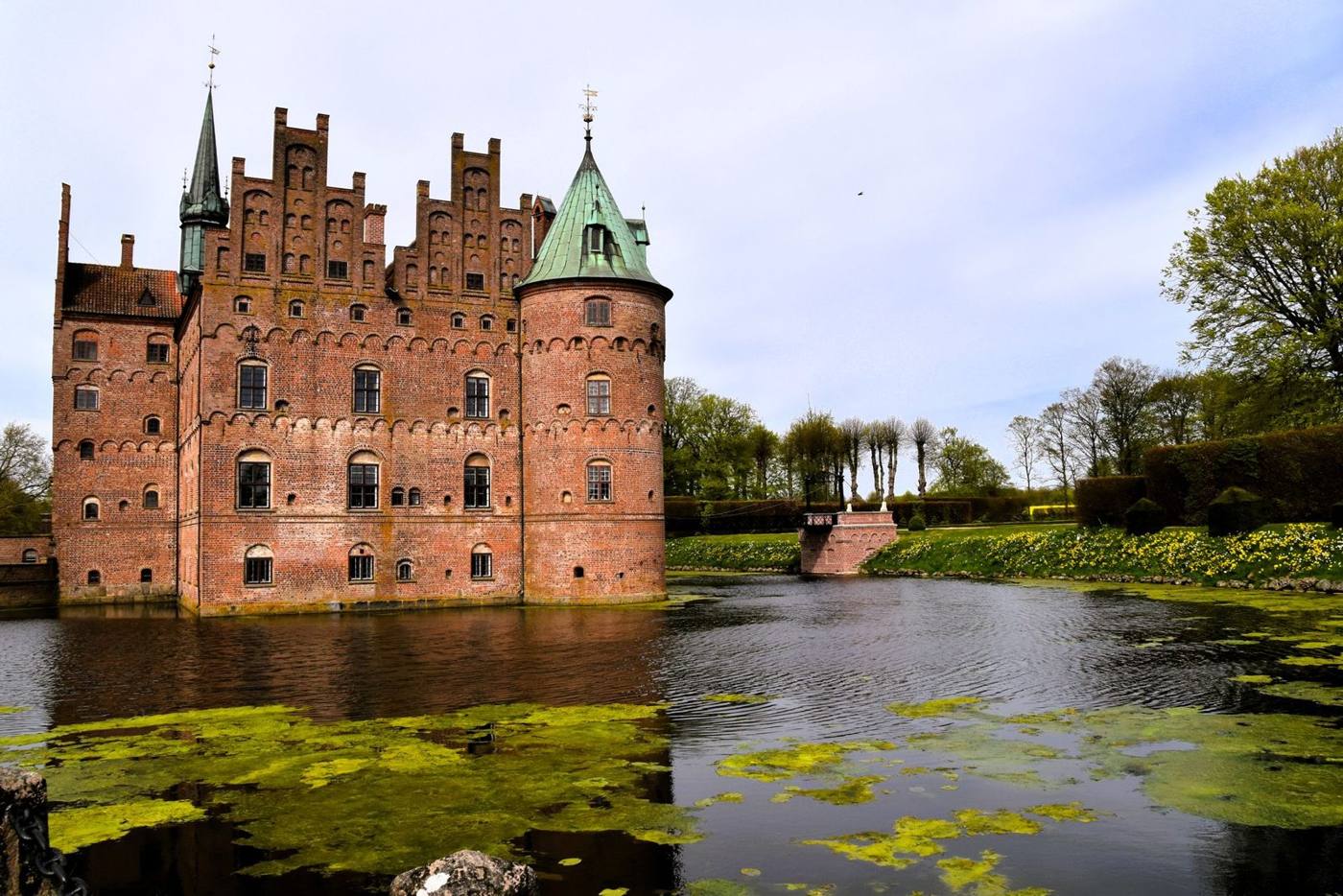
Egeskov is one of the finest Renaissance castles in Europe. It was completed in 1554 in the middle of a small lake, and tradition says it stands on oak piles driven into the bottom: the name means "oak forest". The red brick façades with their pointed towers are reflected in the water. Go inside to see the rooms, with furniture, portraits and hunting trophies, and look for the dolls' house, very large and full of detail. Check prices and times: the castle opens only from April to October.
Spend the afternoon in the gardens, which cover many hectares around the castle. There is a Renaissance garden, a rose garden, hedges clipped into figures, a bamboo maze and long avenues of trees. Among the trees a raised walkway lets you walk high up through the canopy. In the old stables and sheds there are collections of vintage cars, motorcycles, carriages and aircraft.
In the late afternoon continue for about half an hour to Faaborg, on the south coast, where you sleep for one night. Along the road you see thatched farmhouses and the small white churches of the villages.
Practical tip: arrive at Egeskov at opening time and visit the castle first, then the gardens; in summer many families and groups arrive by midday.
- Day 3
Faaborg, the hills of South Funen and Svendborg
On the third day you explore the south coast of the island, among hills, sea and low islands.
In the morning walk around Faaborg, a merchants' town with low houses painted yellow and red, cobbled streets and the old bell tower. Visit Faaborg Museum, devoted to the Funen Painters, a group of artists who in the late nineteenth and early twentieth centuries painted the countryside and people of the island in clear light and colours. Check prices and times.
Then climb into the hills around the town, the most rolling part of Funen, with woods, meadows and marked paths. From above you see the South Funen archipelago, with dozens of islands and islets in the calm sea. A stretch of the archipelago trail, which follows the coast and the hills, is ideal for a walk of a couple of hours.
In the afternoon drive for about half an hour east to Svendborg, the liveliest port in the south. Walk along the harbour, among old wooden ships, warehouses and the ferries to the islands. Cross the bridge to the island of Tåsinge and look at Valdemar's Castle, by the sea, from outside. Check prices and times if you want to go in.
For dinner try smørrebrød, rye bread topped with herring, egg or roast beef, or smoked fish from the coast.
Sleep in Svendborg.
Practical tip: if you have an extra day, take the ferry from Svendborg or Faaborg to one of the islands of the archipelago and explore it by bike.
- Day 4
Back to Odense or the train to Copenhagen
On the last day you head north again. From Svendborg to Odense takes about an hour, by car or by train.
If you have time, in Odense visit Den Fynske Landsby, the Funen Village, an open-air museum with farms, a school, a mill and nineteenth-century country houses brought here from all over the island, among vegetable gardens, animals and fields. In summer there are demonstrations of old crafts. Check prices and times.
Then return the car in Odense and take the train to Copenhagen, about an hour and a half, or leave from the station towards Jutland. The train crosses the Great Belt, partly on a long bridge over the sea and partly in a tunnel.
Trip summary: in four days you saw Odense with the Hans Christian Andersen museum, the old quarter and St Canute's Cathedral, Egeskov water castle with its gardens, Faaborg with the Funen Painters, the hills above the archipelago and the harbour of Svendborg. It is the quiet heart of Denmark, an hour and a half by train from Copenhagen.
When to go: from May to September, with long days, gardens in flower and more frequent ferries to the islands. Remember that Egeskov opens only from April to October. In winter the towns are quiet and many attractions close or shorten their hours.
Practical tip: in Denmark train tickets are cheaper if you buy them in advance; check timetables and offers on the official website of the Danish railways.
Denmark's quiet heart, an hour and a half by train from Copenhagen. The new Andersen museum appeals to adults too. Egeskov opens only from April to October.
Before you go
- Documents and visa
- EU citizens need a valid identity card or passport: Denmark is in the EU and the Schengen area. Until 17 May 2027 Denmark is running checks on its border with Germany: always carry your document. Greenland and the Faroe Islands have their own rules. Other nationalities should check the Schengen rules.
- Health and vaccines
- No vaccines required. EU citizens should bring their EHIC; insurance with medical cover and repatriation is advised. In summer watch out for currents on North Sea beaches. Emergencies: 112.
- Money and payments
- Danish krone. Cards are accepted almost everywhere, even for small purchases; cash is rarely used. The euro is not the official currency.
- Power sockets
- Types C, F and K, 230 volts: you need an adapter for British plugs.
- Time zone
- Central European Time (UTC+1, summer UTC+2).
- Safety
- A very safe country with low crime. Watch out for pickpockets at stations and in crowded places in Copenhagen. On a bicycle use the cycle lanes and follow the signals, as bike traffic is heavy. On the Wadden Sea coast the tide comes in fast: walk on the seabed only with a guide. Official advice: GOV.UK.
Information checked in November 2026 for Italian and EU citizens. Rules change: always check before you travel.
Variations
In 3 days: Odense with the Andersen museum, then Egeskov and Faaborg, returning by train.
In 6 days: add two days on the island of Ærø, reached by ferry from Svendborg, to explore by bike.
Frequently asked questions
When is Egeskov Castle open?
Only from April to October. Check prices and times on the official website before you go.
Do adults enjoy the Andersen museum?
Yes, the new museum, opened in 2021, tells the life and fairy tales of Andersen with light, sound and stage sets suited to all ages. Book a timed entry.
Do I need a car on Funen?
It is useful for Egeskov, Faaborg and the hills. Odense and Svendborg are linked by train, and from Odense to Copenhagen it takes about an hour and a half by train.
Indicative itinerary written by World Atlas. Before booking, check timetables, seasonal openings, documents and safety.
 5 daysEasy
Ærø and the archipelago by bike
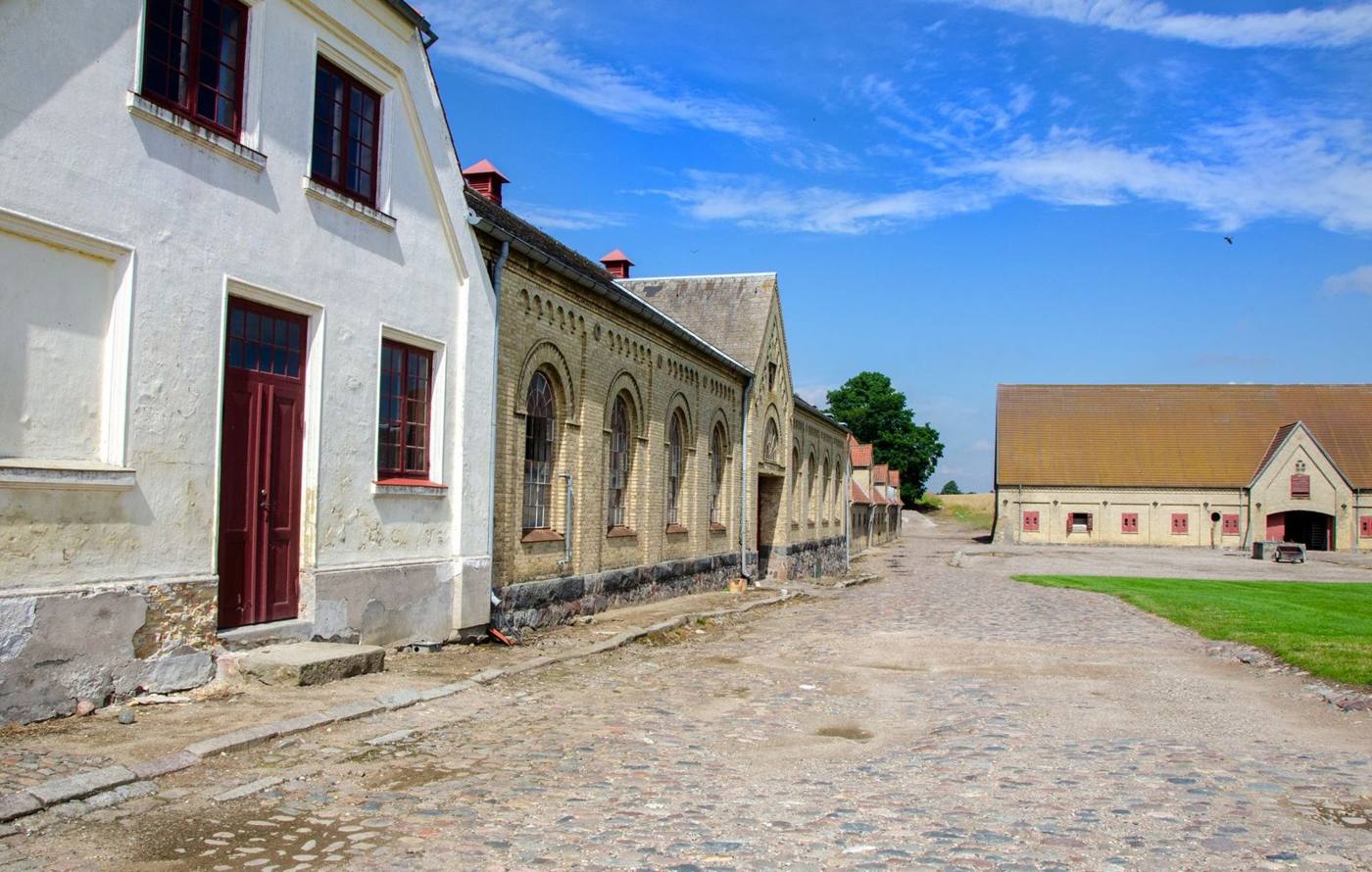
The south Funen islands by bike: Ærøskøbing with its colourful 18th-century houses, the beach huts of Eriksminde, Tåsinge and Langeland.
 4 daysEasy
The Wadden Sea and Rømø
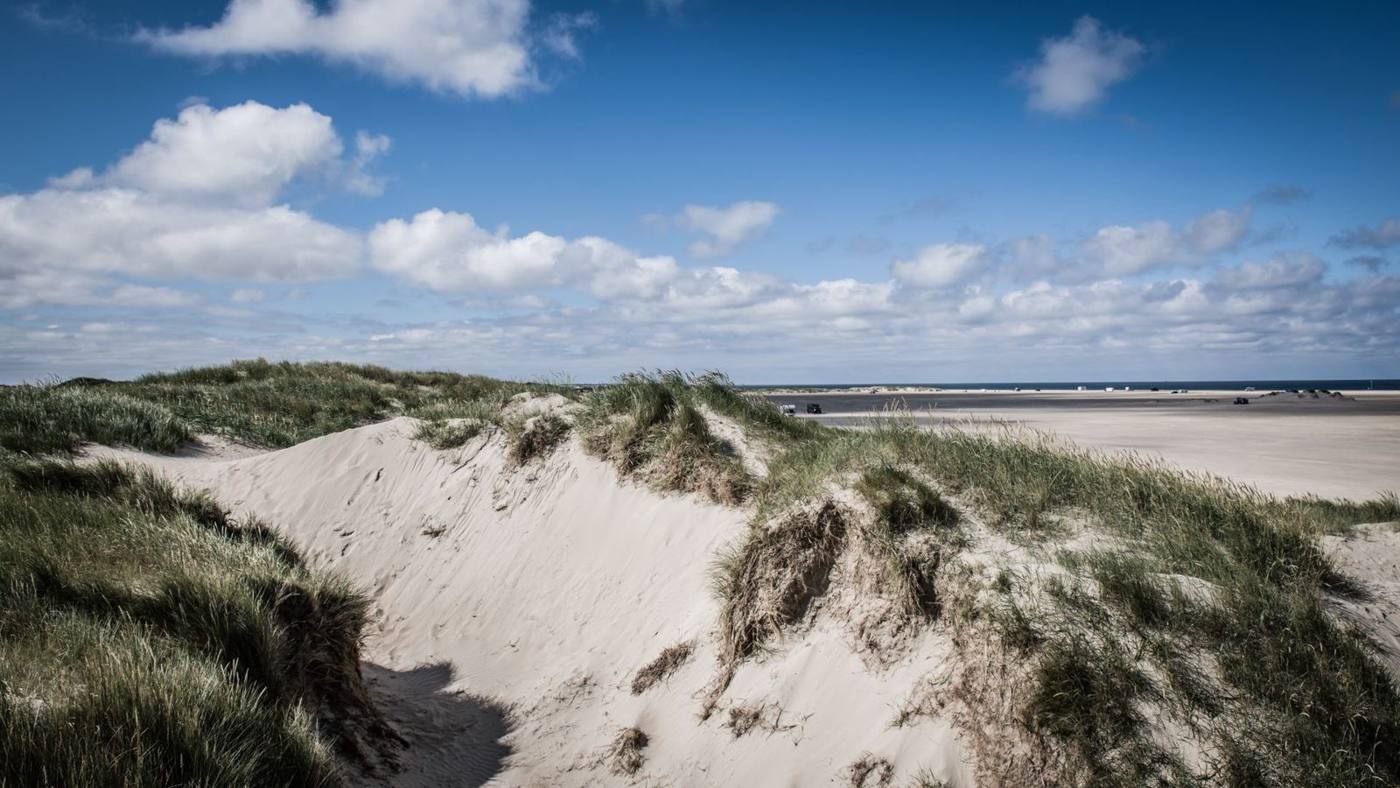
The UNESCO Wadden Sea park: Rømø's huge drive-on beach, oyster picking at low tide, seals and the 'black sun' of starlings.
 4 daysEasy
Aarhus and the lakes
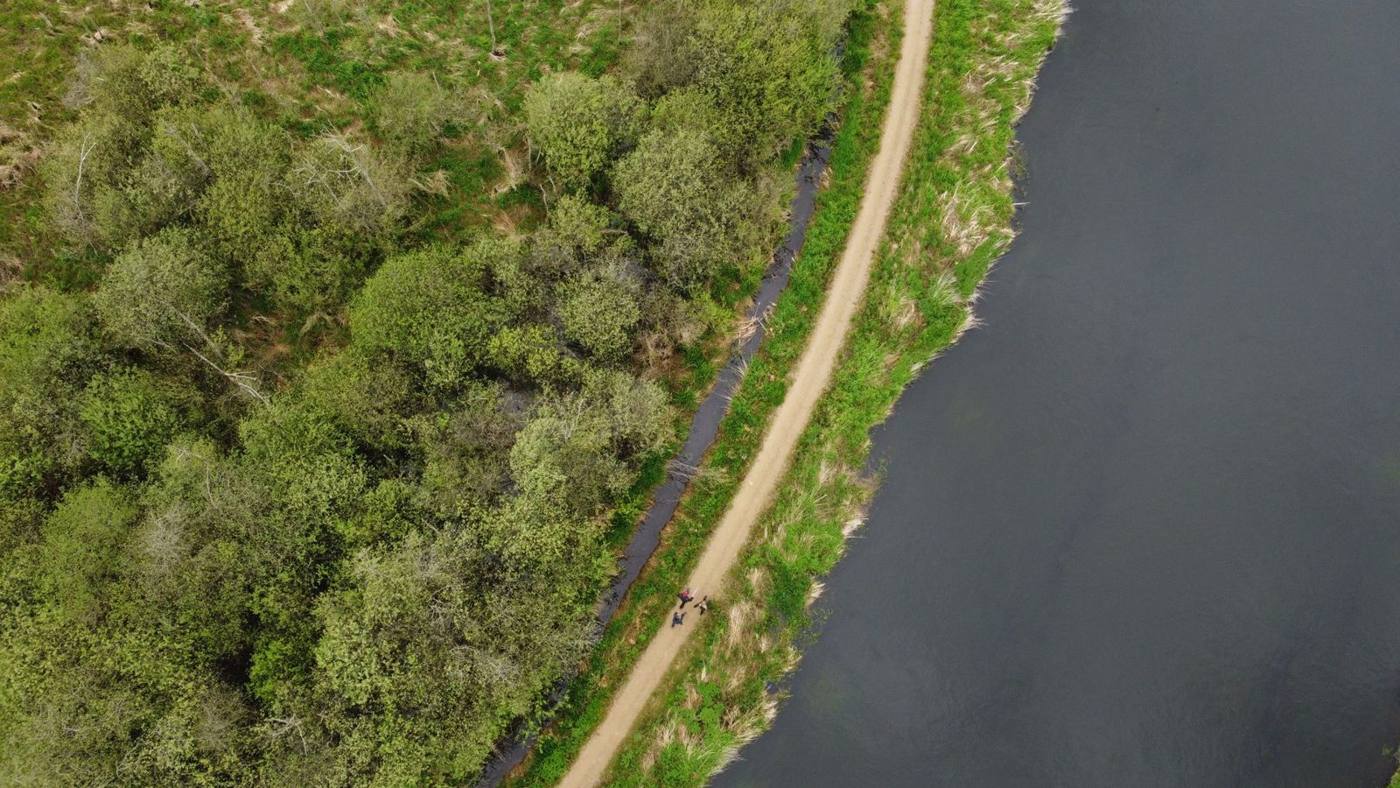
The lake district around Silkeborg, canoeing on the Gudenå river, the Himmelbjerget hill and Moesgaard Museum with the Grauballe Man.