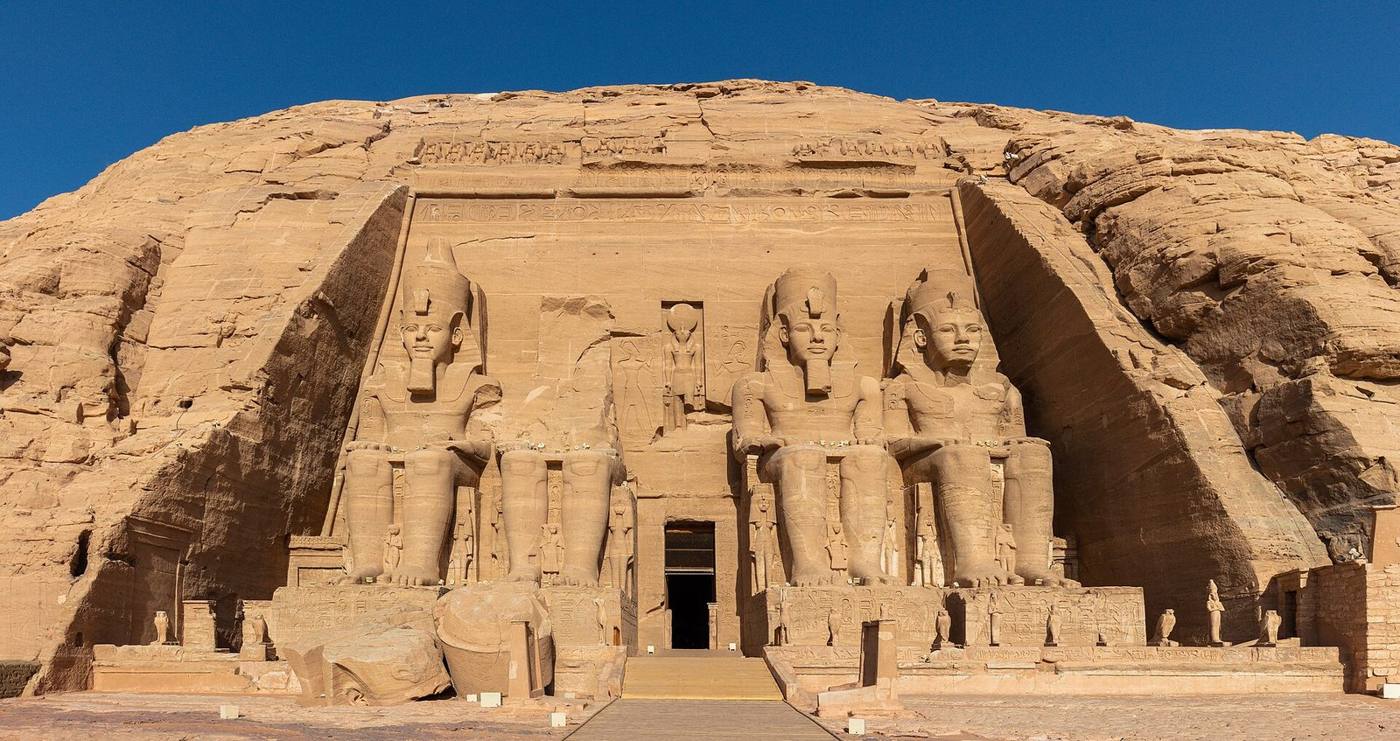
Abu Simbel and the Sun Festival
Twice a year, on 22 February and 22 October, the rising sun reaches deep into the temple of Ramesses II to light the statues of the gods in the sanctuary: a trip built around that moment, with a night in Abu Simbel, the evening show, the temple of Nefertari and the return to Aswan and Philae.
- Aswan
- Abu Simbel
- Philae
Day by day
- Day 1
Arriving in Aswan and the Temple of Isis at Philae
Abu Simbel, in Egypt's far south about 280 kilometres from Aswan and close to the Sudanese border, is home to the two temples carved into the rock by Pharaoh Ramesses II in the thirteenth century BC. Twice a year, around 22 February and 22 October, the rising sun enters the temple and lights up the statues at the back of the sanctuary: the Sun Festival, one of Egypt's most moving sights. Italian citizens can obtain a visa on arrival at the airport for 30 dollars, or apply for an e-visa before travelling; a passport valid for at least six months is required.
Arrive in Aswan by plane from Cairo or on the night train. Aswan is the southernmost city of tourist Egypt, on the Nile, where the river flows between black granite rocks, green islands and golden dunes, with colourful Nubian villages on the west bank.
In the afternoon visit the Temple of Isis at Philae, on an island in the lake between Aswan's two dams. The temple, from the Ptolemaic and Roman periods, was taken apart block by block and rebuilt on Agilkia Island in the 1970s to save it from the dam's waters. You reach it by small motorboat from the Shellal jetty. The temple has great pylons with reliefs of the goddess Isis, a colonnaded courtyard with flower-shaped capitals and the elegant Kiosk of Trajan on the shore.
In the evening stroll along Aswan's Nile corniche and through the souk, with spices, karkadé, dates and Nubian textiles.
Practical tip: for the Sun Festival book accommodation and transport well ahead, as demand is very high.
- Day 2
By road or air to Abu Simbel, the temples and the evening show
In the morning set off for Abu Simbel. By car or minibus the road crosses the desert for about three and a half hours, with few villages and checkpoints along the way; alternatively, there are short flights from Aswan of about forty minutes, with extra services on festival days.
On arrival make your first visit to the temples on the shore of Lake Nasser, the great lake created by the Aswan dam. In the 1960s, with the building of the dam, the temples were about to be submerged: in an international campaign led by UNESCO they were cut into more than a thousand blocks and rebuilt about sixty-five metres higher inside an artificial mountain between 1964 and 1968. This is why the festival date has shifted by a day compared with antiquity.
The great temple has four colossal seated statues of Ramesses II on its façade, about twenty metres tall. Inside, the hall with eight Osiris-shaped pillars and walls carved with the battle of Kadesh against the Hittites lead to the sanctuary deep in the mountain, with four seated statues: the god Ptah, the god Amun-Ra, the deified Ramesses II and the god Ra-Horakhty.
In the late afternoon watch the sunset over the lake and in the evening see the sound and light show, with the temples' story projected onto the façades.
In the evening stay in Abu Simbel, in the small village next to the temples: the best way to be in the front row at dawn.
Practical tip: carry your passport, which is checked along the road and at the site entrance.
- Day 3
The sun in the sanctuary at dawn, Nefertari's temple and back to Aswan
On festival morning get up very early, around four, to queue in front of the great temple: thousands of people wait for the doors to open, while outside drums play and people dance to Nubian music. The awaited moment comes just after dawn, around six: the first ray of sun enters through the door, crosses the halls for some sixty metres and lights up three of the four statues at the back of the sanctuary, Amun-Ra, Ramesses II and Ra-Horakhty, for about twenty minutes. The statue of Ptah, a god linked to the underworld, always stays in darkness. Inside the temple it is very crowded and you pass the sanctuary quickly; many watch the event on screens outside.
After the festival visit the small temple at leisure, dedicated to Queen Nefertari, Ramesses II's favourite wife, and to the goddess Hathor. The façade has six statues about ten metres tall, four of the king and two of the queen, as tall as the king, which is rare in Egyptian art. Inside, coloured reliefs show the queen offering flowers and sistrums to the goddesses.
In the afternoon return to Aswan by road or air.
In the evening visit a Nubian village on the west bank, such as Gharb Soheil, with houses painted blue, yellow and pink, music and hibiscus tea.
Practical tip: outside festival days the visit is calmer and the temples are just as spectacular. Dates may vary by a day: check them in advance.
- Day 4
A felucca on the Nile around Aswan's islands and departure
In the morning take a felucca, the traditional Nile sailing boat with no engine, driven only by the wind. Sailing slowly among the granite rocks and islands, you pass Elephantine, Aswan's largest island, inhabited for thousands of years, with Nubian villages, the ruins of the ancient city of Abu, the Temple of Khnum and the nilometer, a stone staircase used to measure the river's floods and calculate taxes.
The felucca can stop at Kitchener's Island, entirely taken up by a botanical garden with tropical plants from around the world, palms and birds. On the hill of the west bank you see the Tombs of the Nobles, carved into the rock, and the mausoleum of the Aga Khan, the spiritual leader of the Ismailis, buried here in 1957.
If you have time, visit the Unfinished Obelisk in town, left in the granite quarry where it was abandoned because of a crack: it would have been the largest ever made, about forty-two metres tall. It shows clearly how the ancient stonecutters worked.
In the afternoon fly out from Aswan airport, or continue north on a Nile cruise to Luxor.
Things to take home: spices from Aswan's souk, karkadé, dates, Nubian baskets and textiles and alabaster objects.
Practical tip: agree the price and length of the felucca trip before boarding; at sunset the light on the Nile is most beautiful and the temperature gentler.
On the two festival days queues are long and people enter the temple in turns: arrive hours before dawn. Sleeping in Abu Simbel avoids the night drive from Aswan, about three and a half hours. Accommodation must be booked many months ahead. A visa is required, obtained online before travelling or on arrival at the airport. The UK advises against all travel to North Sinai and within 20 km of the Libyan border, and against all but essential travel to most of the Western Desert: this itinerary stays outside those areas.
Before you go
- Documents and visa
- Passport valid for at least six months and a tourist visa, obtained online on the official portal or on arrival at the airport, where since 1 March 2026 it costs 30 dollars in cash.
- Health and vaccines
- No compulsory vaccines for travellers from Europe. Drink only bottled water and take out travel health insurance. Emergencies: 122 police, 123 ambulance.
- Money and payments
- Egyptian pound. Cards work in hotels and larger shops, but for tips, taxis and markets you need cash in small notes.
- Power sockets
- Types C and F, 220 volts.
- Time zone
- UTC+2 in winter; Egypt uses daylight saving time in summer.
- Safety
- Tourist areas along the Nile and the Red Sea are busy and well policed. Governments advise against North Sinai, the Libyan border strip and much of the Western Desert off the main roads. Official advice: GOV.UK.
Information checked in November 2026 for Italian and EU citizens. Rules change: always check before you travel.
Variations
In 2 days from Aswan: Philae on day one, Abu Simbel at dawn there and back on day two.
In 8 days: add a Nile cruise from Aswan to Luxor, with Kom Ombo, Edfu and the Valley of the Kings.
Frequently asked questions
When is the Sun Festival?
Around 22 February and 22 October each year; the exact date may vary by a day, so check beforehand.
What documents do I need?
A passport valid for at least six months and a visa, either on arrival for 30 dollars or an e-visa before travelling.
Is it worth staying in Abu Simbel?
Yes, especially for the festival: staying in the village avoids the night drive from Aswan and gets you there first.
Indicative itinerary written by World Atlas. Before booking, check timetables, seasonal openings, documents and safety.
 7 daysEasy
Marsa Alam and Wadi el-Gemal
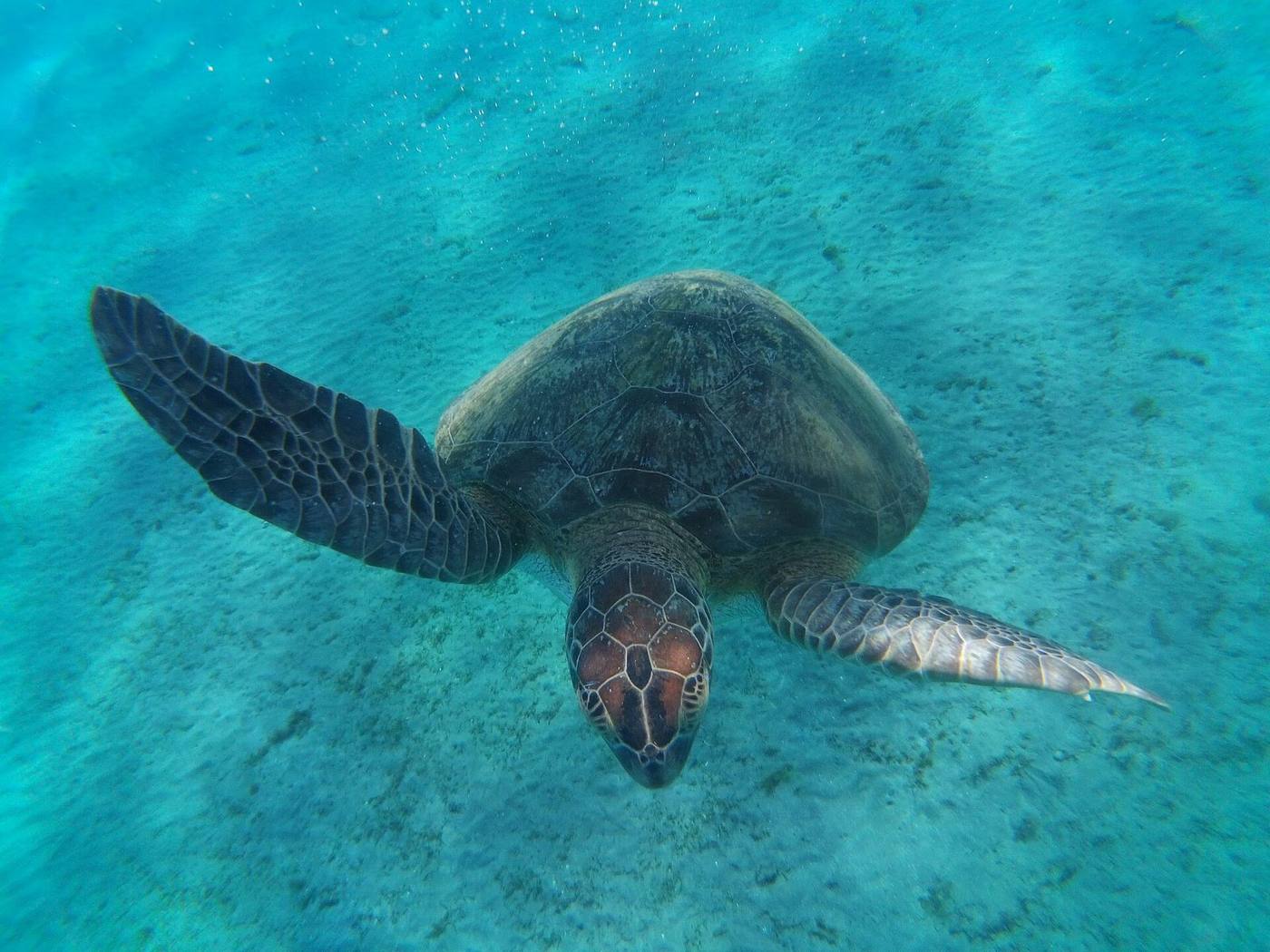
The southern Red Sea, less built-up: snorkelling with turtles and, with luck, the dugong in Abu Dabbab bay, Sataya reef and its dolphins, Wadi el-Gemal National Park among mangroves, acacias and Ababda villages, and starry skies over the Eastern Desert.
 7 daysChallenging
Liveaboard: the Brothers, Daedalus and Elphinstone
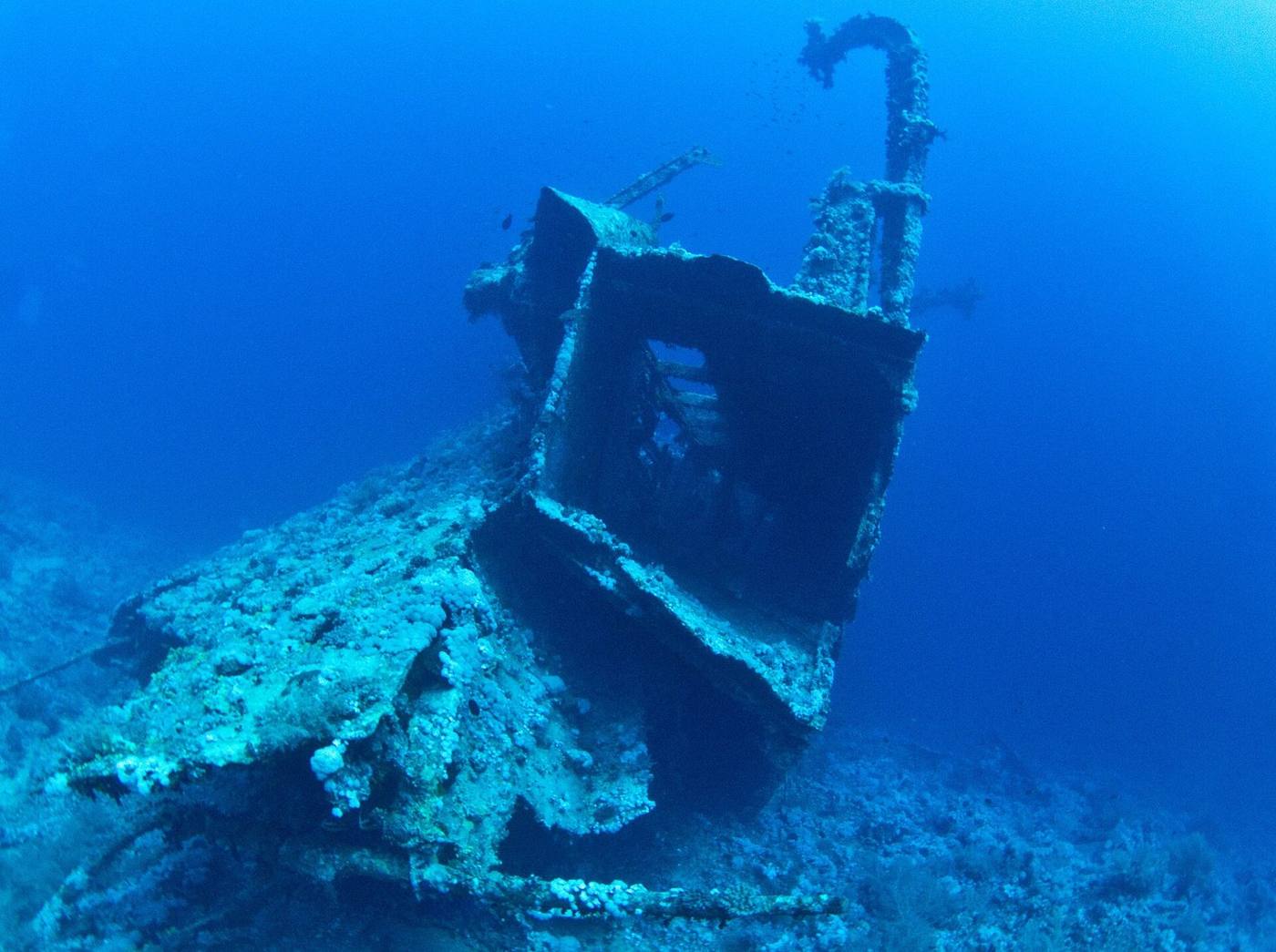
A week on board in the open Red Sea: the two Brothers islets with the wreck of the Numidia, Daedalus reef with its lighthouse and vertical walls, Elphinstone, with oceanic whitetips in autumn, hammerheads in some months, soft corals and big schools.
 6 daysEasy
Hurghada, El Gouna and the Giftun Islands
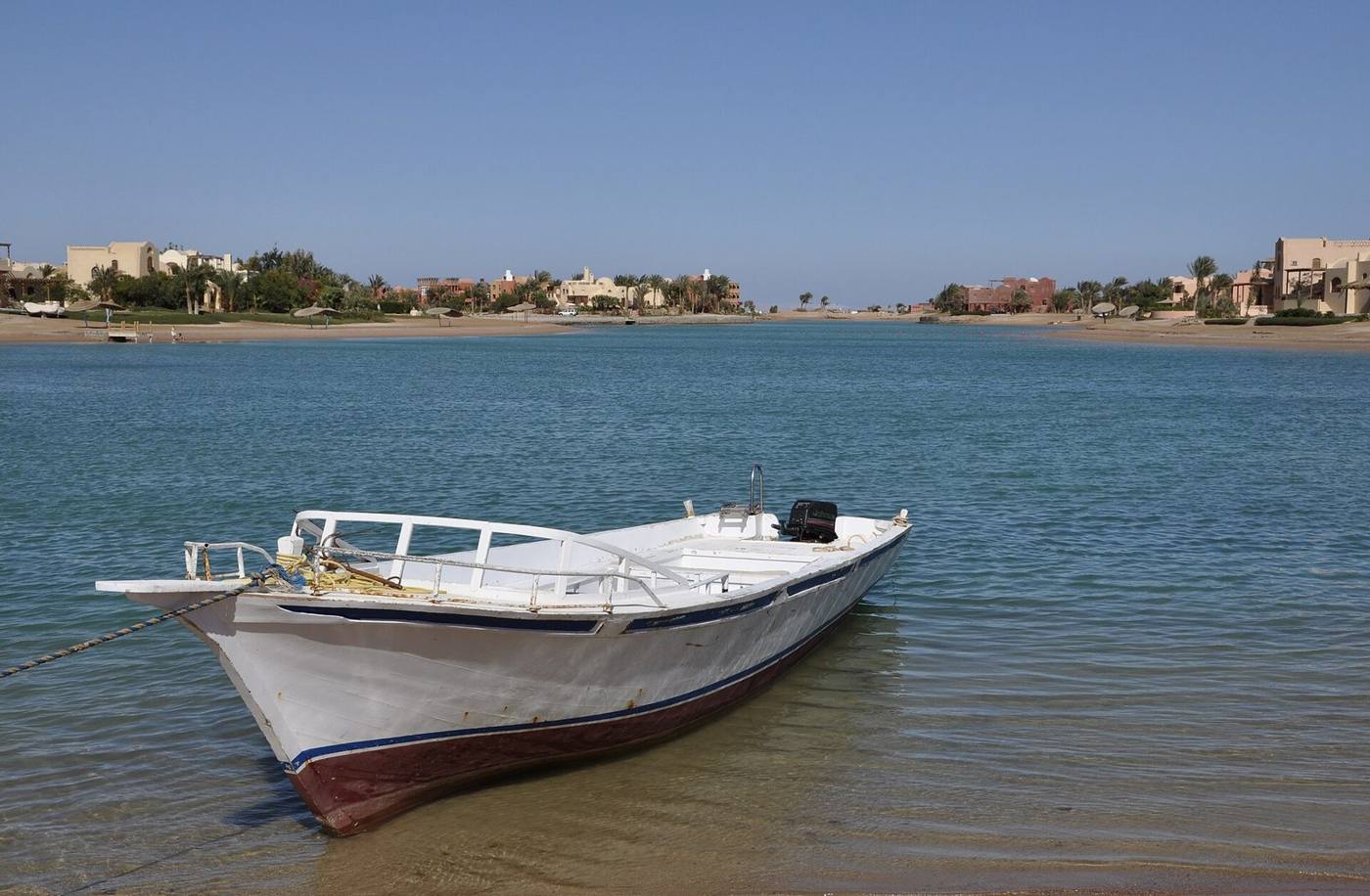
The easy Red Sea, children included: El Gouna with its lagoons and canals, the boat to the Giftun Islands, a national park with white beaches and snorkelling reefs, a first try-dive and an outing into the Eastern Desert with the Red Sea mountains at sunset.