Bauhaus and Luther: Dessau, Wittenberg and Wörlitz
Three UNESCO sites close together: the Bauhaus building and the Masters' Houses in Dessau, the Luther sites in Wittenberg with the Castle Church and the reformer's house, and the Dessau-Wörlitz Garden Realm, the first great English-style landscape park on the Continent.
- Dessau
- Wörlitz
- Wittenberg
Day by day
- Day 1
Dessau: the Bauhaus building and the Masters' Houses
Saxony-Anhalt, south-west of Berlin, holds within a few kilometres three very different UNESCO World Heritage sites: the Bauhaus in Dessau, the school that invented modern design, the Dessau-Wörlitz Garden Realm, one of the first great English-style landscape parks on the continent, and Wittenberg, the town of Martin Luther and the Protestant Reformation. Germany is in the Schengen area but has extended land border checks until March 2027: always carry a valid identity card or passport.
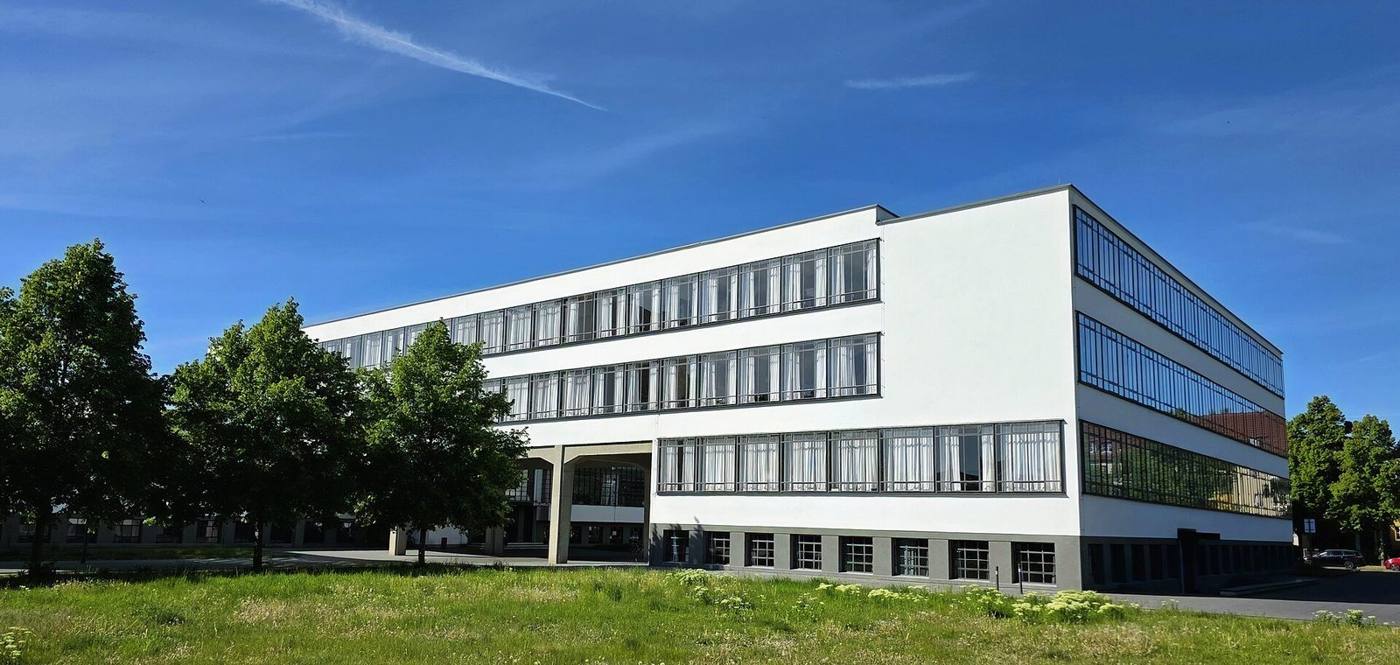
From Berlin, Dessau is about an hour and a half by train. In the morning visit the Bauhaus building, designed by Walter Gropius and opened in 1926, when the school moved here from Weimar. It was revolutionary for its time: white concrete blocks, a great glass façade hanging in front of the workshops, bridges between the wings and projecting balconies on the student flats. Inside you visit the workshops, the auditorium, the canteen and the rooms, with furniture, lamps and door handles designed by teachers and students.
In the afternoon walk to the Masters' Houses, in a small pine wood a few minutes away: three semi-detached villas and the director's house, built for the teachers, among them Kandinsky and Klee, who lived next door to each other, and Feininger. Then visit the Bauhaus Museum Dessau, opened in 2019, with a large collection of objects, textiles, furniture and drawings from the school.
In the evening stroll through the centre of Dessau, rebuilt after the war.
Practical tip: visits inside the Bauhaus building and the houses are often guided and at set times; book online.
- Day 2
The Wörlitz gardens by boat and by bike
In the morning go to Wörlitz, about twenty minutes from Dessau, by bus, car or bike along the cycle paths through the Elbe meadows and woods. The Dessau-Wörlitz Garden Realm was created in the late eighteenth century by Prince Leopold III Frederick Francis of Anhalt-Dessau, an enlightened ruler who wanted to combine beauty, education and farming: a landscape of parks, lakes, canals, palaces and temples over more than a hundred square kilometres, all open without fences.
Its heart is Wörlitz Park, around a lake with islands. Visit Wörlitz Palace, one of the first neoclassical buildings in Germany, with elegant interiors, and the Gothic House, with Swiss stained glass and paintings. The finest way to see the park is a ride in the small gondolas rowed by boatmen, gliding along the canals and under bridges; then walk the paths, where every corner reveals a carefully designed view: a temple, an iron bridge, a statue, a meadow.
In the afternoon reach the Stone Island with its artificial Vesuvius, a small mountain built by the prince after a journey to Italy, inside which a fire was once lit to imitate an eruption during festivities. A few hand-pulled ferries cross the canals.
In the evening return to Dessau or stay in Wörlitz.
Practical tip: the gardens are always open and no-cost, but the palaces and gondolas keep seasonal hours, usually April to October.
- Day 3
Wittenberg: the Castle Church and Luther House
In the morning take the train or drive to Wittenberg, about half an hour away, a small town on the Elbe officially named Lutherstadt Wittenberg, Luther's town. Here, according to tradition, on 31 October 1517 the monk and professor Martin Luther posted his 95 theses against the sale of indulgences on the door of the Castle Church: the beginning of the Protestant Reformation, which changed the history of Europe. The Luther Memorials in Wittenberg are a UNESCO World Heritage site.
Visit the Castle Church, with its nineteenth-century bronze doors engraved with the theses in Latin, and the tombs of Luther and his friend Philipp Melanchthon beneath the floor of the nave. Then walk along the main street to St Mary's Church, where Luther preached, with the great altarpiece painted by Lucas Cranach the Elder showing Luther, Melanchthon and other reformers in biblical scenes.
In the afternoon visit Luther House, a former Augustinian monastery where Luther lived with his wife Katharina von Bora and their children: today it is the world's largest museum of Reformation history, with his room, the pulpit, early Bibles translated into German and manuscripts. Also visit Melanchthon House and the Cranach courtyard, where the painter had his workshop and a printing press.
In the late afternoon head off: Berlin is about forty minutes by fast train, Leipzig about half an hour.
Practical tip: on 31 October, Reformation Day, the town celebrates but is very crowded.
An hour and a half from Berlin, easy as an add-on or a weekend. You can even sleep in the Bauhaus building, in simple former student rooms. The Wörlitz gardens are at no cost; the pavilions have seasonal hours. A valid identity card is enough for EU citizens. Germany has reintroduced spot checks at all its land borders, extended until March 2027: keep your document to hand on trains and in the car too.
Before you go
- Documents and visa
- A valid identity card or passport is enough for EU citizens. German land border checks have been extended until March 2027: always carry your document.
- Health and vaccines
- No vaccines required. EU citizens should carry the European Health Insurance Card. Emergencies: 112, police 110.
- Money and payments
- Euro. Cards are increasingly accepted, but many bars, bakeries and beer halls still take cash only.
- Power sockets
- Types C and F, 230 volts.
- Time zone
- UTC+1, UTC+2 in summer.
- Safety
- The United States rates Germany level 2 for terrorism. In stations and crowded markets watch out for pickpockets. Official advice: GOV.UK.
Information checked in November 2026 for Italian and EU citizens. Rules change: always check before you travel.
Variations
In 2 days: Dessau and the Bauhaus on day one, Wittenberg on day two, with a short stop in Wörlitz.
In 5 days: add Weimar, the first home of the Bauhaus and the town of Goethe and Schiller, and Leipzig.
Frequently asked questions
Do I need a car?
No: Dessau, Wörlitz and Wittenberg can be reached by train, bus and bike, with good cycle paths along the Elbe.
What documents do I need?
A valid identity card or passport: Germany has extended land border checks until March 2027.
When is the best time to go?
April to October, when the gardens are green and the gondolas run; in winter some palaces close.
Indicative itinerary written by World Atlas. Before booking, check timetables, seasonal openings, documents and safety.
 5 daysModerate
The Danube by bike from Regensburg to Passau
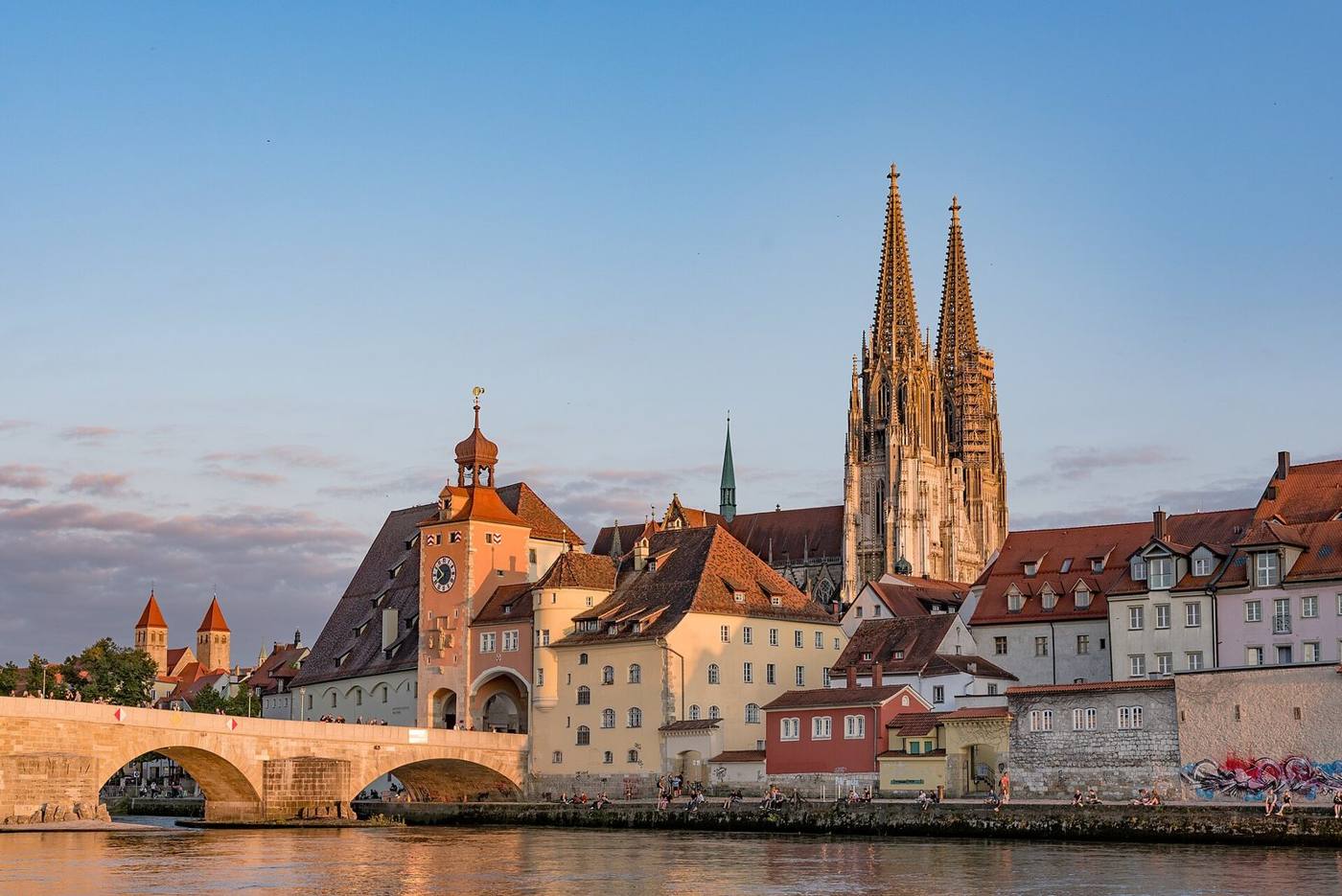
The Bavarian Danube cycle path: the Danube gorge by boat to Weltenburg Abbey, Regensburg (UNESCO) with its stone bridge, the Walhalla temple, Straubing, the river plain and Passau, the city of three rivers.
 5 daysEasy
Berlin in five days
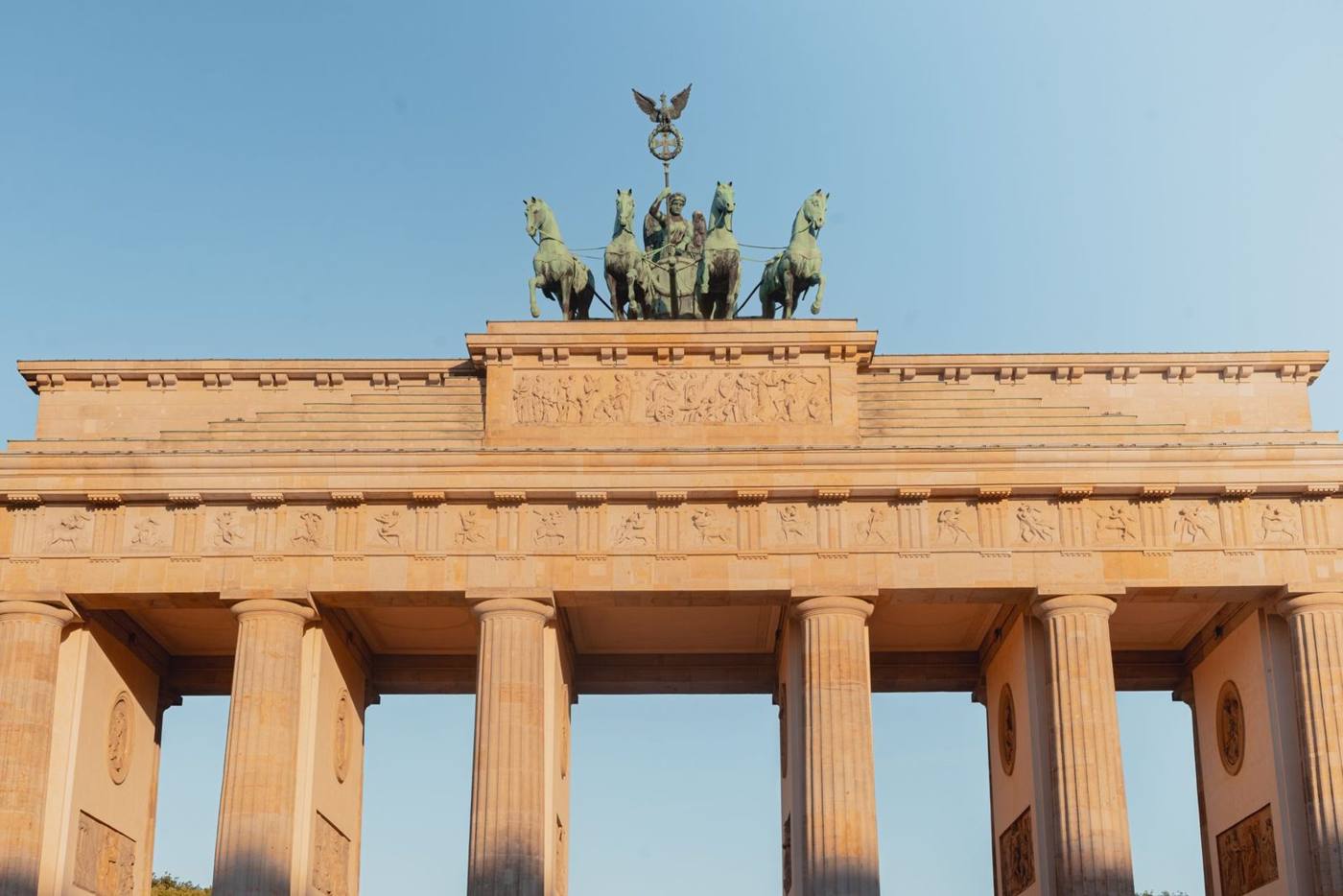
The Brandenburg Gate and the Reichstag, Museum Island, the Wall and the East Side Gallery, the Kreuzberg and Prenzlauer Berg districts and Potsdam.
 8 daysEasy
The Romantic Road and Bavaria
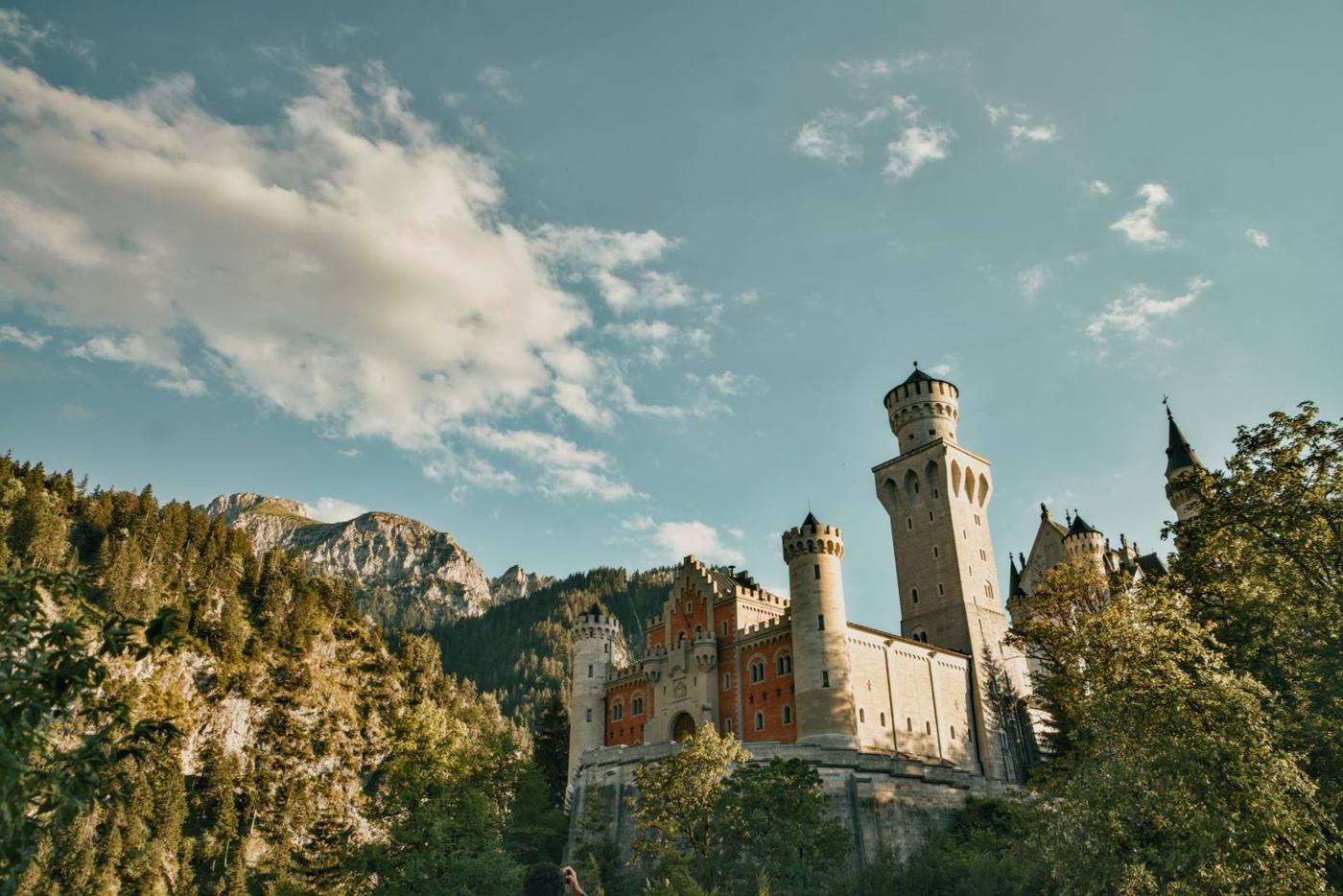
Würzburg, Rothenburg ob der Tauber, Dinkelsbühl, Augsburg, the castles of Neuschwanstein and Linderhof and Munich with its beer halls.