Franconia: Nuremberg, Bamberg and Franconian Switzerland
Northern Bavaria: Nuremberg with its imperial castle, the Germanic National Museum and the documentation centre on the Nazi rally grounds, Bamberg (UNESCO) and its smoked beer, the caves and rocks of Franconian Switzerland and the Margravial Opera House in Bayreuth.
- Nuremberg
- Bamberg
- Pottenstein
- Bayreuth
Day by day
- Day 1
Nuremberg: the imperial castle and the old town
Franconia is the northern part of Bavaria, a region of medieval towns, wooded hills, villages of half-timbered houses and hundreds of small breweries. In five days you see Nuremberg, city of emperors and of Dürer, Bamberg, a UNESCO site, the rocks and caves of Franconian Switzerland, and Bayreuth, Wagner's town.
Nuremberg can be reached by air or by train and is well connected with Munich and Frankfurt. The old town is enclosed by a ring of walls about five kilometres long, with towers and moats, almost all preserved.
In the morning, go up to the imperial castle, the Kaiserburg, on the rock above the city. In the Middle Ages the Holy Roman Emperors often stayed here. You visit the halls, the two-storey chapel, the deep well cut into the rock and the round tower, from which the view takes in the city's red roofs.
On the way down, pass by the house of Albrecht Dürer, the great painter of the German Renaissance, who lived and worked there until his death in 1528.
In the afternoon, walk to the market square, the Hauptmarkt, with the Schöner Brunnen, the spire-shaped Gothic fountain, and the Church of Our Lady. Continue to the churches of Saint Sebald and Saint Lawrence, and along the Pegnitz river, with the Holy Spirit hospital built over the water.
In the evening, try Nuremberg sausages, small and thin, grilled over beech wood and served by six or twelve with sauerkraut, and gingerbread, Lebkuchen.
Practical tip: in December Nuremberg hosts one of Germany's most famous Christmas markets, on the market square. The city is very crowded then.
- Day 2
The rally grounds and the Germanic National Museum
In the morning, go south-east of the centre to the Nazi party rally grounds, where in the 1930s Hitler staged his great parades. It is an important place for understanding twentieth-century history.
The documentation centre, in the north wing of the unfinished congress hall, tells the story of the rise, propaganda and crimes of Nazism. The building has been undergoing renovation: check opening hours and which parts are open before you go. Around the Dutzendteich lake you can walk to the Zeppelin field grandstand, the great stone tribune where Hitler addressed the crowds, now partly decayed, and along the Great Road, sixty metres wide, built for parades.
If you are interested in history, also visit courtroom 600 in the Palace of Justice, where in 1945 and 1946 the Nuremberg trial of the main Nazi leaders took place. The memorial next door tells the story of the trial and the birth of international criminal law. The courtroom is sometimes used for hearings: check the opening days.
In the afternoon, return to the centre and visit the Germanic National Museum, the largest museum of history and art in the German-speaking countries. The collections run from prehistory to the twentieth century: armour, musical instruments, toys, paintings by Dürer, and the oldest surviving terrestrial globe, from 1492.
In the evening, have dinner in an old-town beer hall with schäufele, roast pork shoulder with crisp crackling and potato dumplings.
Practical tip: Nuremberg has a convenient network of underground, trams and buses that takes you to the rally grounds in a few minutes from the centre.
- Day 3
Bamberg: the cathedral, the town hall on the river and Little Venice
In the morning, take the train to Bamberg, about forty minutes from Nuremberg. Bamberg is one of Germany's most beautiful towns, built on seven hills like Rome, and its centre has been a UNESCO site since 1993. It came through the Second World War almost intact and keeps an extraordinary ensemble of medieval and baroque buildings.
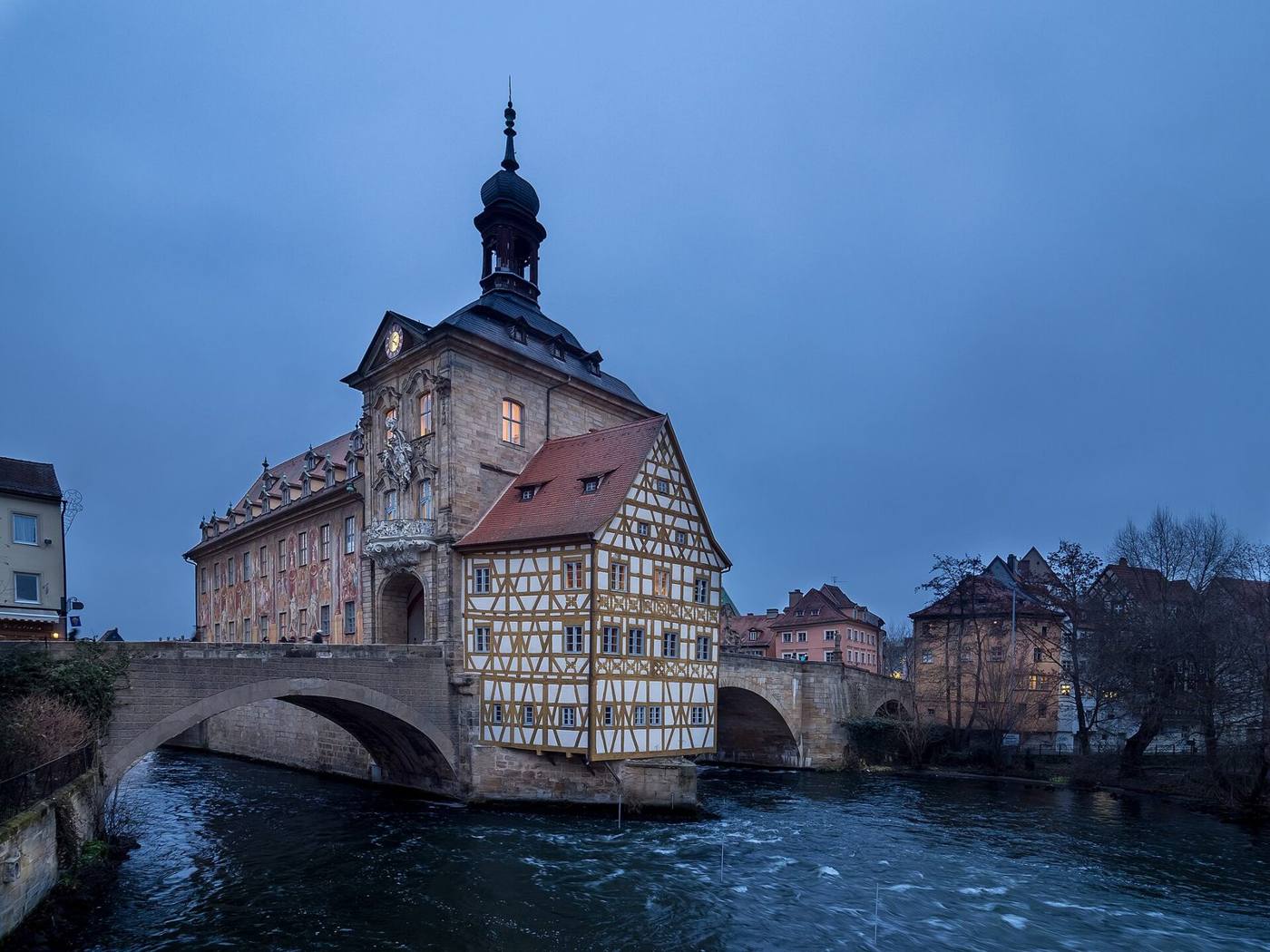
Start at the old town hall, the Altes Rathaus, built on an islet in the middle of the Regnitz river, between two bridges. According to tradition, the bishop refused the citizens land for a town hall, so they built it in the middle of the water. The walls are covered in baroque frescoes, and a small half-timbered section juts out over the river.
Then climb the cathedral hill. The four-towered cathedral holds the Bamberg Horseman, a thirteenth-century stone equestrian statue, and the tomb of Pope Clement II, the only papal tomb north of the Alps. On the same square stand the New Residence of the prince-bishops, with its rose garden and views over the roofs, and the Alte Hofhaltung, the courtyard of the old residence.
In the afternoon, walk along the river to Little Venice, a row of colourful old fishermen's houses with gardens and boats on the water.
In the evening, try Bamberg's smoked beer, Rauchbier, made with malt dried over beech fires, with a taste that recalls smoked ham.
Practical tip: Bamberg can be explored entirely on foot, but the streets go up and down between the hills. Wear comfortable shoes.
- Day 4
Franconian Switzerland: Pottenstein and the Teufelshöhle
In the morning, drive east into Franconian Switzerland, the Fränkische Schweiz, a region of narrow valleys, tower-shaped limestone rocks, castles on crags, caves and villages. The name was given by nineteenth-century Romantic travellers, who found a landscape here reminiscent of the Swiss mountains. From Bamberg it takes less than an hour.
Stop at Tüchersfeld, a village with houses built between two great rock towers, where a small museum tells the story of life in the region. Then continue to Gößweinstein, with its large baroque basilica dedicated to the Trinity, a pilgrimage site, and the castle above the village.
At midday, reach Pottenstein, a village in the valley below a medieval castle on the rock. Nearby is the Teufelshöhle, the devil's cave, one of the largest caves in Germany, with a guided route among stalactites and stalagmites and the skeleton of a cave bear. Check the opening months and times, as the cave is not always open.
In the afternoon, walk one of the trails among the rocks, for example along the Wiesent valley, or take a canoe trip on the river in summer.
Franconian Switzerland has one of the highest concentrations of breweries in the world: many villages have a small one, with a beer garden under the chestnut trees. In autumn the villages celebrate their kirchweih, the parish fair.
Practical tip: public transport is scarce in this area. A car lets you see more villages in a day.
- Day 5
Bayreuth and the Margravial Opera House
In the morning, continue to Bayreuth, about forty minutes from Pottenstein. In the eighteenth century Bayreuth was the capital of the margraves of Brandenburg-Bayreuth, and Margravine Wilhelmine, sister of Frederick the Great of Prussia, turned it into a small capital of the arts.
The main monument is the Margravial Opera House, the Markgräfliches Opernhaus, a UNESCO site since 2012. It is one of the best-preserved baroque theatres in Europe, all in painted and gilded wood, with decorated boxes and the main box for the rulers. Inside you watch a short presentation with lights and music.
Then visit the New Palace, with rooms decorated in rococo style, and the Eremitage park just outside town, with the Sun Temple and fountains.
Bayreuth is also Richard Wagner's town. The composer had the Festspielhaus built, the theatre on the hill where every summer, in July and August, a festival devoted to his operas is held. Tickets are extremely hard to get. In town you can visit his house, Villa Wahnfried, now a museum, with his grave in the garden.
In the afternoon, return to Nuremberg by train in about an hour, or by car.
This trip can be extended towards Würzburg and the Romantic Road, or towards Regensburg and the Danube.
Practical tip: Italian citizens only need an identity card valid for travel. Germany has extended its land border checks until March 2027: keep your document to hand, even on trains.
Nuremberg and Bamberg are 40 minutes apart by train. Franconian Switzerland is best explored by car or bike. Bayreuth's Wagner festival in summer has very hard-to-get tickets; the Margravial Opera House can be visited all year. A valid identity card is enough for EU citizens. Germany has reintroduced spot checks at all its land borders, extended until March 2027: keep your document to hand on trains and in the car too.
Before you go
- Documents and visa
- A valid identity card or passport is enough for EU citizens. German land border checks have been extended until March 2027: always carry your document.
- Health and vaccines
- No vaccines required. EU citizens should carry the European Health Insurance Card. Emergencies: 112, police 110.
- Money and payments
- Euro. Cards are increasingly accepted, but many bars, bakeries and beer halls still take cash only.
- Power sockets
- Types C and F, 230 volts.
- Time zone
- UTC+1, UTC+2 in summer.
- Safety
- The United States rates Germany level 2 for terrorism. In stations and crowded markets watch out for pickpockets. Official advice: GOV.UK.
Information checked in November 2026 for Italian and EU citizens. Rules change: always check before you travel.
Variations
In 3 days: two days in Nuremberg and one in Bamberg, all by train.
In 8 days: add Würzburg, Rothenburg ob der Tauber and the Romantic Road.
Frequently asked questions
When is the best time to go?
From May to October for Franconian Switzerland and beer gardens. In December for the Christmas markets of Nuremberg and Bamberg.
Do I need a car?
Nuremberg, Bamberg and Bayreuth are well linked by train. For Franconian Switzerland a car is much more convenient.
What documents do I need?
Italian citizens only need an identity card valid for travel. German land border checks have been extended until March 2027.
Indicative itinerary written by World Atlas. Before booking, check timetables, seasonal openings, documents and safety.
 4 daysEasy
The Harz: Quedlinburg, Goslar and the Brocken
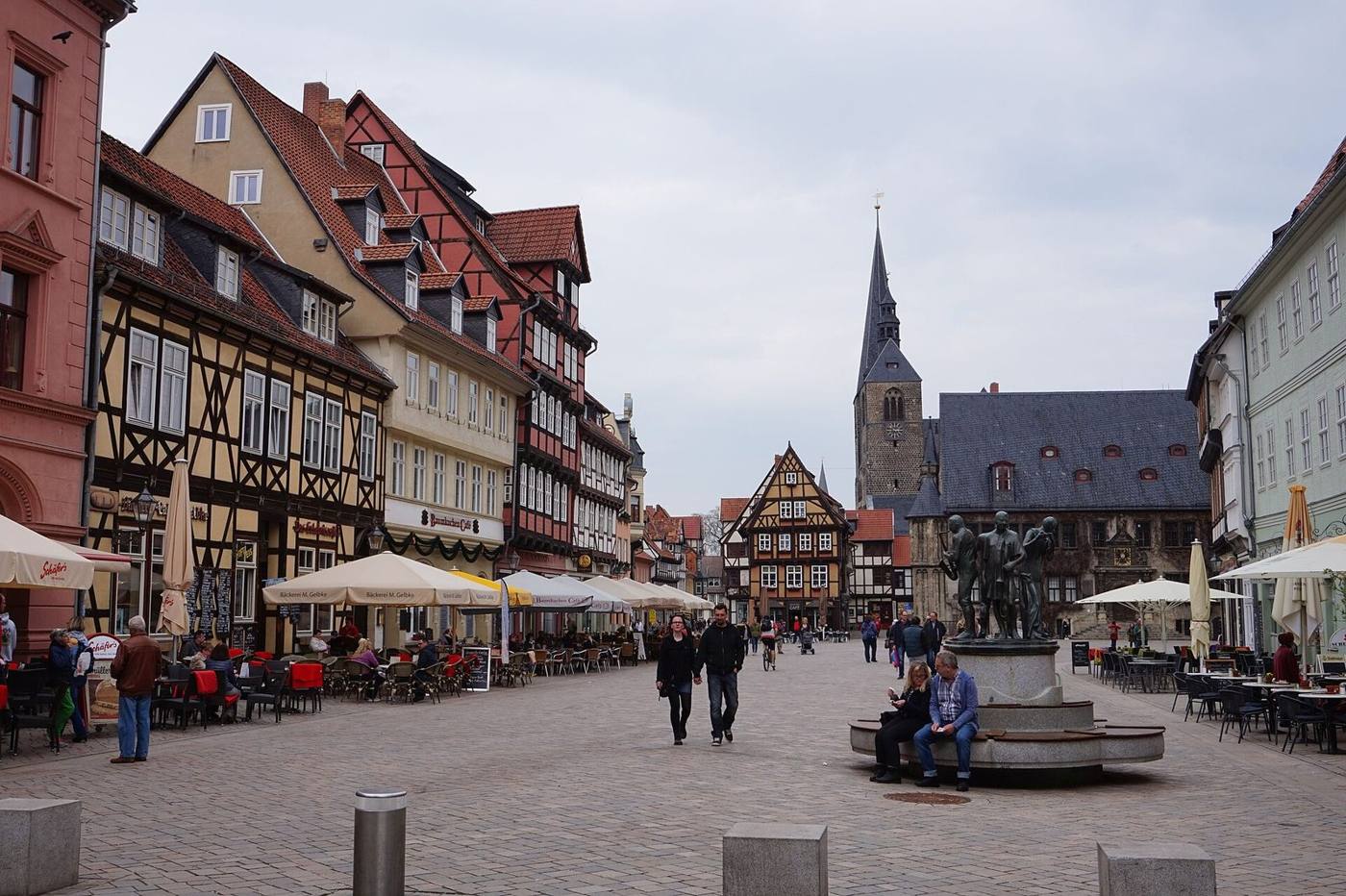
The witches' mountains: Quedlinburg with over a thousand half-timbered houses (UNESCO), Goslar and the Rammelsberg mine, Wernigerode and its castle, the steam train up the Brocken and the Bode gorge between Thale and Treseburg.
 5 daysEasy
The Spreewald and the Mecklenburg lakes
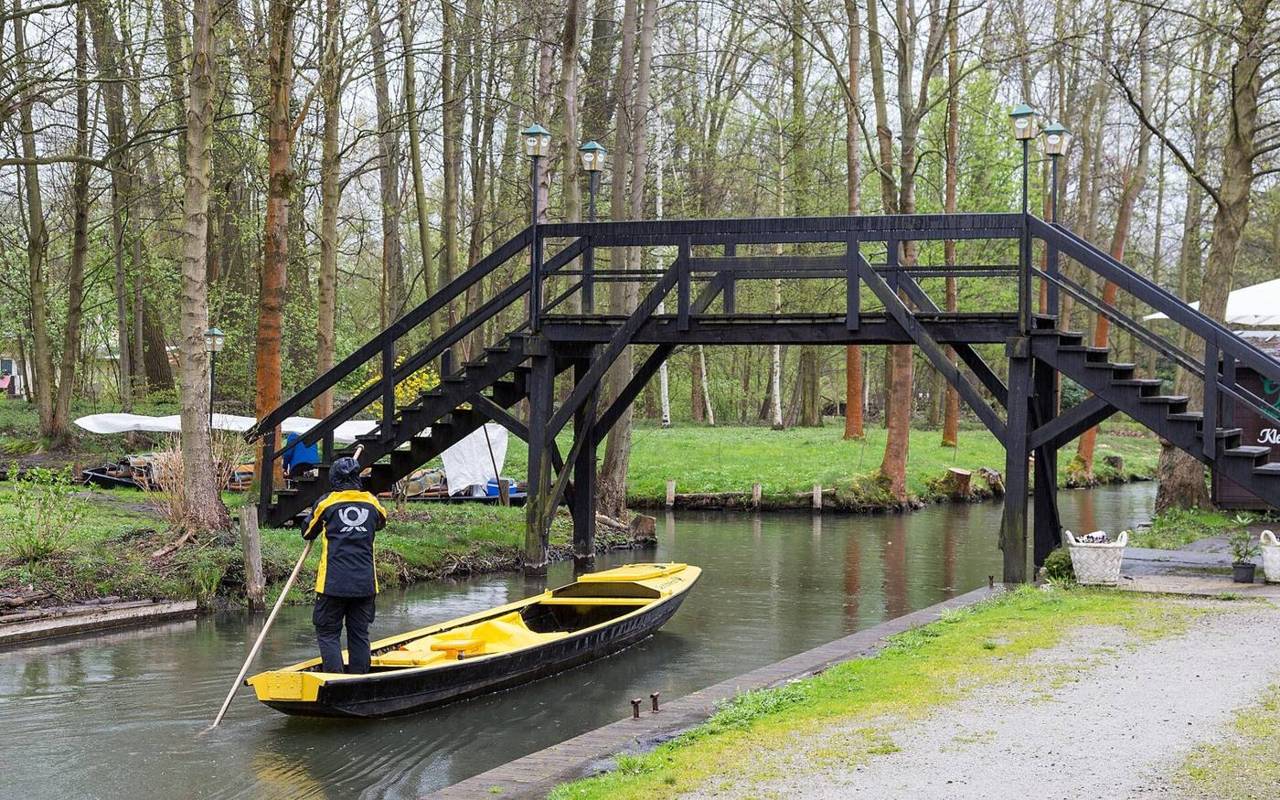
Water country north and south of Berlin: the Spreewald canals explored by punt, a UNESCO biosphere reserve, then Müritz National Park with hundreds of lakes to paddle and Schwerin Castle on its island.
 3 daysEasy
Bauhaus and Luther: Dessau, Wittenberg and Wörlitz
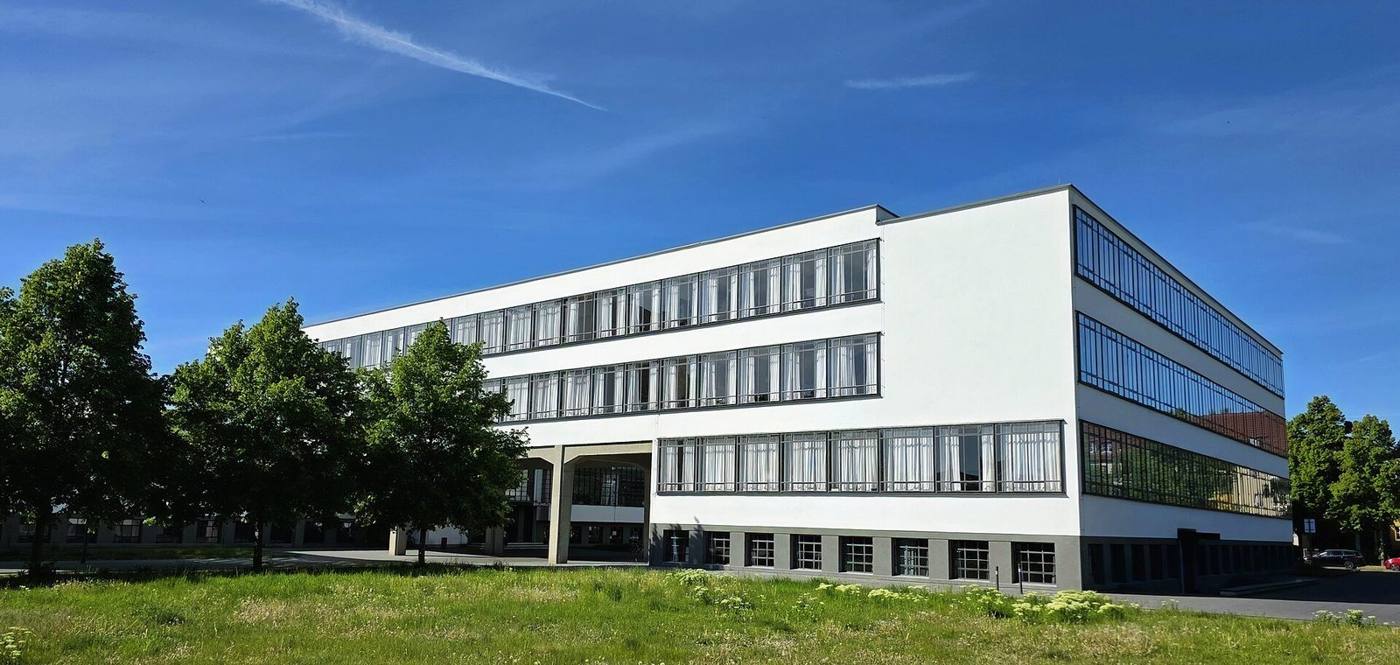
Three UNESCO sites close together: the Bauhaus building and the Masters' Houses in Dessau, the Luther sites in Wittenberg with the Castle Church and the reformer's house, and the Dessau-Wörlitz Garden Realm, the first great English-style landscape park on the Continent.