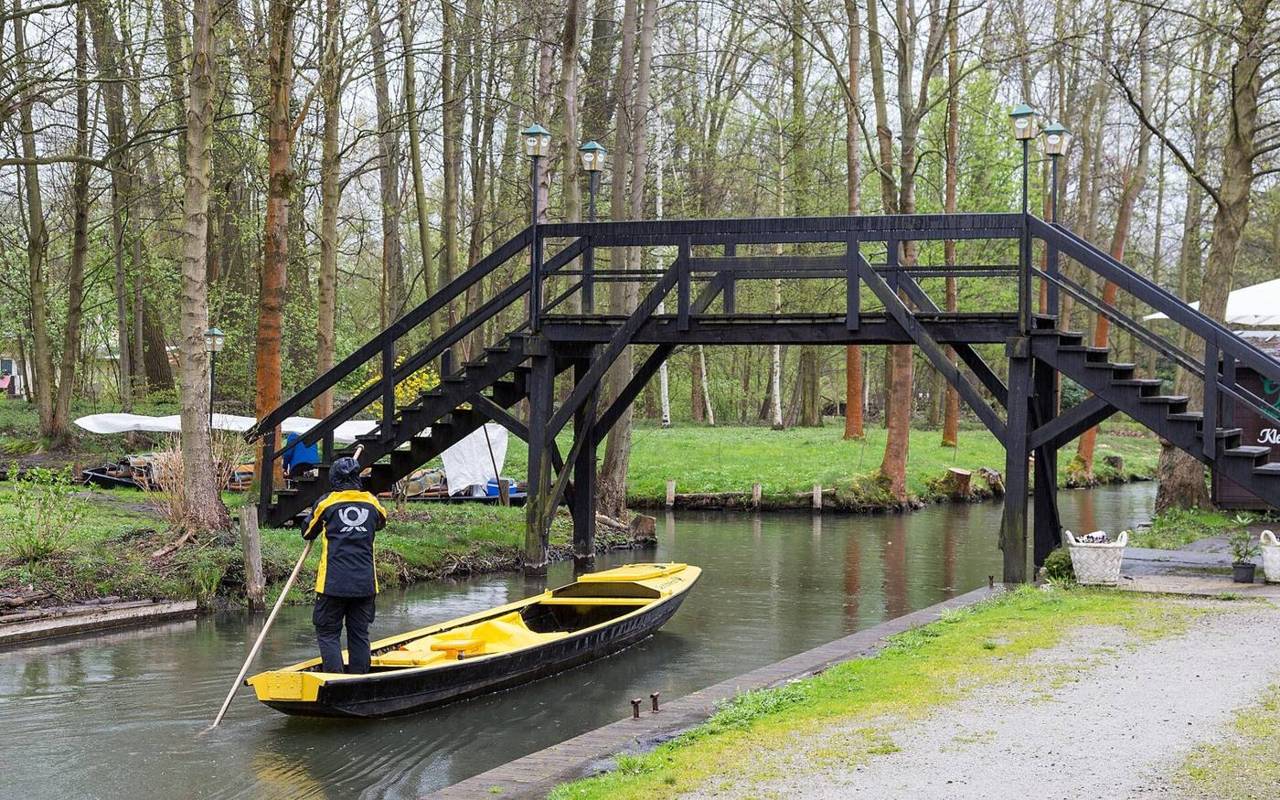
The Spreewald and the Mecklenburg lakes
Water country north and south of Berlin: the Spreewald canals explored by punt, a UNESCO biosphere reserve, then Müritz National Park with hundreds of lakes to paddle and Schwerin Castle on its island.
- Berlin
- Lübbenau
- Waren
- Schwerin
Day by day
- Day 1
From Berlin to Lübbenau and a first boat trip on the canals
This trip takes you to two watery landscapes north and south of Berlin that are little known outside Germany. The Spreewald is a maze of canals in the woods, where people travelled by boat for centuries. The Mecklenburg lakes are hundreds of lakes between forests and fields, with a national park full of birds. Over five days you travel by boat, canoe and bike, and finish in the castle city of Schwerin.
From Berlin the regional train reaches Lübbenau in about an hour. The town is the gateway to the Spreewald, a UNESCO biosphere reserve where the river Spree splits into a network of canals hundreds of kilometres long, among wet meadows, alder trees and small wooden houses.
The Sorbs, a Slavic minority with their own language, have lived here for centuries, which is why many signs are written in two languages, German and Sorbian.
In the afternoon take your first trip on a traditional boat, long and flat, pushed with a pole by the boatman, rather like a gondola. Trips of different lengths leave from the harbour in Lübbenau: to begin with, an hour or two on the canals near the town is enough.
In the evening try the Spreewald pickled gherkins, a speciality protected by the European Union, and dishes with potatoes, quark and linseed oil.
Spend the night in Lübbenau.
Practical tip: Germany has extended its land border checks until March 2027, so always carry your passport or national identity card. In summer there are plenty of mosquitoes on the canals: bring repellent.
- Day 2
The Spreewald by canoe or bike and the village of Lehde
Today you explore the Spreewald on your own. The best way is by canoe or kayak, easy to hire in Lübbenau. The canals are calm, with almost no current, and suit even people who have never paddled. There are signs at the junctions, but take a canal map, as it is easy to get lost.
Follow the rules: in some parts of the reserve boating is banned to protect nature, and the boatmen's punts always have right of way.
A few kilometres from Lübbenau, on the water, lies the village of Lehde, where some houses could once be reached only by boat. Here an open air museum with old wooden farmhouses, barns, tools and furniture shows how people lived in the Spreewald in the nineteenth century, between fishing, vegetable plots and carrying hay by boat. In summer the post is still delivered by boat in some areas.
If you prefer cycling, a network of paths follows the banks and tracks between the meadows, mostly flat. A loop between Lübbenau, Lehde and the nearby villages takes half a day at an easy pace.
In the afternoon stop in one of the small villages and look at the reed roofed houses and gardens along the water. The late afternoon light on the canals is very beautiful.
Spend another night in Lübbenau.
Practical tip: on summer weekends the Spreewald gets very busy. Set off early by canoe and choose the canals furthest from town to find some quiet. Check the museum's opening times, as it closes or opens less in winter.
- Day 3
Transfer to Waren, on Lake Müritz
Today is a travel day. From Lübbenau take the train to Berlin and then another north to Waren, on the shore of Lake Müritz. With one change the journey takes half a day. By car the road goes through Berlin and crosses Brandenburg, a region of pine woods, lakes and brick villages.
Mecklenburg is known as the land of a thousand lakes. The landscape is gentle, with low hills left by the glaciers of the last ice age, rapeseed fields, tree lined avenues and big skies. The Müritz is the largest lake lying entirely within Germany, so wide that in places you cannot see the other shore.
Waren is a quiet small town, with a little old centre of low houses, two brick churches and a harbour full of sailing boats. In summer boats leave the harbour for trips on the lake and along the canals that link it to the other lakes.
In the afternoon walk along the waterfront and visit the town's nature museum, which has aquariums with fish from the Mecklenburg lakes and explains the wildlife of the national park. It is a good way to prepare for tomorrow.
At sunset sit on the jetty. Herons and swans often come in from the lake, and the light on the water changes colour slowly.
Spend the night in Waren.
Practical tip: if you travel by train with a bike, on German regional trains a bike usually needs its own ticket. Otherwise, bikes and canoes are easy to hire in Waren.
- Day 4
Müritz National Park by canoe
Müritz National Park stretches east of Waren and is one of Germany's great nature reserves. It has more than a hundred lakes, bogs, wet meadows and forests of pine and beech. Part of its ancient beech woods, at Serrahn, is a UNESCO World Heritage Site together with other beech forests of Europe.
The best way to discover it is by canoe. Several local operators hire canoes and arrange transport to the starting point. One of the most popular routes runs across small lakes linked by channels near the source of the river Havel, among reed beds and woods. Distances are short and the water is calm.
In the park you may paddle only on marked routes, and some areas are closed to protect nesting birds. Respect the signs and do not go ashore outside the marked stopping places.
The park is famous for its birds. Ospreys nest here and plunge into the water to catch fish, as does the white tailed eagle, Germany's largest bird of prey. In autumn thousands of cranes stop in the meadows and bogs during their migration, and at dawn and dusk you can hear their calls from far away.
If you would rather not paddle, you can tour the park by bike on the forest roads or on foot to the observation towers above the lakes.
In the evening return to Waren for the night.
Practical tip: bring binoculars, water and a waterproof bag for your phone. The best time to see the cranes is September to October: ask at the park visitor centre where they are gathering.
- Day 5
Schwerin Castle and the return to Berlin
Leave Waren in the morning and head west to Schwerin, the capital of Mecklenburg Western Pomerania, about an hour and a half by train or car. The city is surrounded by lakes and has an elegant centre with fine buildings and well kept squares.
Its symbol is the castle, built on an island in Lake Schwerin. With its towers, gilded domes and pointed roofs it looks like something from a fairy tale. It was the residence of the grand dukes of Mecklenburg, and its present form dates from the nineteenth century, inspired by the châteaux of the Loire. Today it houses the regional parliament and a museum with the state rooms. Since 2024 the castle and the city's residence buildings have been a UNESCO World Heritage Site.
The rooms can be visited at certain times, and some may be closed for works: check before you go. Even without going inside, it is worth walking around the island and through the castle's baroque garden, with its canals and statues.
After the visit stroll through the old town, go up to the Gothic brick cathedral if it is open, and down to the lakeside. In summer boats leave the harbour for trips around the lake.
In the afternoon take the train to Berlin, about two hours, to head home or continue your trip.
Practical tip: if you have more time, it is worth staying a night in Schwerin to see the castle lit up at sunset from the lakeside. Regional train tickets for the return are easy to buy at the station or online.
A relaxed trip, good for families. The Spreewald is an hour from Berlin by train; for the Mecklenburg lakes a car is more practical. Canoes are rented with route maps; in the park's protected zones boat access is restricted. A valid identity card is enough for EU citizens. Germany has reintroduced spot checks at all its land borders, extended until March 2027: keep your document to hand on trains and in the car too.
Before you go
- Documents and visa
- A valid identity card or passport is enough for EU citizens. German land border checks have been extended until March 2027: always carry your document.
- Health and vaccines
- No vaccines required. EU citizens should carry the European Health Insurance Card. Emergencies: 112, police 110.
- Money and payments
- Euro. Cards are increasingly accepted, but many bars, bakeries and beer halls still take cash only.
- Power sockets
- Types C and F, 230 volts.
- Time zone
- UTC+1, UTC+2 in summer.
- Safety
- The United States rates Germany level 2 for terrorism. In stations and crowded markets watch out for pickpockets. Official advice: GOV.UK.
Information checked in November 2026 for Italian and EU citizens. Rules change: always check before you travel.
Variations
In 3 days: just the Spreewald, with an extra night for a full day by canoe.
In 7 days: add the Baltic coast, with Wismar and Stralsund, after Schwerin.
Frequently asked questions
Do I need canoeing experience?
No. The Spreewald canals and the park lakes are calm. You just need to be able to swim and follow the instructions of the hire company.
When is the best time to go?
From May to September for canoeing and boat trips. September and October are ideal for the cranes and for avoiding the crowds.
Can I do it without a car?
Yes, with regional trains and a bike. A car only helps to reach the more remote starting points in the park.
Indicative itinerary written by World Atlas. Before booking, check timetables, seasonal openings, documents and safety.
 3 daysEasy
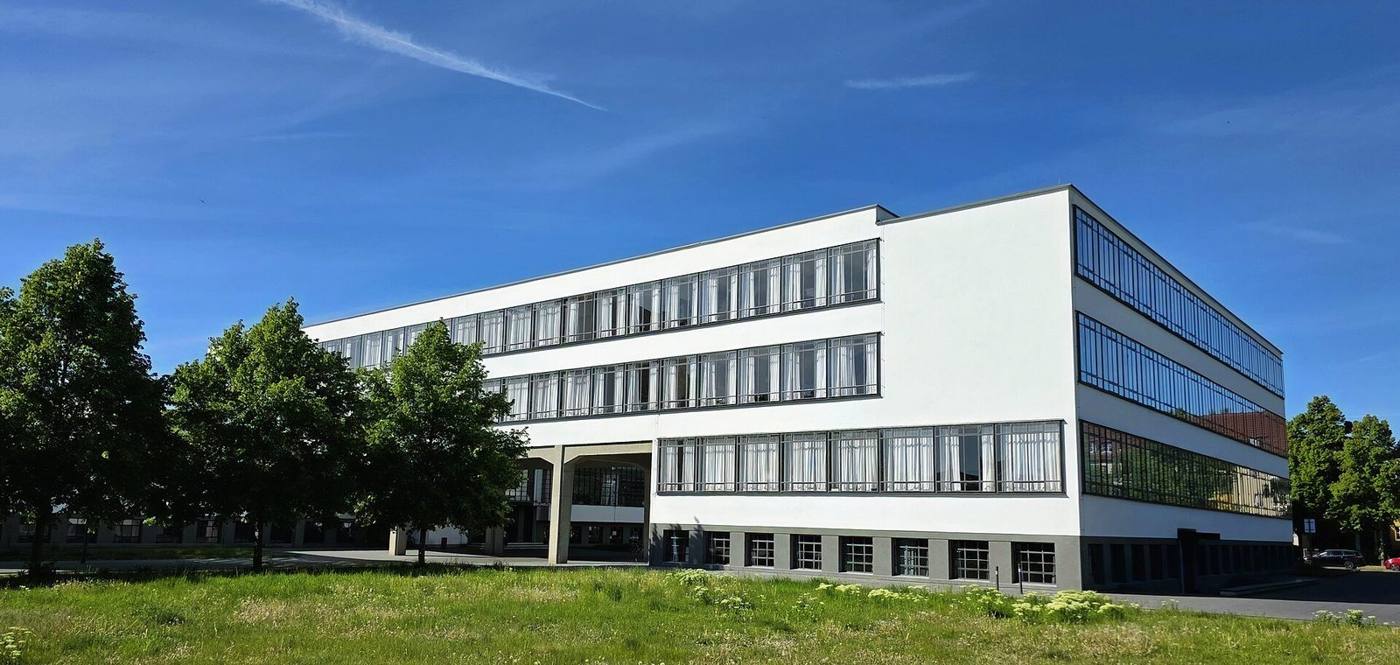
Bauhaus and Luther: Dessau, Wittenberg and Wörlitz
Three UNESCO sites close together: the Bauhaus building and the Masters' Houses in Dessau, the Luther sites in Wittenberg with the Castle Church and the reformer's house, and the Dessau-Wörlitz Garden Realm, the first great English-style landscape park on the Continent.
 5 daysModerate
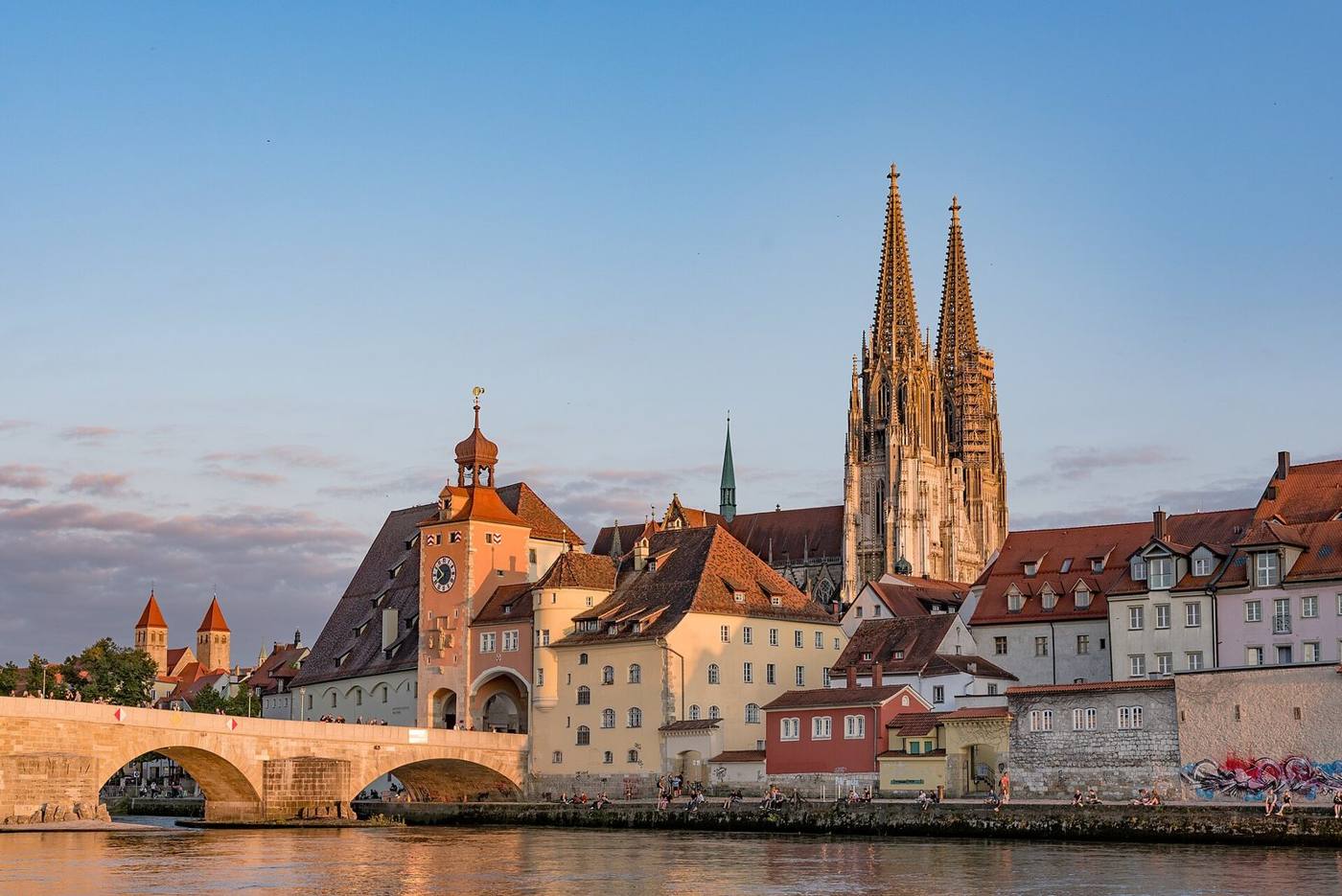
The Danube by bike from Regensburg to Passau
The Bavarian Danube cycle path: the Danube gorge by boat to Weltenburg Abbey, Regensburg (UNESCO) with its stone bridge, the Walhalla temple, Straubing, the river plain and Passau, the city of three rivers.
 5 daysEasy
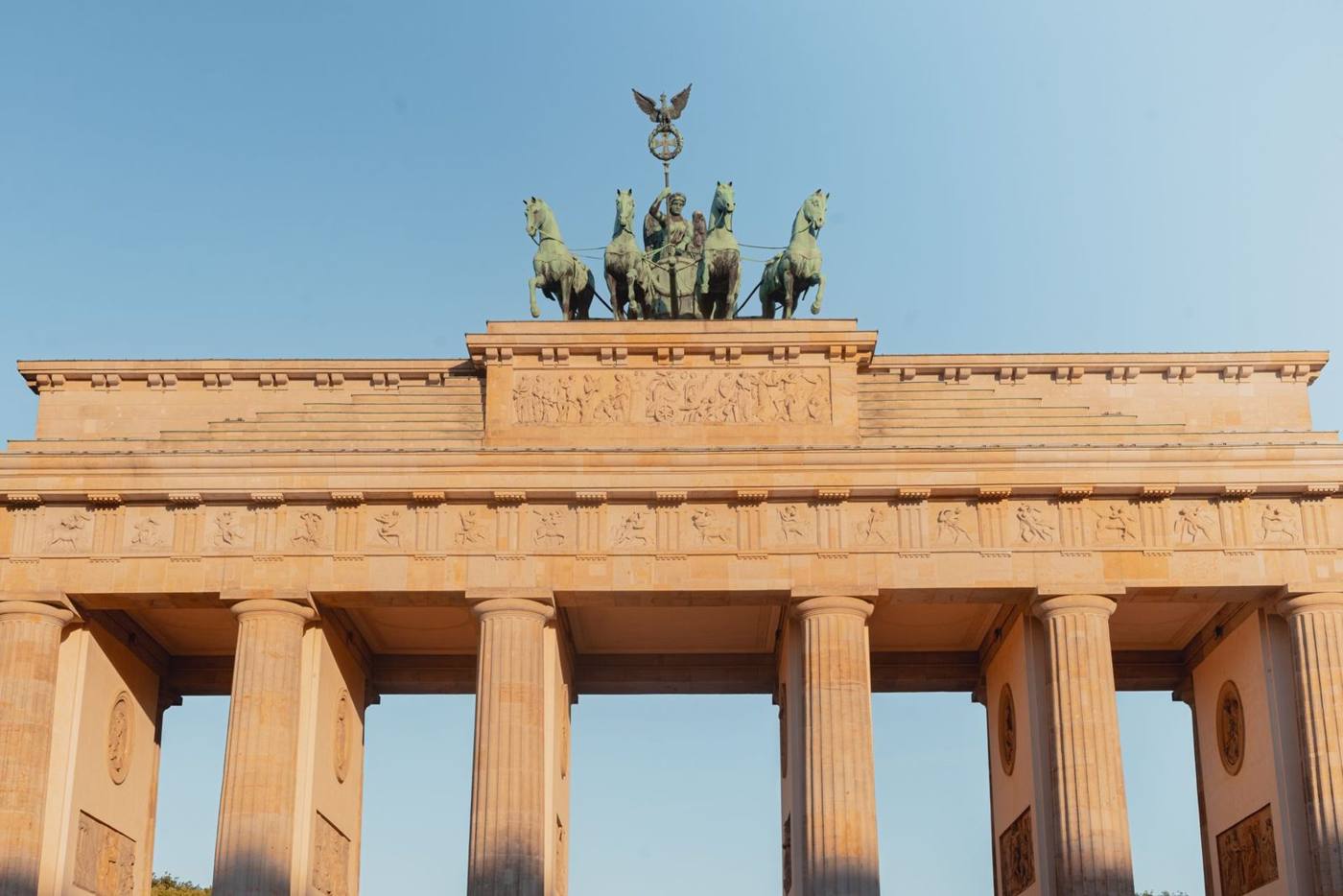
Berlin in five days
The Brandenburg Gate and the Reichstag, Museum Island, the Wall and the East Side Gallery, the Kreuzberg and Prenzlauer Berg districts and Potsdam.