Sulawesi: Tana Toraja and the Togian Islands
The boat-shaped houses and cliff tombs of the Toraja, then the Togian Islands, among the most remote and unspoilt in Indonesia.
- Makassar
- Rantepao
- Tana Toraja
- Tentena
- Ampana
- Togian Islands
- Gorontalo
Day by day
- Day 1
Arrival in Makassar
This trip crosses Sulawesi from south to north, by land and by sea. It begins in Makassar, the great port city of the south, climbs into the mountains to Tana Toraja, the land of villages with boat shaped roofs and graves carved into the rock, then continues towards Lake Poso and the Gulf of Tomini. Here you spend five days in the Togian Islands, among coral reefs, lagoons and Bajau fishing villages, before reaching Gorontalo by ferry. It is a long and demanding trip, with very long roads and simple accommodation.
Before you go: Italian citizens need a valid passport and the visa on arrival, which costs 500,000 rupiah and can also be paid online before departure; check the amount before leaving. Other nationalities should check their own rules. Talk to your doctor about vaccinations and malaria prevention.
Some areas on this trip are close to borders or places where the situation changes often: check your government's travel advice before booking and again before you leave.
You land at Makassar airport, usually on a flight from Jakarta or Bali. In the afternoon visit Fort Rotterdam, a stone fortress by the sea, rebuilt by the Dutch in the 17th century on the site of a fort of the kingdom of Gowa. Inside are colonial buildings and a museum on the history of South Sulawesi.
At sunset walk along Losari seafront, where local people gather in the evening. Have dinner with coto Makassar, a spiced beef soup, and pisang epe, grilled bananas with palm sugar.
Sleep in Makassar, one night.
Practical tip: carry plenty of cash in rupiah for the whole trip. There are cash machines in Tana Toraja, but there are none in the Togian Islands.
- Day 2
The pinisi harbour and the road to Tana Toraja
Wake up early and go to Paotere harbour, the old port of Makassar. Here the pinisi are moored, the large wooden sailing ships built by the Bugis, the seafaring people of South Sulawesi. The boats, painted in bright colours, load and unload goods for the islands. Walk slowly along the quay and watch the dockers at work and the fish market nearby.
Then the long road north begins. It is many hours of travel, almost the whole day. First the road runs across the coastal plain, among rice fields, villages of Bugis houses on wooden stilts and mosques. Then it climbs towards the mountains of Enrekang, with bends, views over the valleys and fruit stalls along the road.
Stop for lunch at a small roadside restaurant and take a few breaks to stretch your legs. Towards evening you enter Toraja country: the landscape changes, the hills are green with terraced rice fields and the first tongkonan houses appear, with their great curved roofs.
You reach Rantepao, the main town of the area, which will be your base for four nights.
Sleep in Rantepao, for four nights.
Practical tip: for the road from Makassar take a car with a driver and leave early. Do not travel at night on these roads: they are narrow, full of bends and poorly lit. Bring water, snacks and a light jacket, because in the mountains it is cool in the evening.
- Day 3
Kete Kesu and the graves of Londa
Today you enter Toraja culture. The Toraja live in villages of tongkonan, family houses built on wooden posts, with a high curved roof that rises at each end like the prow of a boat. In front of the houses stand the rice barns, smaller, and on the facades hang buffalo horns, a sign of the ceremonies held by the family.
In the morning visit Kete Kesu, one of the best known villages, with a row of tongkonan decorated with carvings in red, black, white and yellow. Behind the village a path leads to a rock face where old wooden coffins hang and the bones of the dead can be seen.
In the afternoon go to Londa, where the graves lie inside natural caves in the rock. On the cliff, above the entrance, are the tau tau, wooden statues that represent the dead, dressed in real clothes. With a guide and a lantern you go into the caves, among coffins and skulls. For the Toraja death is an important part of life, and these places are sacred.
In the evening return to Rantepao and taste pa'piong, meat or fish cooked with vegetables inside bamboo tubes over the fire.
Practical tip: hire a local Toraja guide for all your days in the area. They explain the meanings, introduce you to families and know where ceremonies are taking place. You pay an entrance fee at the sites: check prices and times.
- Day 4
Lemo, Kambira and a funeral ceremony
In the morning go to Lemo, a great rock face among the rice fields where square graves have been carved. In front of the graves, on small balconies, the tau tau look out over the valley in neat rows, like silent spectators. The best light is in the morning.
Then visit Kambira, where there is a large tree used in the past as a grave for small children who died before they had teeth. The small openings in the trunk were closed with palm fibre, and the wood grew around them. It is a quiet place, to visit in silence.
If it is the right season, above all in July and August, your guide may find a funeral ceremony, the rambu solo, which you can attend at the family's invitation. It is a large event lasting several days, with hundreds of people, songs, dances, food and the sacrifice of buffalo and pigs. For the family it is the most important moment, and it may be prepared for years.
If you attend, bring a gift for the family, usually sugar or cigarettes, sit where you are shown and follow your guide. The sacrifice of the animals can be hard to watch: decide beforehand whether you want to stay.
Practical tip: at ceremonies wear dark colours, black or brown, and do not photograph grieving relatives without asking. Remember that you are a guest at a private moment.
- Day 5
Batutumonga and the rice terraces
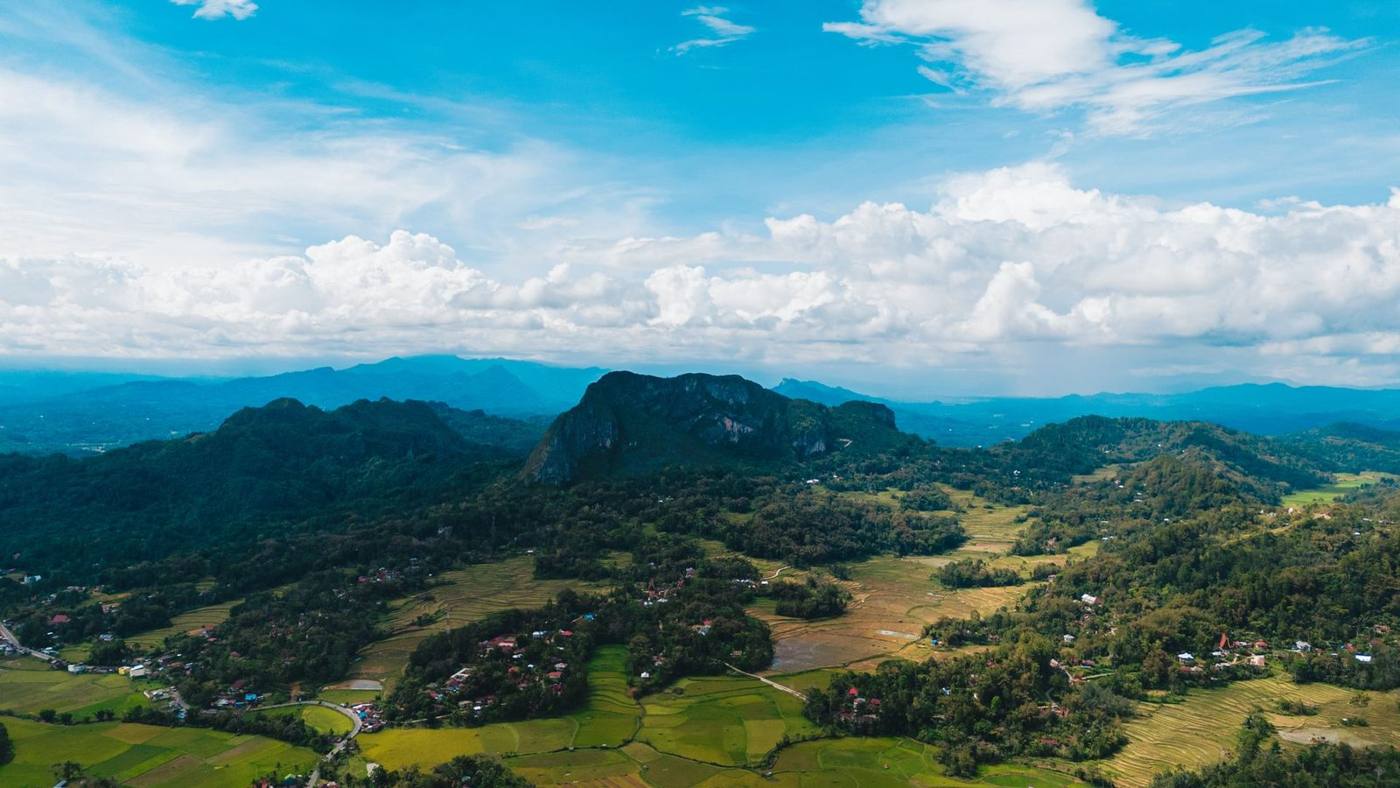
Today is a day of nature. In the morning climb towards Batutumonga, a village on the slopes of Mount Sesean, north of Rantepao. The road climbs among terraced rice fields that step down the hillsides like green stairs, tongkonan villages and bamboo groves. From above the view over the Rantepao valley is wide, especially in the morning light.
Near Batutumonga is Lo'ko Mata, an enormous boulder in the middle of the fields, carved with many family graves. The wooden doors are decorated, and some graves are still in use.
Then walk with your guide through the countryside, going down on foot along the paths among the rice fields. You pass through villages where people work in the fields, children wave and buffalo wallow in the mud. It is the best way to see the daily life of the Toraja, far from the most visited sites.
In the middle of the day stop at a family home or a small café for a simple lunch and a cup of Toraja coffee, grown on these mountains and famous throughout Indonesia. The driver waits for you further down to take you back to Rantepao.
In the evening rest: tomorrow there is still a great deal to see.
Practical tip: on the paths among the rice fields walk carefully along the dykes, because they are narrow and slippery. Wear shoes that can get wet and bring an umbrella for the afternoon rain.
- Day 6
The buffalo market and the megaliths of Bori
The Bolu buffalo market, near Rantepao, follows a calendar of several days: ask your guide which day it falls on during your visit. If it coincides, go in the morning. It is a unique sight: hundreds of buffalo, some of them black and white and very valuable, are inspected and sold. For the Toraja the buffalo is the symbol of wealth, and the price of a rare animal can be extremely high. Next to it is the food market, with pigs, vegetables and coffee.
Then go to Bori Kalimbuang, a field with dozens of menhirs, large standing stones of different heights. Each stone was raised for an important funeral ceremony of a person of high rank. Near the field is a rock face with carved graves.
In the afternoon, if there is time, visit a village where wood is carved and painted with traditional Toraja motifs: every design has a meaning, such as the buffalo, the cockerel or the sun. You can buy a small carved panel directly from the person who made it.
It is your last evening in Tana Toraja. Pack your bag and thank your guide.
Practical tip: at the buffalo market watch out for the animals, which can move suddenly. Stay at the sides and let the handlers pass. Keep a safe distance behind the buffalo too, as they can kick.
- Day 7
The road to Lake Poso
Today the long journey north begins. Leave Rantepao at dawn and head down towards the coast of the Gulf of Bone, then continue north on the road that crosses the province. It is a full day in the car, with many hours on the road, bends and stretches of roadworks.
The landscape changes constantly: cocoa and palm plantations, fishing villages, mountain forests. You stop for lunch along the way and take regular breaks so that the driver can rest.
In the afternoon you reach the southern shore of Lake Poso, one of the deepest lakes in Indonesia, with very clean water and mountains all around. The road runs along the lake to Tentena, the town on the northern shore, where the lake becomes a river.
Tentena is a quiet town, inhabited largely by Christian Pamona people, with churches, small houses and a long bridge over the river where fishermen set bamboo traps for eels.
In the evening have dinner with fish from the lake and rest after the journey.
Sleep in Tentena, one night.
Practical tip: in this part of Sulawesi travel only by day, with a local driver, and stay on the main roads. If the journey runs late, stop for the night along the way rather than driving after sunset. Agree on the plan for the day with your driver before you set off.
- Day 8
Saluopa waterfall and Ampana
Early in the morning visit Saluopa waterfall, in the forest a short distance from Tentena. The water flows down many steps of limestone, forming small pools where you can swim. The path is short and passes among tall trees and ferns. In the morning light the forest is cool and silent.
Then return to Tentena and head north. The road passes through the town of Poso without stopping and continues along the coast of the Gulf of Tomini to Ampana, a small port town from which boats leave for the Togian Islands. The journey takes several hours.
You reach Ampana in the afternoon. Go to the harbour to check the time of the next day's boat: departures for the Togians are not daily and can change. Buy here what you need for the coming days: sun cream, medicines, snacks and cash, because there are very few shops on the islands.
In the evening eat at a small restaurant by the harbour: grilled fish, rice and sambal, the Indonesian chilli sauce.
Sleep in Ampana, one night.
Practical tip: do not stop in Poso and follow your driver's advice. Always keep your passport to hand: there may be checkpoints along the road. Keep a photocopy of it, too, in a separate bag.
- Day 9
By boat to the Togian Islands
In the morning take the boat from Ampana to the Togian Islands. The crossing takes a few hours, on the calm sea of the Gulf of Tomini, and passes close to forested islets and villages on stilts. The boat arrives at Wakai, the main village, and from there a smaller boat takes you to the island where you are staying.
The Togians are an archipelago of dozens of islands, largely protected by a national park. They are covered in forest and surrounded by coral reefs, lagoons and mangroves. There are no roads, cars or large resorts here: you live in simple wooden bungalows by the sea, you get around by boat and electricity often arrives only in the evening.
In the afternoon go for your first snorkel in front of the bungalow. Often you only need to wade in from the beach to see corals, clownfish, pufferfish and starfish. The water is warm and clear.
At sunset watch the sky change colour above the islands, then have dinner with fish caught that day. In the evening, far from all lights, the sky is full of stars.
Sleep in the Togian Islands, for five nights.
Practical tip: on the islands there is little or no phone signal. Let your family know before you leave and download maps and music while you still have a connection.
- Day 10
The coral reefs
Today is the day of the sea. In the morning set off by boat with a guide for a snorkelling trip on the coral reefs around the islands. The Togians have many types of reef: walls that drop into the blue, fringing reefs along the coasts and small atolls. It is one of the areas of Indonesia with the greatest variety of corals.
In the water you see hard and soft corals of many colours, sea fans, sponges, shoals of fish, turtles and, with luck, small reef sharks passing at a distance. The walls are the most spectacular, but they require care with the currents: always follow your guide.
If you are certified, you can dive with the centre on your island. One of the most famous sites is the wreck of a Second World War aircraft, lying on the seabed near one of the islands, for experienced divers.
At midday you have lunch on a deserted beach, in the shade of the palms. In the afternoon rest, read a book in the hammock or snorkel again in front of the bungalow.
In the evening, after dark, try night snorkelling with a torch, only with a guide: octopus, crabs and fish that hide during the day come out.
Practical tip: do not touch the coral, do not stand on the reef and use a reef friendly sun cream. For the national park, check prices and times.
- Day 11
The jellyfish lake
Today you visit one of the strangest places in the Togians: a saltwater lake in the middle of one of the islands, enclosed by forest and connected to the sea only through the rock. The lake is home to thousands of jellyfish that over time have almost entirely lost the ability to sting.
The boat drops you on the coast, and after a short walk through the forest you reach the shore of the lake. You enter the water slowly, with mask and snorkel, and swim among the jellyfish drifting gently around you, orange and transparent. Do not use fins, so as not to harm them, and move slowly.
The number of jellyfish changes with the season and the weather: sometimes there are a great many, sometimes fewer. Your guide tells you the best time of day.
In the afternoon return by boat, stopping at a beach for a swim and at a coconut plantation to drink a fresh coconut. Along the way look at the mangroves, home to birds and mudskippers.
In the evening rest in your bungalow, listening to the sea beneath the wooden boards.
Practical tip: before entering the lake wash off sun cream and repellent with a shower or in the sea. The chemicals harm the jellyfish and the water of the lake. Leave nothing behind on the path through the forest.
- Day 12
The Bajau villages
Today you meet the Bajau, a people of fishermen who have lived on the sea for centuries, between Sulawesi, the Philippines and Borneo. In the past they spent almost their whole lives in boats; today many live in villages of wooden houses built on stilts above the water.
With a guide visit one of the Bajau villages of the Togians. The houses are joined by long wooden walkways, and the fishermen's canoes pass underneath. In some villages a long wooden bridge links the houses on the sea to the nearby island, where the school, the fields and fresh water are.
Walk slowly, say hello and ask your guide to explain how they fish, how the boats are built and how people live without land beneath their feet. Bajau children swim and dive like fish from a very young age.
In the afternoon return to your island and have a last long snorkel, or walk in the island's forest, where you hear hornbills and sometimes see macaques.
In the evening have dinner with fish, perhaps prepared in Bajau style, and watch the fishing boats go out with their lamps.
Practical tip: in the villages dress with shoulders and knees covered and always ask before taking photos. If you want to help, buy fish or local products rather than giving money to the children.
- Day 13
A slow day on the islands
Today is a day to yourself, with no programme. After days of long roads and outings, enjoy the rhythm of the islands: breakfast on the terrace over the sea, a swim, a book, a hammock in the shade.
If you feel like moving, there are several things to do. You can hire a kayak and paddle along the coast, among mangroves and small beaches. You can take a trip to Una Una, the volcanic island to the north of the archipelago, with the Colo volcano, which had a major eruption in the 1980s: ask whether the sea and the volcano allow it. Or you can snorkel on a reef you have not yet seen.
In the afternoon walk across the island to a viewpoint, from which you see the other islands, the lagoons and the colours of the sea, from turquoise to deep blue. Bring water and a hat: even if the path is short, it is very hot in the sun.
It is your last evening in the Togians. Say goodbye to your hosts and pack your bag: tomorrow you leave early.
Practical tip: for the trip to Una Una you need a calm sea and a suitable boat. Always ask about the weather forecast and whether there are life jackets for everyone on board. If the sea is rough, give it up.
- Day 14
The ferry to Gorontalo
Today you leave the Togian Islands. A boat takes you to Wakai, where you board the ferry to Gorontalo, on the northern coast of the Gulf of Tomini. The journey is long, several hours or even a night, depending on the ship. Ferries do not leave every day: this day of the trip must be built around the real timetable.
The ferry is basic, with benches and sometimes cabins. Bring water, food, an inflatable pillow and something to cover yourself with, because the air conditioning can be strong. From the deck you watch the last Togian islands disappear over the horizon and, with luck, dolphins leaping near the ship. Keep the bag with your documents with you at all times.
You arrive in Gorontalo, a quiet Muslim city with a small centre, mosques and markets. If you arrive in time, take a walk in the centre and have dinner with a local dish, such as binte biluhuta, a sweetcorn soup with fish and grated coconut. After five days on the islands, the traffic and the scooters will feel strange.
Sleep in Gorontalo, one night.
Practical tip: buy your ferry ticket in advance if possible, and check the timetable the day before. If the sea is rough, departures can be postponed: always leave a spare day before your international flight.
- Day 15
Domestic flight and departure
In the morning go to Gorontalo airport and take a domestic flight to Makassar or Jakarta, where you continue on your flight home. Leave plenty of time between the two flights, because delays are frequent on domestic flights.
What to take home: Toraja coffee, small wooden panels carved with Toraja motifs, traditional textiles, coconut oil from the islands and spices from the market.
This trip has shown you a Sulawesi that few people know. You have walked among the pinisi in Makassar harbour, seen the tongkonan houses, the rock graves and the tau tau of Tana Toraja, and perhaps attended a funeral ceremony. You have crossed the island to Lake Poso, swum among the stingless jellyfish, snorkelled on the reefs of the Togians and visited the Bajau villages on the sea.
When to go: the best period is from June to September, when the roads are drier and the sea around the Togians is usually calm. Toraja ceremonies are concentrated above all in July and August. From November to March it rains heavily, the mountain roads are slower and some boats may be suspended. Remember that distances are great: do not cut the transfer days too short.
Practical tip: keep your passport to hand until boarding and check the time of your domestic flight again the day before, because it sometimes changes without notice.
A real journey, for travellers who accept very long roads and very simple lodging in exchange for cultures and islands few people see. Ferries to the Togians do not run daily, so the plan must be built around the schedule. Toraja ceremonies are mostly held in July and August.
Before you go
- Documents and visa
- Passport with at least six months' validity. Visa on arrival 500,000 rupiah for 30 days, extendable once, or online on the official immigration website. In Bali you also pay the 150,000 rupiah tourist levy.
- Health and vaccines
- No compulsory vaccines arriving from Europe. Protect yourself against mosquitoes because of dengue; Bali has rabies, so keep away from dogs and monkeys. The eastern regions carry malaria risk: ask your doctor. Emergencies: 110 police, 112 general number.
- Money and payments
- Indonesian rupiah. Cards work in hotels and shops in tourist areas; QR payments are widespread; markets and villages need cash.
- Power sockets
- Types C and F, 230 volts: the same round-pin sockets as much of Europe.
- Time zone
- The country has three time zones. Java is UTC+7, Bali UTC+8, with no daylight saving time.
- Safety
- Tourist areas are generally calm. The United States rates Indonesia level 2 and the Papua regions level 4. Active volcanoes may close on alert. Very severe drug penalties. Official advice: GOV.UK.
Information checked in November 2026 for Italian and EU citizens. Rules change: always check before you travel.
Variations
In 9 days: Makassar and four nights in Tana Toraja, returning to Makassar.
In 18 days: add two more nights in the Togians and, from Gorontalo, the Tangkoko reserve and the Bunaken marine park in the north.
Frequently asked questions
Can you attend a Toraja funeral ceremony?
Yes, but only at the invitation of the family, usually through your local guide. Ceremonies are concentrated in July and August. Bring a gift, wear dark clothes and remember that the sacrifice of buffalo and pigs is part of the rite.
How do you reach the Togian Islands?
From Ampana, on the coast of the Gulf of Tomini, by boat to Wakai, and then by small boats to the island where you are staying. Departures are not daily: build your plan around the timetables and leave spare days.
Is it sensible to travel in Central Sulawesi?
Travel only by day with a local driver, stay on the main roads and do not stop in Poso. Check your government's travel advice before booking and again before you leave.
Indicative itinerary written by World Atlas. Before booking, check timetables, seasonal openings, documents and safety.
 6 daysEasy
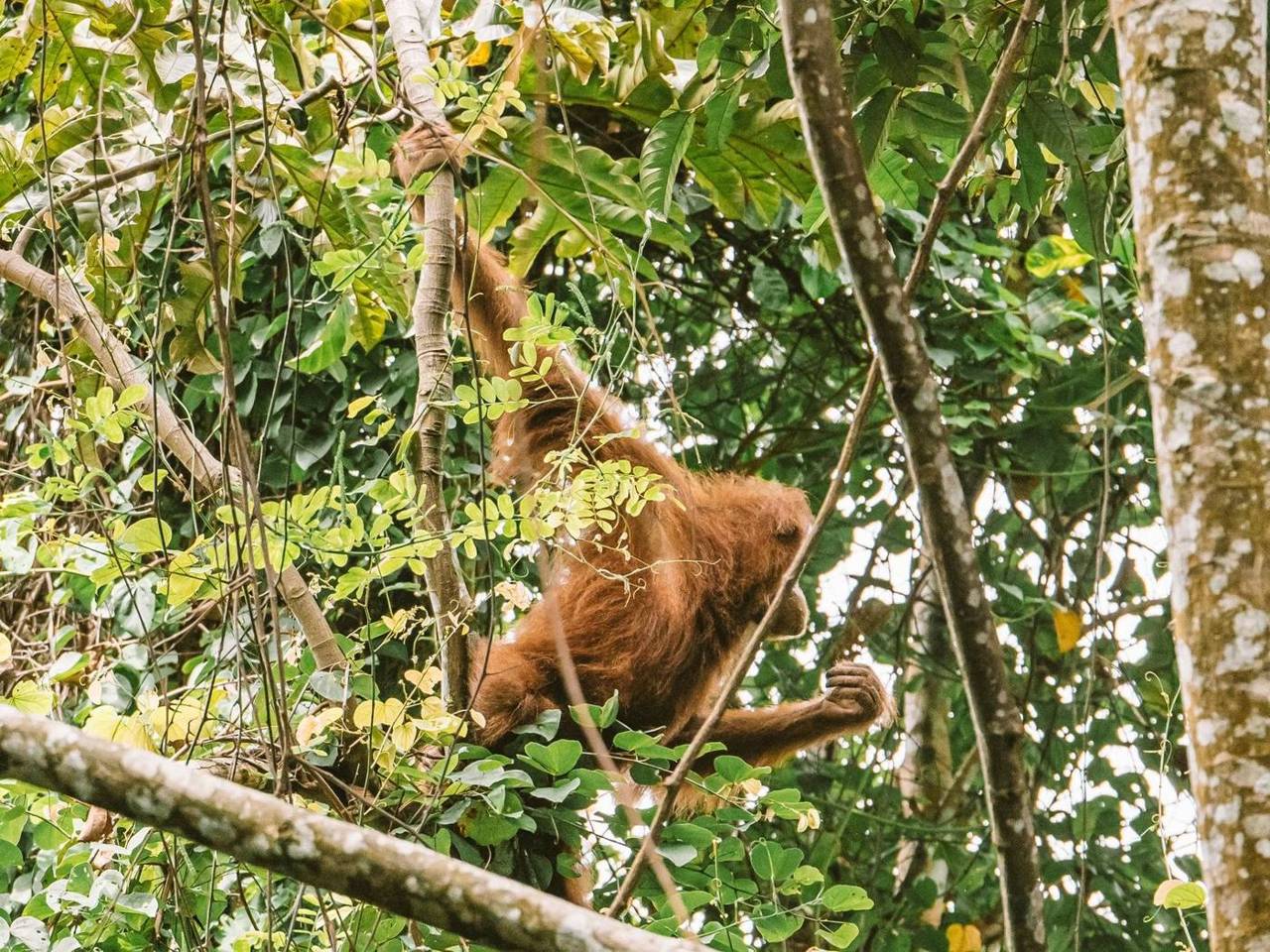
Borneo by klotok in Tanjung Puting
Three days on a wooden boat along the Sekonyer River, sleeping on deck, among orangutans, proboscis monkeys and fireflies.
 7 daysChallenging
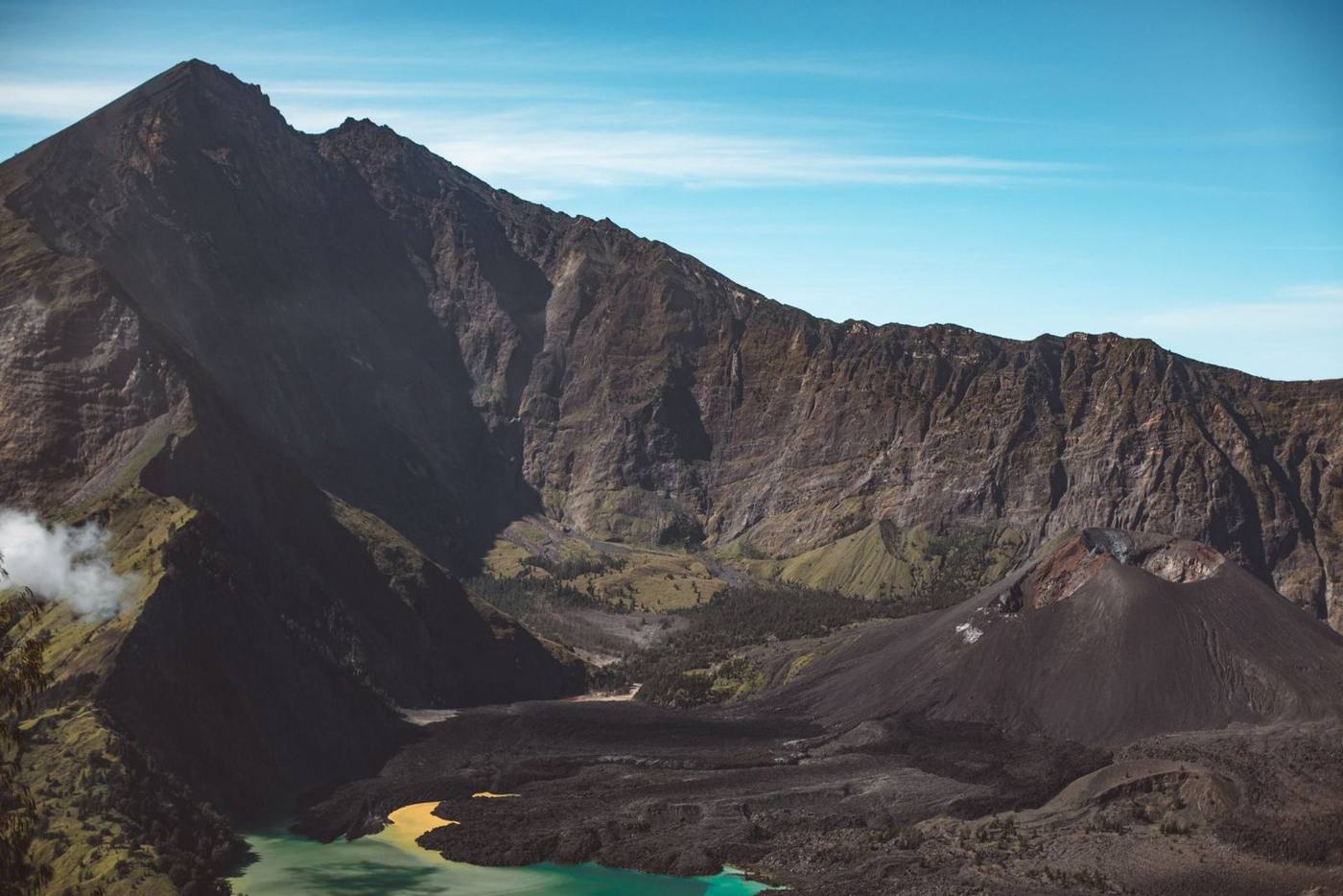
Lombok: trekking on Rinjani
Three days on Indonesia's second-highest volcano: the crater rim, Segara Anak lake and the 3,726-metre summit at dawn.
 16 daysModerate
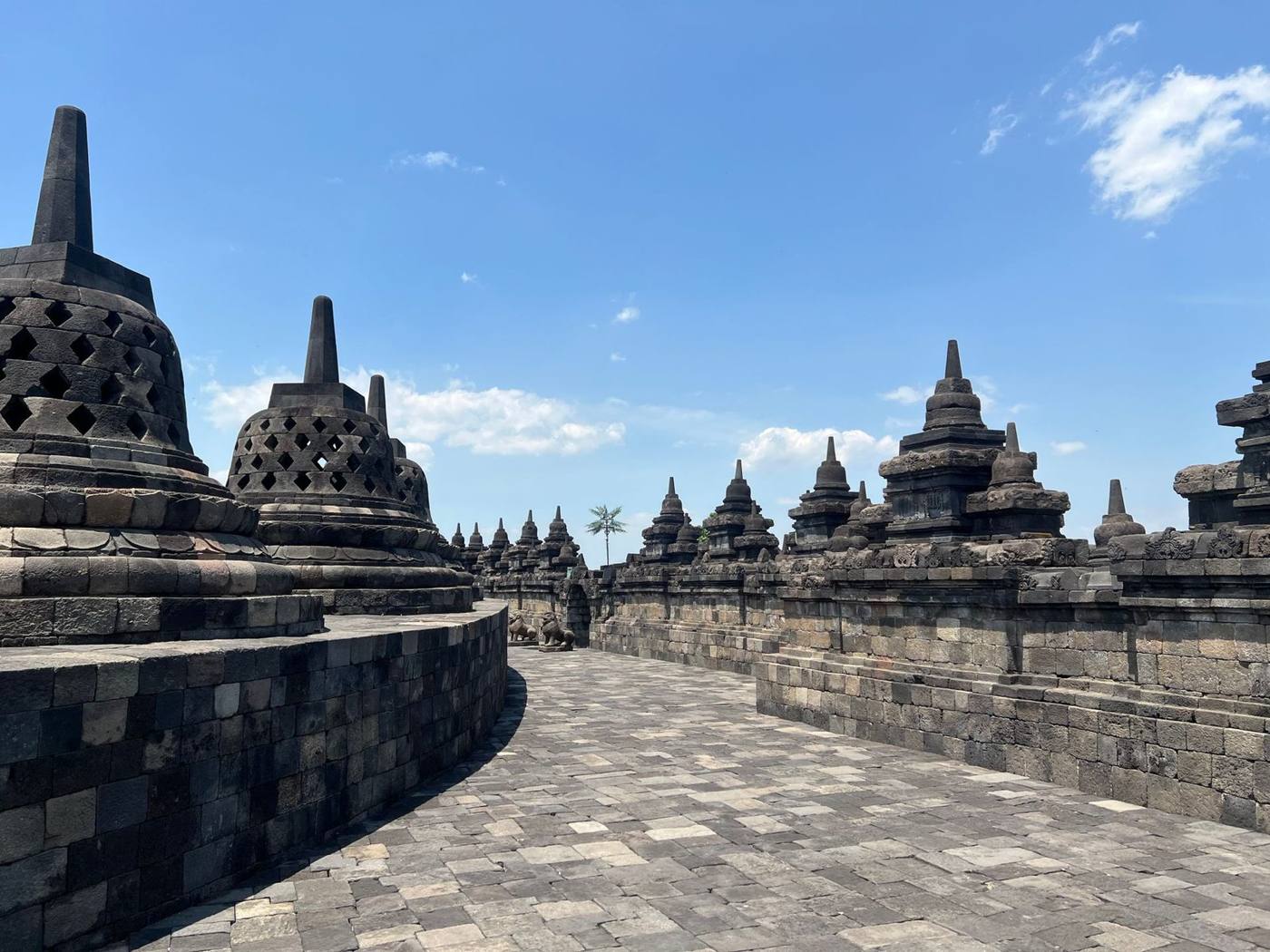
Great Indonesia: Java, Bali and Flores
The complete trip for a first visit: Borobudur and Bromo, Bali's rice terraces and the Komodo dragons.