Kyushu: volcanoes, hot springs and Nagasaki
The southern island away from the classic circuit: the active Aso crater, the hot springs of Kurokawa and Beppu, Nagasaki and the Sakurajima volcano.
- Fukuoka
- Nagasaki
- Kumamoto
- Aso
- Kurokawa Onsen
- Yufuin
- Beppu
- Kagoshima
- Sakurajima
Day by day
- Day 1
Arrival in Fukuoka and the yatai stalls
This trip crosses Kyushu, the southernmost of Japan's four main islands, a land of active volcanoes, hot springs, castles and ports open to the world: Fukuoka with its street stalls, Nagasaki with its history of trade and war, Kumamoto and its castle, the great caldera of Mount Aso, the hot spring villages of Kurokawa, Yufuin and Beppu, and Kagoshima facing the Sakurajima volcano.
Before you leave: check Japan's entry rules for your passport before you travel. When leaving Japan you pay a departure tax of 3,000 yen, usually included in the air fare. The seven day Japan Rail Pass costs 53,000 yen: for the journeys on this trip, compare it with single tickets or the regional Kyushu passes before buying.
You fly into Fukuoka airport, a few minutes by subway from the centre, one of the closest airports to a city anywhere in Japan.
In the afternoon rest after the journey and walk around the Tenjin district or Ohori park, with a large lake and a Japanese garden.
In the evening go to the yatai, the open air food stalls along the river at Nakasu, small kitchens on wheels with a few seats, serving Hakata ramen with its white pork bone broth, skewers and oden.
Sleep in Fukuoka.
Practical tip: seats at the yatai are few. Eat fairly quickly and leave your seat to those waiting.
- Day 2
Nagasaki: Peace Park and the Atomic Bomb Museum
In the morning take the train to Nagasaki, about an hour and a half on the limited express and the Nishi Kyushu shinkansen. Nagasaki is a city of hills around a deep harbour, for centuries Japan's only window on the outside world.
Visit the Atomic Bomb Museum, which tells the story of the explosion of 9 August 1945, when a plutonium bomb destroyed the Urakami district and killed tens of thousands of people, with objects melted by the heat, photographs and testimonies of survivors, the hibakusha. It is a very moving visit. Check opening hours and prices.
Then walk to the hypocentre, marked by a black monolith, and to the Peace Park, with the large Peace Statue, its right hand pointing to the sky and its left held out horizontally, and fountains in memory of the victims who died searching for water.
In the afternoon visit the remains of Urakami cathedral, rebuilt after its destruction, with some blackened statues preserved in the garden.
In the evening take the cable car up Mount Inasa for one of the finest night views in Japan, over the harbour and the lit up hills. Check times and prices.
Sleep in Nagasaki.
Practical tip: in Nagasaki the tram is the easiest way to get around. Buy a one day ticket.
- Day 3
Nagasaki: Dejima and the Dutch quarter
Today you discover the trading city of Nagasaki.
In the morning visit Dejima, a fan shaped artificial island built in the harbour in the seventeenth century, where for more than two hundred years Dutch merchants were the only Europeans allowed to trade with Japan while the rest of the country was closed to foreigners. Many buildings have been reconstructed as they were: warehouses, merchants' houses and offices, with trade goods. Check opening hours and prices.
Then climb the Oura hills, in the district once home to Western merchants after the port opened in the nineteenth century. Visit Glover Garden, with Western style houses among the oldest in Japan and views over the harbour. Next door is Oura church, the oldest Christian church in Japan, part of the Hidden Christian sites on the World Heritage list. Check opening hours and prices.
In the afternoon walk through Nagasaki's Chinatown and try champon, a noodle soup with seafood and vegetables that was born here.
At sunset stroll along the Nakashima river and cross Spectacles Bridge, a double arched stone bridge that, reflected in the water, looks like a pair of glasses.
Sleep in Nagasaki.
Practical tip: the Oura district is uphill. Wear comfortable shoes.
- Day 4
Kumamoto: the castle and Suizenji garden
In the morning take the train to Kumamoto, about two hours with a change at Shin Tosu or via Fukuoka on the Kyushu shinkansen. Check the times.
Visit Kumamoto castle, one of the largest and most imposing in Japan, with tall curved stone walls, called mushagaeshi, built to stop attackers climbing them. The 2016 earthquake badly damaged it, bringing down walls and turrets; the main keep has been restored and reopened, while full restoration of the walls will take many more years. You visit on an elevated walkway that lets you see the rebuilding work. Check opening hours and prices.
In the afternoon take the tram to Suizenji Jojuen garden, a seventeenth century garden created by the Hosokawa family, recreating in miniature the fifty three stations of the Tokaido road, with a grassy mound shaped like Mount Fuji, a pond fed by crystal clear spring water and a teahouse where you can drink matcha. Check opening hours and prices.
In the evening try Kumamoto food: basashi, raw horse meat, a local speciality, or Kumamoto ramen with fried garlic.
Sleep in Kumamoto.
Practical tip: for the next days at Mount Aso and Kurokawa it is best to rent a car in Kumamoto. Public transport is limited.
- Day 5
Mount Aso and the caldera
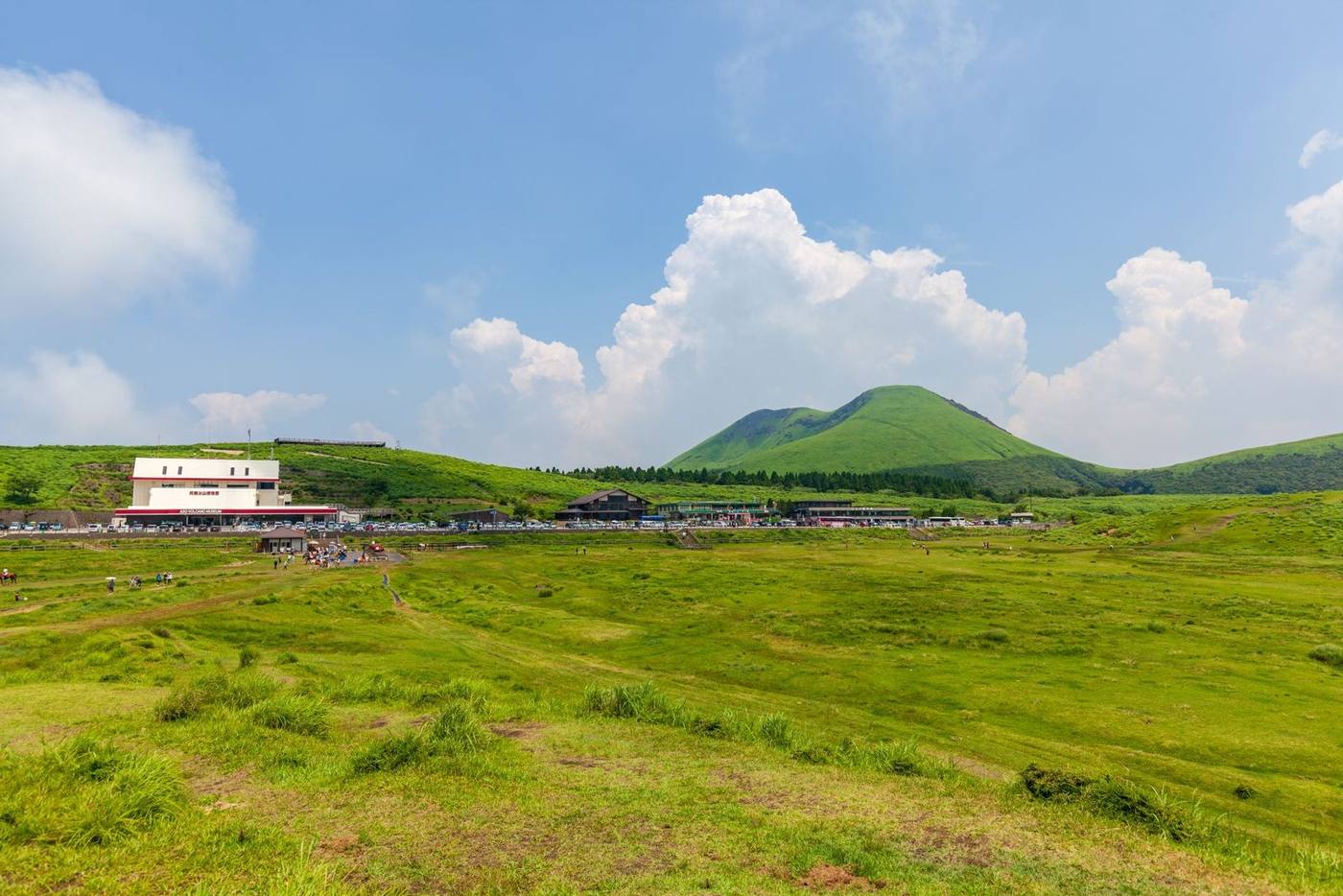
Today pick up your rental car and drive east, about an hour, to Mount Aso, one of the largest active volcanoes in Japan, at the centre of one of the largest calderas in the world, about twenty five kilometres long, where tens of thousands of people live, with towns, rice fields and railways.
In the morning visit the Nakadake crater, the still active cone, with a lake of acidic turquoise water steaming at the bottom. Access to the rim depends on volcanic activity and gas levels: it is often closed or restricted. Check official information on the day. People with asthma or breathing problems should not go near.
Then walk in the Kusasenri meadows, a great green grassland in an ancient crater, with a pond and grazing horses at the foot of Mount Eboshi. The Aso Volcano Museum next door explains the volcano's activity with images from the crater. Check opening hours and prices.
In the afternoon drive to Daikanbo, a viewpoint on the northern rim of the caldera overlooking the plain, the five central peaks of Aso and the towns below.
In the evening sleep in a small hot spring inn in the caldera.
Sleep in Aso.
Practical tip: the mountain roads around Aso are often foggy. Drive carefully and turn on your lights.
- Day 6
The Aso grasslands and shrines
Today you stay in the Mount Aso area.
In the morning drive the Milk Road, a scenic road along the outer rim of the caldera, among green meadows and grazing cattle, with views over the caldera floor and the peaks. In spring farmers in the region burn the grasslands to keep them open, an ancient tradition; on those days some roads may close.
Then visit Aso shrine, one of the oldest in Kyushu, dedicated to the gods of the volcano, with a large wooden gate damaged in the 2016 earthquake and rebuilt. Walk along the market street in front of the shrine, where spring water flows from public fountains along the road and people fill their bottles.
In the afternoon take a short walk on Daikanbo or along the grassland trails, or visit the Shirakawa springs south of the caldera, where clear water wells up from the bottom of a pond. Check opening hours and prices.
In the evening drive to Kurokawa Onsen, about an hour north east, a hot spring village hidden in a wooded valley.
Sleep in Kurokawa, in a ryokan.
Practical tip: in ryokan dinner is served at set times, usually early. Let them know if you will arrive late.
- Day 7
Kurokawa Onsen
Today you stay in Kurokawa Onsen, one of the most beautiful hot spring villages in Japan, along a stream in a wooded valley, with wooden ryokan, little bridges, stone lanterns and streets without neon signs.
In a ryokan you sleep on futons laid on tatami, wear a yukata, a light cotton kimono, and eat a kaiseki dinner, a series of small seasonal dishes carefully prepared.
Kurokawa's special feature is the tegata, a wooden pass sold at the information centre that lets you bathe in three different onsen, chosen from those of the village's ryokan. Many baths are rotenburo, outdoor pools among rocks and trees with the sound of the stream. Check the price and participating baths.
In Japanese baths you wash thoroughly sitting at the showers before getting into the pool, you bathe naked, you do not put your towel in the water and you do not swim. Baths are usually separate for men and women. In many onsen people with tattoos are not admitted or must cover them: check.
In the afternoon walk along the stream to the small waterfall and the village shrine.
In the evening, after dinner, stroll in your yukata through the village lit by lanterns.
Sleep in Kurokawa.
Practical tip: drink water between baths. Hot pools are more tiring than they seem.
- Day 8
Yufuin
In the morning drive north east along the Yamanami Highway, across highlands, meadows and mountains, about an hour and a half, to Yufuin, a hot spring town in a valley at the foot of Mount Yufu, a twin peaked volcano.
Yufuin is quieter and more refined than Beppu, with small art museums, galleries, craft shops and cafés. The main street, Yunotsubo, runs from the station to Lake Kinrin and is crowded during the day.
Walk to Lake Kinrin, a small lake fed by hot and cold springs. On cool autumn and winter mornings a thin mist rises from the surface, the most beautiful time to see it. On the shore is a small shrine and a very old wooden public bath.
In the afternoon visit one of the town's small museums or relax in a hot spring bath with a view of Mount Yufu.
In the evening return the car in Yufuin or Beppu, or continue by car to Beppu, about half an hour.
Sleep in Yufuin or Beppu.
Practical tip: reach Lake Kinrin early in the morning, before the groups arrive. In the middle of the day the town is crowded, so plan museums and cafés for the afternoon.
- Day 9
Beppu: the hells and the sand bath
Today you are in Beppu, one of the largest hot spring towns in the world, with thousands of hot springs and columns of steam rising from house roofs and streets.
In the morning visit the hells of Beppu, the jigoku, a group of springs too hot for bathing, to be looked at: the sea hell, a steaming cobalt blue; the blood hell, red with iron clay; a geyser that erupts at intervals; and the boiling mud pond that forms bubbles like monks' shaven heads. You buy a combined ticket for most of them. Check opening hours and prices.
In the afternoon try a hot sand bath on the beach, sunaba: you lie down in a yukata and attendants cover your body with black sand heated by the springs for ten or fifteen minutes. Then a steam bath in the Kannawa district, where you can also eat vegetables, eggs and fish cooked in the earth's steam, jigoku mushi.
In the evening bathe in one of the town's oldest public onsen, such as Takegawara, a Meiji era wooden building. Check opening hours and prices.
Sleep in Beppu.
Practical tip: some hells have small zoos with caged animals. If you do not like that, skip those stops.
- Day 10
Kagoshima and Sengan-en
In the morning take the train to Kagoshima, about three and a half hours, via Kokura or Hakata and then south on the Kyushu shinkansen. Check times and changes.
Kagoshima is the southernmost city of mainland Kyushu, on Kinko Bay, with the Sakurajima volcano just a few kilometres opposite, smoking and sometimes showering the city with ash. For Kagoshima people ash is part of daily life: there are special bags to collect it and forecasts of where the ash will blow.
In the afternoon visit Sengan-en garden, a seventeenth century garden of the Shimadzu family, lords of the Satsuma domain, with the villa, pavilions, ponds and Sakurajima used as borrowed scenery in the garden landscape. Next door is the Shoko Shuseikan museum, in the old factory where in the nineteenth century the Shimadzu clan began Japan's industrialisation, a World Heritage Site. Check opening hours and prices.
In the evening try Satsuma food: kurobuta black pork, satsuma age fried fish cakes and sweet potato shochu.
Sleep in Kagoshima.
Practical tip: when the volcano emits ash, wear a mask and glasses. The ash irritates the eyes. If you wear contact lenses, glasses are better on those days, and keep your camera covered.
- Day 11
Sakurajima and the lava trails
Today you visit Sakurajima, one of the most active volcanoes in Japan, which in its 1914 eruption joined the mainland with a lava flow.
In the morning take the ferry from Kagoshima harbour, about a quarter of an hour, which runs frequently all day. Check the times.
On the island take the sightseeing bus that tours the viewpoints, or rent a bicycle. Walk the Nagisa trail, a coastal path among the black lava flows of 1914, now covered in pines, with views of the smoking crater. At the visitor centre you learn about the history of the eruptions and the life of people under the volcano. Also visit the buried torii of Kurokami, a shrine gate almost completely buried by ash from the 1914 eruption, with only its top still visible.
Go up to the Yunohira viewpoint, the highest accessible point on the volcano at about three hundred and seventy metres, with views of the crater walls and the bay. You cannot go higher: there is an exclusion zone around the craters.
In the afternoon soak your feet in a roadside foot bath along the coast, if it is open, and return to Kagoshima.
Sleep in Kagoshima.
Practical tip: check the volcano's alert level before you go. In a strong eruption some areas close.
- Day 12
Back to Fukuoka and departure
On the last day take the shinkansen from Kagoshima to Hakata, Fukuoka's main station, about an hour and a half, and then the subway to the airport, a few minutes away.
If your flight leaves in the afternoon, in the morning in Fukuoka you can visit Kushida shrine, with the great decorated floats of the Hakata Gion Yamakasa festival, or Tochoji temple, with a large wooden Buddha. If you have more time, take a trip to Dazaifu, about half an hour away, with the Tenmangu shrine dedicated to the god of learning, surrounded by thousands of plum trees.
Before leaving buy something to take home: mentaiko, spicy cod roe typical of Fukuoka; castella, a soft sponge cake of Portuguese origin typical of Nagasaki; Kagoshima shochu; Kyushu green tea; and ceramics from Arita or Imari, among the most famous in Japan.
This trip shows a different Japan from Tokyo and Kyoto: active volcanoes smoking beside cities, hot spring villages in the forest, ports open to the world for centuries, the memory of the atomic bomb and a rich, rustic cuisine.
Practical tip: arrive at the airport at least two and a half hours before an international flight. If you have heavy luggage, you can send it from your hotel to the airport: the service is common in Japan.
Japan of volcanoes and hot springs, with far fewer tourists than Kyoto. The Aso crater often closes because of gas, so check on the day. The regional Kyushu rail pass saves a lot.
Before you go
- Documents and visa
- Passport valid for the whole stay; many nationalities, including EU citizens, enter without a visa for up to 90 days for tourism. An electronic travel authorisation (JESTA) has been announced but is not yet in force: check before you go.
- Health and vaccines
- No vaccines required. Healthcare is excellent but expensive: travel insurance with high medical cover is essential. Some common medicines, such as certain codeine painkillers, are banned or restricted. Emergencies: 119 ambulance, 110 police.
- Money and payments
- Yen. Cards are increasingly accepted, but temples, small restaurants and rural areas need cash: convenience-store ATMs accept foreign cards. Tipping is not customary.
- Power sockets
- Type A, 100 volts: you need a flat-pin adapter; phone and laptop chargers work, European hairdryers often do not.
- Time zone
- UTC+9, no daylight saving time.
- Safety
- One of the safest countries in the world. The risks are natural: earthquakes, typhoons from July to October, extreme summer heat. Download an English-language alert app. Official advice: GOV.UK.
Information checked in November 2026 for Italian and EU citizens. Rules change: always check before you travel.
Variations
In 7 days: Fukuoka, Nagasaki, Kumamoto, Aso and Beppu, without Kagoshima.
In 15 days: add Yakushima, the island of ancient cedar forests, by ferry from Kagoshima.
Frequently asked questions
Do I need a visa for Japan?
Check the entry rules for your passport before travelling. When leaving you pay a departure tax of 3,000 yen, usually included in the air fare.
Is the Japan Rail Pass worth it?
The seven day pass costs 53,000 yen. For a trip only in Kyushu, compare the price with single tickets and the regional Kyushu passes, which are often cheaper.
Can you go up to the Aso crater?
It depends on volcanic activity and gas levels: access to the Nakadake crater is often closed or restricted. Check official information on the day.
Indicative itinerary written by World Atlas. Before booking, check timetables, seasonal openings, documents and safety.
 7 daysEasy
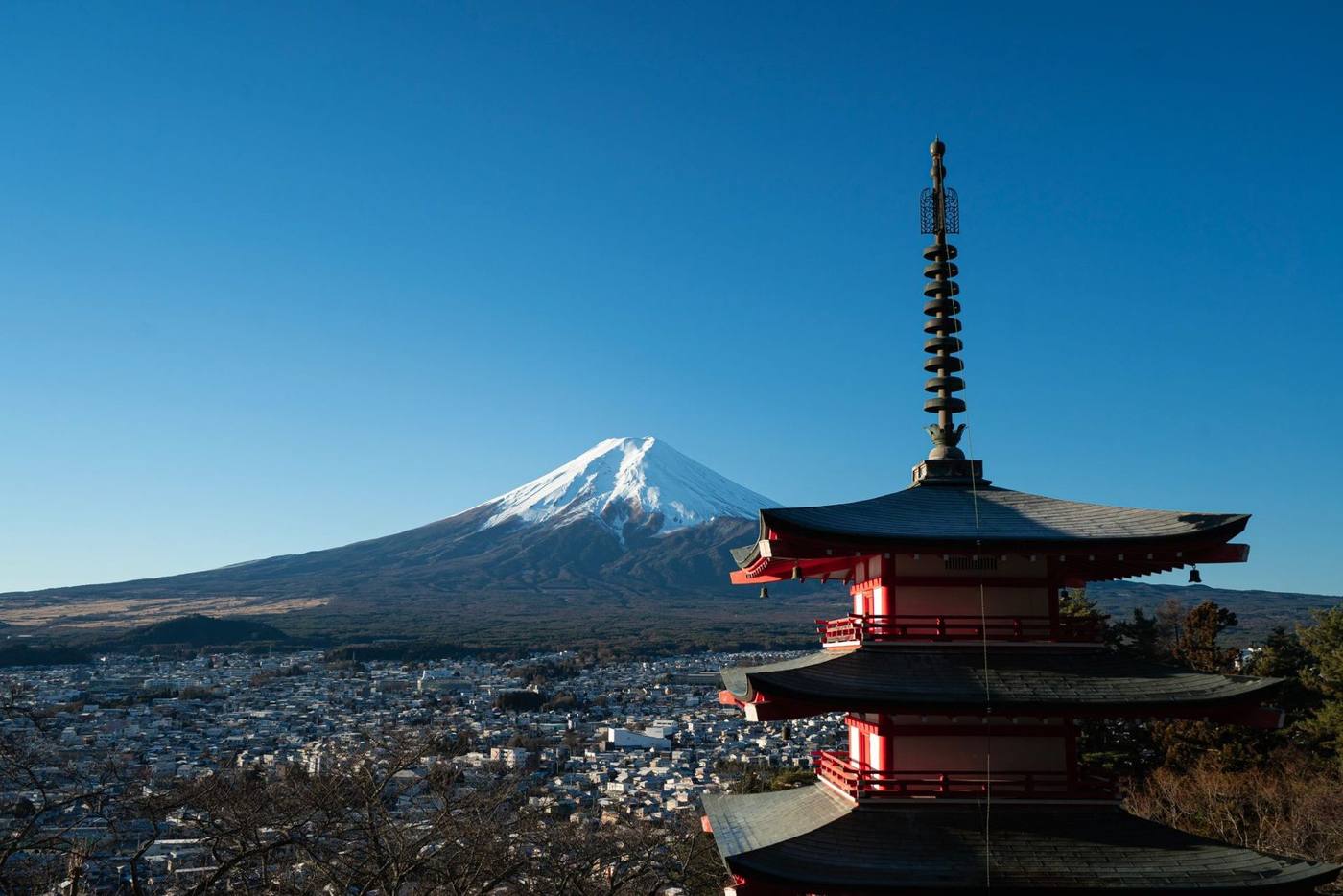
Mount Fuji, Hakone and Kamakura
A week around Tokyo: the Great Buddha of Kamakura, the hot springs of Hakone and Mount Fuji reflected in the lakes.
 9 daysEasy
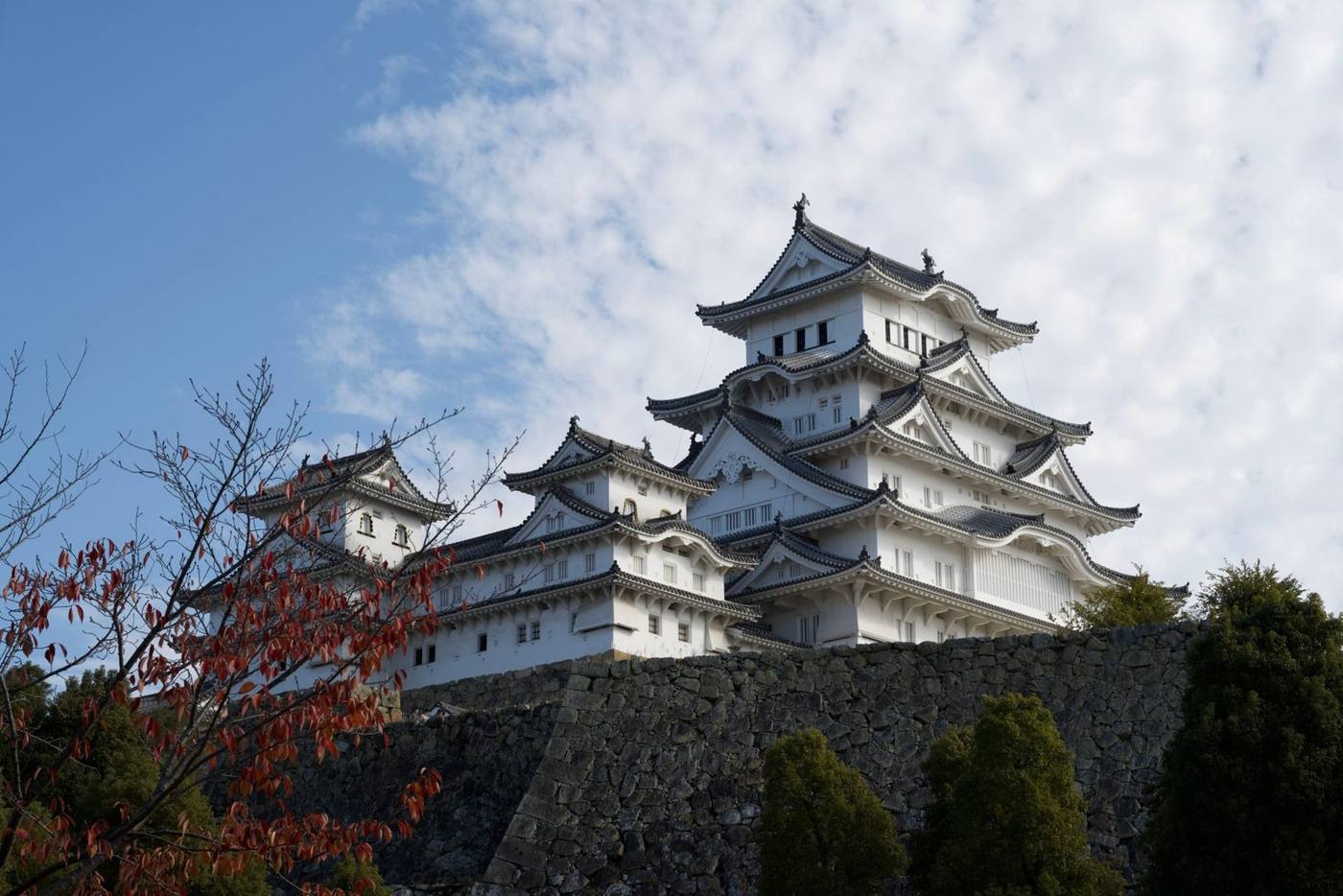
Kansai at a slow pace: Kyoto, Nara, Koyasan and Himeji
Four days in Kyoto, a night in a monastery on Mount Koya, the deer of Nara and Japan's finest castle.
 10 daysEasy
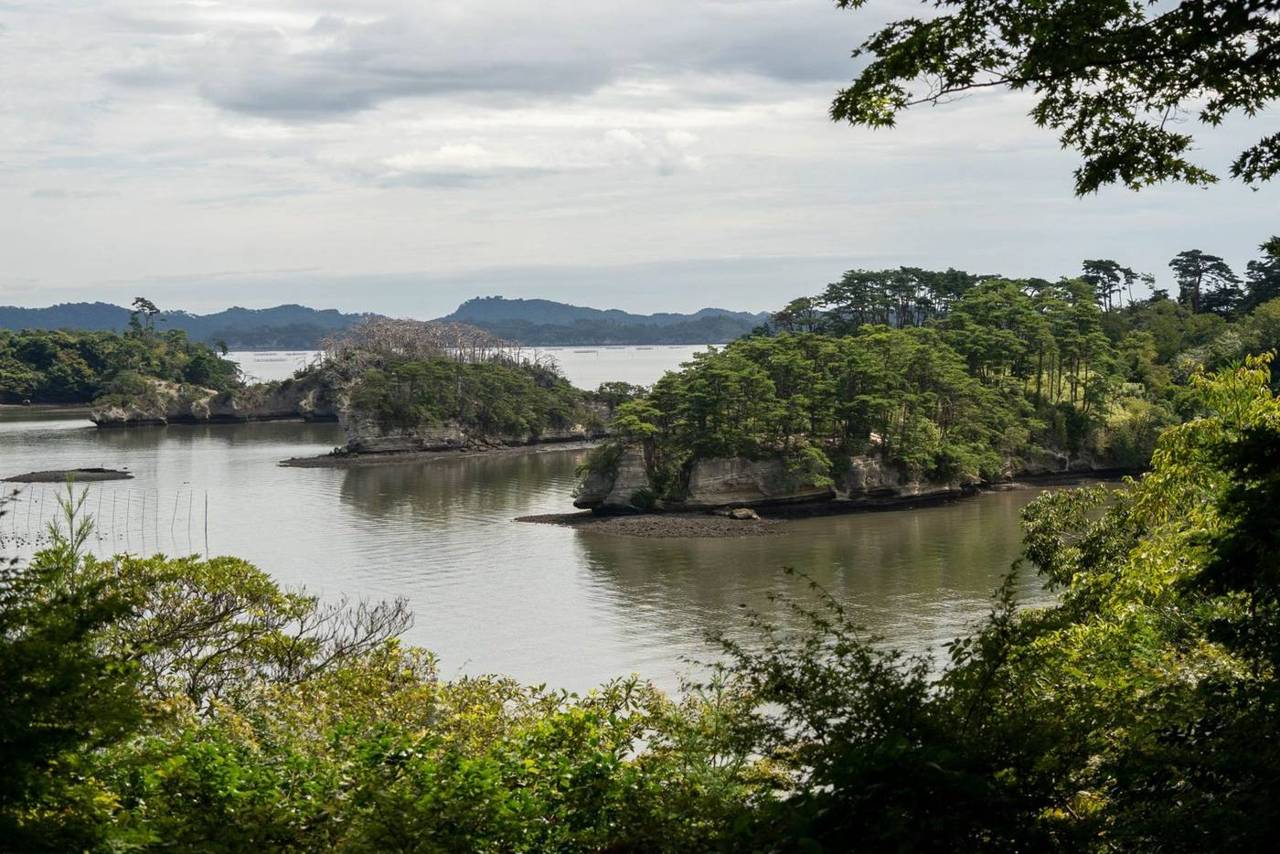
Tohoku, the authentic north
The Japan few foreigners see: Matsushima Bay, the temples of Hiraizumi, the samurai houses of Kakunodate and the Oirase stream.