The North on Foot, from Umm Qais to Salt
The first stages of the Jordan Trail through olive groves, oak woods and farming villages, in the green Jordan few people picture, with Jerash halfway.
- Amman
- Umm Qais
- Ajloun Reserve
- Rasoun
- Ajloun Castle
- Jerash
- Dibbin Forest
- Salt
Day by day
- Day 1
From Amman to Umm Qais, ancient Gadara
This seven-day trip takes you on foot through the north of Jordan, along the first stages of the Jordan Trail: olive groves, oak woods and farming villages, from Umm Qais to the Ottoman town of Salt, by way of the Ajloun reserve, the Ayyubid castle and the Roman city of Jerash.
Before you go: Italian citizens need a passport valid for at least six months from entry and a visa, applied for online on the Jordanian Ministry of Interior website or on arrival at Queen Alia airport. The Jordan Pass, bought only on the official website jordanpass.jo, costs 70, 75 or 80 dinars for one, two or three consecutive days in Petra and covers the visa fee if you stay at least two nights. Other nationalities should check their own rules.
Some areas on this trip are close to borders or places where the situation changes often: check your government's travel advice before booking and again before you leave.
You land in Amman and take the road north, about two hours. Umm Qais stands on a hill in the far north-west of the country. Here lie the ruins of Gadara, one of the cities of the Decapolis: walk along the paved street with its columns, go into the black basalt theatre and look out over the Sea of Galilee and the heights around it. Check prices and times.
Umm Qais is close to border areas: stay in the village and the archaeological site and do not go down towards the Yarmouk valley. In the evening have dinner with mezze, warm bread and local olive oil. Sleep in Umm Qais.
Practical tip: watch the sunset from the ruins, when the light turns golden, but be back before dark and always follow your guide's advice.
- Day 2
Among olive groves and farmed valleys
Today you start walking south.
In the morning meet your guide and set off on foot from Umm Qais. The trail comes down from the hills through ancient olive groves, wheat fields, fig trees and dry-stone walls. In spring the meadows are full of red anemones, poppies and daisies, and Jordan looks like a Mediterranean country. Along the way the guide shows you old olive presses and cisterns cut into the rock, a sign that these hills have been farmed for many centuries.
On the way you pass through small farming villages, where children wave and older people offer tea or coffee with cardamom. The trail goes up and down several times between valleys and ridges: it is a long stage, of many hours, but the pace is relaxed. In the middle of the day stop in the shade of an olive tree for a packed lunch, with bread, hummus, cheese, olives and fruit.
In the afternoon you reach the village where you sleep, in a family home. It is the best moment of the trip: help prepare dinner, see how bread is baked and listen to stories of country life. Often you eat maqluba, rice with vegetables and meat cooked in a pot and then turned out onto the tray, or musakhan, chicken with onions and sumac on bread.
Sleep in the village, in a family home.
Practical tip: in a family home dress modestly, take your shoes off when you go in and bring a small gift from home for your hosts.
- Day 3
In the Ajloun forest reserve
Today you walk into the finest woodland in the north.
In the morning set off again on foot towards the south. The landscape slowly changes: the olive groves give way to hills covered in evergreen oaks, strawberry trees with red bark and wild pistachios. You are in the area of the Ajloun forest reserve, run by the Jordanian body for nature conservation.
The reserve protects one of the last oak woods in the country. Walk on the marked trails, among twisted trees, limestone rocks and clearings. With a little luck you see foxes, porcupines, jays and many birds, especially in spring. The reserve rangers know the plants well and still use them as farmers once did: ask them to show you the aromatic herbs, such as the wild thyme used for za'atar.
In the afternoon you reach the area of the reserve's cottages, made of wood and stone, in the middle of the woods. Drop your pack, take a short walk to a viewpoint and watch the sunset over the hills that slope down towards the Jordan valley. Check prices and times.
If you like, join one of the reserve's activities, such as a guided walk among medicinal plants. Dinner is made with produce from the nearby villages. Sleep in the reserve's cottages.
Practical tip: nights in the Ajloun woods are cool even in spring and autumn; bring a fleece and a head torch, because the paths between the cottages are poorly lit.
- Day 4
Rasoun and Ajloun castle
Today you meet the women of the villages and climb to a medieval fortress.
In the morning walk to the village of Rasoun, through fields and orchards. Here some groups of women have opened small workshops linked to the reserve: they make olive oil soap, biscuits, jams, dried herbs and handicrafts. Go in, watch how they work and buy something: it is a practical way to support the village economy.
The trail between Rasoun and the fortress climbs steadily: take breaks and enjoy the view over valleys covered in olive and oak trees. This is how you reach Ajloun castle, called Qal'at ar-Rabad in Arabic. It was built at the end of the twelfth century by one of Saladin's generals, to control the area and defend it against the Crusaders. It stands on top of a hill, with towers, a moat and vaulted stone halls. Climb up to the terraces: on clear days you see the Jordan valley and the distant hills. Check prices and times.
In the afternoon go down into the town of Ajloun, with its old mosque and market. Rest your legs and have a sweet mint tea in a small square. Sleep in Ajloun or in a family home nearby.
Practical tip: the Jordan Pass includes entry to Ajloun castle and Jerash; keep it on your phone and also printed, because the signal is weak at some sites.
- Day 5
Down to Jerash
Today you walk down through the hills to one of the best preserved Roman cities in the world.
In the morning leave Ajloun and walk south-east, among olive groves, pine woods and small villages. The trail slowly descends towards the Jerash valley, and around midday you see the modern town appear in the distance, with the ancient columns beside it.
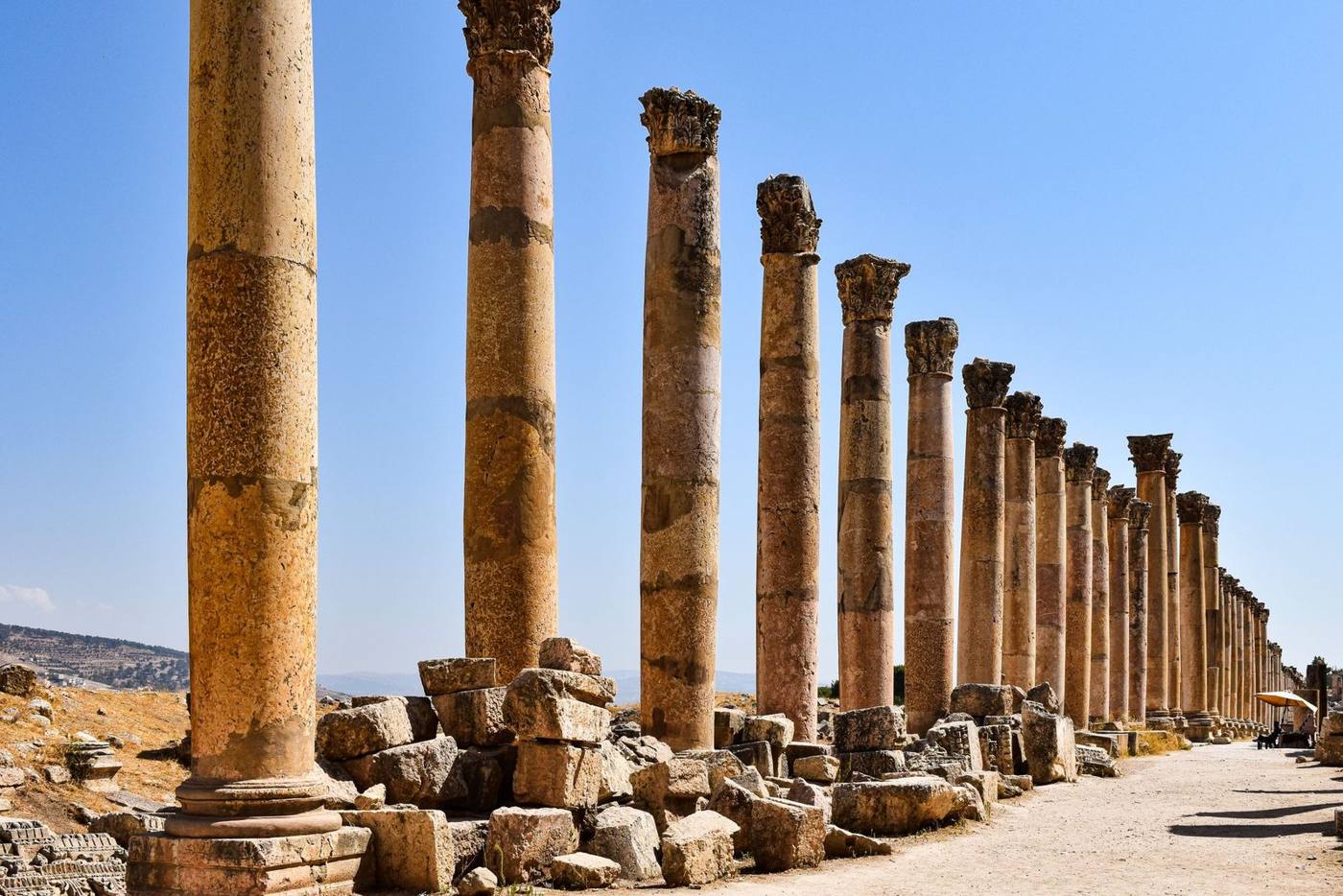
In the early afternoon you reach Jerash, ancient Gerasa, one of the cities of the Decapolis. This is the perfect time to visit: coach groups arrive mostly in the morning and in the afternoon the site is quieter. Enter through Hadrian's Arch, cross the hippodrome and reach the Oval Plaza, surrounded by columns. Walk along the cardo, the main paved street, with grooves left by carts, then climb to the Temple of Artemis and the South Theatre, where the acoustics are still perfect. Check prices and times.
As the sun goes down, the golden stone of the columns changes colour and the site becomes lovely to photograph. If you still have energy, climb to the North Theatre, which fewer people visit, and sit on the steps to look down over the ancient city.
In the evening have dinner in the modern town and sleep in Jerash or nearby.
Practical tip: the Jerash site is very large and has almost no shade; after the morning walk carry water and a hat, and pick only the main areas rather than trying to see everything.
- Day 6
The Dibbin pine forest and arrival in Salt
Today you cross the last forest of the north and arrive in a historic town.
In the morning set off from Jerash to the south-west and walk through the Dibbin forest reserve, one of the largest pine forests in Jordan, with Aleppo pines and oaks. It is a place loved by families from Amman for Friday picnics: on weekdays it is much quieter. The trail follows ridges and valleys, in the shade of the pines and with the scent of resin. You meet shepherds with their flocks and small farms, where you are often offered a glass of tea.
Then go down towards the valley of the Zarqa river and the King Talal reservoir, with farmed fields and greenhouses on the valley floor. The final section climbs again through drier hills and olive terraces, and it is the hardest of the week.
In the late afternoon you reach Salt, a town built on steep hills, with Ottoman houses of yellow stone stepping down the slopes. For a long time it was the most important town in the region, before Amman became the capital. Walk through the centre, among the stairways and the market streets, while the light warms the stone.
Sleep in Salt.
Practical tip: today's stage is long and has climbs; set off very early and ask your guide whether the last section can be shortened by car if you are tired.
- Day 7
Salt's historic centre and back to Amman
Today you explore Salt at a gentle pace and then return to Amman.
In the morning visit the historic centre of Salt, a UNESCO World Heritage Site since 2021 for its tradition of tolerance and hospitality between Muslims and Christians. Go into the old city museum, in a large yellow stone mansion from the late nineteenth century, with decorated rooms and arched windows. Then walk along Hammam Street, the old market full of shops selling spices, dried fruit, sweets and fabrics. Check prices and times.
Climb the stairways to a viewpoint to see the rooftops and the hills around, and stop for a coffee or a sweet, such as warm cheese knafeh.
In the early afternoon return to Amman, less than an hour away, for your flight.
Over these seven days you have seen a green, farming Jordan: the ruins of Gadara at Umm Qais, the olive groves and villages of the north, the oak woods of Ajloun, the village of Rasoun, Ajloun castle, the columns of Jerash, the Dibbin pine forest and the town of Salt.
When to go: the best periods are from March to May, when the flowers are out, and October and November. In summer it is too hot to walk for long. In winter it rains and it can snow on the northern hills.
Practical tip: leave at least half a day open before your flight, because walking stages can finish later than planned and Amman traffic is often heavy.
Suited to keen walkers who have already seen Petra, or who want a week on foot without the desert. The strength is village hospitality and a farming Jordan that classic tours skip; the drawback is the absence of the great southern landscapes, and some stages run close to roads and towns. Stages are long, so use a local operator who knows the Jordan Trail and handles luggage and lodgings.
Before you go
- Documents and visa
- Passport valid for at least six months from entry and a tourist visa, applied for online on the Jordanian Ministry of Interior website or on arrival at Queen Alia airport in Amman, paid in dinars. The Jordan Pass, bought only on the official website jordanpass.jo before arrival, covers the visa fee if you stay in Jordan for at least three nights and includes Petra, Jerash, Wadi Rum and more than forty sites.
- Health and vaccines
- No compulsory vaccinations: ask your doctor about recommended ones at least eight weeks before. Protect yourself from the sun and drink plenty of water, above all in the desert and the canyons. Outside Amman and Aqaba medical facilities are basic: you need insurance with medical costs and repatriation. Emergencies: 911.
- Money and payments
- Jordanian dinar. Cards work in cities and hotels; keep cash for villages, the desert and tips.
- Power sockets
- Mixed sockets for type A and C plugs, often also F and G, 230 volts: bring a universal adapter.
- Time zone
- UTC+3 all year.
- Safety
- With regional tensions and the missile and drone attacks of 2026, the United States rates Jordan level 3 and the UK advises against all travel within 3 km of the Syrian border. Do not go near the borders with Syria and Iraq, the refugee camps, Zarqa or Rusayfah; avoid the city of Ma'an. Flights and airspace can close without notice. In the canyons there is a risk of flash floods: follow the reserves' closures. Official advice: GOV.UK.
Information checked in November 2026 for Italian and EU citizens. Rules change: always check before you travel.
Variations
In 5 days: from Umm Qais to Jerash, without the Dibbin pine forest and Salt.
In 10 days: after Salt add Amman, the Dead Sea and Mount Nebo, with two rest days.
Frequently asked questions
Do I need a guide for the northern Jordan Trail?
It is not compulsory, but it is strongly recommended: the trail passes near villages and roads and the waymarking is not always clear. A local guide also arranges accommodation and luggage transfers.
How much do you walk each day?
The stages are long, often of many hours, with climbs and descents. You need to be fit and wear walking boots that are already broken in.
Do you always sleep in family homes?
Partly, in the villages. In Ajloun you sleep in the reserve's cottages and in Jerash and Salt in small places to stay in town.
Indicative itinerary written by World Atlas. Before booking, check timetables, seasonal openings, documents and safety.
 8 daysEasy
Aqaba and the Red Sea Underwater
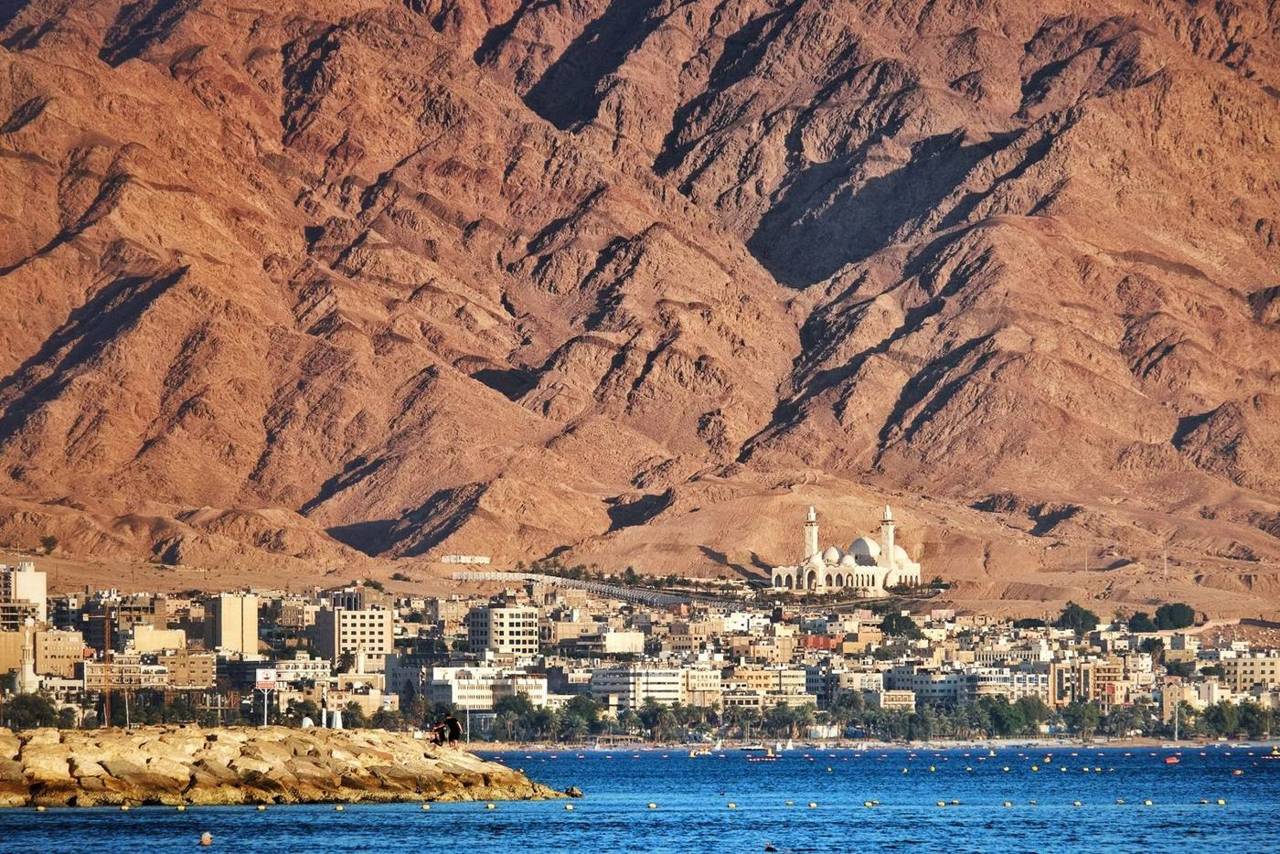
Five days of diving on the Jordanian coast, among wrecks and reefs a few metres from shore, with a night in Wadi Rum and a day at Petra.
 16 daysEasy
Jordan and Oman
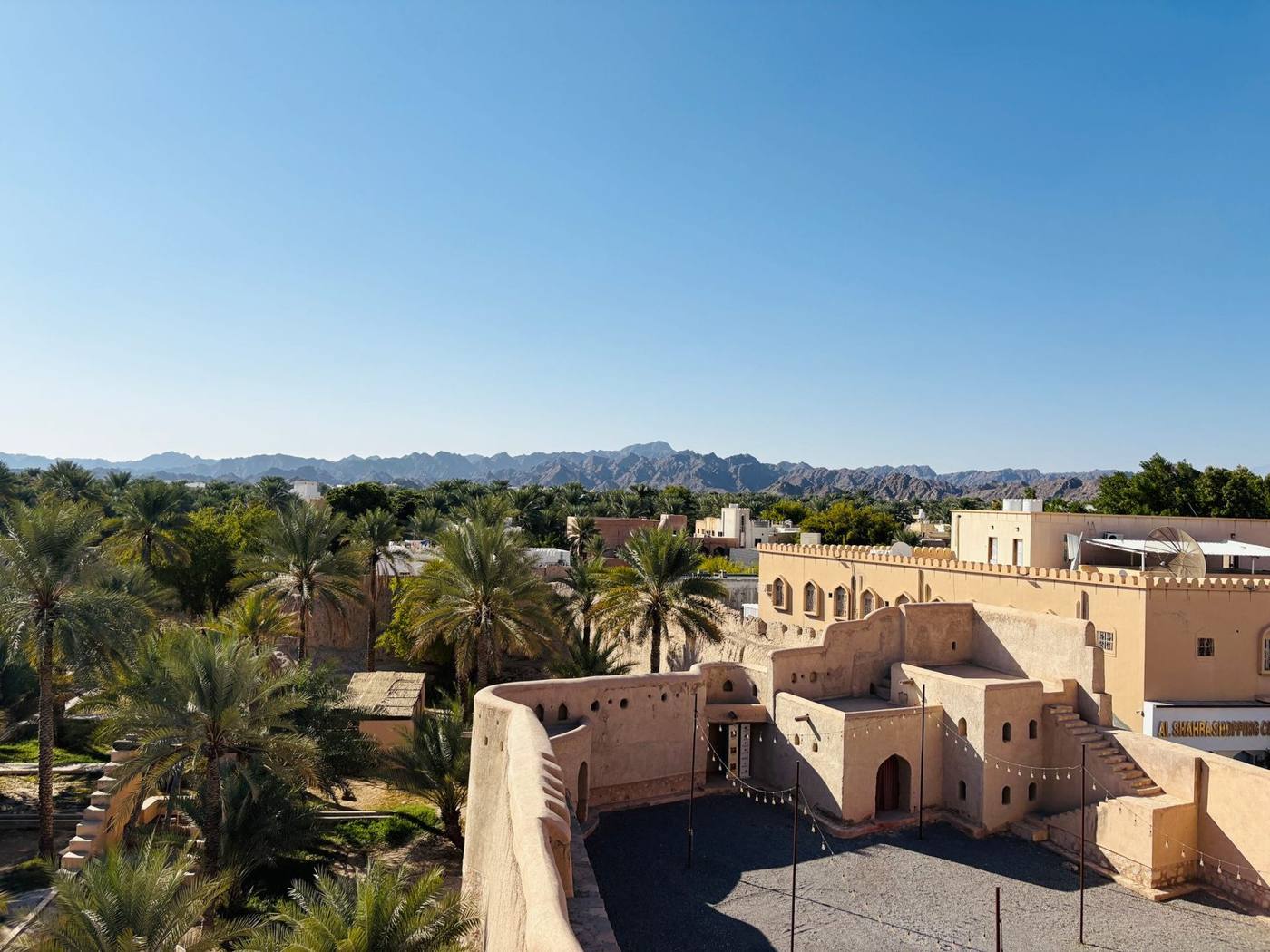
Two Arab countries in one trip: Jordan's Nabataean and Roman ruins, then the forts, wadis and dunes of Oman, linked by a direct flight.
 15 daysModerate
From Petra to AlUla: Jordan and Saudi Arabia
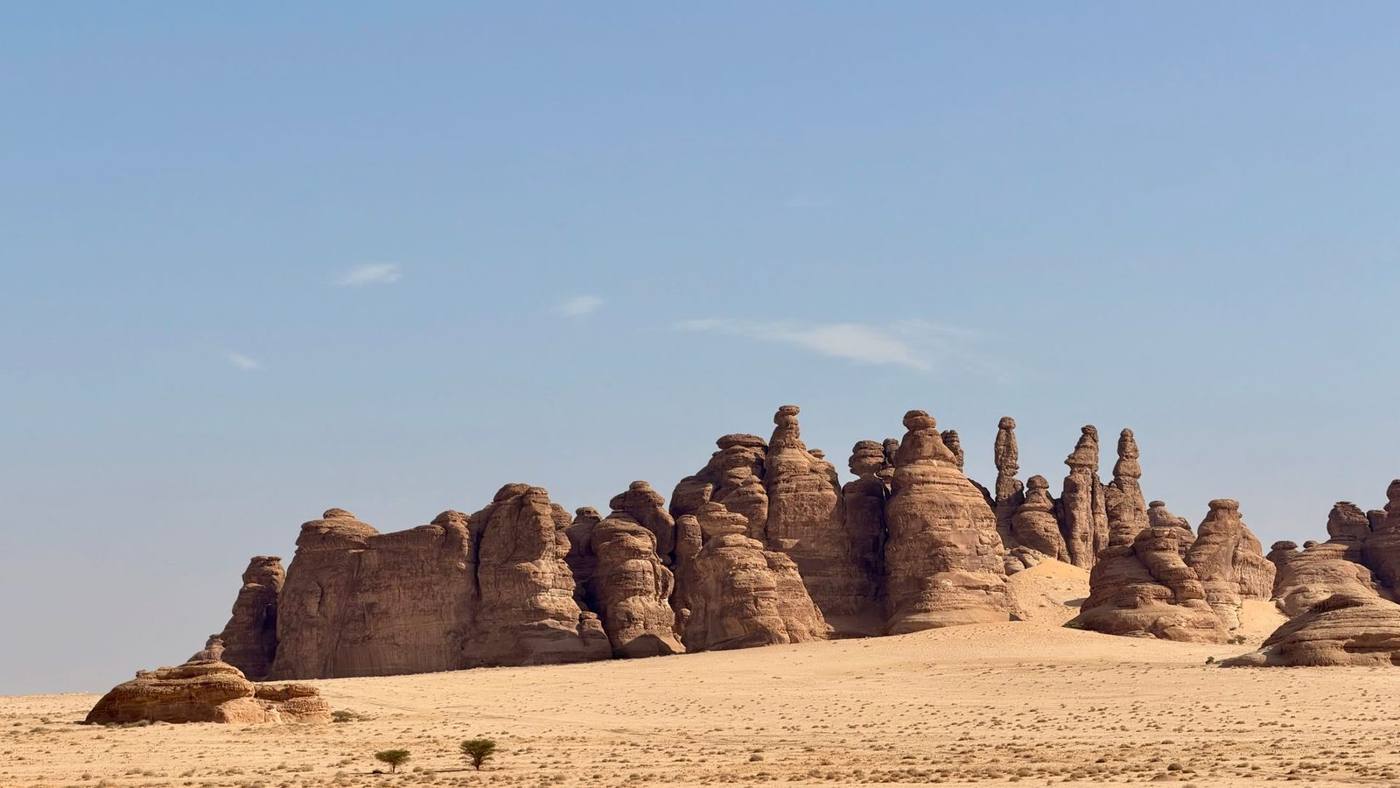
Following the Nabataeans from one capital to the other: Petra in Jordan, then overland across the border to the tombs of Hegra and the canyons of AlUla.