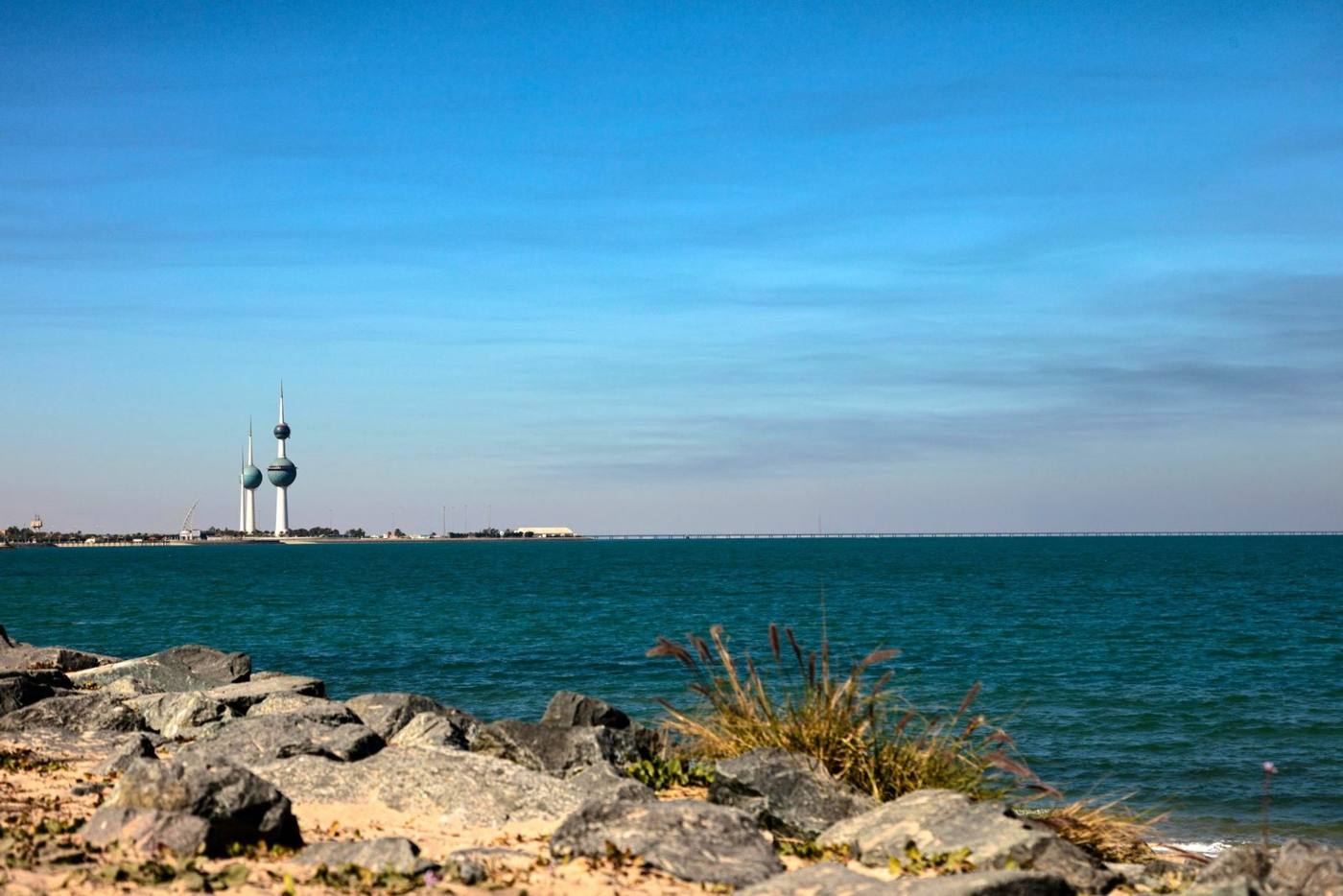
Kuwait City
The Kuwait Towers, the Grand Mosque, Souq Al-Mubarakiya, the Sheikh Jaber cultural centre and the Bait Al-Sadu museum of Bedouin weaving.
- Kuwait Towers
- Grand Mosque
- Souk Al-Mubarakiya
- Bait Al-Sadu
- Sheikh Jaber Al-Ahmad
Day by day
- Day 1
The Kuwait Towers and the seafront
This three-day trip is a stopover in Kuwait City, the capital of a Gulf country with few tourists, for those who want to get to know the region away from the crowds. You see the Kuwait Towers, the Grand Mosque, the house of Bedouin weaving, Souk Al-Mubarakiya and the new Sheikh Jaber Al-Ahmad Cultural Centre.
Before you go: Italian citizens enter Kuwait with a passport valid for at least six months from the date of arrival; an identity card is not enough. You need a visa, applied for online on the Ministry of Interior portal or, where available for your nationality, on arrival: check on the official website before leaving. At the border you may be asked for a return ticket and proof of accommodation. Other nationalities should check their own rules.
Some areas on this trip are close to borders or places where the situation changes often: check your government's travel advice before booking and again before you leave.
Remember that alcohol is banned throughout Kuwait, and carrying it is also illegal.
In the afternoon go to the Kuwait Towers, the symbol of the city, opened at the end of the 1970s: three slender towers on the sea, two of which carry large spheres covered in blue and green discs. In the highest sphere there is an observation platform with views over the city and the Gulf. Check prices and times.
At sunset walk along Arabian Gulf Street, the seafront with beaches, parks and running tracks, popular with families in the evening.
Sleep in Kuwait City, for two nights.
Practical tip: distances in the city are long and pavements few: use taxis or ride-hailing apps and agree the fare if the meter is not running.
- Day 2
The Grand Mosque, Bait Al-Sadu and the souk
Today you see the religious, craft and commercial heart of the city.
In the morning visit the Grand Mosque, the largest in the country, opened in the 1980s, with a dome decorated in blue and gold patterns and a large courtyard. Non-Muslim visitors can enter on a guided tour, outside prayer times. Long, loose clothes are required; women cover their hair and are often given a suitable gown at the entrance. Check times and rules.
Then go to Bait Al-Sadu, a traditional house on the seafront dedicated to sadu, the weaving of Bedouin women. You see looms, rugs and tents striped in red, black and white with geometric designs, and you can often watch the weavers at work. Check prices and times.
In the afternoon enter Souk Al-Mubarakiya, one of the oldest markets in the country, with covered passages selling dates, spices, honey, incense, perfumes, traditional clothes and copperware. Among the stalls there are small places to eat, busy with local families in the evening.
In the evening try fish or lamb machboos, warm bread with cheese and strong tea.
Practical tip: in the souk always ask permission before photographing traders, and never photograph government or military buildings in the city.
- Day 3
The Sheikh Jaber Al-Ahmad Cultural Centre and departure
On the last day you see modern Kuwait City before leaving.
In the morning visit the Sheikh Jaber Al-Ahmad Cultural Centre, opened in 2016, with four buildings clad in panels that recall a geometric weave. It houses theatres, concert halls and an opera house; you can take a guided tour of the spaces or check the programme of performances. Check prices and times.
Then walk in Al Shaheed Park, next to the centre, a large urban garden with ponds, desert plants and small museums.
In the early afternoon take a taxi to the airport, about half an hour from the centre.
In these three days you have seen a less touristy Gulf: towers on the sea, a great mosque, Bedouin weaving, a lively souk and new spaces for culture. It is a stopover, quiet and uncrowded, but with few attractions. The rules are stricter than in the Emirates: no alcohol, modest clothing and care with photographs.
When to go: from November to March, when the days are mild. In summer temperatures often exceed 50 degrees and the city lives only indoors.
Practical tip: before leaving the country pay any traffic fines, if you hired a car: otherwise you may be stopped at the border.
A stopover for those wanting to see the less touristy Gulf. Alcohol is banned throughout the country. In summer temperatures often exceed 50 °C.
Before you go
- Documents and visa
- Passport valid for at least six months from the date of arrival. You need a visa, applied for online on the Kuwaiti Ministry of Interior portal or obtained on arrival for eligible nationalities: check on the official website which procedure applies to you. At the border you must show a return or onward ticket and proof of accommodation. An Israeli stamp in your passport can lead to refusal. Importing alcohol, pork and pork products is illegal.
- Health and vaccines
- No compulsory vaccinations. Healthcare is good but expensive for foreigners: get insurance with medical cover. In summer temperatures often exceed 50 degrees: drink a lot and stay indoors in the middle of the day. Emergencies: 112.
- Money and payments
- Kuwaiti dinar, one of the highest-value currencies in the world. Cards work almost everywhere; cash is useful in Souk Al-Mubarakiya. Any traffic fines must be paid before you leave the country.
- Power sockets
- Type G, 240 volts: the same sockets as in the UK.
- Time zone
- UTC+3 all year, three hours ahead of the UK in winter and two in summer.
- Safety
- The situation in the Gulf region can change quickly, including sudden airspace closures: check the advice and the status of your flights before leaving. The laws are strict and apply to tourists too. Alcohol: it is illegal throughout the country to buy, sell or carry it, or to be drunk. Clothing: dress modestly, especially downtown and in more traditional areas; women avoid shorts and tight or revealing clothes. Ramadan: during the day do not eat, drink, smoke or chew gum in public, even in your car. Photos: it is illegal to photograph government, military, industrial and oil buildings and border areas; do not film people without their consent. Public displays of affection are frowned upon; unmarried couples cannot share a hotel room. Insulting anyone in public, including police officers, can lead to arrest. Penalties for drugs are very severe, even for small amounts. Do not approach the borders, and in the desert stay on marked tracks: landmines and unexploded ordnance remain. Official advice: GOV.UK.
Information checked in November 2026 for Italian and EU citizens. Rules change: always check before you travel.
Variations
On a one-day stopover you can see the Kuwait Towers, the Grand Mosque and the souk.
With two more days add Bahrain and the Pearling Path in Muharraq.
Frequently asked questions
Can you drink alcohol in Kuwait?
No: alcohol is banned throughout the country and you cannot even carry it.
What should I wear?
Modest clothes covering shoulders and knees; women avoid shorts and tight clothes. In the Grand Mosque long clothes are needed and a headscarf for women.
Is Kuwait suitable for a long holiday?
Not really: there are few attractions. It works best as a short stop or combined with other Gulf countries.
Indicative itinerary written by World Atlas. Before booking, check timetables, seasonal openings, documents and safety.