Andasibe and the Avenue of the Baobabs
Indri lemurs in the rainforest and the island's most famous sunset among the baobabs of Morondava.
- Antananarivo
- Andasibe
- Morondava
- Kirindy
Day by day
- Day 1
Arrival in Antananarivo
This seven-day trip focuses on two wonders of Madagascar: the indri, the largest lemurs, in the rainforest of Andasibe, and the sunset among the giant baobabs of the Avenue of the Baobabs, near Morondava, with the Kirindy forest and the villages of the Vezo fishermen.
Before you go: Italian citizens need a passport valid for at least six months on entry, with blank pages, a return ticket and a tourist visa, issued on arrival at the airport or online in advance, between 7 days and 6 months before, on the official e-visa website listed by Viaggiare Sicuri. Other nationalities should check their own rules. After violent protests in late September and early October 2025, a transitional government took office on 17 October 2025: avoid demonstrations and gatherings, because roads can close at short notice. There are armed robberies on main roads, especially at night: never travel by road after dark. Malaria is present: ask your doctor about antimalarials.
You land at the airport of Antananarivo, the capital, known to everyone as Tana, built on hills among the rice fields of the highlands.
In the afternoon, if you arrive early, go up by car with a driver to the Rova, the queen's palace complex on the highest hill, with views over the whole city, its red roofs and Lake Anosy. Check prices and times.
In the evening, stay at your accommodation or use an official taxi: crime is rising in the city and you should not walk at night.
Overnight in Antananarivo.
Practical tip: change euros into ariary at the airport or a bank, and keep your cash split between several pockets.
- Day 2
To Andasibe and the night walks
Today you leave the capital for the rainforest of Andasibe.
Early in the morning, set off with a driver from a recognised operator along the national road heading east. In a few hours you descend from the highlands, among terraced rice fields, villages of red brick houses and fruit stalls along the road, to hills covered in forest. Leave early so that you arrive well before dark.
Andasibe is a small village on the edge of Andasibe-Mantadia National Park, one of the easiest rainforests to visit on the island. The air is damp and cool, and it often rains even in the dry season.
In the afternoon, rest and prepare your gear: closed shoes, long trousers, a waterproof and a head torch.
At sunset, go on a night walk with a local guide, in the community reserves near the park, where night visits are allowed. With a torch the guide finds chameleons asleep on the branches, some tiny, others as long as a forearm, colourful frogs, leaf-tailed geckos and mouse lemurs, the smallest lemurs, with eyes shining in the dark.
Do not touch the animals and do not use the flash at close range.
Overnight in Andasibe, for two nights.
Practical tip: use repellent at sunset and sleep under a mosquito net, because mosquitoes are most active in the evening.
- Day 3
The indri of Andasibe
Today you meet the indri, the largest living lemur, and the symbol of the Andasibe forest.
Early in the morning, enter the park with a local guide, which is compulsory. Pay the entry fee and the guide: check prices and times. You walk on paths among huge trees, tree ferns, orchids and lianas.
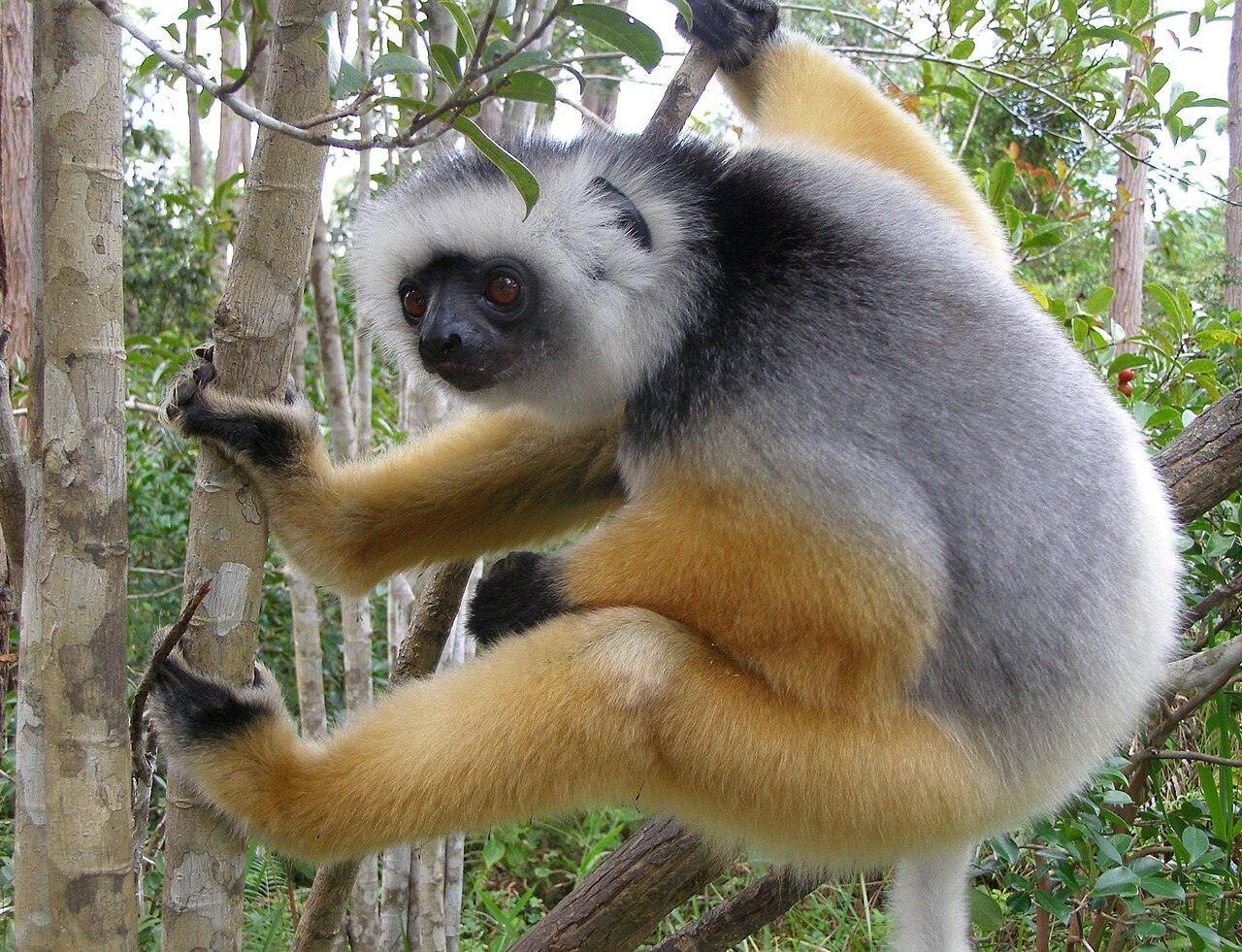
Shortly after dawn you hear it: the song of the indri, a long, powerful wail, like that of whales, which families use to mark their territory and which can be heard kilometres away. The guide follows the sound and takes you under the trees where a group used to people lives. Indri are black and white, with long legs and a face that looks like a teddy bear, and they leap from one trunk to another.
The same forest is home to the diademed sifaka, with orange and grey fur, brown lemurs and many birds that exist nowhere else in the world.
In the afternoon, if you have the energy, visit the Mantadia area with your guide, wilder, with steeper paths and waterfalls, or go on a second night walk in the community reserves.
Overnight in Andasibe.
Practical tip: always stay silent near the indri and keep the distance your guide tells you: they are endangered animals and very sensitive to disturbance.
- Day 4
Back to Antananarivo and flight to Morondava
Today you cross Madagascar from the rainforest of the east to the dry coast of the west.
Early in the morning, leave Andasibe and return to Antananarivo with your driver, on the same mountain road. Along the way, stop at a market to see tropical fruit, woven baskets and spices, such as vanilla and pepper.
From the capital, take the domestic flight to Morondava, on the west coast. Domestic flights in Madagascar are often delayed or cancelled: confirm the time the day before and leave a margin.
From the plane the landscape changes completely: the green hills give way to dry plains, rivers red with earth and, as you near the sea, the first silhouettes of baobabs.
Morondava is a small town of fishermen and traders on the Mozambique Channel, with a long beach and outrigger canoes pulled up on the sand. Here the climate is hot and dry, very different from the damp forest of Andasibe.
In the evening, watch the sunset over the sea, among the fishing boats.
Overnight in Morondava, for three nights.
Practical tip: around Morondava, arrange all road travel with a recognised operator, as the British government advises for western roads, and never travel outside town at night.
- Day 5
The Kirindy forest and the Avenue of the Baobabs
Today you visit the Kirindy forest and, at sunset, the most famous place in Madagascar: the Avenue of the Baobabs.
Very early in the morning, set off north with your driver, on a dirt road among rice fields, villages and isolated baobabs. After a couple of hours you reach the Kirindy forest, a dry forest, with trees that lose their leaves in the dry season and enormous baobabs.
Walk the trails with a local guide. This is home to the fossa, the largest predator in Madagascar, like a small puma: it is not easy to see, but sometimes it comes close to the paths. You will almost certainly see Verreaux's sifakas, white, hopping upright between the trees, and brown lemurs. Check prices and times.
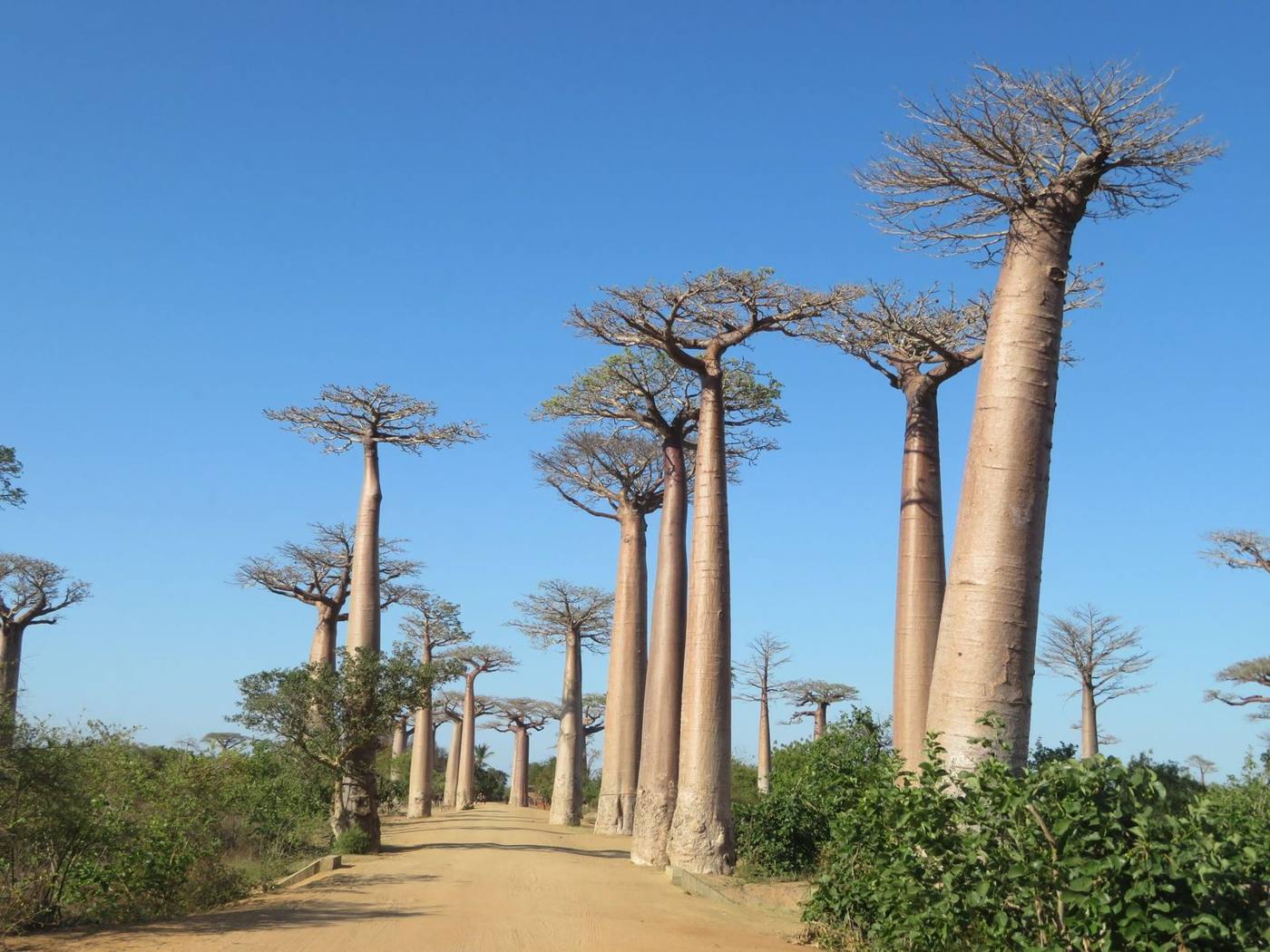
In the afternoon, head back south and reach the Avenue of the Baobabs before sunset. Along a red earth road rise dozens of Grandidier's baobabs, as tall as buildings, with smooth trunks and branches at the top like roots. As the sun goes down, the trunks turn pink and orange, and their outlines are reflected in the pools of the rice fields.
There are many people, but the spectacle is still incredible. The avenue is a short distance from Morondava: head back straight after sunset with your driver, and never drive the longer road to Kirindy at night.
Overnight in Morondava.
Practical tip: if you want the avenue without crowds, go back at dawn the next day, when the light is just as beautiful.
- Day 6
The Vezo villages and the baobabs amoureux
Today you discover the sea people of the west coast and some other special baobabs.
In the morning, take a pirogue with a local fisherman to reach a Vezo village near Morondava. The Vezo are a semi-nomadic fishing people who live from the sea and move along the coast in their outrigger canoes with square sails. In the village you see huts of wood and leaves, nets spread in the sun, fish drying and children playing on the sand. Always ask before taking photos and leave a contribution for the community, following your guide's advice.
Return to Morondava for lunch and taste grilled fish or prawns from the coast, with rice and fresh fruit juice.
In the afternoon, with your driver, go to the baobabs amoureux, the baobabs in love: two trees with intertwined trunks, at the heart of many local legends. Nearby there are other sacred baobabs, where local people leave offerings: do not touch them and ask your guide which fady, the traditional taboos of the place, apply.
Get back to Morondava before dark and watch the last sunset over the Mozambique Channel.
Overnight in Morondava.
Practical tip: on the pirogue bring a waterproof bag for your phone and documents, because the splashes never stop.
- Day 7
Return flight
Today you leave Morondava and return to Antananarivo for your departure.
In the morning, if your flight leaves late, walk on the beach at Morondava and watch the pirogues setting off to fish. Then go to the airport in good time and take the domestic flight to the capital.
Domestic flights can be delayed or cancelled: if your long-haul flight is on the same day, leave a margin of many hours, or better still plan an extra night in Antananarivo.
Trip summary: in seven days you have seen Antananarivo and the Rova, the rainforest of Andasibe with its indri, chameleons and night walks, the dry forest of Kirindy, the Avenue of the Baobabs at sunset, the villages of the Vezo fishermen and the baobabs amoureux. It is a week that focuses on just two things, the indri and the baobabs, and it is the right choice if you have little time.
When to go: the best period is from April to November, in the dry season. From December to March it rains heavily, western roads become difficult and cyclones can arrive.
Practical tip: remember to declare on departure, if asked, the currency and souvenirs you carry, and never buy animals, protected shells or precious woods, which may not be exported.
A week focused on just two things, the indri and the baobabs, and the right choice when time is short. Domestic flights in Madagascar are often delayed or cancelled, so flexibility is essential. Sunset on the Avenue of the Baobabs is busy, but remarkable even with others around.
Before you go
- Documents and visa
- Passport valid for at least six months on entry, with blank pages and a return ticket. You need a tourist visa: it is issued on arrival at the airport or online in advance, between 7 days and 6 months before, on the official e-visa website. It is valid for up to 60 days. Declare large sums of foreign currency on arrival.
- Health and vaccines
- Malaria is present, especially on the coasts: ask your doctor about antimalarials. Plague is endemic in some rural areas: use repellent against fleas too. Drink only bottled water. Outside Antananarivo care is limited and serious cases go to South Africa or Réunion: you need insurance covering medical costs and repatriation.
- Money and payments
- Malagasy ariary. Bring euros in cash to change at banks or authorised offices; cards work only in towns and large hotels.
- Power sockets
- Types C and E, 220 volts: you need an adapter for British plugs.
- Time zone
- UTC+3 all year.
- Safety
- After violent protests in late September and early October 2025, a transitional government took office on 17 October 2025; demonstrations can happen again and roads can close at short notice. Armed robberies on main roads, especially at night: never travel by road after dark. For western roads such as the RN35, the British government advises using a recognised operator. Official advice: GOV.UK.
Information checked in November 2026 for Italian and EU citizens. Rules change: always check before you travel.
Variations
Shorter version: five days, with Andasibe and the return to Antananarivo, without the flight to Morondava.
Longer version: add a full day at Mantadia, the wildest part of Andasibe park, and an extra night in Morondava.
Frequently asked questions
Do I need a visa for Madagascar?
Yes, Italian citizens need a tourist visa, issued on arrival at the airport or online in advance on the official e-visa website. The passport must be valid for at least six months.
Is it safe to drive in Madagascar?
There are armed robberies on main roads, especially at night. Never travel by road after dark and, in the west, arrange your journeys with a recognised operator.
When is the best time to see the indri?
Early in the morning, when they sing and are most active. You can only visit with a local guide.
Indicative itinerary written by World Atlas. Before booking, check timetables, seasonal openings, documents and safety.
 15 daysChallenging
Route Nationale 7 to the sea
The great journey south: highlands, lemur forests, the Isalo canyons and the Ifaty coral reef.
 10 daysEasy
Toliara and the south-west reef: Anakao and Ifaty
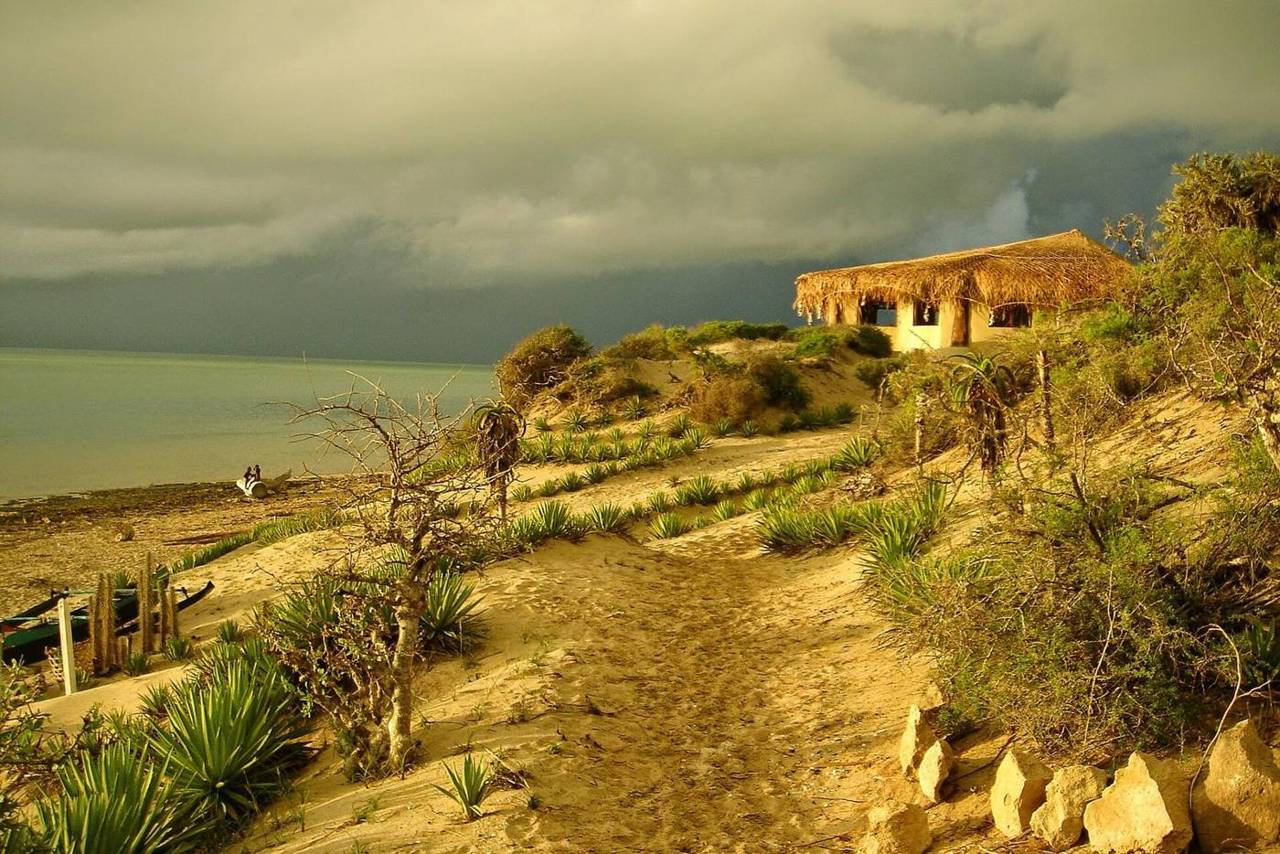
One of the world's longest coral reefs, Vezo fishing villages, Ifaty's spiny baobab forest and the island of Nosy Ve with its red-tailed tropicbirds.
 10 daysEasy
Nosy Be and the Mitsio islands by boat
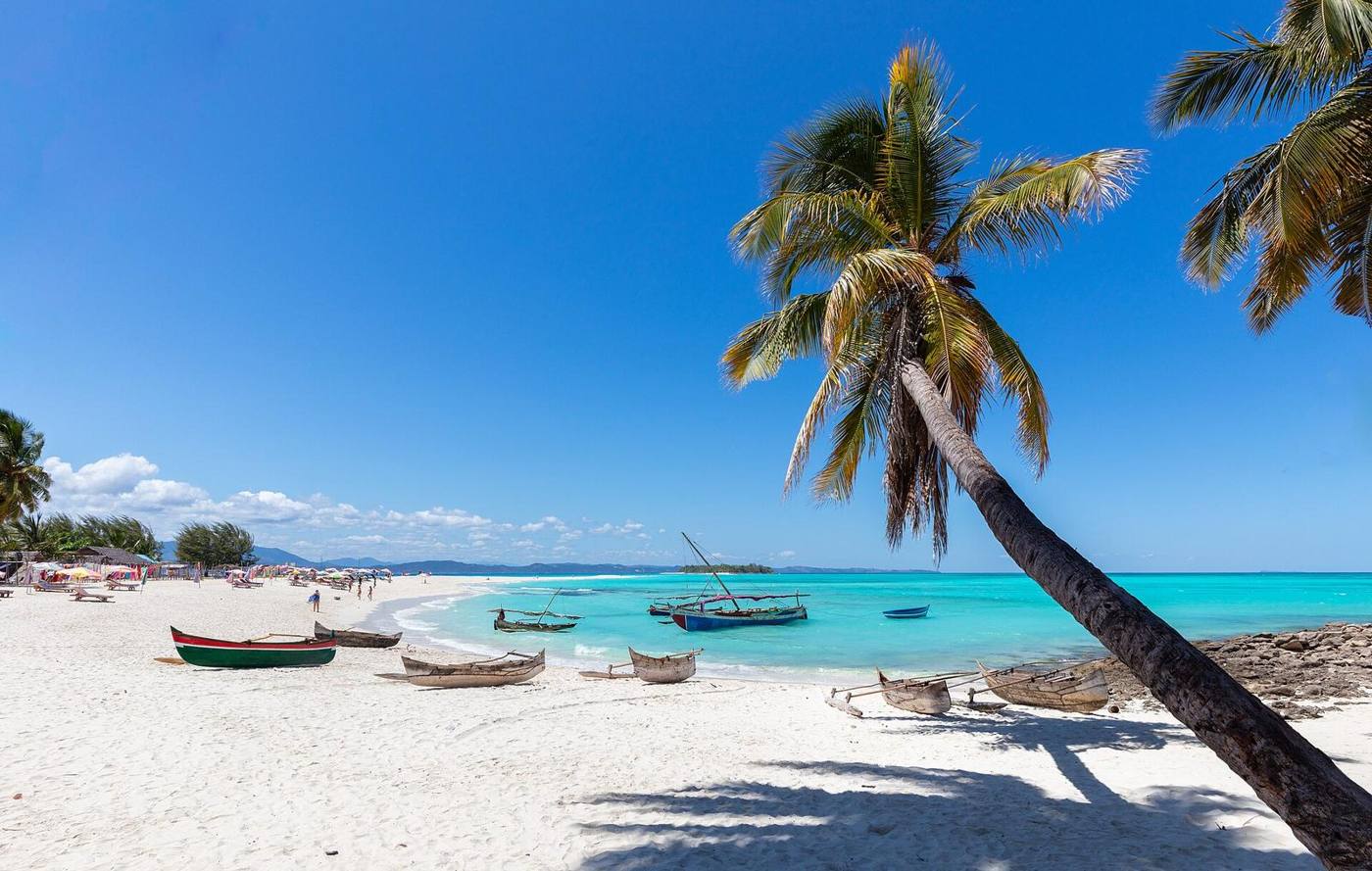
The island of perfumes and its archipelago: the lemurs of Nosy Komba, turtles at Nosy Tanikely and a multi-day cruise to the Mitsio islands.