Madagascar surprise: the canals, Sainte-Marie and the far north
The east coast by boat on the Pangalanes canals, Sainte-Marie island and the north with the Ankarana tsingy, Amber Mountain and the Emerald Sea.
- Antananarivo
- Andasibe
- Pangalanes Canal
- Tamatave
- Sainte-Marie
- Diego Suarez
- Ankarana
- Amber Mountain
Day by day
- Day 1
Arrival in Antananarivo
This twenty-two-day trip takes you to the least visited side of Madagascar: the rainforest of Andasibe with its indri, the Pangalanes canals by boat along the Indian Ocean, the port of Tamatave, the island of Sainte-Marie with its beaches and, in season, its whales, then the far north around Diego Suarez, with the Emerald Sea, the red and grey tsingy and the forest of Montagne d'Ambre.
Before you go: Italian citizens need a passport valid for at least six months on entry, with blank pages, a return ticket and a tourist visa, issued on arrival at the airport or online in advance, between 7 days and 6 months before, on the official e-visa website listed by Viaggiare Sicuri. Other nationalities should check their own rules. Some areas on this trip are close to borders or places where the situation changes often: check your government's travel advice before booking and again before you leave. Avoid demonstrations and gatherings. There are armed robberies on main roads, especially at night: never travel by road after dark. Malaria is present, especially on the coasts: ask your doctor about antimalarials.
You land at the airport of Antananarivo, the capital, known to everyone as Tana. The city is built on hills among the rice fields of the highlands, at about 1,300 metres, so evenings can be cool even in summer.
In the evening, stay at your accommodation or use an official taxi, and do not walk around the city after dark.
Overnight in Antananarivo.
Practical tip: change enough ariary in the city for a good part of the trip. On the canals and in the coastal villages there are no cash machines, and keep your cash split between several pockets.
- Day 2
To Andasibe and the rainforest
You leave Tana early in the morning on National Road 2, which drops from the highlands towards the east coast. The drive to Andasibe takes several hours, because the road is full of bends, lorries and villages.
From the window you see terraced rice fields, two-storey red brick houses, fruit stalls by the road and children carrying water. Then the hills turn green and the air becomes more humid: you are entering the rainforest belt.
You reach Andasibe in the early afternoon. The village is small, built around an old railway station, and lives from the Andasibe-Mantadia National Park.
In the late afternoon take a first walk with a local guide in the area around the park. In Madagascar's parks a guide is compulsory, and without one you would see almost nothing: guides know the trees where the lemurs sleep and can spot a chameleon sitting still on a branch.
After sunset, with a torch, you can take a night walk in a nearby reserve where this is allowed. You see colourful frogs, sleeping chameleons and, with luck, the mouse lemur, one of the smallest primates in the world, its eyes shining in the light.
Overnight in Andasibe.
Practical tip: bring a light waterproof jacket and shoes with a good grip. It rains often here even in the dry season and the paths stay muddy.
- Day 3
The indri and its song at dawn
Today is the day of the indri, the largest living lemur. You enter Andasibe-Mantadia National Park early in the morning with your guide, in the section called Analamazaotra, the closest to the village.
Indri live in small family groups and sing in the morning to mark their territory. Their call is a long, powerful wail that carries for kilometres: when one group starts, another group further away often replies. Hearing it from the path, beneath the tall trees, is the strongest moment of this part of the trip.
The guide follows the calls and takes you close to a family. Indri are black and white, with a face like a teddy bear, and stay high in the branches eating leaves. Unlike other lemurs, they have almost no tail.
On the same walk you can see other lemurs, such as the diademed sifaka, colourful birds, orchids and tree ferns. The path climbs up and down over red earth and roots.
In the afternoon rest, or go back into the forest for a second, shorter walk, when the animals become active again. If you are interested in birds, ask the guide for a route along the small lakes.
Overnight in Andasibe.
Practical tip: at the park, check prices and times at the entrance and pay the guide directly at the park office. Speak quietly: lemurs get used to calm people.
- Day 4
From the forest to the Pangalanes canals
You leave Andasibe in the morning and head down towards the east coast. The road continues through ever lower hills, banana plantations and wide brown rivers. Watch the timing: this stage must end in daylight, because you do not travel on the national road at night.
Near Brickaville you leave the main road and reach the landing stage on Lake Rasoabe, where the boat section begins. Here you start to discover the Pangalanes canals, a waterway more than 600 kilometres long that runs parallel to the Indian Ocean. It is made of natural lagoons and lakes, linked by canals dug in colonial times.
You board a motorboat with your luggage. On one side you see the thin strip of sand and palm trees that separates you from the ocean, on the other the mainland with its forests and villages. The pace changes at once: there are no roads here, only boats, pirogues and footpaths.
In the afternoon you reach a village on the shore of a lake, where you sleep in a simple bungalow. In the evening you can hear the ocean behind the dunes.
Before dinner walk to the ocean beach, but do not swim: the currents here are strong and there are sharks.
Overnight on the Pangalanes canals.
Practical tip: before boarding, check that there are life jackets for everyone and that the boat is not overloaded. Keep your passport and phone in a dry bag.
- Day 5
Lagoons, pirogues and villages
Today you stay on the canals and travel slowly, as everyone does here. In the morning the light on the lakes is soft and the water is as still as a mirror.
By boat you cross wide lagoons and narrow canals, where the branches almost touch the boat. Along the banks you see fishermen in pirogues carved from a single trunk, women washing clothes, children waving and small villages of wooden houses with palm-leaf roofs.
This is the land of the Betsimisaraka people, the second largest group in Madagascar. Life here depends on fishing, rice and fruit. If you stop in a village with the guide, greet the elders first and always ask permission before photographing people.
In the marshy areas look for the carnivorous plants of the genus Nepenthes, with their small green and red pitchers that trap insects. They grow well in the sandy soils along the east coast.
In the afternoon you can go out in a pirogue with a fisherman, or walk over the dunes to the ocean. The sun sets early, around six, and darkness comes quickly.
Dinner is simple: fish from the lake, rice and vegetables, with coconut milk.
Overnight on the Pangalanes canals.
Practical tip: use repellent at sunset and always sleep under a mosquito net. On the east coast malaria is present all year round.
- Day 6
Lake Ampitabe and the last bends
You continue north by boat and reach the area of Lake Ampitabe and the village of Ankanin'ny Nofy, one of the most beautiful stretches of the canals. The lake is large, with dark water and white sandy beaches, surrounded by low forest.
In this area there are small reserves where lemurs are used to people. With a guide you can see brown lemurs and sifakas up close, and walk among palms and coastal plants. Ask the guide to explain which plants the villagers use as medicine.
If the reserve runs evening outings, it is a good moment to look for the aye-aye, the nocturnal lemur with a long finger that it uses to pull larvae out of wood. It is not easy to see: the chances are good only in some reserves, so do not set off with high expectations.
In the afternoon relax on the lake beach. The fresh water of the lake is calmer than the ocean, but always ask the locals where you can swim.
In the evening, on the shore, listen to the sounds of the forest and look at the stars: far from the cities the sky is very dark.
Overnight on Lake Ampitabe.
Practical tip: carry small ariary notes. In the canal villages it is hard to pay by card and there is often no change for large notes.
- Day 7
Tamatave, the great port of the east
In the morning you travel the last stretch north by boat and reach Tamatave, whose Malagasy name is Toamasina. It is Madagascar's most important port and a lively, hot and noisy city, very different from the calm of the canals.
You leave your luggage at your accommodation and tour the centre by taxi or rickshaw, called a pousse-pousse. The main avenue still has colonial houses, large trees and cafés. Visit the big covered market, the Bazary Be, where you find spices, vanilla, cloves, tropical fruit and raffia goods. Vanilla is one of the best-known products of the east coast.
In the afternoon, if you have time, you can go to the Ivoloina zoological park, north of the city, where you see lemurs and tortoises in a forest setting. Check prices and times.
In the evening eat fish or a dish of rice with zebu meat and sauce. Coastal cooking uses a lot of coconut and ginger.
Pack your bag for tomorrow: departure for Sainte-Marie is at dawn, because the road is long and the sea is calmer in the morning.
Overnight in Tamatave.
Practical tip: in Tamatave do not walk after dark, do not show your phone and camera in the street and use taxis recommended by your accommodation.
- Day 8
Road and ferry to Sainte-Marie
You leave at dawn with your driver on the coast road north. The road crosses rivers, clove plantations and fishing villages. After several hours you reach Soanierana-Ivongo, the small port where the ferries to the island of Sainte-Marie depart.
The ferry is the most common way to reach the island. The crossing takes a couple of hours depending on conditions, and it can be rough. Departures are in the morning, when the wind is lighter: if the sea is heavy the service can be cancelled, so keep some slack in your plans.
Alternatively you can reach the island by air on a domestic flight from Tamatave or Antananarivo. It costs more, but avoids the road and the crossing.
You arrive on Sainte-Marie, called Nosy Boraha in Malagasy. It is a long, narrow island covered in palm trees, with a single main road running along the west coast. It was once a refuge for Indian Ocean pirates.
In the afternoon settle into your accommodation and rest on the beach. The pace of the island is slow and the only sounds are the sea and the wind.
Overnight on Sainte-Marie.
Practical tip: on the ferry, check the life jackets and do not board overloaded boats. If the weather is bad, wait: there have been accidents on this crossing caused by overcrowding and sudden squalls.
- Day 9
Ambodifotatra and the pirate cemetery
Today you discover the island's history. Go to Ambodifotatra, the main village, with a small harbour, the market, fishing boats and an old stone Catholic church overlooking the bay.
Just outside the village is the pirate cemetery, on a hill above the bay, among palms and flowers. You reach it on foot along a short path; at low tide it is easy to cross, at high tide you sometimes need a small boat. Among the graves there are old headstones, and one bears a cross with a skull and crossbones. Between the seventeenth and eighteenth centuries Sainte-Marie was a base for pirates who attacked ships bound for India. Check prices and times.
In the afternoon hire a bicycle, or a scooter if you are experienced, or take a tuk-tuk, and follow the coast road south. You stop at almost empty beaches, with calm water protected by the coral reef.
In the evening eat grilled fish, prawns or crab with coconut rice. On the island the cooking is simple and the fish is very fresh.
Overnight on Sainte-Marie.
Practical tip: on the island do not ride a scooter after sunset. The roads are narrow, unlit and full of potholes, and on foot or by bike you see very little in the dark.
- Day 10
Île aux Nattes and the coral reef
Today you reach the southern tip of the island and cross the narrow channel to Île aux Nattes, a small islet with no roads. The crossing is by pirogue and takes a few minutes.
If you prefer, you can spend the night on the islet, where there are a few simple places to stay: in the evening, with no cars and no noise, the silence is total.
On Île aux Nattes you walk on sandy paths among palms, frangipani and small villages. You can walk round the islet in a few hours, stopping on white beaches with turquoise water. The lighthouse on the hill gives a fine view over the sea. Look out for the orchids growing on the trees too.
Bring a mask and snorkel: the coral reef that protects the coast of Sainte-Marie forms shallow lagoons, where you see tropical fish, starfish and corals. Swim only in areas protected by the reef and ask the locals where the currents are.
For lunch, there are simple stalls on the islet serving freshly caught fish.
In the afternoon return to Sainte-Marie by pirogue. If you would like to dive, there are centres on the island that take you to the reefs: ask about certification and check the equipment.
Overnight on Sainte-Marie.
Practical tip: use a reef-safe sun cream and do not touch corals or starfish. In shallow water wear reef shoes, because sea urchins are common.
- Day 11
Pirogues and whales in season
If you are travelling between July and September, today you go out by boat to see humpback whales. They come from the cold waters of Antarctica to the channel between Sainte-Marie and the mainland to give birth and mate. You see them leap out of the water, slap their tails on the surface and swim with their calves beside their mothers.
During the outing you sometimes also see dolphins and sea turtles close to the boat.
Choose a boat that follows the whale-watching rules: distance from the animals, engine at idle, short time with each group and a limited number of boats around. The outing lasts a few hours and takes place in the morning, when the sea is calmer.
If you travel in other months, take a pirogue trip instead along the bays and mangroves of the island's wilder east coast. You can reach the natural pools in the north of Sainte-Marie, near Ambodiatafana, carved by the sea into the volcanic rock. You bathe there when the ocean is calm.
In the afternoon rest: it is your last day by the sea before the north. Watch the sunset from the west coast, where the sun goes down behind the mainland.
Overnight on Sainte-Marie.
Practical tip: if you suffer from seasickness, take a remedy before you go. Bring water, a hat and a light jacket: on a boat you feel the wind even in the sun.
- Day 12
Flight to Diego Suarez
Today you leave the east coast and fly to the north of Madagascar. The flight from Sainte-Marie to Diego Suarez often stops in Antananarivo, so the day is mostly about getting there. Check schedules in advance: domestic flights change often, sometimes at the last minute.
Diego Suarez, whose Malagasy name is Antsiranana, lies near the northern tip of the island, on one of the largest bays in the world. The city feels different: pastel-coloured colonial houses, wide avenues and a strong, steady wind that blows from May to October.
In the afternoon take a walk around the centre by taxi or with your guide. You see the old buildings from the French period, the market and the view over the bay, with the cone-shaped islet called Pain de Sucre, the Sugarloaf, considered sacred by local people.
Meet the driver and guide for the northern part of the trip here. Talk with them about the plan for the coming days, the driving times and the sea conditions.
In the evening try the dishes of the north, such as fish in coconut and the samosas sold in the street.
Overnight in Diego Suarez.
Practical tip: keep medicines, a swimsuit and a change of clothes in your hand luggage. On domestic flights bags sometimes arrive late.
- Day 13
The Emerald Sea by sailing boat
Today you sail on the Emerald Sea, a large lagoon protected by the coral reef east of Diego Suarez. You leave in the morning from the fishing village of Ramena, about half an hour by road from the city, on a traditional sailing boat.
The plan depends on the wind, which can be very strong here. If the sea is too rough, the captain may change the route or postpone the outing: listen to his advice, because he knows these waters well. The boats are simple, with no cabin, so sit where the crew tells you and hold on when the boat heels over.
With a strong wind the boat moves fast and the trip is lively: you will certainly get wet. Once out of the bay, the water changes colour and becomes a bright, pale green, almost unreal, over a white sandy bottom.
You stop on a sandy islet in the lagoon. Here you swim in calm, shallow water with mask and snorkel, and have lunch on the beach with grilled fish and fruit prepared by the crew.
In the afternoon you return to Ramena, where you can walk along the long beach, watch the fishermen's pirogues and have a drink on the sand.
You return to Diego Suarez before sunset.
Overnight in Diego Suarez.
Practical tip: put your phone and camera in a tightly closed dry bag, and bring a long-sleeved shirt. The wind and sun on the water burn your skin more than you feel.
- Day 14
The three bays and the red tsingy
In the morning you explore the coast east of Diego Suarez, in the area of the three bays: Sakalava Bay, Pigeons Bay and Dunes Bay. You reach them on sandy tracks, ideally with a 4x4 and a local driver.
Sakalava Bay is wide and windy, much loved by kitesurfers. Pigeons Bay and Dunes Bay are smaller and wilder, with white beaches, rocks and clear water. You can walk along a coastal path from one bay to the next and stop for a swim where the sea is calm.
In the afternoon head south to the red tsingy, about an hour and a half by road. They are not limestone like other tsingy: they are pinnacles of red earth and sand, carved by rain and wind. The colour shifts from pink to orange to fiery red, and the best light is in the late afternoon.
You walk along the rim and on the paths between the spires with your guide. The ground is fragile: stay on the marked routes and do not touch the formations.
You return to Diego before dark.
Overnight in Diego Suarez.
Practical tip: bring plenty of water and a hat. There is no shade at the red tsingy and the earth reflects the heat.
- Day 15
To Ankarana and the first grey tsingy
You leave Diego Suarez and drive south on National Road 6. After a couple of hours you reach the Ankarana reserve, a limestone plateau covered in dry forest, with canyons, caves and underground rivers.
Along the way you see the first cashew plantations and the villages of the Antankarana people, who give the region its name.
In the afternoon take your first walk with the reserve guide, compulsory here too. You walk through the forest among baobabs, succulents and trees that lose their leaves in the dry season. Several lemurs live here, including the crowned lemur, with an orange patch on its head, and Sanford's brown lemur. Look out for chameleons, geckos and birds too.
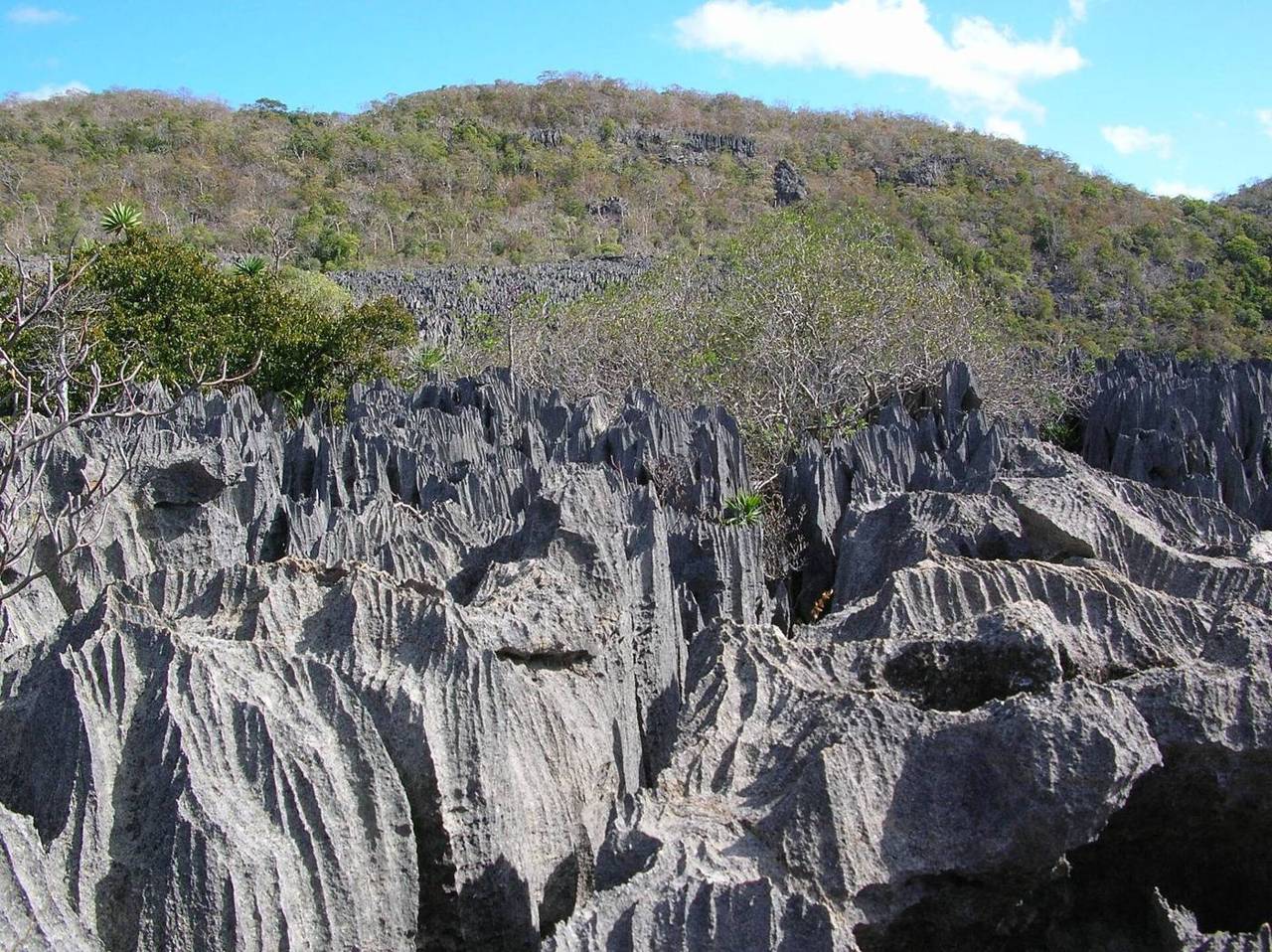
The guide takes you to a first area of grey tsingy. The word tsingy, in Malagasy, refers to ground where you cannot walk barefoot. They are limestone pinnacles as sharp as knives, carved by rain over thousands of years. You see them from walkways and safe paths.
You return to your accommodation near the reserve before sunset. In the evening, from the garden, you sometimes hear lemurs and forest insects.
Overnight near Ankarana.
Practical tip: wear sturdy, closed hiking shoes with thick soles. The limestone of the tsingy cuts through thin rubber and hands: bring light gloves too.
- Day 16
Ankarana: caves, suspension bridges and lemurs
Today you spend the whole day at Ankarana. Leave early with your guide, while it is still cool, for one of the longest trails in the reserve.
The full circuit takes most of the day: decide on the length with your guide according to your fitness.
The route takes you towards the great fields of grey tsingy. You climb ladders and walkways, and cross a suspension bridge over a rock canyon, with the spires beneath your feet. From above the landscape is striking: a sea of grey pinnacles stretching to the horizon, with green forest in the gorges.
You then go down to one of the reserve's caves. Inside, with a torch, you see stalactites, stalagmites and colonies of bats. Underground rivers flow through some caves. The guide explains the local rules, the fady, the traditional taboos: some places are sacred and must be respected.
Along the way look for lemurs, which often move in groups through the trees, and the large baobabs that grow among the rocks.
In the afternoon return to your accommodation and rest. The heat in the dry forest is intense in the middle of the day.
Overnight near Ankarana.
Practical tip: carry at least two or three litres of water each and a snack. There is nowhere to buy them in the reserve, and long walks last many hours.
- Day 17
Montagne d'Ambre and its waterfalls
You leave Ankarana and head back north. Before Diego Suarez you climb towards the village of Joffreville, on the slopes of an ancient volcanic massif. Here Montagne d'Ambre National Park begins.
The road climbs with many bends and the vegetation becomes ever denser.
Within a few kilometres the landscape changes completely. From the dry forest of Ankarana you enter a mountain rainforest, green, damp and cool, with trees covered in moss, giant ferns and lianas. It is much cooler than on the coast: bring a sweatshirt.
In the afternoon take your first walk with the park guide. The path leads to one of the large waterfalls, which drops from a rock face into a natural pool surrounded by forest. The sound of the water fills the valley.
Along the way you see the local lemurs, such as the crowned lemur and Sanford's brown lemur, and many birds. On trunks and leaves the guide looks for chameleons of every colour and size.
You return to your accommodation near the park. The evening is cool and you hear the rain on the forest.
Overnight near Montagne d'Ambre.
Practical tip: in the mountain forest there are leeches after rain. Pull long socks over your trousers and check your legs at the end of the walk.
- Day 18
Tiny chameleons and crater lakes
Today you spend another day at Montagne d'Ambre, with a longer walk in the forest. Leave early with your guide, while the animals are active.
The park is famous for its chameleons. Large, colourful species live here, but above all some dwarf chameleons of the genus Brookesia, among the smallest reptiles in the world. They are a few centimetres long and blend in among the dead leaves: without an expert guide you would never find them. When the guide finds one, look at it without touching.
The path also takes you to a lake in an ancient volcanic crater, surrounded by forest, and to viewpoints from which you see the bay of Diego Suarez in the distance. Along the way there are other, smaller waterfalls and streams.
Look out too for colourful frogs, leaf-tailed geckos that blend in with the bark and orchids on the trunks. There are many birds: ask your guide to identify them by their song.
In the afternoon rest at your accommodation. If you still have energy, ask for a walk at sunset nearby to see the nocturnal animals.
Overnight near Montagne d'Ambre.
Practical tip: to photograph small chameleons use macro mode and do not use the flash, which disturbs them. Let the guide work without moving branches and leaves.
- Day 19
Back to Diego and the bay
You come down from Montagne d'Ambre and return to Diego Suarez, less than an hour by road. It is a quiet day, to rest after the days of walking in the parks.
In the morning you can take a trip on the bay, one of the largest in the world, with a boat that passes close to the Pain de Sucre, the sacred cone-shaped islet. You do not land on the islet out of respect for local traditions, but you see it up close from the sea.
Alternatively, if the wind allows, you can go back to Ramena for a last swim, or visit the lighthouse at Cap Miné and the old military positions on the coast. Ask your guide which areas are open.
In the afternoon go to the market to buy spices, vanilla, cocoa from the north and handicrafts. Cocoa from the Ambanja area, further south, is among the best on the island. Bargain politely.
In the evening watch the sunset over the bay and have dinner with fish and seafood. It is also the right moment to say goodbye to your driver and guide in the north.
Overnight in Diego Suarez.
Practical tip: buy vanilla only as whole pods, shiny and flexible, and keep it in a closed container. If you take large quantities home, ask about customs limits.
- Day 20
Flight to the capital
Today you fly from Diego Suarez to Antananarivo. The flight takes just over an hour, but it is worth arriving at the airport well in advance: checks are slow and times can change.
From the plane, in good weather, you see the northern coast, then the mountains and finally the red highlands around the capital, with rice fields and villages.
On arrival a driver meets you and takes you to your accommodation. Traffic in Tana is slow and chaotic, especially in the late afternoon, so do not plan too much.
If your flight arrives early, you can also walk along Lake Anosy in broad daylight.
Otherwise take a walk near your accommodation or rest. The highland climate is cooler than the coast, and in the evening you need a sweatshirt.
In the evening have dinner at your accommodation or somewhere nearby. Try romazava, a zebu meat stew with green leaves, considered one of the national dishes, and ravitoto, meat with pounded cassava leaves.
Use this evening to sort your photos, wash a few clothes and pack your souvenirs for the journey home.
Overnight in Antananarivo.
Practical tip: keep a printed confirmation of your international flight and check the baggage rules. Domestic flights often have lower weight limits than international ones.
- Day 21
Antananarivo, the Rova and the sacred hill
Your last full day in Madagascar. With a driver you visit the main sights of Antananarivo and its surroundings.
If you have time, stop in the upper town too, with its stairways and brick houses with wooden balconies.
In the morning go up to the Rova, the queen's palace complex on the highest hill in the city. The palace was damaged by fire in the 1990s and later restored. From the hill you see the whole city: red roofs, churches, rice fields and Lake Anosy, with the jacarandas that flower around October and November. Check prices and times.
Then go to Ambohimanga, about twenty kilometres north. It is the sacred royal hill, a UNESCO World Heritage Site: a fortified village with stone gates, ancient trees and the wooden residence of the kings. For the Malagasy it is an important spiritual place, so follow the rules shown at the entrance.
In the afternoon return to the city and visit the Analakely market, in the lower town, where you find fruit, spices, raffia baskets and fabrics. Keep your bags closed and in front of you.
In the evening pack and have a last quiet dinner.
Overnight in Antananarivo.
Practical tip: at markets carry only the money you need and leave your passport at your accommodation. Watch out for pickpockets in the crowd.
- Day 22
Departure from Antananarivo
Today is departure day. Leave for the airport with plenty of time: traffic in Tana is unpredictable and airport checks take time.
In twenty-two days you have seen three different faces of Madagascar. You heard the song of the indri in the forest of Andasibe, travelled slowly by boat on the Pangalanes canals among lagoons, fishing villages and carnivorous plants, and saw the bustle of the great port of Tamatave. You crossed the sea to Sainte-Marie, with the pirate cemetery, Île aux Nattes and, in season, the whales. Then the north: the Emerald Sea by sailing boat, the three bays, the red tsingy, the grey pinnacles and caves of Ankarana, and the forest of Montagne d'Ambre with the smallest chameleons in the world.
When to go: the best period runs from April to November, in the drier season. For whales at Sainte-Marie choose July to September. Avoid January to March, the cyclone season on the east coast, when roads flood and boat services stop. In Diego Suarez, from May to October, the wind is very strong: perfect for sailing, less so for spending all day on the beach.
Have a good journey home.
Practical tip: keep a few ariary for last purchases at the airport. Outside Madagascar the ariary is hard to exchange, so spend or change what is left before you leave.
The least-seen Madagascar, with nature, sea and very few tourists. Travel on the Pangalanes is slow and basic: that's the charm. Avoid January-March, the cyclone season on the east coast.
Before you go
- Documents and visa
- Passport valid for at least six months on entry, with blank pages and a return ticket. You need a tourist visa: it is issued on arrival at the airport or online in advance, between 7 days and 6 months before, on the official e-visa website. It is valid for up to 60 days. Declare large sums of foreign currency on arrival.
- Health and vaccines
- Malaria is present, especially on the coasts: ask your doctor about antimalarials. Plague is endemic in some rural areas: use repellent against fleas too. Drink only bottled water. Outside Antananarivo care is limited and serious cases go to South Africa or Réunion: you need insurance covering medical costs and repatriation.
- Money and payments
- Malagasy ariary. Bring euros in cash to change at banks or authorised offices; cards work only in towns and large hotels.
- Power sockets
- Types C and E, 220 volts: you need an adapter for British plugs.
- Time zone
- UTC+3 all year.
- Safety
- After violent protests in late September and early October 2025, a transitional government took office on 17 October 2025; demonstrations can happen again and roads can close at short notice. Armed robberies on main roads, especially at night: never travel by road after dark. For western roads such as the RN35, the British government advises using a recognised operator. Official advice: GOV.UK.
Information checked in November 2026 for Italian and EU citizens. Rules change: always check before you travel.
Variations
In 15 days: Andasibe, the Pangalanes canals and Sainte-Marie, then back to Antananarivo without the north.
In 26 days: add a few days on Nosy Be and the nearby islands, which you can reach from the north.
Frequently asked questions
How do you get to Sainte-Marie?
By ferry from Soanierana-Ivongo, after several hours by road from Tamatave, or on a domestic flight. The ferry leaves in the morning and can be cancelled in heavy seas: keep a spare day and always check life jackets and loads.
Do you need a guide in the parks?
Yes. In Madagascar's national parks and reserves a local guide is compulsory. You pay at the park office: check prices and times. Without a guide you would see very few animals, especially chameleons and nocturnal lemurs.
Is this a demanding trip?
It is of medium difficulty. The trails at Ankarana and Montagne d'Ambre need some fitness, and on the canals transport is basic. Roads are slow: never travel by road after dark and leave margins for domestic flights.
Indicative itinerary written by World Atlas. Before booking, check timetables, seasonal openings, documents and safety.
 7 daysModerate
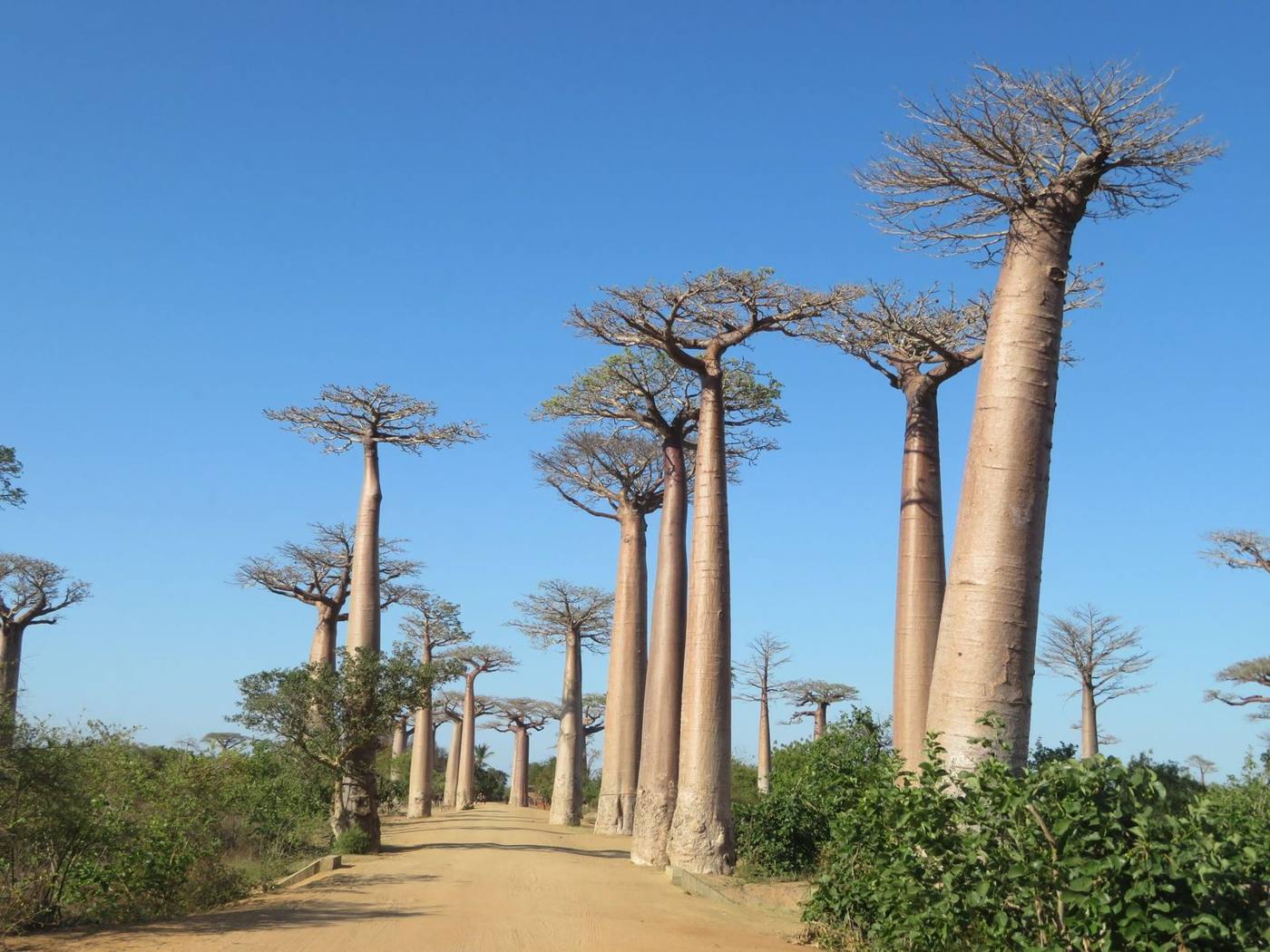
Andasibe and the Avenue of the Baobabs
Indri lemurs in the rainforest and the island's most famous sunset among the baobabs of Morondava.
 15 daysChallenging
Route Nationale 7 to the sea
The great journey south: highlands, lemur forests, the Isalo canyons and the Ifaty coral reef.
 10 daysEasy
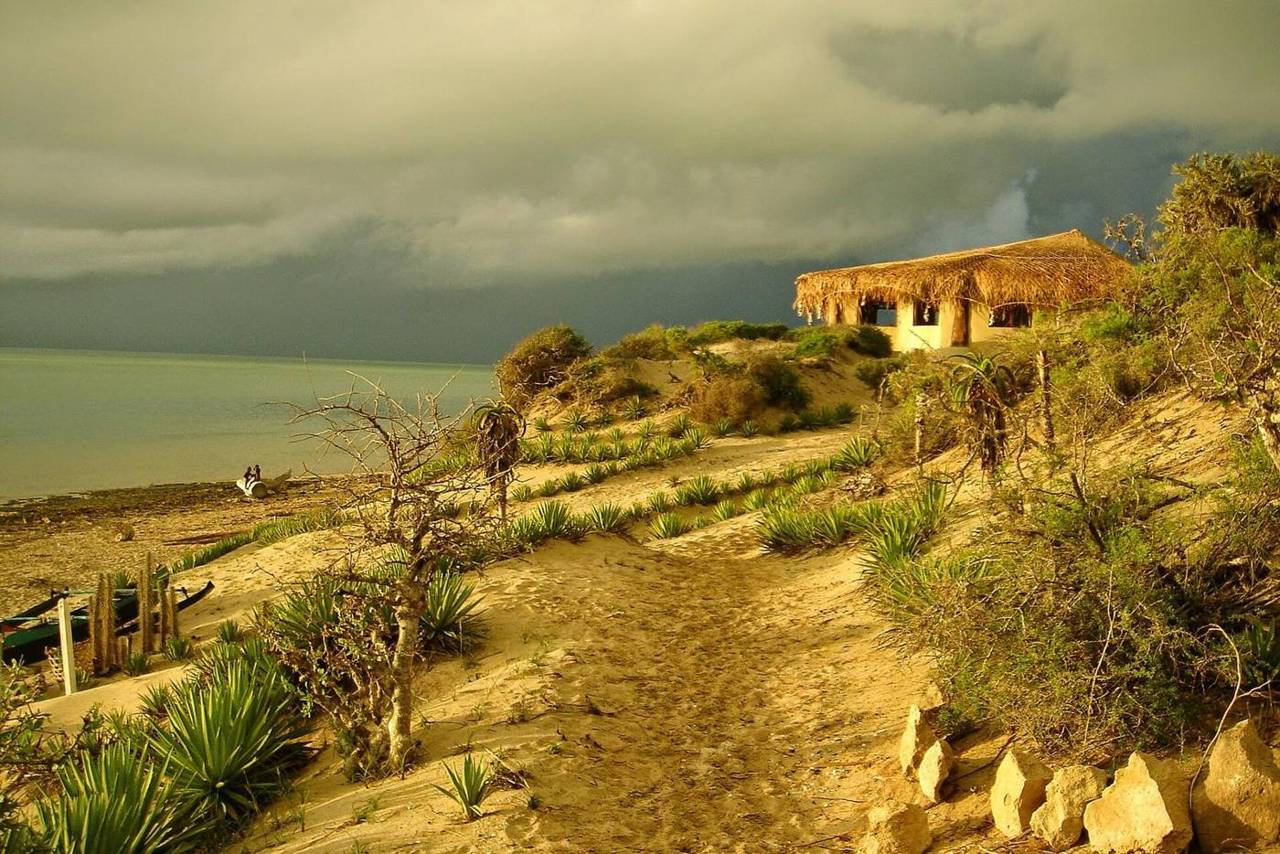
Toliara and the south-west reef: Anakao and Ifaty
One of the world's longest coral reefs, Vezo fishing villages, Ifaty's spiny baobab forest and the island of Nosy Ve with its red-tailed tropicbirds.