Querétaro, the Sierra Gorda and Peña de Bernal
The colonial city of Querétaro with its aqueduct and squares, the wineries and cheeses of the wine route, the Peña de Bernal monolith and, in the Sierra Gorda mountains, the five Franciscan missions with their carved facades, a UNESCO World Heritage site.
- Querétaro
- Tequisquiapan
- Peña de Bernal
- Jalpan
- Landa de Matamoros
Day by day
- Day 1
Querétaro: the old town and its squares
To enter Mexico you need a valid passport; EU citizens need no visa for tourism, and on arrival officials decide how many days to grant, up to a maximum of 180. Check the rules for your nationality.
Querétaro, about two and a half hours by bus north-west of Mexico City, is an elegant, quiet colonial city with a UNESCO-listed old town, tidy and full of squares, gardens, baroque churches and eighteenth-century palaces painted ochre, red and yellow. Here in 1810 the plot was hatched that led to Mexico's War of Independence, and here in 1917 the constitution still in force was signed. The state of Querétaro is at level 2 in US government advice: travel requires normal precautions.
In the morning stroll through the centre, starting at Jardín Zenea, with its bandstand, and Plaza de Armas, with its fountain and colonial palaces, including the Casa de la Corregidora, now the state government seat: here Josefa Ortiz, wife of the Spanish governor, warned the conspirators that the plot had been discovered, setting off the uprising. Visit the church of San Francisco and the regional museum in the adjoining convent.
In the afternoon visit the church of Santa Rosa de Viterbo, one of the masterpieces of Mexican baroque, with great painted flying buttresses outside and carved gilded altars inside, and the church of Santa Clara, also covered in gold.
In the evening, at weekends, the centre comes alive with music and families in the squares; try enchiladas queretanas, with chilli sauce and fresh cheese.
Practical tip: the centre is easy to explore on foot; the pedestrian streets are safe and busy until evening.
- Day 2
Querétaro: the Convent of the Cross and the aqueduct
In the morning visit the Convent of the Holy Cross, built by the Franciscans on the hill where, according to tradition, a cross appeared in 1531 during the battle between Spaniards and indigenous people that led to the city's founding. In the convent garden grows a tree called the tree of the cross, whose thorns are shaped like little crosses; legend says it grew from a friar's staff planted in the ground. Emperor Maximilian of Habsburg was imprisoned in the convent in 1867 before being executed. The guided visit also shows an old system of clay pipes and the friars' cells.
Then go to the Founders' viewpoint, overlooking the Querétaro aqueduct, the city's symbol: built between 1726 and 1738, it has seventy-four pink stone arches up to about twenty-eight metres high, and for two centuries carried water from springs in the hills to the centre, over more than a kilometre.
In the afternoon visit the Cerro de las Campanas, the hill where Maximilian was shot on 19 June 1867 together with two of his generals, marking the end of the empire and the victory of Benito Juárez's Republic. Today it is a park with a small expiatory chapel built by the Habsburgs and a large statue of Juárez. The site museum tells the story of the siege of the city and the end of the empire.
In the evening try stuffed corn gorditas and a glass of regional wine.
Practical tip: Maximilian left for Mexico from Miramare Castle in Trieste: those who know that story find its ending here.
- Day 3
The wine and cheese route and Tequisquiapan
In the morning drive east along the Querétaro wine and cheese route, in the area around Ezequiel Montes and Tequisquiapan, about an hour from the city. The plateau, at almost two thousand metres, with warm days and cool nights, has in recent decades become one of Mexico's most important wine regions, especially for sparkling wines made by the traditional method. Visit one or two wineries, with vineyards, underground cellars and tastings, and an artisan cheese dairy making cow's and goat's cheeses, some aged in caves or with wine.
In the afternoon reach Tequisquiapan, a Pueblo Mágico, a town recognised by the government for its beauty and history, with its main square, arcades, the pink and yellow church of Santa María de la Asunción, flower-filled cobbled streets and shops selling wicker and textile crafts. Tequisquiapan was famous for its thermal waters: some hot spring pools remain nearby.
On weekends in late May and early June the national cheese and wine fair is held, with tastings and music.
In the evening dine in Tequisquiapan and taste local cheeses with freshly baked bread.
Practical tip: if you taste a lot of wine, don't drive; organised winery tours with transport run from Querétaro. Many wineries also have restaurants among the vines, ideal for a long lunch.
- Day 4
Peña de Bernal: the path on the monolith and the village
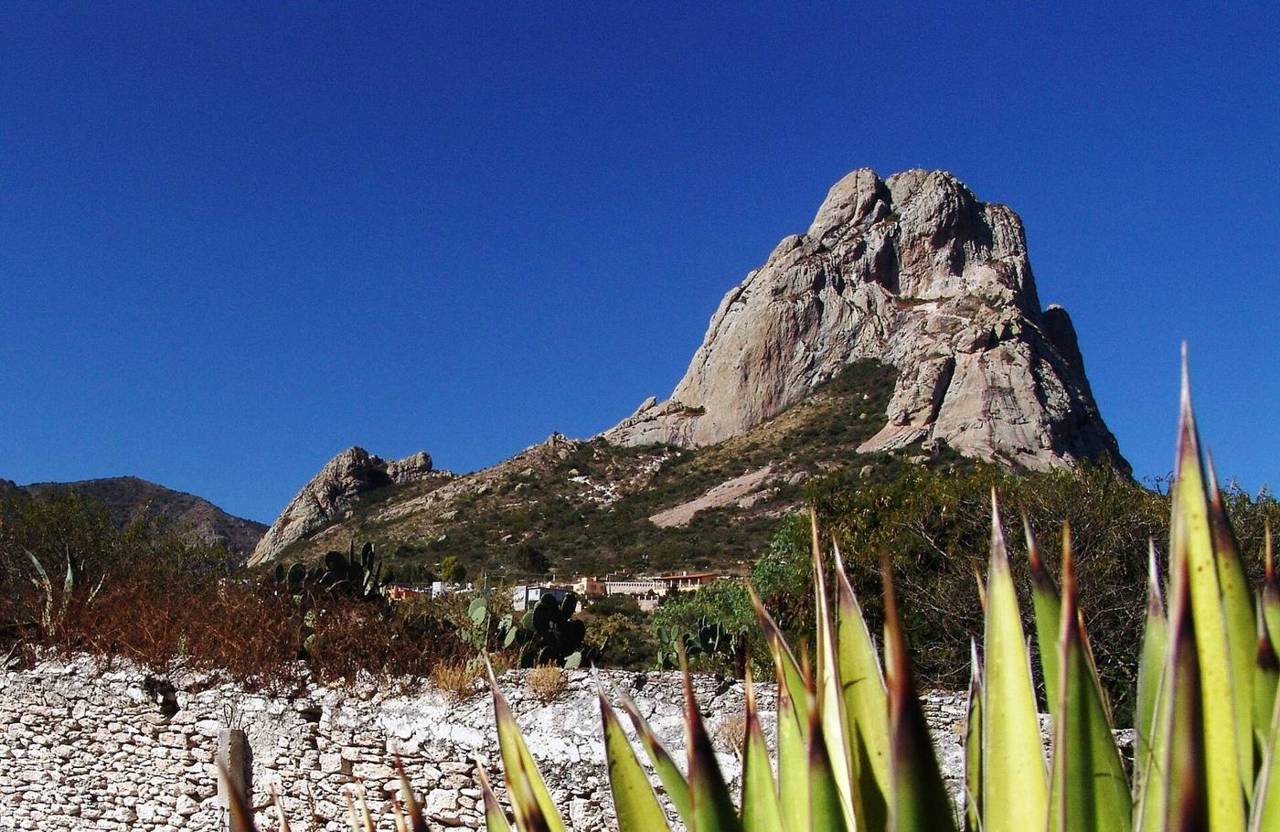
In the morning reach Bernal, about twenty minutes from Ezequiel Montes, a small Pueblo Mágico at the foot of the Peña de Bernal, one of the largest monoliths in the world: a huge block of volcanic rock rising alone about three hundred and fifty metres above the village like a great stone tower. It formed millions of years ago when magma solidified inside a volcano, and erosion later removed the softer rocks around it. For the Otomí and Chichimeca communities of the area it is a sacred place; since 2009 the traditions linked to the Peña have been on UNESCO's intangible heritage list.
Climb early along the path from the village to about halfway up the monolith, to a chapel, about an hour's ascent with stone steps and steep sections. From here you see the whole valley, with fields, the village and the hills. Beyond this point the climb to the top is real rock climbing, only with a guide, ropes and equipment.
In the afternoon stroll through Bernal, with its narrow uphill streets, colourful houses, the church of San Sebastián and the small eighteenth-century castle on the square. Shops sell woollen textiles woven on traditional looms and milk sweets. Try corn gorditas cooked on the comal, the clay griddle.
In March, for the spring equinox, thousands of people dressed in white climb the Peña to receive the sun's energy.
Practical tip: there is no shade on the monolith; go early and bring water and a hat.
- Day 5
The Sierra Gorda: the missions of Jalpan and Landa
In the morning leave early north-east for the Sierra Gorda, about three and a half to four hours from Bernal on a very winding road. The road crosses very different landscapes: first cactus desert, then mountains covered in pine and oak, finally humid tropical valleys. The Sierra Gorda is a UNESCO biosphere reserve, one of Mexico's most biodiverse areas, with canyons, caves, waterfalls and rivers.
The main reason to come is the five Franciscan missions of the Sierra Gorda, a UNESCO World Heritage site, built between 1750 and 1770 by friars led by Junípero Serra, who later founded the California missions. The churches have extraordinary carved and painted façades in a folk baroque in which Pame indigenous craftsmen mixed saints, angels and Christian symbols with flowers, fruit, animals and figures from their own culture, such as mermaids, jaguars and eagles.
In the afternoon visit the mission of Jalpan, the first and largest, in the town of Jalpan de Serra, with its ochre façade and great portal, and the mission of Landa, about twenty kilometres away, considered by many the most beautiful, with a pink and orange façade full of carved figures.
In the evening sleep in Jalpan, a quiet town with a square and a reservoir.
Practical tip: the road to the Sierra Gorda is long and winding; do not drive at night and fill up before leaving.
- Day 6
Tilaco, Tancoyol and Concá, then the return
In the morning visit the other three missions, scattered among the valleys around Jalpan, half an hour to an hour apart on mountain roads. The mission of Tilaco, in the most hidden valley, has the richest and most colourful façade, with mermaids, angels and baskets of fruit. The mission of Tancoyol, in a green valley, has an elegantly carved façade and a great portal. The mission of Concá, the smallest, in a village near a river, has a façade with animal figures, including a rabbit, and a pelican feeding its young, a Christian symbol.
If you have time, near Concá you can swim in the Santa María River, or visit the Sótano del Barro, a huge sinkhole more than four hundred metres deep, home to green parrots that fly out at dawn, reached with a local guide.
In the afternoon head back to Querétaro, about four and a half hours, or to Mexico City, about six hours. Alternatively there are buses from Jalpan to both cities.
Things to take home: Querétaro wine and cheese, local opals only from reliable shops, Bernal woollen textiles, milk sweets, Tequisquiapan wickerwork and Sierra Gorda coffee.
Practical tip: check your government's travel advice before leaving.
A quiet Mexico, little known to Europeans. The road to the Sierra Gorda is long and winding: better with a driver. For nearby Guanajuato and San Miguel de Allende, the United States advises reconsidering travel (level 3). The United States places this state at level 2 (increased caution): no road travel at night, taxis only via apps or official ranks. Italian citizens need no visa for tourism.
Before you go
- Documents and visa
- Passport valid for the whole stay; no visa is needed for tourism. On arrival the officer sets the number of days granted. Quintana Roo state charges foreign visitors a tax, the Visitax, payable online.
- Health and vaccines
- No compulsory vaccines. Drink only bottled water and use mosquito repellent against dengue and other diseases. Emergencies: 911.
- Money and payments
- Mexican peso. Cards are accepted in cities and tourist areas; in markets, villages and on local transport you need cash.
- Power sockets
- Types A and B, 127 volts: you need a flat-pin adapter.
- Time zone
- Mexico City is UTC-6; Quintana Roo is UTC-5. Mexico no longer uses daylight saving time, except in some border areas.
- Safety
- The situation varies greatly between states: the United States rates some, such as Guerrero, Michoacán and Sinaloa, at level 4, while Yucatán and Campeche are at level 1. Official advice: GOV.UK.
Information checked in November 2026 for Italian and EU citizens. Rules change: always check before you travel.
Variations
In 3 days: Querétaro on day one, the wine route and Tequisquiapan on day two, the Peña de Bernal on day three.
In 9 days: add San Miguel de Allende, about an hour from Querétaro, or the Huasteca Potosina beyond the Sierra Gorda.
Frequently asked questions
What do I need to enter Mexico?
A valid passport; EU citizens need no visa for tourism, and up to 180 days are granted on arrival at the officials' discretion.
Can I climb to the top of the Peña de Bernal?
The path goes about halfway; the final part is real rock climbing, only with a guide and equipment.
Do I need a car?
Not for Querétaro; for the wine route, Bernal and the Sierra Gorda it is much easier, or there are organised tours and buses.
Indicative itinerary written by World Atlas. Before booking, check timetables, seasonal openings, documents and safety.
 5 daysModerate
Monarch butterflies and Valle de Bravo
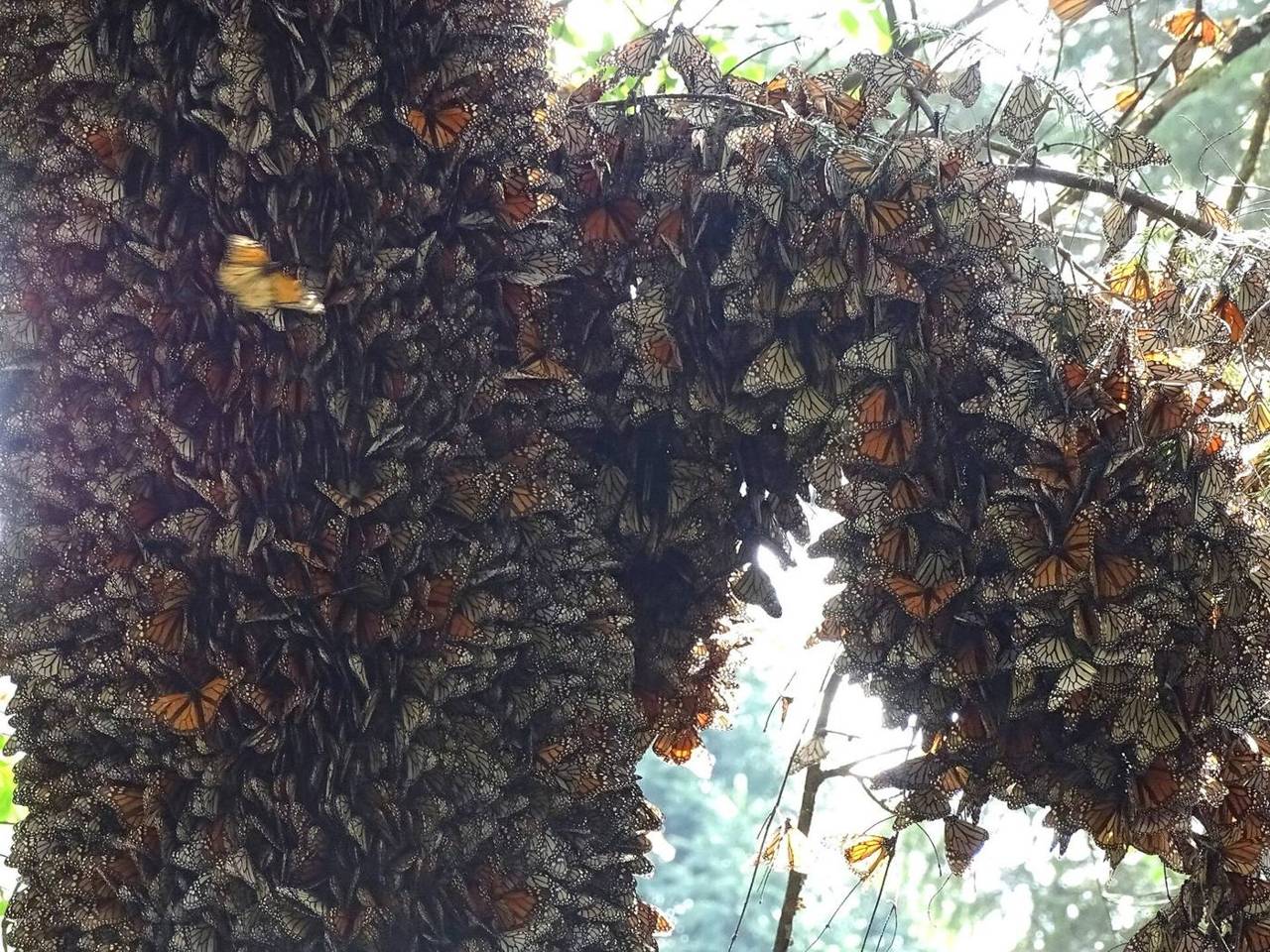
Millions of monarch butterflies covering the mountain firs in winter after a journey of thousands of kilometres from Canada: visited in the sanctuaries of the State of Mexico, based in the lakeside town of Valle de Bravo, with Malinalco and its Aztec temple carved into the rock.
 6 daysModerate
The Huasteca Potosina and Xilitla
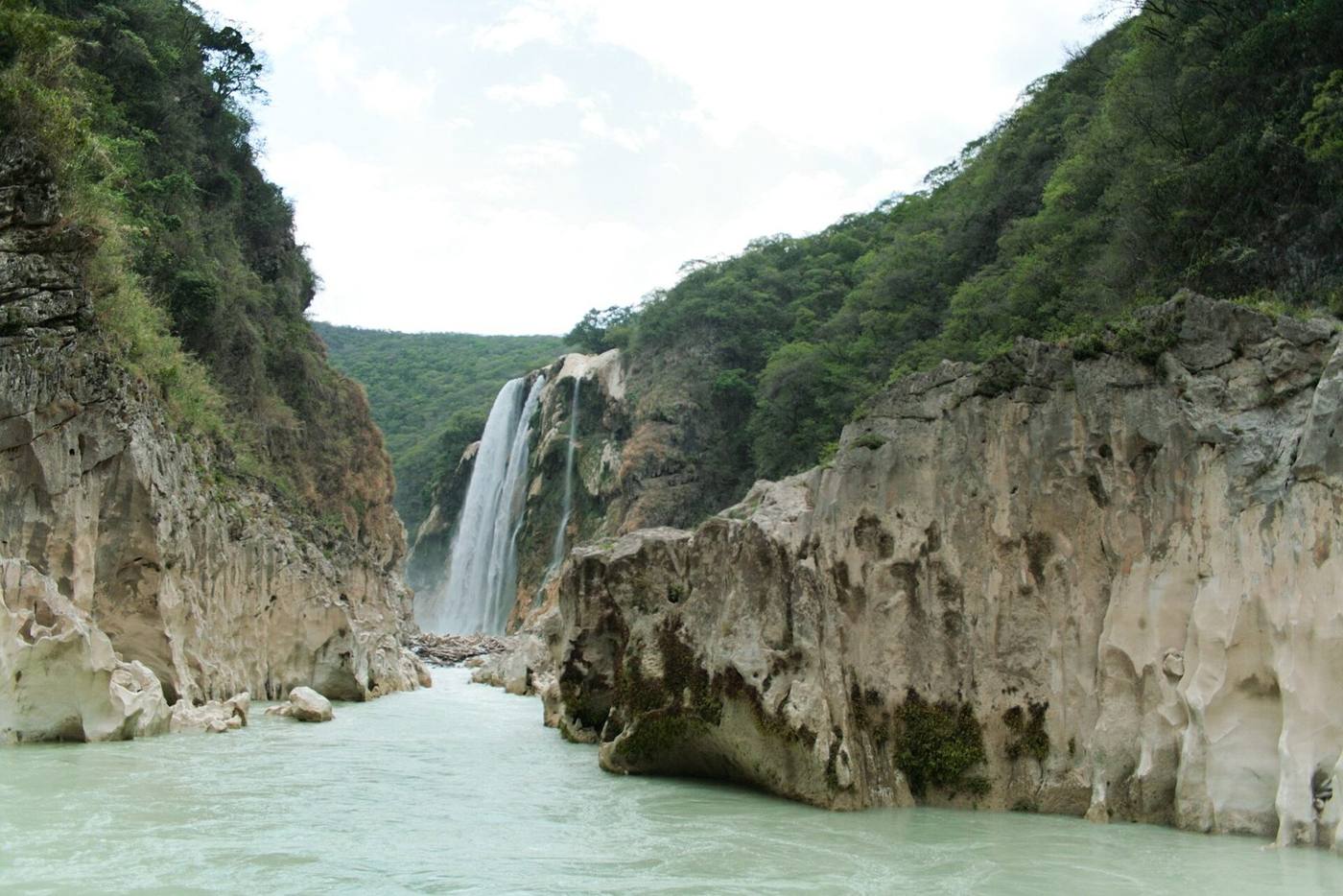
The land of turquoise waters in San Luis Potosí state: the Tamul waterfall reached by canoe, the pools of Puente de Dios and Micos, the Cave of Swallows where thousands of birds emerge at dawn, and the surrealist garden of Las Pozas in Xilitla, created by Edward James in the jungle.
 6 daysEasy
Oaxaca, the Day of the Dead
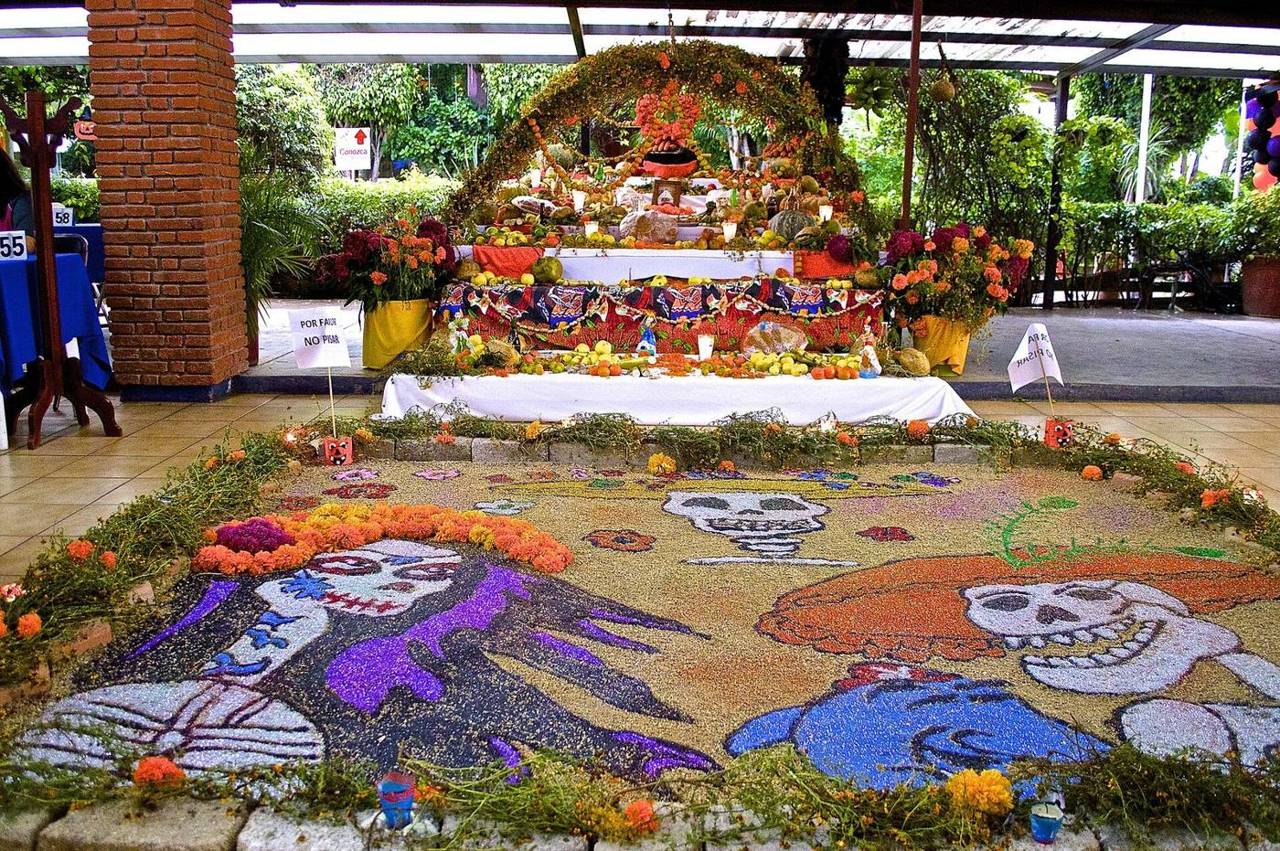
Mexico's most heartfelt festival in one of its most beautiful cities: altars with marigolds and candles, the cemeteries lit up at night in Xoxocotlán, masked comparsas, pan de muerto and mezcal, then the wool-rug villages of Teotitlán and the alebrije village of San Martín Tilcajete.