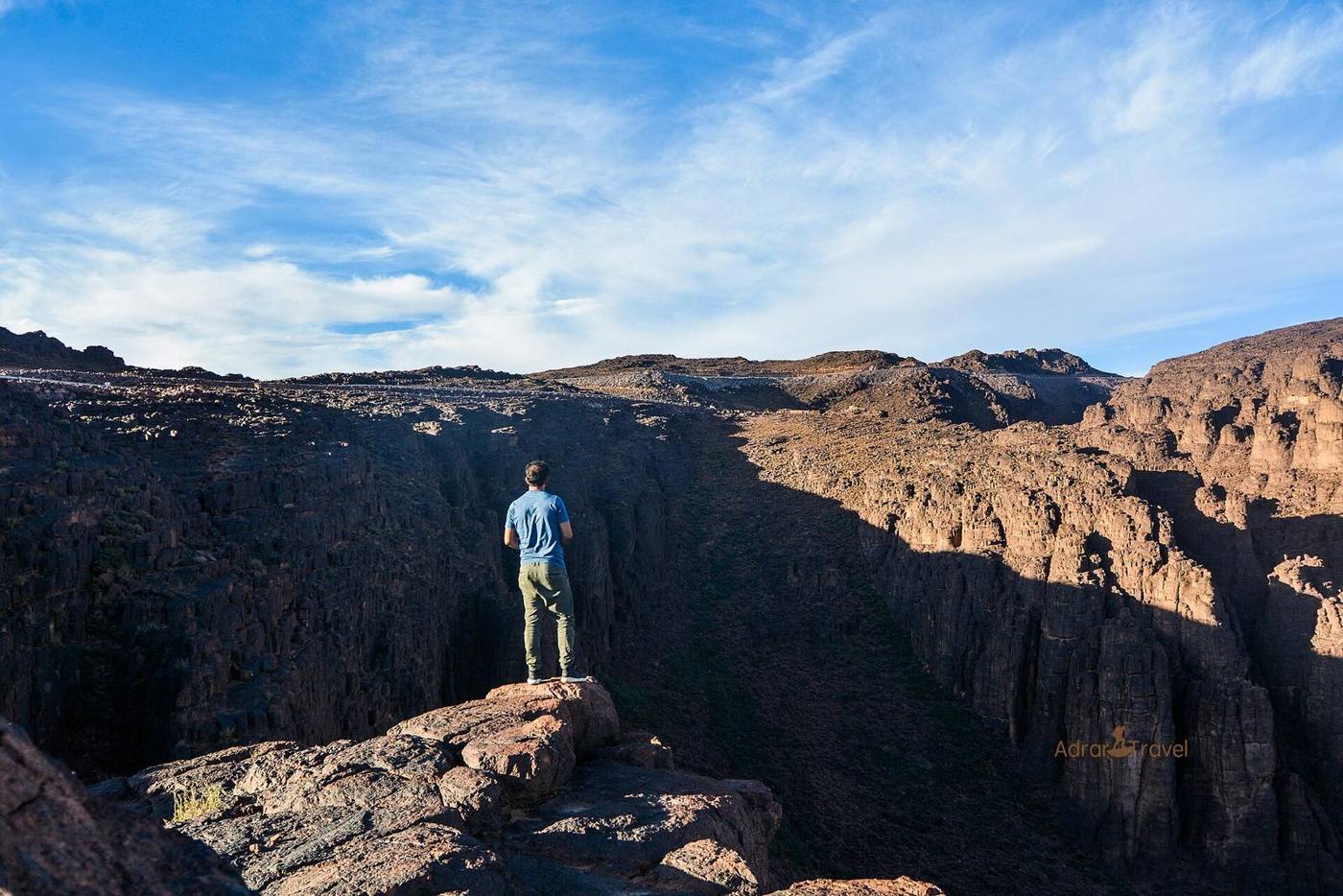
Jbel Saghro: trekking in the Anti-Atlas
Volcanic rock pinnacles, empty plateaus and Aït Atta nomads: a mule-supported trek between mountains and the Sahara, in the season when the Atlas is under snow.
- Marrakech
- Ouarzazate
- Nkob
- Jbel Saghro
- Bab n'Ali
- Tinghir
Day by day
- Day 1
Arrival in Marrakech
This trip is a four day trek in the Jbel Saghro, a range of volcanic mountains in the Anti Atlas, in southern Morocco, between the High Atlas and the Sahara. It is a landscape of dark rocks, pinnacles, canyons, plateaus and small oases, inhabited by the Berber nomads of the Aït Atta, who bring their flocks here in winter. You walk with a guide and with mules carrying the luggage, and sleep in tents or in nomad shelters, under a sky full of stars.
To enter Morocco, Italian and EU citizens do not need a visa for stays of up to 90 days, with a passport. The US government rates Morocco at level 2 of 4, exercise increased caution due to terrorism, and Canada advises against the 20 kilometre strip along the Algerian border, far from this trip. Check current advice.
You fly into Marrakech. The Saghro trek is done with an agency or a licensed mountain guide, who arranges the mules, cook, tents and transfers: it is the safest and recommended option.
On the first day, on arrival, stroll through the medina of Marrakech, the old town, a UNESCO World Heritage Site, to Jemaa el Fna square, with its musicians, storytellers, orange juice sellers and, in the evening, stalls cooking in the open air.
In the evening have dinner with Moroccan food: tagine, the dish slow cooked in an earthenware pot with a conical lid, couscous, harira, the pulse soup, and mint tea.
Spend the night in Marrakech.
Practical tip: the best time for the Saghro is October to April. Summer is too hot, and winter nights are cold, even below freezing.
- Day 2
Across the Atlas to Nkob
Today leave Marrakech and cross the High Atlas southwards to Nkob, at the foot of the Jbel Saghro, about six or seven hours by road with stops.
The road climbs through many hairpins to the Tizi n'Tichka pass at about 2,260 metres, the highest road pass in Morocco, among mountains, earthen Berber villages and terraced valleys. On the other side you descend into an ever drier, more mineral landscape.
Along the way you can stop at the ksar of Aït Ben Haddou, a UNESCO World Heritage Site, a fortified village of red earth on a hill, used in many films, and at Ouarzazate, the gateway to the desert.
In the afternoon continue through the Draa valley or along the road via Agdz and Tazzarine to Nkob, known as the village of 45 kasbahs: kasbahs are fortified houses of raw earth with decorated towers, built by the families of the Aït Atta tribe. Many are lived in, others are ruined, and some have been turned into guesthouses.
At sunset walk through the village and palm groves, watching the kasbahs turn red.
In the evening meet the guide and the muleteer, who go over the trekking programme and check the equipment.
Spend the night in Nkob.
Practical tip: the Tizi n'Tichka road can close for snow in winter: check. For the trek bring a warm sleeping bag, a head torch and hiking boots already worn in.
- Day 3
First day on foot: from Nkob into the mountains
Today the trek in the Jbel Saghro begins, with a guide, a cook and mules carrying tents, food and luggage. You walk on average five to seven hours a day, on mountain paths and tracks, with moderate ascents.
In the morning set off from Nkob or a nearby village and climb a valley among palm groves, barley fields, almond trees and small earthen villages, where women work in the fields and children wave. Then the landscape changes: you climb among hills of black and brown rock, smoothed by the wind, with few shrubs, acacias, junipers and aromatic herbs.
At midday the cook prepares lunch in the shade of a rock or tree: salads, bread, sardines, cheese and fruit, with mint tea, which in Morocco is drunk many times a day and is a sign of hospitality.
In the afternoon you reach camp, near a spring or well, in the Igli area or a similar valley. The muleteers put up the tents and the cook prepares dinner: soup, tagine or couscous.
In the evening look at the sky: there are no lights for dozens of kilometres in the Saghro, and the Milky Way is clearly visible.
Spend the night in a tent.
Practical tip: drink plenty of water even when it is not hot: mountain air is dry. Use sun cream and a hat. Follow the guide's decisions on the route: he knows the springs and the ground conditions.
- Day 4
Igli and the pinnacles of the Saghro
Today walk in the heart of the Jbel Saghro, one of the most spectacular parts of the trek.
In the morning climb towards a pass among pinnacles of volcanic rock, towers, spires and strangely shaped walls carved by erosion. The landscape partly recalls the deserts of the American South West. Along the way you come across shepherds' shelters built of dry stone and pens for goats and sheep.
The Saghro is the territory of the nomadic Aït Atta tribe, which for centuries controlled this area and the caravans of the south. In 1933, on Mount Bougafer, the Aït Atta held out for a long time against the French army, in one of the last great battles of the colonial conquest of Morocco.
At midday have lunch in a valley near a well, in the shade of a tree.
In the afternoon descend into a valley with a small palm grove, or a grassy area where nomads graze their flocks in winter, and reach camp.
If the guide knows a nomad family in the area, you may be invited to drink tea in their black goat hair tent, and see how they live: milk, bread baked under hot sand, carpet weaving.
Spend the night in a tent.
Practical tip: if a nomad family invites you, accept the tea with your right hand and ask before taking photographs. A small useful gift, such as tea, sugar or exercise books for the children, is more respectful than money.
- Day 5
The Bab n'Ali plateau
Today reach the Bab n'Ali plateau, the most famous place in the Jbel Saghro.
In the morning climb gradually towards the plateau among rocks and passes, and come in sight of Bab n'Ali, the Gate of Ali: two huge pinnacles of volcanic rock, tall and isolated, rising like towers in the middle of a valley. Around them the landscape is made of walls, columns and spires of dark stone, with colours ranging from black to purple, red and orange depending on the light.
At midday have lunch in the shade of the rocks, with a view over the mountains.
In the afternoon walk around the pinnacles or climb a nearby pass to see the plateau from above, with the High Atlas, often snowy in winter, on the northern horizon and the desert to the south.
The evening camp is near Bab n'Ali, in a sheltered spot. At sunset the pinnacles turn red and gold, and in the evening the silence is total.
After dinner, around the fire, the muleteers and the cook sometimes sing and play drums, and tell stories of their lives and of the nomads.
Spend the night in a tent.
Practical tip: at night in the Saghro temperatures can drop sharply, even below freezing in winter: sleep in layers, with a hat and wool socks. Protect your phone and batteries from the cold by keeping them in your sleeping bag.
- Day 6
Last day on foot and the nomad camps
Today is the last day of the trek. You descend from the plateau to the south or east, to a village where the car is waiting.
In the morning walk downhill through canyons, valleys and stone plateaus, passing nomad camps: tents of black goat hair, stone pens, flocks of goats and sheep, camels and donkeys. In winter many Aït Atta families come down from the Saghro to lower, warmer areas, and in spring they climb back to the pastures of the High Atlas: this is transhumance, practised for centuries.
At midday have a last outdoor lunch with the trekking team.
In the afternoon reach a valley village, such as Tagdilt or one of the places on the southern side, where the mules are unloaded. It is time to say goodbye to the muleteer and the cook and thank them: it is customary to leave a tip for the team, agreed with the guide.
Then the car takes you to a guesthouse or small hotel in the Nkob, Tinghir or Dades valley area, where you can finally have a hot shower.
In the evening relax and think back over your days in the mountains.
Spend the night in the Dades or Tinghir area.
Practical tip: tipping the trekking team is normal in Morocco: ask the guide about the usual amount before setting off, to avoid embarrassment.
- Day 7
The Todra gorges and the return towards Ouarzazate
Today visit the Todra gorges near Tinghir, then return towards Ouarzazate.
In the morning go to Tinghir, a small town in a large palm grove along the river Todra, with kasbahs and earthen villages. Then drive up the valley to the Todra gorges, about fifteen kilometres away: a narrow canyon with limestone walls up to about 300 metres high, which close in to a few metres apart. You walk along the canyon floor beside the river and watch climbers on the walls.
Then stroll through the palm groves below the gorges, among irrigation channels, fields and gardens where families grow dates, barley, mint, vegetables and fruit trees.
In the afternoon head back west along the road of a thousand kasbahs, through the Dades valley and El Kelaa M'Gouna, the valley of roses, famous for its spring rose festival and rose water. Then continue to Ouarzazate, about three and a half hours from Tinghir.
If you have time, in Ouarzazate visit the Taourirt kasbah, former residence of the Glaoui family, with decorated rooms and a terrace.
Spend the night in Ouarzazate.
Practical tip: in the Todra gorges watch out for stones falling from the walls. In the shops of the valley of roses bargain calmly and ask where the products come from.
- Day 8
Back to Marrakech and departure
On the last day return from Ouarzazate to Marrakech, about four hours by road, crossing the High Atlas again via the Tizi n'Tichka pass.
Along the way stop one last time to look at the mountains and the earthen Berber villages clinging to the slopes, and for tea in a small café overlooking the valley.
If your flight is in the afternoon or evening, in Marrakech you can take a last walk through the medina and the souks, the covered markets divided by trade: the dyers' souk, with skeins of coloured wool hung up to dry; the metalworkers', with metal lanterns; the leather souk, with slippers, bags and belts; and the spice souk, with mountains of cumin, paprika, saffron and cinnamon.
Before leaving buy some souvenirs: a Berber carpet, argan oil, spices, babouche slippers, a metal lantern or some ceramics.
From Marrakech airport there are direct flights to many European cities.
If you have a few more days, you can add two nights in the Merzouga desert among the dunes of Erg Chebbi, or a few days in Essaouira on the Atlantic coast.
Practical tip: in the souks of Marrakech always bargain, calmly and with a smile. Allow for traffic on the way to the airport and arrive at least two hours before your flight.
Morocco's most scenic trek, and its least known. It is a winter trip: from November to March the days are mild and the nights very cold, so bring a proper sleeping bag. You walk 5-6 hours a day on stony ground, without big climbs: fine for regular hikers.
Before you go
- Documents and visa
- EU visitors need a passport valid for the whole stay; identity cards are not accepted. No visa is needed for tourist stays of up to 90 days.
- Health and vaccines
- No vaccines required. Drink bottled water and take out travel health insurance: public healthcare is limited and private clinics charge. Emergencies: 19 police, 15 ambulance.
- Money and payments
- Moroccan dirham, which cannot be exported beyond a small sum: change a little at a time and keep the receipts. Cash is needed everywhere in medinas and villages.
- Power sockets
- Types C and E, 220 volts.
- Time zone
- UTC+1 for most of the year; Morocco changes its clocks during Ramadan, so check before travelling.
- Safety
- The main risk named by governments is terrorism; avoid the 20 km strip along the closed Algerian border and the frontier areas of Western Sahara. Official advice: GOV.UK.
Information checked in November 2026 for Italian and EU citizens. Rules change: always check before you travel.
Variations
In 5 days: a two day trek in the Saghro with the Todra gorges.
In 11 days: add two nights in the Merzouga desert and the Draa valley.
Frequently asked questions
Do I need a visa?
Italian and EU citizens enter with a passport without a visa for stays of up to 90 days. Check the current requirements.
Do I need to train?
You need to be used to walking five to seven hours a day on mountain paths. Ascents are moderate and mules carry the luggage.
When is the best time to go?
October to April. Summer is too hot, and winter nights are very cold.
Indicative itinerary written by World Atlas. Before booking, check timetables, seasonal openings, documents and safety.
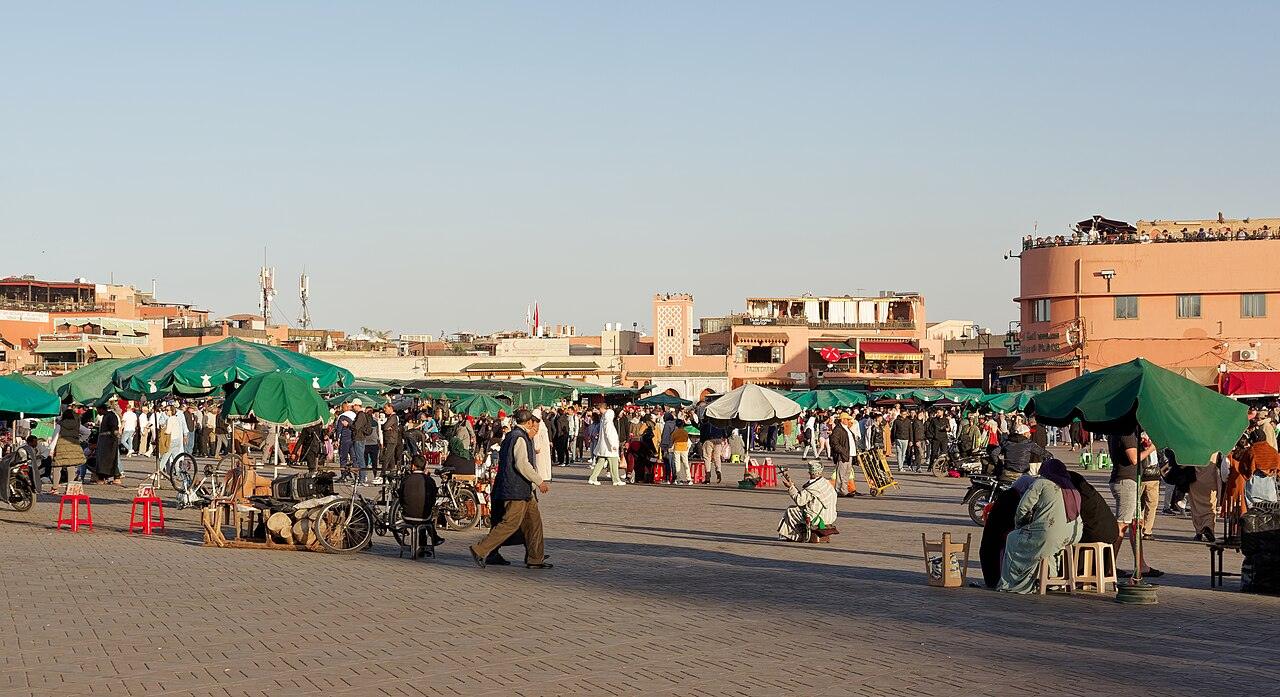 7 daysEasy
Marrakech and the Sahara
From Jemaa el-Fna square to the Erg Chebbi dunes, across the Atlas, past kasbahs and gorges.
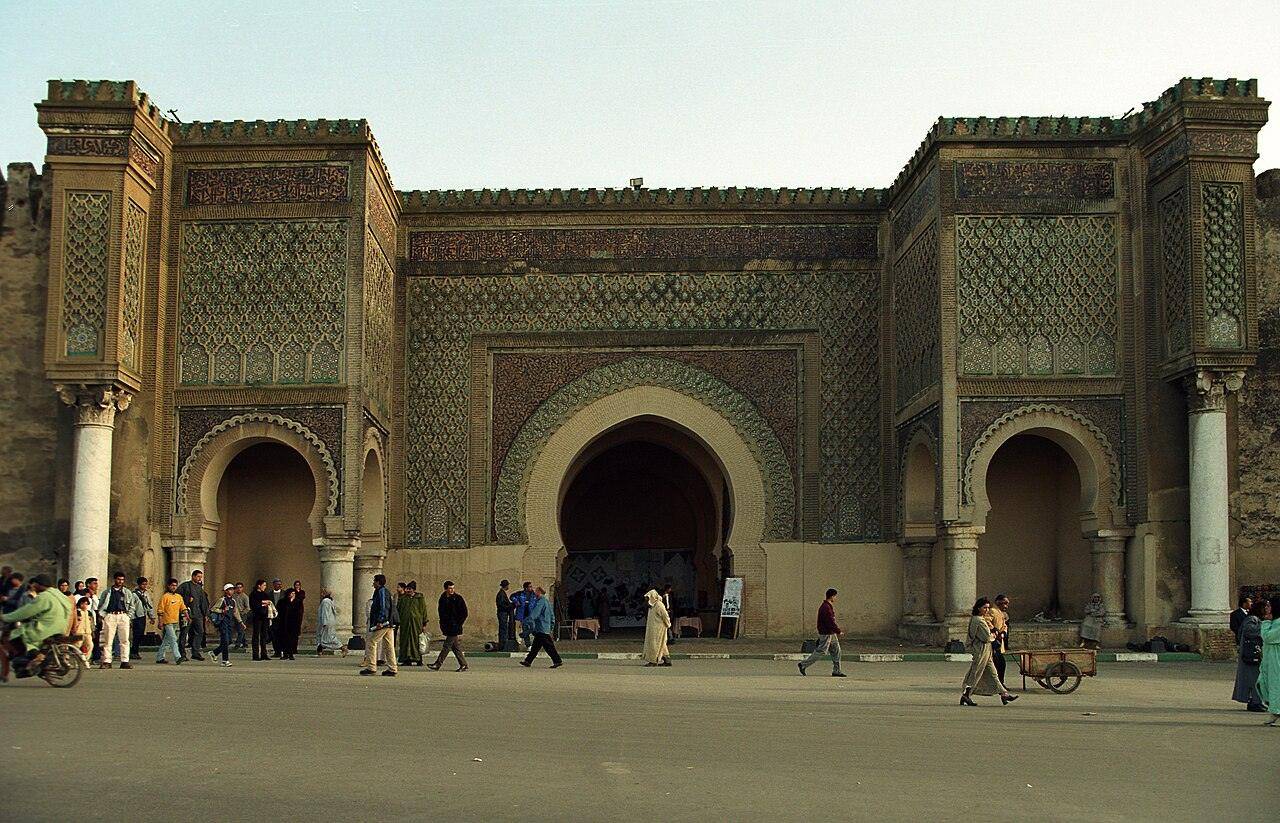 15 daysModerate
Imperial cities, Chefchaouen and the desert
The full circuit: Fez and Meknes, the blue town in the Rif, the Sahara, the gorges and a finale between Marrakech and Essaouira.
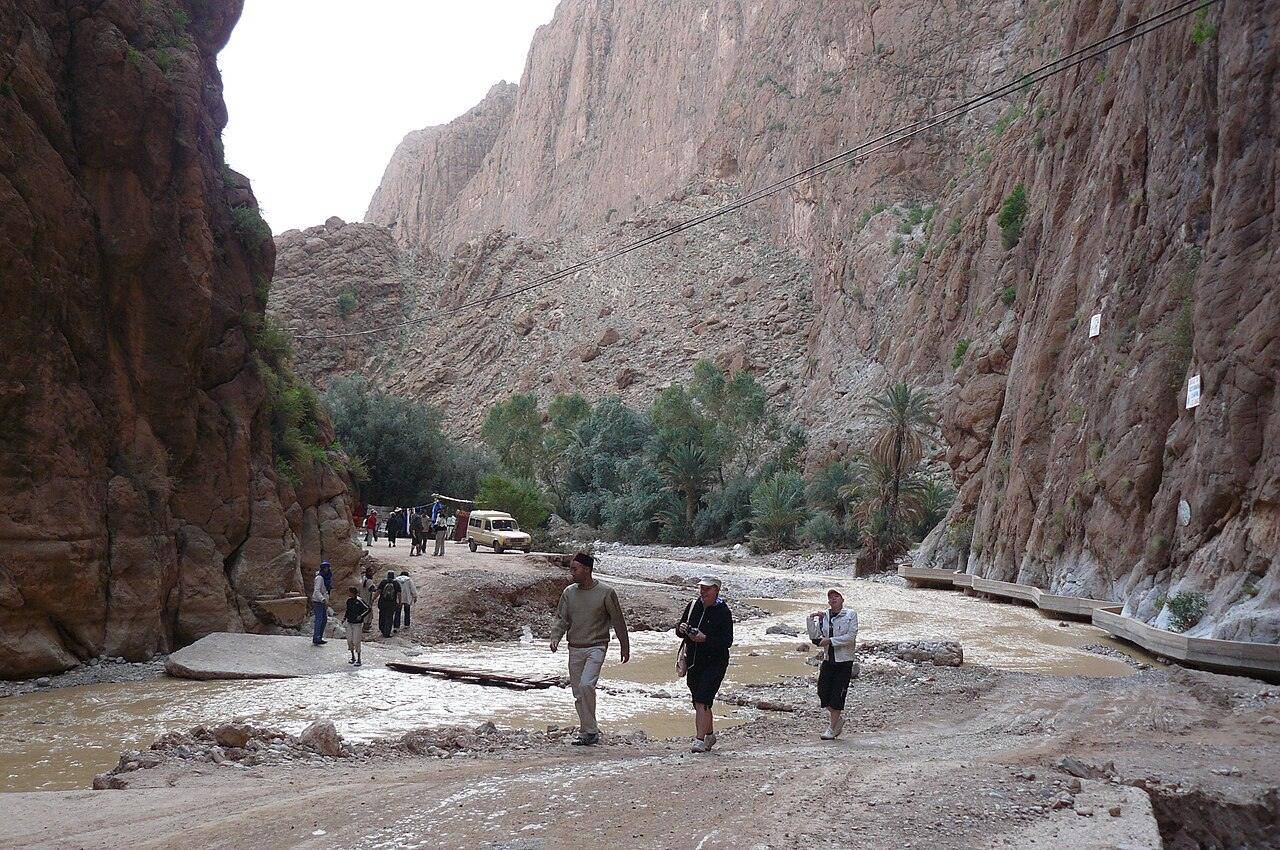 8 daysEasy
Marrakech to Fès by way of the Sahara
The classic crossing: the High Atlas, the kasbahs of Ouarzazate, the Dades gorges and a night in the Merzouga dunes, ending in the medina of Fès.