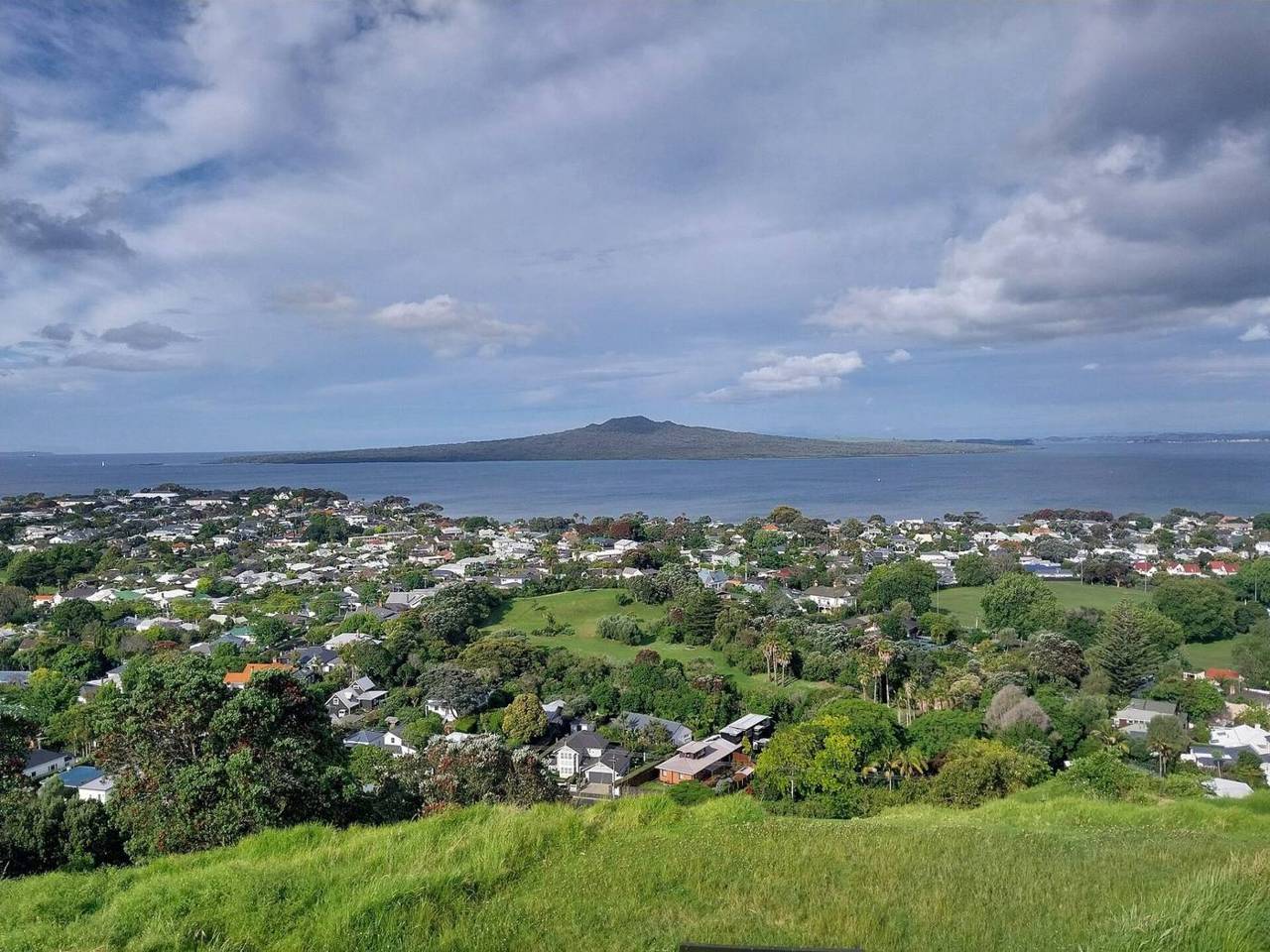
Auckland and the Hauraki Gulf
The city of volcanoes and sails: the harbour and the Auckland Museum, the view from the extinct Maungawhau volcano, the ferry to Rangitoto volcano, the beaches and vineyards of Waiheke Island and the bird sanctuary of Tiritiri Matangi, with rare species that have vanished elsewhere.
- Auckland
- Maungawhau
- Rangitoto
- Waiheke
- Tiritiri Matangi
Day by day
- Day 1
The harbour, the Auckland Museum and Maungawhau at sunset
Auckland is New Zealand's largest city, built on a narrow isthmus between two harbours, one on the Pacific and one on the Tasman Sea, and on top of a volcanic field with more than fifty small extinct volcanoes. In front of the city lies the Hauraki Gulf, full of islands: some volcanic and wild, others covered in vineyards, others turned into sanctuaries for rare birds. In four days it is a good start or end to a trip around the country.
In the morning, walk along the city waterfront, through the Viaduct Harbour and the Wynyard quarter, with their sailing boats, piers and old port warehouses. Auckland is called the City of Sails: the America's Cup has been raced here several times.
Then go to the Auckland Museum, a large neoclassical building on the hill of the Domain park, which is also the war memorial. The ground floor houses one of the world's most important collections of Māori and Pacific Island art and culture: a large carved war canoe, a complete meeting house, feather cloaks and green jade carvings. There is often a performance of Māori songs and dances too.
At sunset, climb Maungawhau, also called Mount Eden, the highest natural point in the city: an extinct volcano with a perfect crater about fifty metres deep. From the top you see the whole of Auckland, the two harbours, the other volcanoes and the islands of the gulf. The crater is sacred to Māori: you do not go down into it, and you reach the summit only on foot.
Practical tip: to get around the city, use a rechargeable card for local buses, trains and ferries: it is easier and cheaper than single tickets.
- Day 2
By ferry to Rangitoto and the climb to the crater
In the morning, take the ferry from the downtown terminal to Rangitoto, the volcanic island visible from all over the city, with its symmetrical, flat shape. The crossing takes about twenty-five minutes. Rangitoto is the youngest volcano in the Auckland field: it rose from the sea in a series of eruptions about six hundred years ago, when Māori already lived on the neighbouring island of Motutapu, where their footprints have been found in the ash.
No one lives on the island and there are no shops. From the wharf a path climbs to the summit in about an hour, through fields of black lava and the largest pōhutukawa forest in the world, which is covered in red flowers in December. On the way up, a detour leads to the lava caves, tunnels formed by lava flowing beneath the already cooled crust: bring a torch to go inside. At the top, from the forested rim of the crater, the view sweeps over the gulf, the city and the islands.
On the way down you can follow the coastal path to a small bay, or cross the causeway linking Rangitoto to Motutapu island, a reserve with meadows and sheep.
In the late afternoon, take the ferry back and spend the evening in the Ponsonby district, with its bars and Victorian-style wooden houses.
Practical tip: before boarding for Rangitoto you must clean your shoes and bag of seeds, soil and insects, to protect the island from invasive species. Bring water and food, because there is nothing on the island, and check the time of the last ferry.
- Day 3
Waiheke: beaches, trails and vineyards
Today you go to Waiheke, the second largest island in the gulf, about forty minutes by ferry from the city centre. It is an island of green hills, white sand bays, woods and vineyards, with a few small villages and many holiday homes belonging to Aucklanders. It is known for its red wines and its olive oil.
On arrival at Matiatia harbour, take the bus or rent an electric bike, because the island is hilly. The first stop is Oneroa, the main village, with a beach in a sheltered bay and a street of cafés and art galleries. Then continue to Onetangi, a long sandy beach on the north coast, perfect for swimming in summer.
If you love walking, follow one of the island's coastal paths, which run along cliffs, through native bush and past hidden coves. The route between Matiatia and Oneroa, for example, is short and scenic. In the wilder eastern part of the island are the tunnels and gun emplacements of Stony Batter, built during the Second World War to defend Auckland.
In the afternoon, visit one or two wineries for a tasting: many have terraces overlooking the vines and the sea. If you drink, do not drive: use the bus or an organised tour.
In the evening, return to Auckland by ferry, watching the sunset over the gulf and the city skyline.
Practical tip: at summer weekends Waiheke is very busy and the ferries fill up. If you can, go on a weekday.
- Day 4
A day on Tiritiri Matangi and departure
The last day is devoted to Tiritiri Matangi, a small island in the gulf north of Auckland that has become one of New Zealand's most famous conservation projects. It was once covered in pasture; since the 1980s volunteers have planted hundreds of thousands of trees, removed introduced predators such as rats and cats, and brought back birds that had almost disappeared. Today it is a sanctuary open to the public.
The ferry leaves from central Auckland and takes just over an hour. On arrival, volunteers guide visitors along the forest paths and explain the birds and plants. With a little patience you will see the takahē, a large blue and green flightless bird once thought to be extinct; the kōkako, with its deep song; the tīeke, black with red wattles; and many other rare birds, which here are not afraid of people. The birdsong in the forest in the morning is extraordinary. There is also an old lighthouse on the island.
In the afternoon, take the ferry back and get ready for your flight. Auckland international airport is about thirty to forty-five minutes from the centre, depending on traffic.
Practical tip: the ferry to Tiritiri Matangi does not run every day, so book in advance. Here too you must clean your shoes and bags before boarding. Italian citizens do not need a visa, but before leaving they must apply for the NZeTA electronic authorisation and pay the 100 New Zealand dollar international visitor levy, in the same application.
A good start or end to a trip. For Rangitoto and Tiritiri Matangi you must clean shoes and bags of seeds and soil before boarding, to protect the islands. The Tiritiri ferry does not run daily: book ahead. EU citizens do not need a visa, but before travelling they must request the NZeTA electronic travel authority and pay the NZ$100 International Visitor Levy (IVL), in the same application.
Before you go
- Documents and visa
- Valid passport and an NZeTA, requested online before leaving, with the IVL levy of 100 New Zealand dollars. The NZeTA costs 17 dollars through the official app and 23 through the website.
- Health and vaccines
- No vaccines required. Biosecurity checks on arrival are very strict: declare food, plants and hiking boots. Emergencies: 111.
- Money and payments
- New Zealand dollar. Cards are accepted almost everywhere, even in small towns.
- Power sockets
- Type I, 230 volts: you need an adapter for the angled flat-pin Australian-style plugs.
- Time zone
- UTC+12, UTC+13 with daylight saving time from late September to early April.
- Safety
- A very safe country. The main risks are natural: changeable mountain weather, strong sea currents, earthquakes and active volcanoes. Driving is on the left. Official advice: GOV.UK.
Information checked in November 2026 for Italian and EU citizens. Rules change: always check before you travel.
Variations
In 2 days: Auckland and Maungawhau on the first day, Rangitoto or Waiheke on the second.
In 7 days: after Auckland, head north to the Bay of Islands, with the Waitangi Treaty sites, or east to the Coromandel peninsula.
Frequently asked questions
When is the best time to go?
From November to April, in the southern summer, for the sea and the islands. In winter the climate is mild but rainy, and some island ferries run less often.
Do I need to book?
Yes for the Tiritiri Matangi ferry, which does not run daily and has limited seats. Ferries to Rangitoto and Waiheke are frequent, but in summer it is better to buy your ticket in advance.
What documents do I need?
A valid passport, the NZeTA electronic authorisation and the 100 New Zealand dollar international visitor levy, to be requested online before you leave.
Indicative itinerary written by World Atlas. Before booking, check timetables, seasonal openings, documents and safety.
 4 daysEasy
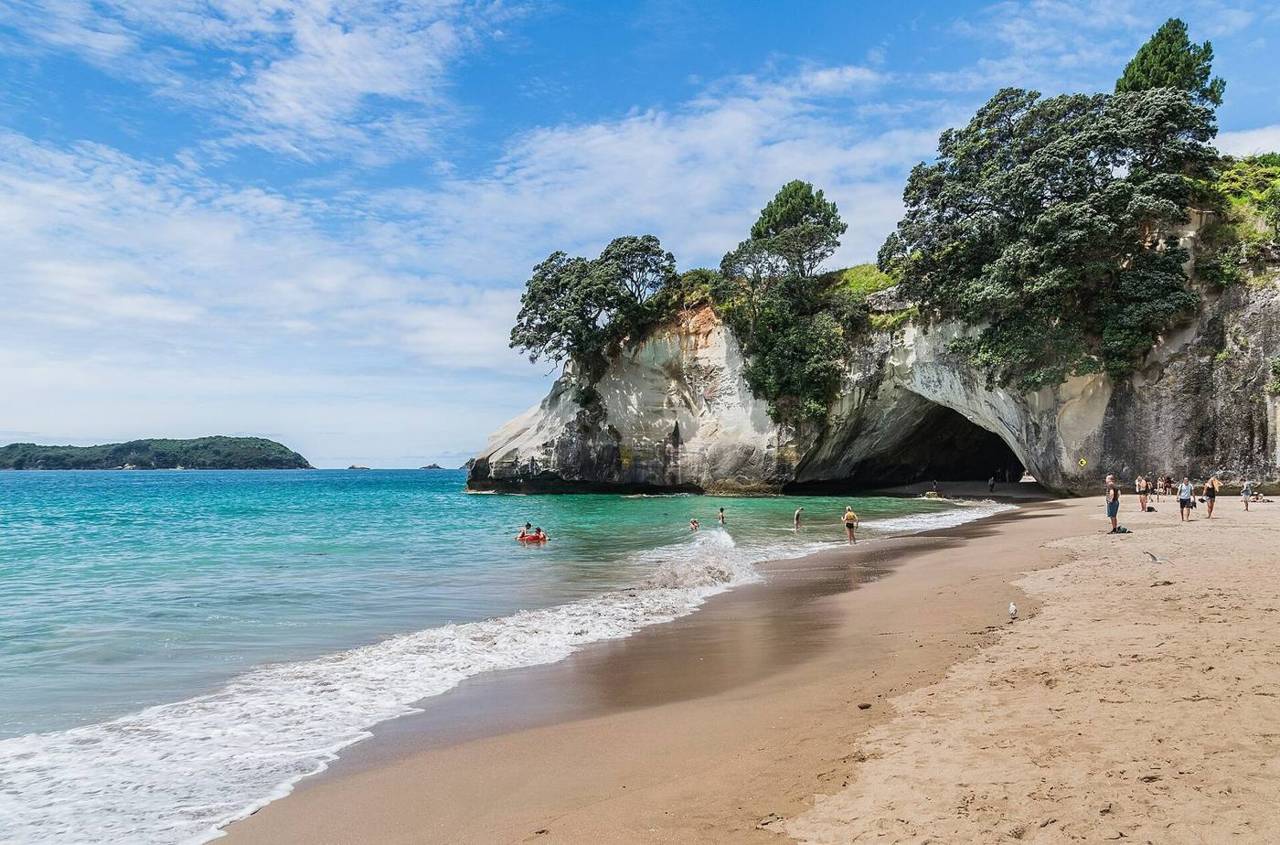
The Coromandel Peninsula
The North Island's finest beaches two hours from Auckland: the rock arch of Cathedral Cove, Te Whanganui-A-Hei marine reserve by kayak, Hot Water Beach, where you dig a warm pool in the sand, kauri forests and the coast road to Coromandel Town.
 4 daysEasy
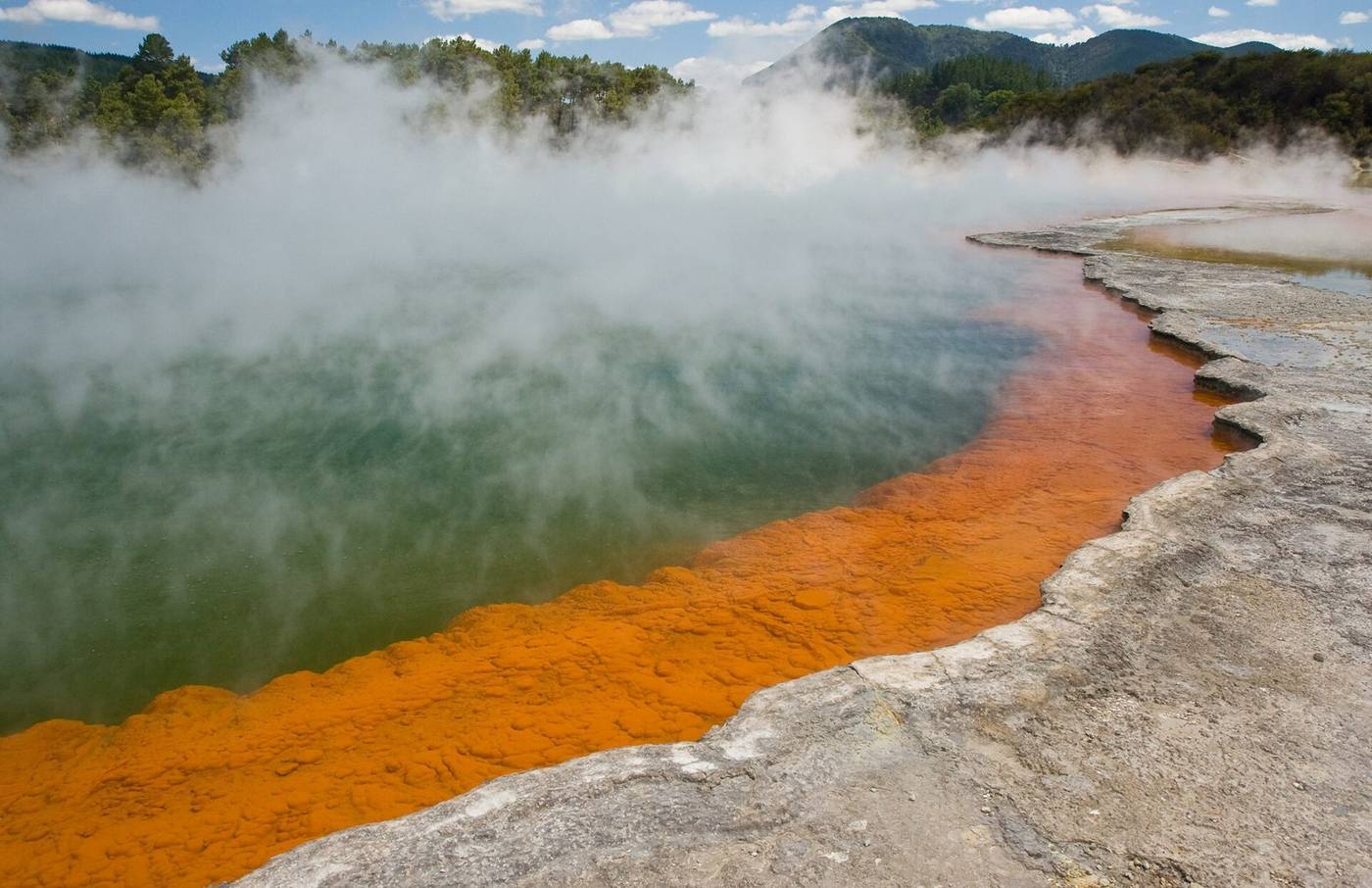
Rotorua in depth: geothermal wonders and Māori culture
The steaming land: Pōhutu geyser at Te Puia, the coloured pools of Wai-O-Tapu and Waimangu, boiling mud, the redwoods of Whakarewarewa Forest, a living Māori village with food cooked in the steam and an evening of song and haka.
 4 daysEasy
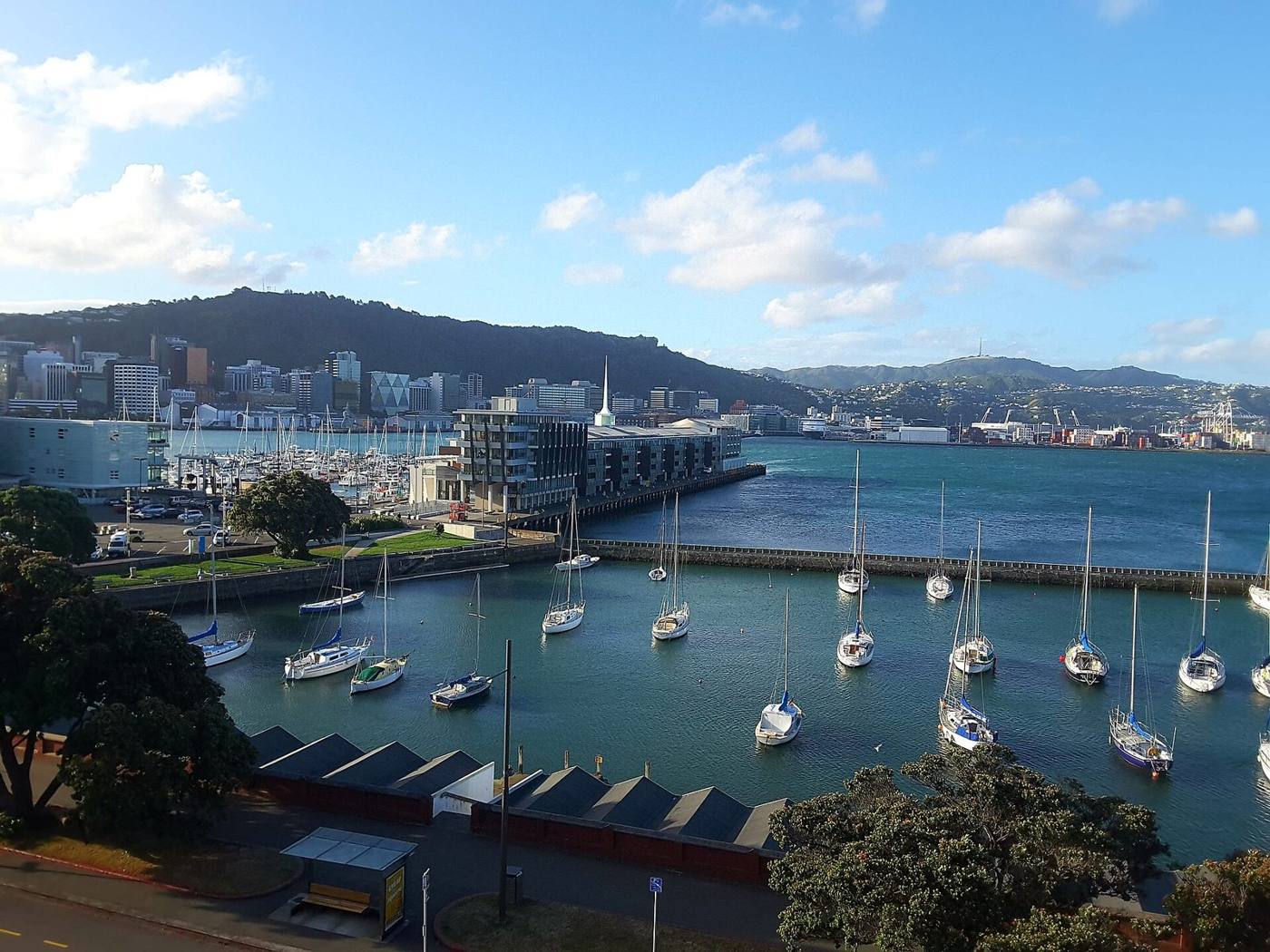
Wellington and the Wairarapa
The windy, creative capital: Te Papa national museum, the cable car and botanic garden, the Zealandia sanctuary where the forest has returned to its pre-human state, then the vineyards of Martinborough and Cape Palliser lighthouse with its fur seal colony.