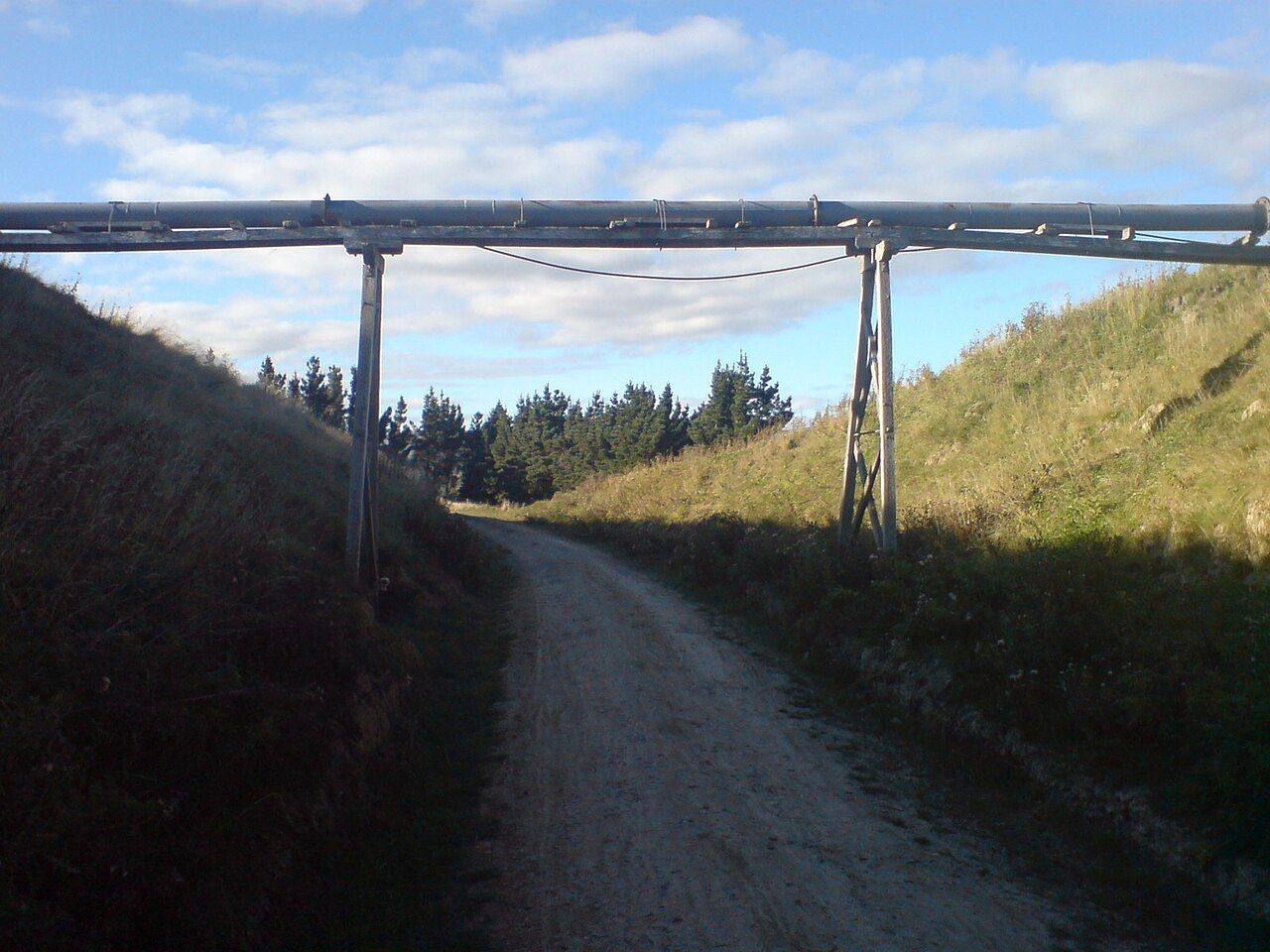
The Otago Central Rail Trail by bike
About 150 km on an old railway turned cycle trail: tunnels, timber and stone viaducts, gold-rush towns, the brown hills of Central Otago and historic pubs, from Clyde to Middlemarch, with a train or shuttle for the return.
- Clyde
- Alexandra
- Ophir
- Ranfurly
- Middlemarch
- Dunedin
Day by day
- Day 1
From Clyde to Alexandra among the pinot noir vineyards
The Otago Central Rail Trail is a cycle trail of about one hundred and fifty kilometres in Otago, on New Zealand's South Island, built along the route of an old railway that closed at the end of the twentieth century. It runs between Clyde and Middlemarch through a dry, bright landscape of golden hills, schist rocks, gorges, iron viaducts, tunnels and small towns born in the gold rush. Its gradients are gentle, because it was built for trains, and it suits even occasional cyclists. It was the first of the country's great cycle trails. In five days you go from Clyde to Middlemarch and then to Dunedin.
You fly into Queenstown, then take a shuttle to Clyde, about an hour and a half away. Many local operators arrange bike hire, including e-bikes, luggage transfers between lodgings and shuttles.
Clyde is a gold-rush town on the Clutha river, with nineteenth-century stone houses and the large dam. Pick up your bike and start riding towards Alexandra, about ten kilometres away, along the river.
Central Otago is the southernmost wine region in the world, famous for pinot noir. Stop at a winery among the vines for a tasting.
In the evening, sleep in Alexandra.
Practical tip: to enter New Zealand, Italian citizens must apply online for an NZeTA and pay the visitor levy, the IVL, of 100 New Zealand dollars. Bike helmets are compulsory in New Zealand.
- Day 2
The Poolburn Gorge, tunnels and viaducts, then Ophir
Today you ride one of the finest stretches of the trail. In the morning, leave Alexandra and cross farmland with apricot and cherry orchards to Chatto Creek, a small village.
Then the trail enters the Poolburn Gorge, a narrow, wild valley between schist walls. Here the old railway passes through two tunnels cut into the rock, long enough to be dark in the middle: bring a bike light. Just after, you cross the Poolburn Viaduct, an iron and stone bridge high above the stream, one of the most photographed on the trail.
The landscape is classic Central Otago: golden hills, grey rocks, wild thyme bushes brought by nineteenth-century miners, blue sky and very few houses.
In the afternoon you reach Ophir, a gold-rush village almost unchanged, with its 1886 stone post office still in use, miners' cottages and a suspension bridge over the Manuherikia river. Ophir has some of the most extreme temperatures in New Zealand, very hot in summer and freezing in winter.
In the evening, sleep in Ophir or the nearby village of Lauder.
Practical tip: in Central Otago the sun is very strong and there is little shade. Bring sun cream, sunglasses, a cap under your helmet and at least two water bottles.
- Day 3
Up onto the plateau to Ranfurly
Today you climb towards the plateau of the Ida Valley and the Maniototo. In the morning, ride from Lauder towards Oturehua, with the trail climbing slowly towards the highest point of the route, near Wedderburn, at about six hundred metres. The climb is long but gentle.
In Oturehua, visit the old general store, a nineteenth-century country shop preserved as it was, with wooden shelves, jars, tools and work clothes. Not far away is an old water-powered engineering workshop, where tools for the farms were made. It shows how inventive people had to be in this remote country.
At the highest point of the trail there is an old wooden railway shed with an altitude sign, where everyone stops for a photo. From here the landscape opens onto the Maniototo, a great plain surrounded by mountains, with farms and sheep pastures.
In the afternoon, ride down towards Wedderburn and on to Ranfurly, a small town known for its art deco buildings, rebuilt in the 1930s after a series of fires.
If you have the time and energy, take a detour to Naseby, a gold-rush village among the woods, where outdoor curling is played in winter.
In the evening, sleep in Ranfurly.
Practical tip: on the plateau the wind can be strong and the weather changes quickly. Bring a windproof jacket and warm layers even in summer, and check the forecast.
- Day 4
Down to Middlemarch
Today is the last stage by bike, long but almost all downhill. In the morning, leave Ranfurly and ride across the Maniototo plain, through Waipiata and Kokonga, along the Taieri river, flowing slowly and winding between pastures.
Then the trail enters the Taieri gorge and descends towards Hyde, with more viaducts and a tunnel. Near Hyde there is a memorial to a serious rail accident in 1943, when a train derailed on a bend and twenty-one people died.
The landscape changes gradually: the hills become greener and gentler, with pastures and sheep, and the valley widens towards the Strath Taieri plain.
In the afternoon you reach Middlemarch, the small town at the end of the trail, with its railway station and the Rock and Pillar Range behind it. It is time to return your bike and celebrate finishing the route. Many riders stop at the station for a photo with the sign marking the end of the trail.
In the evening, enjoy the silence of the plain and the starry sky: Central Otago has some of the darkest skies in New Zealand.
In the evening, sleep in Middlemarch.
Practical tip: many operators carry luggage between lodgings along the trail. Book ahead, as the small towns have few beds, especially in summer.
- Day 5
Shuttle or train to Dunedin
In the morning, leave Middlemarch for Dunedin, about an hour and a half away. There are two options. The most convenient is the shuttle by road. The most beautiful, when it is running, is the Taieri Gorge scenic train, which follows the rest of the old railway through a deep gorge, with bridges, tunnels and viaducts, to Dunedin station.
Dunedin is a city founded in the nineteenth century by Scottish settlers, and its name is the old Gaelic name for Edinburgh. It has a university and Scottish atmosphere, with stone churches and Victorian buildings.
Visit the railway station, a large building of dark and white stone with ceramic decoration, one of the most photographed buildings in New Zealand. Walk around the Octagon, the eight-sided central square, and climb Baldwin Street, one of the steepest residential streets in the world.
If you have time, in the afternoon go to the Otago Peninsula, home to the only mainland colony of royal albatrosses, very rare yellow-eyed penguins and seals.
This trip combines well with Queenstown and Fiordland, or with the Catlins and the south coast.
Practical tip: the Taieri Gorge train does not always run the whole line to Middlemarch, and timetables change. Check the service when you book, otherwise take the shuttle.
Gentle gradients, suitable for occasional cyclists. Bikes and luggage transfers can be rented in Clyde. Summer is hot and dry; in winter snow and frost can close sections: October to April is best. EU citizens do not need a visa, but before travelling they must request the NZeTA electronic travel authority and pay the NZ$100 International Visitor Levy (IVL), in the same application.
Before you go
- Documents and visa
- Valid passport and an NZeTA, requested online before leaving, with the IVL levy of 100 New Zealand dollars. The NZeTA costs 17 dollars through the official app and 23 through the website.
- Health and vaccines
- No vaccines required. Biosecurity checks on arrival are very strict: declare food, plants and hiking boots. Emergencies: 111.
- Money and payments
- New Zealand dollar. Cards are accepted almost everywhere, even in small towns.
- Power sockets
- Type I, 230 volts: you need an adapter for the angled flat-pin Australian-style plugs.
- Time zone
- UTC+12, UTC+13 with daylight saving time from late September to early April.
- Safety
- A very safe country. The main risks are natural: changeable mountain weather, strong sea currents, earthquakes and active volcanoes. Driving is on the left. Official advice: GOV.UK.
Information checked in November 2026 for Italian and EU citizens. Rules change: always check before you travel.
Variations
In 3 days: just the finest stretch, from Alexandra to Lauder with the Poolburn Gorge.
In 9 days: add Queenstown and the Otago Peninsula.
Frequently asked questions
Do I need to be fit?
Ordinary fitness is enough: the gradients are gentle. With an e-bike the trail suits almost everyone.
When is the best time to go?
From October to April. Summer days are very hot, autumn colours are lovely; winter is cold and there may be ice.
Can you ride it the other way?
Yes, from Middlemarch to Clyde, but starting from Clyde gives more downhill in the last part.
Indicative itinerary written by World Atlas. Before booking, check timetables, seasonal openings, documents and safety.
 4 daysChallenging
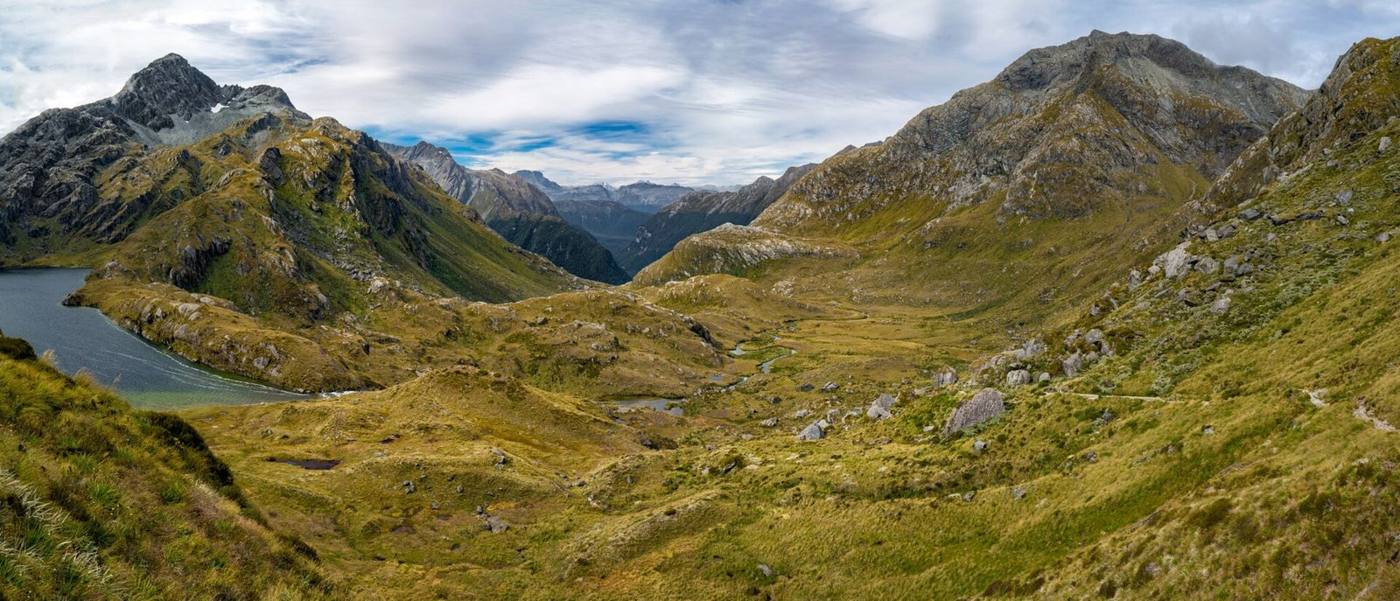
The Routeburn Track
One of the Great Walks, 32 km between Mount Aspiring and Fiordland national parks: beech forest, the hut on Lake Mackenzie, the panoramic Harris Saddle ridge with views over the valleys and, on clear days, the Tasman Sea, and Earland Falls.
 3 daysEasy
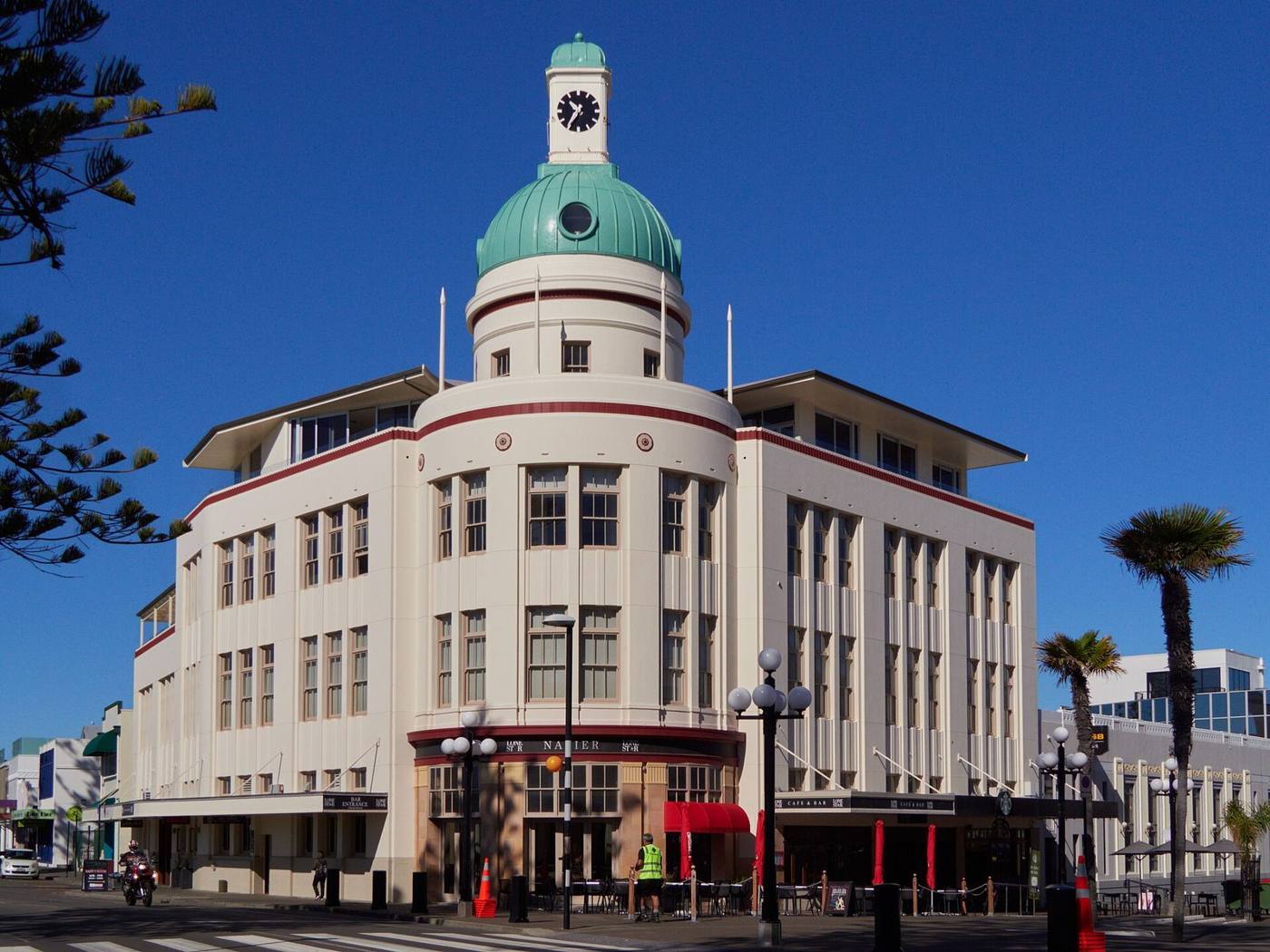
Napier and Hawke's Bay
The Art Deco city rebuilt after the 1931 earthquake, with pastel facades and guided walks, the Hawke's Bay wineries by bike between Havelock North and the Gimblett Gravels, Te Mata Peak at sunset and the gannet colony at Cape Kidnappers.
 12 daysEasy
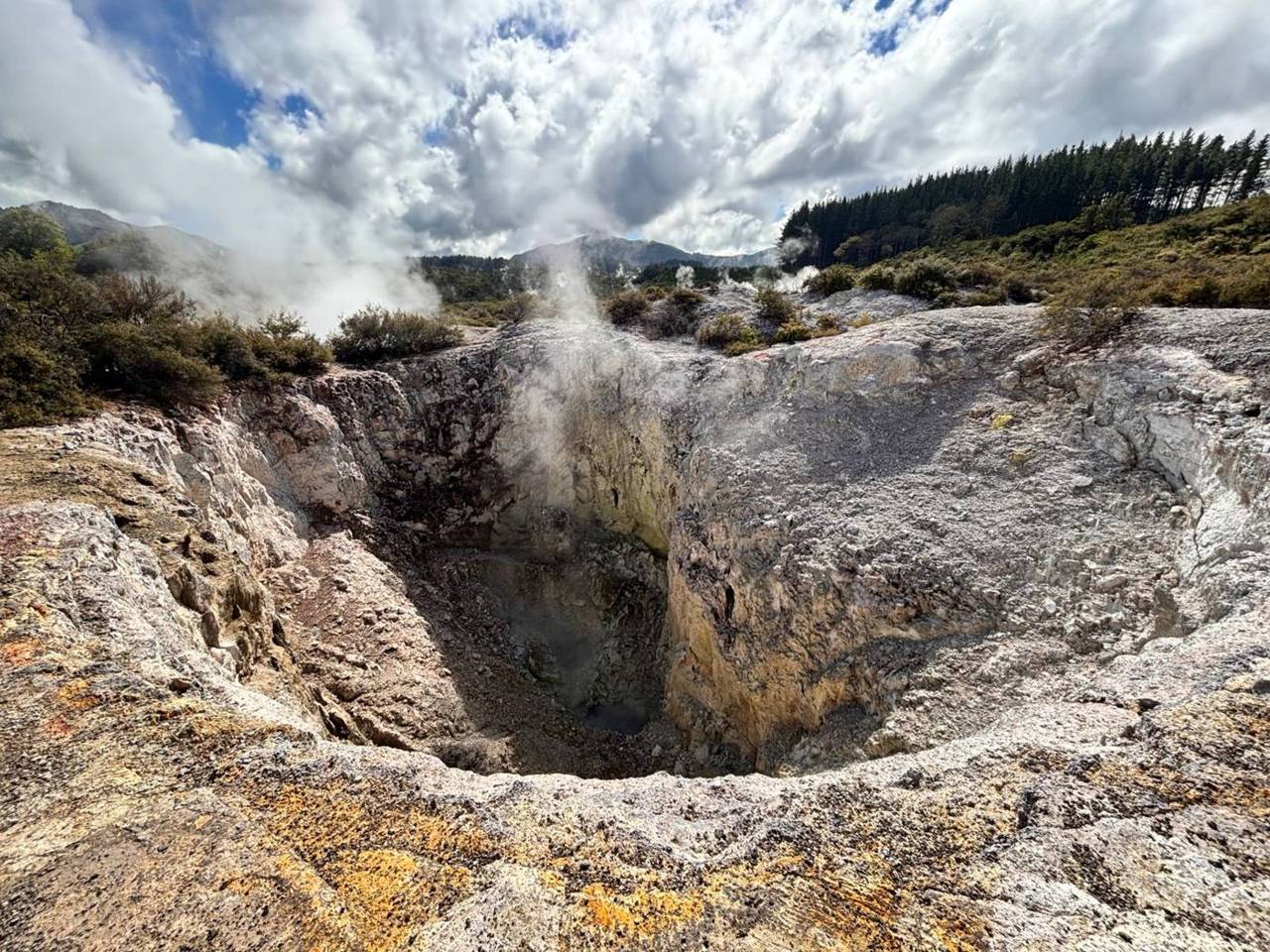
The North Island
From Auckland to the Coromandel Peninsula, the hot springs and Māori culture of Rotorua, the Tongariro volcanoes and the capital Wellington.