The Inland Sea and Zubarah
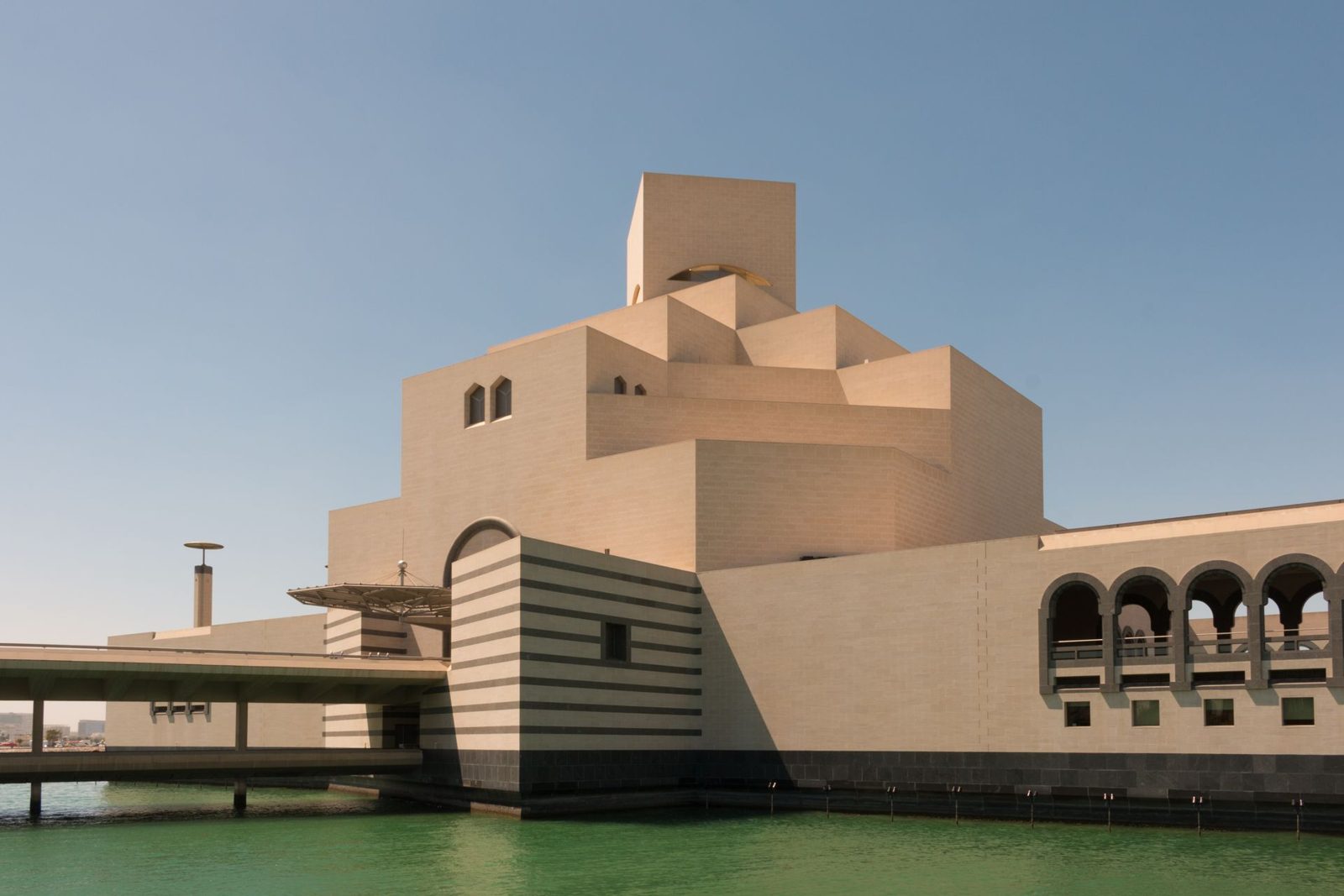
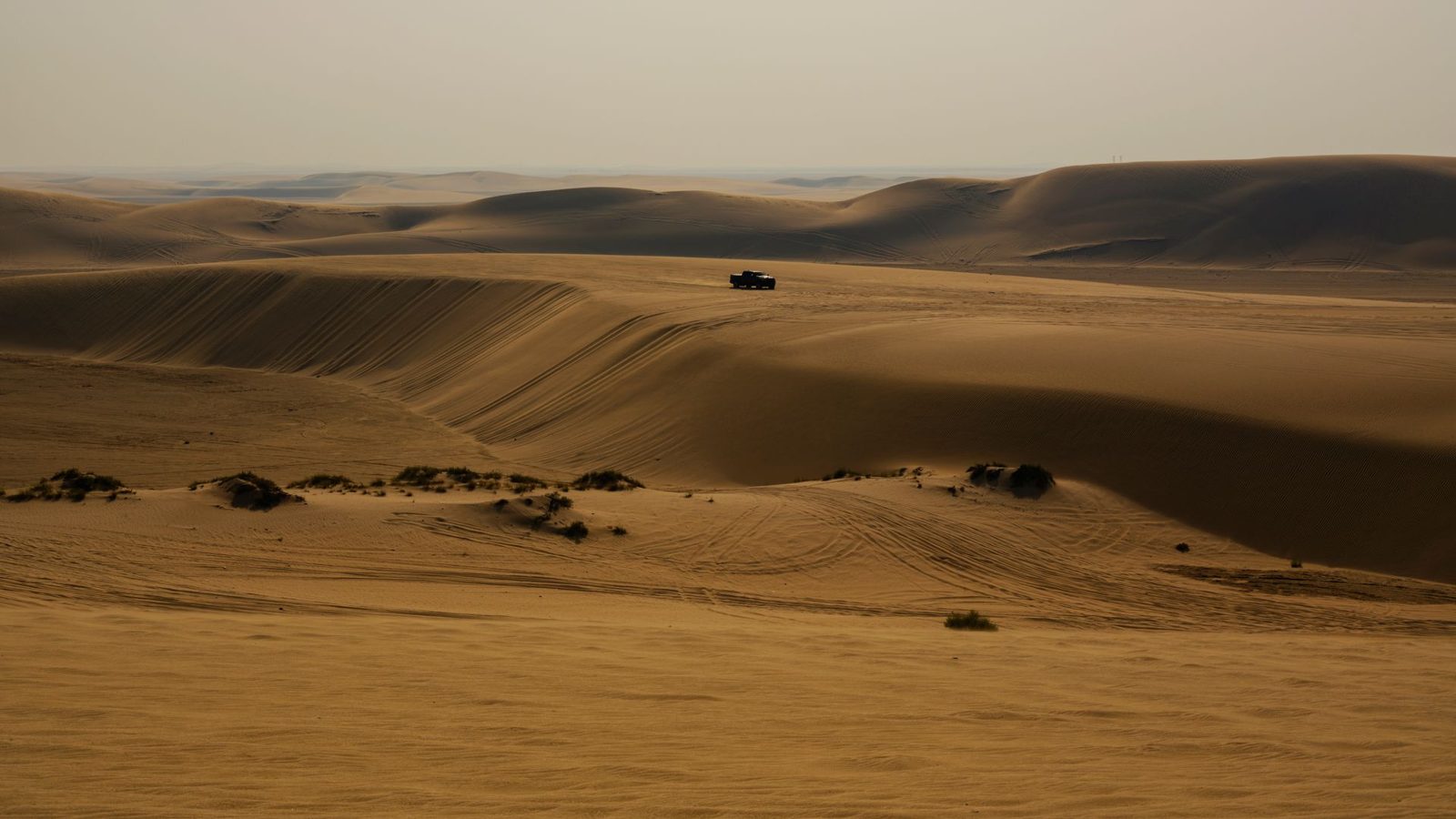
The dunes running into the sea at Khor Al Adaid, Richard Serra's sculpture in the desert and the UNESCO fort of Al Zubarah.
- Doha
- Khor Al Adaid
- Brouq
- East-West/West-East
- Al Zubarah
Day by day
- Day 1
By 4x4 to Khor Al Adaid and a night at camp
This three-day trip takes you to Qatar beyond the city, surprising for anyone who thinks only of Doha: the inland sea of Khor Al Adaid, where the dunes run down into the water, the Brouq reserve with Richard Serra's great sculpture in the desert, and the UNESCO World Heritage site of Al Zubarah.
Before you go: Italian citizens enter Qatar with a passport valid for at least six months from the date of arrival; an identity card is not enough. Italy is on the official list of countries whose citizens enter without a visa for tourism: check the permitted length of stay on the official Visit Qatar website. Other nationalities should check their own rules.
Some areas on this trip are close to borders or places where the situation changes often: check your government's travel advice before booking and again before you leave.
In the morning leave Doha heading south with an experienced driver in a 4x4. After the Mesaieed area the tarmac ends and the sand begins: the driver deflates the tyres and you enter the dunes. Khor Al Adaid can only be reached this way: never try to get there alone in a hire car.
The route climbs and drops over high, soft dunes, then suddenly the inland sea appears, a long arm of blue water surrounded by sand. On the far shore is Saudi Arabia.
In the afternoon swim in the calm, warm water, walk on the dunes and watch the sunset over the water.
At night sleep in an organised tented camp near the shore, with dinner under the stars.
Practical tip: keep your passport with you even in the desert and follow the driver's instructions: do not go near the border and do not enter the water where he tells you not to.
- Day 2
Brouq and the East-West/West-East sculpture
Today you cross Qatar from the south to the west, as far as the Brouq reserve.
In the morning, after breakfast at camp, return by 4x4 to the paved road and continue towards the west coast of the peninsula, near Zekreet. The journey takes a few hours, with stops to rest.
In the Brouq Nature Reserve the landscape is different from the rest of the country: white limestone plateaus, rocks carved by the wind into mushrooms and columns, and the turquoise sea on the horizon. Gazelles and oryx live here, protected in some areas.
In the afternoon reach East-West/West-East, the work of the American sculptor Richard Serra: four huge steel plates, over fourteen metres high, lined up across about a kilometre in a valley between the hills. Walk from one plate to the next: in the low light the steel turns orange and the shadows stretch across the sand. The space around is empty and silent, and the sculpture changes at every hour of the day.
Nearby there is also an old concrete village built as a film set, now abandoned among the rocks.
Sleep in the Dukhan area or drive back towards Doha.
Practical tip: the tracks in the reserve can be sandy: if you do not have a 4x4, ask your driver or guide to take you, and always carry plenty of water.
- Day 3
Al Zubarah fort and archaeological site, and the way back
On the last day you go to the north-west of the country, to the most important place in Qatar's history.
In the morning drive to Al Zubarah, on the north-west coast. A walled town of the eighteenth century stood here, wealthy thanks to pearl diving and trade, connected with the Indian Ocean and the Gulf. The archaeological site, a UNESCO World Heritage Site, shows the foundations of houses, markets, walls and the harbour, partly covered by sand.
Not far away is Al Zubarah Fort, built in the 1930s as a guard post, with square towers, a round one and pale walls. Inside, small exhibitions tell the story of the town and the excavations. Check prices and times.
In the afternoon drive back to Doha, about an hour and a half.
In these three days you have seen Qatar at its most surprising: an inland sea among the dunes, a landscape of white rocks with a monumental sculpture and the remains of a pearling town. Khor Al Adaid can only be reached by 4x4 with an experienced driver, and Al Zubarah is isolated with no services.
When to go: from November to March. Outside these months the heat in the desert becomes dangerous.
Practical tip: at Al Zubarah bring water, food and a hat: there are no shops or shade, and the sun on the pale stone is very strong.
Qatar outside the city, surprising for those who think only of Doha. Khor Al Adaid is reached only by 4x4 with an experienced driver. Al Zubarah is isolated with no services: bring water.
Before you go
- Documents and visa
- Passport valid for at least six months from the date of arrival. Italian and British citizens can enter Qatar for tourism without a visa; British citizens can stay up to 30 days, other nationalities should check the length of stay on the official Visit Qatar website or the Hayya platform before leaving. Importing e-cigarettes and refills is illegal, whatever the quantity.
- Health and vaccines
- No compulsory vaccinations. Healthcare is good but expensive: the authorities recommend health insurance, which can also be bought on arrival, but it is better to have a policy with high medical cover already. From May to September the heat is extreme: drink often and stay indoors in the middle of the day. Emergencies: 999.
- Money and payments
- Qatari riyal, pegged to the US dollar. Cards work almost everywhere; cash is useful at the stalls of Souq Waqif and for small purchases.
- Power sockets
- Type G, 240 volts: the same sockets as in the UK.
- Time zone
- UTC+3 all year, three hours ahead of the UK in winter and two in summer.
- Safety
- The situation in the Gulf region can change quickly, including sudden airspace closures: check the advice and the status of your flights before leaving. The laws are strict and apply to tourists too. Alcohol: only in licensed hotels and venues and from the age of 21, with original photo ID; drinking or being drunk in public is an offence and there is zero tolerance for drink-driving. Vaping is illegal. Clothing: men and women cover shoulders and knees in public, including while driving; the rule is strictly enforced in government buildings, hospitals and banks. Ramadan: during the day do not eat, drink, smoke or chew gum in public, even in your car. Photos: photographing or sharing images of people without their consent is an offence; take care near religious, military and government sites; drones need a permit. Public displays of affection can lead to arrest; swearing, rude gestures and offensive posts are offences. Zero tolerance for drugs, even traces. In the desert travel only in an equipped 4x4 with an experienced driver. Official advice: GOV.UK.
Information checked in November 2026 for Italian and EU citizens. Rules change: always check before you travel.
Variations
In one day from Doha you can see Khor Al Adaid, without sleeping at camp.
With two more days add Doha and its museums, at the start or end of the trip.
Frequently asked questions
Can I go to Khor Al Adaid on my own?
No: it can only be reached with an equipped 4x4 and an experienced driver who knows the dunes.
Is the desert camp comfortable?
Organised camps have tents with beds, toilets and dinner; still bring warm clothes for the night.
Do I need a guide for Al Zubarah?
No, you can visit the site independently; the fort has information panels. Bring water as there are no services.
Indicative itinerary written by World Atlas. Before booking, check timetables, seasonal openings, documents and safety.