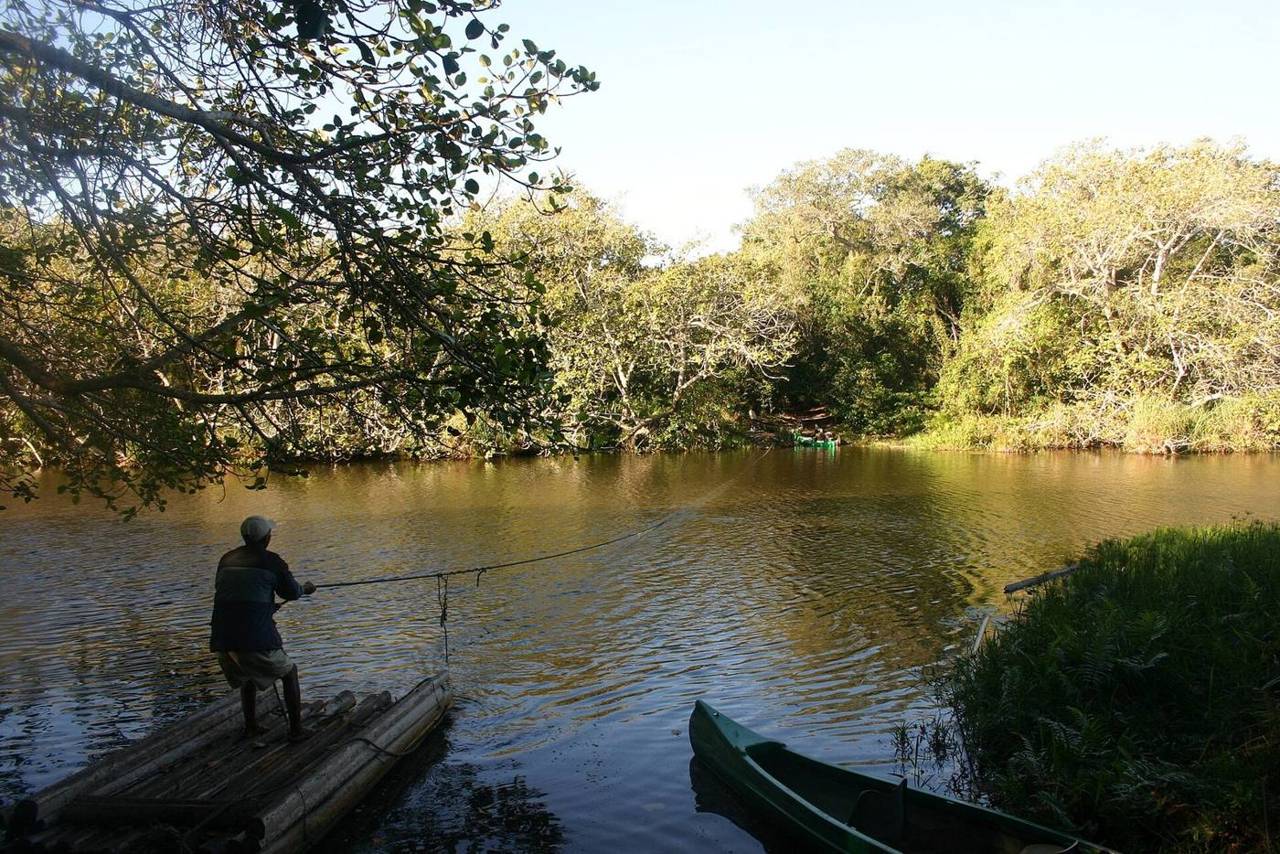
Maputaland: Sodwana and Kosi Bay
The wildest corner of KwaZulu-Natal, in iSimangaliso park: Africa's southernmost coral reefs at Sodwana Bay, turtles nesting on the beaches in summer, the lakes and traditional fish traps of Kosi Bay and Tembe reserve with its big-tusked elephants.
- Durban
- Sodwana Bay
- Tembe
- Kosi Bay
Day by day
- Day 1
From Durban to Sodwana Bay
Maputaland is the north-eastern corner of South Africa, in KwaZulu-Natal, between the Indian Ocean, Mozambique and eSwatini: a land of forested dunes, lakes, swamps, coral reefs and Zulu and Tsonga villages, still little touched by mass tourism. Much of the coast is part of iSimangaliso Wetland Park, a World Heritage site. In six days you see Sodwana Bay, Tembe reserve with its elephants and the lakes of Kosi Bay.
You arrive at King Shaka International Airport in Durban. Hire a car and drive north along the coast for about four and a half hours, first on the motorway through sugarcane plantations, then on smaller roads through eucalyptus plantations, villages and roadside markets.
In the afternoon you reach Sodwana Bay, a bay on the Indian Ocean sheltered by a long, forested dune, South Africa's main diving centre. The southernmost coral reefs in Africa grow here, thanks to the warm current flowing down from Mozambique.
Walk on the beach and watch the boats being pushed into the sea through the waves by tractors, and the fishermen on the shore.
In the evening, sleep at Sodwana Bay.
Practical tip: Italian citizens enter South Africa without a visa for up to 90 days. Your passport must be valid for at least 30 days after departure and have 2 blank pages. The United States has South Africa at level 2.
- Day 2
Sodwana: diving on the reef
Today is a day at sea. Early in the morning, set off on a dive boat from Sodwana beach. The boats launch straight from the sand, punch through the waves with a strong push and reach the reefs in a few minutes.
Sodwana's reefs are named after their distance from the beach, such as Two Mile Reef, the best known, about two miles out, with depths between ten and twenty metres, suitable even for less experienced divers. Underwater you see hard and soft corals, sea turtles, moray eels, clownfish, rays and large shoals of colourful fish. Further out there are deep reefs for experienced divers.
If you do not dive, join a boat trip to snorkel on the shallower reefs, or swim and snorkel in the rock pools near the shore at low tide.
Between July and November, on boat trips, you may see humpback whales migrating along the coast, and dolphins all year round.
In the afternoon, rest in the shade of the dune forest, home to monkeys and many birds.
In the evening, sleep at Sodwana Bay.
Practical tip: you need a valid certification to dive, but many schools offer courses and try-dives for beginners. Book ahead during South African school holidays, when the bay fills up.
- Day 3
Sodwana: snorkelling and the turtle night
In the morning, go out to sea again, diving or snorkelling, or explore on foot the coast north and south of the bay, with its long, empty beaches, dunes and rock pools.
Alternatively, head to Lake Sibaya, the largest natural freshwater lake in South Africa, a short distance from the coast, separated from the sea by a high forested dune. Hippos, crocodiles and many water birds live on its shores.
In the evening, if you are there in the right season, join a turtle night. Between November and February, female leatherback turtles, the largest turtles in the world, which can weigh more than five hundred kilos, and loggerheads come out of the sea at night to dig nests in the sand and lay their eggs. Between January and March the hatchlings emerge and race to the sea.
Trips run only with guides licensed by iSimangaliso park, by 4x4 along the beach, under very strict rules: no bright lights, no flash, no contact with the turtles. The guides find the tracks in the sand and lead the group to a respectful distance.
In the evening, sleep at Sodwana Bay.
Practical tip: turtle trips are few, with limited places, and only run in season. Book them in advance and bring a light jacket, as it is windy on the beach at night.
- Day 4
Tembe reserve: elephants and safari
In the morning, drive north-west to Tembe Elephant Park, about two hours away, near the border with Mozambique. The reserve protects an area of sand forest, woodland and swamp, and the last indigenous elephants of KwaZulu-Natal, which once moved freely between South Africa and Mozambique.
Tembe's elephants are among the largest in Africa, and some bulls have very long tusks. The reserve also has lions, leopards, buffalo, rhinos and many antelope, such as the suni, one of the smallest antelope in the world, the size of a cat, which lives in the sand forest.
The reserve is visited by 4x4, because the tracks are deep sand and unsuitable for ordinary cars. Leave your car at the entrance and set off on a game drive with a reserve guide.
In the afternoon, stop at a hide near a waterhole, where elephants come to drink and bathe, a few metres from you. Watch how they move as a family, with females, calves and the matriarch, the oldest elephant leading the group.
The reserve is run together with the Tembe Tsonga community, which owns the land.
In the evening, sleep at Tembe.
Practical tip: Maputaland is a malaria area, especially in the rainy season, from November to April. Ask your doctor or a travel medicine clinic for advice before you travel.
- Day 5
Kosi Bay: the lakes, the fish traps and snorkelling at the mouth
In the morning, drive east to Kosi Bay, at the north-eastern tip of South Africa, a few kilometres from the Mozambique border. Kosi Bay is not a bay but a system of four lakes linked by channels, surrounded by palm forest, mangroves and swamps, opening onto the ocean through a narrow estuary.
In the channels between the lakes you see the Tsonga fish traps, enclosures of wooden stakes and woven reeds shaped like arrows or hearts, which guide fish into a closed chamber with the tides. Families have built and used them for hundreds of years, and each trap belongs to a family. From above, the system of traps looks like a drawing on the water.
Take a boat or canoe trip on the lakes with a local guide, through the channels and mangroves, watching herons, fish eagles and kingfishers.
In the afternoon, go to the Kosi Bay mouth, reachable only by 4x4 through the dune forest, where the estuary meets the ocean. With the right tide, snorkel in the clear water of the mouth, among tropical fish, rays and sometimes turtles, in some of the clearest water on the coast.
In the evening, sleep at Kosi Bay.
Practical tip: tidal currents at the Kosi Bay mouth are strong. Snorkel only with a guide and at the right state of the tide, and never swim alone.
- Day 6
Return towards Durban or St Lucia
In the morning, take a last walk on the shore of the Kosi Bay lakes at dawn, when the water is still and birds are most active.
Then head south. You have two options. The first is to return directly to Durban, in about five and a half to six hours, for your flight home. The second is to stop at St Lucia, about three and a half hours away, the small town at the southern gate of iSimangaliso park, at the mouth of the Lake St Lucia estuary.
In St Lucia you can take a boat trip on the estuary, home to hundreds of hippos and crocodiles, or drive the scenic Cape Vidal road inside the park, through swamps, grasslands and dune forests where you see rhinos, buffalo, zebras and kudu, to the beach at Cape Vidal. In the evening in St Lucia, hippos come out of the water and sometimes walk through the town's streets.
This trip combines well with Hluhluwe-iMfolozi Park, one of the best places in Africa to see white rhinos, or with eSwatini and Kruger National Park, reachable overland to the north.
Practical tip: at night in Maputaland the roads are dark and often crossed by people and animals. Avoid driving after sunset and plan your timings carefully.
For lovers of nature and the sea away from crowds. A 4x4 is needed for Kosi Bay and some sand tracks. Turtles can only be seen on licensed night tours. The area has a malaria risk, especially from November to April: ask your doctor. The United States advises increased caution (level 2) because of crime: no driving at night, windows closed in cities, no valuables on show. Italians need no visa for up to 90 days.
Before you go
- Documents and visa
- Passport valid for at least 30 days beyond departure, with at least two completely blank pages; no visa for tourism up to 90 days. A return ticket is required.
- Health and vaccines
- No compulsory vaccines arriving from Europe; a yellow fever certificate is needed only if arriving from a risk country. Kruger and the north-east have seasonal malaria risk: ask your doctor before travelling. Emergencies: 10111 police, 10177 ambulance, 112 from mobiles.
- Money and payments
- South African rand. Cards work almost everywhere; keep some cash for tips and car guards.
- Power sockets
- Type M, plus C and N, 230 volts: you need an adapter for the large three round-pin plugs.
- Time zone
- UTC+2 all year: South Africa does not use daylight saving time.
- Safety
- The United States rates South Africa level 2 for crime. In cities avoid walking alone at night, leave nothing visible in the car and use ride-hailing apps after dark. Official advice: GOV.UK.
Information checked in November 2026 for Italian and EU citizens. Rules change: always check before you travel.
Variations
In 4 days: Sodwana Bay and Kosi Bay, without Tembe.
In 9 days: add St Lucia and Hluhluwe-iMfolozi.
Frequently asked questions
When is the best time to go?
From May to October, the dry season, for safaris, with fewer mosquitoes. From November to March for the turtles, with more heat and rain.
Do I need a 4x4?
For Tembe and the Kosi Bay mouth yes, but you can join guided trips and leave your car. For the rest, an ordinary car is enough.
Do I need malaria prophylaxis?
Maputaland is a malaria area. Ask your doctor or a travel medicine clinic for advice before you travel.
Indicative itinerary written by World Atlas. Before booking, check timetables, seasonal openings, documents and safety.
 4 daysEasy
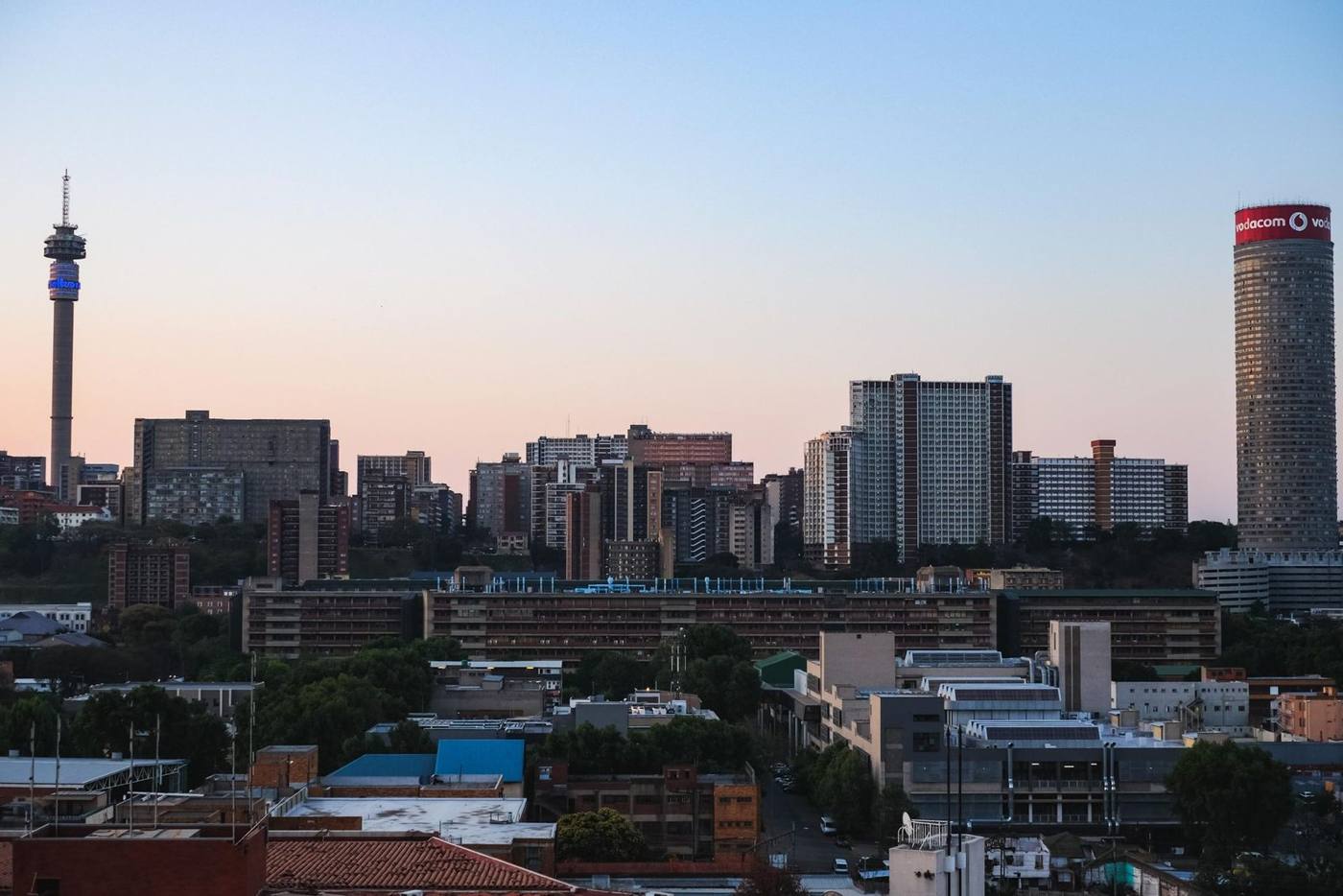
Johannesburg, Soweto and the Cradle of Humankind
The story of modern South Africa: the Apartheid Museum, Constitution Hill, Soweto with Mandela's house and the Hector Pieterson memorial, the creative Maboneng district, Pretoria with the Union Buildings and the Sterkfontein caves, where some of humanity's oldest ancestors were found.
 4 daysEasy
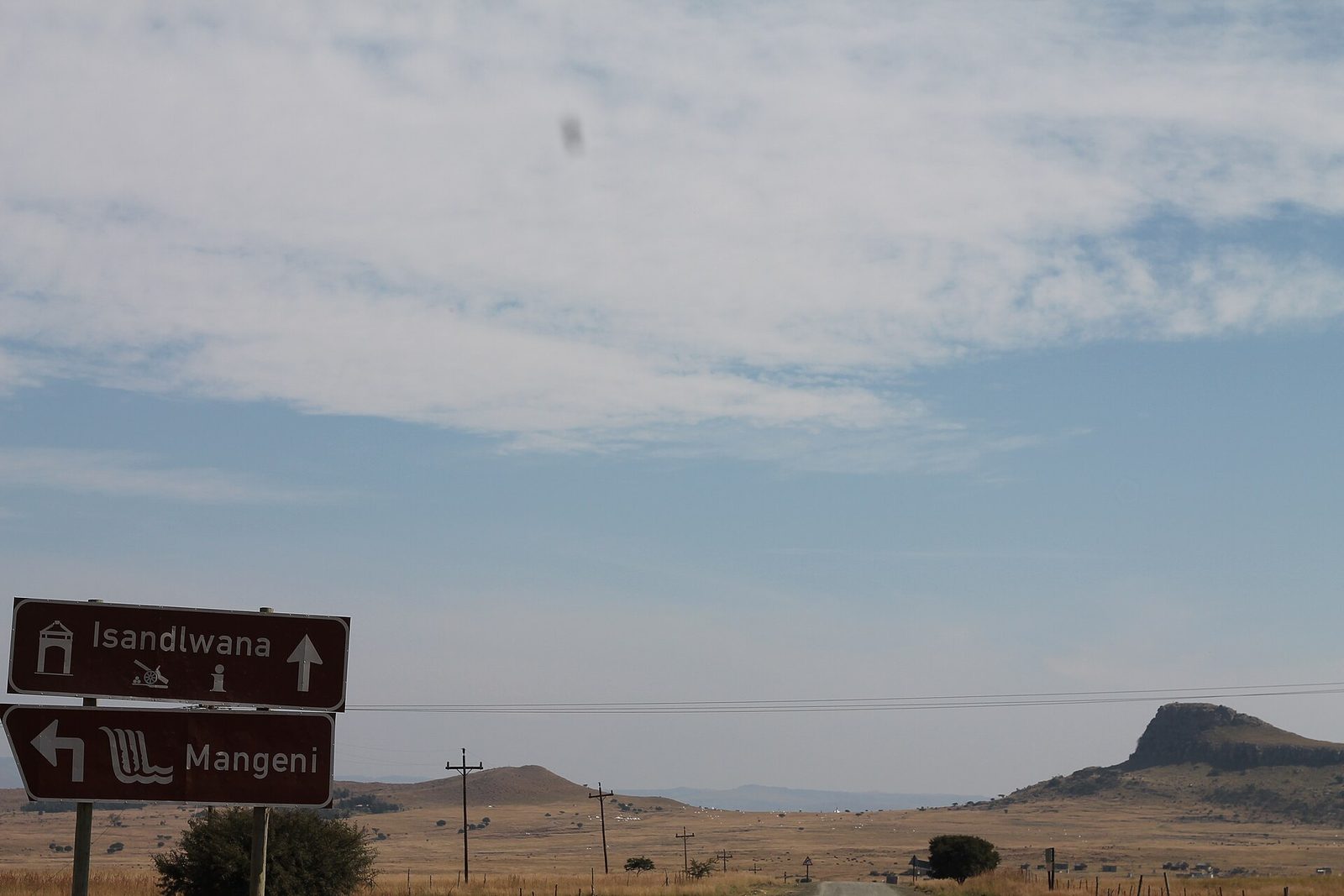
The KwaZulu-Natal battlefields
The hills where Zulus, British and Boers clashed: Isandlwana, where in 1879 the Zulu army defeated the British, Rorke's Drift, the Blood River and Spioenkop, told on site by local historian guides who bring events to life.
 6 daysEasy
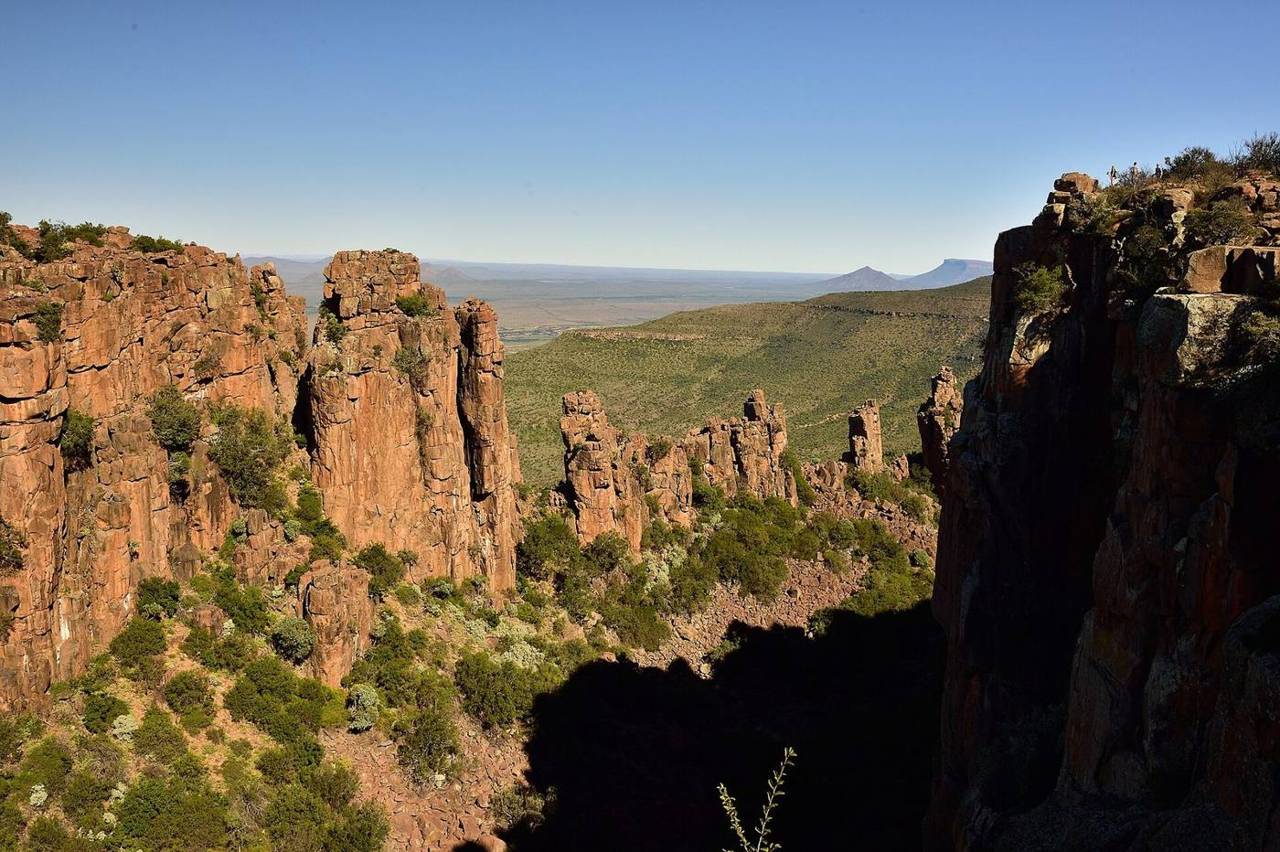
Addo and the eastern Karoo
A clear of malaria safari in the Eastern Cape: Addo Elephant Park, the nearby private reserves with the Big Five, then inland to Graaff-Reinet, one of the country's oldest towns, and the Valley of Desolation with its rock columns above the Karoo.