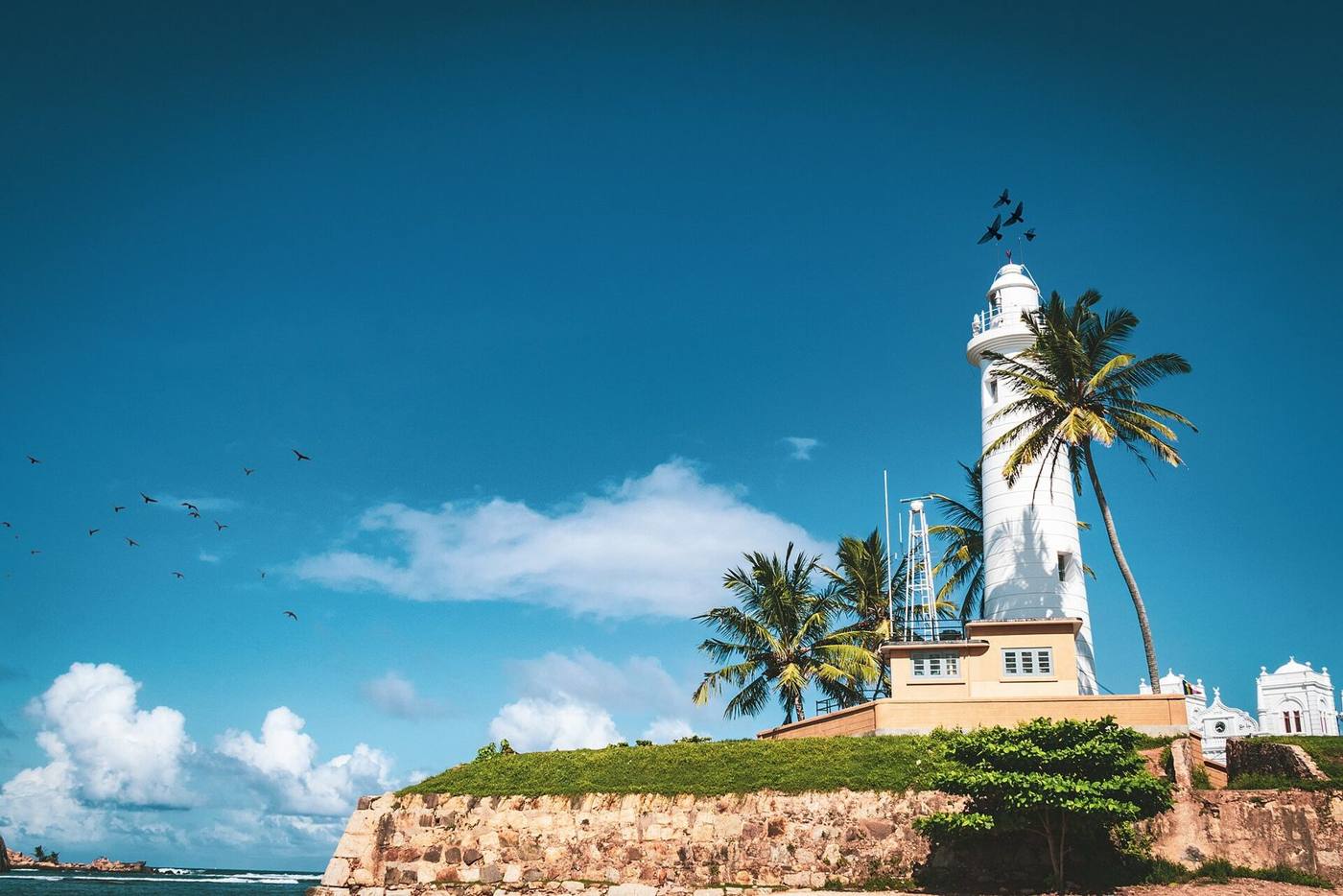
Galle and the south-west coast
The colonial coast and southern beaches: Galle's Dutch fort (UNESCO), its walls walked at sunset, Unawatuna bay, the stilt fishermen at Koggala, the Kosgoda turtles, the Madu river by boat and Bentota with the Brief garden and Lunuganga, the estate of architect Geoffrey Bawa.
- Colombo
- Bentota
- Kosgoda
- Galle
- Unawatuna
- Koggala
Day by day
- Day 1
Arrival in Colombo and the coastal train to Bentota
This trip follows the south-west coast of Sri Lanka: Bentota and the gardens of the architect Geoffrey Bawa, the Madu river by boat, the turtles of Kosgoda, the Dutch fort of Galle, the bay of Unawatuna and the stilt fishermen of Koggala.
Before you go: Italian citizens enter Sri Lanka with a passport valid for at least six months and with the ETA, the electronic travel authorisation to apply for before leaving on the official website eta.gov.lk. Since 25 May 2026 the tourist ETA for Italian passports costs nothing, is valid for 30 days and allows two entries. Other nationalities should check their own rules. Cyclone Ditwah, in November and December 2025, caused landslides and serious damage to roads and railways, above all in the centre of the island: check conditions before every journey. Viaggiare Sicuri advises against driving yourself, recommends a local driver and advises against travelling at night. Do not show Buddha tattoos: they can lead to deportation.
You arrive at the international airport, north of Colombo, and reach Colombo Fort station. Take the coastal line train south: for long stretches it runs a few metres from the ocean, among palms, beaches, fishing villages and colourful boats. In a couple of hours you reach Aluthgama, the station for Bentota. Buy tickets only on the official railway website.
In the afternoon rest on Bentota beach, wide and golden, at the mouth of the river.
Sleep in Bentota, for two nights.
Practical tip: sit on the right-hand side of the train, facing the sea, but always stay inside the carriage: leaning out of the open doors is dangerous and there have been fatal accidents.
- Day 2
Lunuganga and the Madu river
Today you visit the gardens of two brothers and sail among the mangroves.
In the morning go to Lunuganga, the country estate of Geoffrey Bawa, Sri Lanka's most important architect and father of the style known as tropical modernism. For about fifty years Bawa transformed a cinnamon plantation on a lake into a garden of terraces, avenues, statues and carefully composed views, where nature and architecture merge. It is visited with a guide. Check prices and times.
Then reach the Brief Garden, inland, the garden of his older brother, Bevis Bawa, a sculptor and landscape designer, with statues, tropical plants and a decorated house. Check prices and times.
In the afternoon go to Balapitiya, a little further south, and take a boat trip on the Madu river, a wide wetland protected under the Ramsar convention, with mangroves, islets and water birds. The boat stops on an island where a family shows how cinnamon bark is peeled, the most famous spice of Sri Lanka, and near a small Buddhist temple on an islet. Look for monitor lizards, kingfishers and, if you are lucky, crocodiles.
Return to Bentota for sunset on the beach.
Sleep in Bentota.
Practical tip: on the Madu river choose boats that go slowly through the mangroves and ask to skip the stops with fish that nibble the skin of your feet, which are not very hygienic.
- Day 3
Kosgoda and arrival in Galle
Today you head down the coast to Galle, with a stop for the sea turtles.
In the morning set off south with a driver or by tuk tuk. In Kosgoda there are several sea turtle centres: five of the world's seven species lay their eggs on Sri Lanka's beaches. The centres collect the eggs from the beaches, where they would risk being eaten or stolen, hatch them safely and release the young into the sea.
Choose carefully: some centres keep the animals in tanks for tourists, even for years, and let people handle them. Prefer those that release the hatchlings soon after they are born, usually in the evening, and that care only for injured turtles. Check prices and times.
Then continue south along the coast road, with beaches, temples and memories of the 2004 tsunami, which hit this coast hard: at Peraliya a memorial recalls the train swept away by the waves.
In the afternoon arrive in Galle and settle in inside or near the fort.
In the evening walk along the walls at sunset, when locals come out for a stroll and young people play cricket on the lawns.
Sleep in Galle, for three nights.
Practical tip: at turtle centres never touch the hatchlings and do not use flash: artificial light disorients them.
- Day 4
Galle fort on foot
Today you explore on foot one of the best-preserved European fortified towns in Asia.
Galle fort was built by the Portuguese at the end of the sixteenth century and then enlarged by the Dutch in the seventeenth, with bastions of stone and coral around the headland. It is a UNESCO World Heritage Site. Inside the walls a community of Sinhalese, Muslims and descendants of Europeans still lives.
Early in the morning walk along the ramparts, starting from the old gate. Pass the clock tower and the Flag Rock bastion, where young men dive into the sea from the rocks, and reach the white lighthouse on the point, near the Meeran mosque.
Visit the Dutch Reformed Church, from the eighteenth century, with its floor of tombstones, and the National Maritime Museum, housed in an old Dutch warehouse, with stories of shipwrecks and the spice trade. Check prices and times.
At midday have a fish dish or hoppers, bowl-shaped rice pancakes with an egg in the middle.
In the afternoon stroll through the grid of streets, among colonial houses with verandas, wooden doors and shops selling jewellery, fabrics and antiques.
At sunset return to the walls.
Sleep in Galle.
Practical tip: be wary of anyone who offers to take you to gem shops: buy only with a certificate and a receipt, or do not buy at all.
- Day 5
Unawatuna and Koggala
Today you spend a day among the bays and fishing villages east of Galle.
In the morning go to Unawatuna, a few kilometres from the fort, with its wide crescent bay, pale sand and calm water when the sea is good. Swim and, if you like, snorkel on the reef close to the shore, with tropical fish and sometimes turtles.
Then climb Rumassala hill, covered in forest, to the white peace pagoda built by Japanese monks, with a view over Galle fort. Go down to little Jungle Beach, a quiet cove among the trees.
In the afternoon continue towards Koggala, where you see the stilt fishermen, sitting on a pole planted in the sea with a rod in hand. Today many of them pose for photos and ask for an offering: ask first and agree the price.
Then visit the Martin Wickramasinghe museum, dedicated to the great Sinhalese writer born here, with his birthplace and a museum of village life. Check prices and times. At sunset take a boat trip on Koggala lake, with its islets and temples.
Sleep in Galle.
Practical tip: swim only in sheltered bays and respect the red flags: on this coast currents can be very strong.
- Day 6
The expressway to the airport
Today you leave the south coast.
In the morning enjoy one last walk on the fort walls or one last breakfast of tropical fruit, such as papaya, mango and rambutan.
Then leave for the international airport with a driver. The Southern Expressway takes you from Galle towards Colombo in a few hours, then the airport expressway continues north. Allow a wide margin for traffic around the capital.
In six days you have seen the south-west coast of Sri Lanka: the train along the ocean, the gardens of Lunuganga and the Brief Garden in Bentota, the Madu river and its cinnamon, the turtles of Kosgoda, the bastions of Galle fort, the bay of Unawatuna and the stilt fishermen of Koggala.
When to go: from December to April, when the sea is calm and the sky clear. From May to October the south-west monsoon brings rough seas and red flags to this coast: in those months the east coast, from Trincomalee to Arugam Bay, is better.
Practical tip: before leaving buy something to take home: Ceylon cinnamon sticks, tea, curry spices or a hand-painted batik; remember that in Sri Lanka tips are appreciated, around ten per cent, and for drivers and guides too.
From May to October the south-west monsoon brings rough seas and red flags to this coast: the east coast is better then. Some turtle centres keep animals in tanks for tourists: choose those that release them. A passport and an online ETA are needed; it has been no-cost for Italians since 25 May 2026 and is valid 30 days.
Before you go
- Documents and visa
- Passport valid for at least six months with two consecutive blank pages, plus the ETA, the electronic travel authorisation to apply for before leaving on the official website eta.gov.lk. Since 25 May 2026 the tourist ETA for Italian passports costs nothing: it is valid for 30 days and allows two entries; to stay longer you need a paid extension.
- Health and vaccines
- No vaccinations are compulsory for travellers from Italy. Malaria has been eliminated, but dengue and chikungunya are rising, especially during the monsoons: use insect repellent and if you have a fever see a doctor at once, without taking aspirin. After a bite from a stray animal you need rabies treatment. Drink bottled water. Outside the big cities hospitals are often basic: you need insurance covering medical costs and repatriation. Emergencies: 119.
- Money and payments
- Sri Lankan rupee (LKR). Cards work in hotels and larger shops; carry cash for tuk tuks, markets, temples and small places. Change money at banks or authorised exchange offices.
- Power sockets
- Types D and G, 230 volts: bring a universal adapter.
- Time zone
- UTC+5:30 all year.
- Safety
- Public order is generally stable. Cyclone Ditwah, in November and December 2025, caused landslides and serious damage to roads and railways: the train line from Colombo returned to Peradeniya, on the edge of Kandy, only in October 2026, and the section to Badulla has not yet been restored. During the monsoons further landslides and closures are possible: check the forecast on meteo.gov.lk; the Disaster Management Centre answers on 177. Driving yourself is not advised: use a local driver, and never travel at night. Buy train tickets only on the official railway website. Wild elephants can attack: in parks always follow authorised guides. Showing Buddha tattoos or disrespecting sacred images can lead to arrest or deportation; drug laws are very strict. In the north, around Jaffna, Kilinochchi and Mullaitivu, mine clearance is still under way. Official advice: GOV.UK.
Information checked in November 2026 for Italian and EU citizens. Rules change: always check before you travel.
Variations
In four days: the coastal train to Galle, the fort, Unawatuna and Koggala, without Bentota.
In nine days: add Mirissa, with blue whale trips, usually from December to April, and Udawalawe park with its elephants.
Frequently asked questions
What document do I need for Sri Lanka?
Italian citizens enter with a passport valid for at least six months and the ETA, applied for before leaving on the official website eta.gov.lk; since 25 May 2026 it costs nothing for Italian passports and is valid for 30 days. Other nationalities should check their own rules.
How do I choose a turtle centre in Kosgoda?
Prefer those that release hatchlings soon after birth and care only for injured animals. Avoid those that keep turtles in tanks for tourists to handle.
When can you swim on the south-west coast?
From December to April the sea is generally calm. From May to October the monsoon brings strong waves and red flags: always follow the signs.
Indicative itinerary written by World Atlas. Before booking, check timetables, seasonal openings, documents and safety.
 5 daysEasy
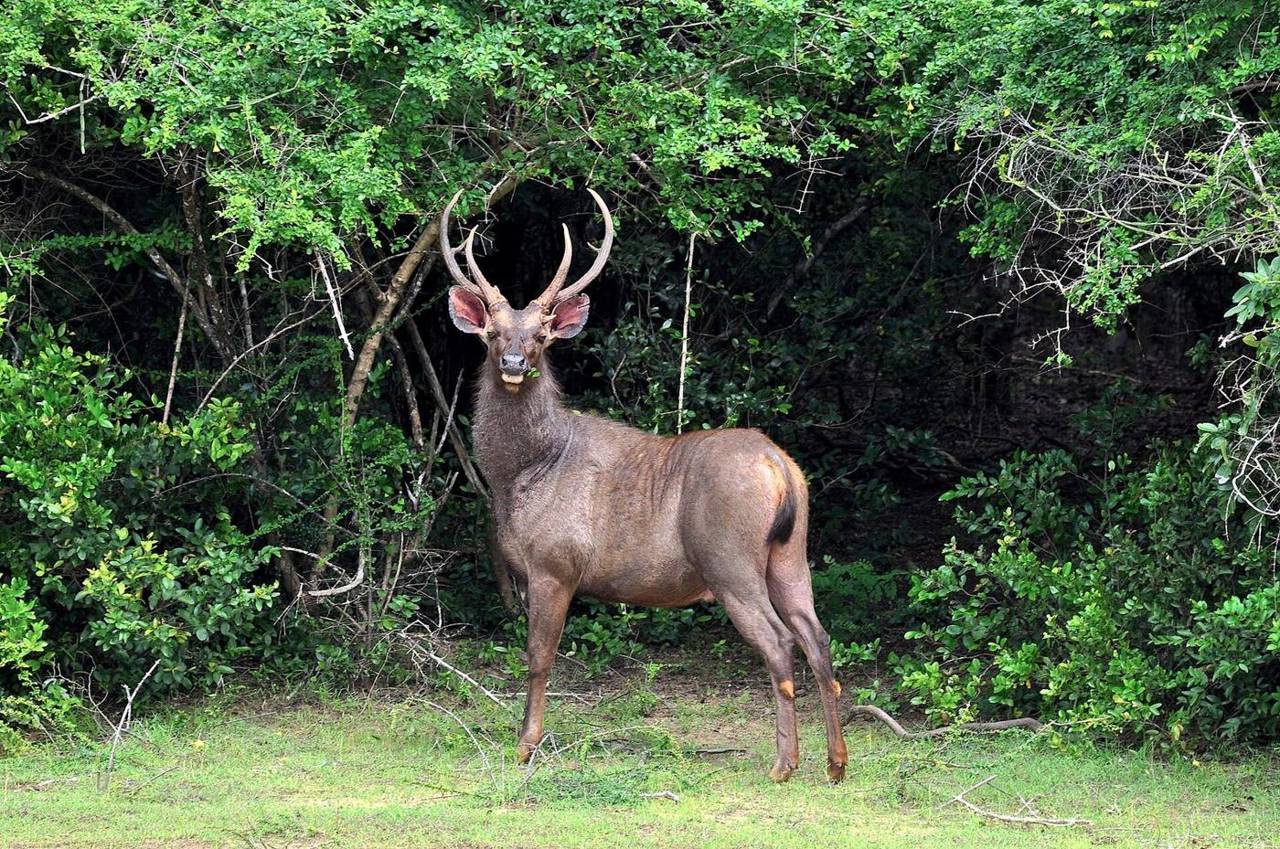
Wilpattu and Kalpitiya
The lesser-known west coast: Wilpattu, the island's largest park, with natural lakes called villus where you look for leopards and sloth bears without Yala's lines of jeeps, then the Kalpitiya lagoon for kitesurfing and, in season, boat trips for dolphins and whales.
 5 daysModerate
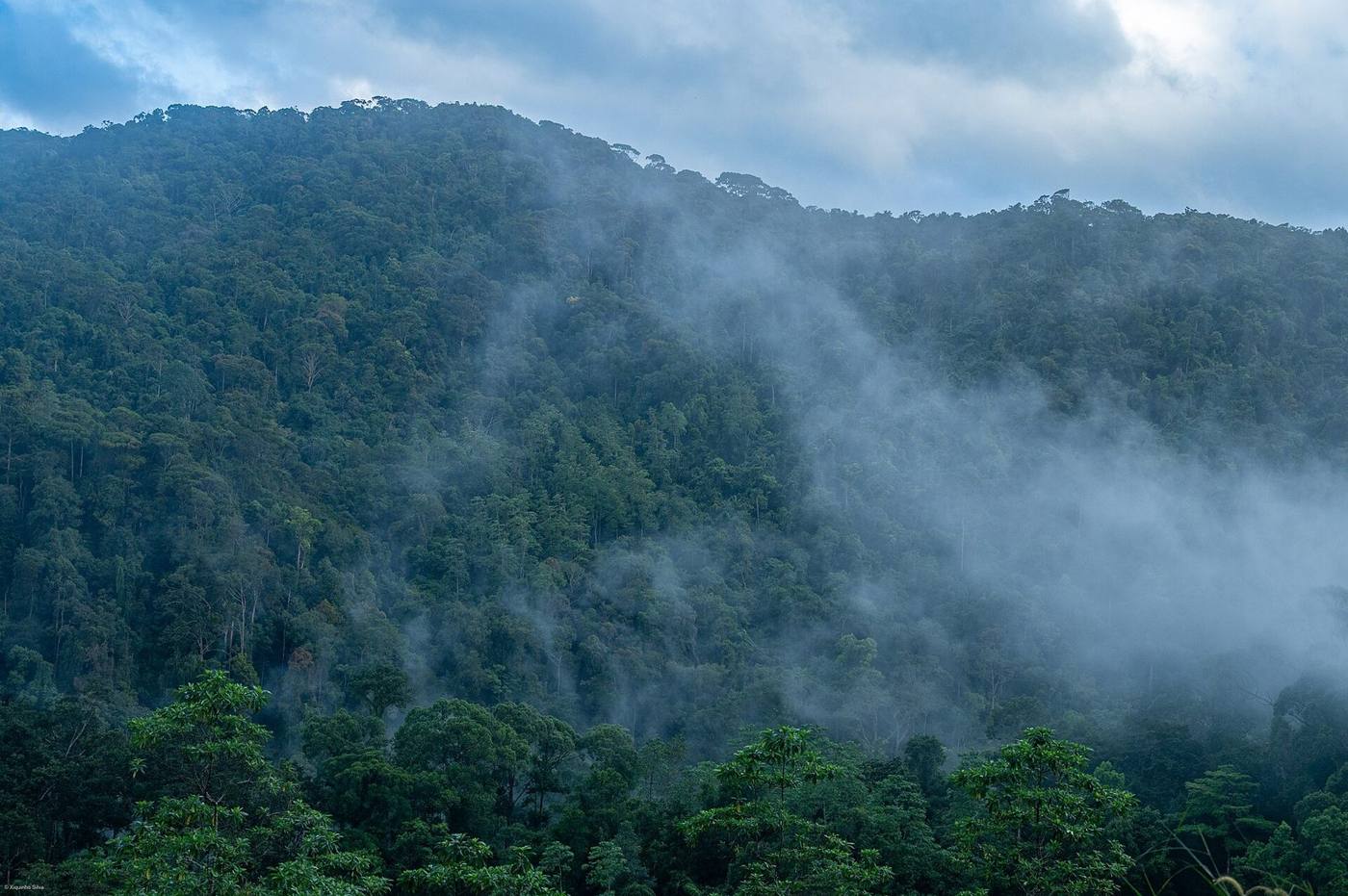
Sinharaja and Udawalawe
From rainforest to elephants: Sinharaja, the island's last large primary rainforest and a UNESCO site, with endemic birds and guided trails, then Udawalawe park, the surest place to see elephant herds, and the centre that raises orphans and returns them to the wild.
 5 daysEasy
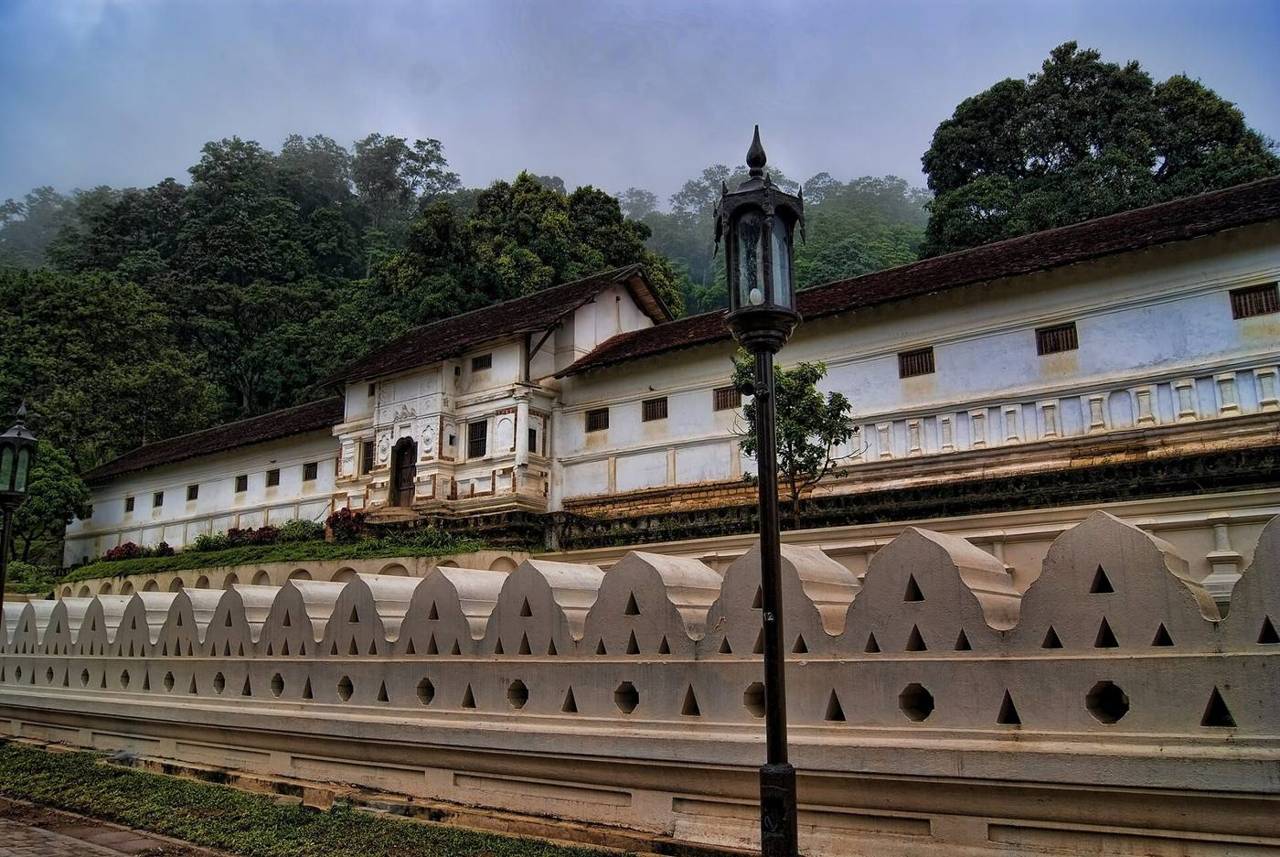
Kandy and the central hills at an easy pace
Five unhurried days around the last capital of the Sinhalese kings: the Temple of the Tooth and Kandy lake, Peradeniya botanical gardens, the temples of Gadaladeniya and Lankatilaka, a tea estate in the Hantana hills and Kandyan dance in the evening.