The Southern Forests: Kui Buri, Sam Roi Yot and Khao Sok
A journey of wildlife and rainforest: the wild elephants of Kui Buri, the royal cave of Phraya Nakhon and two nights in floating bungalows on Cheow Lan lake.
- Bangkok
- Kui Buri National Park
- Khao Sam Roi Yot
- Chumphon
- Khao Sok
- Cheow Lan Lake
- Khao Lak
Day by day
- Day 1
Arrival in Bangkok and the road to Pranburi
This trip leads into the Thailand of forests, away from the busiest islands: the wild elephants of Kui Buri, the cave with the royal pavilion at Khao Sam Roi Yot, the rainforest of Khao Sok and Cheow Lan Lake with its floating raft houses, ending on the Andaman Sea at Khao Lak.
Before you leave: since 15 September 2026 Italian citizens can enter without a visa for stays of up to 30 days. Before the flight, in the three days before arrival, you must fill in the digital arrival card online, the TDAC. The passport must be valid. Other nationalities should check their own rules. The United States rates Thailand at level 1, the lowest, with more caution in the far southern provinces and along the border with Cambodia, which this trip does not touch.
You arrive at Bangkok airport after a long flight. Instead of stopping in the city, take a car with driver or a minibus south: Pranburi is about three and a half hours away, on the Gulf of Thailand coast, south of Hua Hin.
The road crosses the salt pans of Samut Sakhon and the pineapple plantations of Prachuap Khiri Khan. Stop to eat at a service area: Thai kitchens along the road are good and quick.
In the evening you reach Pranburi, a quiet coast of long beaches and fishing villages.
Sleep in Pranburi.
Practical tip: buy a local SIM card with data at the airport. You need it for maps and to call transport.
- Day 2
Kui Buri and the wild elephants
Today you go to Kui Buri National Park, one of the best places in Thailand to see wild elephants.
The park is about an hour south west of Pranburi, towards the mountains on the border with Myanmar. It spreads over forests and hills. Near the entrance, in an area of former farmland, the park has created large meadows where the animals come to eat grass and drink at ponds.
Visits take place in the afternoon, on the back of a pickup driven by a ranger or someone from the nearby villages who knows the animals. You leave the visitor centre around four and drive the park tracks until sunset. The elephants come out of the forest in groups, with calves, and approach the meadows. You also see gaur, the great wild cattle of Asia, almost two metres tall, and deer.
It is not a zoo: sometimes the animals do not show up. The rangers follow tracks and talk by radio to find the groups.
The park ticket and the pickup are paid: check the prices at the visitor centre.
Sleep in Pranburi or in lodging near the park.
Practical tip: always stay on the pickup and do not make noise. Wild elephants are dangerous if frightened.
- Day 3
Khao Sam Roi Yot and Phraya Nakhon cave
Today you visit Khao Sam Roi Yot National Park, the park of three hundred peaks, a short distance from Pranburi.
The park is a landscape of limestone mountains rising from the sea and the marshes. Early in the morning go to Laem Sala beach: you get there by boat from Bang Pu beach or on foot on a path that climbs over the hill in about half an hour.
From the beach you climb to Phraya Nakhon cave. The path is steep, over stones, and takes forty minutes to an hour. At the top you enter a large cave with a collapsed roof: from the sky a beam of light comes down which, in the morning hours, lights up the wooden royal pavilion built inside in the late nineteenth century for a king's visit. It is one of the best known images of Thailand.
In the afternoon go to the park's marshes, at Thung Sam Roi Yot, the largest freshwater wetland in the country. A wooden boardwalk crosses reed beds and ponds with lotus flowers. You see herons, egrets, kingfishers and many migrating birds in winter.
In the evening dine on fish from the coastal villages.
Sleep in Pranburi or in the park.
Practical tip: at the cave wear hiking shoes and bring water. The path is hot and slippery with the humidity.
- Day 4
By train along the coast to Chumphon and the road to Khao Sok
Today you head south, first by train and then by car, to the Khao Sok forest.
In the morning take the train from Pranburi or Hua Hin station to Chumphon. The southern railway follows the gulf coast, between coconut plantations, villages, temples and rice fields. Second class carriages have open windows or air conditioning. The journey takes a few hours: check the times and buy your ticket in advance, because southern trains are often full.
On board vendors pass with rice, fried chicken, cut fruit and iced coffee.
In Chumphon, the town where southern Thailand narrows between two seas, find a minibus or car to Khao Sok, about three hours south west. The road crosses the peninsula through rubber and oil palm plantations, then the first forest covered mountains rise.
In the evening you reach Khao Sok village, at the entrance of the national park. The houses and lodgings are wooden, among the trees and along the river. At night you hear cicadas, frogs and forest birds.
Sleep in Khao Sok, in a tree house or a bungalow on the river.
Practical tip: in the south it rains a lot from May to October on the Andaman side. Bring a light rain jacket.
- Day 5
Khao Sok: rainforest and canoeing on the Sok River
Today you enter the Khao Sok rainforest, one of the oldest in the world, older than the Amazon.
In the morning set off on a guided trek in the park. The path follows the river between giant trees, lianas, bamboo and palms. You ford small streams and reach the waterfalls, where you can swim in the pools. The guide shows animal tracks, medicinal plants, insects and spiders. Elephants, tapirs, bears and even tigers live in the park, but they are very rarely seen. It is easier to meet monkeys, giant squirrels and hornbills.
In the right season, between January and March, the rafflesia sometimes blooms, one of the largest flowers in the world, red and leafless. Ask the guide.
In the afternoon go down the Sok River by canoe, sitting behind a boatman who steers between rocks and currents. Along the banks you see monitor lizards, large lizards sunbathing on branches, and macaques coming down to drink. It is the quietest moment of the day.
The park ticket is paid: check the price at the visitor centre.
Sleep in Khao Sok.
Practical tip: in the forest wear leech socks, sold in the village. In the rainy season there are many.
- Day 6
Cheow Lan Lake and the floating raft houses
Today you go to Cheow Lan Lake, in the heart of the park, and sleep on the water.
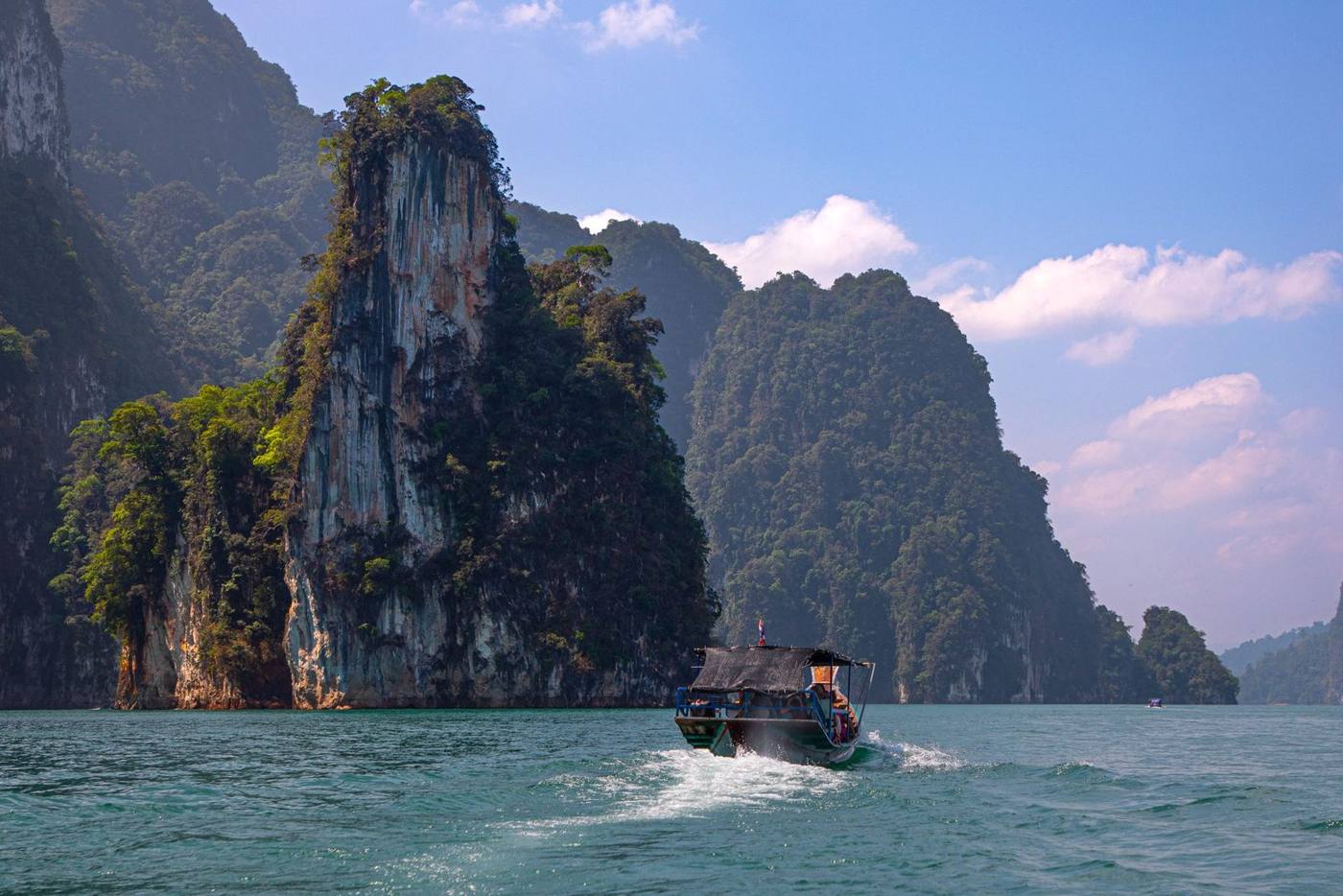
The lake is a reservoir created in the 1980s by a dam on the river. The water filled the valleys between the limestone mountains, and today the peaks rise from the green lake like islands, hundreds of metres high, covered in forest.
From Khao Sok village you drive to the dam, about an hour. Here you board a long tail boat that crosses the lake between the rock walls. The ride takes about an hour and is already a spectacle.
You reach the floating raft houses, bamboo and wooden houses built on rafts on the water, at the foot of the mountains. The rooms are simple, often with a mattress on the floor and a mosquito net, but the view is extraordinary. You swim straight off the platform.
In the afternoon take a kayak and paddle the bays around, in silence. You hear gibbons singing from the forest and see hornbills flying over the lake.
In the evening dinner on the raft with fish from the lake and vegetables. At night the sky is full of stars and the forest is noisy.
Sleep in the raft houses on the lake.
Practical tip: bring a head torch and charged batteries. On the lake there is electricity only a few hours a day.
- Day 7
Kayaking at dawn and Nam Talu cave
Today is the most adventurous day of the trip.
At dawn go out by kayak or boat: mist rises from the lake and the light hits the peaks one after another. It is the best time for animals. Gibbons sing from the treetops, hornbills pass overhead with their noisy wingbeats, and sometimes you see macaques on the shore.
After breakfast leave with the guide for Nam Talu cave. The boat takes you to the start of a forest path, from which you walk for about an hour to the cave entrance. Inside an underground river flows: you cross the cave on foot in the water, with helmet and torch, sometimes with water up to your chest, among bats, spiders and limestone formations.
It is a demanding visit but not technical. The cave closes in the rainy season, because the water can rise very fast: always follow the decision of the guide and the park.
In the afternoon return to the raft houses, rest and swim.
In the evening a last dinner on the lake.
Sleep in the raft houses on the lake.
Practical tip: for the cave wear light clothes and closed hiking sandals. Leave your phone in a waterproof bag or on the boat.
- Day 8
To Khao Lak and the Andaman Sea
Today you leave the forest and go down to the sea.
In the morning return by boat to the dam and continue by car westwards. In about two hours you reach Khao Lak, on the Andaman coast, north of Phuket.
Khao Lak is a long coast of golden sand beaches, with forest behind and few tall buildings. It is quieter than Phuket. The hotels are spread along the coast.
In December 2004 the Indian Ocean tsunami struck this coast with enormous force: thousands of people died in Khao Lak, residents and tourists. In the village of Bang Niang there is a police boat that the wave dragged almost two kilometres inland: today it is a memorial, with a small museum. Visit it with respect. Along the coast there are tsunami evacuation route signs.
In the afternoon walk on the beach and swim. At sunset the sun sinks into the sea.
In the evening try the yellow curry of the south with seafood, or steamed fish with lime and chilli.
Sleep in Khao Lak.
Practical tip: in the Andaman Sea, from May to October, waves are high and currents strong. Swim only where there are lifeguards or when the sea is calm.
- Day 9
Khao Lak: snorkelling or rest
Today is an open day by the sea, to spend as you like.
If you want to see the seabed, boats leave from Khao Lak for the Similan Islands, one of the most famous marine parks in Thailand, with clear water, granite rocks, corals and many fish. The park is usually open from mid October to mid May and closes in the monsoon season to protect the environment: check dates and prices. The number of visitors per day is limited. Closer are the Surin Islands, very beautiful for snorkelling.
An island trip leaves early in the morning by speedboat and returns in the afternoon. You make two or three snorkelling stops and land on a white beach.
If you prefer to rest, stay in Khao Lak: walk on the beach, have a Thai massage and visit the Ton Chong Fa or Sai Rung waterfalls, inland, small waterfalls in the forest.
In the evening look for the local night market, with street food stalls: skewers, pad thai, mango with sticky rice, fruit shakes.
Sleep in Khao Lak.
Practical tip: on the boat do not touch the corals and do not feed the fish. Use a sunscreen that respects the sea. Wear a shirt in the water, because the sun burns quickly.
- Day 10
Flight from Phuket to Bangkok and departure
On the last day you leave from Phuket airport, about an hour and a quarter from Khao Lak.
If the flight is in the afternoon, in the morning take a last walk on the beach or a last swim.
From Phuket you fly to Bangkok in just over an hour, and from Bangkok you take the international flight. Leave plenty of margin between the two flights: Bangkok airport is large and checks can be long. Alternatively, some international flights with a connection leave directly from Phuket.
If you have a night in Bangkok before the flight, use it for a dinner along the Chao Phraya River or a ride on the public boat that runs up the river past the temples.
What to take home: tea and coffee from the south, cashew nuts, black pepper, curry paste, soap and massage oils, silk and cotton fabrics.
This trip shows the Thailand of nature, the one many people do not see: wild elephants at sunset, caves, the oldest forest, a lake between the mountains and the Andaman Sea.
Practical tip: on domestic flights the included checked baggage is often small. Check the weight before leaving to avoid paying extra at the airport.
The best trip for those who travel for wildlife: Kui Buri is one of the most reliable places in Asia to see wild elephants, no-cost and at a distance. The nights on Cheow Lan lake are what stays with you. The drawback is the basic comfort of the floating bungalows and Khao Sok's humidity, even in the dry season. Nam Talu cave closes after rain, so check locally.
Before you go
- Documents and visa
- Passport valid for at least six months. Since 15 September 2026 many nationalities, including most EU citizens, enter without a visa for tourism for up to 30 days. Before each entry, within the three days beforehand, the no-cost Thailand Digital Arrival Card (TDAC) must be completed online on the official website.
- Health and vaccines
- No vaccines required arriving from Europe; ask your doctor about hepatitis A and typhoid. Dengue is present: use repellent. Do not drink tap water. Health insurance recommended. Emergencies: 191 police, 1669 ambulance, 1155 tourist police.
- Money and payments
- Baht. Cards accepted in cities and hotels; markets and small places need cash. ATMs charge a flat fee for withdrawals with foreign cards.
- Power sockets
- Types A, B, C and O, 220 volts: bring a universal adapter.
- Time zone
- UTC+7, no daylight saving time.
- Safety
- A safe country for travellers. Avoid the southernmost provinces near Malaysia and the border strip with Cambodia. Beware of tuk-tuk and gem scams, and of scooter traffic. Official advice: GOV.UK.
Information checked in November 2026 for Italian and EU citizens. Rules change: always check before you travel.
Variations
In 7 days: only Khao Sok, Cheow Lan Lake and Khao Lak, with a flight from Bangkok to Surat Thani.
In 14 days: add the Trang islands and Koh Lipe after Khao Lak, or Bangkok and Ayutthaya at the start.
Frequently asked questions
Do I need a visa?
Since 15 September 2026 Italian citizens enter without a visa for stays of up to 30 days. In the three days before arrival you fill in the TDAC online. Other nationalities should check their own rules.
When is the best time?
From November to April, the dry season on the Andaman side. From May to October it rains a lot, the Similan Islands close and Nam Talu cave is often not visited.
Do you really see elephants at Kui Buri?
Very often yes, but it is not certain: they are wild animals. Afternoon trips with the rangers give the best chances.
Indicative itinerary written by World Atlas. Before booking, check timetables, seasonal openings, documents and safety.
 10 daysEasy
The Trat Islands: Koh Chang, Koh Mak and Koh Kood
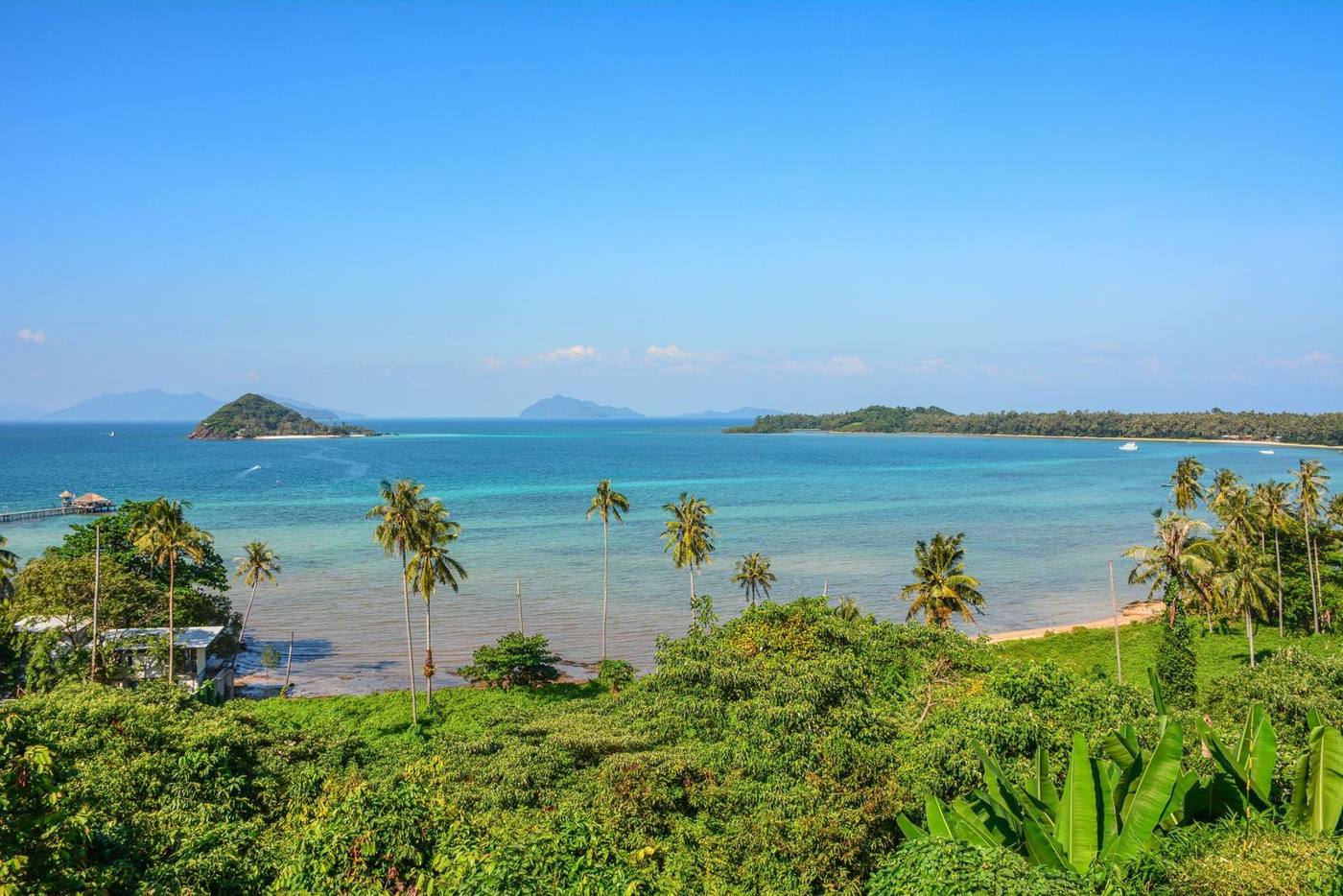
The eastern archipelago near Cambodia: forested hills on Koh Chang, calm closed to cars on Koh Mak, the beaches of Koh Kood, with a stop at the Chanthaburi gem market.
 5 daysEasy
Bangkok in depth
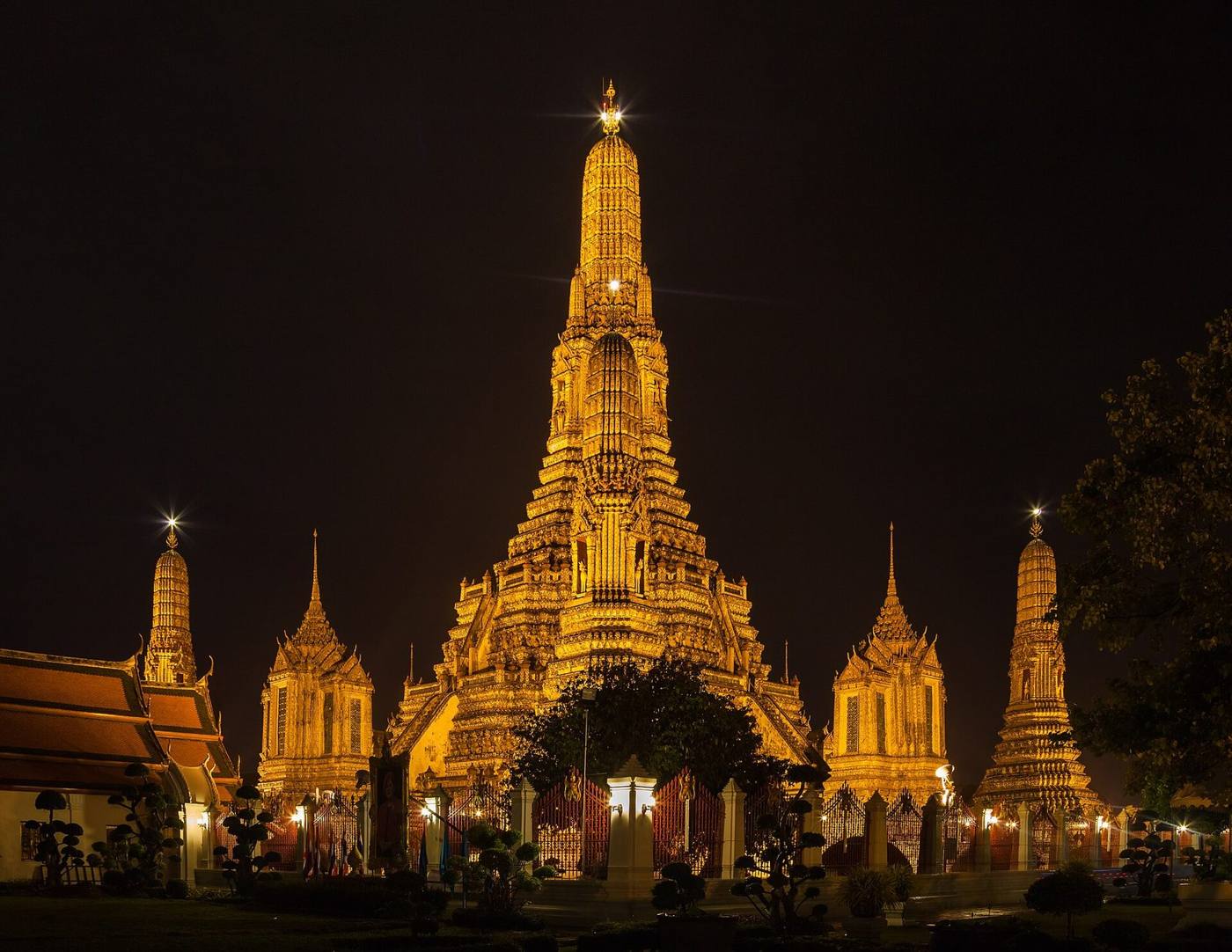
The capital at a gentle pace: the Grand Palace and the Emerald Buddha, Wat Pho and Wat Arun on the river, Chinatown and its street food, the Thonburi canals by boat, the Jim Thompson House, markets and rooftop terraces.
 5 daysEasy
Chiang Mai in depth and Doi Inthanon
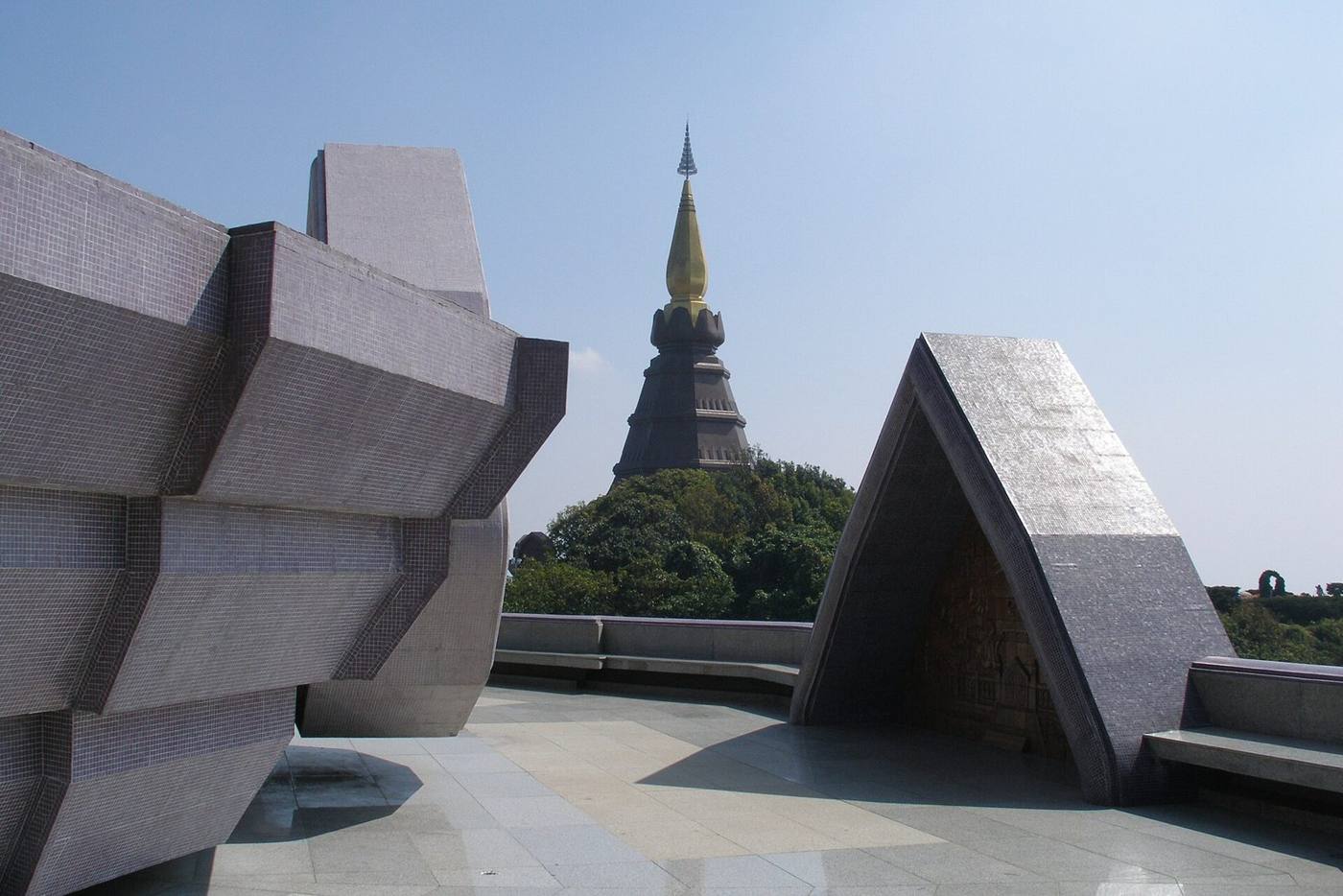
The northern capital: the walled old city and the temples of Wat Chedi Luang and Wat Phra Singh, Doi Suthep on the hill, night markets, a Thai cooking class and Doi Inthanon, the country's highest mountain, with waterfalls and royal pagodas.