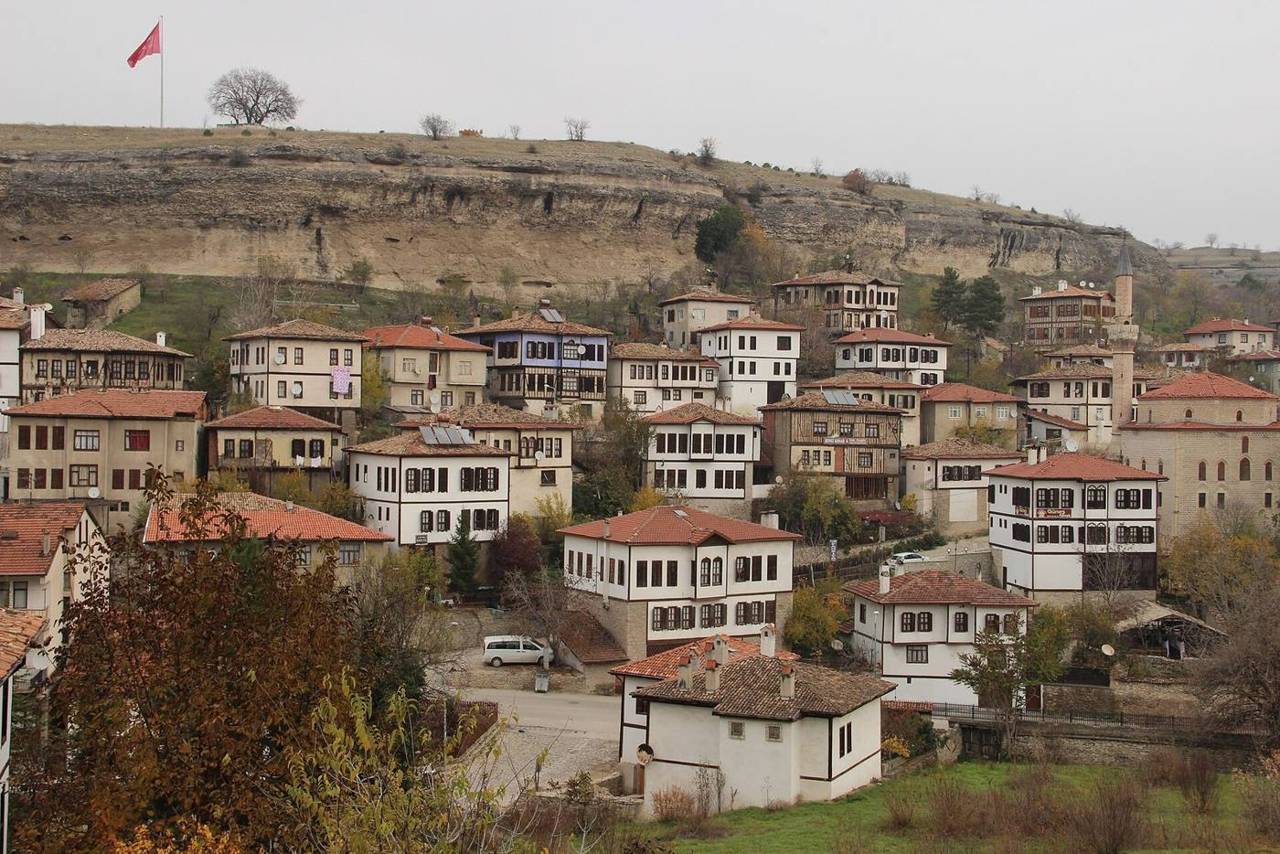
Safranbolu, Amasra and the Western Black Sea
A Turkey of Ottoman houses and forests: Safranbolu with its wooden mansions and caravanserais, a UNESCO World Heritage site, the Incekaya canyon, the Genoese port of Amasra with its sea castle, and the green Black Sea coast as far as Cide.
- Ankara
- Safranbolu
- Yörük Köyü
- Amasra
- Cide
Day by day
- Day 1
From Ankara to Safranbolu and a first evening among the Ottoman houses
The western Black Sea is a part of Turkey that few foreigners know: hills covered in forest, wooden villages, small fishing harbours and a green, rainy coast, far from the harsh light of the Mediterranean. Inland is Safranbolu, one of the best preserved Ottoman towns in the country, a UNESCO World Heritage Site since 1994. Turks love it and come here at weekends. In five days you discover it calmly and then go down to the sea at Amasra and along the coast to Cide.
From Ankara to Safranbolu is about three hours' drive north, first on a dual carriageway and then through hills and forests. There are also frequent coaches from Ankara's bus station and from Istanbul, in about six hours. For the coast, however, a car is very useful, so it is worth renting one.
In the afternoon, settle into one of the old Ottoman houses in the market quarter, the Çarşı, turned into guesthouses. They are houses of two or three floors, with a stone base and upper floors of wood and white plaster, closely set windows, red tiled roofs and rooms that all look alike, with low sofas along the walls and built-in cupboards that even hid the bathroom.
In the evening, walk through the steep cobbled lanes, among the workshops of blacksmiths and cobblers and the sellers of lokum, the jelly sweet the town is famous for, and of saffron, the spice that gave it its name.
Practical tip: at weekends and on holidays Safranbolu is full of Turkish visitors: if you can, arrive on a weekday and book your accommodation in advance.
- Day 2
Safranbolu, the Cinci Han and the village of Yörük
In the morning, visit the old town. Start at the Cinci Han, a large stone caravanserai from the seventeenth century, where merchants' caravans stopped with their camels and goods. It has an arcaded courtyard and more than fifty rooms; you can climb onto the roof, from which you see the whole old town, with its wooden houses, minarets and valley. Then go to the historic Turkish bath, the Cinci hamam, still in use, and to the mosque of Köprülü Mehmet Paşa, with its stone sundial in the courtyard.
Then climb Hıdırlık hill, with a small park and an Ottoman tomb, for the best view over the town. Go into one of the house museums too, such as the governor's house or the Kaymakamlar house, where the rooms are furnished as in the nineteenth century, with clothes, carpets and kitchens.
In the afternoon, drive for about a quarter of an hour to Yörükköy, the village of the Yörük, an ancient Turkmen nomadic people who settled here. The village is a small open-air museum: wooden houses even older than those of Safranbolu, an old communal laundry and the Sipahioğlu house, with painted rooms and carved wooden ceilings, which you visit with the family that owns it. The village women often sell homemade flatbreads and jams.
In the evening, try the local cooking: bükme, a pastry filled with meat, and sweets made with saffron.
Practical tip: the streets in the centre are steep and paved with uneven stones, so you need comfortable shoes and, in the rain, a lot of care.
- Day 3
The Tokatlı canyon and the Incekaya aqueduct
Today you stay around Safranbolu for some nature. A few kilometres from town the stream has carved the Tokatlı canyon, a narrow, deep gorge with rock walls covered in woods.
The first stop is the Incekaya aqueduct, an arched stone bridge across the canyon. Its foundations are probably Byzantine, but the present structure was rebuilt in the eighteenth century by a grand vizier born in Safranbolu, to bring water to the town. You can walk along the top, on a narrow walkway with a low parapet and a drop on both sides: anyone who suffers from vertigo can look at it from the path.
From here a path follows the rim of the canyon and then goes down towards the bottom, among trees, rocks and the sound of water: you can walk for an hour or two. Above the canyon, on the other side, there is a viewing terrace with a glass floor hanging over the void, very popular with Turkish visitors.
In the afternoon, visit the cave of Bulak Mencilis, about ten kilometres away, with stalactites, stalagmites and a walkway along an underground river. It is one of the longest caves in the region, open to the public only for part of its length.
In the evening, return to Safranbolu and enjoy your last dinner in town, perhaps on one of the terraces overlooking the roofs of the market quarter.
Practical tip: the cave has damp steps and a cool temperature all year, so bring a sweatshirt even in summer and check the opening hours, which may change with the season.
- Day 4
Amasra, the castle and the two harbours
In the morning, leave Safranbolu and drive north to Amasra, on the Black Sea coast, in about an hour and a half, passing through the town of Bartın. The road comes down from the hills to the sea through forests of chestnut and hazel: the region is one of Turkey's great hazelnut producers.
Amasra is built on a small peninsula with two harbours, one on each side, and an island linked by a bridge. It was a Greek colony, then Roman and Byzantine and, in the Middle Ages, a trading port of the Genoese, before passing to the Ottomans in 1460. The great castle walls remain, enclosing the upper part of the peninsula, with gates, towers and the carved Genoese coat of arms.
Enter the castle and walk among the houses inside the walls, in the Kaleiçi quarter, where there is also a Byzantine church turned into a mosque. Then cross the stone bridge to the island of Boztepe, with its lighthouse and views over the two harbours and the coast.
In the afternoon, stop at the small woodcarving workshops: Amasra is famous for handmade wooden objects, such as spoons, plates and chopping boards. The archaeological museum tells the long history of the town with statues and inscriptions.
In the evening, have dinner by the harbour with Black Sea fish, above all the anchovy, called hamsi, which in winter is eaten fried, baked or with rice, and with the well-known Amasra salad.
Practical tip: in summer Amasra is very busy with Turkish visitors at weekends, so book your room and arrive early to find parking.
- Day 5
The coast road to Cide and the return
Your last day, devoted to the coast road heading east, one of the most beautiful on the Black Sea. From Amasra the road climbs and drops along the cliffs, with constant bends, tunnels of trees and viewpoints over the sea, which here is a deep blue and often rough. Allow about two and a half hours to Cide without stops, but with stops it takes the whole morning.
On the way you pass Çakraz, with a shingle beach and a small harbour, and Kurucaşile, a village where for centuries shipwrights have built wooden boats by hand: if a yard is open, you can see the hulls being built on the shore. Further on is the bay of Gideros, a narrow, green inlet with calm water, one of the most photographed spots on the coast, where people stop for tea.
Cide is a small, quiet town with a long beach, a few pools and a seafront promenade. This is where the trip ends.
For the return you have two options: head back towards Ankara via Kastamonu, a town with a castle and old Ottoman houses, in about five or six hours, or go back towards Bartın and Safranbolu. If you have time, sleep in Kastamonu and drive back the next day.
Practical tip: the Black Sea is rainy even in summer and the coast road is narrow and winding, so drive in daylight and take your time. Italian citizens do not need a visa for short tourist stays; an electronic identity card valid for travel abroad is also enough to enter.
Quiet and little visited by foreigners, very popular with Turks at weekends. A car is needed. The Black Sea is rainy even in summer. Italian and most EU citizens need no visa for short tourist stays.
Before you go
- Documents and visa
- Passport, or for some EU citizens a national identity card; no visa for tourism up to 90 days in 180 for most EU nationalities.
- Health and vaccines
- No compulsory vaccines. Drink bottled water. Emergencies: 112.
- Money and payments
- Turkish lira. Cards work almost everywhere; state site tickets are set in euros but paid in lira at the day's rate.
- Power sockets
- Types C and F, 230 volts: the same round-pin sockets as much of Europe.
- Time zone
- UTC+3 all year: Turkey does not use daylight saving time.
- Safety
- The United States rates Turkey level 2, with level 4 within 10 km of the Syrian and Iraqi borders. Tourist areas are busy and calm. Official advice: GOV.UK.
Information checked in November 2026 for Italian and EU citizens. Rules change: always check before you travel.
Variations
In 3 days: Safranbolu and Yörükköy only, with the Tokatlı canyon, from Ankara or Istanbul.
In 8 days: after Cide, continue east to Sinop, the northernmost town in Turkey, and then go down to Amasya, with the royal tombs cut into the rock.
Frequently asked questions
When is the best time to go?
From May to September for the coast. Safranbolu is also lovely in autumn, with the colourful forests. In winter the coast is cold and rainy and some roads may have snow.
Do I need a car?
For Safranbolu, the coaches from Ankara and Istanbul are enough, but for the coast between Amasra and Cide a car is almost essential.
What documents do I need?
Italian citizens do not need a visa for short tourist stays. A passport or an electronic identity card valid for travel abroad is enough.
Indicative itinerary written by World Atlas. Before booking, check timetables, seasonal openings, documents and safety.
 5 daysModerate
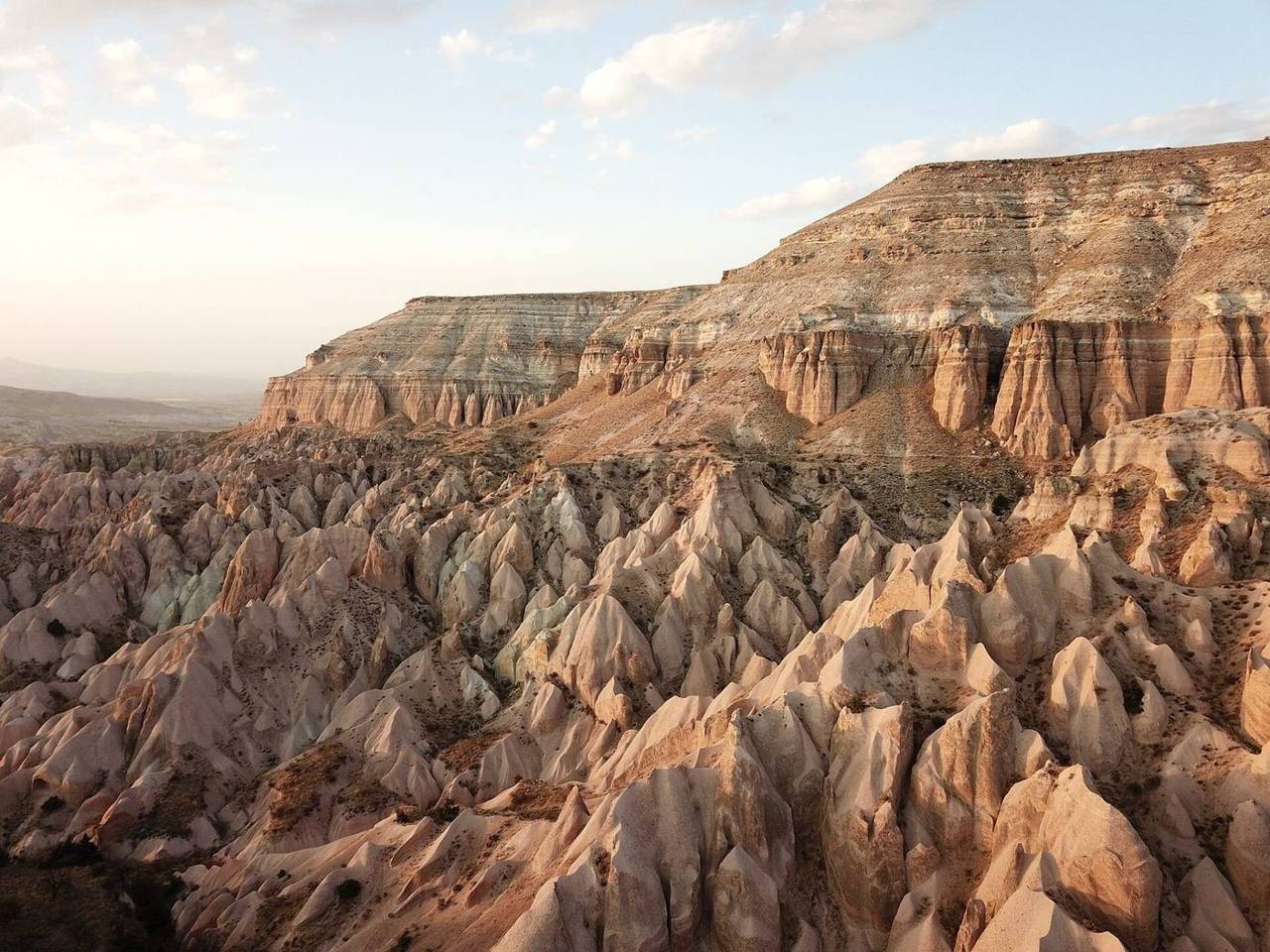
Cappadocia on foot
Cappadocia away from the coaches: the Red and Rose valleys at sunset, Pigeon Valley, the painted rock churches of Soğanlı, the Greek village of Mustafapaşa, the Ihlara valley along the river and Mount Erciyes in the background.
 5 daysEasy
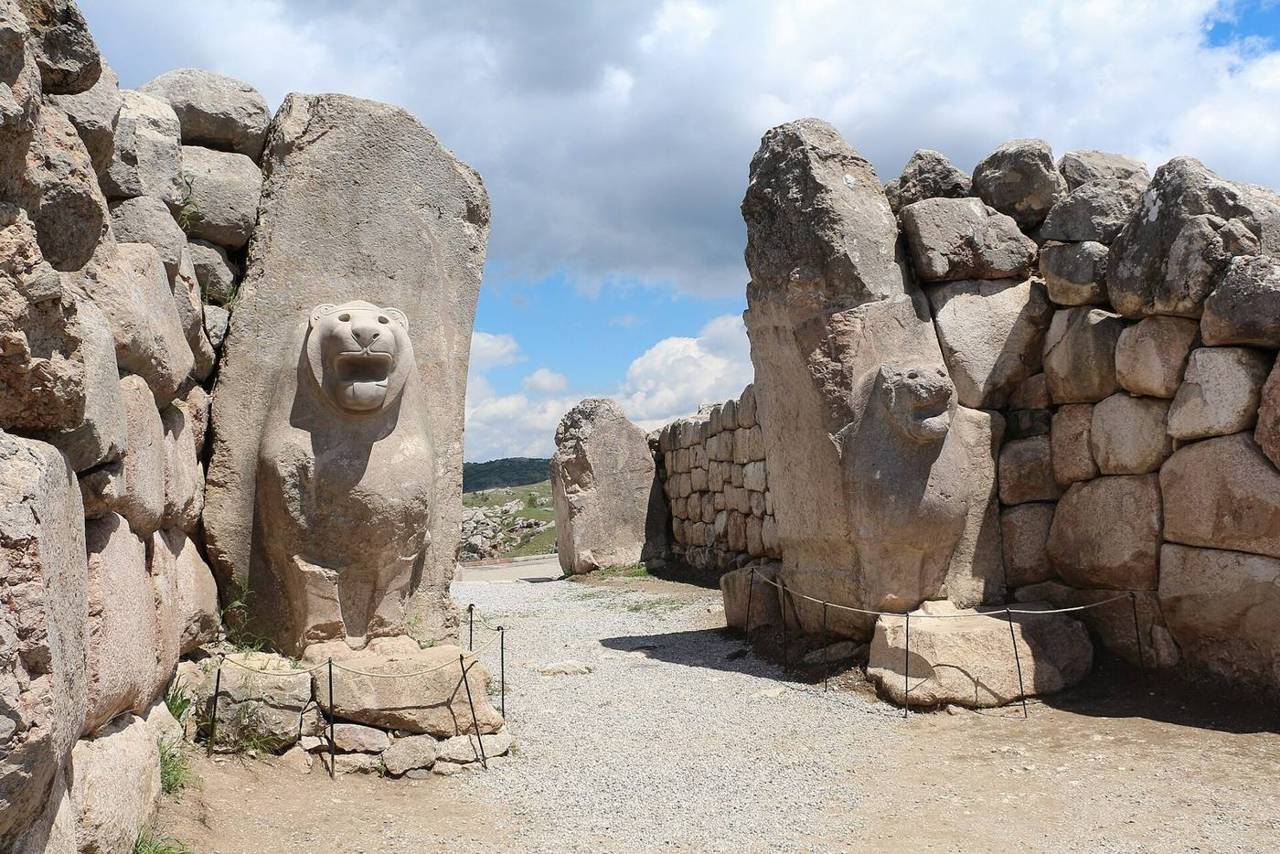
Ankara, Hattusa and Amasya
Anatolia of the Hittites and the kings of Pontus: the Museum of Anatolian Civilisations and Atatürk's mausoleum in Ankara, Hattusa, the Hittite capital and a UNESCO World Heritage site, with the Lion Gate and the rock sanctuary of Yazılıkaya, and Amasya with its royal tombs carved into the cliff above the river.
 5 daysEasy
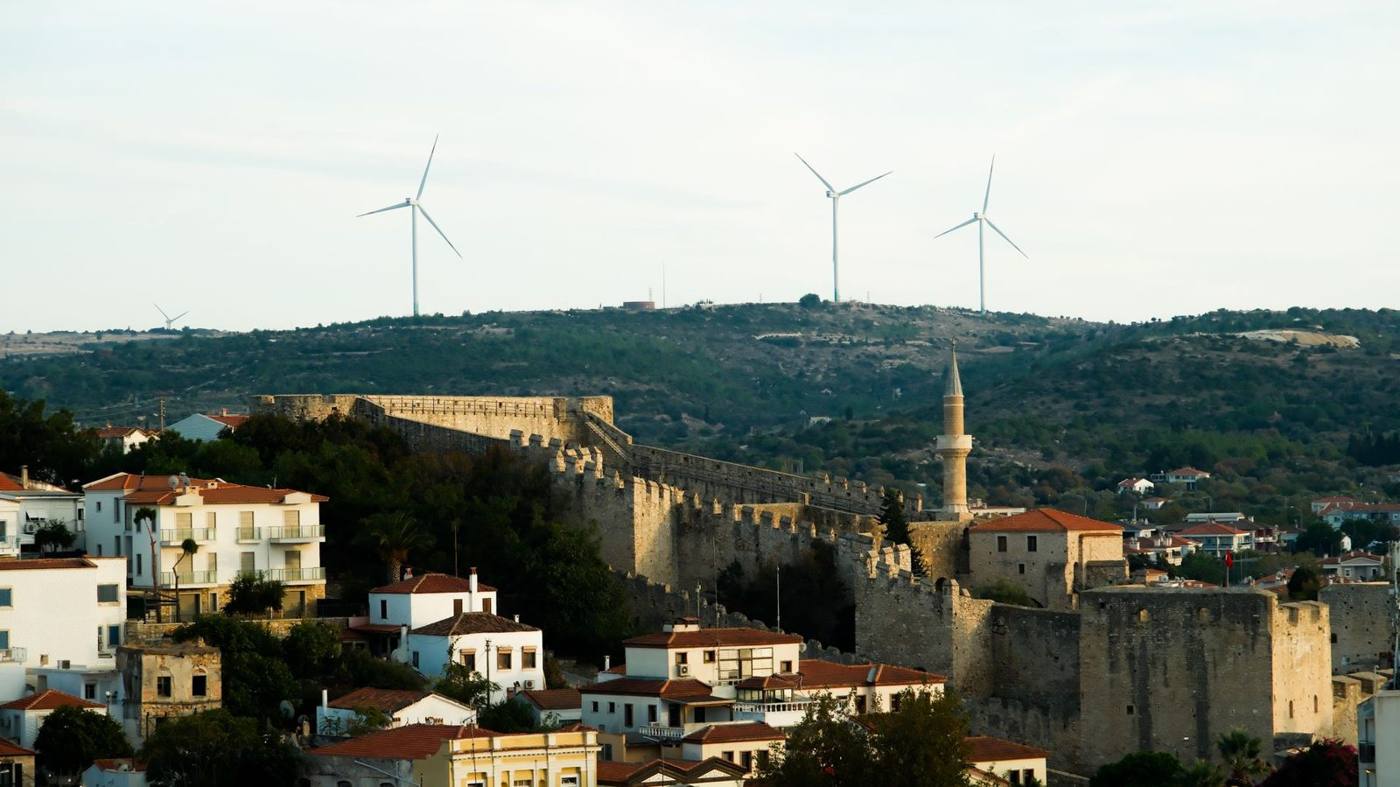
İzmir, Alaçatı and Çeşme
The most modern Aegean: İzmir with the Kemeraltı bazaar, the Kordon seafront and the ancient agora, then the Çeşme peninsula with Alaçatı's stone houses, windmills, wind for surfing, the beaches of Ilıca and the Greek island of Chios half an hour away by ferry.