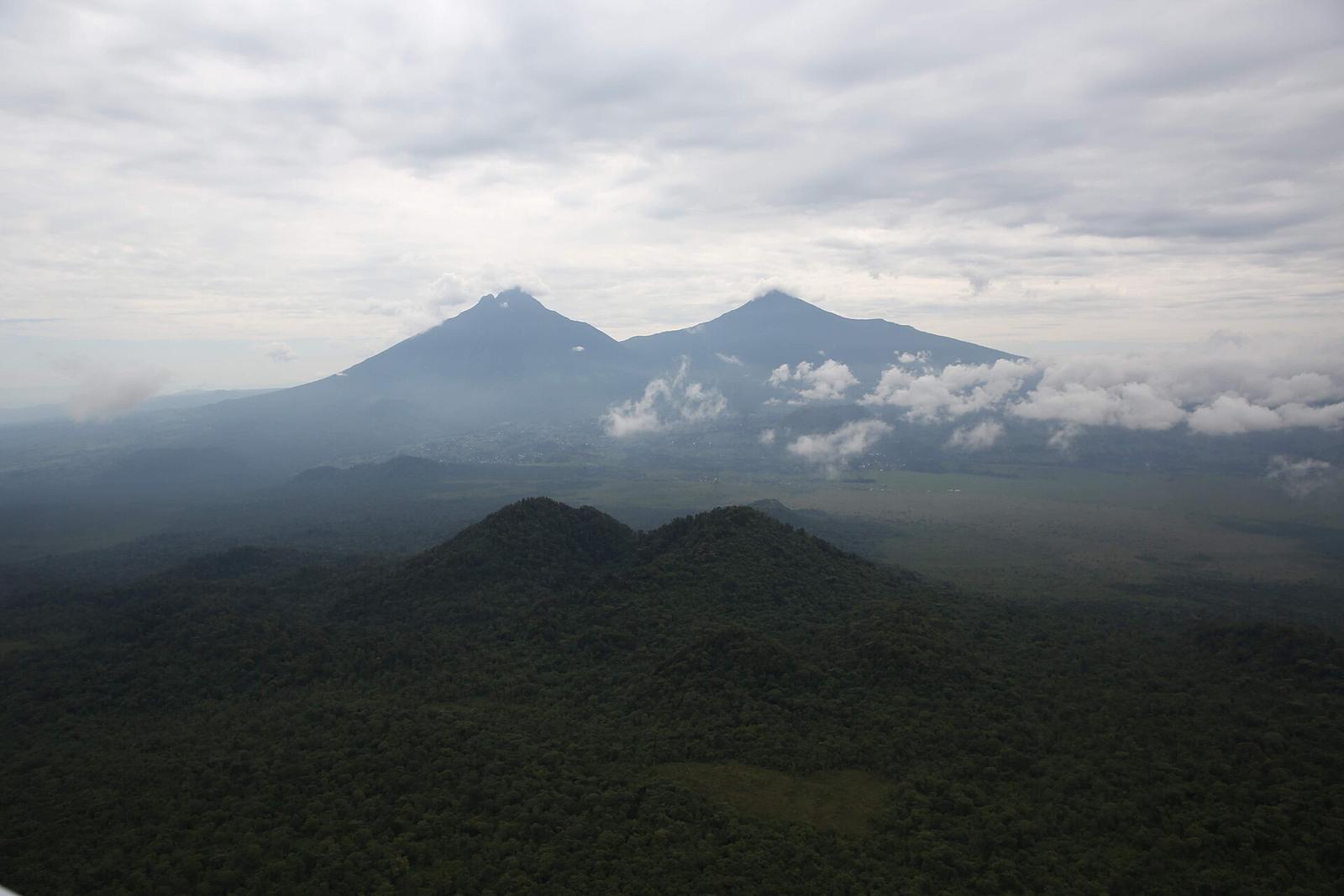
Uganda and Rwanda: gorillas, volcanoes and forests
Uganda's parks and then Rwanda: the Virunga volcanoes with gorillas and golden monkeys, Lake Kivu and Nyungwe forest with its canopy walk.
- Entebbe
- Murchison Falls
- Kibale
- Queen Elizabeth
- Bwindi
- Volcanoes
- Lake Kivu
- Nyungwe
- Kigali
Day by day
- Day 1
Arrival in Entebbe
This nineteen-day trip joins the parks of Uganda and the volcanoes of Rwanda: rhinos, the falls of the Nile, chimpanzees, mountain gorillas, golden monkeys, Lake Kivu and Nyungwe Forest. You travel by road in a 4x4 with a driver guide.
Before you go: Italian citizens need a passport valid for at least six months from the date of arrival and a visa, applied for only online on the official Ugandan government website, visas.immigration.go.ug, a few weeks before departure: print the approval letter and show it on arrival. Beware of unofficial websites that charge more. If you plan to visit Kenya or Rwanda too, consider the East Africa Tourist Visa. Carry the international yellow fever vaccination certificate, which may be checked on arrival and by airlines, and ask your doctor about malaria prevention. For Rwanda you need a visa, issued on arrival or applied for online on the official Irembo portal; plastic bags are banned in Rwanda. Other nationalities should check their own rules. Some areas on this trip are close to borders or places where the situation changes often: check your government's travel advice before booking and again before you leave.
You land at Entebbe airport, on the shore of Lake Victoria, the largest lake in Africa. Entebbe is smaller and quieter than Kampala and is the easiest base for the first night. If you arrive early, walk in the botanical gardens by the lake, with huge trees, colobus monkeys and many birds. In the evening try lake tilapia with matoke, the mash of green bananas.
Sleep in Entebbe.
Practical tip: change some dollars into Ugandan shillings straight away and buy a local SIM card with your passport. Mobile phone payments are very common and will be useful in the villages too.
- Day 2
Ziwa Rhino Sanctuary
Today you leave Lake Victoria and head north, towards Murchison Falls. Early in the morning you cross the outskirts of Kampala, where traffic can be very slow, then the road opens up between maize fields, banana groves and small markets along the roadside.
After about three or four hours you reach Ziwa Rhino Sanctuary. Rhinos had disappeared completely from Uganda because of poaching and the wars of the 1970s and 1980s. Here, inside a fenced area guarded day and night, a small group of white rhinos was reintroduced and now breeds: it is the only place in the country where you see them in the wild.
The visit is on foot, with a ranger who follows the animals' tracks through the bush savannah. You move in silently to a few dozen metres, when the ranger thinks it is right, and watch the rhinos grazing or resting in the shade. It feels very different from a game drive: you hear them breathing and the sound of grass being torn up. Check prices and times.
The sanctuary is also home to antelopes, monkeys and many birds. If there is time, ask for a walk in the swamp to look for the shoebill, a large and strange bird with an enormous beak.
In the afternoon continue towards Masindi or to the edge of Murchison Falls National Park.
Sleep near the sanctuary or towards Murchison.
Practical tip: for the rhino walk wear neutral colours and closed shoes, and always listen to the ranger. If you are told to stop or to stand behind a tree, do it at once.
- Day 3
Murchison Falls: the Nile in the gorge
Today you enter Murchison Falls National Park, the largest in Uganda, crossed by the Victoria Nile on its way to Lake Albert. The road passes through Budongo Forest, home to chimpanzees and many birds, then drops towards the river.
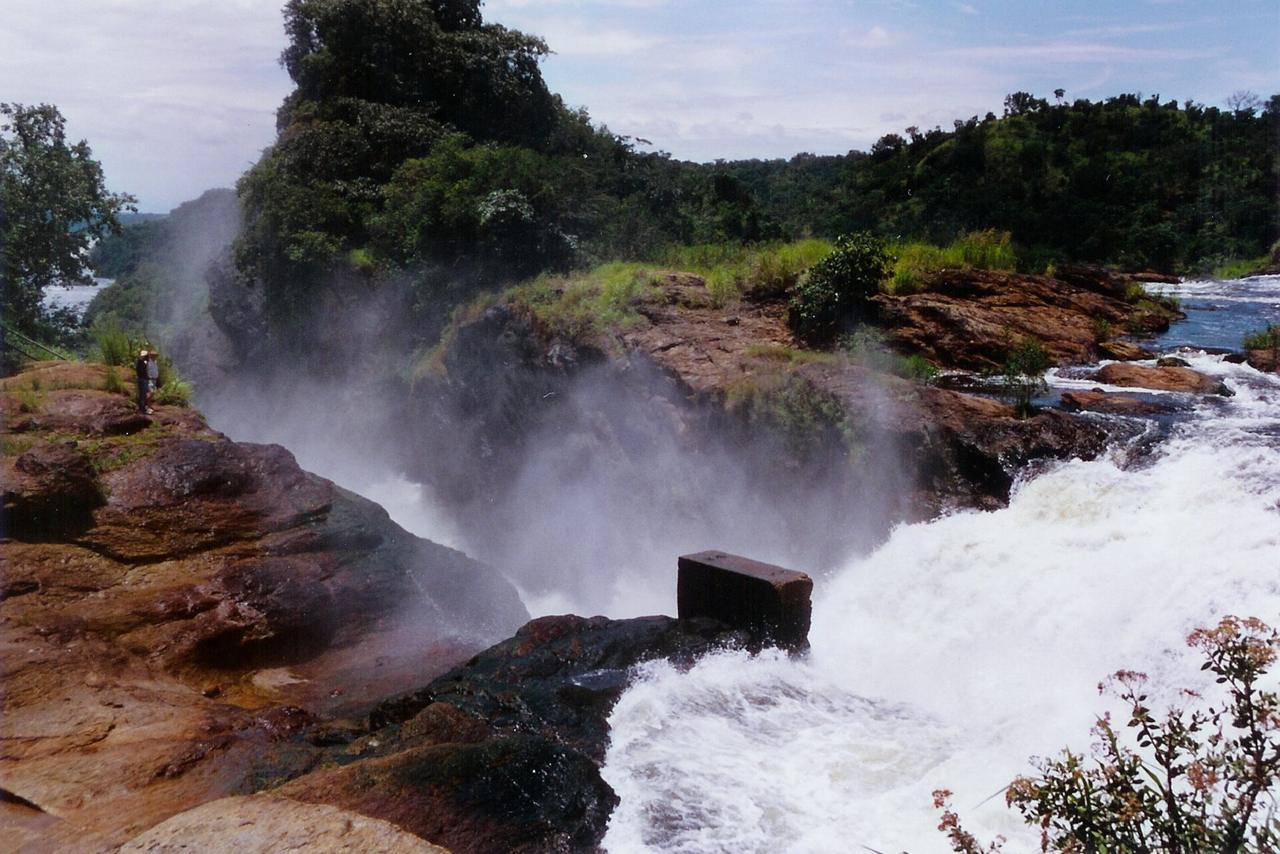
The first stop is the top of the falls. Here the Nile, tens of metres wide, is forced into a crack in the rock about seven metres wide and plunges down with tremendous force. The noise is deafening, the air is full of spray, and on sunny days small rainbows form above the gorge. A short path takes you to the best viewpoints: always stay behind the barriers, because the rocks are wet and slippery.
In the afternoon take the boat trip on the Nile, which goes upstream to a short distance from the foot of the falls. Along the banks you see groups of hippos, very large Nile crocodiles, buffaloes and elephants coming down to drink. Birds are everywhere: herons, kingfishers, colourful bee-eaters and fish eagles calling from the trees. Check prices and times for the boat.
At sunset the light turns orange on the water and the first night sounds drift in from the savannah.
Sleep in the park or near the river, for two nights.
Practical tip: on the boat sit on the right-hand side on the way up to have the banks closer, and keep your camera in a waterproof bag. Near the falls the spray reaches the deck.
- Day 4
Game drive on the north bank of the Nile
Today is your savannah safari day. You set off at dawn and cross the Nile on the Paraa ferry, which carries vehicles and people to the north bank. It is a short crossing but a striking one, with hippos snorting a few metres away.
On the north bank the savannah is open, dotted with palms and acacias, and slopes gently down to the delta where the Nile enters Lake Albert. This is home to Rothschild's giraffes, tall and elegant, large herds of buffaloes, elephants, warthogs and many antelopes, such as the Uganda kob, which appears on the national coat of arms, and the hartebeest. With some luck your guide finds lions, which often rest in the shade in the middle of the day.
Around midday go back to the river for lunch and to rest during the hottest hours.
In the afternoon, for another view, you can take a second boat trip towards the delta, where the papyrus swamps are shoebill country, or a walk with a ranger to the top of the falls, starting from below. Check prices and times for the activities.
In the evening, around the fire, listen to your guide's stories about the park, which lost most of its animals in past decades and then slowly recovered thanks to protection.
Sleep in the park or near the river.
Practical tip: in Uganda's parks the best game drives are early in the morning and late in the afternoon. Bring binoculars for each person: with only one pair in the vehicle you miss a lot of wildlife.
- Day 5
Towards Kibale and Fort Portal
Today is a long transfer day, heading south along the western side of the country. The road goes through Hoima and then down between green hills, tea plantations and villages to Fort Portal, the town at the gateway to Kibale Forest. Allow most of the day in the car, with stops for lunch and to stretch your legs.
The landscape changes slowly: the savannah of Murchison gives way to higher, wetter land planted with bananas, coffee and tea. On clear days the Rwenzori Mountains appear on the western horizon, often hidden in cloud.
Around Fort Portal there are dozens of volcanic lakes, formed inside ancient craters. If you arrive a little early, ask your guide to stop at a viewpoint over the lakes, where green or blue water fills the bottom of the hollows, surrounded by fields and forest. At sunset the light on the hills is very beautiful.
In the evening your guide explains how the next day's chimpanzee trek works: the meeting time, the rules of behaviour and what to carry in your daypack. The permit must be booked in advance with the Uganda Wildlife Authority: check prices and availability.
Sleep near Fort Portal or on the edge of Kibale Forest, for two nights.
Practical tip: on long drives in Uganda the roads are good but often busy with lorries, motorbikes and animals. Avoid travelling after dark and ask your driver to keep to a sensible speed, even when you are running late.
- Day 6
Kibale and the chimpanzees
Today you enter Kibale Forest, one of the places in Africa with the most primate species in such a small area. About thirteen species of primate live here, including a large population of chimpanzees, some groups of which are used to people.
The meeting point is the rangers' station early in the morning. After a short briefing you set off on foot into the forest, in small groups, with an armed guide for safety. The trail is mostly flat but can be muddy. You often hear the chimpanzees before you see them: they let out very loud calls that carry through the trees, and drum with their hands on the buttress roots of the great trees.
When you find them, you can stay with them for about an hour, a few metres away. You watch them eating fruit high in the trees, coming down to the ground, playing, grooming each other or resting. Each group has its own hierarchy, and the guides know many individuals by name.
In the afternoon take a walk in the Bigodi wetland, run by the village community just outside the park. On wooden boardwalks and trails through the papyrus you look for red colobus, red-tailed monkeys and many birds, including the great blue turaco. Part of the money supports the village's schools and projects. Check prices and times.
Sleep near Kibale.
Practical tip: for the chimpanzee trek wear long trousers tucked into your socks against ants, a light waterproof jacket and shoes with a good grip.
- Day 7
Queen Elizabeth and the Kazinga Channel
Today you drive south to Queen Elizabeth National Park, between Lake George and Lake Edward. The road passes near the Katwe craters and crosses the Equator, marked by a small monument by the roadside: a photo stop is almost compulsory.
Queen Elizabeth is a very varied park, with open savannah, woodland, volcanic craters, lakes and swamps. In the afternoon take the boat trip on the Kazinga Channel, the stretch of water about thirty kilometres long that links the two lakes. It is one of the places in Africa with the most hippos: you see them by the dozen, their heads just above the water. Along the banks come elephants, buffaloes wallowing in the mud and crocodiles sunning themselves on the sand.
The birdlife is extraordinary: pelicans, cormorants, storks, goliath herons and fish eagles. Check prices and times for the boat.
At sunset go back to camp and listen to the hippos coming ashore to graze during the night.
This park lies close to the border with the Democratic Republic of the Congo: always follow the instructions of your guide and the rangers, keep to the main tracks and check the situation every day.
Sleep in or near the park, for two nights.
Practical tip: in the park camps, never walk alone after dark. Hippos leave the water to graze and are very dangerous: ask the staff to walk you to your room with a torch.
- Day 8
Kasenyi and the lions of Ishasha
Today you leave at dawn for a game drive on the Kasenyi plains, in the north of the park. It is the best time to see predators: the lions are still active after the night and stalk the herds of Uganda kob that gather here in large numbers. If you are lucky you also see a leopard, a spotted hyena or a mongoose crossing the track.
After the drive visit the salt lakes in the nearby craters, where salt has been extracted by traditional methods for centuries. The coloured pans and the hard manual work of the salt gatherers tell of a very tough life.
In the afternoon head south to the Ishasha area. This is home to the famous tree-climbing lions: in the hot hours they lie on the branches of the big fig trees, to stay cool and away from insects. Seeing them is not guaranteed, but your guide knows their favourite trees and checks them one by one. Around you there are also topi, kob and buffaloes, in a wilder landscape with fewer vehicles.
Ishasha is right by the border with the Democratic Republic of the Congo: always stay with your guide, do not leave the tracks and follow the rangers' instructions.
Sleep in the Ishasha area or in the north of the park.
Practical tip: tree-climbing lions need patience. Switch off the engine, stay quiet and wait: often a lion moves, yawns or climbs down from the branch, and that is the moment for the best photo.
- Day 9
Bwindi: towards the impenetrable forest
Today you leave the savannah and climb towards Bwindi Impenetrable Forest. The road rises through very steep hills, farmed right to the top with tea, bananas and potatoes, and then enters the forest mist. The landscape is completely different from the last few days: dense green, giant ferns, lianas and moss-covered trees.
Bwindi is a UNESCO World Heritage Site and protects one of the oldest and richest forests in East Africa. About half of the world's remaining mountain gorillas live here, along with chimpanzees, monkeys and hundreds of species of birds and butterflies. The park is divided into sectors, each with its own starting village and gorilla families: your guide takes you to the one on your permit.
In the afternoon take a short walk in the village near the entrance, or a forest trail along a stream to a small waterfall, with a park guide. It is a good way to get used to the altitude and the terrain.
In the evening pack your bag for the next day and go to bed early. The gorilla permit must be booked many months in advance with the Uganda Wildlife Authority: check prices and availability.
Sleep near Bwindi, for two nights.
Practical tip: in Bwindi the nights are cool and it often rains. Bring a jumper, a waterproof jacket and a head torch, because the lights go out early in the villages, and dry your boots by the fire.
- Day 10
An hour with the mountain gorillas
Today is the most awaited day of the trip. Early in the morning you reach the rangers' station, where you hear the rules: stay in your group, speak quietly, keep your distance and do not eat near the animals. Each gorilla family can receive only a small group of visitors a day, and the time close to the animals lasts about an hour.
Then you enter the forest with the rangers and porters. Trackers set off first and follow the family's trail from where it slept, keeping in touch with your guide by radio. The walk can take one hour or many hours, on steep and muddy paths, sometimes cut with a machete through the vegetation.
When you arrive, you leave bags and sticks behind and move in slowly. You see the silverback, huge and calm, the females with babies clinging to their backs, the youngsters playing and rolling in the leaves. You hear their low grunts and the sound of snapping branches. It is a very intense encounter, one that stays with you for a long time.
In the afternoon, if you still have energy, visit a village community that tells the story of the peoples who lived in the forest before the park was created. Choose a visit run by the community itself.
Sleep near Bwindi.
Practical tip: hire a porter from the village even if your bag is light. They help you on the steepest stretches, and for many local families it is an important source of work.
- Day 11
From Uganda to Rwanda
Today you change country. From Bwindi the road descends towards Kisoro, in south-west Uganda, between terraced hills and the first outlines of the Virunga volcanoes on the horizon. On clear days you see the cones of Muhabura, Gahinga and Sabyinyo, which mark the border between Uganda, Rwanda and the Democratic Republic of the Congo.
From Kisoro you reach the Rwandan border and go through exit formalities for Uganda and entry formalities for Rwanda. Keep your passport and Rwandan visa ready; it is best to apply for the visa online before leaving on the official Irembo portal. Remember that plastic bags are banned in Rwanda: luggage may be checked at the border. After the border you drive on the right, while in Uganda you drive on the left.
In less than an hour you reach Musanze, the town at the foot of the volcanoes. Rwanda surprises you at once: spotless roads, tidy villages and hills farmed down to the last metre. It is no accident it is called the land of a thousand hills.
In the afternoon walk through Musanze market, full of potatoes, beans, fruit and colourful fabrics, then drive up to Kinigi, the village near the entrance to Volcanoes National Park.
Sleep in Kinigi or Musanze, for three nights.
Practical tip: change any leftover Ugandan shillings before the border, as they are hard to change in Rwanda. Rwanda uses the Rwandan franc, and recent US dollar notes are accepted almost everywhere.
- Day 12
Volcanoes: the golden monkeys
Today you enter Volcanoes National Park, the Rwandan side of the Virunga range. Here you have chosen not to do a second gorilla trek, which in Rwanda has a much more expensive permit, but to spend your time with the golden monkeys, which live only in this part of Africa.
The meeting point is the park headquarters in Kinigi early in the morning, where the rangers divide visitors into small groups. From there you drive to the starting point and walk through potato fields to the stone wall that marks the park boundary. Then you enter the bamboo forest where the golden monkeys live.
They are lively monkeys, with golden orange fur on their backs and black faces. They leap from one bamboo stem to the next, eat shoots and leaves and chase each other non-stop. As with the gorillas, you stay with them for about an hour. The walk is usually shorter and easier than the gorilla trek, but the ground is often muddy.
In the afternoon rest or take a bike ride through the villages around Kinigi with a local guide, to see farming family life and the brick houses up close.
Park permits are sold by the Rwandan tourism authority, the Rwanda Development Board, on its official portal: check prices and times.
Sleep in Kinigi or Musanze.
Practical tip: golden monkeys move very fast through the bamboo. Set your camera to a fast shutter speed and use burst mode, and keep the lens dry under a cloth.
- Day 13
Dian Fossey's grave
Today you walk to Karisoke, the research camp founded in 1967 by the American zoologist Dian Fossey, between the Karisimbi and Bisoke volcanoes. The camp's name itself joins the names of the two volcanoes.
Dian Fossey spent almost twenty years studying mountain gorillas and fighting poaching. Her book Gorillas in the Mist made the world aware of these animals and of the risk of losing them. In December 1985 she was murdered in her cabin, and the case has never been fully solved. She is buried here, next to Digit, the gorilla she was closest to, and the other gorillas in the camp's small cemetery.
The meeting point is in Kinigi early in the morning. The path starts in the fields, enters the park and climbs into the damp forest, among moss-covered trees, nettles and lianas. The climb is demanding because of the altitude, around three thousand metres, and the mud, but it is not technical. Along the way you sometimes see buffaloes or hear gorillas, but this is not a gorilla visit.
At the camp the foundations of the cabins remain, along with the graves and their small headstones. The rangers tell the story of the place and of the gorilla research that still goes on today.
In the afternoon return to Kinigi and rest.
Sleep in Kinigi or Musanze.
Practical tip: bring gardening gloves for the nettles and gaiters against the mud. A walking stick, often available at the trailhead, helps a lot on the way down.
- Day 14
Towards Lake Kivu
Today you leave the volcanoes and drive west down to Lake Kivu, one of Africa's great lakes, on the border between Rwanda and the Democratic Republic of the Congo. The road drops through tea plantations and farmed hills, and in a little over an hour the great expanse of water comes into view.
The first stop is Rubavu, the town on the northern shore of the lake, with tree-lined avenues, palms and dark sand beaches. Walk along the lakefront, watch the fishermen mending their nets and, if the weather is good, have a swim at one of the town's beaches.
Rubavu sits right on the border with Congo, and the Congolese city of Goma is next door. Stay on the Rwandan side, follow local advice and do not go near the border.
In the afternoon continue south on the road that follows the lake shore, with endless bends, fishing villages, coffee plantations and beautiful views over the inlets. You reach Karongi, also called Kibuye, a quiet little town overlooking bays and small green islands.
In the evening try sambaza, small fried lake fish eaten whole, with a local beer or a banana drink.
Sleep in Karongi, for two nights.
Practical tip: the lakeside road is beautiful but full of bends. If you get car sick, take something before leaving and ask your driver to stop at a few viewpoints along the way to break up the journey.
- Day 15
The islands of Lake Kivu
Today is a slow day on the water. In the morning board a boat with a local skipper for a tour of the islands off Karongi. The lake is deep and calm, with dark water and green hills that drop steeply to the shore.
One of the most visited islands is home to a large colony of fruit bats: thousands of animals hanging from the branches, which take off together at the slightest noise. On another, quieter island you can walk among the trees and see cows grazing. On the way back stop near the fishermen, who work from boats lashed together with long eucalyptus poles.
In the afternoon rest, read or have a swim. After days of trekking and safaris, this break on the lake is precious.
If you want to understand the country's history better, visit the genocide memorial in the area, which remembers the victims of 1994 in this region. It is a place of silence and respect.
Towards evening, at sunset, watch the fishermen setting off in their boats: at night they fish with lamps, and along the lake you see the lights on the water. Their rhythmic singing keeps time with the oars and carries all the way to the shore.
Sleep in Karongi.
Practical tip: for the boat trip always ask for a life jacket and agree on the price and the length of the trip beforehand. Check prices and times, and take a hat and sunscreen, because the sun on the water is strong.
- Day 16
Towards Nyungwe Forest
Today you head south along Lake Kivu, then climb into the mountains to Nyungwe Forest. The road is long and winding, constantly rising and falling between hills, villages and tea plantations of an intense green.
Nyungwe is one of the oldest and best preserved mountain forests in Africa. It covers a large range of uplands in the south-west of the country and is Rwanda's water tower: from its hills flow streams that end up in the Nile and Congo basins. It is home to many primate species, including chimpanzees, hundreds of bird species and a great many orchids.
You arrive in the Gisakura area, on the edge of the forest, where the most beautiful tea plantations are. In the afternoon take a walk between the rows, with women picking leaves into baskets carried on their backs. With a guide you can also visit a factory and see how the leaves become tea.
In the evening the temperature drops quickly, because you are above two thousand metres. Have a jacket and something warm ready.
Permits for park activities are sold by the Rwandan tourism authority on its official portal. Book them in advance: check prices and times.
Sleep on the edge of Nyungwe Forest, for two nights.
Practical tip: it rains often in Nyungwe, even in the dry season. Always keep a waterproof jacket and a rain cover for your daypack in your bag, and pack a dry change of clothes for the evening.
- Day 17
The canopy walkway and the colobus monkeys
Today you explore Nyungwe Forest on foot. In the morning you set off with a park guide to the walkway suspended in the treetops, one of Rwanda's symbols. The path drops into the valley among giant ferns, orchids and very tall trees to the start of the bridge.
The walkway hangs tens of metres above the ground, over a deep valley. As you walk you feel it sway slightly under your feet and you see the forest from above, as birds and monkeys see it. If you suffer from vertigo, look ahead and not down: the railings are solid and the guide is with you. Check prices and times.
In the afternoon take another trail to look for Angola colobus, black and white monkeys with long tails, which live in very large groups in Nyungwe. Watching them leap between the trees, their white fur opening like a cape, is quite a sight. Along the way you also hear the call of turacos and see other monkeys, such as L'Hoest's monkey.
If you prefer, you can do the chimpanzee trek, which starts at dawn and needs a separate permit. The chimpanzees here move around a lot, and finding them is harder than in Kibale.
Sleep on the edge of Nyungwe Forest.
Practical tip: on Nyungwe's trails the climbs on the way back are steep. Start slowly, drink often and take a packed lunch for the longer walks.
- Day 18
Kigali and the memorial
Today you leave the forest and reach Kigali, the capital, in about five or six hours by road. On the way you pass through Huye, the university town of the south, where you can stop at the national ethnographic museum, with objects and stories about traditional life in Rwanda. Check prices and times.
In the afternoon, in Kigali, visit the Gisozi genocide memorial. More than two hundred and fifty thousand victims of the 1994 genocide against the Tutsi are buried here, from the time when hundreds of thousands of people were killed in about a hundred days. The museum tells of the origins of the violence, the days of the massacre and the rebuilding of the country, with photographs, objects and testimonies. One room is dedicated to the children who were killed, with their photos and the things they loved. It is a painful visit, but necessary to understand Rwanda today. Take the time you need and sit quietly in the gardens.
In the evening explore a livelier part of the city, such as the Nyamirambo district, with its colourful houses, mosques and small eateries. Try goat skewers, called brochettes, with chips and grilled bananas.
Kigali is a clean and orderly city, but use common sense all the same: in the evening take taxis or motorbike taxis with a helmet, booked through your accommodation.
Sleep in Kigali.
Practical tip: dress modestly at the memorial and do not photograph people in reflection. Leave a small donation if you wish to support its work of remembrance.
- Day 19
Departure from Kigali
Today is departure day. If your flight is in the afternoon, spend the morning at Kimironko market, the largest in the city, with fruit, vegetables, woven baskets and colourful African fabrics. If you want a souvenir, look for the traditional Rwandan baskets with pointed lids, woven by hand by women. Then go to Kigali International Airport, a short distance from the centre.
In nineteen days you have crossed two different but neighbouring countries. In Uganda you walked among the rhinos of Ziwa, felt the force of the Nile at Murchison Falls, saw the giraffes and elephants of the north bank, the chimpanzees of Kibale, the hippos of the Kazinga Channel and the tree-climbing lions of Ishasha. In Bwindi you spent an hour with a family of mountain gorillas. In Rwanda you followed golden monkeys through the bamboo, climbed to Dian Fossey's grave, rested by Lake Kivu, walked above the treetops of Nyungwe and understood the country's history at the Kigali memorial.
It is a trip of primates, forests and long mountain roads. It makes sense to see the gorillas in Bwindi, where the permit costs less, and to give Rwanda over to golden monkeys, lakes and forests.
When to go: the best months are June to September and December to February, the drier seasons, when the trails are less muddy. Book permits many months ahead.
Practical tip: security checks at Kigali airport are thorough. Arrive at least three hours early and do not carry plastic bags in your luggage.
The ultimate primate trip. A gorilla permit in Rwanda costs $1,500, almost double Uganda's: that's why it pays to see the gorillas in Bwindi and the golden monkeys in Rwanda. Rwanda is spotless, safe and well organised: a surprise.
Before you go
- Documents and visa
- Passport valid for at least six months from your arrival date and a compulsory visa, applied for only online on the official Ugandan government website, visas.immigration.go.ug, before leaving: beware of unofficial sites. The East Africa Tourist Visa also covers Kenya and Rwanda. Carry an international yellow fever vaccination certificate.
- Health and vaccines
- Yellow fever vaccine: carry the international certificate, which may be checked on arrival and by airlines. Malaria risk throughout the country: ask your doctor about antimalarials. Outside Kampala health facilities are limited: you need insurance covering medical costs and repatriation. Drink only bottled water. Emergencies: 999 or 112.
- Money and payments
- Ugandan shilling. Bring recent US dollar notes in good condition, to change at banks or exchange offices. Cards work in towns and at many tourist places; mobile phone payments are everywhere.
- Power sockets
- Type G, 240 volts, the same as in the UK.
- Time zone
- UTC+3 all year.
- Safety
- Areas near the borders with the DRC and South Sudan and the Karamoja region call for caution and up to date information. Outside towns avoid travelling after dark, do not show valuables and in the parks always follow rangers and guides. Official advice: GOV.UK.
Information checked in November 2026 for Italian and EU citizens. Rules change: always check before you travel.
Variations
In 14 days: drop Ziwa, Lake Kivu and one day in Nyungwe, and go straight from Bwindi to Volcanoes and then Kigali.
In 22 days: add Lake Bunyonyi after Bwindi and a few days of savannah in Akagera National Park, in eastern Rwanda.
Frequently asked questions
Is it better to see the gorillas in Uganda or in Rwanda?
The gorilla encounter is similar in both countries, but in Rwanda the permit costs much more. That is why this trip has the gorillas in Bwindi and the golden monkeys in Rwanda. Check prices and availability on the official websites.
How tiring is this trip?
It is a moderate trip: the treks to the gorillas and to Dian Fossey's grave can be steep and muddy, and there are many long drives. You need to be reasonably fit, but you do not need mountaineering training.
Do I need a car with a driver?
Yes, it is the most common and recommended option: distances are long, you change driving side at the border and the guide knows the parks, rules and permits. Choose a registered organiser with reviews you can check.
Indicative itinerary written by World Atlas. Before booking, check timetables, seasonal openings, documents and safety.
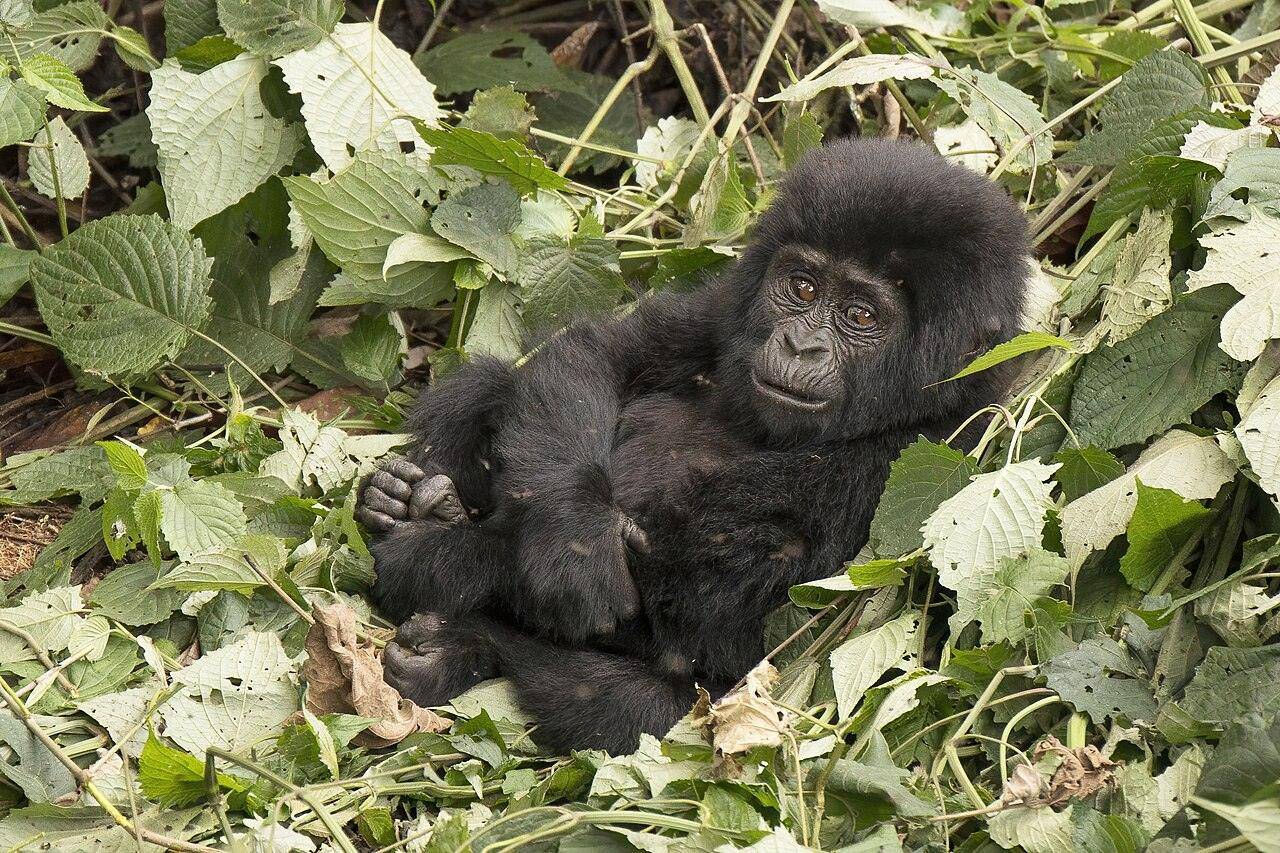 7 daysModerate
Bwindi gorillas and Kibale chimpanzees
A week focused on primates: an hour with mountain gorillas and a chimpanzee trek in the forest.
 15 daysModerate
Complete Uganda: Murchison, primates and lakes
From the Nile falls to Lake Bunyonyi: savannah, rhinos, chimpanzees, gorillas and the green landscapes of the Pearl of Africa.
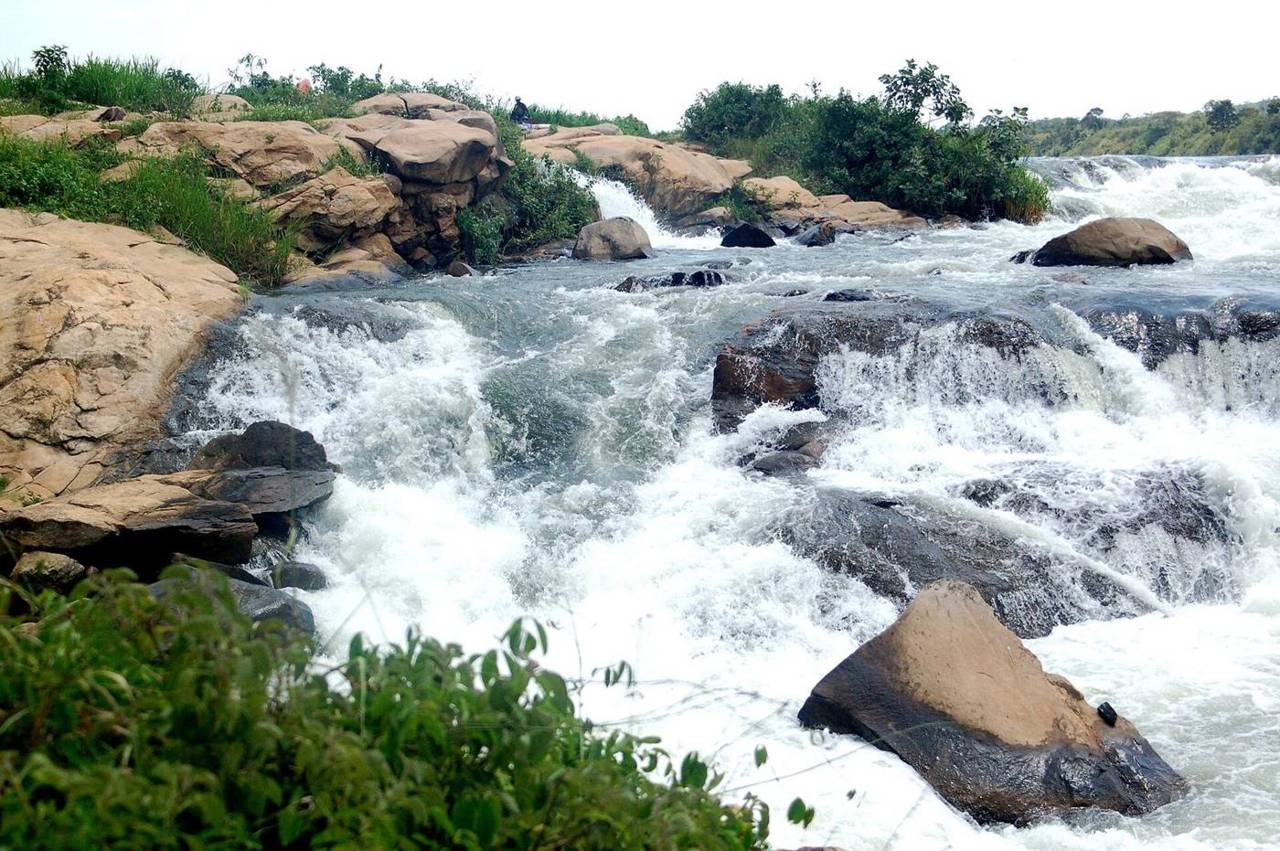 12 daysModerate
Uganda express: the Nile, the Mountains of the Moon and gorillas
The source of the Nile at Jinja, the chimpanzees of Kibale, the tree-climbing lions of Queen Elizabeth and an hour with a gorilla family in Bwindi.