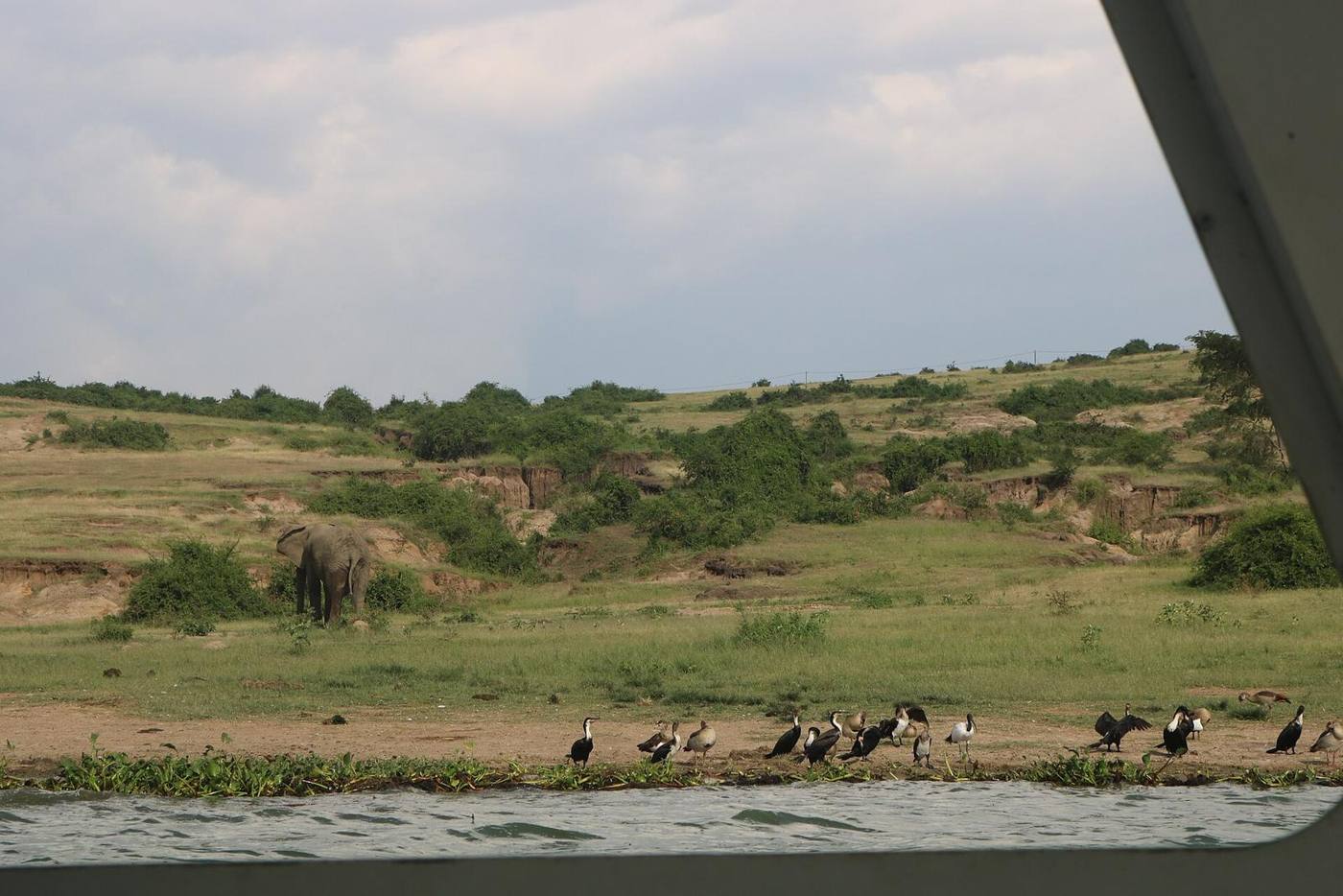
Uganda and Tanzania: from the Mountains of the Moon to the Serengeti
Uganda's forests and primates, with a trek on the slopes of the Rwenzori, and then Tanzania's great savannahs.
- Entebbe
- Rwenzori
- Kibale
- Queen Elizabeth
- Bwindi
- Arusha
- Serengeti
- Ngorongoro
Day by day
- Day 1
Arrival in Entebbe
This nineteen-day trip joins the two sides of East Africa: in Uganda the forests, the primates and a trek on the slopes of the Rwenzori, the Mountains of the Moon; in Tanzania the great savannahs of Tarangire, the Serengeti and the Ngorongoro Crater. You travel in a 4x4 with a driver guide, with a flight between the two countries.
Before you go: Italian citizens need a passport valid for at least six months from the date of arrival and a visa, applied for only online on the official Ugandan government website, visas.immigration.go.ug, a few weeks before departure: print the approval letter and show it on arrival. Beware of unofficial websites that charge more. If you plan to visit Kenya or Rwanda too, consider the East Africa Tourist Visa. Carry the international yellow fever vaccination certificate, which may be checked on arrival and by airlines, and ask your doctor about malaria prevention. For Tanzania you need a visa: check the current rules on the official Tanzanian immigration website. Other nationalities should check their own rules. Some areas on this trip are close to borders or places where the situation changes often: check your government's travel advice before booking and again before you leave.
You land in Entebbe, on the shore of Lake Victoria. The town is quiet and green, and easier than Kampala for the first night. If you have time, walk along the lake at sunset, when the fishermen come back in their boats.
Sleep in Entebbe.
Practical tip: buy a local SIM card with your passport straight away and change some dollars into Ugandan shillings. In the Rwenzori villages cards do not work, so carry enough cash for tips and small purchases.
- Day 2
Towards the Mountains of the Moon
Today you cross Uganda from east to west, towards the Rwenzori Mountains. You set off early to avoid the Kampala traffic, then the road runs between farmed hills, banana groves and tea plantations, passing through Fort Portal. It is a long day in the car, about seven or eight hours with stops.
The Rwenzori is a mountain range about one hundred and twenty kilometres long, on the border with the Democratic Republic of the Congo. Ancient geographers spoke of snowy mountains at the source of the Nile, and that is where the name Mountains of the Moon comes from. The highest summit, Margherita Peak, reaches 5,109 metres and is the third highest peak in Africa. Rwenzori Mountains National Park is a UNESCO World Heritage Site.
In the afternoon you reach the Kasese area and climb up to the villages at the foot of the mountain, home to the Bakonzo people, who farm the slopes up to very high altitudes. Here you meet the trekking guide and porters, check your gear and pack for the next two days.
The Rwenzori lies close to the border with Congo: walk only with official park guides, follow their instructions and check the situation before setting off.
Sleep at the foot of the Rwenzori.
Practical tip: in your trekking bag pack a waterproof jacket, a warm layer, a hat, gloves, a head torch, worn-in boots and a dry bag for spare clothes. Leave the rest of your luggage at the base.
- Day 3
Climbing into the Rwenzori forest
Today the trek begins. After registering at the park entrance you set off on foot with your guide and porters, passing the last fields and Bakonzo homes. Then you enter the mountain forest, damp and dense, where the path follows a stream for a long way.
The trail climbs, steeply in places, over roots, rocks and mud. The forest is full of life: tree ferns, mosses, lianas and gigantic trees. With some luck you see black and white colobus, blue monkeys, or hear the call of the Rwenzori turaco, with its red and green wings. You cross wooden bridges over the streams and small clearings with views down the valley.
In the afternoon you reach the first hut, at around 2,600 metres, a simple building with bunk beds, where you spend the night with the group. The porters do the cooking and prepare a hot meal. At sunset, if the sky is clear, you see the higher ridges turn pink above the forest.
Permits for the trek and the huts are booked through the Uganda Wildlife Authority or a registered organiser: check prices and availability.
Sleep in the hut.
Practical tip: it is cold in the hut at night. Bring a warm sleeping bag, change out of wet clothes at once and drink plenty, even if you do not feel thirsty, because the climb and the altitude dehydrate you more than you think.
- Day 4
Descent and Fort Portal
Today, if your legs and the weather allow, take a short climb above the hut early in the morning with your guide, to see how the vegetation changes with altitude: bamboo, giant heather draped in lichen and, on the best days, the first views over the valleys. The giant plants the Rwenzori is famous for, such as lobelias and groundsels several metres tall, grow higher up, on the later days of the longer treks.
Then the descent begins, down the same path. Going down on mud and roots is often harder than going up: go slowly, place your feet carefully and use poles. You reach the villages early in the afternoon, tired but happy.
Before leaving, say goodbye to your guide and porters and thank them: for many Bakonzo families the work on the mountain is an important source of income. A tip, given directly to the people, is much appreciated.
In the afternoon continue north to Fort Portal, about an hour and a half by road, on the edge of Kibale Forest. A hot shower and a comfortable bed are waiting for you at last, among green hills and crater lakes.
In the evening, to recover your energy, try luwombo, a stew of meat or groundnuts steamed in banana leaves.
Sleep near Fort Portal or Kibale.
Practical tip: after the trek, put your boots and clothes out to dry straight away. Stuff your boots with newspaper: by the next morning they will be almost dry.
- Day 5
Kibale and the chimpanzees
Today you enter Kibale Forest, famous for its large chimpanzee population and its variety of primates: about thirteen species live here. Some chimpanzee groups are used to people, which makes it possible to watch them up close.
The meeting point is the rangers' station at dawn. After the briefing on the rules you set off in a small group with a guide. Compared with the Rwenzori the walk is easy and almost flat, but the ground can be wet. The guides listen for the chimpanzees' calls, which carry a long way, and follow the direction of the sound.
When you find the group you can stay with them for about an hour. Chimpanzees are our close relatives, and watching them is striking: they use their hands as we do, look at each other, quarrel and make up, and the young play under their mothers' eyes. Sometimes they come down to the ground and walk a few metres from the path.
In the afternoon walk through the Bigodi wetland, run by the local community, where you see other monkeys and many colourful birds, or take a drive among the crater lakes around Fort Portal, with views over the hills and the tea fields. Check prices and times.
The chimpanzee permit must be booked in advance with the Uganda Wildlife Authority: check prices and availability.
Sleep near Kibale.
Practical tip: do not carry food in sight during the trek and do not use a flash. If a chimpanzee comes close, stand still and follow your guide's instructions.
- Day 6
Queen Elizabeth National Park
Today you drive south to Queen Elizabeth National Park, at the foot of the Rwenzori, between Lake George and Lake Edward. On the way you cross the Equator, marked by a ring by the roadside, and pass a field of extinct volcanic craters, some filled with water.
Queen Elizabeth is one of Uganda's most varied parks: savannah, acacia woodland, papyrus swamps, lakes and forest, with more than six hundred bird species recorded. In the afternoon take the boat trip on the Kazinga Channel, which links the two lakes. From the boat you see huge numbers of hippos up close, elephants drinking, buffaloes lying in the water and crocodiles on the bank. Birds are everywhere, from pelicans to kingfishers. Check prices and times.
On the way back watch the sunset over Lake Edward and the outline of the Rwenzori, if the clouds allow: two days ago you were walking on its slopes.
This park lies close to the border with the Democratic Republic of the Congo: always follow your guide and the rangers, stay on the main tracks and ask for up to date information every day.
Sleep in or near the park, for two nights.
Practical tip: animals pass through the park camps at night too. After sunset do not walk alone and ask the staff to walk you with a torch, because hippos on land are dangerous and move faster than you would expect.
- Day 7
Kasenyi and Ishasha
Today you set off at dawn for a game drive on the Kasenyi plains, in the north of the park. Large herds of Uganda kob graze here, and the lions follow them closely. In the early morning the light is soft, the animals are active and your chances of seeing predators are higher. Look out for hyenas, warthogs and eagles perched in the trees too.
After a lunch break head south to the Ishasha area. The road crosses the central part of the park, with fishing villages on the lake and wide stretches of savannah. Ishasha is famous for its tree-climbing lions, a rare behaviour: in the hottest hours they rest on the branches of the big fig trees. Your guide checks the trees one after another, and if you are lucky you see a lion stretched out with its paws dangling in the air.
Ishasha also has topi, kob, buffaloes and elephants, and far fewer vehicles than the north. The atmosphere is wilder and the silence is broken only by birds.
Ishasha lies right by the border with Congo: move only with your guide, stay on the tracks and follow the rangers' instructions.
Sleep in the Ishasha area or in the northern part of the park.
Practical tip: for photos of lions in trees bring a telephoto lens or powerful binoculars. The animals are often high up among the leaves, and you need patience to wait for the right moment.
- Day 8
Towards Bwindi
Today you leave the savannah and climb towards Bwindi Impenetrable Forest. The road winds up through very steep hills, terraced right to the top, with tea plantations, banana trees and small villages. The higher you go, the cooler and damper the air becomes, and mist often wraps the summits.
Bwindi is one of the most important places in the world for mountain gorillas: about half of those that remain live here. The forest is very old and very rich, with ferns, lianas, towering trees and hundreds of species of birds and butterflies. It is a UNESCO World Heritage Site.
In the afternoon take a walk through the village near the park entrance with a local guide. You see how tea and bananas are grown, how banana beer is made and how families live on the edge of the forest. Choose a visit organised by the community, where the money stays in the village.
In the evening pack your bag for the next day: water, a packed lunch, a waterproof jacket, gloves and your permit. The gorilla permit must be booked many months ahead with the Uganda Wildlife Authority: check prices and availability.
Sleep near Bwindi, for two nights.
Practical tip: if you have a cold or a fever, tell the rangers. Gorillas can catch our illnesses, and anyone who is ill cannot join the visit. It is better to lose a permit than to put a whole family of gorillas at risk.
- Day 9
The mountain gorillas
Today is gorilla day. Early in the morning you reach the rangers' station for the briefing: each family receives only a small group of visitors a day, you must keep your distance and the time close to the animals lasts about an hour.
Then you set off into the forest with the rangers and porters, following directions from the trackers who have found the family. The walk can be short or take many hours, on steep and slippery slopes, among branches and lianas. After the Rwenzori your legs are ready.
When you arrive, you leave your bag and sticks and move in quietly. The silverback sits among the leaves, chewing calmly and watching you. The females nurse their babies, the youngsters roll and chase each other. A little one comes closer out of curiosity and its mother pulls it back with a gesture. You hear their low rumbles, which they use to communicate. Time flies and the hour is over far too soon.
You return to the rangers' station, where you receive a trekking certificate. In the afternoon rest or take a short trail to a waterfall in the forest with a guide.
Sleep near Bwindi.
Practical tip: wear long trousers, long sleeves and light gloves, because the forest has nettles and thorns. Hire a porter: they help you on the climbs and give work to local families, and they will gladly carry your camera bag too.
- Day 10
Back to Entebbe
Today you head back towards Entebbe, to close the Ugandan part of the trip. You have two options. The first is the road: a whole day in the car, nine or ten hours, across the south-west of the country through Mbarara and Masaka. The second is a small domestic flight from one of the airstrips near Bwindi to Entebbe, in about an hour and a half, which saves time and effort. Check prices and times.
If you go by road, stop at the Equator near Kayabwe, where a monument marks the line between the two hemispheres and there are craft stalls. Along the way you see herds of Ankole cattle, with their enormously long horns, a symbol of the south-west of the country.
You reach Entebbe in the late afternoon. In the evening rest and repack your bags for the next day's flight: separate the dirty trekking clothes and check that you have your documents for Tanzania.
If you have time, have a rolex for dinner, Uganda's most famous street food: an omelette rolled in a chapati, with tomatoes and onion.
Sleep in Entebbe.
Practical tip: on long road transfers, avoid travelling after dark. Ugandan roads at night are poorly lit and busy with lorries and motorbikes, and an accident far from the towns is hard to deal with. Leave early so that you arrive with daylight to spare.
- Day 11
Flight to Tanzania
Today you leave Uganda and fly to Tanzania, to Kilimanjaro International Airport, between Moshi and Arusha. Depending on the airline and the day, the flight may be direct or have a stop, often in Nairobi or Dar es Salaam. Book ahead and check prices and times.
Before the flight check your documents for Tanzania again: the visa, a valid passport and, if needed, the yellow fever vaccination certificate, which may be requested from travellers arriving from a country at risk, such as Uganda. Rules can change, so check the official website and your government's travel advice.
On clear days, from the window, you see the summit of Kilimanjaro, the highest mountain in Africa, at almost six thousand metres. On arrival you meet your safari guide and in about an hour you reach Arusha, the base town for the northern parks, at the foot of Mount Meru.
In Tanzania you travel in a 4x4 with a pop-up roof, so you can stand to watch the animals. Your guide explains the programme for the coming days and the park rules.
In the evening try nyama choma, grilled meat, with ugali, the white maize porridge, and a fresh fruit juice.
Sleep in Arusha.
Practical tip: keep your medicines, documents and a change of clothes in your hand luggage: with connections, suitcases can arrive late, and you do not want to start the safari without your essentials.
- Day 12
Tarangire, the park of baobabs
Today you leave Arusha early, heading south-west, and in about two hours you reach Tarangire National Park. Pay the entrance fee or let your guide do it: check prices and times.
Tarangire is the park of baobabs, huge and ancient trees with swollen trunks that can live for centuries. In the middle of the savannah they look like motionless giants, and some have bark scarred by elephants, which strip it to eat the water-rich inner layer.
The Tarangire River crosses the park, and in the dry season, from June to October, it becomes the only source of water in the area. Animals gather here in large numbers: above all elephants, which you see in big herds, with calves walking between the legs of the adults. You also see zebras, wildebeest, giraffes, buffaloes, impalas and, with some luck, lions and leopards.
Tarangire is also a paradise for birds: hundreds of species have been recorded, including weavers, hornbills and bustards.
In the late afternoon leave the park and drive to the Mto wa Mbu or Karatu area, near Lake Manyara.
Sleep near Lake Manyara.
Practical tip: Tarangire has tsetse flies, which bite and are attracted to dark colours, especially blue and black. Wear light clothes, beige or khaki, and bring insect repellent. Keep the windows closed when your guide tells you to, especially in the wooded areas.
- Day 13
Lake Manyara
Today you visit Lake Manyara National Park, at the foot of the Rift Valley escarpment, which rises steeply for hundreds of metres above the plain. The park is small but very varied, and can be seen well in a day.
At the entrance you go into a dense green forest, fed by groundwater springs that flow out of the escarpment. Large troops of baboons live here, along with vervet monkeys and elephants moving between the trees. Further on the forest opens onto acacia woodland and grassy plains that reach down to the lake shore.
Lake Manyara is salty and shallow, and its surface changes a lot with the seasons. When there is water it attracts flamingos, pelicans, storks and a great many other birds. Near the hot springs you often see hippos. The park is also known for lions that sometimes climb trees, although seeing them is rare. Check prices and times.
In the afternoon, if you like, take a walk in the village of Mto wa Mbu, where many different Tanzanian peoples live, with banana fields, rice paddies and a market.
Sleep in the Karatu area or near Lake Manyara.
Practical tip: Karatu and Mto wa Mbu have the last cash machines and shops before the Serengeti. Take out the cash you need and buy water, sunscreen and spare batteries. In the parks it is hard to find anything, and prices are much higher.
- Day 14
Towards the Serengeti
Today you cross the Ngorongoro highlands and descend towards the Serengeti. The road climbs through damp forest to the crater rim, where you stop at the viewpoint: below you lies the great bowl, which you will visit at the end of the safari. Then the road drops towards the plains, past Maasai villages and herds.
On the way stop at Olduvai Gorge, one of the most important places in the world for the study of human origins. Archaeologists found very old hominin fossils and stone tools here. A small museum tells the story of the discoveries and the research. Check prices and times.
After Olduvai you enter the Serengeti, one of the most famous parks in the world, with about fifteen thousand square kilometres of plains, hills and rivers. The name comes from the Maasai language and means endless plain. Your first hours in the park are thrilling: the savannah stretches as far as the eye can see, with groups of gazelles, zebras and wildebeest, and lone acacia trees.
In the late afternoon take your first game drive towards the central Seronera area, rich in wildlife all year round.
Sleep in the Serengeti, for three nights.
Practical tip: the road to the Serengeti is unpaved and dusty. Keep your camera in a closed bag and bring a scarf or a mask to cover your nose and mouth, and a cloth to clean the lenses at the end of the day.
- Day 15
The predators of Seronera
Today is a full day of game drives in the central Serengeti, around the Seronera River valley. You set off at dawn, with breakfast and a packed lunch, to make the most of the best hours.
Seronera is famous for big cats. Lions live in large prides and often rest on the granite outcrops called kopjes, which rise from the plain like islands. Leopards spend their days on the branches of acacias and willows along the river: your guide looks for them by watching for tails hanging from the trees. Cheetahs prefer the open plains, where they hunt gazelles at great speed.
Along the river you also see hippos, crocodiles, giraffes, elephants, hyenas and jackals. The guides talk to each other by radio, and when someone spots a rare animal many vehicles move to the same area.
The Serengeti is the heart of the great migration, the circular movement of more than a million wildebeest together with zebras and gazelles. Where the herds are changes with the seasons and the rains: ask your guide where they are at the time of your trip.
Sleep in the Serengeti.
Practical tip: in the Serengeti the animals always have right of way. Ask your guide to switch off the engine near animals and not to leave the tracks, and keep your voice down: silence will let you see much more, and the animals will stay calm and close.
- Day 16
On the trail of the migration
Today you follow the migration or explore another area of the Serengeti, depending on the season. From December to March the herds are usually on the southern plains, where the wildebeest calves are born. Between June and July they move west into the western corridor and cross the Grumeti River. From July to October they are often in the north, near the Mara River. Your guide knows the latest movements and decides the route.
When you find the migration the spectacle is enormous: thousands of wildebeest in lines, walking and grazing, the constant noise of their calls, zebras mixed in with the herd and predators following the herds. Near the rivers the crocodiles wait for the animals to cross.
If the migration is far away, do not worry: the Serengeti is rich in wildlife all year round. Explore the kopjes, look for rhinos in the protected areas or enjoy the plains and acacias at sunset.
If you wish, at dawn you can take a hot air balloon flight over the savannah, with breakfast on landing. It is an expensive experience: check prices and conditions.
In the evening, around the fire, listen to the sounds of the night: hyenas, lions and the calls of the wildebeest.
Sleep in the Serengeti.
Practical tip: in the Serengeti tented camps never leave your tent at night. If you need anything, use the whistle or torch to call the staff, who will walk with you.
- Day 17
The Ngorongoro Crater
Today you leave the Serengeti and return to the highlands to descend into the Ngorongoro Crater. It is a huge volcanic caldera, about six hundred metres deep, with a floor around twenty kilometres across, formed when an ancient volcano collapsed. It is part of the Ngorongoro Conservation Area, a UNESCO World Heritage Site.
The road down is steep and narrow, and leads into a closed world where animals live all year round: wildebeest, zebras, buffaloes, gazelles, hyenas, elephants and many lions. Ngorongoro is one of the few places in Tanzania where you can see black rhinos, though often at a distance.
On the salt lake in the middle of the crater, when there is water, pink flamingos gather. Hippos wallow in the swamps, and bull elephants with long tusks move through the tall grass. At midday have your packed lunch at a picnic site, but eat inside the vehicle: kites swoop down to snatch food from your hands.
Time in the crater is limited: check prices and times with your guide.
In the afternoon climb back to the rim and drive to Karatu, a small town among coffee plantations.
Sleep in Karatu.
Practical tip: on the crater rim, at over two thousand metres, mornings are cold and often misty. Bring a fleece or a warm jacket, even if it is hot on the plains, and keep a layer handy in the vehicle during the descent.
- Day 18
Arusha
Today you return to Arusha, about three hours by road through the coffee plantations of Karatu and the Maasai plains. It is a quieter day, to rest after the safaris and discover the city.
Arusha is a lively city at the foot of Mount Meru, a volcano over 4,500 metres high. Take a walk through the central market, full of fruit, spices, fabrics and tools, where you see everyday life in the city. Then visit the natural history museum, in the old German fort known as the Boma, with exhibits on human origins and the history of the region. Check prices and times.
In the afternoon, for some nature, take a walk around Lake Duluti, a small volcanic lake on the edge of the city, with views of Mount Meru and, on clear days, Kilimanjaro. Alternatively visit a coffee farm in the area and learn how coffee is grown, roasted and prepared.
In the evening have your last dinner in Tanzania with local dishes, such as pilau, spiced rice, or mishkaki, skewers of marinated meat.
In Arusha use common sense: in the evening take a taxi booked through your accommodation and do not walk alone after dark.
Sleep in Arusha.
Practical tip: if you buy souvenirs, such as kitenge fabrics, carvings or coffee, bargain politely. The first price is almost always higher than the final one, and a smile helps more than insistence.
- Day 19
Departure
Today is departure day. Reach Kilimanjaro International Airport with a booked transfer, about an hour by road from Arusha. If your flight is in the afternoon, enjoy a last breakfast in the morning with a view of Mount Meru.
In nineteen days you have seen two faces of East Africa. In Uganda you walked in the forest of the Rwenzori, the Mountains of the Moon, and slept in a mountain hut. You followed the chimpanzees of Kibale, sailed the Kazinga Channel among hippos, looked for the tree-climbing lions of Ishasha and spent an hour with a family of mountain gorillas in Bwindi. In Tanzania you saw the baobabs and elephants of Tarangire, the forest of Lake Manyara, the endless plains of the Serengeti with their predators and the migration, and the Ngorongoro Crater with its black rhinos.
It is a varied and intense trip that combines trekking, forests and safaris. The Rwenzori makes it special: few travellers in East Africa walk on the Mountains of the Moon.
When to go: the best months are June to September, in the dry season, when the Rwenzori trails are less muddy and the animals gather in the Serengeti. December, January and February are also good months. Book gorilla and chimpanzee permits many months ahead.
Practical tip: arrive at the airport at least three hours early and keep your passport and boarding pass to hand.
The trip that joins East Africa's two souls: forest and primates, savannah and big mammals. Without the Rwenzori it would be a safari like many others; the trek makes it special. Right months: June-September.
Before you go
- Documents and visa
- Passport valid for at least six months from your arrival date and a compulsory visa, applied for only online on the official Ugandan government website, visas.immigration.go.ug, before leaving: beware of unofficial sites. The East Africa Tourist Visa also covers Kenya and Rwanda. Carry an international yellow fever vaccination certificate.
- Health and vaccines
- Yellow fever vaccine: carry the international certificate, which may be checked on arrival and by airlines. Malaria risk throughout the country: ask your doctor about antimalarials. Outside Kampala health facilities are limited: you need insurance covering medical costs and repatriation. Drink only bottled water. Emergencies: 999 or 112.
- Money and payments
- Ugandan shilling. Bring recent US dollar notes in good condition, to change at banks or exchange offices. Cards work in towns and at many tourist places; mobile phone payments are everywhere.
- Power sockets
- Type G, 240 volts, the same as in the UK.
- Time zone
- UTC+3 all year.
- Safety
- Areas near the borders with the DRC and South Sudan and the Karamoja region call for caution and up to date information. Outside towns avoid travelling after dark, do not show valuables and in the parks always follow rangers and guides. Official advice: GOV.UK.
Information checked in November 2026 for Italian and EU citizens. Rules change: always check before you travel.
Variations
In 14 days: drop the Rwenzori and Lake Manyara and go straight from Entebbe to Kibale, then on to the Serengeti.
In 23 days: add Murchison Falls before the Rwenzori and a few days by the sea in Zanzibar at the end.
Frequently asked questions
Is the Rwenzori trek difficult?
On this trip you only spend two days on the lower slopes, with a night in a hut, without climbing to the peaks. The trails are steep and muddy and you need to be fit, but no mountaineering skills are required.
How do you get from Uganda to Tanzania?
By flying from Entebbe to Kilimanjaro airport, direct or with a stop, often in Nairobi or Dar es Salaam. Check prices and times and book ahead.
When can you see the great migration in the Serengeti?
The herds move all year: from December to March they are usually in the south, between June and July towards the west, from July to October in the north. Ask your guide where they are at the time of your trip.
Indicative itinerary written by World Atlas. Before booking, check timetables, seasonal openings, documents and safety.
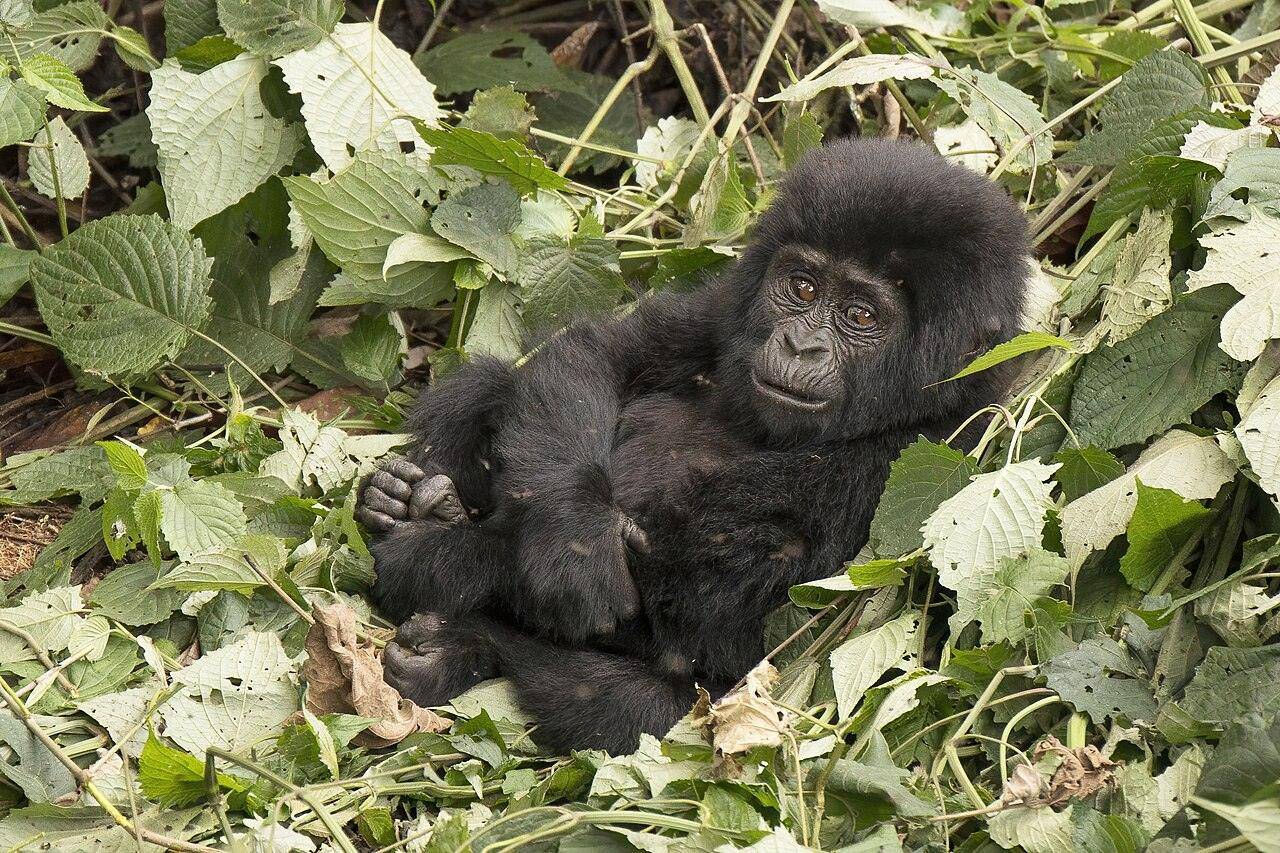 7 daysModerate
Bwindi gorillas and Kibale chimpanzees
A week focused on primates: an hour with mountain gorillas and a chimpanzee trek in the forest.
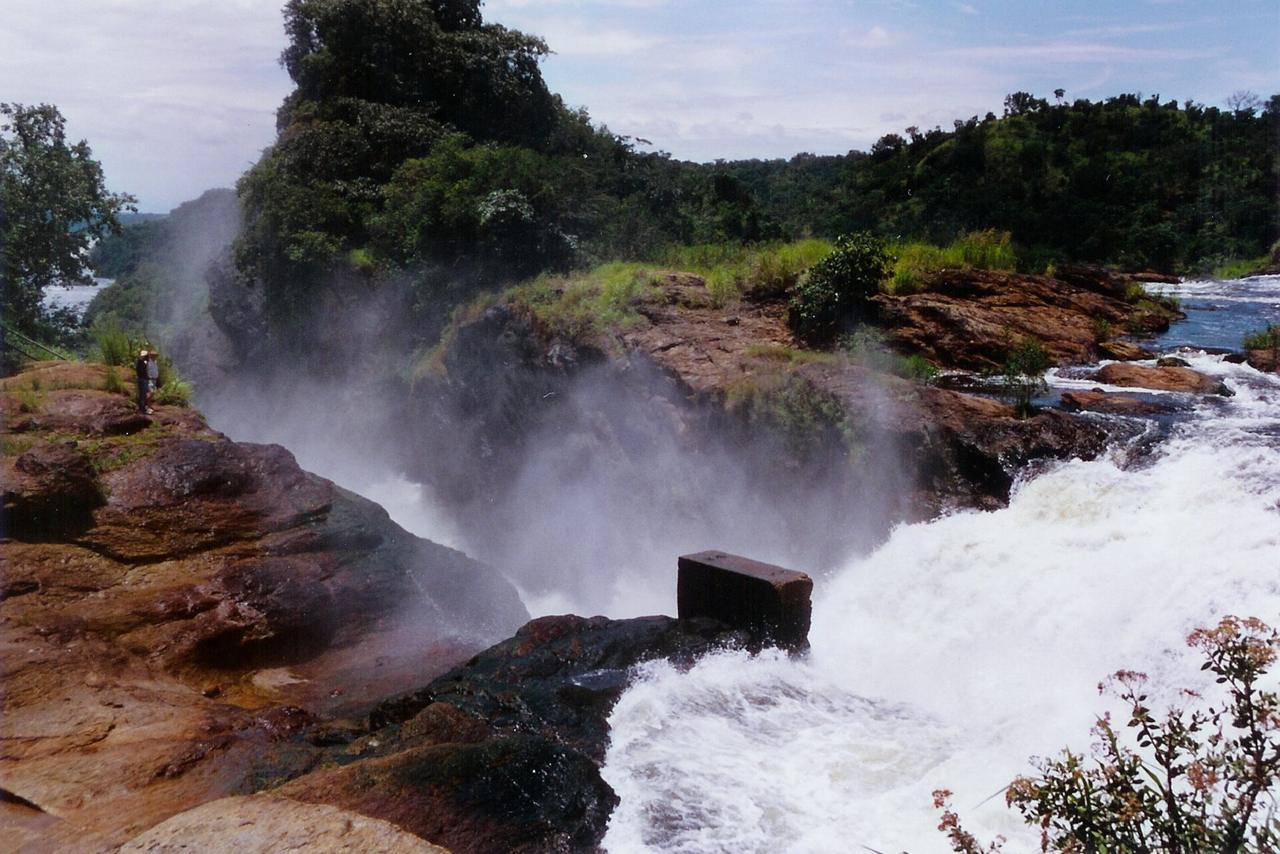 15 daysModerate
Complete Uganda: Murchison, primates and lakes
From the Nile falls to Lake Bunyonyi: savannah, rhinos, chimpanzees, gorillas and the green landscapes of the Pearl of Africa.
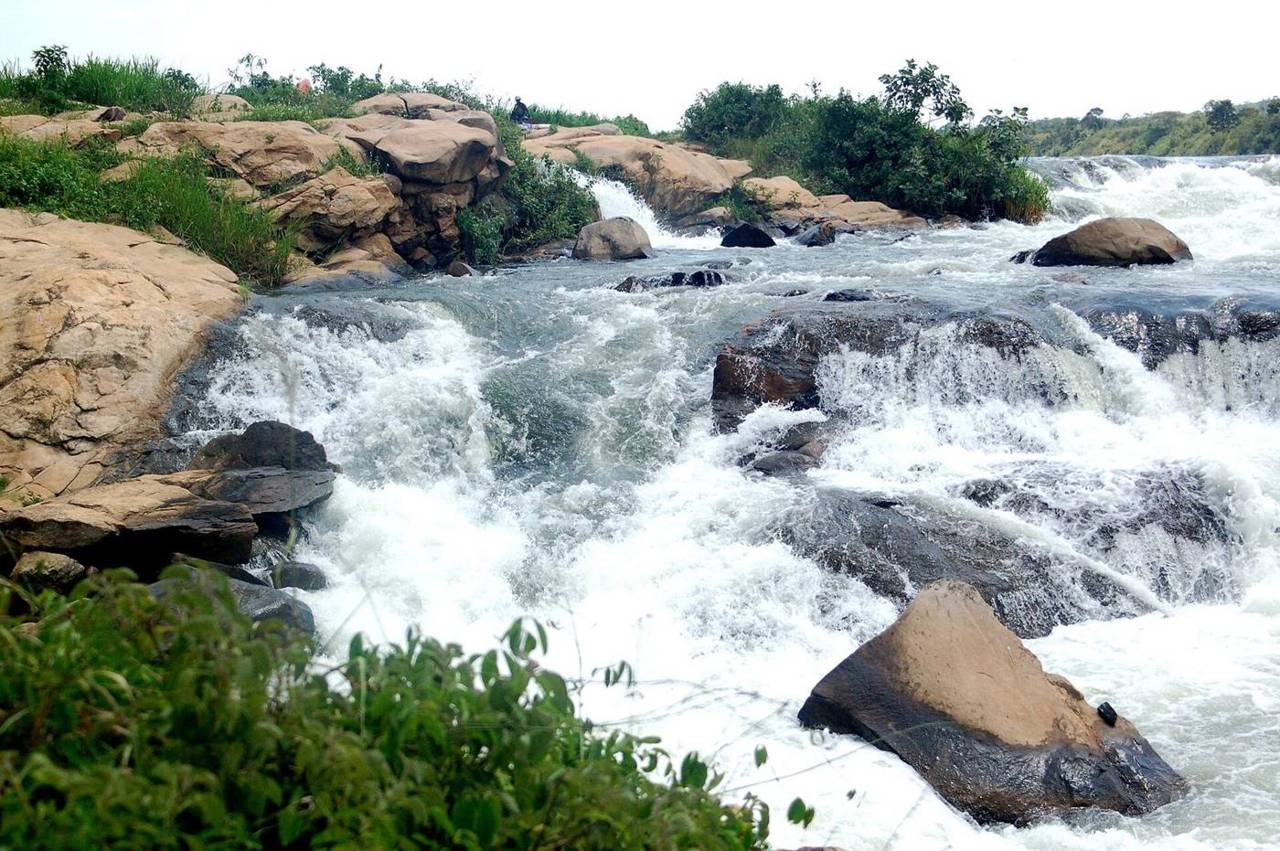 12 daysModerate
Uganda express: the Nile, the Mountains of the Moon and gorillas
The source of the Nile at Jinja, the chimpanzees of Kibale, the tree-climbing lions of Queen Elizabeth and an hour with a gorilla family in Bwindi.