Karst and caves: Ninh Binh, Phong Nha and Lan Ha
Limestone Vietnam in twelve days: paddies among the pinnacles, the Pu Luong reserve, the caves of Phong Nha and kayaking in Lan Ha Bay.
- Hanoi
- Ninh Binh
- Van Long
- Pu Luong
- Phong Nha
- Cat Ba
- Lan Ha Bay
Day by day
- Day 1
Arrival in Hanoi
This trip follows the limestone mountains of northern and central Vietnam: the peaks rising from the rice fields of Ninh Binh, the terraced valleys of Pu Luong, the huge caves of Phong Nha and the islands of Lan Ha Bay. You travel by car with a driver, by night train and by boat, with many hours outdoors and a few tiring days.
Before you leave: Italian citizens can enter without a visa for stays of up to 45 days, an exemption valid until 14 March 2028; for longer stays there is the 90 day electronic visa. Other nationalities should check their own rules. The passport must be valid.
You fly into Hanoi airport with one stop, usually in Asia or the Gulf. By taxi or a booked car you reach the centre in about an hour.
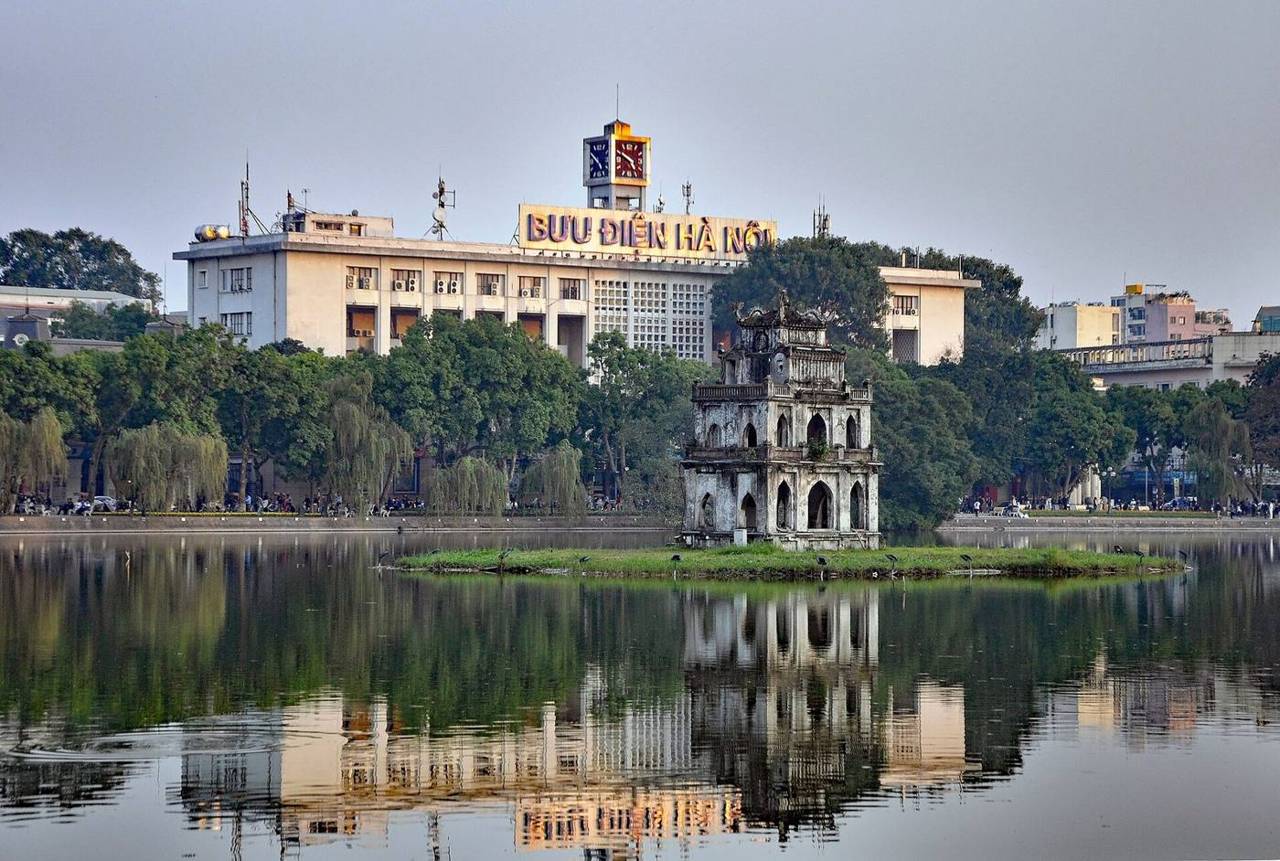
The first day is for recovering from the time difference. In the late afternoon walk around Hoan Kiem Lake, the heart of the city, with the small temple on the islet and the red bridge. In the evening, at weekends, the streets around the lake close to traffic and fill with families.
Dinner in the Old Quarter with a pho, the rice noodle soup with beef, or with bun cha, grilled pork with noodles and herbs.
Sleep in the Old Quarter or near the lake.
Practical tip: to cross the road in Hanoi walk at a steady pace, without stopping suddenly. The scooters go around you.
- Day 2
Hanoi, the old city
Today you have a full day in Hanoi before leaving for the mountains.
Early in the morning go back to Hoan Kiem Lake: at dawn residents exercise, dance and play shuttlecock on the shores. Then visit the Temple of Literature, the country's first university, founded in the eleventh century, with its courtyards, trees and stone stelae on turtles bearing the names of scholars.
Later walk in the area of the Ho Chi Minh mausoleum and the One Pillar Pagoda, a small wooden pagoda built on a single column in the middle of a pond. The mausoleum has limited hours and dress rules: check first.
In the afternoon get lost in the Old Quarter. Each street had a trade: the street of silk, of pots, of herbs, of paper offerings. The houses are narrow and deep, the so called tube houses. Stop at a café to try egg coffee, a sweet yolk cream over strong coffee, born in Hanoi.
In the evening watch a water puppet show, a traditional art of the villages of the Red River delta.
Sleep in Hanoi.
Practical tip: pack a small backpack for the next days. On the night train and on boats there is little space for luggage.
- Day 3
Ninh Binh by boat at Trang An
Today you leave Hanoi and go to Ninh Binh, about two hours south, the Ha Long Bay on land.
The landscape changes suddenly: from the flat rice fields of the delta rise hundreds of limestone peaks covered in vegetation, with rivers and canals running between them. The Trang An complex is a UNESCO World Heritage site.
At Trang An you board a small rowing boat guided by a local woman or man, who often rows with their feet. The boat follows the river between the mountains and passes through long, low caves, where you must lower your head. It stops at temples and pagodas on the bank. The trip lasts two or three hours. There are several routes: ask at the ticket office about the differences. The ticket is paid, check the price.
In the afternoon cycle through the rice fields around Tam Coc, the nearby village. In spring the rice is green, at the end of May and the end of September it turns yellow before harvest.
In the evening dine on the local specialities, goat cooked in many ways, and crispy burnt rice fried in oil.
Sleep in Ninh Binh, in lodging among the rice fields.
Practical tip: bring a hat and sunscreen on the boat. There is no shade on the rivers.
- Day 4
Hang Mua and the Van Long reserve
Today you see Ninh Binh from above and look for one of the rarest monkeys in the world.
Early in the morning go to the Van Long wetland reserve, a large marsh between the mountains. You get around on small rowed bamboo boats, in silence. On the rock walls lives Delacour's langur, a black and white monkey that exists only in this region of Vietnam and is at risk of extinction. They are seen more often in the morning, on the rocks, with binoculars. On the water there are herons, kingfishers and fish.
At midday visit Bich Dong pagoda, a pagoda built on several levels inside and above a cave, or the ancient capital of Hoa Lu, with the temples of the tenth century kings.
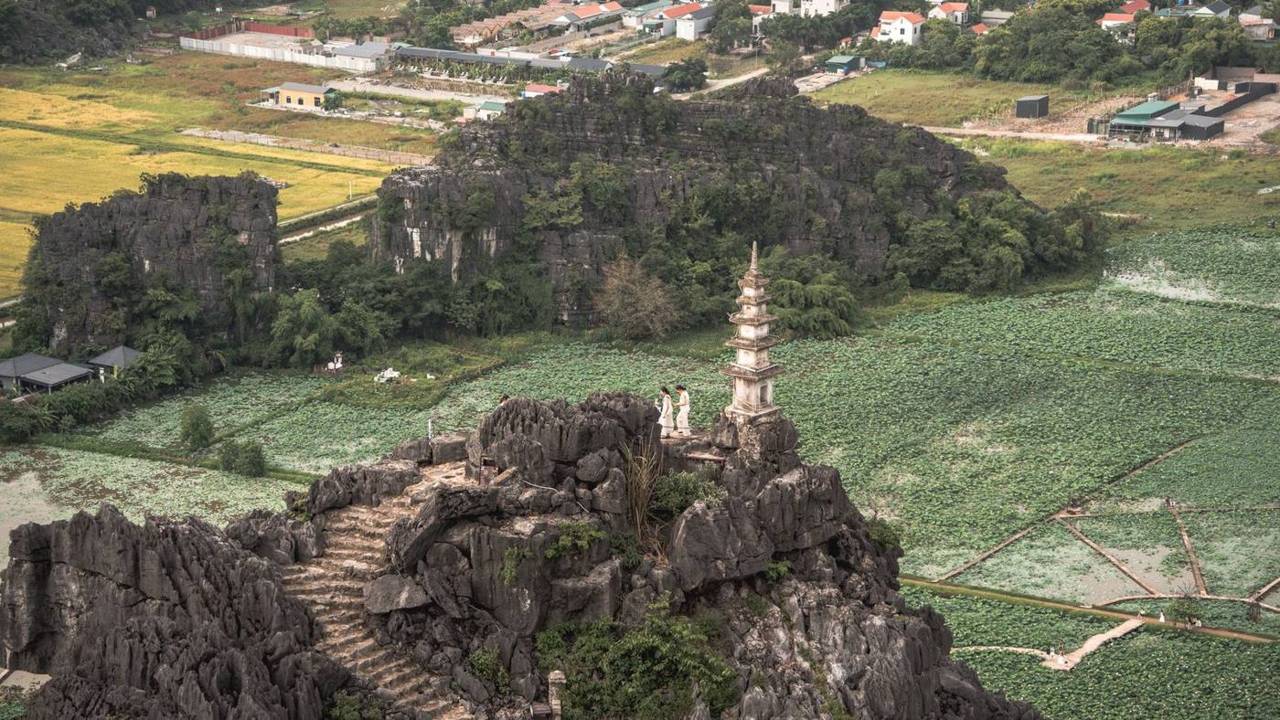
In the late afternoon climb Hang Mua, the dancing cave. A staircase of about five hundred stone steps climbs to the top of the mountain, where there is a dragon statue and a small pagoda. From the top you see the river winding between rice fields and peaks. Sunset is the finest moment, but also the most crowded.
Sleep in Ninh Binh.
Practical tip: at Hang Mua the steps are uneven and slippery after rain. Wear closed shoes and carry water.
- Day 5
The Pu Luong reserve
Today you leave the plain and climb towards the mountains of the Pu Luong reserve.
From Ninh Binh the road heads west for about three hours, between hills and plantations. Pu Luong is a nature reserve with forest covered mountains, narrow valleys and terraced rice fields. It is home to the Thai and the Muong, peoples who live in wooden stilt houses, with the lower floor for animals and tools.
In the afternoon take the first walk with a local guide. The path passes terraced rice fields, bamboo groves and villages. Along the streams you will see bamboo water wheels, large wheels that lift water from the river and pour it into the rice field channels. They turn day and night to the sound of water.
Greet people in the villages: children almost always answer. Ask before photographing people and do not enter houses unless invited.
In the evening dine with your host family or at the ecolodge: rice, mountain greens, chicken, river fish and rice wine.
Sleep in an ecolodge or a stilt house.
Practical tip: in stilt houses you often sleep on mattresses on the floor in a shared room. If you want a private room, ask beforehand.
- Day 6
Walking through the Pu Luong valleys
Today is a full day on foot in the reserve.
Early in the morning mist covers the valleys and the peaks rise like islands. After breakfast you set off with the guide for a walk of five or six hours.
The path climbs and descends between villages and fields. You cross terraced rice fields, woods, small bamboo bridges over streams. In some places the path is narrow and muddy. The guide explains how rice is grown, which here usually gives one harvest a year, and how houses are built.
At midday you have lunch in a village house or a packed lunch beside a stream. You eat sticky rice cakes cooked in bamboo tubes, a mountain speciality.
In the afternoon, if there is time, swim in a pool in the stream or visit a cave in the reserve with the guide.
In the evening, in the village, you sometimes hear the music of gongs and flutes.
Sleep in Pu Luong.
Practical tip: the rainy season is from May to September. In those months the paths are muddy and leeches are frequent: wear long socks and hiking shoes. From October to December the rice is already harvested, but the sky is clearer. Bring a light rain jacket in every season.
- Day 7
Back to Ninh Binh and the night train
Today you head back to the plain and take the night train to central Vietnam.
In the morning take a last walk in the Pu Luong villages, then drive down to Ninh Binh. The journey takes about three hours.
In the afternoon, if you have time, visit the Bai Dinh pagoda complex, one of the largest in Vietnam, built in recent years on a hillside: very long corridors with hundreds of statues, great bells and a tower of many floors. It is a place much loved by Vietnamese pilgrims.
In the evening take the night train from Ninh Binh station to Dong Hoi. The journey takes about nine or ten hours. The berths in the soft sleeper carriages are in four berth compartments, with pillows and blankets. Book ahead, because during holidays places sell out. Bring food, water and a jacket: the air conditioning is sometimes strong.
The train follows the coast, but at night you see little. Early in the morning, as you wake, you will see the rice fields, dunes and fishing villages of the centre.
Sleep on the train.
Practical tip: keep your passport and money on you while you sleep on the train. Lock the compartment door.
- Day 8
Phong Nha by boat and Paradise Cave
Today you arrive in Dong Hoi at dawn and go to Phong Nha Ke Bang National Park, one of the largest karst areas in Asia, a UNESCO World Heritage site.
From Dong Hoi to Phong Nha takes about an hour by car. Leave your bags at the lodging and have breakfast.
In the morning visit Phong Nha cave. You arrive by boat from the village, going up the Son River for about half an hour. The boat enters the cave, where the river flows underground, between lit stalactites and stalagmites. Then you land and walk back on a path through the cave. The ticket is paid, check the price.
In the afternoon go to Paradise Cave, about an hour's drive into the park. A long wooden staircase descends into a huge cave, tens of metres high, with white and golden formations. You walk on a wooden boardwalk for about a kilometre; if you wish you can book with an authorised operator a longer visit, up to seven kilometres inside.
In the evening, in Phong Nha, dine on grilled chicken and pork skewers, looking at the river.
Sleep in Phong Nha.
Practical tip: in the caves humidity is very high. Bring a spare shirt and a cloth for your camera.
- Day 9
Dark Cave and days in the park
Today you experience the caves more actively.
In the morning go to Dark Cave. You arrive by zipline over the river, then swim to the cave entrance. Inside there are no lights: you walk with a helmet and head torch through mud, to a pool of soft mud where you float. Then you come out, wash in the river and go kayaking. It is fun, but you come back covered in mud.
In the afternoon take a bicycle or scooter ride in the Bong Lai valley, a valley of fields, farms and buffalo near the village. Some families open their farms to visitors: you eat, swim in the river, play with the animals.
If you want a real adventure you can book the two day trek to Hang En cave, one of the largest caves in the world, with a river and a beach inside and a camp for the night. It is done only with an authorised operator, places are limited and it must be booked months ahead: check dates and fitness requirements. In this case skip Dark Cave.
Sleep in Phong Nha.
Practical tip: in Dark Cave wear a swimsuit and old shoes. The mud stains clothes for good.
- Day 10
Flight to Hanoi and transfer to Cat Ba
Today you leave the centre and return north, towards the sea.
In the morning go to Dong Hoi airport, about an hour from Phong Nha, and take the flight to Hanoi. The flight takes about an hour and a half. Check the times first: there are not many daily flights.
From Hanoi airport you go to Cat Ba island. The road passes Haiphong, the great northern port, then you take a ferry or a bridge and a road along the coast. In all it takes three or four hours. There are buses that sell combined bus and boat tickets: ask at an agency or your lodging.
Cat Ba is the largest island in the area, with a harbour town, a national park in the interior and the islands of Lan Ha Bay around it. Lan Ha is the southern part of the same region as Ha Long Bay, with hundreds of limestone islands, but fewer tourist boats.
In the evening walk along the harbour front and dine on freshly caught fish and seafood: crabs, squid, clams cooked with lemongrass.
Sleep in Cat Ba.
Practical tip: between July and September typhoons sometimes arrive. Boats stop running: keep a day of margin.
- Day 11
Lan Ha Bay by kayak
Today is the day of the bay, by boat and kayak.
In the morning board a boat leaving Cat Ba harbour and entering Lan Ha Bay. The limestone islands rise from the green sea, one after another, covered in trees. There are floating villages, wooden houses built on rafts, where the families of fishermen and fish farmers live.
In mid morning you get into a kayak. You paddle between the islands, under the rock walls, and enter lagoons enclosed by low passages through the rock, passable only at low tide. Inside the lagoons the water is still, the silence total and sometimes you see monkeys on the rocks.
At midday lunch on the boat and a swim on a small beach between the islands, such as Monkey Beach or one of the little beaches around.
In the afternoon, if you prefer dry land, you can walk a trail in Cat Ba National Park to Ngu Lam peak, with views over the hills and the sea.
In the evening you return to Cat Ba.
Sleep in Cat Ba.
Practical tip: choose a boat trip with few people and ask if the kayak is included. Large boats sometimes do not enter the lagoons.
- Day 12
Back to Hanoi and departure
On the last day you return to Hanoi and take the flight home.
Early in the morning leave Cat Ba by bus and boat towards Hanoi. It takes three or four hours. If your flight is in the evening, you still have a few hours for the city.
For the last lunch try banh mi, the Vietnamese sandwich born from French bread, with pork, paté, pickled vegetables and coriander, or cha ca, fish cooked with dill and turmeric, a typical Hanoi dish.
If you have time, visit the Museum of Ethnology, with traditional houses of Vietnam's peoples rebuilt in the garden, including the stilt houses you saw in Pu Luong. Check times and closing days.
Hanoi airport is about an hour from the centre, longer at rush hour. Leave well in advance.
What to take home: Vietnamese coffee with the metal filter, green tea, silk, lacquerware, the conical leaf hat.
This trip shows a lesser known Vietnam, the Vietnam of limestone mountains, giant caves, stilt house villages and silent bays, far from the busiest places.
Practical tip: keep some dong in cash for taxis and tips. Many places do not accept cards. Cash machines are easy to find in the centre of Hanoi.
For travellers who have done the classic loop, or want to skip it, and would rather walk, paddle and go underground. Phong Nha alone justifies the trip, while Lan Ha offers Ha Long's scenery with fewer boats. The limit is the weather in the centre, with rain and floods from September to November that close some caves. The Hang En trek must be booked months ahead and requires good fitness.
Before you go
- Documents and visa
- Passport with at least six months' validity remaining. Italian, French and several other European citizens need no visa for tourism up to 45 days, an exemption valid until 14 March 2028; otherwise use the e-visa from the official portal.
- Health and vaccines
- No compulsory vaccines. Protect yourself against mosquitoes because of dengue; drink only bottled water. Emergencies: 113 police, 114 fire, 115 ambulance.
- Money and payments
- Vietnamese dong. Cards and QR code payments are widespread in cities; in markets, villages and for small purchases you need cash.
- Power sockets
- Types A and C, among others, 220 volts: a universal adapter is useful.
- Time zone
- UTC+7 all year: Vietnam does not use daylight saving time.
- Safety
- A safe country for travellers. In big cities beware of snatch thefts from scooters; from July to December typhoons and floods hit the centre and north. Official advice: GOV.UK.
Information checked in November 2026 for Italian and EU citizens. Rules change: always check before you travel.
Variations
In 8 days: Hanoi, Ninh Binh and Phong Nha, without Pu Luong and without Cat Ba.
In 16 days: add the Ha Giang loop in the north, or Hue and Hoi An after Phong Nha.
Frequently asked questions
Do I need a visa?
Italian citizens do not, for stays of up to 45 days: the exemption is valid until 14 March 2028. For longer stays there is the 90 day electronic visa. Other nationalities should check their own rules.
How do I book Hang En?
Only with an authorised park operator, with limited places and many months ahead. Good fitness is needed: check dates and requirements before booking the rest of the trip.
When is the best time?
From March to May and from September to November. From July to September there are typhoons on the coast and heavy rain in the centre; in winter the north is cool and the sky often grey.
Indicative itinerary written by World Atlas. Before booking, check timetables, seasonal openings, documents and safety.
 10 daysEasy
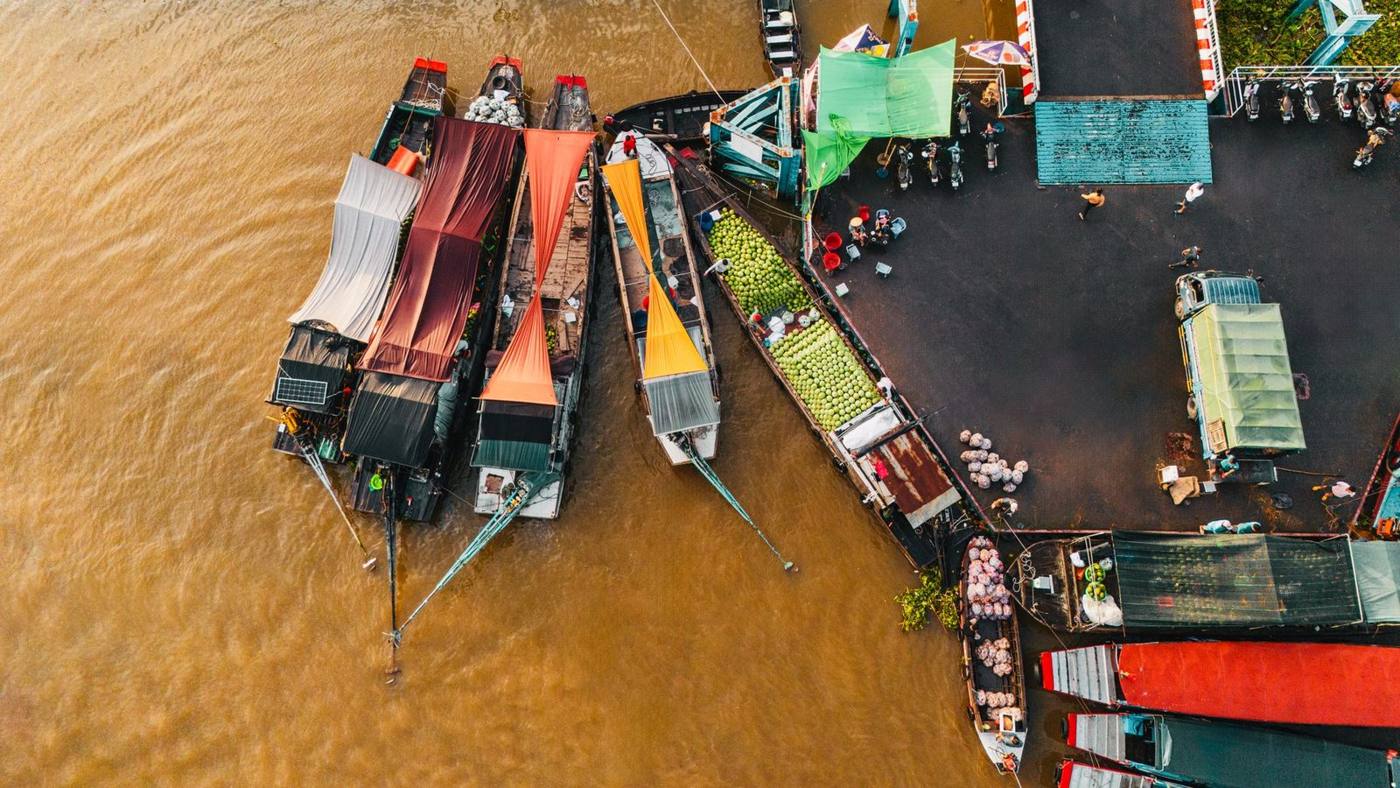
The Mekong Delta and Phu Quoc
A week on the water among canals, dawn markets and flooded forests up to the Cambodian border, then a few days by the sea on Phu Quoc.
 4 daysEasy
Hanoi in depth
The capital at a gentle pace: the Old Quarter of the 36 streets, Hoan Kiem Lake, the Temple of Literature, the Ho Chi Minh Mausoleum, the Museum of Ethnology, the water puppet theatre and street food, from pho to bun cha.
 5 daysModerate
The Ha Giang Loop
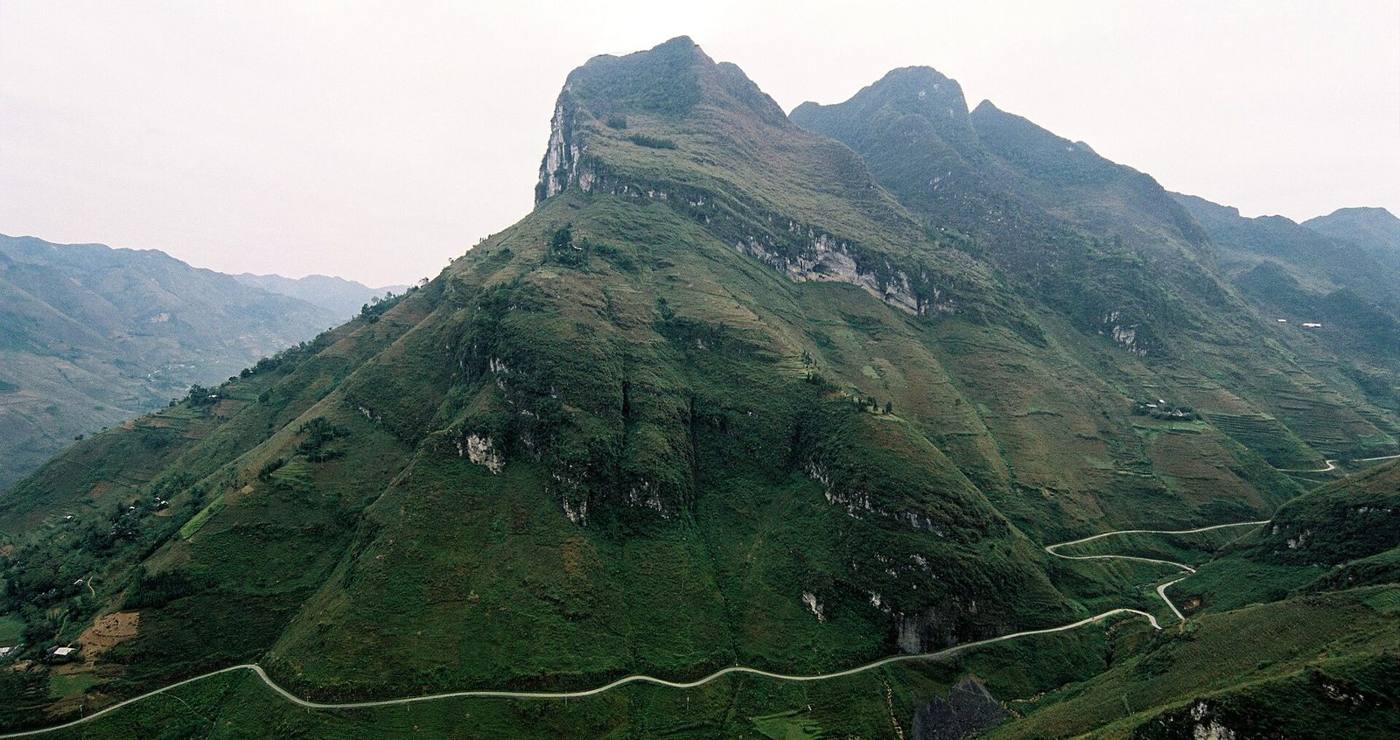
The limestone mountains of the far north: Ma Pi Leng Pass above the Nho Que river canyon, the terraces of Hoang Su Phi, Hmong and Lo Lo villages, the Hmong king's palace at Sa Phin and weekend markets, travelled with a motorbike driver.