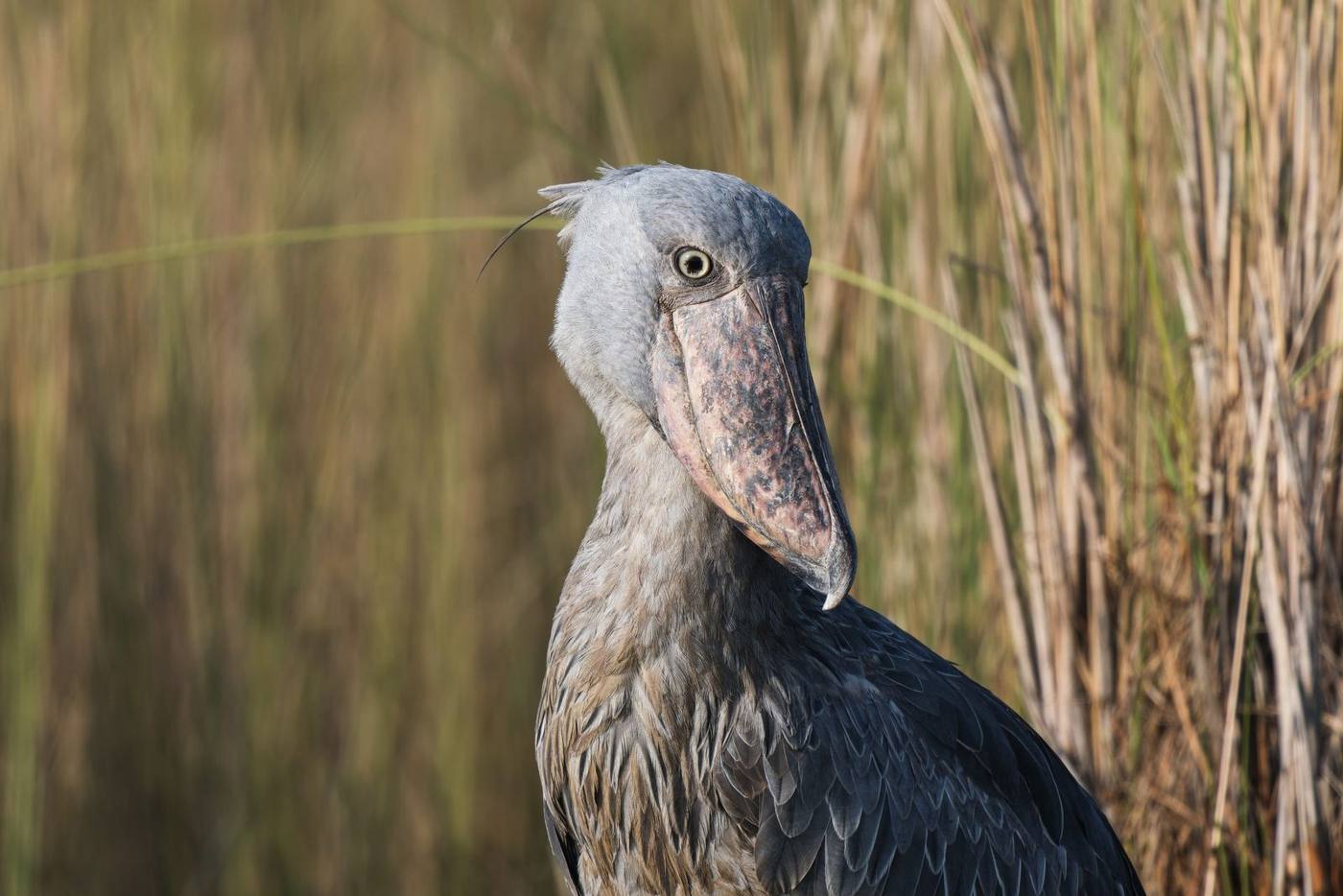
The shoebill of Bangweulu
The Bangweulu swamps, where you search by canoe for the shoebill, one of the world's rarest and strangest birds, among herds of black lechwe.
- Kasanka
- Chikuni
- Bangweulu
Day by day
- Day 1
From Kasanka to the Chikuni swamps
This four-day trip takes you to the Bangweulu swamps, in north-eastern Zambia, a great wetland of about six thousand square kilometres of floodplains, reed beds and woodland. It is a protected area owned by the local communities: about sixty thousand people live here from fishing and farming, and six traditional chiefs take part in managing it together with African Parks and the national parks department. People come here for a rare and mysterious bird, the shoebill.
Before you go: Italian citizens enter Zambia without a visa and on arrival receive a stamp valid for 30 days. The passport must be valid for at least six months from entry and have three completely blank pages. Other nationalities should check their own rules. Some areas on this trip are close to borders or places where the situation changes often: check your government's travel advice before booking and again before you leave. The swamps are a malaria area: ask your doctor and bring a strong repellent.
From Kasanka the track heads north, through miombo woodland and villages, to the edge of the swamp. The route is long and slow, suitable only for a 4x4 with a driver who knows the area; otherwise you arrive by small plane. Seasons, access and track conditions change with the water: check them first with African Parks or the national parks department.
In the afternoon you reach the Chikuni area, on the eastern plain. In front of you the grass stretches to the horizon, dotted with thousands of dark antelope grazing in the shallows.
Practical tip: bring light rubber boots or water sandals, because in the swamps you often walk in mud.
- Day 2
By canoe in search of the shoebill
Today you set off at dawn by canoe with a community guide. The canoes are wooden, long and narrow, and the guide pushes them with a pole, standing at the stern, as the swamp fishermen have always done. You glide through narrow channels and papyrus taller than you, in a silence broken only by birds.
The guide looks for the shoebill in places where the water is shallow and full of fish. It is a large grey bird, over a metre tall, with a huge bill shaped like a clog. It stands still for long minutes, then lunges forward to catch a fish, often a lungfish. When you find one, the guide stops at a distance and lets you watch without disturbing it. A sighting is not guaranteed, but it is frequent in the right months.
Along the channels you also see many other birds: wattled cranes, herons, storks, jacanas walking on water lily leaves and fish eagles. The swamp is one of the best places in Zambia for birdwatching, and the guide knows many of the calls.
In late morning you return to camp, when the sun gets strong. In the afternoon you rest and, if you like, take a walk on the dry plain near camp, always with the guide, looking for tracks and smaller birds in the grass.
Practical tip: bring binoculars with good magnification and a camera with a zoom: the shoebill is watched from a distance, so as not to frighten it.
- Day 3
Black lechwe and life in the swamp
Today you discover the other great inhabitant of Bangweulu, the black lechwe. It is an antelope found only in this region, with a dark coat and long lyre-shaped horns, and it moves in herds across the floodplains. It runs through shallow water in great leaps, throwing up spray. After difficult years the population has recovered well, thanks to protection by the communities and the rangers.
In the morning you can go back out by canoe to another part of the channels, for a second try at the shoebill, or walk on the plain with the guide. You also see tsessebe, a fast antelope with a reddish coat, and with luck the sitatunga, which hides in the reeds.
In the afternoon, if the community offers it, visit a fishing village. You see how fish is smoked and dried, how canoes and reed traps are made, and how life follows the rhythm of the water, which rises with the rains and falls in the dry season. Always ask permission before photographing people.
At sunset the plain turns gold and pink and thousands of birds head back to the reed beds for the night. It is one of the most beautiful moments of the trip, and the air cools quickly once the sun has gone.
Practical tip: in the swamp the sun and the glare from the water are strong: bring sunglasses, a hat and a light long-sleeved shirt.
- Day 4
Heading back
Today you leave Bangweulu. If there is time, take a last short outing at dawn on the plain, when the black lechwe graze in the morning mist and cranes fly low over the water. Then you set off by 4x4 heading south, towards Kasanka and the great northern road, or go to the airstrip for a small plane.
If you travel by car, the day is long: leave early, stop only in villages and towns and arrive before dark. From Serenje the tarmac road leads back towards Kapiri Mposhi and Lusaka, but it is better to split the return into two stages.
In four days you have seen one of the most important wetlands in southern Africa: canoes poled through the papyrus, the shoebill standing still among the reeds, herds of black lechwe and the life of the fishermen. It is a trip for birdwatchers and lovers of remote places, with simple camps run with the community, which leave part of their income to the villages.
When to go: from March to July, when the water is high and the shoebill is seen more often, with good chances from April. Opening dates and access change every year with the rains: ask African Parks or the national parks department first.
Practical tip: it combines well with Kasanka, but the bats arrive between October and December, while the shoebill is best seen from March: choose the season according to what you most want to see.
For birdwatchers and lovers of remote places. Sightings are not guaranteed but frequent from April. Simple camps run with the community.
Before you go
- Documents and visa
- Passport valid for at least six months from entry, with three completely blank pages. Italian citizens enter without a visa: on arrival they receive a stamp valid for 30 days, which can be extended at an immigration office before it expires. Cash above the equivalent of 5,000 US dollars must be declared.
- Health and vaccines
- No vaccinations are compulsory. Malaria is present throughout the country, especially near rivers and lakes: ask your doctor about prevention and use repellent and a mosquito net. In the rainy season, from November to April, there can be cholera cases: drink only bottled water. Emergencies: police 991, ambulance 992.
- Money and payments
- Zambian kwacha. Cards work in cities and at many lodges, but carry cash for villages and tips; use ATMs inside banks, because card cloning has been reported.
- Power sockets
- Types C, D and G, 230 volts: bring a universal adapter.
- Time zone
- UTC+2 all year.
- Safety
- The situation is generally stable, but demonstrations can happen: avoid them. In cities take care in markets and shopping centres and avoid the compounds, the poorer neighbourhoods, after dark. The border areas with the Democratic Republic of the Congo and Angola are advised against for non-essential travel because of landmines. Roads are in poor condition: do not drive at night. Official advice: GOV.UK.
Information checked in November 2026 for Italian and EU citizens. Rules change: always check before you travel.
Variations
In 3 days: by small plane you arrive and leave directly from the airstrip near the swamp, with two canoe outings.
In 7 days: add Kasanka before Bangweulu, bearing in mind that the bats and the shoebill have different best seasons.
Frequently asked questions
Can you always see the shoebill?
No, a sighting is not guaranteed, but it is frequent from April, when the water is high. The community guides know the places where it feeds.
Who manages the Bangweulu swamps?
It is a protected area owned by the local communities, managed together with African Parks and Zambia's national parks department. Ask them for up-to-date seasons and access.
Do I need a visa for Zambia?
No, Italian citizens enter without a visa and receive a stamp valid for 30 days on arrival. The passport must be valid for at least six months and have three blank pages. Other nationalities should check their own rules.
Indicative itinerary written by World Atlas. Before booking, check timetables, seasonal openings, documents and safety.
 4 daysModerate
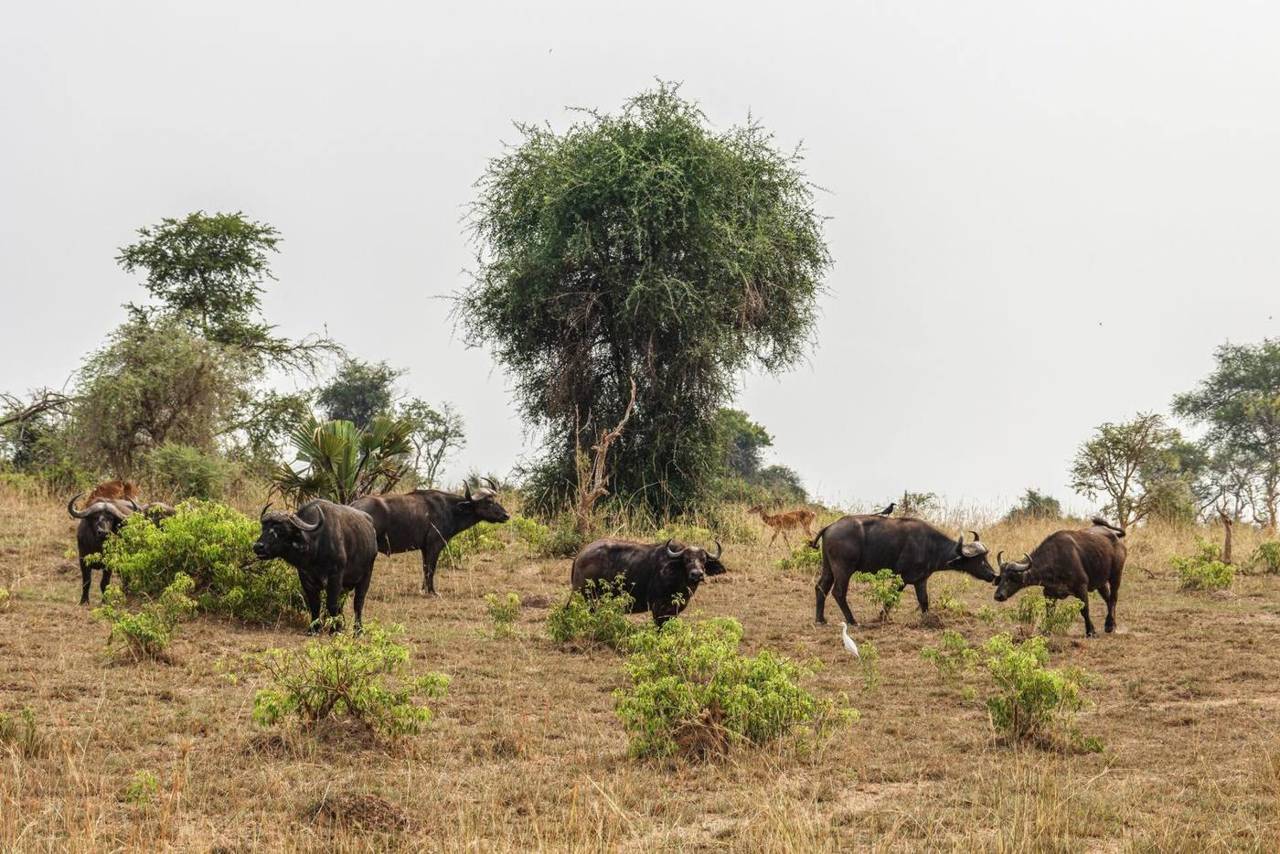
North Luangwa
Zambia's wildest park, with very few camps, walking safaris, reintroduced black rhinos and large herds of buffalo.
 6 daysModerate
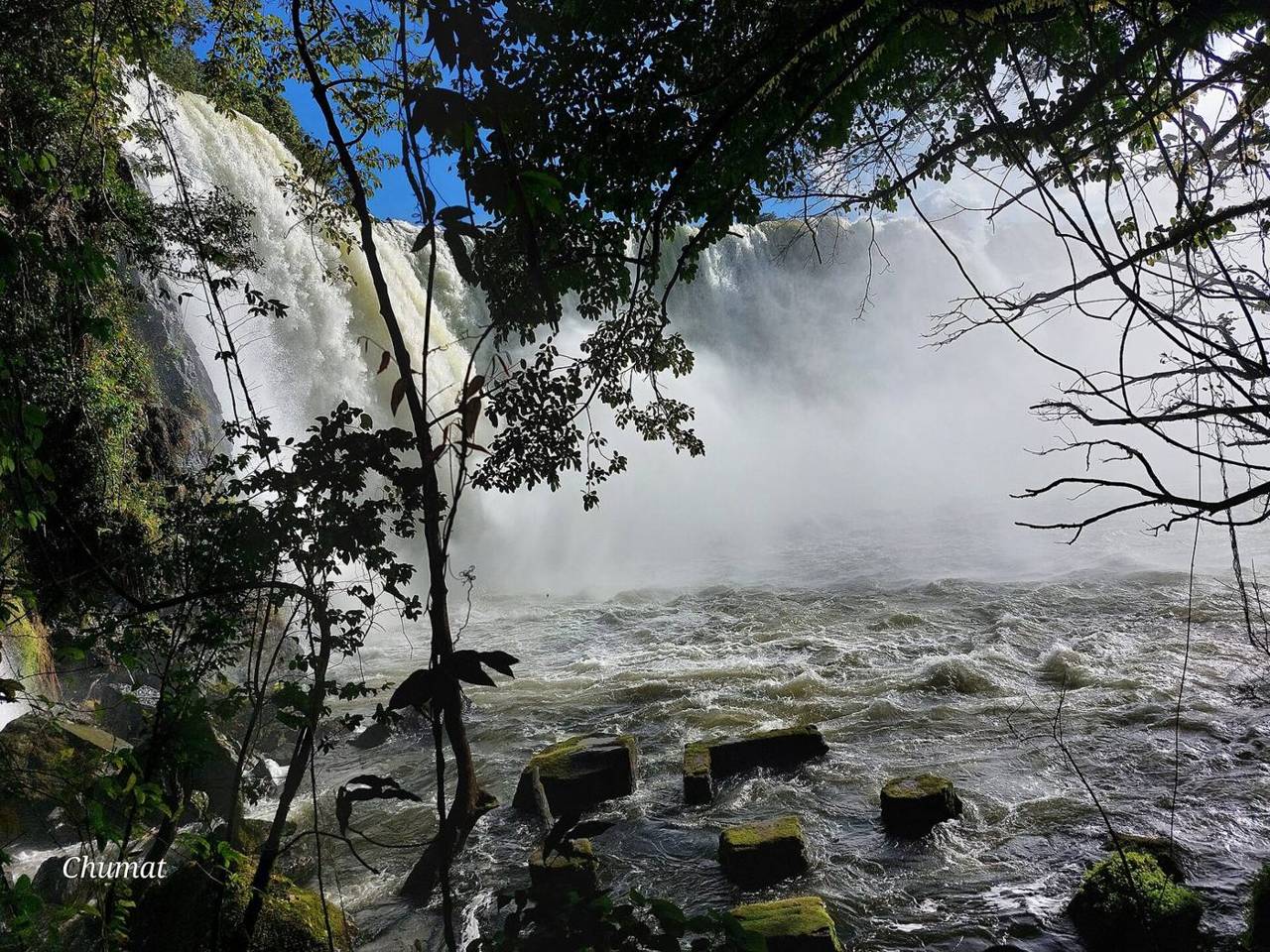
The northern waterfalls
The northern Zambia waterfall circuit: Kalambo, among Africa's tallest, Lumangwe, Kabwelume and Ntumbachushi, with Lake Tanganyika at Mpulungu.
 3 daysEasy
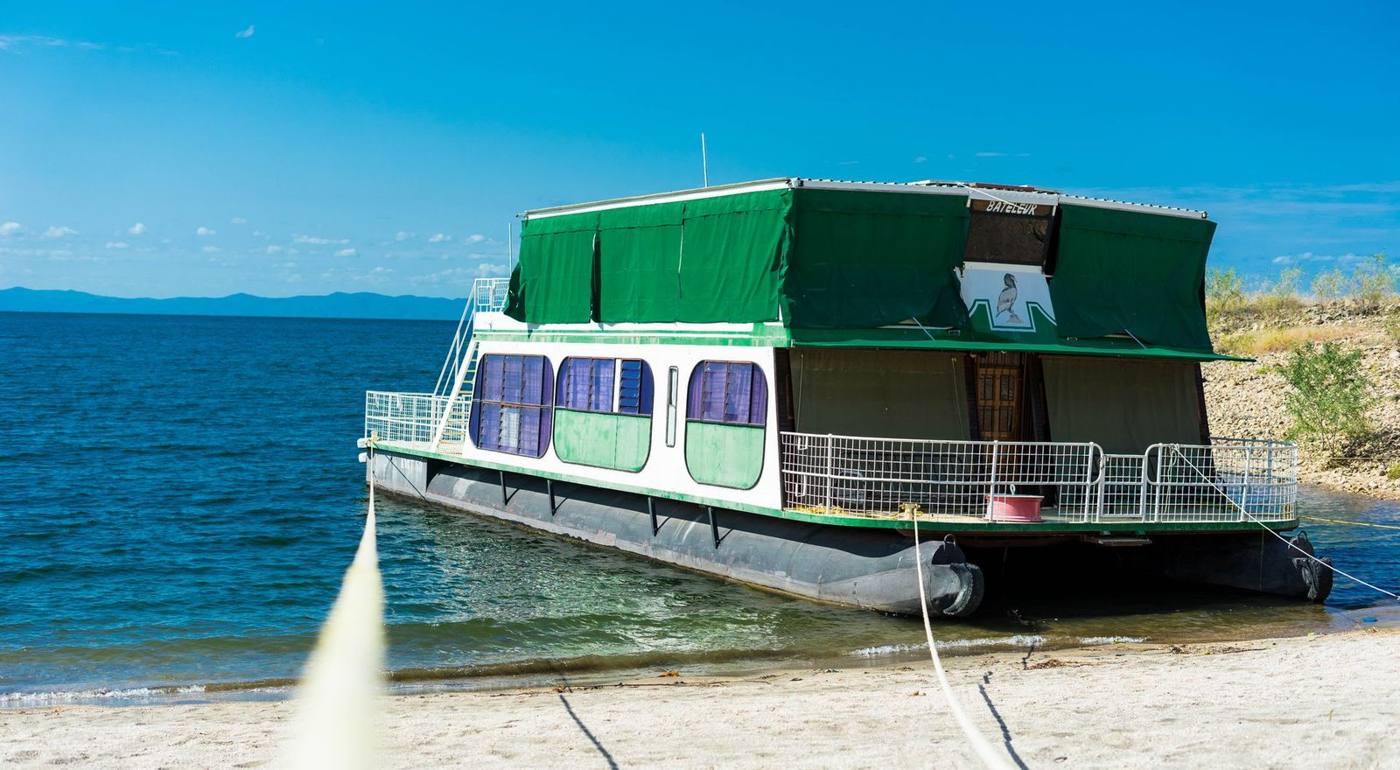
Siavonga and Lake Kariba
The Zambian side of Lake Kariba, three hours from Lusaka: sunsets over the lake, boats, the Kariba dam and tigerfish fishing.