 Ireland
The Emerald Isle: ocean cliffs, ruined castles, pubs with live music and some of the most beautiful coastal roads in Europe.
Places not to miss
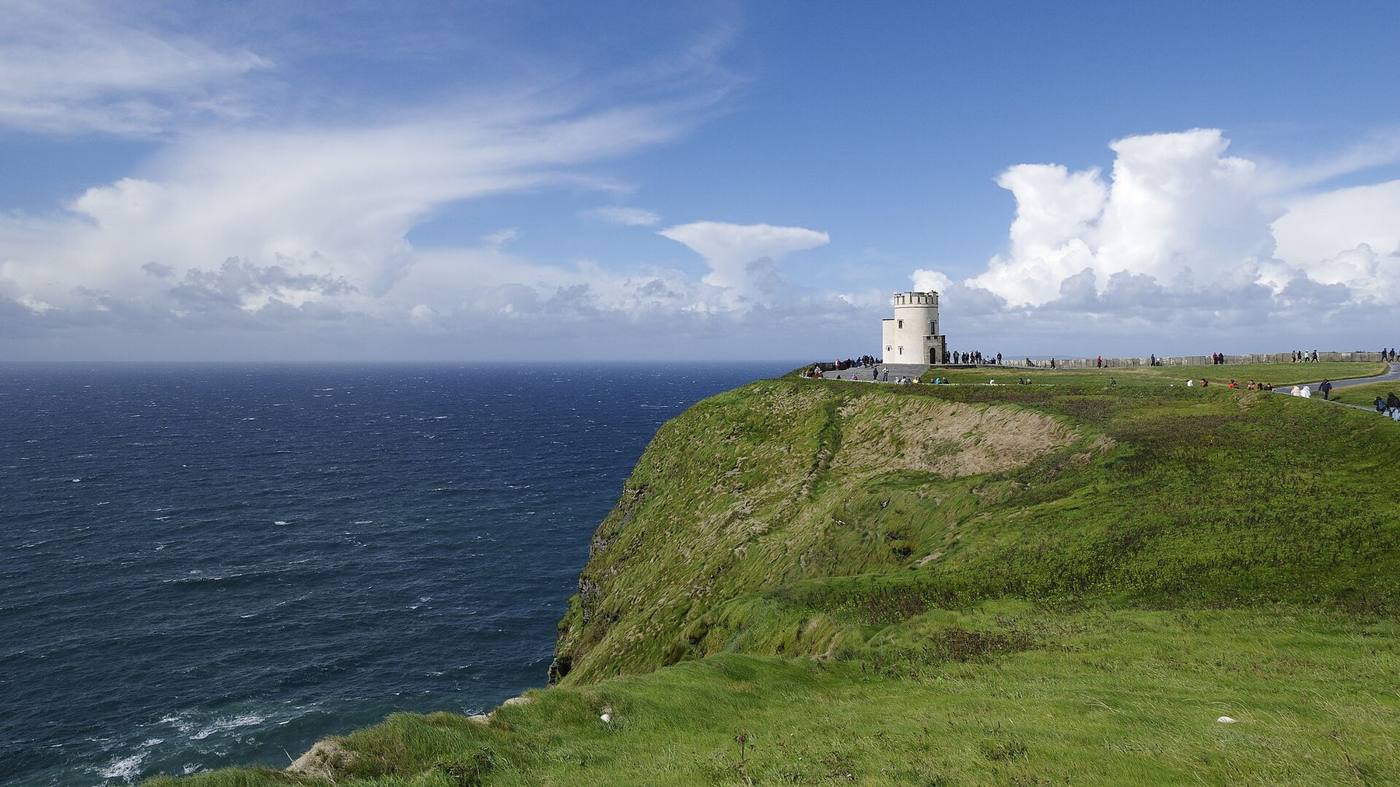
Cliffs of Moher
Sheer walls over 200 metres above the Atlantic.
Dublin
Trinity College and the Book of Kells, Temple Bar, the Guinness Storehouse.
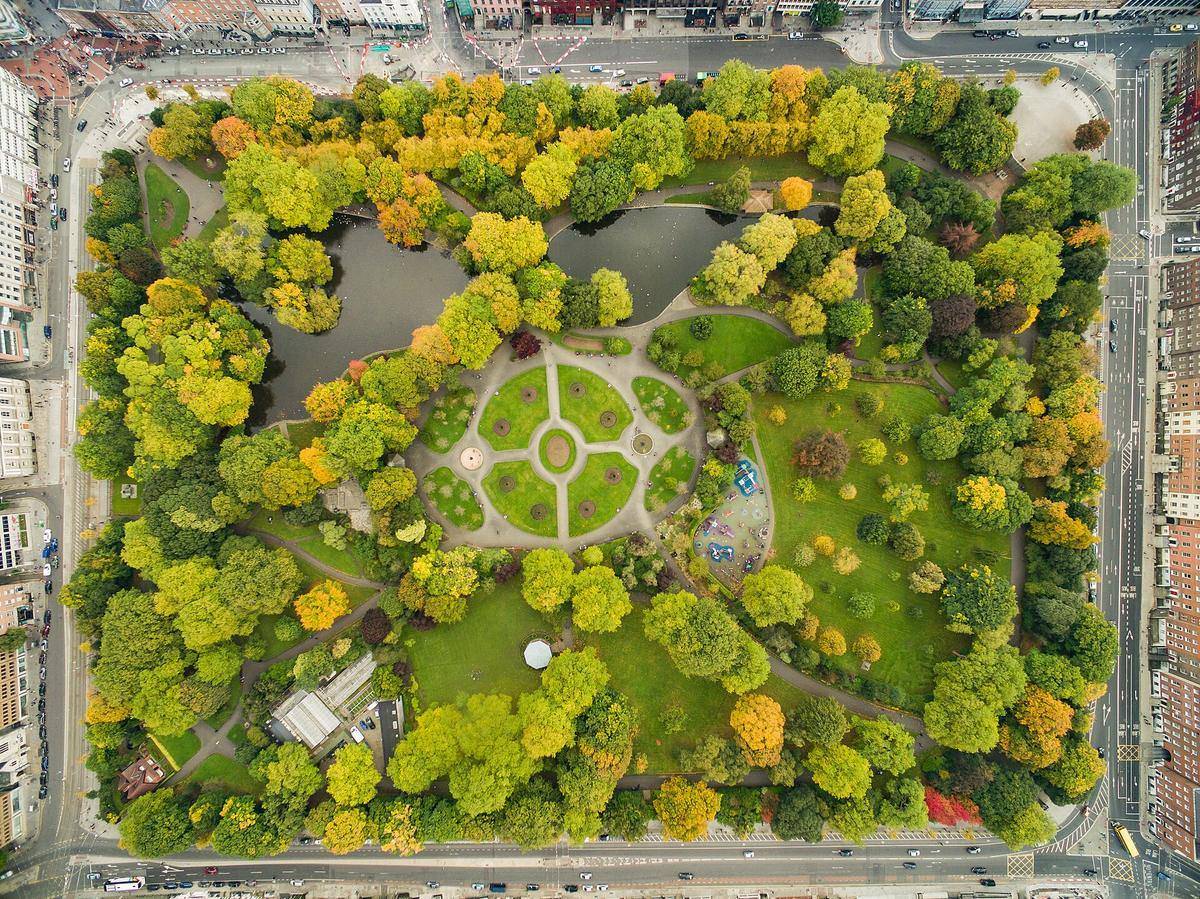
Photo: Dronepicr, CC BY 3.0 Ring of Kerry
A scenic loop of lakes, mountains and coastline.
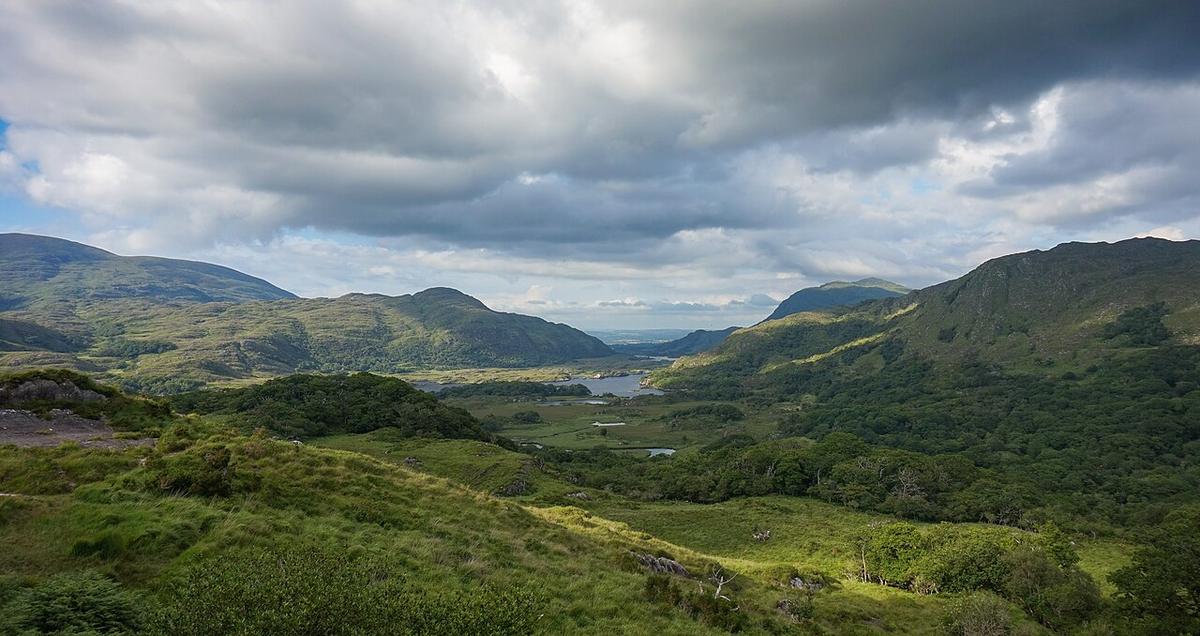
Photo: Marco Ober, CC BY-SA 4.0 Wild Atlantic Way
2,500 km of western coast, from Donegal to Cork.
Connemara
Wild landscapes, lakes and ponies.
Skellig Michael
A medieval monastery on a rock, with puffins.
Nature and wildlife
Puffins on the Skelligs, dolphins at Dingle, seals along the coast.
Food and drink
Irish stew, smoked salmon, soda bread, Guinness and Irish whiskey.
When to go
May-September; rain is possible all year round.
Did you know?
Fewer people live in Ireland today than before the Great Famine of 1845.
Itineraries in Ireland
The Wild Atlantic Way
The west coast from Galway to Kerry: Connemara, the Aran Islands, the Burren, the Cliffs of Moher, the Dingle Peninsula and the Ring of Kerry.
Dublin, Wicklow and Newgrange
Dublin with Trinity College and its music pubs, the Wicklow Mountains with Glendalough monastery and the Neolithic tomb of Newgrange.
The Ring of Kerry and Dingle
Kerry at a gentle pace: Killarney and the Gap of Dunloe, the Ring of Kerry and the Skellig Ring, the Dingle Peninsula and its pubs.
Connemara and the Aran Islands
Irish-speaking Ireland: the Aran Islands by bike, dry-stone walls, Connemara with its bogs and the Killary fjord.
Donegal
Ireland at its wildest: the Slieve League cliffs, Glenveagh National Park, Mount Errigal and the empty beaches of the Inishowen Peninsula up to Malin Head.
The complete Ireland
Around the island in two weeks: Dublin, Kilkenny and Cashel, Kerry, the Cliffs of Moher, Galway and Connemara, Donegal and the Causeway Coast.
Cork, Kinsale and West Cork
The foodie south: Cork's English Market, the colourful harbour of Kinsale, Cobh and the Titanic, the villages and bays of West Cork.
Castles and abbeys of the East
Medieval Kilkenny, the Rock of Cashel, Cahir Castle, Ireland's oldest city, Waterford, and the Copper Coast.
The Wicklow Way
Ireland's oldest waymarked trail: six days from the Dublin suburbs across the Wicklow Mountains, Glendalough and country villages.
County Clare and traditional music
Evenings of Irish music in Doolin and Ennis, the limestone landscapes of the Burren, the Cliffs of Moher on foot and Loop Head.
Belfast and the Causeway Coast
Across the border, in Northern Ireland: Belfast with the Titanic museum and the murals of the Falls and Shankill, then the Antrim coast with its Glens, the Carrick-a-Rede rope bridge, the basalt columns of the Giant's Causeway and the ruins of Dunluce Castle on the cliff.
Mayo and Achill
The wide-open west: Westport and the climb up Croagh Patrick, the holy mountain above Clew Bay, the Great Western Greenway by bike along an old railway, Achill Island with the cliffs at Keem and the deserted village of Slievemore, and the Neolithic Céide Fields.
Sligo and Yeats Country
The poet's county: the rock table of Benbulben and Yeats's grave at Drumcliff, the lake isle of Innisfree, the megalithic tombs of Carrowmore and Carrowkeel, among the oldest in Ireland, surfing at Strandhill and Glencar waterfall.
The Shannon and Clonmacnoise
Ireland's slow heart: the monastery of Clonmacnoise with its high crosses on the riverbank, Athlone and its castle, Birr Castle and gardens with their great 19th-century telescope, and a rented cruiser on the River Shannon with no boating licence needed.
Practical guide to Ireland
- Documents
- EU citizens need only a valid identity card or passport. Ireland is in the European Union but not in the Schengen area: documents are checked on arrival. Northern Ireland is part of the United Kingdom, where British rules apply, including the ETA electronic authorisation.
- Safety
- A very safe country. Watch for pickpockets in cities; on Atlantic cliffs and beaches wind and waves can be dangerous, so keep away from edges. Traffic drives on the left, on country roads that are often narrow. Official advice: GOV.UK.
- Getting around
- Trains and buses link Dublin with Cork, Galway, Limerick and the main towns; for the western peninsulas, Kerry and Connemara you need a car or a tour. In Dublin there are the Luas tram, buses and the coastal DART train, paid with a contactless card or Leap Card.
- Verified costs
- We do not give a single daily figure. Certain costs in 2026: the Book of Kells at Trinity College Dublin starts from about 21.50 or 25 euros for adults depending on the time slot, booked online (source Trinity College). Entry to Skellig Michael is at no cost, but landing is only with permitted boats from mid-May to September and the boat is paid separately (source Heritage Ireland). Many of Dublin's national museums are at no cost.
Climate month by month
Average minimum and maximum temperatures in Dublin (east) and Valentia in Kerry (south-west). The climate is mild and damp all year, with little difference between summer and winter; it rains often, especially on the west coast.
- January
- Dublin 2 / 8 °C · Valentia 5 / 10 °C
- February
- Dublin 2 / 9 °C · Valentia 5 / 10 °C
- March
- Dublin 3 / 10 °C · Valentia 6 / 11 °C
- April
- Dublin 4 / 12 °C · Valentia 7 / 13 °C
- May
- Dublin 6 / 15 °C · Valentia 9 / 15 °C
- June
- Dublin 9 / 18 °C · Valentia 11 / 17 °C
- July
- Dublin 11 / 19 °C · Valentia 13 / 18 °C
- August
- Dublin 11 / 19 °C · Valentia 13 / 18 °C
- September
- Dublin 9 / 17 °C · Valentia 12 / 17 °C
- October
- Dublin 7 / 14 °C · Valentia 10 / 15 °C
- November
- Dublin 4 / 10 °C · Valentia 7 / 12 °C
- December
- Dublin 3 / 9 °C · Valentia 6 / 10 °C
Source: Climats et Voyages (1991-2020). Data and prices checked in November 2026.
Where to go and where not to
There are no particular warnings beyond normal precautions; before booking, always check up-to-date official travel advice, because the situation can change.