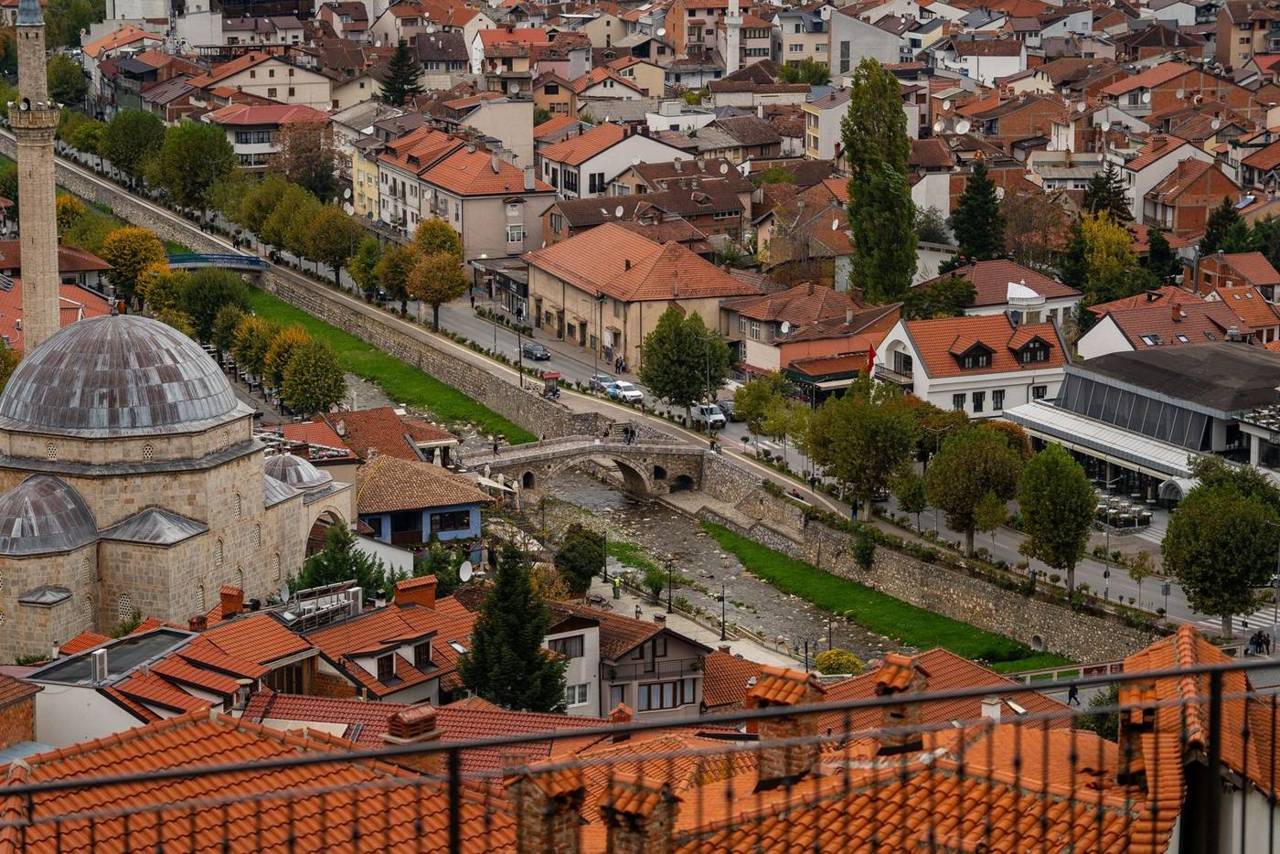
Albania and Kosovo: from Krujë to Prizren and Peja
The Road of the Nation into Kosovo, between Ottoman Prizren, the Serbian monasteries of Dečani and Gračanica and the Rugova gorge.
- Tirana
- Kruja
- Kukës
- Prizren
- Gjakova
- Dečani
- Peja
- Pristina
Day by day
- Day 1
Arrival in Tirana and a first evening in the city
This trip takes you from Albania to Kosovo along the Road of the Nation, the motorway that since 2009 has linked the two countries through the northern mountains. You will see Kruja and Skanderbeg's castle, Prizren, the bazaar of Gjakova, the Serbian monasteries of Dečani, Peja and Gračanica, the Rugova gorge and Pristina. You travel by rental car or with a driver.
Before you go: Italian citizens can enter Albania with an electronic identity card or a passport, valid for at least three months after leaving the country, without a visa for tourist stays. Italian paper identity cards are no longer valid for travel abroad from 3 August 2026. In Kosovo too, European Union citizens enter without a visa with an electronic identity card or a passport; check Viaggiare Sicuri again before you leave. Other nationalities should check their own rules. The United States and the United Kingdom advise against the northern municipalities of Kosovo, near the border with Serbia: North Mitrovica, Zvečan, Zubin Potok and Leposavić. This route stays well away from that area.
You land in Tirana and pick up the car. Ask the rental company straight away for written permission to enter Kosovo: the European green card is not valid there, and insurance is bought at the border.
In the evening, stroll around Skanderbeg Square and along the Boulevard of the Martyrs of the Nation, as far as the Pyramid, the former museum dedicated to Enver Hoxha, now open with steps up to the top.
Overnight in Tirana.
Practical tip: Kosovo uses the euro, so you only need lek for the Albanian part of the trip.
- Day 2
Kruja and the Road of the Nation to Prizren
Leave early for Kruja, less than an hour from Tirana, on the slopes of the mountain. Here in the fifteenth century Skanderbeg held out against Ottoman sieges, which is why the little town is a symbol for all Albanians.
First walk through the old bazaar, a sloping street of wood and stone, with shops selling carpets, copper and felt. Then enter the castle: the Skanderbeg Museum tells the hero's life with weapons, paintings and a copy of his helmet with the goat's head, and the Ethnographic Museum, in an Ottoman house, shows how a wealthy family lived. Check prices and times.
After lunch, take the A1 motorway north. The road climbs through the mountains of Mirdita and passes through the Kalimash tunnel, more than five kilometres long, then drops towards Kukës and the Drin lake. At the Morinë crossing you enter Kosovo: show your document, buy the car insurance and carry on. From Tirana to Prizren it takes about three and a half hours of driving in all.
You reach Prizren in the evening. The historic centre stretches along the Bistrica river, below the fortress, with the lights of the cafes and the minarets.
Overnight in Prizren, for two nights.
Practical tip: have euros ready in cash for the insurance at the border, because you cannot always pay by card.
- Day 3
Prizren, Kosovo's Ottoman town
Prizren is the most beautiful town in Kosovo, and you can see all of it on foot. Start at the Ottoman stone bridge over the Bistrica and Shadërvan square, with its fountain and open-air cafes.
Next to it stands the Sinan Pasha Mosque, from the seventeenth century, with its high dome and walls painted with floral patterns. Go in quietly, take off your shoes and cover your shoulders and legs. Not far away is the Church of Our Lady of Ljeviš, a medieval Serbian building with frescoes, part of the group of Medieval Monuments in Kosovo on the UNESCO World Heritage list; often you can only see it from the outside.
In late morning, visit the League of Prizren complex, on the riverbank. In this building, in 1878, Albanian leaders met to defend Albanian lands after the Treaty of San Stefano: it is one of the key places in the national story. Check prices and times.
In the afternoon, climb to the fortress, the Kalaja, in about twenty minutes on foot through lanes and steps. From the top you see the whole town, with its red roofs, mosques and churches, and the plain stretching to the mountains.
Come back down for dinner: try flija, layered pastry cooked slowly under a metal lid, and burek with yoghurt.
Overnight in Prizren.
Practical tip: climb to the fortress in the late afternoon, when the light is best and the heat lower, and come down before dark.
- Day 4
The bazaar of Gjakova and Dečani monastery
Today you head north west, into the valley where two very different places stand. From Prizren to Gjakova takes about an hour.
Gjakova has the longest bazaar in Kosovo, the Çarshia e Madhe, a paved street of low wooden shops, many rebuilt after the 1999 war. Walk slowly, look at the tailors' and goldsmiths' workshops and stop in a cafe. At the end of the bazaar is the Hadum Mosque, from the sixteenth century, with its courtyard and cemetery.
After lunch, carry on to Deçan, half an hour further north. The monastery of Visoki Dečani was built in the fourteenth century and is one of the most important in the Serbian Orthodox Church. It is a UNESCO World Heritage Site and is still guarded today by KFOR soldiers, the NATO mission. There is a check at the entrance, and you usually leave a document there until you leave.
Inside, the church of pale and pinkish marble is covered with medieval frescoes, thousands of figures of saints and scenes from the Bible. Photography is not allowed inside, and you must not photograph the soldiers. Dress modestly and speak quietly: monks still live here.
In the evening you reach Peja, at the foot of the mountains.
Overnight in Peja, for two nights.
Practical tip: carry your passport or identity card with you even in the car, because there are checks on the road to Dečani and sometimes in town.
- Day 5
The Patriarchate of Peja and the Rugova gorge
In the morning, visit the Patriarchate of Peja, on the edge of town at the mouth of the gorge. It is a group of medieval churches joined together, for centuries the seat of the Serbian patriarchs, and it too is a UNESCO World Heritage Site. The churches are painted red outside and full of frescoes inside. Here too there is a check at the entrance, and the rules are the same as at Dečani.
Then enter the Rugova gorge, which climbs for kilometres between rock walls towards the border with Montenegro. The road follows the Lumbardhi river, with waterfalls, caves and small bridges. Stop at the viewpoints and, if you like, try the via ferrata or the rope bridge with a local guide. Check prices and times.
To walk, choose a marked trail towards the mountain villages or the glacial lakes above the valley, through beech woods and pastures. In a few hours you see shepherds, wooden houses and peaks above two thousand metres.
The Canadian government points out that the mountain areas bordering Albania and Montenegro still have mines and unexploded ordnance from the war: always stay on marked trails and paved roads, and do not walk into fields with no track.
In the evening, return to Peja for dinner: taste Rugova cheese and grilled meat.
Overnight in Peja.
Practical tip: in the mountains, set off with a local guide or at least with a track downloaded to your phone, because there is no signal on many stretches.
- Day 6
Pristina and Gračanica monastery
From Peja to Pristina takes about an hour and a half. The capital of Kosovo is young and full of cafes, and its recent history can be read in the streets.
Start at the Newborn monument, large metal letters unveiled on independence day, 17 February 2008, and repainted every year with a new theme. Not far away is the National Library, with its white domes and metal mesh on the facade, one of the most debated buildings in the Balkans. Then walk along the pedestrian Mother Teresa Boulevard, the heart of the city, to the Catholic cathedral dedicated to the saint.
In the old town, visit the Imperial Mosque, from the fifteenth century, the bazaar and the Ethnological Museum, in an Ottoman house with a garden. Check prices and times.
In the afternoon, drive a quarter of an hour to Gračanica, south east of the city. The monastery was built in the fourteenth century by the Serbian king Milutin and is the last of the Medieval Monuments in Kosovo on this trip. The church, with five domes in red brick and stone, has some of the finest frescoes of the period. Gračanica is a town inhabited mainly by Serbs: you will see signs in Cyrillic, Orthodox churches and an atmosphere very different from Pristina.
Overnight in Pristina.
Practical tip: central Pristina is easy to explore on foot; leave the car in a supervised car park and leave nothing visible inside.
- Day 7
Back to Albania and a last evening in Tirana
Today you return to Albania. From Pristina to Tirana it takes about four hours on the motorway via Prizren and the Morinë crossing, so set off after breakfast.
If you have time, stop at Kukës, the first Albanian town after the border, on the Drin reservoir. In 1999 the town took in tens of thousands of refugees from Kosovo, a memory that is still alive here. Have a coffee on the lakeside and then continue through the northern mountains, with scattered villages and wooded hills.
In the afternoon you reach Tirana. Return the car and, if there is time, visit Bunk'Art 1, the large nuclear shelter built for the regime's leaders under a hill on the eastern edge of the city. Inside, dozens of rooms tell the story of the country under the dictatorship. Check prices and times.
For your last evening, go to Blloku or to the Pazari i Ri district, the New Bazaar, with its stalls of fruit and vegetables, cheese and honey, surrounded by many places to eat. Try speca me gjizë, peppers stuffed with curd cheese, and Tirana's fërgesë.
Overnight in Tirana.
Practical tip: when leaving Kosovo, keep the insurance receipt until the border, because it is sometimes asked for at the last check.
- Day 8
Flight home
This is the last day. If your flight is in the afternoon, in the morning take the Dajti Ekspres cable car, which climbs from the edge of Tirana up Mount Dajti, to more than a thousand metres, in about a quarter of an hour. From the top you see the whole city and the plain down to the sea. Check prices and times, because the cable car stops in strong wind.
Then go to the airport, about half an hour from the centre.
In eight days you have crossed the Albanian world from one side of the border to the other: Skanderbeg's Kruja, the Road of the Nation through the mountains, Prizren with its bridge, mosque and fortress, the bazaar of Gjakova, the frescoes of Dečani, Peja and Gračanica, the Rugova gorge and Pristina, capital of Europe's youngest country. It is a trip for people who already know the Albanian coast and want to understand the recent history of the Balkans.
When to go: the best period runs from May to October. May, June and September are the ideal months, with long days and good temperatures for walking. In August Prizren hosts Dokufest, a documentary film festival, and the town is crowded: book early. In winter a lot of snow falls in the Rugova gorge and in the mountains.
Practical tip: before you leave, buy something to take home: a carpet or a copper object from Kruja, silver filigree from Prizren or mountain tea.
For those who have seen the Albanian coast and want to understand the Albanian world beyond the border, with recent history still visible. Prizren, Kosovo's finest town, is the highlight. The drawback is two days lost on the road, and Kosovo needs some care: proper documents and security checks at the entrance to the Serbian monasteries. We wrote this route ourselves; AnM only covers Kosovo within Balkanika.
Before you go
- Documents and visa
- Electronic identity card or passport for EU citizens, valid for at least three months after leaving Albania. Italian paper identity cards are no longer valid for travel abroad from 3 August 2026. No visa is needed for tourist stays of up to 90 days.
- Health and vaccines
- No compulsory vaccinations. Outside Tirana medical facilities are limited: you need insurance covering medical costs and repatriation. Drink sealed bottled water. Emergencies: 127 ambulance, 129 police, 128 fire.
- Money and payments
- Albanian lek. Cash machines and cards work mainly in cities and tourist areas; in villages and small shops you need cash.
- Power sockets
- Types C and F, 230 volts: you need an adapter for British plugs.
- Time zone
- UTC+1, UTC+2 in summer, one hour ahead of the UK.
- Safety
- The United States rates Albania at level 2 because of crime, with no areas to avoid. The UK advises staying away from demonstrations in central Tirana. In winter mountain roads can be blocked by snow. Official advice: GOV.UK.
Information checked in November 2026 for Italian and EU citizens. Rules change: always check before you travel.
Variations
In 6 days: Kruja, Prizren and Peja with Dečani, returning to Albania without the Pristina stage.
In 11 days: add two days in Theth and Valbona via Lake Koman, and a day in Shkodër.
Frequently asked questions
What document do I need for Kosovo?
European Union citizens enter Kosovo without a visa with an electronic identity card or a passport. Check Viaggiare Sicuri before you leave. Other nationalities should check their own rules.
Is Kosovo safe for tourists?
Yes, Prizren, Peja, Gjakova and Pristina are calm. The governments of the United States, the United Kingdom and Canada advise against the northern municipalities near Serbia, such as North Mitrovica, Zvečan, Zubin Potok and Leposavić, which this trip does not visit.
Can I enter Kosovo with a car rented in Albania?
Yes, but you need written permission from the rental company. The European green card is not valid in Kosovo: at the border you buy local insurance for the days of your trip.
Indicative itinerary written by World Atlas. Before booking, check timetables, seasonal openings, documents and safety.
 8 daysModerate
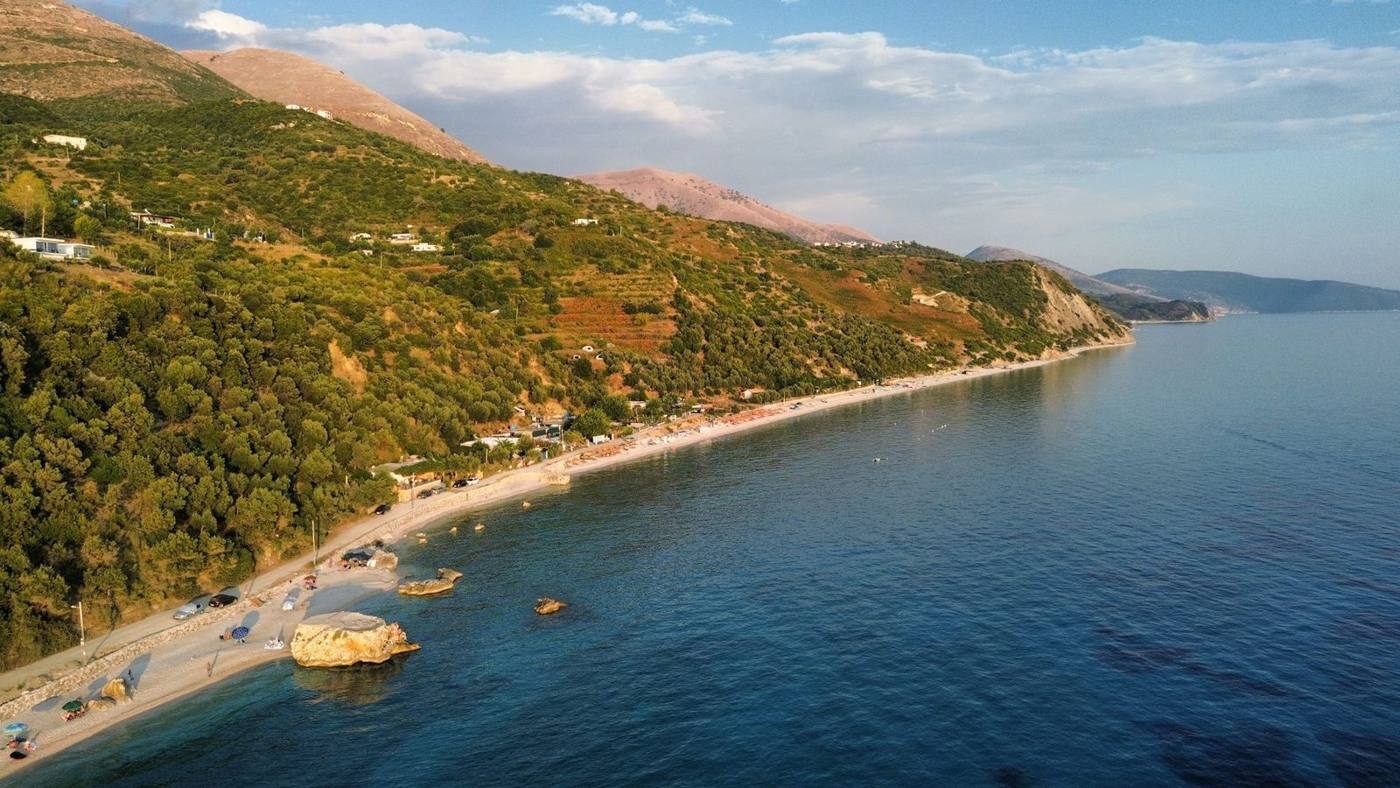
The coastal trail on foot, from Dhërmi to Nivicë
Five days of walking with a pack between coves, olive groves and abandoned hill villages above the Ionian, sleeping in the villages along the way.
 16 daysEasy
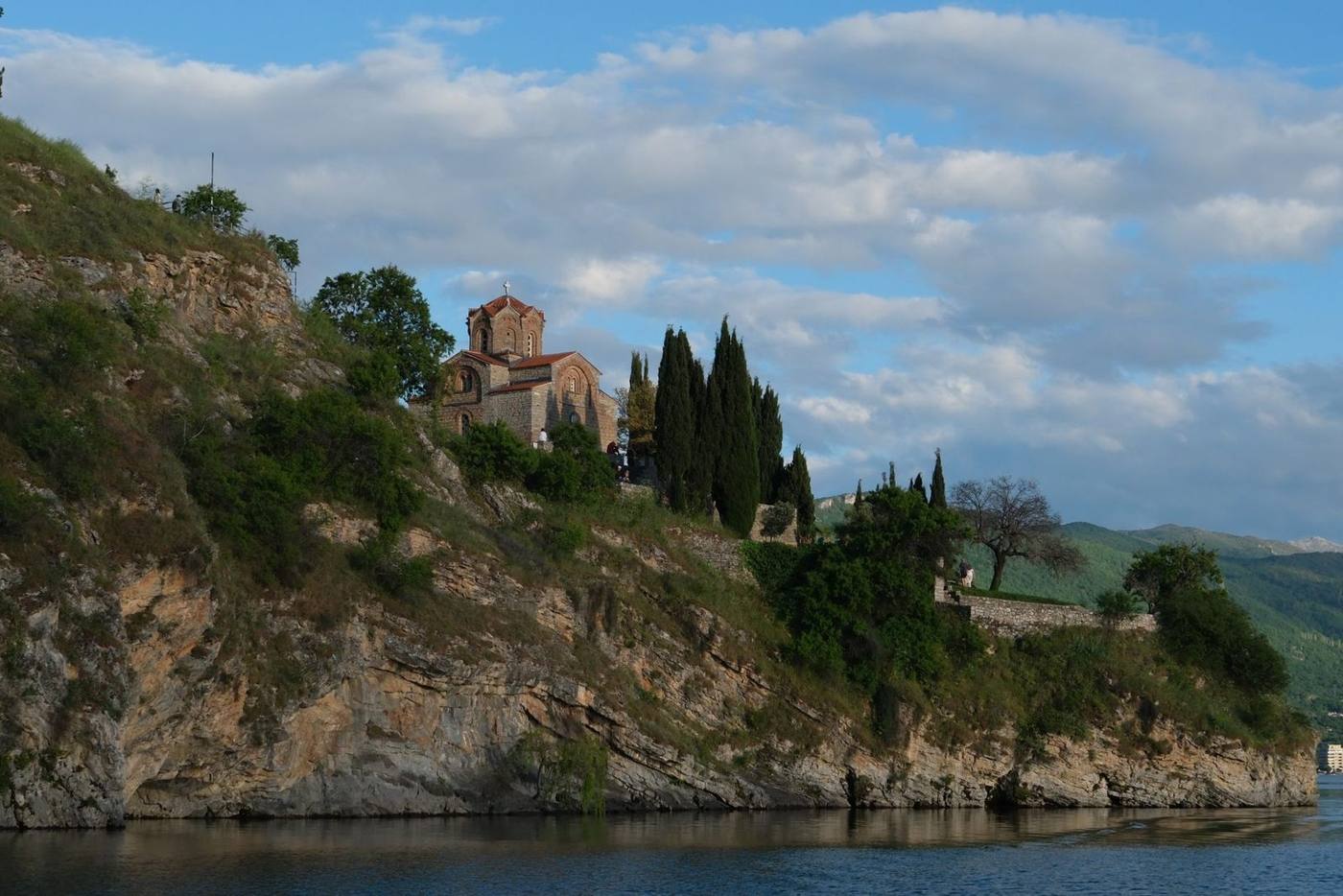
Albania, Ohrid and the Bay of Kotor
The full loop of Albania with two border crossings: the lakeside monasteries of Ohrid in North Macedonia and the Venetian towns of Montenegro.
 20 daysModerate
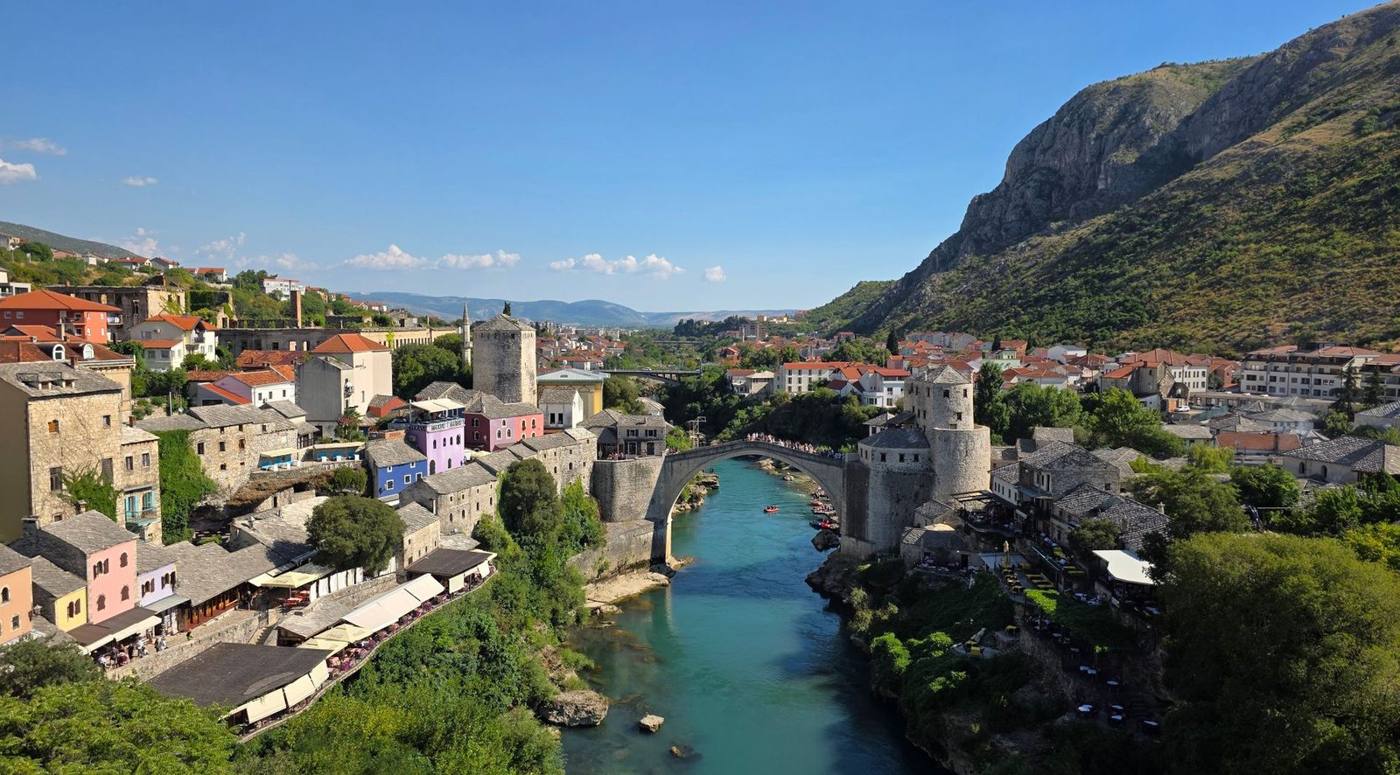
Balkanika: six countries from Tirana to Sarajevo and back
Twenty days by minibus through Albania, North Macedonia, Kosovo, Montenegro, Bosnia and Herzegovina and Dubrovnik, closing the loop at Theth.