Balkanika: six countries from Tirana to Sarajevo and back
Twenty days by minibus through Albania, North Macedonia, Kosovo, Montenegro, Bosnia and Herzegovina and Dubrovnik, closing the loop at Theth.
- Tirana
- Berat
- Gjirokastra
- Coriza
- Ocrida
- Prizren
- Žabljak
- Mostar
- Sarajevo
- Theth
Day by day
- Day 1
Arrival in Tirana
This trip is a twenty day loop by minibus through six Balkan countries: Albania, North Macedonia, Kosovo, Montenegro, Bosnia and Herzegovina and one day in Croatia, at Dubrovnik. You start and finish in Tirana, closing the circuit in the Theth valley.
Before you go: Italian citizens can enter Albania with an electronic identity card or a passport, valid for at least three months after leaving the country, without a visa for tourist stays. Italian paper identity cards are no longer valid for travel abroad from 3 August 2026. With the electronic identity card or a passport you also enter North Macedonia and Bosnia and Herzegovina without a visa, with at least three months' remaining validity, and Kosovo. In Montenegro the electronic identity card is valid for up to 30 days. Croatia is in the European Union. Other nationalities should check their own rules. The United States advises reconsidering travel to the northern municipalities of Kosovo, near Serbia: North Mitrovica, Zvečan, Zubin Potok and Leposavić, where the UK reports protests that have at times turned violent. This route stays well away from that area. In Bosnia and Herzegovina and in some parts of Kosovo landmines from the war remain: never leave marked roads and paths.
You land at Tirana airport, about half an hour from the centre, and meet the group. In the late afternoon walk to Skanderbeg Square, with the Et'hem Bey Mosque and the clock tower, and then into the Blloku, the district once reserved for the regime's leaders.
For dinner try byrek, the savoury filo pie, and tavë kosi, lamb baked with yoghurt.
Sleep in Tirana.
Practical tip: the six countries use four currencies, lek, denar, euro and Bosnian mark: keep a small envelope for each.
- Day 2
Dajti, Durrës and Berat
Today you leave the capital after a first look from above.
Early in the morning take the Dajti cable car, which climbs in about a quarter of an hour over the woods to more than a thousand metres. From the terrace you see the whole Tirana plain and, when the air is clear, the sea. Check prices and times: in strong wind the cable car stops.
Then the minibus heads down to the coast at Durrës, about an hour away. Visit the Roman amphitheatre, from the second century AD, discovered under the houses only in the twentieth century, with a small chapel decorated with Byzantine mosaics. Check prices and times. Walk to the Venetian tower and along the seafront.
After lunch the journey continues south to Berat, the town of a thousand windows, a UNESCO World Heritage Site, with white houses stacked on the hillside on both sides of the Osum river.
In the late afternoon climb to the castle, a citadel that is still lived in, with churches and stone lanes. Visit the Onufri Museum, in the Cathedral of the Dormition, with icons by the sixteenth century painter famous for his red. Check prices and times.
At sunset walk down to Mangalem and cross the bridge to Gorica, on the other bank, to watch the windows light up.
For dinner try stuffed aubergines and the local red wine.
Sleep in Berat.
Practical tip: at Berat Castle the stones are smooth and steep: wear shoes with soles that grip.
- Day 3
Ardenica, Apollonia and Vlorë
Today is a day of ancient history among the hills of the Fier plain.
From Berat the minibus heads west to the Monastery of Ardenica, on a hill among olive trees. The church is decorated with frescoes, and tradition says that Skanderbeg, the national hero, was married here. Check times.
Then visit the archaeological park of Apollonia, founded by Greek colonists from Corinth and Corcyra and later an important Roman city. The young Octavian, the future emperor Augustus, was studying here when he heard of Caesar's murder. Walk past the façade of the bouleuterion, the odeon, the portico and the columns on the hill, then go into the medieval monastery that houses the museum. Check prices and times.
In the afternoon carry on to Vlorë, the town where Albania's independence was declared in 1912. Visit Flag Square, with the independence monument, and the sixteenth century Muradie Mosque.
At sunset walk along the long new seafront, with views of Sazan Island and the Karaburun peninsula, where the mountains drop into the sea.
For dinner try fish from the bay, mussels and a salad with sheep's cheese.
Sleep in Vlorë.
Practical tip: there is little shade at Apollonia: bring a hat, water and sun cream even in spring.
- Day 4
Llogara, the Riviera, Butrint and Gjirokastër
Today is one of the longest days of the trip, all along the southern coast.
From Vlorë the road climbs in bends to the Llogara Pass, at more than a thousand metres, among the black pines of the national park. From the viewpoint you see the Albanian Riviera from above, with its beaches and villages below.
Then go down towards Dhërmi and Himarë and follow the coast south, between olive groves and bays. Stop at Porto Palermo to see from outside the fortress attributed to Ali Pasha, on a small peninsula.
After lunch you reach the Sarandë area and carry on to Butrint, the most important archaeological site in Albania, a UNESCO World Heritage Site. In the woods on the lake shore you visit the Greek theatre, the baths, the baptistery, the great basilica and the Lion Gate. Check prices and times.
In the late afternoon the minibus heads inland, with a quick stop at the Blue Eye if there is time, the blue spring in the woods, and reaches Gjirokastër in the evening, the stone town below the fortress, a UNESCO World Heritage Site.
For dinner try qifqi, rice and egg balls with mint, typical of Gjirokastër.
Sleep in Gjirokastër.
Practical tip: today you spend many hours in the minibus: keep water, fruit and a snack in your bag, and a swimsuit for a quick dip if the group stops by the sea.
- Day 5
Gjirokastër, Përmet and Korçë
Today you first visit the stone town, then drive one of the most beautiful roads in the country.
In the morning walk up to Gjirokastër fortress, with its clock tower and the view over the Drino valley. Check prices and times. Then visit one of the great Ottoman houses, such as the Zekate House, with its painted wooden rooms. Check prices and times.
Then the minibus goes to Tepelenë and up the Vjosa valley to Përmet, a small town of flowers and vineyards. The Vjosa is a wild river, with no dams: in 2023 Albania made it Europe's first wild river national park. In Përmet try gliko, fruit cooked in syrup, and raki.
In the afternoon the road climbs towards Leskovik, among high mountains and forests, near the Greek border. It is narrow and full of bends, and you meet shepherds with their flocks. Then you descend through Ersekë to Korçë.
In the evening stroll through Korçë's restored old bazaar and past the Orthodox cathedral. The town is known for its serenades, the love songs of the old days.
For dinner try lakror, the thin pastry pie filled with vegetables, and the town's beer.
Sleep in Korçë.
Practical tip: on the mountain road between Përmet and Leskovik, anyone who gets travel sick should sit at the front and eat lightly.
- Day 6
Voskopojë, Sveti Naum and Struga
Today you cross into North Macedonia along the southern side of Lake Ohrid.
In the morning drive up from Korçë to Voskopojë, at about 1,150 metres. In the eighteenth century it was a large trading town, with schools and a printing press; then it was destroyed several times. Today it is a quiet village that keeps a few churches with walls covered in frescoes, such as Saint Nicholas. Ask the keeper to go in, and check times.
Then the minibus goes to Pogradec, on the Albanian shore of the lake, and crosses the Tushemisht border. Just after it is the Monastery of Sveti Naum, founded at the start of the tenth century by Saint Naum, a companion of Saint Clement. The church stands on a headland, with peacocks in the garden. Below are the clear springs of the Crn Drim river, best seen from a rowing boat.
In the afternoon follow the eastern shore north, pass Ohrid and reach Struga, where the Black Drin leaves the lake. Lake Ohrid is one of the oldest lakes in Europe and a UNESCO World Heritage Site.
In the evening walk along the river in the centre of Struga and watch the sunset over the water.
For dinner try the lake trout and tavče gravče, beans baked in an earthenware pot.
Sleep in Struga, for two nights.
Practical tip: in North Macedonia the currency is the denar: change a small amount at the border or use a cash machine in Struga.
- Day 7
Heraclea, Bitola and Ohrid
Today you are based in Struga, between ancient ruins and Byzantine churches.
In the morning the minibus heads to Bitola, about an hour and a half. Just outside the town you visit Heraclea Lyncestis, founded by Philip II of Macedon, the father of Alexander the Great, and later a Roman town and a bishop's seat. The finest remains are the mosaics of the basilicas, with deer, peacocks and trees. Check prices and times.
Then walk in Bitola along Širok Sokak, the pedestrian street with the colourful nineteenth century buildings, from the time when the town hosted many European consulates. At the end you find the clock tower and the old bazaar.
In the afternoon you return to the lake and visit Ohrid. Go into the Church of Saint Sophia, with medieval frescoes among the most important in the region, then take the path up to the Church of Saint John at Kaneo, on its rocky headland above the water.
Then climb to Plaošnik, where the Church of Saint Panteleimon, linked to Saint Clement and Slavic writing, has been rebuilt, and to Samuel's Fortress. Check prices and times.
In the evening you return to Struga.
For dinner try ajvar, the roasted red pepper spread, with white cheese and bread.
Sleep in Struga.
Practical tip: in Ohrid the lanes of the centre are steep and stony: it is easier to reach Saint John from the lakefront and then walk down towards Plaošnik.
- Day 8
Debar, Mavrovo, Tetovo and Skopje, then Kosovo
Today is a long day, with two countries and many stops.
In the morning the minibus heads north along the Albanian border to Debar. Shortly afterwards, in the Radika river valley, you visit the Monastery of Saint John Bigorski, famous for its carved wooden iconostasis, with hundreds of figures. Cover your shoulders and legs.
Then you cross Mavrovo National Park, the largest in the country, with beech forests and mountains. On the artificial Lake Mavrovo you can see the Church of Saint Nicholas, partly submerged when the dam was built: when the water is low you can walk up to its walls.
In Tetovo stop at the Painted Mosque, the Šarena Džamija, with its outer and inner walls covered in colourful designs. Check times.
In the afternoon you reach Skopje, the capital. Cross the stone bridge over the Vardar river and walk through the old bazaar, one of the largest in the Balkans, with mosques, caravanserais and workshops. The fortress stands above it.
In the evening the minibus crosses the border into Kosovo at Hani i Elezit and reaches Suva Reka, near Prizren. In Kosovo the currency is the euro.
Sleep in Suva Reka.
Practical tip: keep your ID within easy reach on the minibus: at the borders an officer often comes on board and checks everyone.
- Day 9
Prizren, Gračanica and Pristina
Today you visit the most beautiful town in Kosovo and its capital.
In the morning go to Prizren, on the Bistrica river, below the mountains. Walk over the Ottoman stone bridge and on to the Sinan Pasha Mosque, from the seventeenth century, with its dome and minaret above the square. Not far away is the Church of Our Lady of Ljeviš, from the fourteenth century, part of the Medieval Monuments in Kosovo UNESCO World Heritage Site; you mostly see it from the outside, so check times.
Then climb to the fortress above the town, the Kalaja, for the view over the roofs, minarets and bell towers.
For lunch try flija, a pie of thin layers of batter cooked slowly under an iron lid, and burek.
In the afternoon the minibus heads to Pristina, about an hour and a half. Before the city you visit Gračanica Monastery, built in 1321 by the Serbian king Milutin, with its five domed church and the frescoes inside. This too is a UNESCO World Heritage Site. Women cover their shoulders and legs. Check times.
In the evening walk in Pristina along Mother Teresa Boulevard, the pedestrian avenue full of young people and cafés, to the Newborn monument, the large lettering made for independence in 2008. Also look at the National Library, with its unusual architecture.
Sleep in Pristina.
Practical tip: old explosive remnants are still found in the Kosovo countryside: even for a photo, do not leave roads and well used paths.
- Day 10
Dečani, Peja, the Rugova Gorge and Podgorica
Today you cross western Kosovo and enter Montenegro.
In the morning the minibus heads west to Dečani Monastery, at the foot of the mountains. The fourteenth century church has a façade of banded marble and, inside, thousands of painted figures: it is one of the largest fresco cycles in the Balkans and a UNESCO World Heritage Site. The monastery is guarded and at the entrance there is a checkpoint where you are asked for your ID. Cover your shoulders and legs. Check times.
Then go to Peja and visit the Patriarchate of Peć, a group of painted medieval churches at the mouth of the gorge, also a UNESCO World Heritage Site. Check times. In the centre walk through the old bazaar.
For lunch try mountain cheese and grilled meat.
In the afternoon the road enters the Rugova Gorge, with tall rock walls above the river and tunnels cut into the mountain. Stop at a viewpoint for photos. The road then climbs to the border pass with Montenegro and descends through Rožaje and Berane, among forests and mountains.
In the evening you reach Podgorica, the capital of Montenegro. In Montenegro the currency is still the euro.
Sleep in Podgorica.
Practical tip: the pass between Kosovo and Montenegro can be closed or difficult with snow until spring: in April check the road before setting off.
- Day 11
Ostrog, the Tara Canyon and Žabljak
Today you climb into the mountains of Montenegro, the wildest part of the trip.
In the morning the minibus goes to Ostrog Monastery, about an hour away. The upper church is built into the white rock face, high above the valley. It was founded in the seventeenth century by Saint Basil of Ostrog, whose relics are kept here, and it is the most important place of pilgrimage in the country. You reach the upper car park and walk the last stretch. Cover your shoulders and legs; women may cover their hair.
Then you pass through Nikšić and climb onto the plateaus to the north. The road crosses pastures and pine forests to the Đurđevića Tara Bridge, the great white arched bridge over the canyon of the Tara river, completed in 1940. From the bridge you see the green river far below. The canyon is among the deepest in Europe.
In the afternoon you reach Žabljak, a small mountain town in Durmitor National Park, a UNESCO World Heritage Site.
At sunset walk around the Black Lake, an easy stroll of about an hour among the fir trees, with the peaks of Durmitor reflected in the water. Check the park's prices and times.
For dinner try kačamak, cornmeal with cheese and cream, and slow cooked lamb.
Sleep in Žabljak.
Practical tip: in Žabljak the evenings are cold even in summer: bring a jacket and a hat.
- Day 12
From Foča to the Blagaj spring
Today you enter Bosnia and Herzegovina and head down to the southern lands.
In the morning the minibus leaves Durmitor and descends along the Piva or Tara canyon to the Šćepan Polje border, where the two rivers join to form the Drina. The stretch is narrow and spectacular, with green water below the road. In Bosnia and Herzegovina the currency is the convertible mark.
You reach Foča, a small town on the Drina, a starting point for rafting on the Tara and close to Sutjeska National Park, the oldest in the country. Stop for a coffee.
Then the road crosses the plateaus of Herzegovina, with few houses and wide stony pastures, through Gacko and Nevesinje. The landscape changes: it becomes drier and brighter.
In the late afternoon you reach Blagaj, near Mostar. Here the Buna river flows out from the bottom of a cave, below a tall rock face, and it is one of the largest springs in Europe. Beside the water stands the tekke, a sixteenth century dervish house with wooden rooms. Check prices and times. Cover your shoulders and legs.
For dinner try trout from the Buna and ćevapi, small grilled meat sausages served in bread.
Sleep in Blagaj or Mostar.
Practical tip: landmines are still a problem in Bosnia and Herzegovina: even in the fields beside the road, do not walk where there are no marked paths.
- Day 13
Stolac, Počitelj, Mostar and on to Sarajevo
Today you visit three places in Herzegovina and in the evening drive up to the capital.
In the morning the minibus goes to Stolac. Just outside the town is the Radimlja necropolis, with dozens of stećci, the large medieval tombstones carved with figures, swords and horsemen. They are part of a UNESCO site that brings together these tombs in several Balkan countries. Check prices and times.
Then go to Počitelj, an Ottoman stone village built on the hill above the Neretva river, with its mosque, tower and walls. Climb up to the tower for the view of the river.
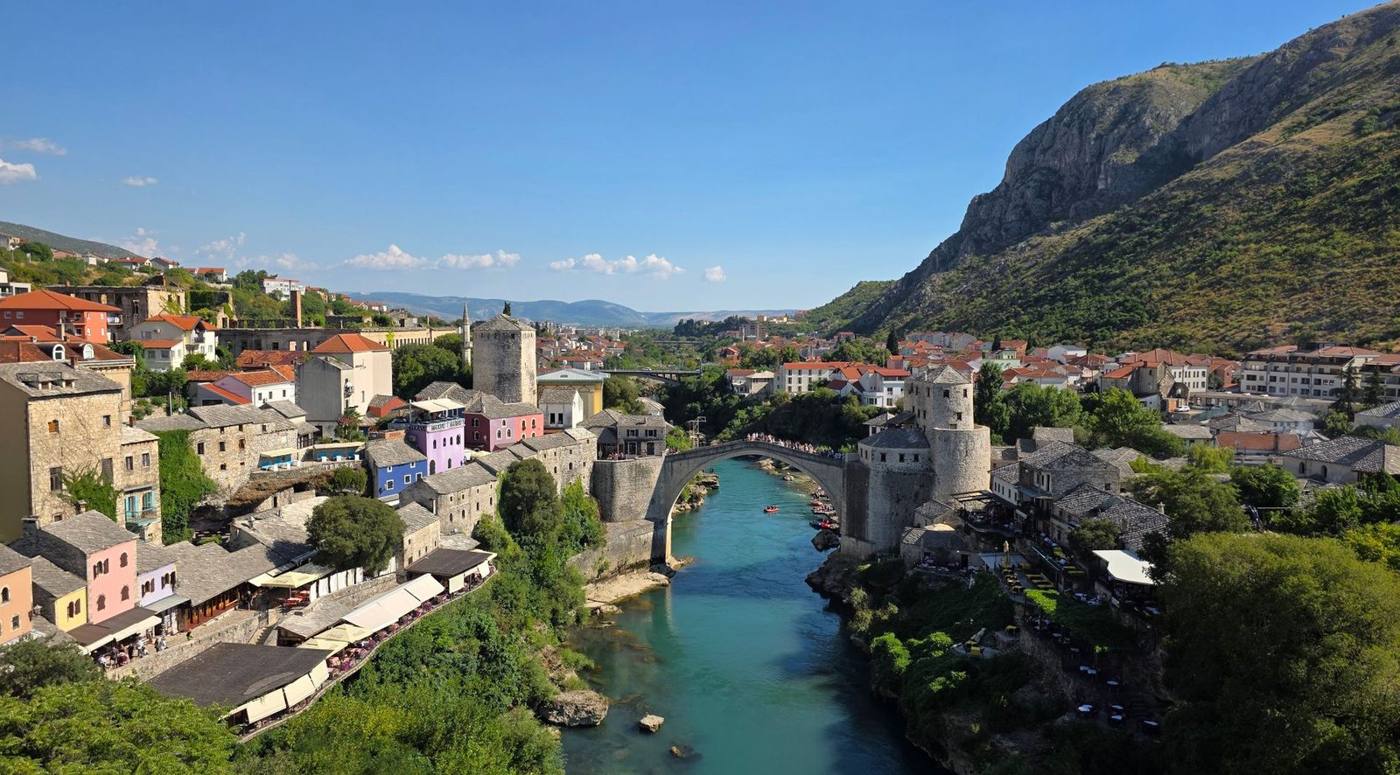
At midday you reach Mostar. Walk to the Stari Most, the old bridge, built by the Ottomans in 1566, destroyed during the war in 1993 and rebuilt with original stones recovered from the river, reopening in 2004. Divers leap from the bridge into the Neretva when the tourists have collected enough money. Walk through the old bazaar and visit one of the Ottoman houses.
For lunch try meat burek and baklava.
In the late afternoon take the road to Sarajevo along the Neretva valley, about two and a half hours through canyons and lakes.
In the evening take a first walk in the Baščaršija, the old bazaar.
Sleep in Sarajevo, for two nights.
Practical tip: in Mostar reach the bridge in the morning or late in the evening: around midday many coach groups arrive.
- Day 14
Bjelašnica and Sarajevo
Today you spend half the day in the mountains and half in the city.
In the morning the minibus climbs Bjelašnica, about an hour south of Sarajevo. Some of the ski races of the 1984 Winter Olympics were held here. In good weather go as far as Lukomir, one of the highest villages in the country, with stone houses and dark roofs, where families still live from herding. In this area walk only on marked paths and with a local guide: in the mountains around Sarajevo the risk of landmines remains.
In the afternoon you return to the city. Walk through the Baščaršija, with the Sebilj fountain, the coppersmiths' workshops and the sixteenth century Gazi Husrev-beg Mosque. Then follow the Miljacka river to the Latin Bridge, where Archduke Franz Ferdinand was killed in 1914, the event that started the First World War.
Visit the Vijećnica, the Moorish style city hall that housed the national library, burnt during the siege and later rebuilt. Check prices and times.
To understand the siege of the city from 1992 to 1996, go to the Tunnel Museum, near the airport, where you walk through a section of the underground passage that brought food and weapons into the city. Check prices and times.
For dinner try ćevapi, burek and a Bosnian coffee.
Sleep in Sarajevo.
Practical tip: the road to Lukomir is unpaved and closes in winter: check whether it is passable before setting off.
- Day 15
Dubrovnik
Today you head down to the Adriatic and spend a day in Croatia.
Early in the morning the minibus leaves Sarajevo and heads south again, through Mostar and Herzegovina, to the Croatian border. It is about five hours on the road with stops. Croatia is in the European Union and the Schengen area and uses the euro.
In the early afternoon you reach Dubrovnik, the old town by the sea, a UNESCO World Heritage Site, enclosed by walls of pale stone. For centuries it was the Republic of Ragusa, a merchant city state that rivalled Venice.
Enter through the Pile Gate and walk along the Stradun, the main street paved with polished stone. Stop at Onofrio's Fountain and visit the Rector's Palace, now a museum. Check prices and times.
In the late afternoon climb onto the walls, about two kilometres long, which run right round the city with their towers and bastions. From above you see the red roofs, the bell towers and the sea. Check prices and times.
At sunset walk to the old harbour, or sit on the rocks outside the walls.
For dinner try Adriatic fish, black risotto and oysters from Ston.
Sleep in Dubrovnik or nearby.
Practical tip: in Dubrovnik go up on the walls as late as possible: in summer the middle of the day is very hot and crowded with cruise passengers.
- Day 16
Kotor, Lovćen and Cetinje
Today you return to Montenegro and climb from the bay to the mountain.
In the morning the minibus follows the coast to the Montenegrin border and then enters the Bay of Kotor, the deep inlet closed in by mountains that looks like a fjord. Along the shore there are stone villages such as Perast, with its two small islands and their churches just offshore.
You reach Kotor and walk through the old town, a UNESCO World Heritage Site, among stone squares, the Cathedral of Saint Tryphon and Venetian palaces. If you have the energy, climb the walls to the Fortress of Saint John: more than a thousand steps, with a view over the whole bay. Check prices and times.
In the early afternoon take the serpentine road, with dozens of hairpin bends above the bay, to Lovćen National Park. At the top of the mountain is the mausoleum of Njegoš, the prince bishop and poet of Montenegro: you climb hundreds of steps through a tunnel to a terrace from which, under a clear sky, you can see almost the whole country. Check prices and times.
Then go down to Cetinje, the old royal capital, with its monastery and the buildings of the old embassies.
In the evening you reach Budva, on the coast.
For dinner try Njeguši ham and cheese, typical of the village below Lovćen.
Sleep in Budva.
Practical tip: the serpentine road is hard on anyone who gets car sick: sit at the front and watch the road.
- Day 17
Budva, Sveti Stefan, Bar and Ulcinj
Today you follow the Montenegrin coast almost to the Albanian border.
In the morning walk through Budva's old town, inside the Venetian walls, with lanes of white stone, churches and the citadel by the sea. Early in the morning it is quiet.
Then the minibus heads south to Sveti Stefan, the islet of stone houses joined to the mainland by a strip of sand. The island is a private complex, but the finest view is from the road above and from the beach next to it. Stop for a photo and a swim.
At midday you reach Bar and go up to Stari Bar, the abandoned old town on the hill, at the foot of the mountain. Among the ruins are churches, a mosque, an aqueduct and the walls. Check prices and times. Near the road stands a very old olive tree, considered one of the oldest in Europe.
In the afternoon you reach Ulcinj, the last town before Albania. The old town sits on a rock above the sea, and tradition says that Sabbatai Zevi, who had proclaimed himself the messiah in the seventeenth century, lived here in exile. South of the town lies Velika Plaža, a sandy beach about twelve kilometres long.
For dinner try fish and the local olives.
Sleep in Ulcinj.
Practical tip: in Stari Bar the stones are uneven and in summer it is very hot: visit before eleven in the morning or after five in the afternoon.
- Day 18
Shkodër and the Theth valley
Today you return to Albania and climb into the Albanian Alps.
In the morning the minibus crosses the Sukobin and Muriqan border and reaches Shkodër. Climb to Rozafa Fortress, on the hill where three rivers meet, with a view of Lake Shkodër, the largest lake in the Balkans. A legend tells of a young woman walled into the foundations to keep the walls standing. Check prices and times.
Then walk through the centre, along the pedestrian street with its colourful houses, and stop for a coffee. Shkodër is a town of bicycles.
In the early afternoon take the road to Theth, about two and a half hours. After the plain you climb towards the village of Bogë and the pass, with hairpin bends through beech woods and the limestone peaks of the Albanian Alps, also called the Accursed Mountains. Then you go down into the Theth valley, a green basin closed in by rock walls.
At sunset walk through the village, among the stone houses scattered across the meadows and the little church with its bell tower, the symbol of the valley.
For dinner you eat in the house where you sleep: usually there is cheese, meat, vegetables from the garden, homemade bread and raki.
Sleep in Theth, in a family guesthouse.
Practical tip: in Theth the phone signal is weak and many places accept only cash: take money out in Shkodër.
- Day 19
Theth, Lezhë and Krujë
Today you spend the morning in the mountains and in the afternoon head down towards the capital.
Early in the morning walk to the Grunas waterfall, about an hour on foot from the village on an easy path through the woods. The water falls into a narrow gorge. On the way back visit the kulla, the stone tower where men involved in blood feuds governed by the Kanun, the ancient code of the mountains, once shut themselves in. Check prices and times.
If you have more time you can walk towards the Blue Eye of Theth, a pool of turquoise water, but it takes a few extra hours there and back.
Around midday the minibus sets off again, climbs back over the pass and descends to the plain. You pass through Lezhë and stop at the Skanderbeg Memorial, built over the ruins of the church where the hero was buried in 1468.
In the late afternoon climb to Krujë, on the mountain above the plain. Walk through the old covered bazaar, with its wooden roofs and shops selling carpets, felt and silver, then go into the castle and the museum of Skanderbeg, who held out against the Ottomans here. Check prices and times.
In the evening you reach Tirana for the group's last dinner.
For dinner try fërgesë, peppers, tomatoes and cheese cooked in a pan.
Sleep in Tirana.
Practical tip: today's drive is long: buy your souvenirs in Krujë, so you do not have to rush tomorrow.
- Day 20
Flight home from Tirana
On the last day you leave Albania.
If your flight leaves late, take a walk round Tirana's New Bazaar, the restored covered market, and buy mountain honey, olive oil, mountain tea or raki. The airport is about half an hour from the centre, but traffic can make it longer.
In these twenty days you have crossed six countries without a break, seeing how one country turns into the next: Berat and Apollonia, the Riviera and Butrint, the stone town of Gjirokastër and the Vjosa valley, the churches of Voskopojë and Lake Ohrid with Sveti Naum, Heraclea and Bitola, the Painted Mosque of Tetovo and the bazaar of Skopje, Prizren and the monasteries of Gračanica and Dečani, the Rugova Gorge, Ostrog and the bridge over the Tara, Durmitor, the Blagaj spring, Mostar and Sarajevo, the walls of Dubrovnik and Kotor, Lovćen, the Montenegrin coast and finally the Theth valley.
The highlight is the continuity, with the history of the 1990s before your eyes. The drawback is the effort: you change bed almost every day, Albania takes up only the beginning and the end, and borders need patience.
When to go: the best periods are from April to June and September. In April there may still be snow on the mountain passes; in July and August the coast is full and the valleys are very hot. In October the days are shorter and the guesthouses in Theth begin to close.
Practical tip: keep a few euros and some lek for the taxi and for tips for the driver and the group guide.
This is the trip for those who want to see the Balkans once and properly, crossing borders by minibus with the history of the 1990s in plain view. Its strength is continuity: you see how one country shades into the next. The drawback is fatigue, you change beds almost every night and Albania only fills the first and last parts. You need twenty days off and patience at the borders.
Before you go
- Documents and visa
- Electronic identity card or passport for EU citizens, valid for at least three months after leaving Albania. Italian paper identity cards are no longer valid for travel abroad from 3 August 2026. No visa is needed for tourist stays of up to 90 days.
- Health and vaccines
- No compulsory vaccinations. Outside Tirana medical facilities are limited: you need insurance covering medical costs and repatriation. Drink sealed bottled water. Emergencies: 127 ambulance, 129 police, 128 fire.
- Money and payments
- Albanian lek. Cash machines and cards work mainly in cities and tourist areas; in villages and small shops you need cash.
- Power sockets
- Types C and F, 230 volts: you need an adapter for British plugs.
- Time zone
- UTC+1, UTC+2 in summer, one hour ahead of the UK.
- Safety
- The United States rates Albania at level 2 because of crime, with no areas to avoid. The UK advises staying away from demonstrations in central Tirana. In winter mountain roads can be blocked by snow. Official advice: GOV.UK.
Information checked in November 2026 for Italian and EU citizens. Rules change: always check before you travel.
Variations
In 14 days: Tirana, Berat, Ohrid, Skopje, Prizren, Durmitor, Mostar and Sarajevo, returning directly to Tirana via Podgorica, without the southern coast and without Dubrovnik.
In 23 days: add a night in Përmet, a day rafting on the Tara from Foča and a day walking from Theth to Valbona, returning across Lake Koman.
Frequently asked questions
What documents do I need for the six countries?
Italian citizens enter all of them with an electronic identity card or a passport, without a visa. In Albania, North Macedonia and Bosnia and Herzegovina the document must have at least three months' remaining validity; in Montenegro the identity card is valid for stays of up to 30 days. Other nationalities should check their own rules.
Is Kosovo safe?
The United States rates Kosovo at level 2 and advises reconsidering travel to the northern municipalities: North Mitrovica, Zvečan, Zubin Potok and Leposavić. The route only passes through Prizren, Pristina, Gračanica, Dečani and Peja, well away from that area. Avoid demonstrations and large gatherings.
Are there still landmines in the Balkans?
Yes, in Bosnia and Herzegovina and in some remote parts of Kosovo landmines and unexploded weapons from the war remain, especially in the countryside and the mountains. Towns and main roads are safe: never leave roads, paved areas and marked paths without an experienced guide.
Indicative itinerary written by World Atlas. Before booking, check timetables, seasonal openings, documents and safety.
 9 daysEasy
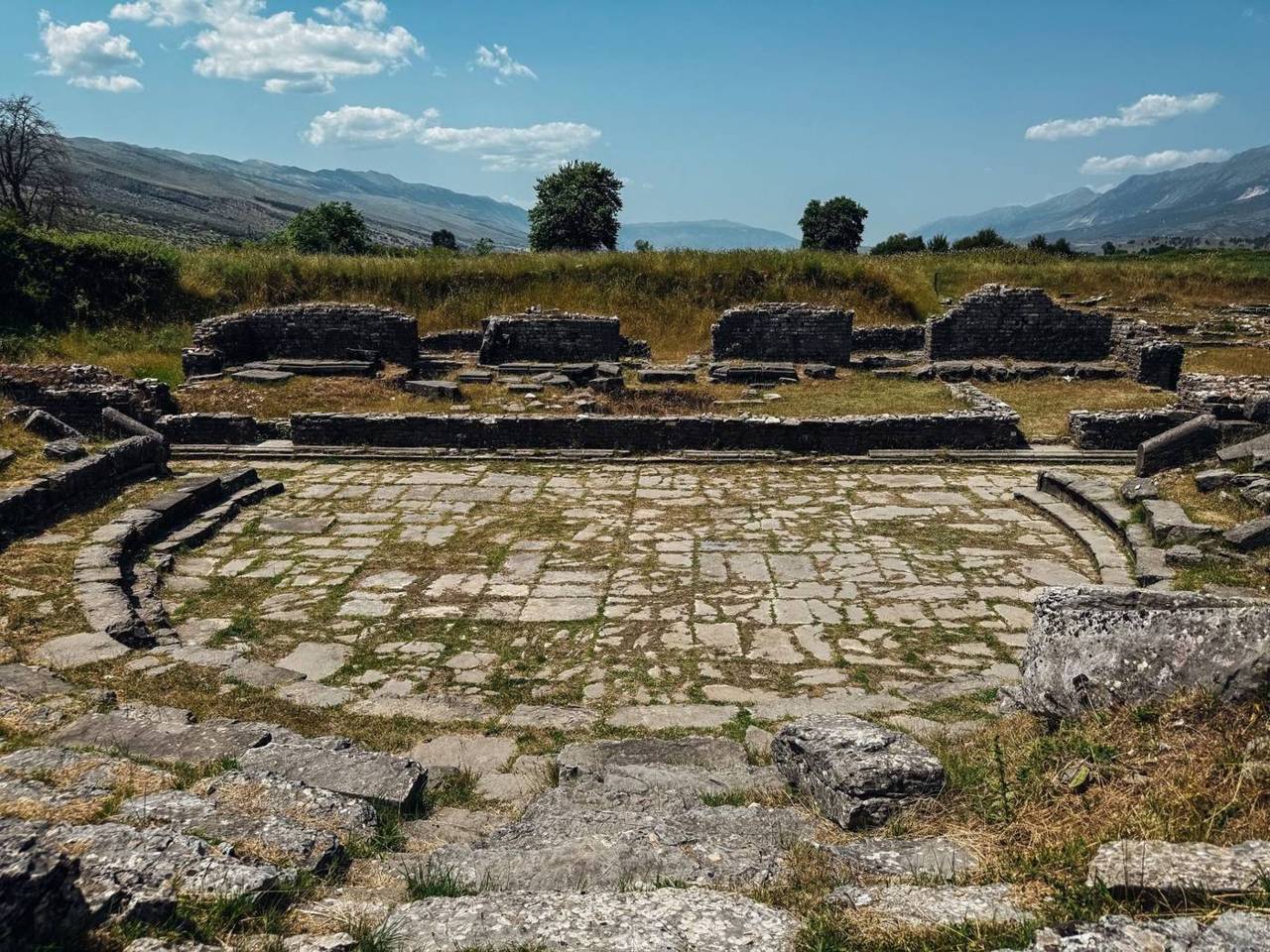
Ancient Albania: from Apollonia to Lake Ohrid
Roman Durrës, Apollonia and Butrint, a boat to Sazan island and a finale on Lake Ohrid, with two days by the sea at Dhërmi.
 13 daysModerate
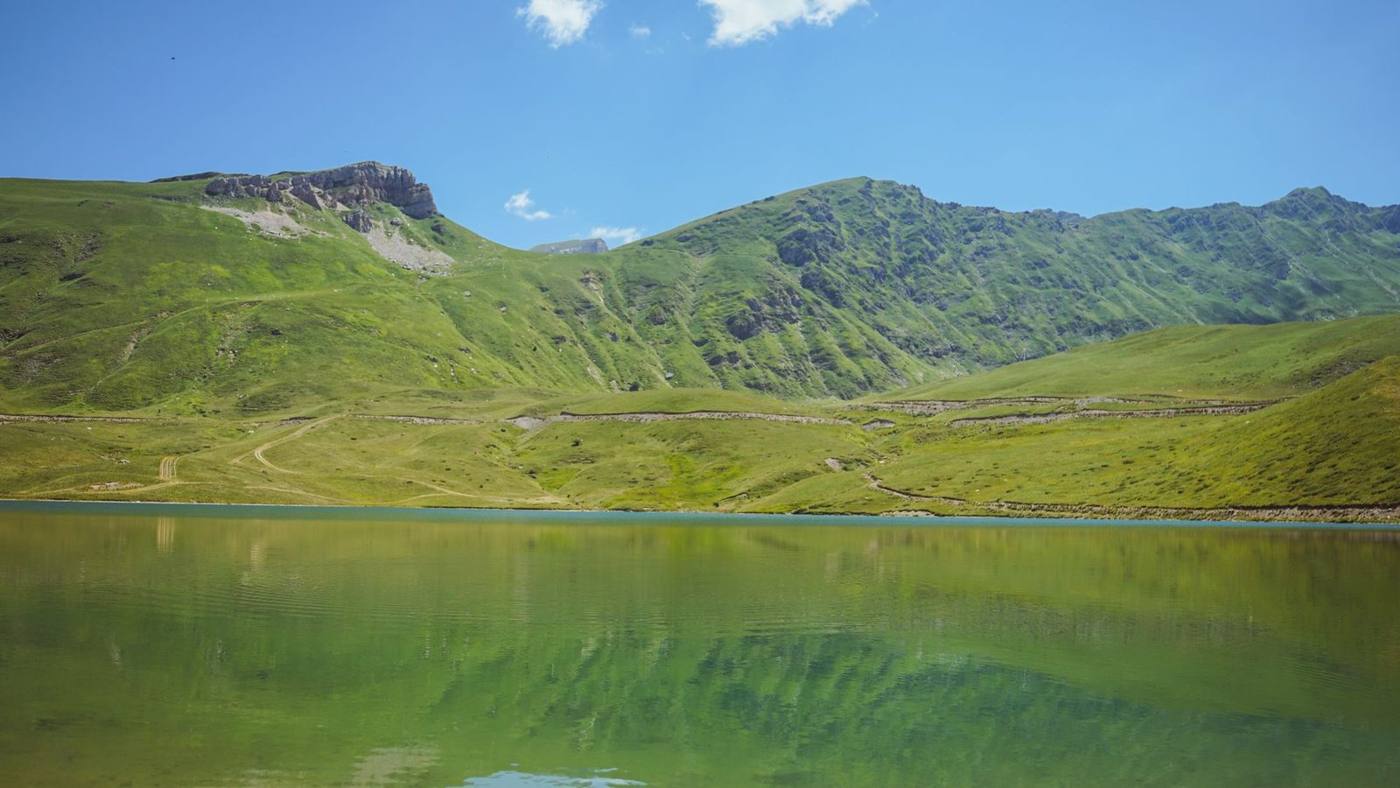
By motorbike through inland Albania: Dibër and the Drin valley
A motorbike raid far from the coast, on mountain roads between Burrel, Peshkopi and the Drin river, coming back through Shkodër.
 7 daysModerate
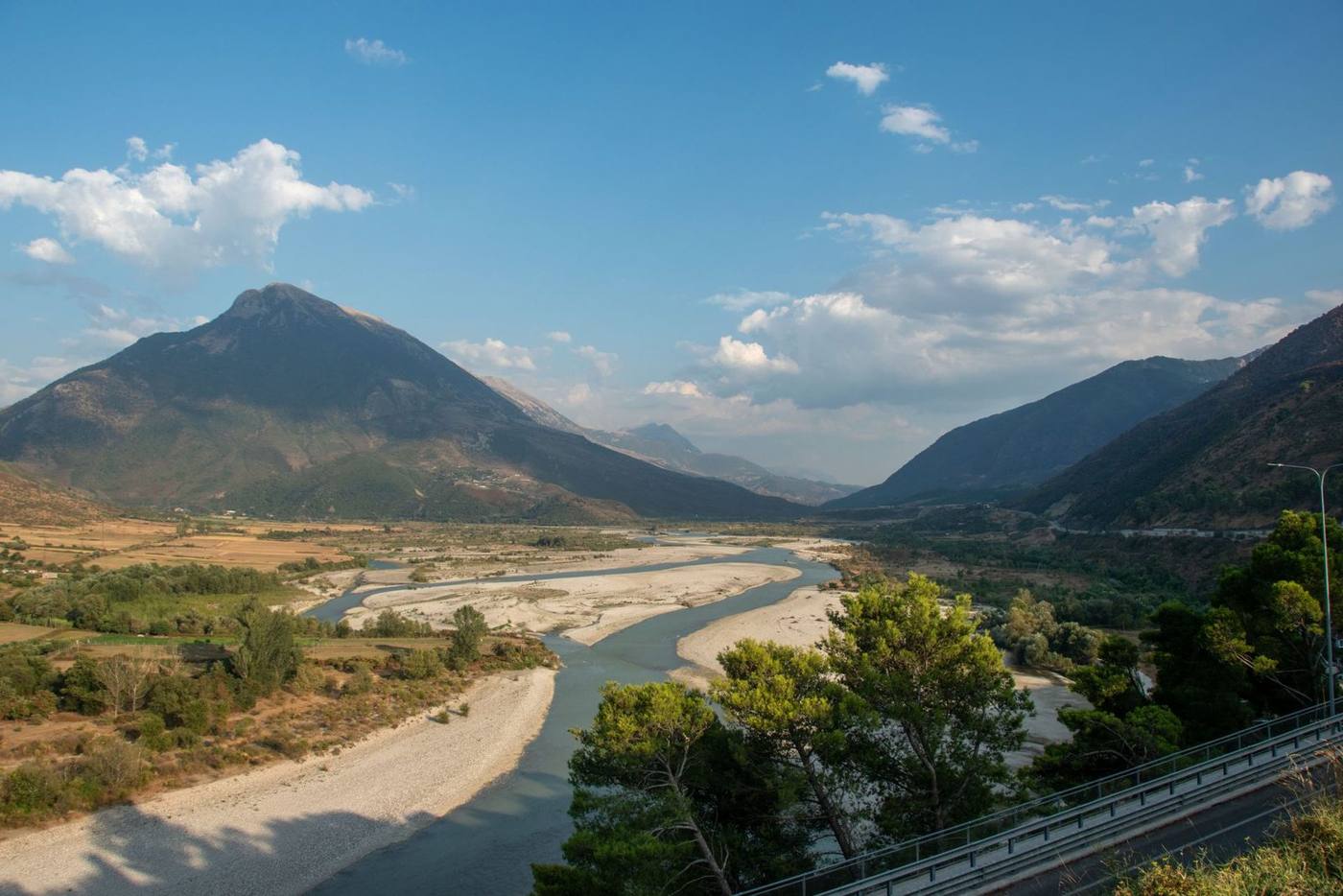
The Vjosa and Përmet, the wild river
Rafting in the Langarica canyon, the Benja hot springs, the villages of Zagoria and the Vjosa delta, in Europe's first wild river national park.