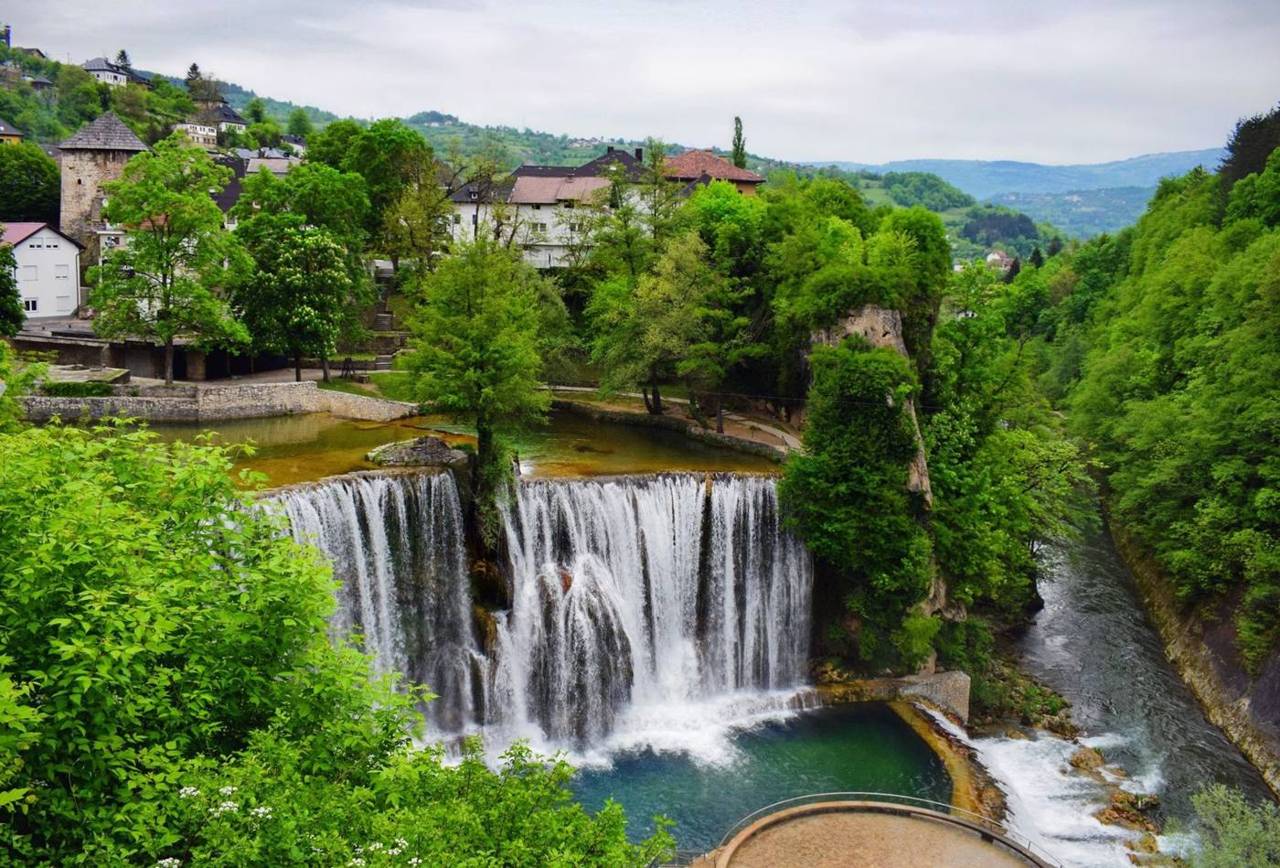
Mountains and lakes of Bosnia
The stone villages of Lukomir, Sutjeska National Park with Perućica forest, the Jajce waterfall, the Pliva lakes and the Una river.
- Sarajevo
- Lukomir
- Sutjeska
- Travnik
- Jajce
- Pliva Lakes
- Una
- Bihać
Day by day
- Day 1
From Sarajevo to Lukomir, above the Rakitnica canyon
This seven-day trip crosses green, wild Bosnia, from the mountains around Sarajevo to the river Una. Roads are slow and signposting is poor: you need a sturdy car and downloaded maps.
Before you go: Italian citizens can enter Bosnia and Herzegovina with a passport or an electronic identity card, valid for at least three months beyond the length of the stay; no visa is needed for up to 90 days in six months. Foreigners must register within 48 hours of arrival: hotels do this for you. Other nationalities should check their own rules. Italy's travel advice does not list any areas to avoid, but landmines from the 1992 to 1995 war remain in the country, especially in the mountains and the countryside: always stay on paved roads and marked paths, and do not enter overgrown fields, woods away from paths or abandoned houses. For Lukomir and Sutjeska take a local guide.
In the morning leave Sarajevo heading south-west and climb Mount Bjelašnica, where the ski races of the 1984 Olympics were held. The last stretch of road is unpaved. Lukomir, at about 1,500 metres, is the highest village in Bosnia and Herzegovina: a few stone houses with steep roofs, once covered in wood, above the Rakitnica canyon. Many families live here only in summer, with their sheep, and in winter the snow cuts the village off.
With your guide walk the paths above the canyon, several hundred metres deep, to the viewpoints, and look at the old medieval tombstones near the village.
In the evening return towards Sarajevo or sleep in a mountain house on Bjelašnica.
Practical tip: in Lukomir bring cash in convertible marks, because cards do not work, and a jacket even in summer, because the wind is cold at altitude.
- Day 2
Sutjeska National Park and the Tjentište valley
Today you reach the oldest national park in Bosnia and Herzegovina, established in 1962, on the border with Montenegro.
In the morning drive south-east, via Foča, to the Tjentište valley, in the heart of Sutjeska park, about three to four hours. The road follows the river Drina in places and then the Sutjeska canyon, between rock walls and dense woods.
At Tjentište you see the great monument to the Battle of the Sutjeska, where in June 1943 Tito's partisans broke out of the encirclement by Axis forces with huge losses. The memorial, inaugurated in 1971, is made of two large concrete blocks that look like split rocks, one of the most famous examples of a Yugoslav monument. Next to it is a small memorial house with frescoes of the battle. Check prices and times.
In the afternoon stop at the park visitor centre to get maps, ask which trails are open and book a guide for the Perućica forest the next day. Then take a short walk along the river, among beech trees and clear water.
From the park you can also see Maglić, the highest peak in Bosnia and Herzegovina, at 2,386 metres, on the border with Montenegro. Climbing it takes a full day and good preparation.
Sleep in Tjentište.
Practical tip: phone coverage in the park is poor; download offline maps and leave word of your route at the visitor centre before every walk.
- Day 3
The primeval forest of Perućica and the Skakavac waterfall
Today you enter one of the last primeval forests in Europe.
In the morning, with the park guide, enter the Perućica reserve, a forest never cut by humans, strictly protected within Sutjeska park. Here beech, fir and black pine grow to fifty metres and more, some centuries old, and fallen trees are left on the ground to feed the forest. Mosses, ferns and fungi grow in the undergrowth, and bears, wolves and chamois live here, although they are rarely seen.
The route leads to the viewpoint over the Skakavac waterfall, about 75 metres high, one of the highest in the country, which drops from a rock face in the middle of the forest. The view is especially beautiful in early summer, when there is plenty of water.
In the afternoon return to Tjentište. If you still have energy, walk the marked trails around the valley or stop for a swim, only where it is safe, in the cold pools of the river Sutjeska.
In the evening try the mountain dishes of the area, such as lamb slow-cooked under an iron bell, shepherds' cheese and honey.
Sleep in Tjentište.
Practical tip: you can only enter Perućica with a guide and on authorised routes; bring boots, water, a snack and a waterproof jacket, because humidity in the forest is high and the weather changes quickly.
- Day 4
Travnik, the city of the viziers, and arrival in Jajce
Today you cross central Bosnia towards the north-west, with a stop in one of the most beautiful Ottoman towns in the country.
In the morning leave Tjentište early and drive north to Travnik, about four hours. For more than a century Travnik was the seat of the viziers, the Ottoman governors of Bosnia, and the town of the European consuls, described by the writer Ivo Andrić, born here in 1892 and winner of the Nobel Prize in Literature in 1961, in his novel Bosnian Chronicle.
Visit the Coloured Mosque, the Šarena džamija, decorated with paintings on the outside too, then climb to the medieval fortress above the town for the view over the Lašva valley. Check prices and times. In the centre you see Andrić's birthplace and the tombs of the viziers.
For lunch stop at Plava voda, the blue water springs below the old town, and try Travnik ćevapi or Vlašić cheese, a salty white cheese kept in brine.
In the afternoon continue to Jajce, about an hour. Jajce was the last capital of the medieval kingdom of Bosnia: the last king, Stephen Tomašević, was crowned here in 1461, before the Ottoman conquest of 1463. Arrive in time to see the waterfall at sunset.
Sleep in Jajce.
Practical tip: there are few petrol stations on the secondary roads between Sutjeska and Travnik; fill up in Foča before you set off.
- Day 5
The Jajce waterfall and the mills on the Pliva lakes
Today you stay in Jajce, a small town where nature reaches right into the centre.
In the morning go to the viewpoint over the Pliva waterfall, which drops about twenty metres into the river Vrbas right below the walls of the old town. It is one of the few waterfalls in the world in the heart of a town. Check prices and times for the route on the platforms.
Then climb the lanes to the fortress, with its medieval walls and clock tower, and visit the catacombs, an underground church carved into the rock in the fifteenth century for a Bosnian noble family. Check prices and times.
In the centre there is also the AVNOJ museum, in the building where on 29 November 1943 the second session of the anti-fascist council was held, laying the foundations of Tito's Yugoslavia. Check prices and times.
In the afternoon drive or walk a few kilometres to the Pliva lakes, two green lakes surrounded by woods, linked by small waterfalls. Between the two lakes are the mlinčići, about twenty small wooden watermills built over the rapids, once used to grind grain. Walk on the boardwalks between the mills and along the lake shore, where in summer people go out in boats or canoes.
Sleep in Jajce.
Practical tip: at sunset the light on the waterfall and the fortress is at its best; watch it from the path on the opposite bank of the Vrbas.
- Day 6
Una National Park, Štrbački buk and rafting
Today you reach the clearest river in Bosnia, on the border with Croatia.
In the morning drive west to Una National Park, established in 2008, about two and a half hours. The Una flows over travertine rocks, with turquoise water and waterfalls, among woods and villages. Start at Štrbački buk, the most spectacular waterfall in the park, where the river drops in several wide, foaming steps. Here the river marks the border: on the other side is Croatia. Walk along the boardwalks and viewpoints. Check prices and times.
In the early afternoon go rafting on the Una with an authorised guide, on one of the easier stretches, suitable for beginners too, among rapids, small falls and rock walls. Always wear a life jacket and helmet, because the current can be very strong. Check prices and times.
If you prefer to stay dry, go to Martin Brod, in the eastern part of the park, where the Una and the river Unac form a series of waterfalls around the village, with an old Orthodox monastery nearby.
In the evening try grilled Una trout, one of the typical dishes of the area.
Sleep in Bihać or in a village in the park.
Practical tip: some internal roads in the park are unpaved and narrow; ask at the entrance which access points are open and drive carefully.
- Day 7
Bihać and departure
On the last day you visit the town on the Una and then set off.
In the morning walk through the centre of Bihać, spread along the banks of the Una, with its islets and bridges. See the Fethija mosque, a fourteenth century Gothic church converted into a mosque at the end of the sixteenth century, which still has its Gothic windows, and the Captain's Tower, a medieval defensive tower that now houses a small museum. Check prices and times.
Then sit by the river for a last Bosnian coffee, served in a copper džezva with a sugar cube and a piece of rahat lokum.
In the early afternoon choose your direction: you can continue into Croatia, where the Plitvice Lakes are less than an hour's drive away, or return towards Sarajevo, about five and a half hours, or towards Banja Luka.
In these seven days you have seen Lukomir and the Rakitnica canyon, Sutjeska park with the Tjentište memorial, the Perućica forest and the Skakavac waterfall, Travnik and the Coloured Mosque, the waterfall and catacombs of Jajce, the mills of the Pliva lakes, Una park with Štrbački buk and rafting, and Bihać.
When to go: from June to September, when the mountain roads are open and the rivers are suitable for rafting. In June the waterfalls carry the most water. From April to October there can be wildfires in the woods: do not light fires.
Practical tip: if you cross into Croatia in a hire car, check that the contract allows it and that the insurance is valid in both countries.
Green, wild Bosnia, with crystal-clear rivers and very few tourists. Roads are slow and signs scarce: you need a sturdy car and downloaded maps. Sutjeska and Lukomir are best done with a local guide, also because of the mine risk off the trails.
Before you go
- Documents and visa
- British passport issued less than 10 years before arrival and valid for at least 90 days after departure. No visa needed for up to 90 days in any 6-month period. All foreign nationals must register with the police within 72 hours; hotels usually do this.
- Health and vaccines
- No compulsory vaccinations. Medical facilities are limited, especially outside Sarajevo: you need travel insurance covering treatment and medical evacuation. Emergencies: police 122, fire 123, ambulance 124.
- Money and payments
- Convertible mark (KM or BAM), at a fixed rate of 1.9558 KM to the euro. Cash is common; Visa and Mastercard work in shops and hotels in the larger towns, where there are cash machines.
- Power sockets
- Types C and F, 230 volts: you need an adapter for British plugs.
- Time zone
- One hour ahead of the UK all year.
- Safety
- There are no areas the UK advises against, but landmines and unexploded weapons remain from the 1992 to 1995 war. Do not step off roads and paved areas without an experienced guide, and take extra care near former front lines, abandoned buildings, neglected land, woods and orchards. Thefts from cars are rising in tourist areas. Official advice: GOV.UK.
Information checked in November 2026 for Italian and EU citizens. Rules change: always check before you travel.
Variations
In 4 days: Travnik, Jajce with the Pliva lakes and Una park, without Lukomir and Sutjeska.
In 9 days: add two days in Sarajevo, with the Baščaršija and Trebević.
Frequently asked questions
Do you need a guide for Lukomir and Sutjeska?
Yes, it is wise: in the mountains there are still areas with mines off the paths, and the Perućica forest can only be visited with a park guide. Ask at the visitor centre.
Is rafting on the Una suitable for beginners?
There are easy stretches suitable for beginners too. Choose an authorised guide, wear a helmet and life jacket and remember that the current can be very strong.
Which document do you need for Bosnia and Herzegovina?
Italian citizens can enter with a passport or an electronic identity card, valid for at least three months beyond the stay, without a visa for up to 90 days. Other nationalities should check their own rules.
Indicative itinerary written by World Atlas. Before booking, check timetables, seasonal openings, documents and safety.
 4 daysEasy
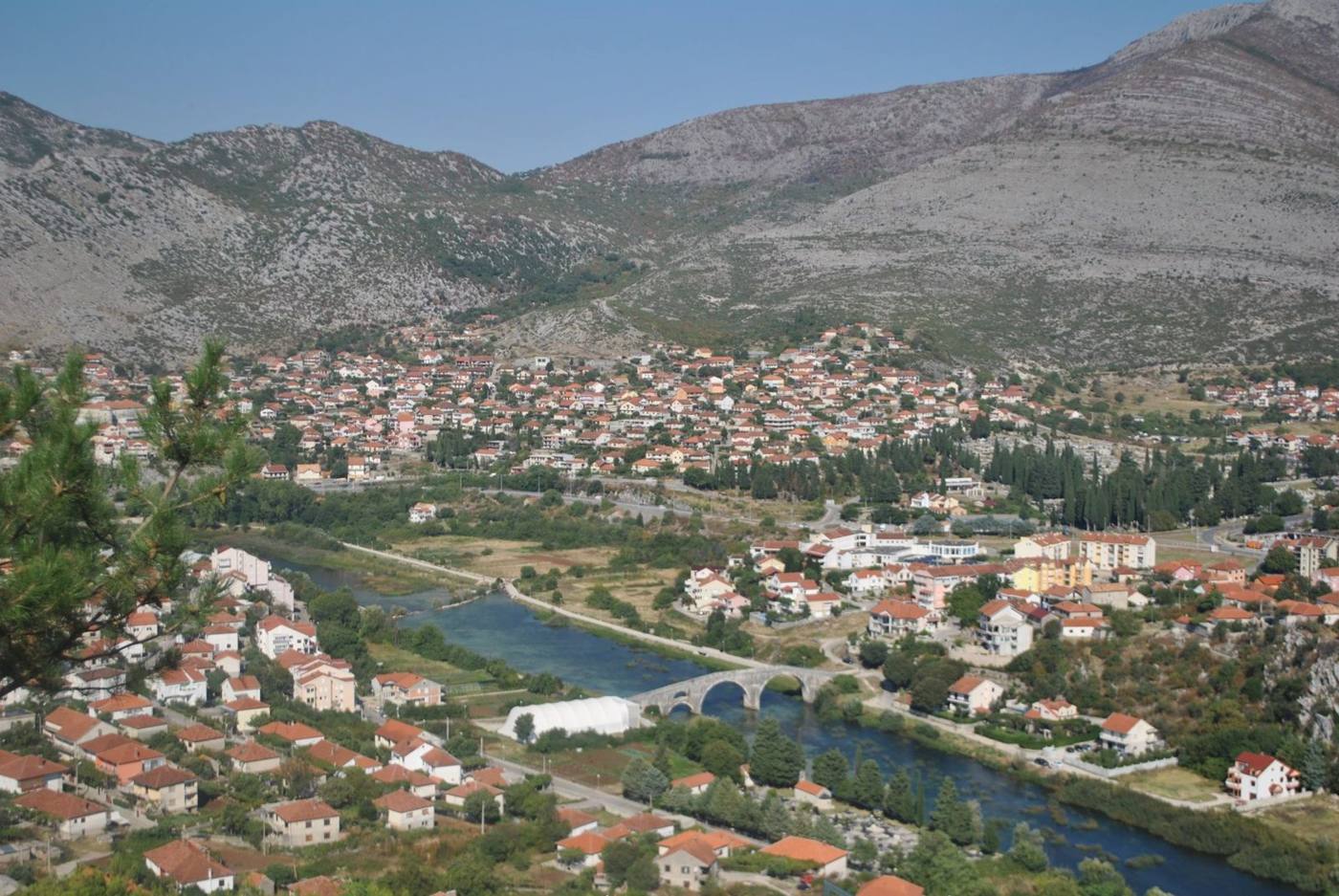
Herzegovina and its wine
Žilavka and Blatina wineries around Mostar and Čitluk, Trebinje with its plane trees and Tvrdoš monastery.
 3 daysEasy
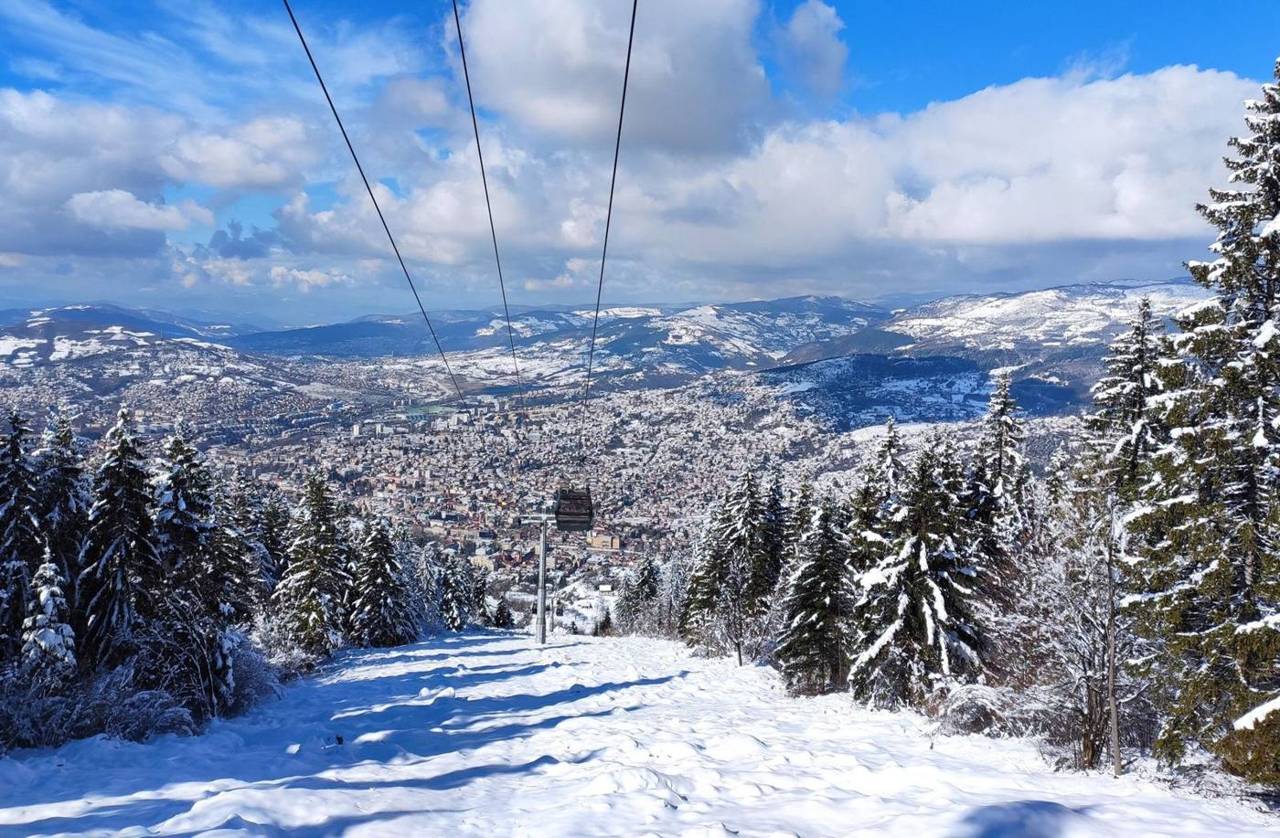
Sarajevo and Mount Trebević
The Trebević cable car, the old graffiti-covered Olympic bobsled track, the 11/07/95 gallery, the Vijećnica and Bosnian coffee in the Baščaršija.
 3 daysModerate
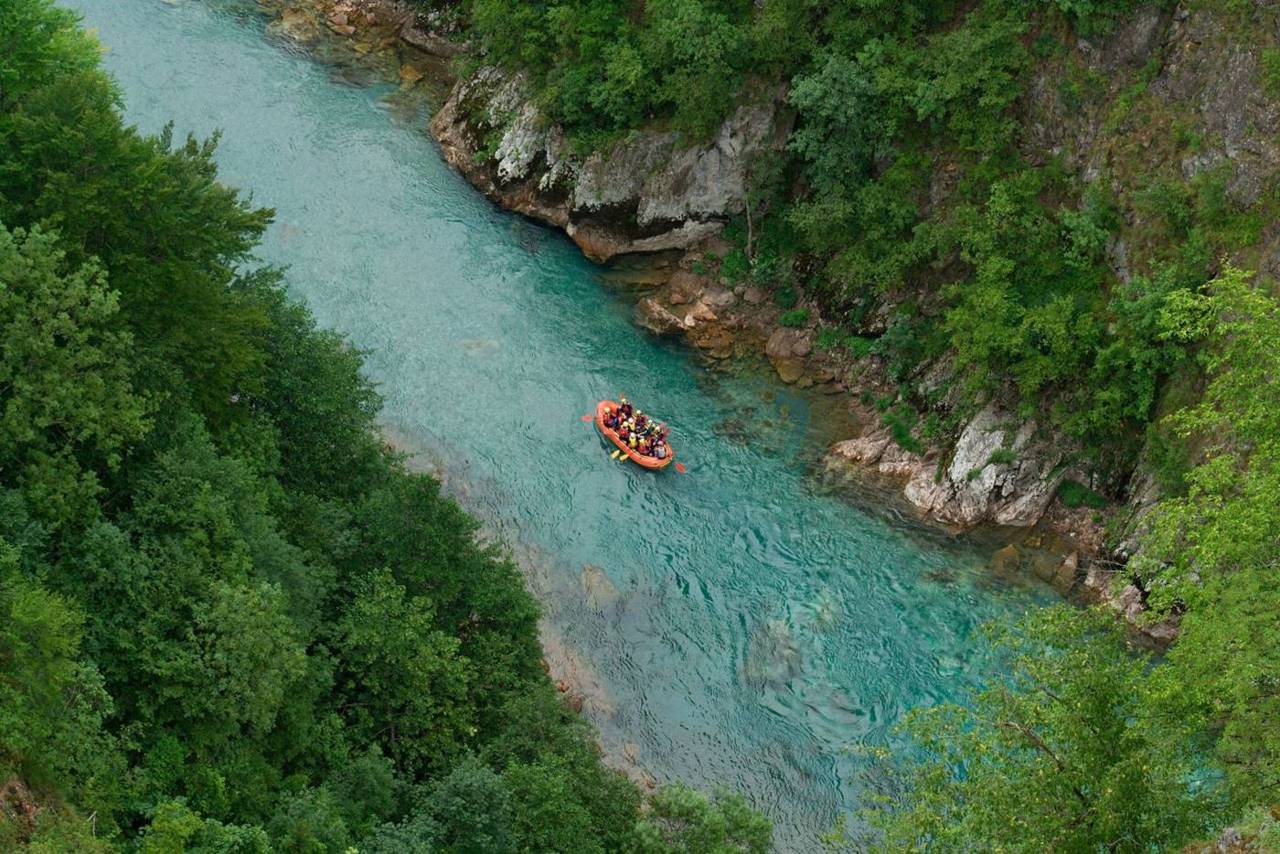
Rafting on the Tara
The Bosnian stretch of the Tara canyon, rafting from the Montenegrin border to Šćepan Polje and the rafting camps on the Drina near Foča.