South-east Brazil: Iguaçu, Minas Gerais and Salvador
The falls, the baroque gold-rush towns of Minas Gerais with Aleijadinho's churches, the open-air museum of Inhotim and Salvador.
- Rio de Janeiro
- Foz do Iguaçu
- Belo Horizonte
- Inhotim
- Ouro Preto
- Tiradentes
- Salvador de Bahia
Day by day
- Day 1
Arrival in Rio de Janeiro
This trip shows the Brazil that few European visitors know, together with two famous places: three days in Rio de Janeiro, the Iguaçu Falls on both sides of the border with Argentina, the baroque gold towns of Minas Gerais, the open-air museum of Inhotim and finally Salvador de Bahia. You travel on domestic flights and by car or with drivers.
Before you go: Italian citizens enter Brazil without a visa for tourism with a valid passport. Other nationalities should check their own rules. The United States rates Brazil at level 2, meaning exercise increased caution, because of crime, and advises against entering favelas, the informal communities, at any time. It also advises against areas within 160 km of the land borders, except Iguaçu National Park: for this reason the trip has you sleep inside the park rather than in the city of Foz do Iguaçu. Ask a travel health clinic about vaccines, such as yellow fever, and use insect repellent against the mosquitoes that carry dengue.
You land at Rio's international airport, Galeão, about an hour from the beaches of the south zone in traffic. Take an official taxi booked at the desk or a car called with an app.
In the afternoon settle in Copacabana or Ipanema and walk along the seafront, with the black and white wave pavement designed by Roberto Burle Marx.
At sunset go to Pedra do Arpoador, the rock between the two beaches, where people clap as the sun goes down.
Sleep in Rio de Janeiro, for three nights.
Practical tip: on the beach carry only a little cash and a copy of your passport. Leave the original in the safe.
- Day 2
Christ the Redeemer and Santa Teresa
Today you see Rio from above and discover the artists' district.
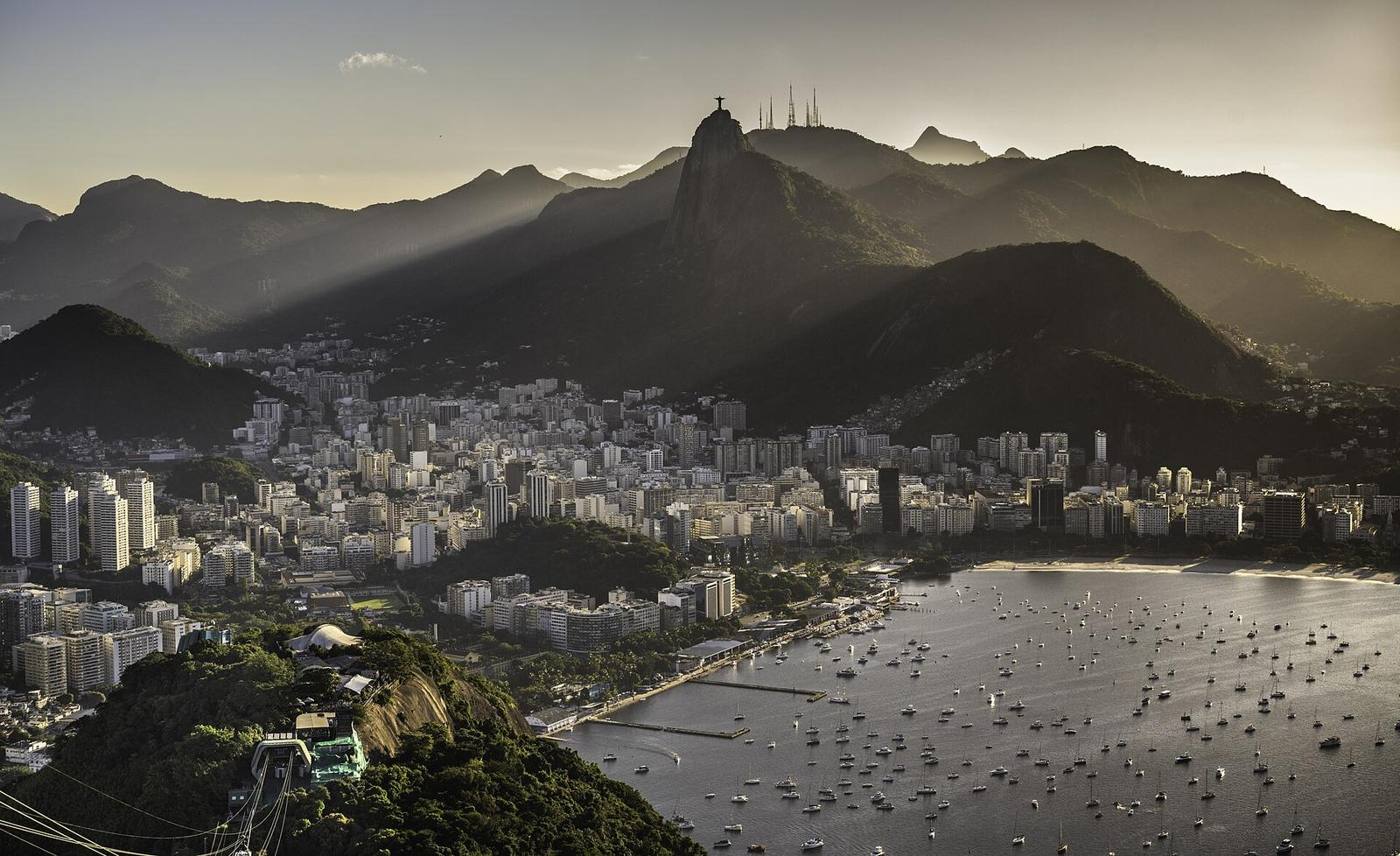
Early in the morning go up Corcovado, the mountain topped by Christ the Redeemer, the statue with open arms inaugurated in 1931. You climb on the rack railway that leaves from the Cosme Velho district and runs through the Tijuca forest, or with the authorised minibuses. Buy your ticket online with a time slot and check prices and times. Go early, before the clouds and the crowds arrive.
From the top you see the whole city: Sugarloaf Mountain, Guanabara Bay, the Rodrigo de Freitas lagoon, the beaches and the Maracanã stadium.
In the afternoon go to Santa Teresa, the hilltop district with old villas, cobbled streets and artists' studios. The yellow tram, called the bondinho, climbs from the centre passing over the Arcos da Lapa, an eighteenth-century white aqueduct.
Then walk down the Escadaria Selarón, the staircase covered in coloured tiles from all over the world, the work of the Chilean artist Jorge Selarón, which links Santa Teresa with Lapa.
In the evening Lapa fills with music: samba, choro and forró in the venues under the arches. If you want to dance, this is the place, but get around by taxi.
Sleep in Rio de Janeiro.
Practical tip: in Santa Teresa and Lapa in the evening always use a taxi or an app car, even for a few hundred metres. Some streets are dark and empty.
- Day 3
The historic centre and Sugarloaf Mountain
Today you visit the centre of Rio and go up Sugarloaf Mountain for sunset.
In the morning take the metro to the centre. Start at Praça XV de Novembro, home to the Paço Imperial, the old residence of the kings of Portugal and later of the emperors of Brazil. Nearby is the Candelária church, large and bright, and the Confeitaria Colombo is one of the city's historic cafés, with mirrors and Belle Époque decoration.
Step into the Real Gabinete Português de Leitura, a nineteenth-century library with thousands of books on carved wooden shelves up to the ceiling. Check prices and times.
Then walk to the renovated port area, with Praça Mauá, the Museum of Tomorrow, devoted to the future of the planet, and the giant murals of the Boulevard Olímpico.
In the afternoon go to the Urca district and ride up Sugarloaf Mountain, the granite rock 396 metres high at the entrance to Guanabara Bay. There are two cable cars: the first goes to Morro da Urca, the second to the summit. Arrive an hour before sunset to see the city in daylight and then the lights of the evening. Check prices and times.
In the evening go back to the beach area and try a moqueca, the fish stew with coconut milk, or feijoada, if it is Saturday.
Sleep in Rio de Janeiro.
Practical tip: in the centre of Rio walk during the day, when the streets are full of people at work. On Sundays and in the evening the centre empties.
- Day 4
Flight to Iguaçu and the Brazilian side
Today you leave the coast and fly to the most powerful waterfalls in South America.
In the morning take the flight from Rio to Foz do Iguaçu, about two hours, usually direct. The Iguaçu Falls lie on the border between Brazil and Argentina: there are about 275 drops along almost three kilometres of the Iguaçu river, just before it flows into the Paraná. The national parks on both sides are UNESCO World Heritage Sites.
The city of Foz do Iguaçu lies inside the border strip the United States advises against, while the national park is excluded from the advisory. So from the airport go straight to the park entrance, a few minutes by road, without stopping in the city. Sleep inside the park, on the Brazilian side, where there is only one hotel: book it many months ahead.
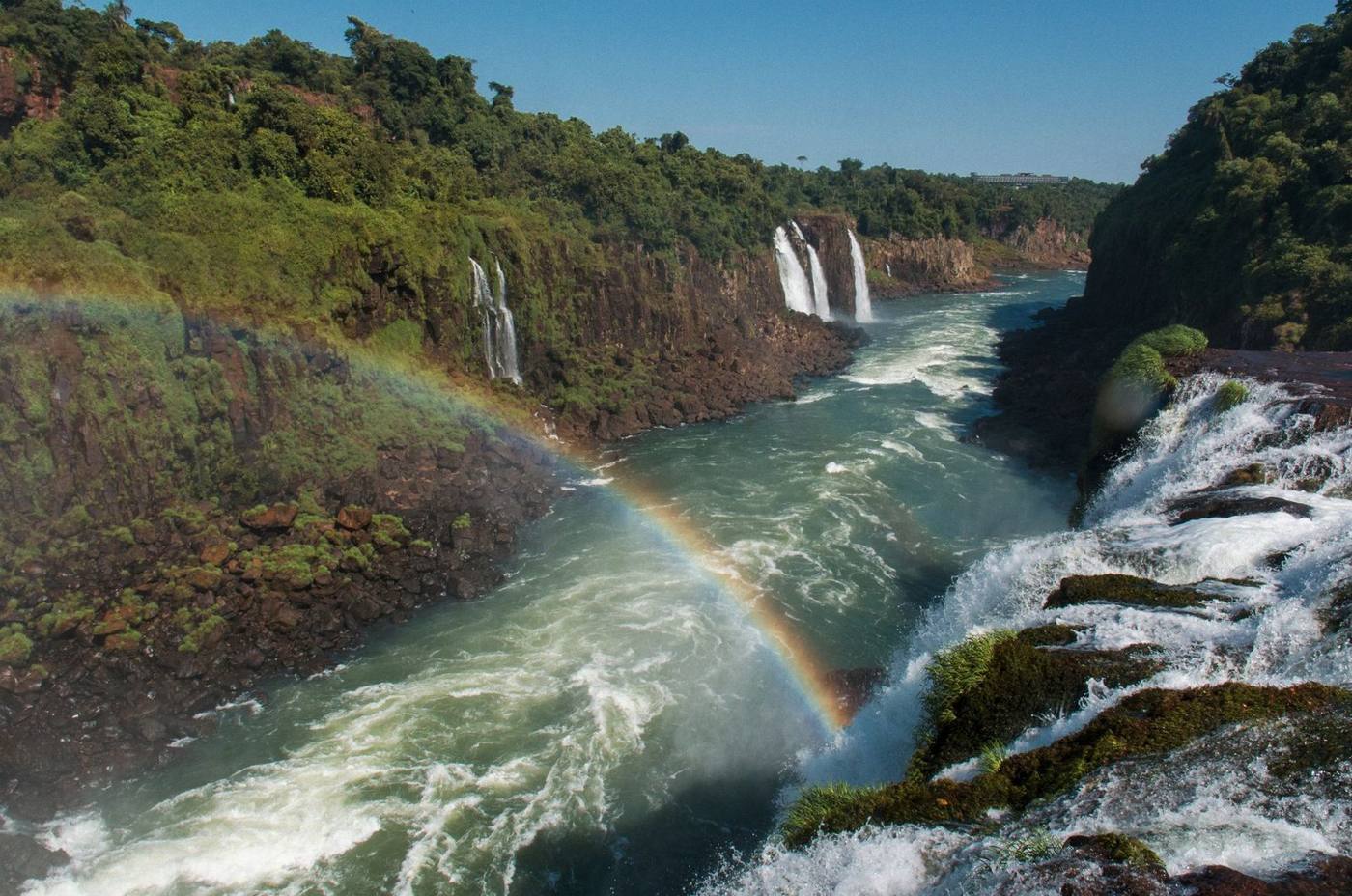
In the afternoon walk the falls trail, just over a kilometre long, which runs down the canyon with ever wider views of the falls on the Argentine side. The Brazilian side gives you the overall view: from here you understand how big the falls are.
The trail ends on a walkway that goes out into the river, in front of the Garganta do Diabo, the Devil's Throat, where water falls on every side with a deafening roar. You will get soaked.
At sunset, when the day visitors have left, walk the trail near the hotel again: the light on the falls and the silence are the reward for sleeping in the park.
Sleep in Iguaçu National Park.
Practical tip: bring a light rain jacket and a waterproof pouch for your phone. On the Garganta walkway the water comes from every direction.
- Day 5
The Argentine side of the falls
Today you cross the border and see the falls up close, from the Argentine side.
Early in the morning leave with an organised transfer straight from the park to the border bridge and Iguazú National Park, in Argentina. Bring your passport: at the border there are exit checks for Brazil and entry checks for Argentina. The transfer passes through the outskirts of Foz do Iguaçu without stopping, and it is the part of the day outside the park.
The Argentine side has about eighty per cent of the falls and you visit it on walkways several kilometres long. The Circuito Superior runs above the falls, along the edge of the drops. The Circuito Inferior goes down low and comes close to the water, among spray and rainbows.
Then take the little ecological train to the Garganta del Diablo station and walk along a walkway of about a kilometre over the river. At the end you look over the edge of the gorge: the water disappears into a white cloud. Check prices and times for the Argentine park, which you pay in pesos or by card.
In the park you see coatis, animals with ringed tails that steal food from tourists, butterflies of every colour, toucans and small monkeys.
In the afternoon return to Brazil with the same transfer and go back to the park. Alternatively you can sleep in Puerto Iguazú, the small town on the Argentine side.
Sleep in Iguaçu National Park.
Practical tip: do not feed the coatis and keep your rucksack closed. They bite and scratch, and there are warning signs everywhere in the parks.
- Day 6
Flight to Belo Horizonte
Today you leave the falls and reach Minas Gerais, the land of gold.
In the morning go straight from the park to Foz do Iguaçu airport, which is very close to the entrance, and take the flight to Belo Horizonte, almost always with a stop in São Paulo or Campinas. The journey takes four or five hours in all.
Minas Gerais means general mines. At the end of the seventeenth century gold was discovered here, and in the eighteenth century the region became the richest in colonial Brazil. The gold paid for towns full of baroque churches, now UNESCO World Heritage Sites.
Belo Horizonte is the state capital, a modern city built at the end of the nineteenth century and surrounded by hills. Confins international airport is about forty kilometres from the centre.
In the afternoon, if you have time, go to Pampulha, the modern complex built around a lake in the 1940s by Oscar Niemeyer, the great Brazilian architect, a UNESCO World Heritage Site. The church of Saint Francis of Assisi, with curved vaults and blue tiles by Candido Portinari, is the jewel of the complex.
In the evening discover mineira cooking, the most famous in the country: pão de queijo, the cheese bread roll, feijão tropeiro, with beans, cassava flour and sausage, frango com quiabo, chicken with okra, and doce de leite.
Sleep in Belo Horizonte, for two nights.
Practical tip: at Belo Horizonte's Mercado Central, also open on Sunday mornings, you can taste Minas cheeses, cachaça and sweets. Take your time and ask to try before you buy.
- Day 7
Inhotim, art in the garden
Today you spend the whole day in one of the largest open-air museums in the world.
In the morning leave early for Inhotim, in Brumadinho, about an hour and a half from Belo Horizonte by car or shuttle. Inhotim is both a contemporary art museum and a botanical garden: dozens of pavilions and works by Brazilian and foreign artists are scattered across a huge park, among lakes, palms, hills and forest.
You walk along paths and avenues, and every so often you find a building with a single work inside, or a sculpture in the middle of a lawn. Some installations are about sound, others you walk through or look at from above. The pavilions devoted to a single artist are the highlight: you go in and stay alone with the work.
The garden is tended by landscape designers and has a large collection of palms and tropical plants. Between one pavilion and the next there are lakes with water lilies, agave gardens and towering trees.
The museum is big and you cannot see it all in one day: choose the pavilions that interest you on the map beforehand. Inside there are electric shuttles, for a fee, linking the furthest areas. Check prices and times, and the opening days, because the museum does not open every day of the week.
In the late afternoon return to Belo Horizonte.
Sleep in Belo Horizonte.
Practical tip: wear comfortable shoes and bring a hat, sun cream and water. You walk many kilometres and some climbs are steep, under the sun.
- Day 8
Ouro Preto, the town of gold
Today you reach the most beautiful colonial town in Minas Gerais.
In the morning leave for Ouro Preto, about a hundred kilometres from Belo Horizonte, two hours of road through the mountains. Ouro Preto means black gold: the local gold was coated with a dark layer of iron oxide. In the eighteenth century it was called Vila Rica and was one of the richest towns in the Americas. It was the first Brazilian town declared a UNESCO World Heritage Site, in 1980.
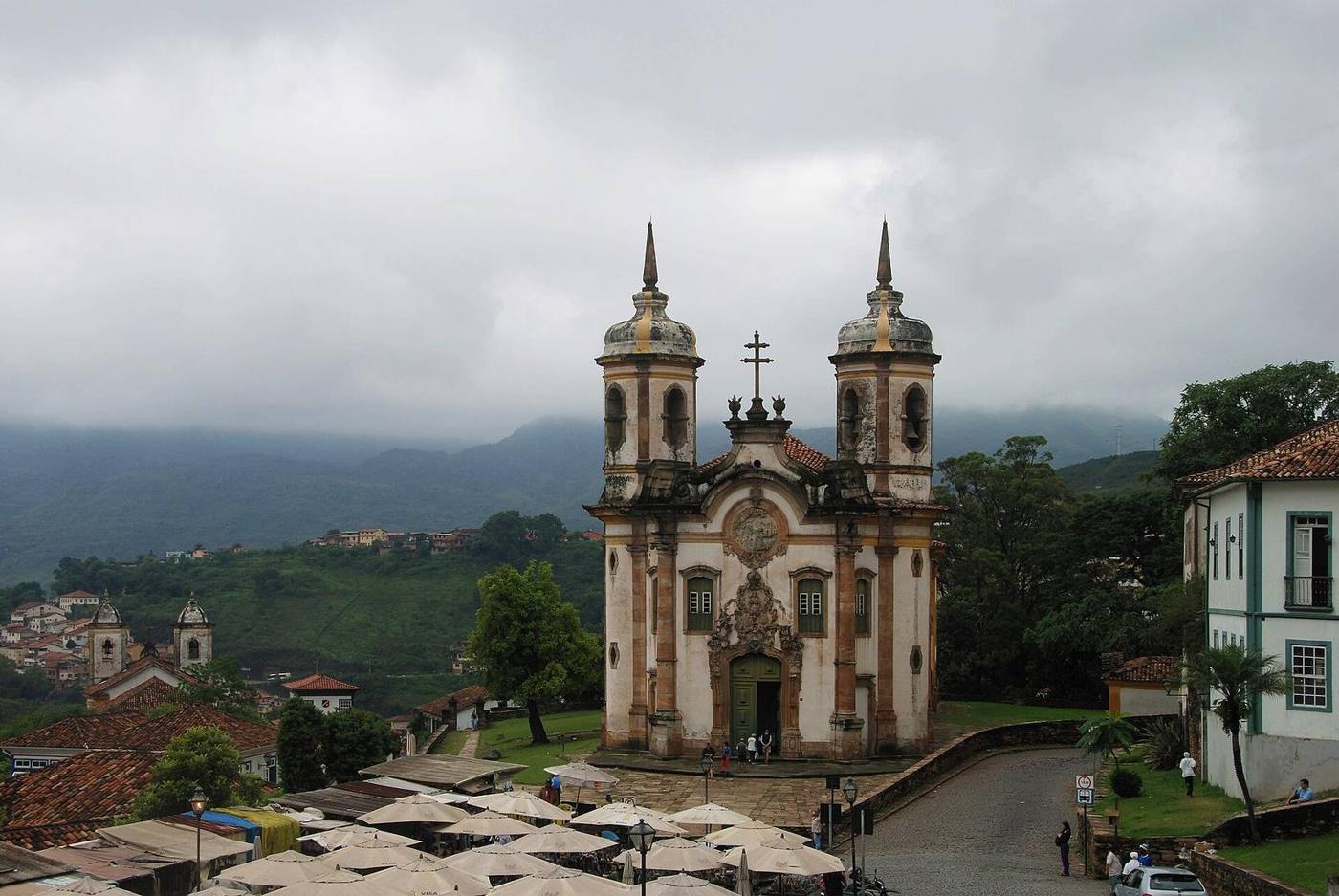
The town is built on steep hills, with stone streets that climb and drop, white houses with coloured windows and more than ten baroque churches.
In the afternoon start at Praça Tiradentes, the heart of the town, named after the hero of the Inconfidência Mineira, the 1789 plot against Portuguese rule. On the square is the Museu da Inconfidência, in the old town hall and prison, with the story of the plot and works of religious art. Check prices and times.
Then walk down to the church of Saint Francis of Assisi, the masterpiece of Aleijadinho, the eighteenth-century mixed-race sculptor and architect, son of a Portuguese man and an enslaved woman. He designed the façade and carved the stone. The painted ceiling is by Manuel da Costa Ataíde, the most famous painter of Minas.
In the evening have a mineiro dish for dinner and taste the local cachaça.
Sleep in Ouro Preto, for three nights.
Practical tip: in Ouro Preto the streets are steep and the cobbles slippery, especially in the rain. Wear shoes with a good grip and leave wheeled suitcases in the car.
- Day 9
The baroque churches and the mines
Today you visit Ouro Preto's richest churches and an old mine.
In the morning go into the mother church of Nossa Senhora do Pilar, one of the richest in Brazil: the interior is covered in carved wood gilded with gold from the mines. Next door there is a museum of religious art. Then climb to the church of Nossa Senhora do Carmo and to Santa Efigênia, built on the hill of the slaves' district.
Ouro Preto's gold was mined above all by enslaved Africans. The churches of the Black brotherhoods, such as Santa Efigênia, tell this story, with African saints and symbols from their cultures.
In the afternoon visit one of the small mines dug into the hill, such as the one named after Chico Rei, linked to the legend of an African king who bought freedom for himself and his people with gold. You go into low, narrow tunnels with a guide. Check prices and times.
Then walk among the soapstone workshops, the soft grey local stone used for pots, statues and objects. Ouro Preto is also a university town, with its repúblicas, the student houses, which bring the streets to life in the evening.
At sunset climb to a high point in town, such as the viewpoint near the church of São Francisco de Paula, to see the rooftops and bell towers.
Sleep in Ouro Preto.
Practical tip: many churches close at lunchtime and on Mondays. Plan visits for the morning and afternoon, and check each one's opening hours before you climb up.
- Day 10
Mariana and the Passagem mine
Today you visit the oldest town in Minas Gerais and go down into a large gold mine.
In the morning go to Mariana, about fifteen kilometres from Ouro Preto. It was the first town and the first bishop's seat in Minas Gerais, at the start of the eighteenth century. It is smaller and quieter than Ouro Preto, with flat streets and low colonial houses.
In the Sé cathedral there is a German organ from the early eighteenth century, which arrived from Portugal and is still played at concerts: check whether there is one during your visit. Then go to Praça Minas Gerais, where two baroque churches, Saint Francis and Carmo, stand side by side with the old town hall and a stone pillar.
In the afternoon, on the way back, visit the Passagem mine, one of the largest gold mines in the region open to visitors. You go down in an old cart on rails, along a sloping tunnel, deep into the mountain. Underground the guide talks about the miners' work and shows you a lake of crystal-clear water inside the rock. Check prices and times.
Return to Ouro Preto in the late afternoon and walk the streets of the centre again, which turn golden at sunset.
In the evening try tutu, a bean purée with cassava flour, and queijo minas with goiabada, cheese with guava paste.
Sleep in Ouro Preto.
Practical tip: in the mine the air is cool and the ground wet. Bring a light jacket and closed shoes.
- Day 11
Congonhas and Tiradentes
Today you see Aleijadinho's most famous statues and reach the prettiest small town in Minas.
In the morning leave Ouro Preto heading south. After about an hour and a half you reach Congonhas, where the sanctuary of Bom Jesus de Matosinhos is a UNESCO World Heritage Site. In front of the church, on the staircase, stand the twelve soapstone prophets carved by Aleijadinho in the last years of his life, when he was already ill. Along the slope, in six small chapels, are the scenes of the Passion of Christ with life-size painted wooden statues.
Then continue to Tiradentes, about an hour and a half. The town takes the name of the hero of the Inconfidência, born in the area. It is small and well kept, with stone streets, white colonial houses, gardens and the mountains of the Serra de São José in the background.
In the afternoon climb to the mother church of Santo Antônio, with its interior covered in gold, and walk among the craft workshops making furniture, silver and wooden objects.
If it is running, you can take the old steam train linking Tiradentes with São João del-Rei, a nearby colonial town. Check prices, times and departure days.
In the evening Tiradentes is known for good mineira cooking: it is the right place for a long dinner.
Sleep in Tiradentes.
Practical tip: in Tiradentes at weekends many visitors arrive from Belo Horizonte and Rio, and prices rise. If you can, plan your night on a weekday.
- Day 12
Back to Belo Horizonte and flight to Salvador
Today you leave Minas Gerais and fly to the coast of Bahia.
In the morning take a last walk around Tiradentes, while the streets are still quiet. Go up to the São José fountain, an eighteenth-century stone fountain where the townspeople drew water and washed their clothes.
Then leave for Confins airport, north of Belo Horizonte, about three and a half hours by road. Allow plenty of time: the traffic around Belo Horizonte can be slow. Along the way stop at one of the shops selling Minas cheeses, milk sweets and cachaça to take home, if you have room in your case.
In the afternoon take the flight to Salvador, about two hours, usually direct.
Salvador de Bahia was the first capital of Brazil, from 1549 to 1763, and the main port of the African slave trade. That is why it is the city where Brazil's African culture is strongest: in music, in the candomblé religion, in capoeira and in the food.
The city is split in two: the Cidade Alta, on the hill, with the historic centre, and the Cidade Baixa, along the sea, with the port and the markets.
In the evening you arrive in Salvador and settle in the Barra area or in the historic centre.
Sleep in Salvador de Bahia, for four nights.
Practical tip: in Salvador choose a place to stay in Barra, near the sea, or in the busiest part of the Pelourinho. In the evening get around by taxi or with an app.
- Day 13
The Pelourinho
Today you visit Salvador's historic centre, one of the finest in the Americas.
In the morning go to the Pelourinho, the colonial district in the Cidade Alta, a UNESCO World Heritage Site. Cobbled streets run down between low houses painted yellow, blue, pink and green, with iron balconies. The name comes from the pillar where enslaved people were punished.
Go into the church and convent of Saint Francis, with an interior covered in gilded wood and a cloister decorated with azulejos, the blue and white Portuguese tiles. Check prices and times. Then visit the church of Nossa Senhora do Rosário dos Pretos, built by enslaved and freed Black people, where mass is still celebrated with drums.
On the Terreiro de Jesus square stands the cathedral, and not far away is the Jorge Amado House Foundation, devoted to the writer who told the story of Bahia in his novels.
In the afternoon go down to the Cidade Baixa on the Elevador Lacerda, the art deco public lift that has linked the two parts of the city since 1873, with views over the Bay of All Saints. Below is the Mercado Modelo, with crafts and stalls.
In the evening, on Tuesdays, percussion groups often play in the Pelourinho squares.
Sleep in Salvador de Bahia.
Practical tip: in the Pelourinho some people tie a coloured ribbon round your wrist and then ask for money. If you do not want it, say no politely and walk on.
- Day 14
Bonfim, capoeira and the Farol da Barra
Today you discover Salvador's religious life and its seafront.
In the morning go to the church of Senhor do Bonfim, the city's best-loved, on a hill on the Itapagipe peninsula. In front of the church the railings are covered in thousands of coloured ribbons, the fitas: you tie one to your wrist or to the railing with three knots, making three wishes. Inside, the room of miracles is full of photos, letters and small wax objects left by those whose prayers were answered.
In this church Catholicism and candomblé meet, the religion brought by Africans, in which Bonfim is linked to Oxalá, the father of the orixás. In January the festival of washing the church steps with scented water gathers thousands of people dressed in white.
In the afternoon watch a roda of capoeira, the martial art and dance born among the enslaved, to the sound of the berimbau, a musical bow with a gourd. In the Pelourinho there are schools where you can watch a training session or try a lesson.
At sunset go to the Farol da Barra, the lighthouse on the fort of Santo Antônio, at the tip of the city. From here the sun sets over the waters of the bay, and people gather on the grass and the rocks.
In the evening try acarajé, the bean fritter fried in palm oil and filled with prawns, sold by the baianas dressed in white.
Sleep in Salvador de Bahia.
Practical tip: ask for acarajé quente if you like it spicy, frio if you prefer it without chilli. The baianas will ask you.
- Day 15
The Bay of All Saints
Today you go out by boat on the great bay in front of Salvador.
The Bay of All Saints is one of the largest in Brazil, with dozens of islands. In the morning leave by boat from the port in the Cidade Baixa for a tour of the islands. You usually visit Ilha dos Frades, with white sand beaches and calm water, and Itaparica, the largest island, with an old fort and springs.
Alternatively take the ferry to Itaparica and spend the day on a quiet beach, eating fish at a beach kiosk.
In the afternoon return to Salvador and pass through the Rio Vermelho district, lively and bohemian, where on 2 February the festival of Iemanjá, the candomblé goddess of the sea, is celebrated with offerings of flowers thrown into the ocean.
If you are interested in Afro-Brazilian history, visit the Afro-Brazilian Museum, in the old medical school building on the Terreiro de Jesus, with religious objects and the carved wooden panels devoted to the orixás. Check prices and times.
In the evening try moqueca baiana, the fish stew with coconut milk, palm oil, peppers and coriander, served in a clay pot with rice and pirão, a cassava flour porridge.
Sleep in Salvador de Bahia.
Practical tip: the boats to the islands leave in the morning and come back in the afternoon. Bring sun cream, a hat and cash for eating on the islands, where you cannot always pay by card.
- Day 16
Praia do Forte
Today you leave the city for a day by the sea on the coast to the north.
In the morning leave for Praia do Forte, about eighty kilometres from Salvador, an hour and a half along the Linha Verde road. It is a fishing village that has become a seaside resort, with a pedestrian street full of shops and a long beach with coconut palms.
Visit the centre of Projeto TAMAR, the Brazilian sea turtle protection programme. Here you see tanks with turtles of several species and learn how nests on the beaches are protected. From September to March, in the nesting season, you can sometimes watch hatchlings being released into the sea. Check prices and times.
At low tide, on the rocks in front of the beach, natural pools of warm, clear water form, where you can swim with a mask among colourful fish.
In the afternoon walk to the ruins of the Castelo Garcia d'Ávila, a sixteenth-century fortified house, one of the first Portuguese buildings in Brazil, overlooking the coast. Check prices and times.
From July to October, off this coast, humpback whales pass by on their way to breed in the warm waters of Bahia, and you can take boat trips to see them.
In the evening return to Salvador, or sleep in Praia do Forte and go to the airport tomorrow: it is about an hour away.
Sleep in Salvador de Bahia or Praia do Forte.
Practical tip: check the tide times before going to the natural pools. At high tide the water covers the rocks and you see nothing.
- Day 17
Departure
Today you leave Brazil.
In the morning, if your flight leaves in the afternoon, take a last walk along the Barra seafront or go back to the Mercado Modelo for last purchases: Bonfim ribbons, capoeira instruments, objects in wood and soapstone. Salvador's international airport is about thirty or forty minutes from Barra, more in traffic. Arrive at least three hours early for international flights, which often stop in São Paulo or Lisbon.
In these seventeen days you have seen a Brazil that few European visitors know. In Rio de Janeiro, Christ the Redeemer, Sugarloaf Mountain, Santa Teresa and the beaches. At Iguaçu, the falls from both sides, from the Garganta do Diabo walkway to the Garganta del Diablo. In Minas Gerais, the contemporary art of Inhotim, Aleijadinho's baroque churches in Ouro Preto, Mariana and Congonhas, the Passagem mine and little Tiradentes. In Salvador, the Pelourinho, Bonfim, capoeira, the Bay of All Saints and the turtles of Praia do Forte.
When to go: the best periods are from April to June and from August to November. In Minas Gerais the climate is mild all year, with a dry, sunny winter from May to September and rain from December to March. At Iguaçu the falls carry more water after the rains. In Salvador it rains most from April to July; the driest months run from September to March. Carnival, in February or March, makes everything more expensive.
Practical tip: in Brazilian restaurants a ten per cent service charge is often already on the bill. Check the receipt before leaving anything extra.
Cultural Brazil, which hardly any European tourists see. Ouro Preto is one of the finest colonial towns in the Americas and Minas has the country's most famous cuisine. Inhotim needs a full day. Mild climate all year in Minas; Salvador is best September-March.
Before you go
- Documents and visa
- Valid passport; no visa for tourism up to 90 days for EU citizens.
- Health and vaccines
- No compulsory vaccines arriving from Europe; yellow fever is recommended for the Amazon and some inland areas. Protect yourself against mosquitoes because of dengue. Emergencies: 190 police, 192 ambulance, 193 fire.
- Money and payments
- Brazilian real. Cards and instant payments are everywhere; carry little cash.
- Power sockets
- Type N, plus C, 127 or 220 volts depending on the city: check the voltage before plugging in devices.
- Time zone
- Rio and São Paulo are UTC-3 all year: Brazil does not use daylight saving time.
- Safety
- The United States rates Brazil level 2 for crime, with level 4 within 160 km of land borders (except Foz do Iguaçu and the Pantanal). No favelas without a community guide. Official advice: GOV.UK.
Information checked in November 2026 for Italian and EU citizens. Rules change: always check before you travel.
Variations
In 12 days: Rio de Janeiro, Iguaçu and Ouro Preto, without Inhotim, Tiradentes and Salvador.
In 21 days: add the Chapada Diamantina, with caves, waterfalls and canyons, by flight or bus from Salvador.
Frequently asked questions
What document do I need for Brazil?
Italian citizens enter Brazil without a visa for tourism with a valid passport. Other nationalities should check their own rules. For the Argentine side of the falls you need the same passport.
Why sleep inside Iguaçu National Park?
The United States advises against areas within 160 km of Brazil's land borders, including the city of Foz do Iguaçu, but excludes the national park. Sleeping in the park and going straight to and from the airport avoids stopping in the city. The only hotel in the park must be booked very early.
How much time do I need for Ouro Preto?
At least two full days, to see the main churches, the museum and a mine. With a third day you add Mariana and the Passagem mine. Churches often close at lunchtime and on Mondays, so check the opening hours.
Indicative itinerary written by World Atlas. Before booking, check timetables, seasonal openings, documents and safety.
 7 daysEasy
Rio de Janeiro and the Iguaçu Falls
South America's most spectacular city and its mightiest falls, seen from both sides of the border.
 15 daysModerate
Pantanal, Amazon and Rio
The jaguars of the Pantanal, a lodge in the Amazon rainforest and a finale in Rio de Janeiro.
 12 daysEasy
Brazil express: Rio, Iguaçu and Salvador da Bahia
Postcard Brazil in under two weeks: Sugarloaf Mountain, the world's mightiest falls and the most African city in the Americas.