Southern Bahia: Morro de São Paulo, Boipeba and Itacaré
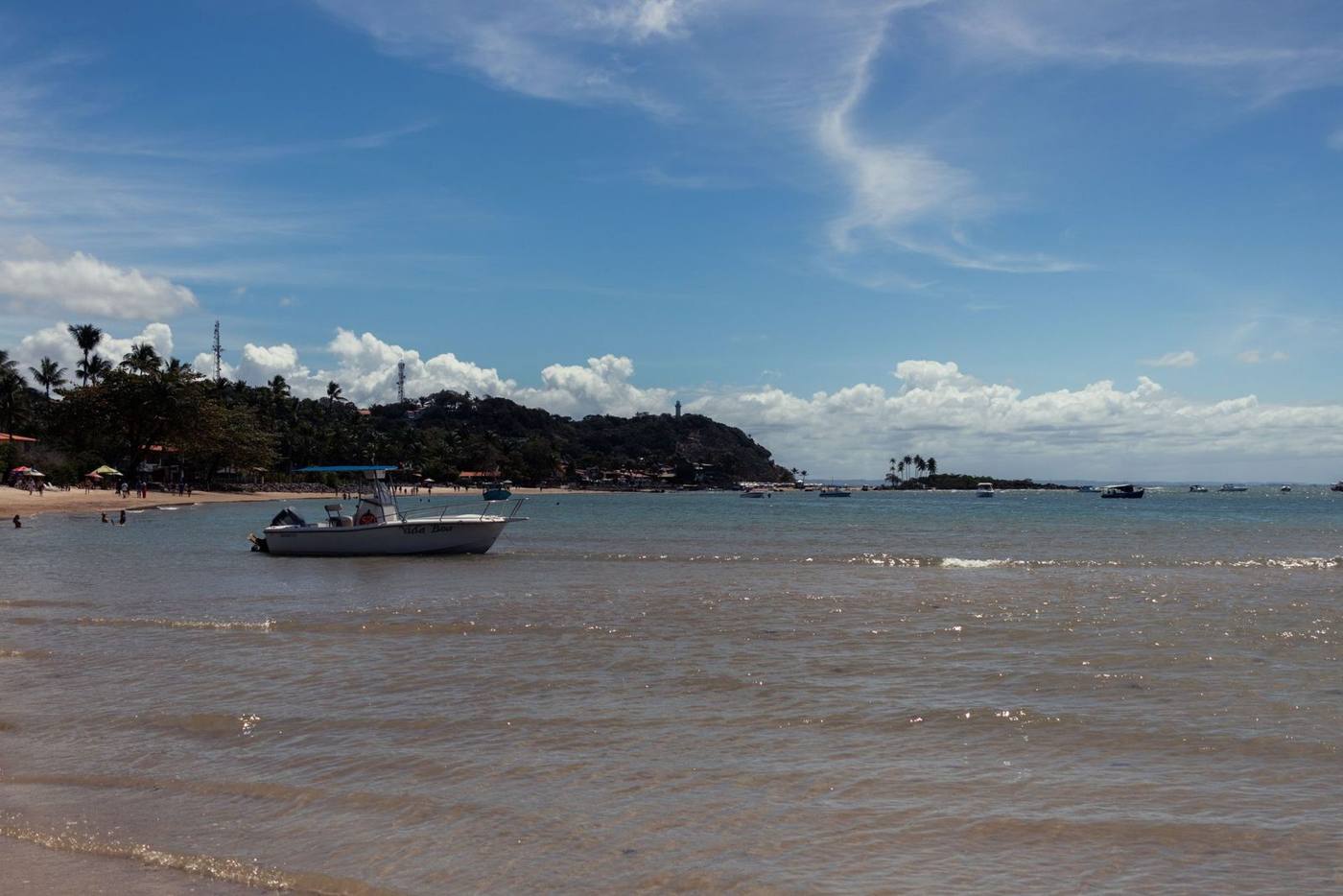
The islands and beaches south of Salvador: Morro closed to cars de São Paulo, Boipeba with its fishing villages and natural pools, the Maraú peninsula and Itacaré, between Atlantic forest, surf waves and cocoa.
- Salvador da Bahia
- Morro de São Paulo
- Boipeba
- Barra Grande
- Itacaré
Day by day
- Day 1
By catamaran from Salvador to Morro de São Paulo
This trip travels down the southern coast of Bahia state, in north eastern Brazil, known as the Costa do Dendê, after the oil palm used in Bahian cooking. It is a coast of islands, mangroves, coconut palms, natural pools that appear at low tide and car no-cost fishing villages. You go from Morro de São Paulo to Boipeba island, then to the Maraú peninsula and finally to Itacaré, between the Atlantic forest and the beaches.
Italian and most EU citizens do not need a visa for tourist stays. The United States has Brazil at level 2.
You fly into Salvador, Bahia's capital. From the ferry terminal near the Modelo market, catamarans leave for Morro de São Paulo, on Tinharé island, a crossing of about two and a half hours on open sea.
Morro de São Paulo is a car no-cost village: from the jetty you walk up, while local porters carry luggage in wheelbarrows. The village is lively, with sandy lanes, shops, bars and pousadas, the Brazilian guesthouses.
On arrival climb to the lighthouse on the hill above the village, with a view over the whole coast. At sunset many people gather here to watch the sun go down, and there is also a zip line descending towards the sea.
In the evening have moqueca baiana, a stew of fish or prawns cooked with coconut milk, dendê oil, tomatoes and coriander.
Spend the night in Morro de São Paulo.
Practical tip: the catamaran can be very rough: if you suffer from seasickness take something beforehand. A tourist fee is charged on arrival at Morro: check the amount.
- Day 2
Morro de São Paulo: the four beaches and the fort
Today discover Morro de São Paulo and its beaches, simply named by numbers: first, second, third and fourth beach, one after another along the coast.
The first beach, near the village, is small and quiet. The second is the liveliest, with bars, music and water sports. The third is calmer, with shallow water and natural pools among the coral. The fourth is the longest and wildest, with palms, pale sand and clear sea, reached by walking along the sand at low tide.
In the morning, at low tide, walk from the second to the fourth beach and swim in the natural pools that form on the coral reef in front of the third and fourth beaches. The water is warm and clear, with small colourful fish.
In the afternoon visit the Tapirai fort, built in the seventeenth century by the Portuguese to defend the channel to Salvador from pirates and the Dutch. You see stone walls, cannons and ruins, with sea views. Nearby is the town gate, an old stone arch.
At sunset return to the fort walls, one of the best spots to watch the sun.
In the evening go out in the village, where the bars on the second beach stay open late.
Spend the night in Morro de São Paulo.
Practical tip: the natural pools are only visible at low tide. Check tide times and wear reef shoes. Do not touch the coral.
- Day 3
Boipeba: Moreré and island life
Today move to Boipeba island, south of Morro, about an hour by boat through the channel between the islands and mangroves. Alternatively, go by 4x4 and boat across Tinharé island.
Boipeba is far quieter than Morro: there are no cars, only sandy lanes, tractors for luggage, fishermen and a small village, Velha Boipeba, at the river mouth, with a seventeenth century church and colourful houses. The island is part of an environmental protection area, with forest, mangroves and long empty beaches.
In the afternoon walk or ride a tractor to Moreré, a fishing village on the east coast, with a small bay of calm water, wooden boats and palms. Off Moreré, at low tide, natural pools form among the coral, where you snorkel among tropical fish a few metres from shore.
Towards evening return to Velha Boipeba and watch the sunset at the river mouth, as fishing boats head back to the village.
In the evening have fresh fish, lobster or grilled prawns, and acarajé, bean fritters fried in dendê oil, filled with prawns and sauces.
Spend the night on Boipeba.
Practical tip: Boipeba has few cash machines and they do not always work. Bring cash in reais. Ask your pousada for tide times.
- Day 4
Boipeba: Cueira and the low tide pools
Today explore Boipeba's finest beaches, in the south of the island.
In the morning take a boat trip around the island, run by local fishermen. The boat stops at the most spectacular natural pools, which form only at low tide offshore, such as those of Moreré and Castelhanos, with shallow, clear turquoise water over the reef. Here you snorkel among fish, sea urchins and starfish.
The boat then passes Cova da Onça, a fishing village, and goes up the river through the mangroves, where you see crabs and birds. Sometimes lunch is at a small stilt restaurant with fresh fish and oysters.
In the afternoon stop at Cueira beach, one of the island's most beautiful, with white sand, coconut palms and calm sea. There are a few simple places on the beach serving grilled lobster, the local speciality.
An alternative is to walk along the coast from Moreré to Cueira, in about two hours at low tide, past empty beaches.
At sunset head back towards the village.
Spend the night on Boipeba.
Practical tip: the tropical sun is very strong even under cloud. Use water resistant sunscreen, a hat and a T shirt for snorkelling. Choose boats run by licensed local fishermen.
- Day 5
The Maraú peninsula: Barra Grande and Lagoa do Cassange
Today leave Boipeba and head south to the Maraú peninsula, crossing the channel by boat and then continuing by road or boat to Barra Grande, the peninsula's main village, in about half a day.
The Maraú peninsula is a long strip of land between the open sea and Camamu Bay, one of Brazil's largest bays, with islands, mangroves and rivers. The roads are unpaved and the beaches almost deserted.
Barra Grande is a small village of sandy lanes at the tip of the peninsula, with bars, pousadas and a beach on the bay with calm water. From here trips leave for the east coast beaches, such as Taipu de Fora, with coral pools considered among the most beautiful in Brazil.
In the afternoon go to Lagoa do Cassange, a freshwater lake separated from the sea only by a narrow strip of sand. On one side you swim in the lake, with warm, dark water, on the other in the ocean. Around the lake are dunes and vegetation.
At sunset return to Barra Grande and watch the sun go down over Camamu Bay.
Spend the night in Barra Grande.
Practical tip: the peninsula's dirt roads turn muddy in rain. Travel with local 4x4s or boats. Check the tides for the Taipu de Fora pools.
- Day 6
Itacaré: the four beaches trail
Today you reach Itacaré, south of the Maraú peninsula, about two hours by dirt and paved road. Itacaré is a small town at the mouth of the Rio de Contas, surrounded by the Atlantic forest, the Mata Atlântica, one of the most species rich forests in the world. It is famous for surfing and for its beaches hidden in the forest.
In the afternoon walk the four beaches trail, an easy walk of about an hour and a half that links, through forest and rocks, four small beaches near town: Prainha, Itacarezinho, Engenhoca and Havaizinho. Each is a small bay of golden sand between rocks, with palms and waves. In the forest you sometimes see howler monkeys and toucans.
The best known is Prainha, a perfect bay framed by two forested headlands, much loved by surfers.
At sunset return to town and stroll along Rua Pituba, the main street, full of bars, craft shops and cafés.
In the evening in Itacaré you often hear capoeira, the Afro Brazilian martial art and dance born in Bahia, practised in squares to the sound of the berimbau, a stringed instrument with a gourd.
Spend the night in Itacaré.
Practical tip: some forest trails are better done with a local guide, for safety reasons. Do not leave valuables on the beach. Waves and currents can be strong: swim only where it is safe.
- Day 7
Itacaré: a cacao farm and waterfalls
Today discover Itacaré's interior, with the forest and the history of cacao.
Between the late nineteenth and mid twentieth centuries, the Ilhéus and Itacaré region was one of the world's main cacao producers. The great landowners of the fazendas, or farms, were called the cacao colonels, and their story is told in the novels of Jorge Amado, Bahia's most famous writer. In the 1980s a plant disease called vassoura de bruxa, witches' broom, destroyed most of the plantations.
In the morning visit a cacao farm near Itacaré, where cacao is still grown in the shade of forest trees, in a system called cabruca. You see cacao pods attached to the trunk, taste the sweet white pulp around the seeds and learn the whole process, from fermentation and drying to chocolate.
In the afternoon hike to waterfalls in the forest, such as the easily reached Tijuípe falls, with a pool for swimming, or the falls of the Rio de Contas. Alternatively, go rafting on the Rio de Contas or kayaking through the mangroves.
In the evening have a last Bahian dinner, such as bobó de camarão, a cassava cream with prawns.
Spend the night in Itacaré.
Practical tip: farm visits must be booked in advance. For rafting choose licensed operators with safety equipment.
- Day 8
Departure from Ilhéus
On the last day go to Ilhéus airport, about an hour and a half south of Itacaré, along the coastal road between forest and sea.
If you have a few hours before your flight, visit central Ilhéus, the city of cacao and of Jorge Amado. The historic centre preserves buildings from the cacao boom, such as the cathedral of São Sebastião, with its domes, and the Paranaguá palace. The house where Jorge Amado lived as a young man is now a cultural centre devoted to the writer. Many scenes of the novel Gabriela, Clove and Cinnamon, the best known book about the city, are set in the streets of the centre.
Along the Ilhéus coast there are long palm fringed beaches, and south of the city some historic cacao farms are open to visitors.
Before leaving buy some souvenirs: chocolate made from local cacao, cachaça, the sugar cane spirit, colourful Bahia ribbons or crafts.
From Ilhéus airport there are flights to Salvador, São Paulo and other Brazilian cities, from which you continue to Europe.
Practical tip: check flight times from Ilhéus, as there are not many. If your connection is tight, it is better to spend the previous night in Ilhéus. Leave a good margin for international flights from Salvador or São Paulo.
For those who want sea and nature at a slow pace. Boat transfers can be rough; Morro de São Paulo charges an entry fee to the island. From April to June it rains more. As everywhere in Bahia, do not take valuables to the beach.
Before you go
- Documents and visa
- Valid passport; no visa for tourism up to 90 days for EU citizens.
- Health and vaccines
- No compulsory vaccines arriving from Europe; yellow fever is recommended for the Amazon and some inland areas. Protect yourself against mosquitoes because of dengue. Emergencies: 190 police, 192 ambulance, 193 fire.
- Money and payments
- Brazilian real. Cards and instant payments are everywhere; carry little cash.
- Power sockets
- Type N, plus C, 127 or 220 volts depending on the city: check the voltage before plugging in devices.
- Time zone
- Rio and São Paulo are UTC-3 all year: Brazil does not use daylight saving time.
- Safety
- The United States rates Brazil level 2 for crime, with level 4 within 160 km of land borders (except Foz do Iguaçu and the Pantanal). No favelas without a community guide. Official advice: GOV.UK.
Information checked in November 2026 for Italian and EU citizens. Rules change: always check before you travel.
Variations
In 4 days: Morro de São Paulo and Boipeba.
In 10 days: add two days in Salvador, in the Pelourinho district, before heading to the islands.
Frequently asked questions
When is the best time to go?
September to March, with less rain. April to July is wetter, but it is always warm.
Do I need a visa?
No, Italian citizens do not need a visa for tourist stays.
How do I get around?
By boat, catamaran, tractor and local 4x4. Hire cars are only useful towards Itacaré and Ilhéus.
Indicative itinerary written by World Atlas. Before booking, check timetables, seasonal openings, documents and safety.
 6 daysEasy
Trancoso and Caraíva
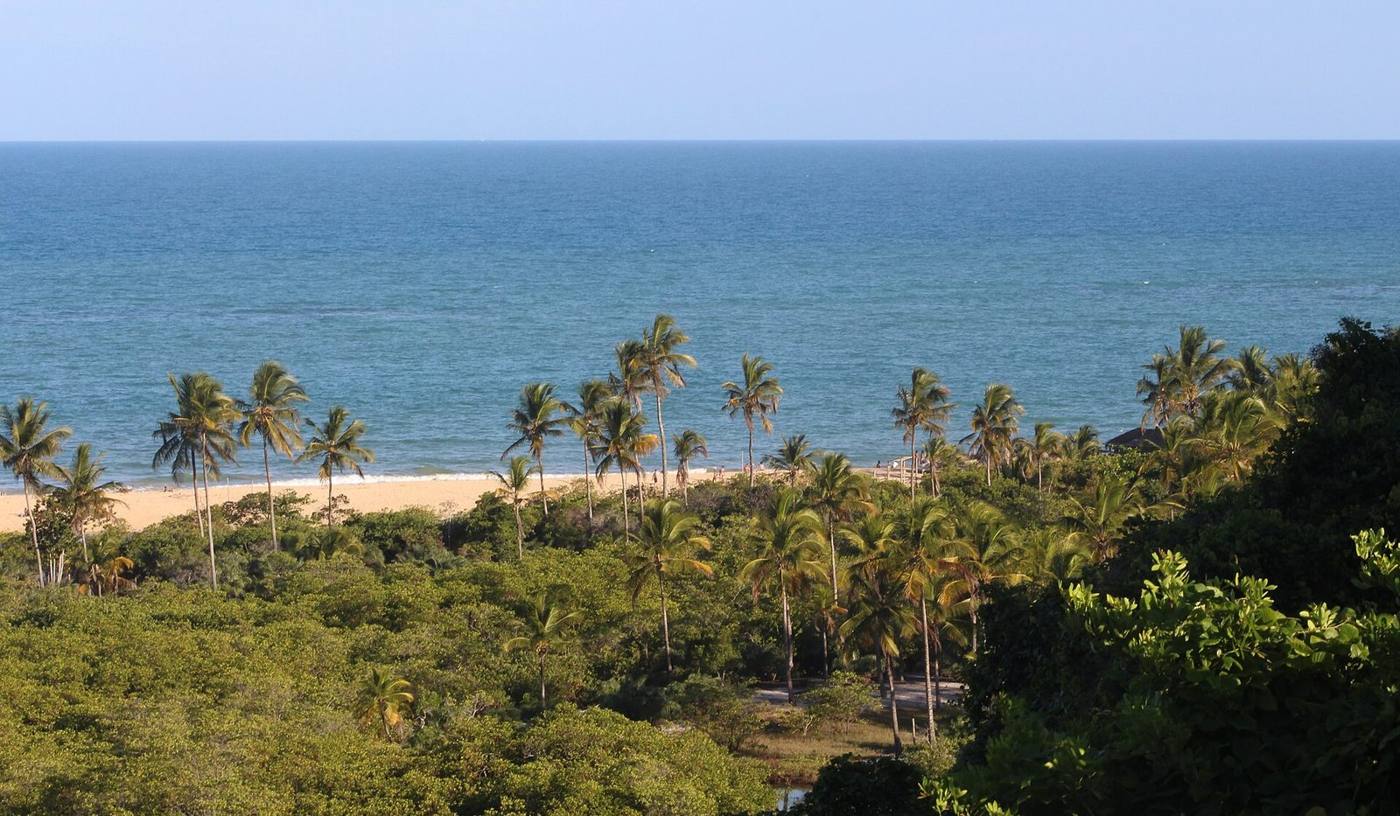
The coast where Brazil was discovered, south of Porto Seguro: the Quadrado of Trancoso with its colourful houses and white church above the sea, the cliffs of Arraial d'Ajuda, the village closed to cars of Caraíva with no paved roads and the Pataxó village of Barra Velha.
 5 daysEasy
Paraná: Curitiba, Serra Verde and Ilha do Mel
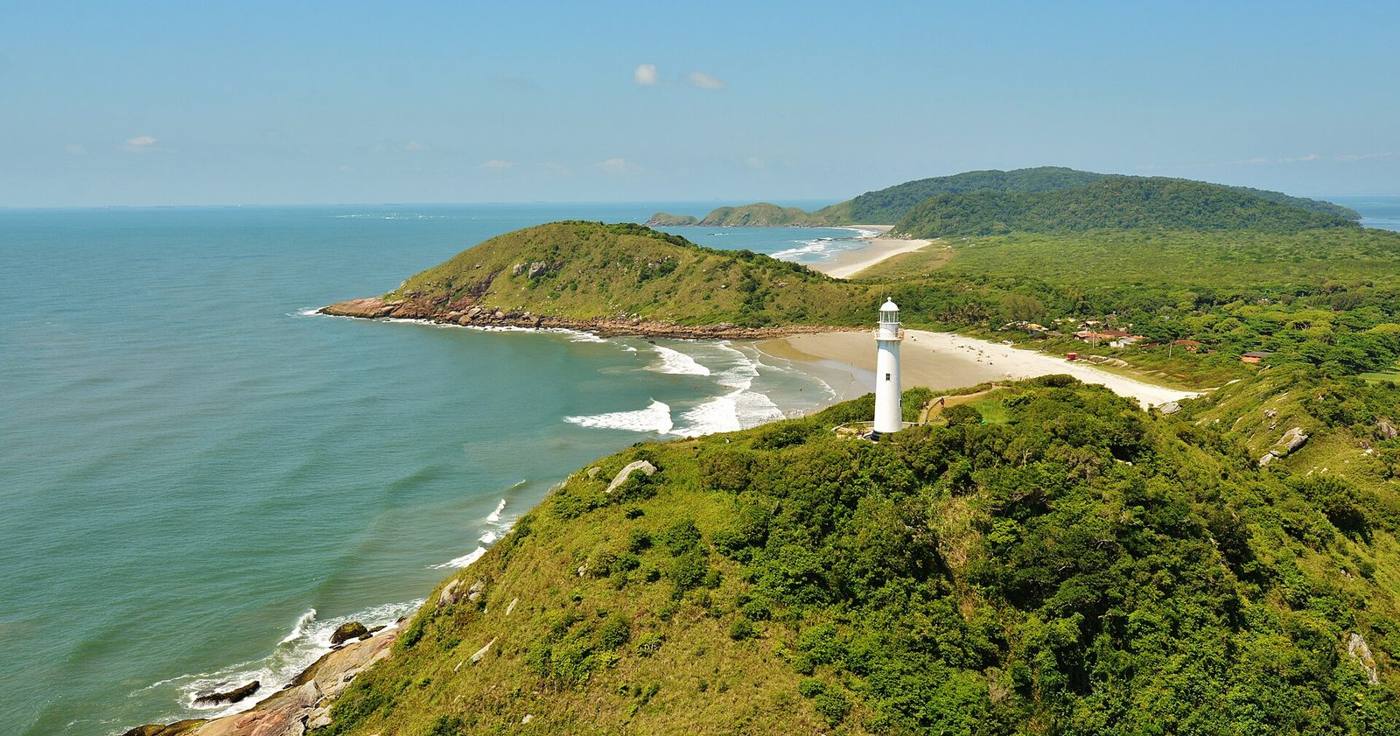
Curitiba, the city of parks, the scenic train descending through the Atlantic forest of the Serra do Mar to Morretes and its barreado stew, and Ilha do Mel, a island closed to cars with lighthouses, caves and wild beaches.
 7 daysEasy
Florianópolis and the Santa Catarina coast
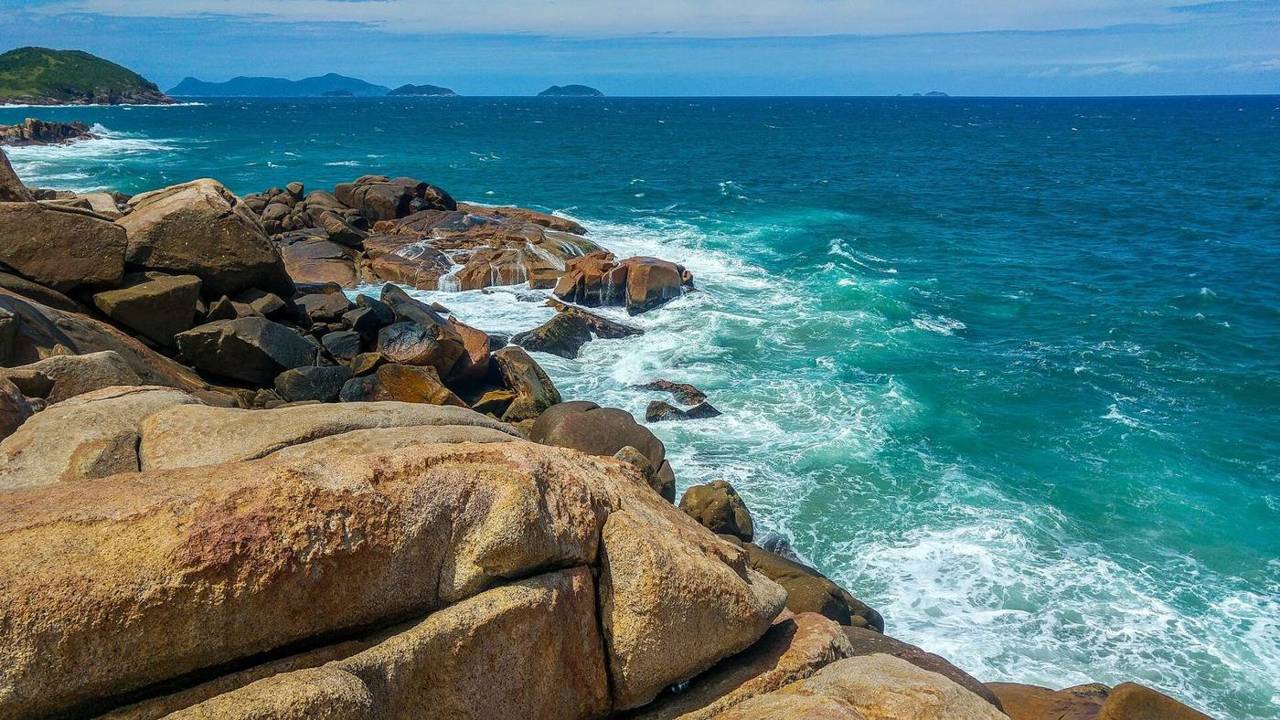
The island of Florianópolis with over forty beaches, Conceição lagoon and fishing villages of Azorean origin, then the coast to the south: Guarda do Embaú between river and sea and Praia do Rosa, where southern right whales arrive in winter.