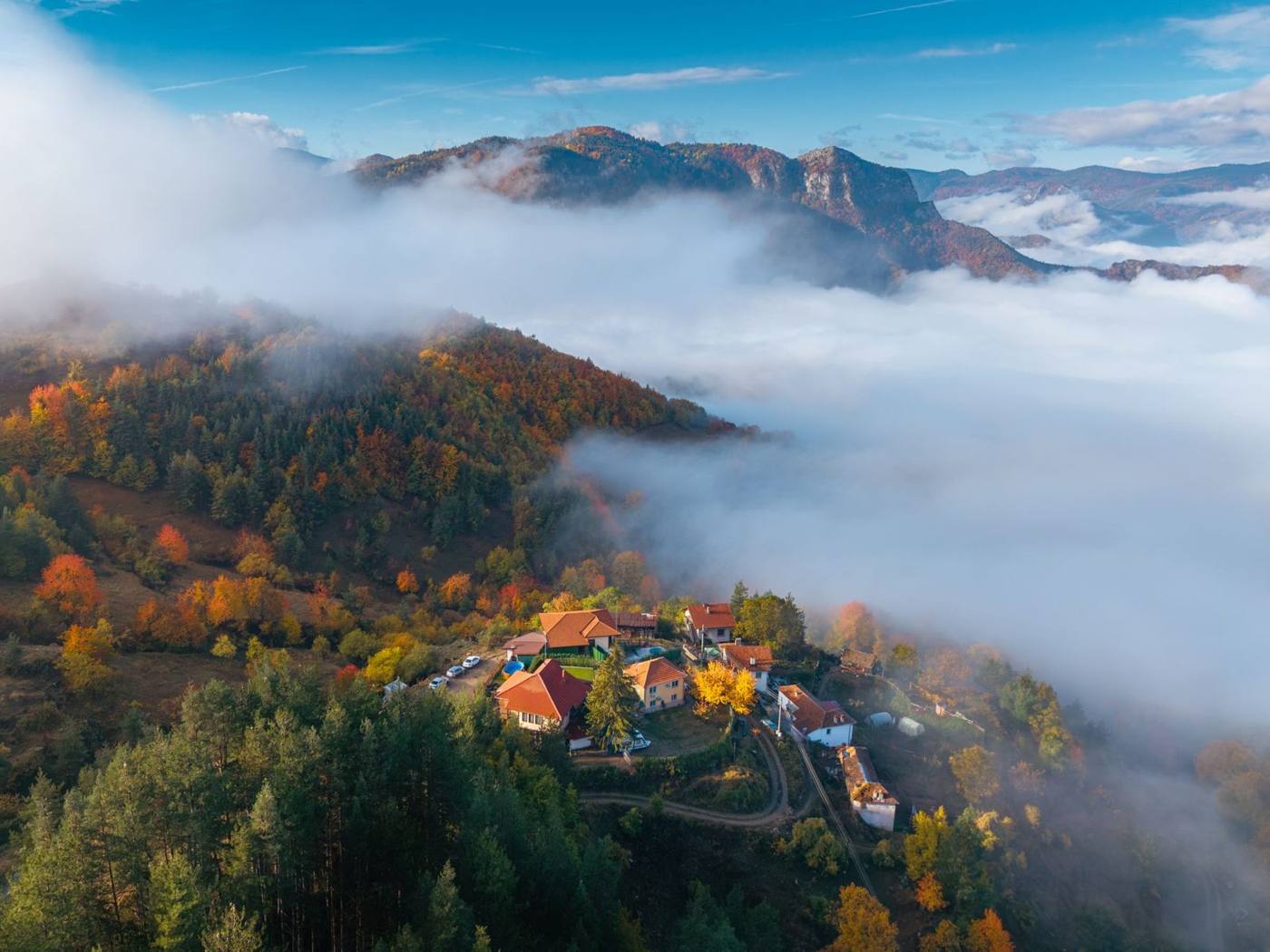
The Rhodopes
The mountains of the Orpheus legends: Trigrad gorge and the Devil's Throat cave, the Wonderful Bridges, Shiroka Laka village, Bachkovo monastery and Asen's fortress.
- Plovdiv
- Asenovgrad
- Bachkovo
- Wonderful Bridges
- Shiroka Laka
- Trigrad
Day by day
- Day 1
From Plovdiv to Asen's Fortress and Bachkovo Monastery
This trip takes you into the Rhodope mountains, in southern Bulgaria: green, rounded mountains, stone villages, deep gorges and the legends of Orpheus, the Greek singer who, according to myth, was born in these lands. You start from Plovdiv and travel by rental car.
Before you go: Italian citizens can enter Bulgaria with an electronic identity card or a passport; Bulgaria has been in the Schengen area since 2025. Other nationalities should check their own rules. The currency has been the euro since 1 January 2026. The Rhodopes are peaceful; the roads are winding and narrow, so drive in daylight and take your time. Roads outside towns need an electronic vignette.
From Plovdiv, drive south for about half an hour to Asenovgrad, at the gateway to the mountains. Above the town, on a rocky spur over the gorge of the Chepelarska river, stands Asen's Fortress, named after Tsar Ivan Asen II, who had it rebuilt in the thirteenth century. Little remains of the walls, but the Church of the Holy Mother of God is intact, with its tower and walls of stone and brick. The view over the gorge is superb. Check prices and times.
Then continue for about ten kilometres to Bachkovo Monastery, the second largest in Bulgaria, founded in 1083 by a Byzantine commander of Georgian origin. In the courtyard, among the wooden galleries, you see the main church with a deeply venerated old icon and the refectory with its frescoes. Cover your shoulders and knees.
Overnight near Bachkovo.
Practical tip: in front of the monastery there are stalls selling honey, jams and mountain yoghurt; it is the right moment to taste Rhodope produce.
- Day 2
The Wonderful Bridges
Today you see one of the strangest natural formations in Bulgaria.
In the morning, drive south along the Chepelarska valley and then up a mountain road that climbs through fir forests to about 1,500 metres, near the village of Zabardo. Allow an hour and a half.
The Wonderful Bridges are two large natural marble arches, carved by a stream in a narrow gorge. According to geologists, there was once a cave here: the roof collapsed and only the arches remained, as high and wide as a cathedral. You can walk across the larger bridge on a path through the trees, then go down into the gorge to pass beneath it and look up at the rock vault.
The steps and walkways are well made, but in the gorge the ground is damp and slippery: wear shoes with a good grip. Around them are meadows and woods for a quiet picnic.
In the afternoon, continue south through Chepelare and the forests of Pamporovo, the ski resort of the Rhodopes, to Shiroka Laka, about an hour and a half. Along the way, stop at the viewpoints over the valleys: green hills one behind the other are the typical landscape of these mountains.
In the evening, have Rhodope dishes for dinner: patatnik, a potato and cheese pie, and slow-cooked Smilyan beans.
Overnight in Shiroka Laka, for two nights.
Practical tip: the road to the Wonderful Bridges is narrow and partly unpaved; check conditions before you go, especially after rain.
- Day 3
Shiroka Laka and the music of the Rhodopes
Today you stay in Shiroka Laka, one of the most beautiful villages in the Rhodopes.
The village is protected as an architectural reserve. Its nineteenth-century houses have stone ground floors and white upper floors, with small windows and roofs covered in grey stone slabs. A stream runs through the village, crossed by old arched stone bridges. Wander the lanes without hurrying and climb the church hill to see the rooftops from above.
Shiroka Laka is famous for its music. There is a national school of folk music here, where young people learn to play the gaida, the Rhodope bagpipe made from goatskin, and to sing with the deep voices typical of the region. If you are lucky, you will hear rehearsals through the windows. Visit one of the house museums too, with woollen rugs and objects from mountain life. Check prices and times.
In the afternoon, walk up to the village of Gela, higher up, through meadows and woods. A local legend says Orpheus was born in these mountains, and in summer Gela hosts a gathering of gaida players.
If you visit in late winter, the kukeri festival takes place near Shiroka Laka: men in masks and cowbells dance to drive away evil spirits.
Overnight in Shiroka Laka.
Practical tip: few people speak English in the villages; learn a few words of Bulgarian, such as thank you, blagodarya, and remember that here nodding up and down often means no.
- Day 4
The Trigrad gorge and the Devil's Throat
Today you enter the deepest gorge in the Rhodopes and the cave of the Orpheus legend.
From Shiroka Laka, drive west for about an hour and a half, through Devin and then along a narrow valley to the Trigrad gorge. Here the river has cut through the marble, creating vertical walls hundreds of metres high, so close together that in places the road barely squeezes through. Light comes in only in strips and the air is cool even in summer.
In the middle of the gorge is the entrance to the Devil's Throat cave. The Trigrad river plunges into the mountain in a roaring underground waterfall that drops into a huge dark chamber. Visits are guided: you walk down a tunnel to the chamber, hear the thunder of the water and then climb out up a long, steep staircase beside the waterfall. Legend says that Orpheus went down from here into the underworld to bring Eurydice back to life. Check prices and times.
In the afternoon, if you want another cave, drive to the Yagodina cave, a few kilometres away, with galleries full of rock formations. Check prices and times.
In the evening, stay in the village of Trigrad, at the head of the valley, near the meadows and the mountains towards the Greek border. It is a very quiet place, with few houses and the sound of cowbells.
Overnight in Trigrad.
Practical tip: in the Devil's Throat the exit staircase is long and wet; bring a waterproof jacket and closed shoes, and note that the visit is not advised for people with heart problems or vertigo.
- Day 5
Back to Plovdiv
Today you leave the mountains and return to Plovdiv.
In the morning, take a walk in the meadows above Trigrad, while the mist still lies in the valley floors. Then set off north.
The road passes through Devin, a small spa town famous for its mineral water, and then follows the valley of the Vacha river down, past dams, reservoirs and wooded gorges, to the Thracian plain. Allow about three hours to Plovdiv, with a few stops at viewpoints.
You reach Plovdiv in the early afternoon. If you have time before leaving, go up to the old town to see the Roman theatre and the painted nineteenth-century houses.
In these five days you have seen the greenest and calmest side of Bulgaria: Asen's Fortress and Bachkovo Monastery, the marble arches of the Wonderful Bridges, the stone village of Shiroka Laka and its music, the Trigrad gorge and the Devil's Throat cave, linked to the myth of Orpheus.
When to go: from May to October. In spring the meadows are full of flowers, in summer the mountains are cool compared with the plain, and in autumn the forests turn red and yellow. In winter some mountain roads may close because of snow.
Practical tip: before you leave, buy Rhodope honey, mountain herbs for tea and village yoghurt; and always allow plenty of time on the roads, because there are many bends and slow lorries.
Bulgaria at its greenest and calmest, with stone villages and good mountain food. Roads are winding: allow plenty of time. Few people speak English in the villages.
Before you go
- Documents and visa
- EU citizens need a valid identity card or passport: Bulgaria is in the EU and, since 1 January 2025, in the Schengen area. Damaged or worn identity cards have been refused at the border, so check yours is intact and readable. Other nationalities should check the Schengen rules.
- Health and vaccines
- No vaccines required. EU citizens should bring their EHIC; take insurance covering medical costs, repatriation and, for hiking, mountain rescue. Emergencies: 112, answered in English too.
- Money and payments
- Euro, since 1 January 2026; until the end of 2026 prices are also shown in lev. Cards work almost everywhere in towns, but carry cash in villages and mountain huts. Avoid street money changers. Roads outside towns and motorways need an electronic vignette: buy it on the official BG TOLL website, at the border or at petrol stations, and check current prices.
- Power sockets
- Types C and F, 230 volts.
- Time zone
- Eastern European Time (UTC+2, summer UTC+3).
- Safety
- A generally safe country. Watch for pickpockets and bag theft in tourist areas, on public transport and at airports, especially in Sofia and on the coast in summer. Use only licensed taxis, particularly at Sofia airport and in Sunny Beach. Drug penalties are severe. In summer and early autumn there is a risk of fast-spreading wildfires. Official advice: GOV.UK.
Information checked in November 2026 for Italian and EU citizens. Rules change: always check before you travel.
Variations
In 3 days: Bachkovo and Asen's Fortress, then Shiroka Laka, and back to Plovdiv, without Trigrad.
In 7 days: add two days in Plovdiv, with the old town, the Roman theatre and the Kapana district.
Frequently asked questions
What document do I need for Bulgaria?
Italian citizens can enter with an electronic identity card or a passport. Other nationalities should check their own rules.
Are the Rhodope roads difficult?
They are paved almost everywhere but narrow and full of bends. Drive in daylight, allow plenty of time and check mountain road conditions after rain or snow.
Can you visit the Devil's Throat with children?
Yes, but the exit staircase is long, steep and wet. Think carefully with small children and check prices and times of the guided tours.
Indicative itinerary written by World Atlas. Before booking, check timetables, seasonal openings, documents and safety.
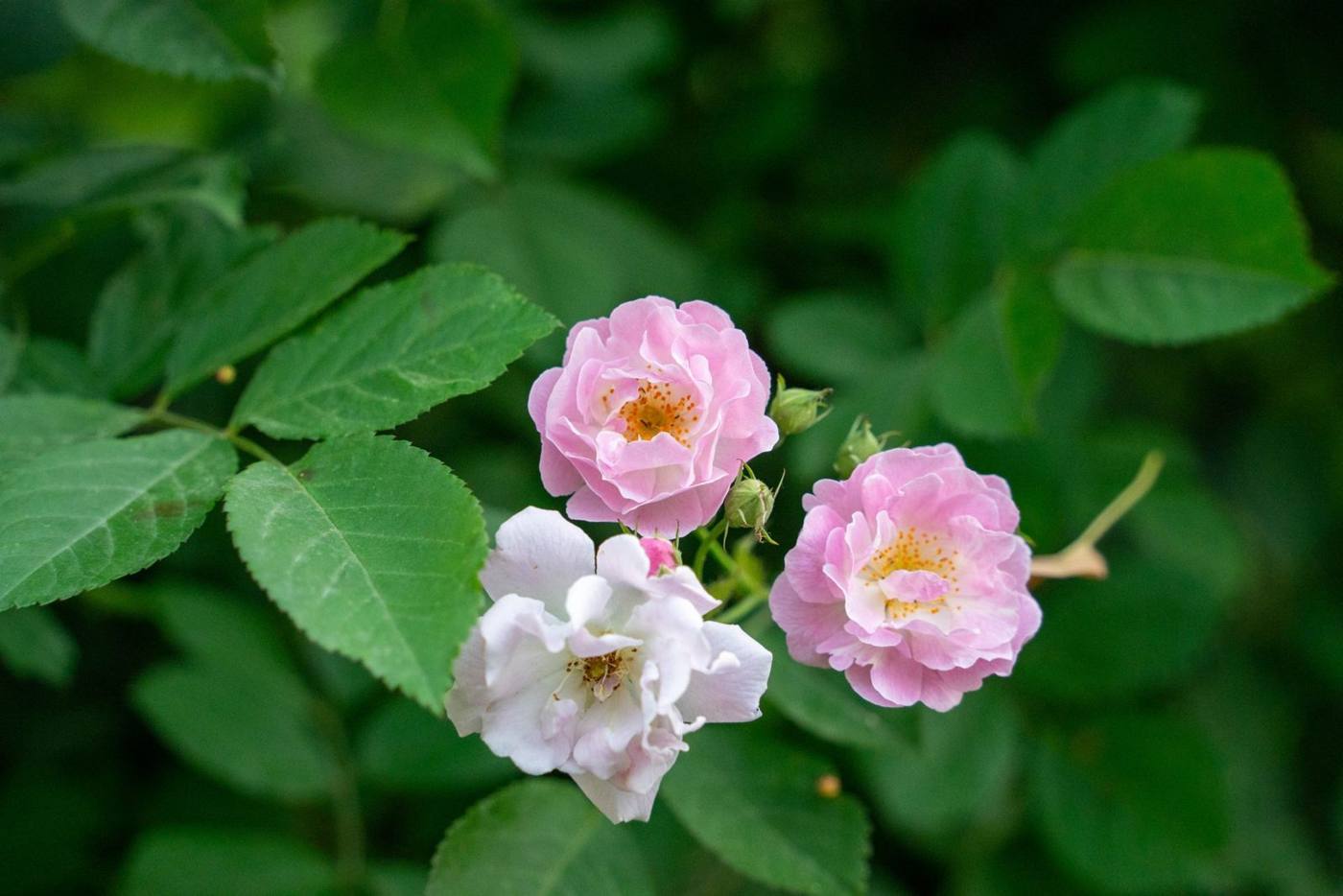 4 daysEasy
The Valley of Roses and the Thracians
Kazanlak and the rose festival in late May and early June, the UNESCO Thracian tomb, Shipka pass with its monument and Russian church, and the village of Koprivshtitsa.
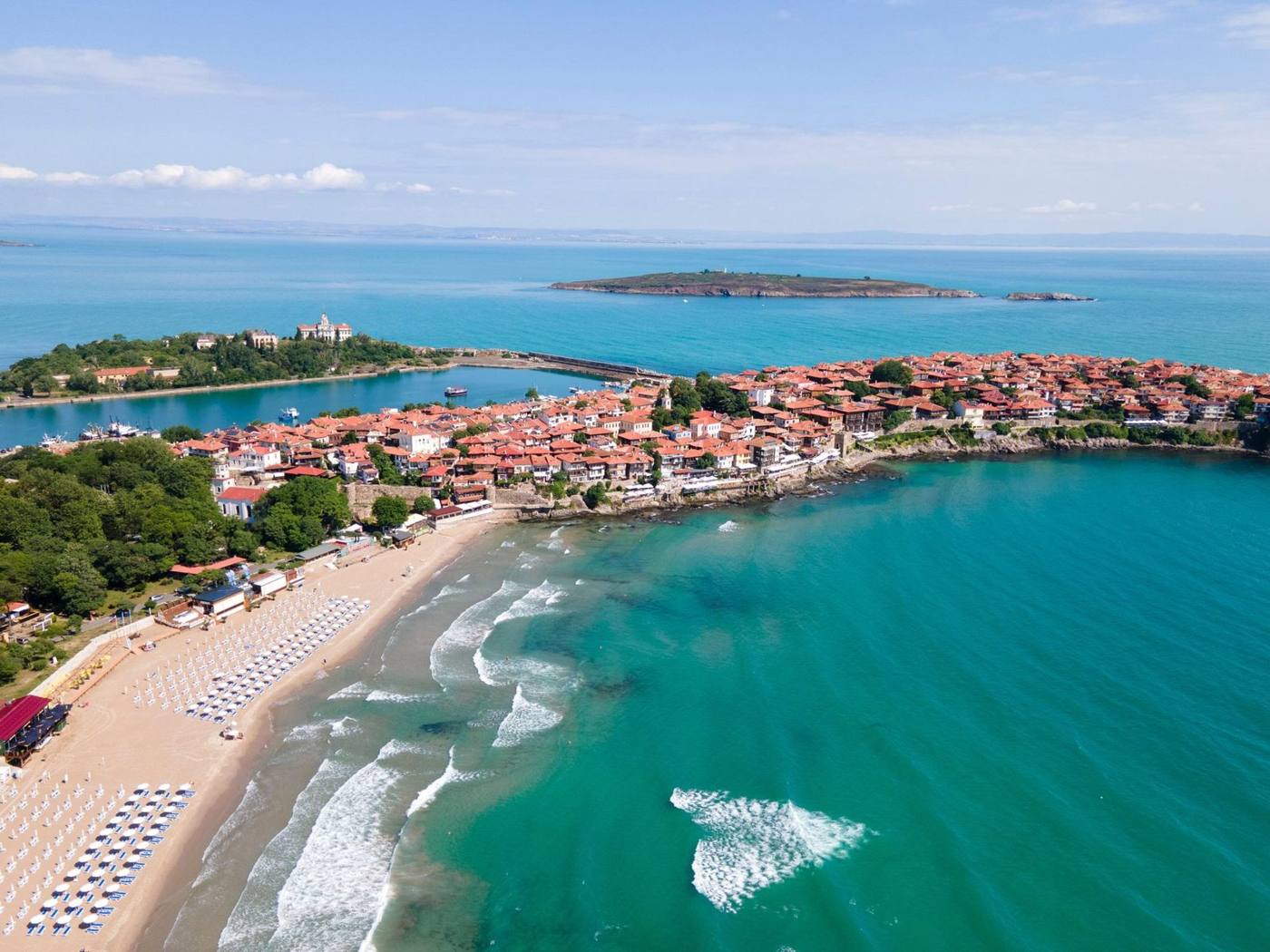 5 daysEasy
Sozopol and the south coast
Sozopol's old town of wooden houses, the beaches of Sinemorets and the Veleka river mouth, Strandzha park and quiet Ahtopol village.
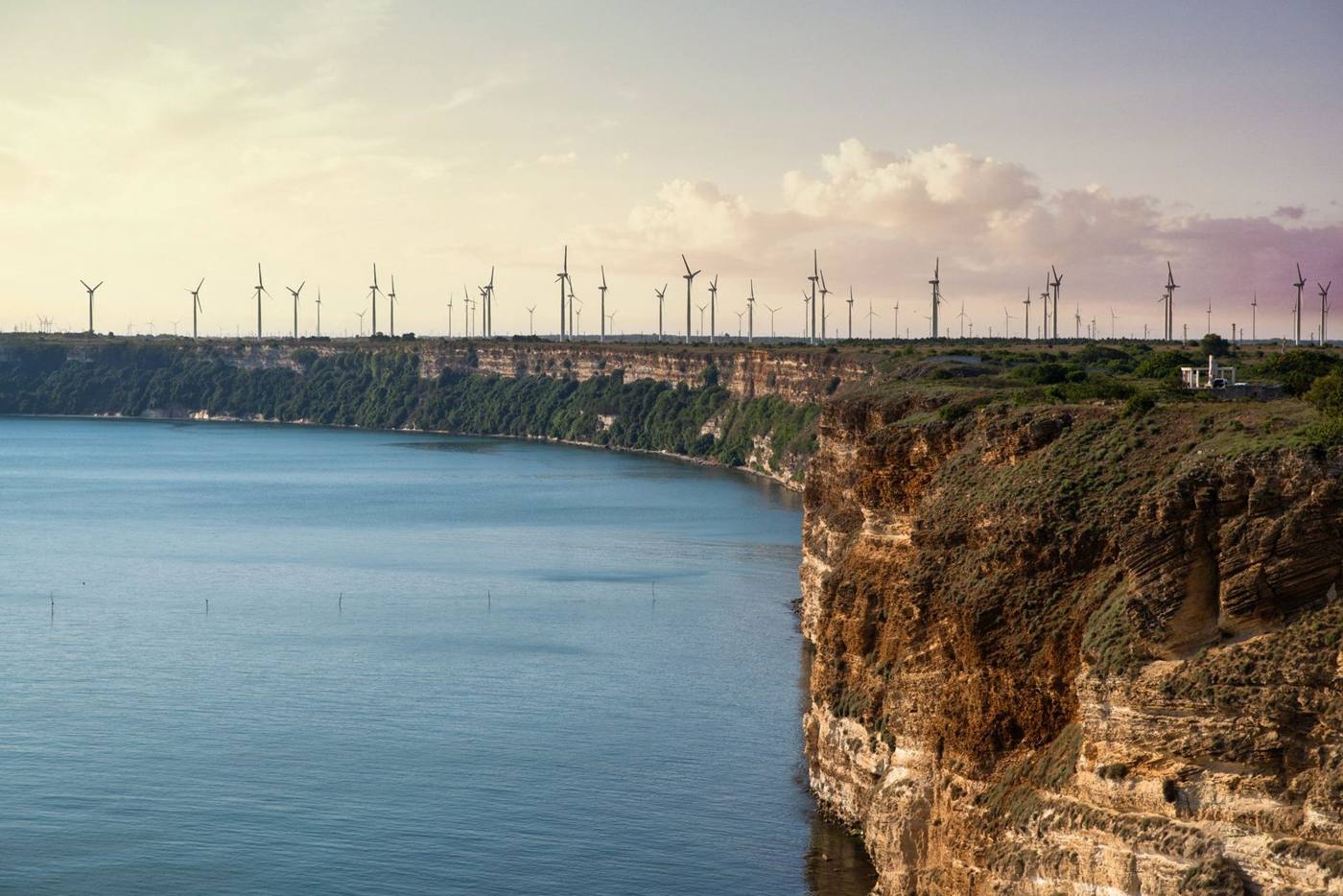 4 daysEasy
Varna and Cape Kaliakra
Varna with the world's oldest gold in its museum, the rock monastery of Aladzha, the red cliffs of Cape Kaliakra with dolphins and the town of Balchik with Queen Marie's palace.