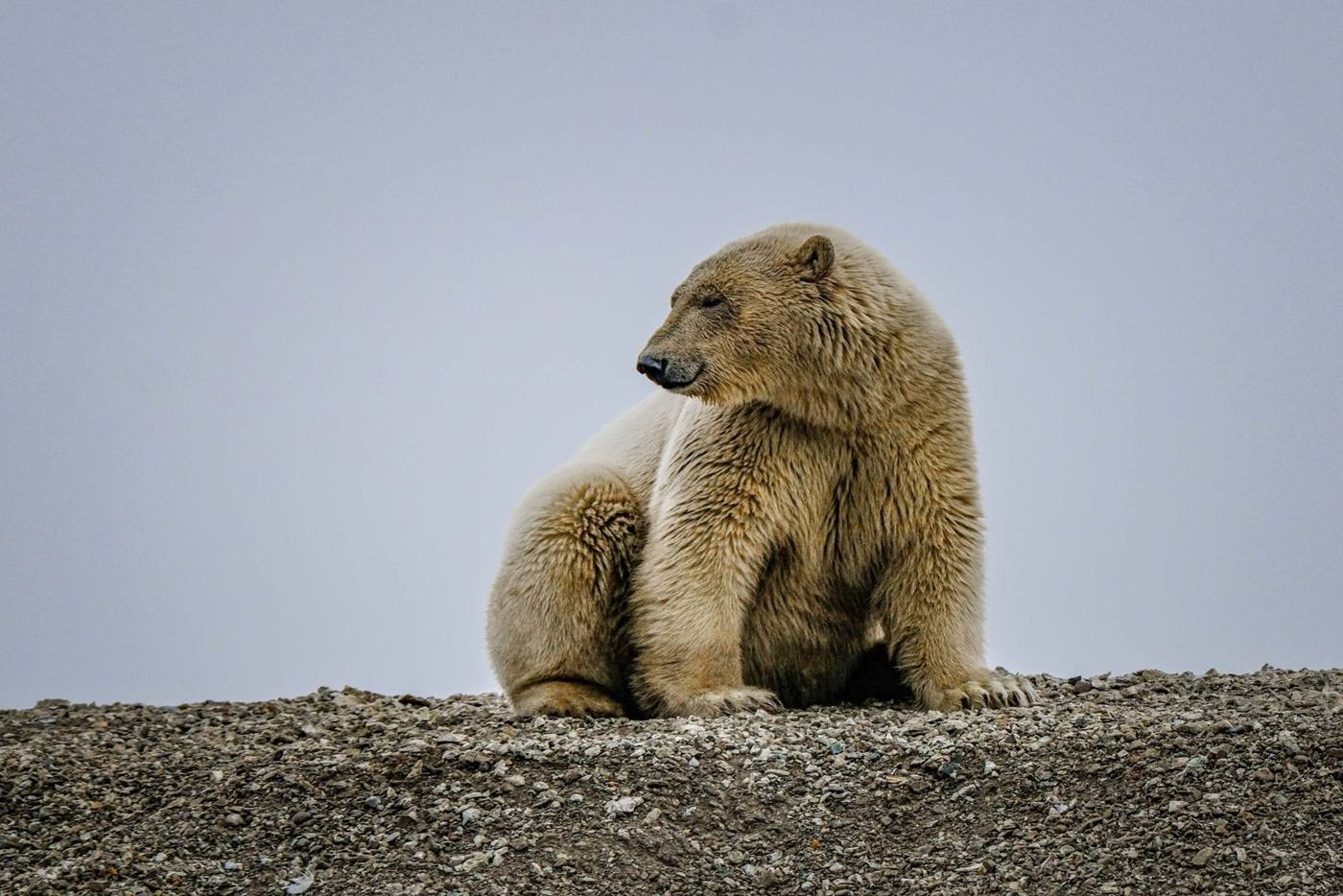
The polar bears of Churchill
On Hudson Bay, where polar bears wait for the sea to freeze: tundra buggy outings and, with some luck, the northern lights.
- Winnipeg
- Churchill
- Wapusk
- Winnipeg
Day by day
- Day 1
Arrival in Winnipeg
Churchill is a small town of fewer than nine hundred people on the western shore of Hudson Bay, in northern Manitoba, and it is the most accessible place in the world to see polar bears in the wild. Every autumn, between October and November, hundreds of bears gather along the coast waiting for the bay to freeze so they can return to the ice to hunt seals. In six days you arrive in Winnipeg, fly to Churchill and spend two full days among the bears.
You arrive in Winnipeg, the capital of Manitoba, a city at the geographical centre of Canada, where the Red and Assiniboine rivers meet. From Europe you usually change in Toronto, Montreal or Calgary.
If you arrive early, walk to The Forks, the meeting point of the two rivers, inhabited for six thousand years, with its covered market and riverside walks. Next door is the Canadian Museum for Human Rights, in a modern building of glass and stone with a glowing tower, devoted to struggles for rights in the world and in Canada, including those of Indigenous peoples.
In the evening, prepare your cold-weather gear: in Churchill in November the temperature often drops below minus fifteen degrees, with strong wind off the bay.
In the evening, sleep in Winnipeg.
Practical tip: Italian citizens arriving in Canada by air must apply online for an eTA, the electronic travel authorisation, which costs 7 Canadian dollars. Do it on the official Canadian government website before you leave.
- Day 2
Flight to Churchill: the town and the Itsanitaq Museum
Early in the morning, take the flight from Winnipeg to Churchill, about two and a half hours north. Churchill is not linked by any road to the rest of Canada: you reach it only by plane or by a slow train that takes two days through forest and tundra. From the plane you see the boreal forest thin out until it becomes tundra, flat and snow-covered, dotted with frozen lakes.
The town lies where three environments meet: the boreal forest to the south, the tundra to the north and the Arctic sea of Hudson Bay. This is why polar bears pass through in autumn, beluga whales come in summer and the northern lights shine in winter.
In the afternoon, visit the Itsanitaq Museum, a small collection of Inuit art and objects, with carvings in stone, bone and ivory, some thousands of years old, tools, kayaks and mounted animals from the region. The museum tells the story of life among the peoples of the Canadian Arctic.
Walk around the town, with its low, colourful houses, murals on the buildings, the port with its large grain elevator and the rocky shore of the bay. You will see signs warning that bears are about.
In the evening, sleep in Churchill.
Practical tip: in Churchill never walk alone outside the town, or at night in dark streets: polar bears sometimes come into town. Always follow local rules and ask for a lift after dark.
- Day 3
First day on the tundra buggies among the bears
Today is the first of two days on the tundra buggies, large vehicles built specially for the tundra, with huge wheels almost as tall as a person, wide windows and an open-air platform at the back. They are high enough to keep the bears at a distance and let you get close without disturbing them.
In the morning, set off towards the protected area along the coast, east of the town, in the Churchill Wildlife Management Area. The vehicles follow fixed tracks so as not to damage the tundra.
During the day, look for polar bears, which at this season rest on the snow, walk along the shore or play-fight, especially young males, rising up on their hind legs. Sometimes a bear comes up to the vehicle and lifts its nose to sniff. In November the bears have not eaten for months and are simply waiting for the ice.
Besides the bears, look for Arctic foxes, as white as the snow, red foxes, willow ptarmigan and sometimes snowy owls.
Lunch is eaten on board, in the warm, while the wind blows outside. The vehicle has heating and a toilet.
In the evening, return to Churchill.
In the evening, sleep in Churchill.
Practical tip: the bear season runs from October to about mid-November, and places on the tundra buggies sell out many months in advance. Book well ahead, even a year before, and check the exact dates.
- Day 4
Second day on the tundra buggies along Hudson Bay
Today you spend a second full day on the tundra, which usually brings different encounters: every day the bears move around, the light and wind change, and the bay starts to freeze along the shore.
In the morning, with the low golden light of the north, is the best time for photographs. Look for a mother with cubs, rarer and more cautious than the males, keeping away from the other bears. Watch how the bears move slowly to save energy and how they lie on the snow with their legs stretched out to cool down.
Towards the coast, watch the ice forming on the water: first a thin film, then larger sheets pushed towards the shore by the wind. When the bay freezes enough, the bears leave within a few days and the season ends.
The guide on board talks about the bears' lives, their yearly cycle and the threat of climate change, which makes the bay freeze later and melt earlier, shortening the time the bears have to hunt.
In the afternoon, head back towards town, watching the red sunset over the tundra.
In the evening, sleep in Churchill.
Practical tip: bring a long lens and spare batteries, because the cold drains them quickly. Keep them warm in an inside pocket and take the camera out of the warm vehicle as little as possible.
- Day 5
Dog sledding and an evening for the aurora
After two days on the vehicles, today you experience the tundra in a different way. In the morning, go dog sledding in the spruce forest near the town with a local musher. The dogs, usually huskies and sled-dog crosses, bark excitedly before the start and then run silently over the snow, pulling the sled between the trees.
The musher tells the story of dog sledding in northern Canada, how for centuries it was the main means of transport for Indigenous peoples and fur trappers.
In the afternoon, visit traces of the town's history, such as Cape Merry, with an old cannon on the rocky point at the mouth of the Churchill River and views over the bay, and, in the distance, the Prince of Wales Fort, built of stone in the eighteenth century by the Hudson's Bay Company for the fur trade. Visits are only with guides, because of the bears.
In the evening, if the sky is clear, go out to watch the northern lights. Churchill lies beneath the auroral oval, the band where auroras are most frequent, and green lights often dance over the tundra.
In the evening, sleep in Churchill.
Practical tip: for the aurora, do not walk out of town alone because of the bears. Join an organised outing with a guide, or watch the sky from lit, safe areas.
- Day 6
Flight to Winnipeg and departure
In the morning, take a last walk around the town, with the freezing air and the white light of the bay. Stop at the national parks office, which has exhibits on the bears and the region's wildlife, and at the small Catholic church, or buy a souvenir of Inuit and northern crafts.
Before leaving, look at the polar bear holding facility, an old hangar where bears that come into town too often are kept for a few days before being flown by helicopter far to the north, onto the ice. It is a way of protecting both residents and bears without killing them. You cannot go inside, but you can see it from outside.
Then take the flight to Winnipeg, about two and a half hours, and from there the flight home, changing in one of the big Canadian cities.
This trip combines well with a few days in the Rocky Mountains, in Banff and Jasper, with the early winter snow, or with Toronto and Niagara Falls, or with Montreal and Quebec City.
If you want to return in summer, between July and August, thousands of beluga whales come to the river mouth at Churchill, seen by boat or kayak, and the tundra is in flower.
Practical tip: flights between Churchill and Winnipeg can be cancelled or delayed by snow and wind. Leave at least a day's margin before your intercontinental flight home.
The most reliable place in the world to see polar bears in the wild: in the right season sightings are almost guaranteed. It is a very expensive trip with few places, often booked a year and a half ahead, almost always as an all-inclusive package. In summer you can see belugas in the Churchill River instead.
Before you go
- Documents and visa
- Passport valid for the whole stay. Anyone flying in needs an eTA, applied for online on the official Canadian government website: it costs 7 Canadian dollars.
- Health and vaccines
- No compulsory vaccines. Medical care is very expensive for visitors: health insurance is essential. Emergencies: 911.
- Money and payments
- Canadian dollar. Cards are accepted almost everywhere; tips of 15 to 20% are customary in restaurants.
- Power sockets
- Types A and B, 120 volts: you need an adapter and devices must accept 120 volts.
- Time zone
- Montreal and Quebec City are UTC-5, Calgary and Banff UTC-7, Vancouver UTC-8, all with daylight saving time in summer.
- Safety
- A very safe country. In summer wildfires can close roads and parks and bring smoke: check local alerts. Official advice: GOV.UK.
Information checked in November 2026 for Italian and EU citizens. Rules change: always check before you travel.
Variations
In 4 days: arrive in Winnipeg and fly to Churchill the same day, with a single day on the tundra buggies.
In 10 days: add the Rocky Mountains, with Banff and Jasper.
Frequently asked questions
When can you see polar bears?
From October to about mid-November, while they wait for Hudson Bay to freeze. The dates vary each year, so check them when you book.
Is it very cold?
Yes, in November the temperature often drops below minus fifteen degrees, with wind. You need an expedition jacket, insulated trousers, snow boots, gloves and a hat.
Can you go independently?
You can get there on your own, but tundra buggies are booked with licensed operators and you never walk alone outside the town.
Indicative itinerary written by World Atlas. Before booking, check timetables, seasonal openings, documents and safety.
 7 daysEasy
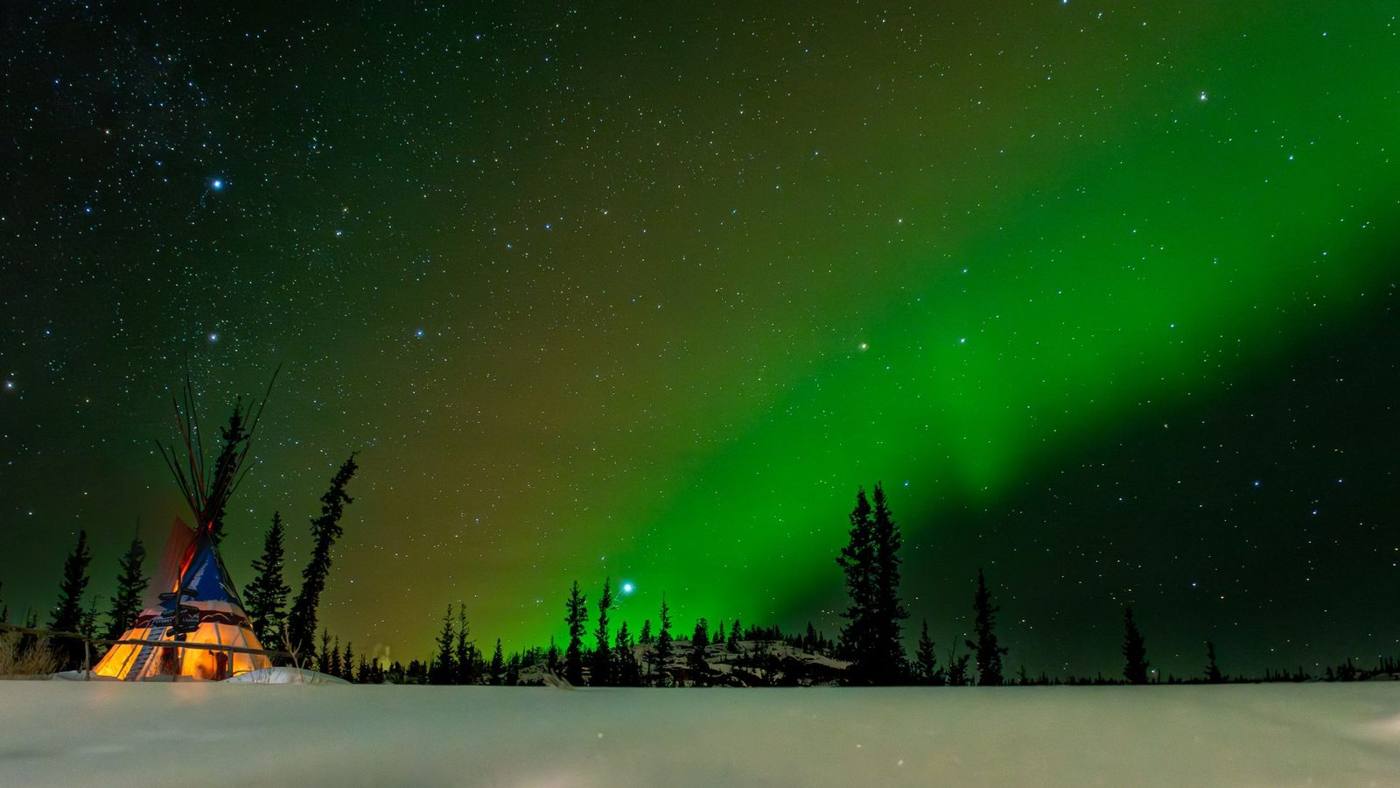
Yukon: northern lights in Whitehorse
Nights in a cabin far from the lights, days of dog sledding and snowshoeing and a soak in the Takhini hot springs.
 9 daysEasy
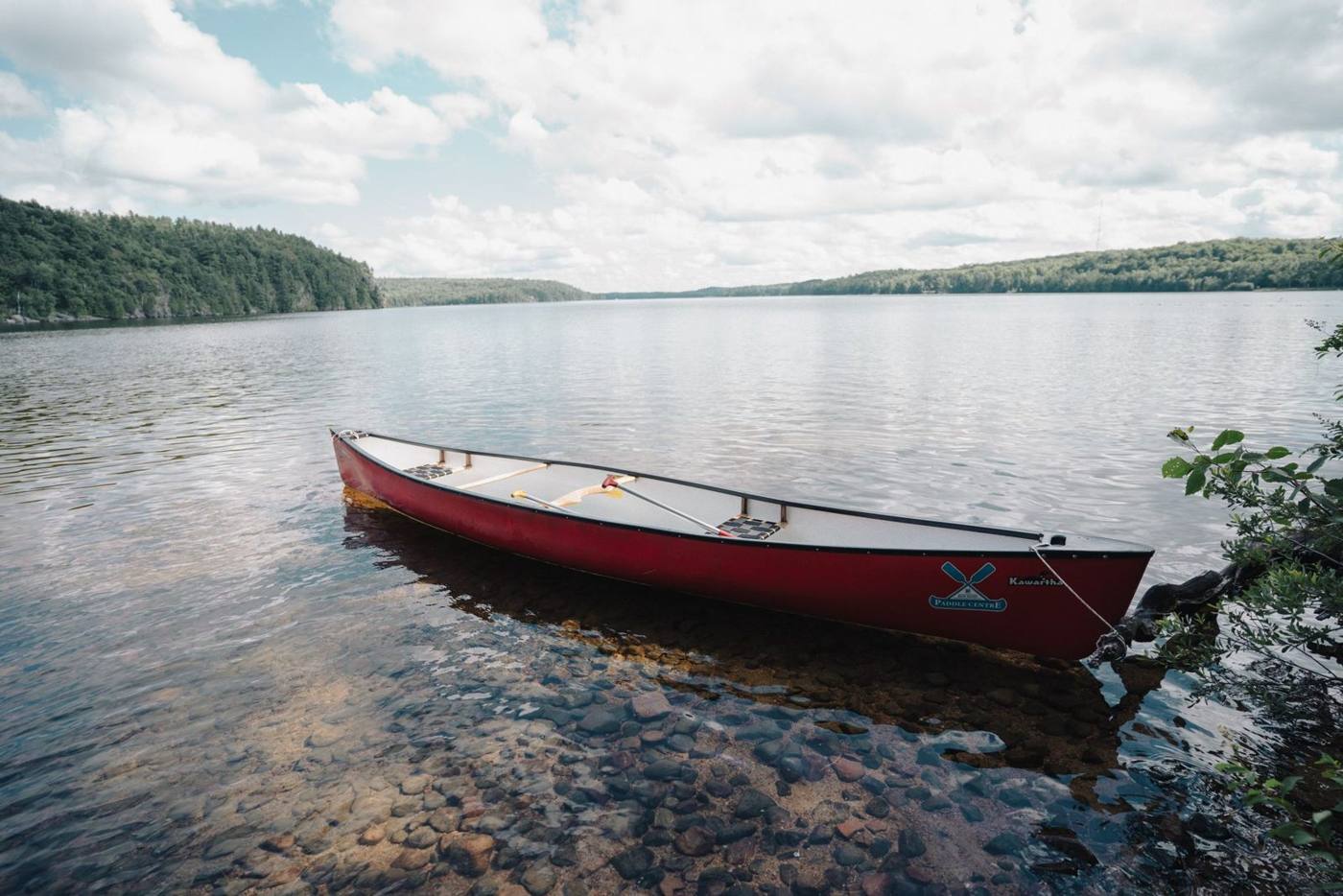
Ontario: Toronto, Niagara and Algonquin
Toronto, Niagara Falls, the Lake Ontario vineyards, the capital Ottawa and three days by canoe among the lakes of Algonquin.
 10 daysModerate
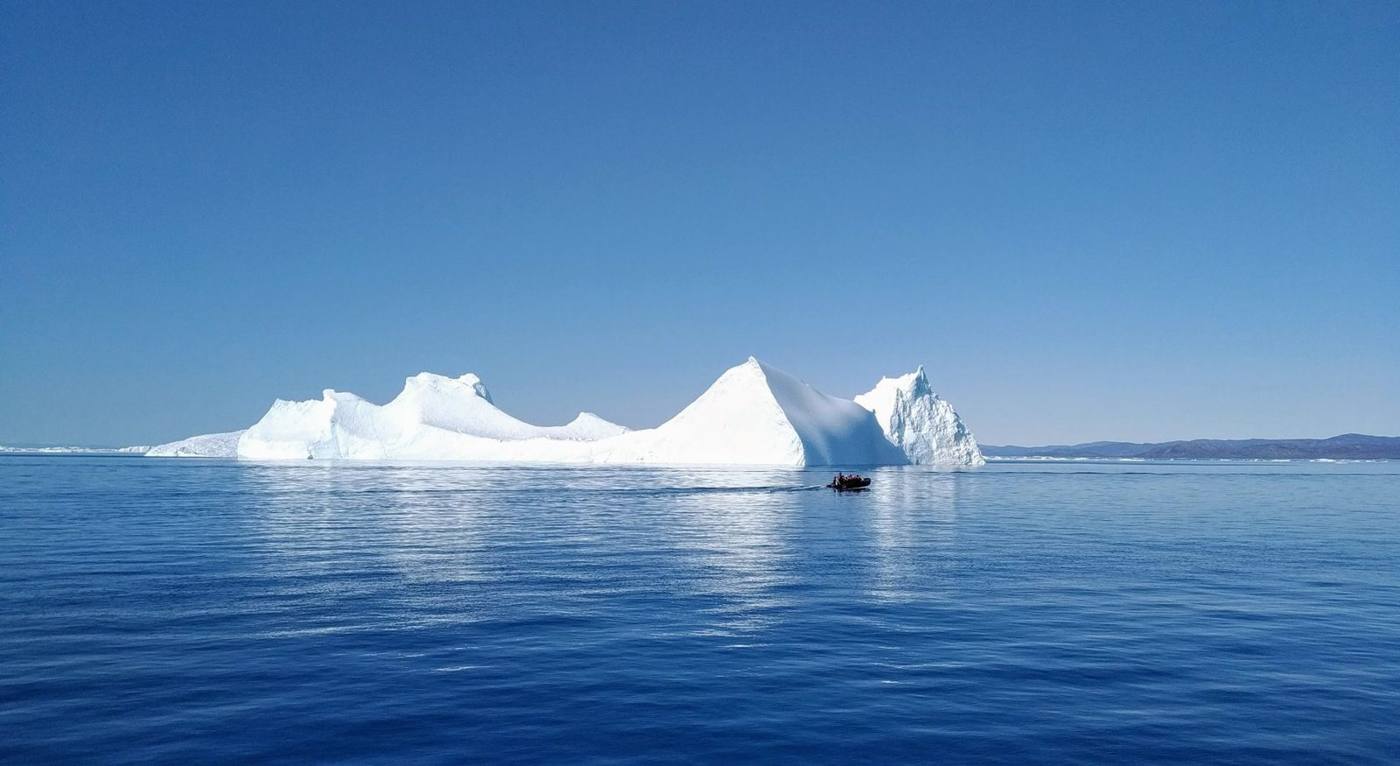
Newfoundland: icebergs, whales and fjords
St. John's and its coloured houses, Iceberg Alley, puffins, the fjords of Gros Morne and the Viking site of L'Anse aux Meadows.