 Canada
The Rocky Mountains, turquoise lakes, bears, whales and multicultural cities in one of the largest countries in the world.
Places not to miss
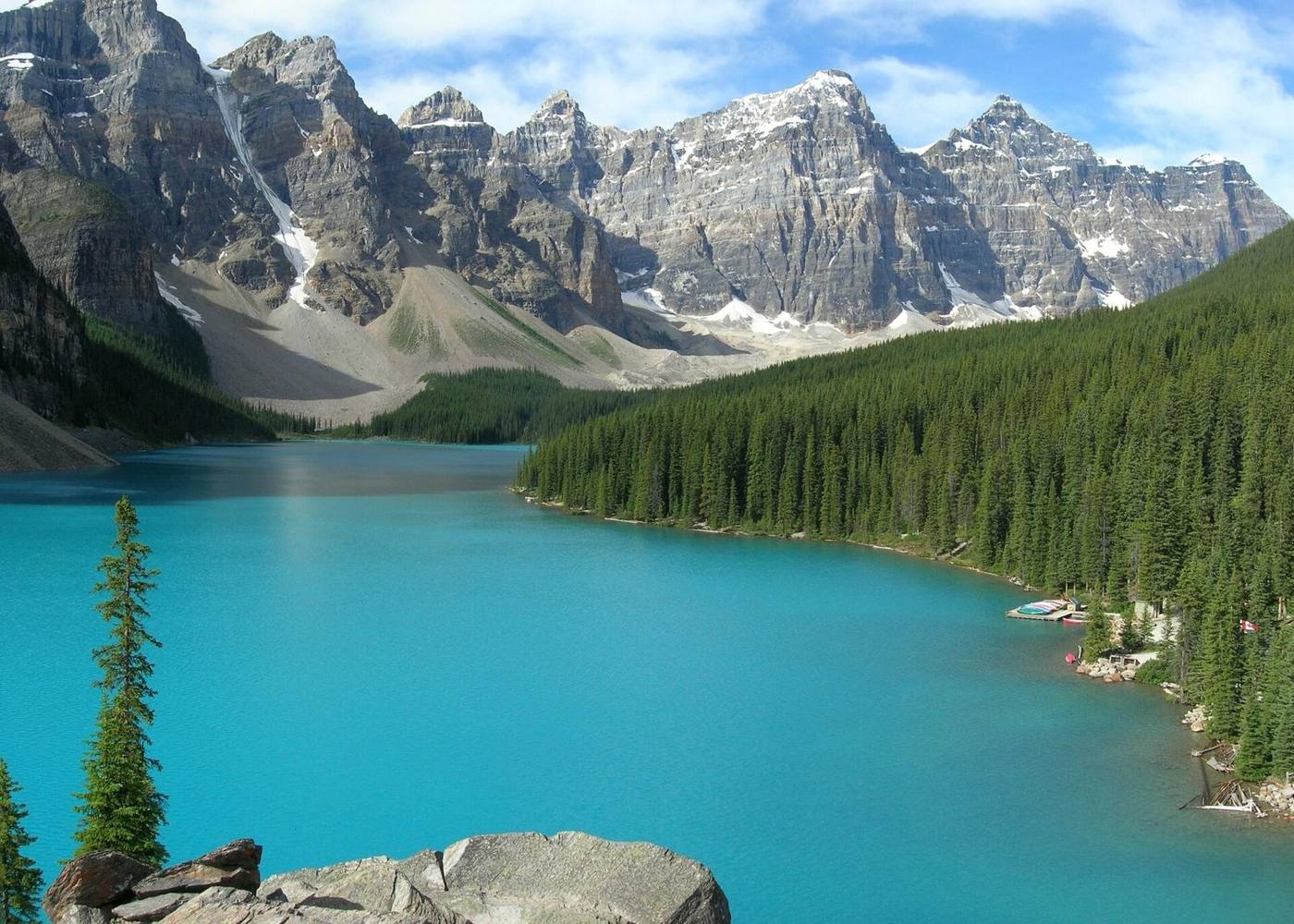
Banff and Jasper
Lake Louise, Moraine Lake, the Icefields Parkway.
Niagara Falls
Horseshoe Falls.
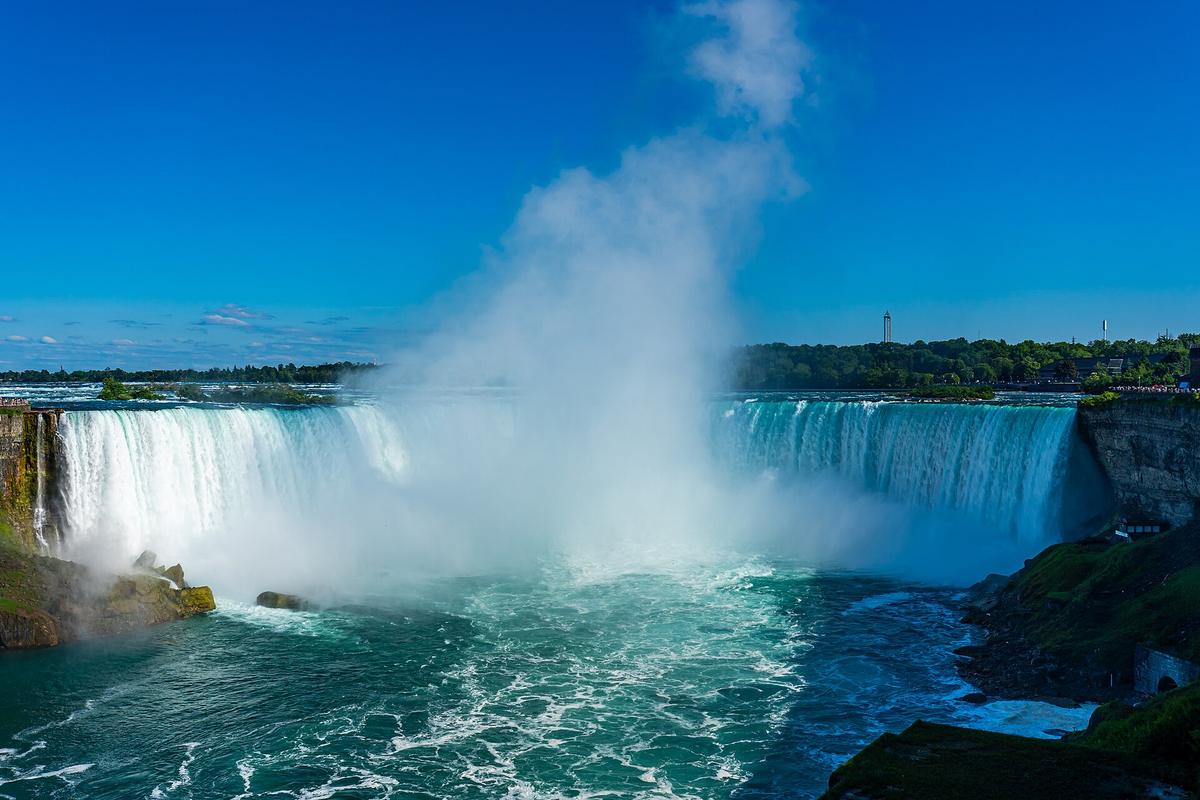
Photo: Maksimsokolov, CC BY-SA 4.0 Quebec City
A fortified French city.
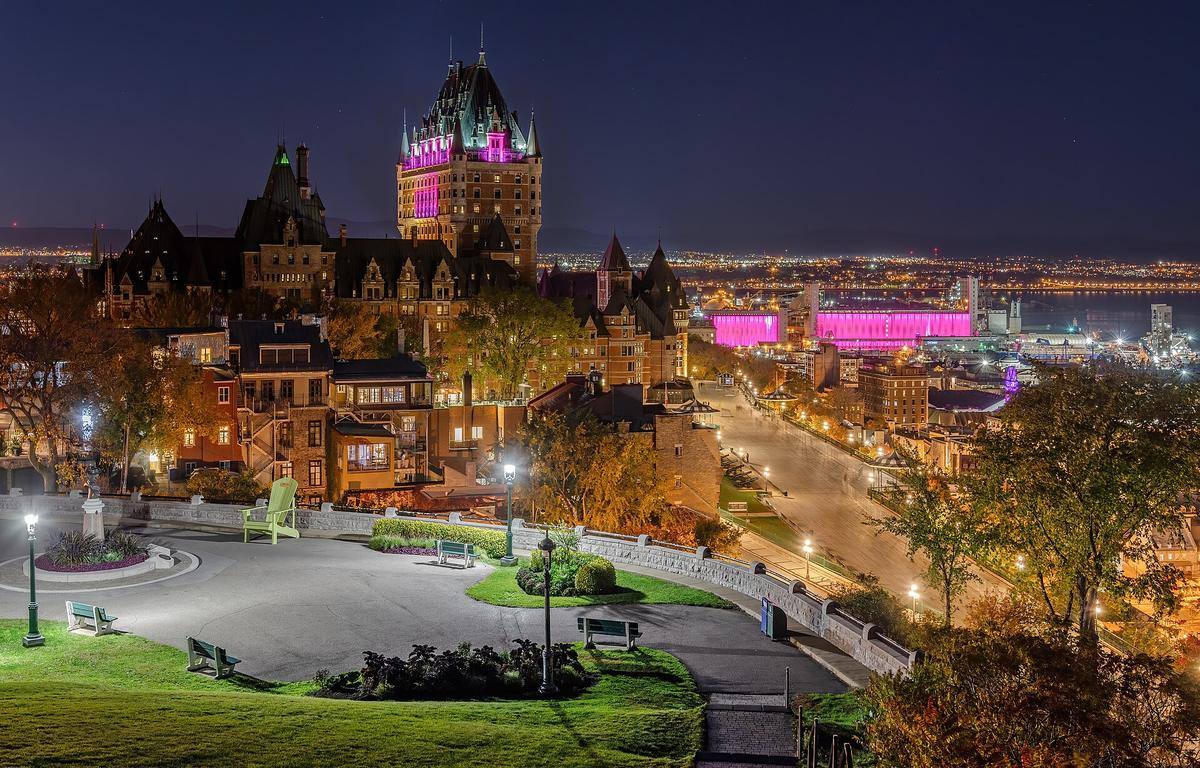
Photo: Wilfredor, CC0 Vancouver Island
Orcas and temperate rainforests.
Churchill
Polar bears (October-November).
Yukon
The northern lights.
Nature and wildlife
Grizzly and black bears, moose, polar bears, orcas, belugas.
Food and drink
Poutine, maple syrup, salmon.
When to go
June-September; winter for skiing and the aurora.
Did you know?
Canada has more lakes than the rest of the world combined.
Itineraries in Canada
The Rockies: Banff and Jasper
From Calgary to the turquoise lakes of Banff, the Icefields Parkway among glaciers and bears to Jasper, and Yoho National Park.
Vancouver and Vancouver Island
Vancouver between sea and mountains, Victoria, the rainforests and surf of Tofino and the orcas of Johnstone Strait.
Quebec, Montreal and the whales of Tadoussac
French Canada: Montreal, Old Quebec City, the Charlevoix region and the whales of the Saguenay fjord.
Nova Scotia and the Cabot Trail
Halifax, Peggy's Cove lighthouse, Lunenburg, the tides of the Bay of Fundy and the Cabot Trail on Cape Breton.
The polar bears of Churchill
On Hudson Bay, where polar bears wait for the sea to freeze: tundra buggy outings and, with some luck, the northern lights.
Yukon: northern lights in Whitehorse
Nights in a cabin far from the lights, days of dog sledding and snowshoeing and a soak in the Takhini hot springs.
Ontario: Toronto, Niagara and Algonquin
Toronto, Niagara Falls, the Lake Ontario vineyards, the capital Ottawa and three days by canoe among the lakes of Algonquin.
Newfoundland: icebergs, whales and fjords
St. John's and its coloured houses, Iceberg Alley, puffins, the fjords of Gros Morne and the Viking site of L'Anse aux Meadows.
By train from Toronto to Vancouver
Four nights on The Canadian through forests, prairies and the Rockies, with stops in Jasper and Banff before Vancouver.
Bay of Fundy and Prince Edward Island
The Hopewell Rocks at low tide, Fundy National Park, the red beaches and fishing villages of Prince Edward Island.
Gaspésie and Percé
A loop around the Gaspé peninsula in maritime Quebec: fishing villages on the St Lawrence, the Chic-Choc mountains with caribou and moose, Forillon park at land's end, the pierced rock of Percé and Bonaventure Island with one of the world's largest gannet colonies.
Haida Gwaii
The islands of the Haida people off British Columbia: the Kay Llnagaay heritage centre with its totem poles, moss-covered rainforests, wind-swept beaches and, in Gwaii Haanas park, the ancient village of SGang Gwaay with its mortuary poles, a UNESCO World Heritage site.
Grizzlies of the Great Bear Rainforest
The world's largest temperate rainforest, on the British Columbia coast: grizzlies fishing for salmon in the rivers, with luck the white spirit bear, fjords, orcas and humpbacks, staying in lodges reached only by floatplane or boat.
Okanagan and Kootenay: wines, lakes and hot springs
Interior British Columbia: the Okanagan valley with wineries on the hills above the lake, the town of Nelson in the Selkirk mountains, the Ainsworth hot springs in a cave, the old mining towns of Kaslo and New Denver and Kootenay Lake.
Dawson City and the Dempster to the Arctic Ocean
Canada's northernmost road: Dawson City and the Klondike gold rush, then more than 900 km of gravel through Tombstone park, across the Arctic Circle and the Richardson Mountains to Inuvik and Tuktoyaktuk, on the shore of the Arctic Ocean.
Ottawa, the Thousand Islands and Prince Edward County
The capital with Parliament Hill and the great national museums, the UNESCO-listed Rideau Canal, Kingston and its fort, a cruise among the Thousand Islands of the St Lawrence and the wineries and sand dunes of Prince Edward County.
Georgian Bay: the Bruce Peninsula and Killarney
The Ontario landscapes that inspired the Group of Seven: the turquoise water and the Grotto of the Bruce Peninsula, the ferry to Manitoulin, the world's largest freshwater island, and the white quartzite hills of Killarney park, by canoe.
The quieter Rockies: Yoho, Kootenay and Waterton
The Rockies away from the crowds of Banff and Lake Louise: Yoho's Emerald Lake and Takakkaw Falls, Kootenay's canyons and paint pots, the Radium hot springs and Waterton Lakes, where the prairies meet the mountains on the Montana border.
Quebec in winter: carnival and Mont-Tremblant
French Canada under snow: Montreal with its underground city and festival of lights, the Laurentian mountains at Mont-Tremblant, dog sledding and snowshoe trails, then the Quebec Winter Carnival with its ice palace, night parades and the canoe race on the frozen river.
Calgary, Drumheller and the dinosaurs of Alberta
Canada's prairies and badlands: Calgary and, in July, the Stampede with its rodeo and chuckwagon races, the Drumheller badlands with the Royal Tyrrell Museum, one of the world's best palaeontology museums, the Hoodoos and Dinosaur Provincial Park, a UNESCO World Heritage site.
Practical guide to Canada
- Documents
- You need a passport valid for the whole stay. Anyone flying in needs an eTA, the electronic travel authorisation, applied for online on the official Canadian government website: it costs 7 Canadian dollars. Beware of sites that charge more.
- Safety
- Canada is a very safe country. The main risks are natural: bears in the Rocky Mountain parks (carry bear spray), wildfires in summer, which can close roads and parks, and extreme cold in winter. Official advice: GOV.UK.
- Getting around
- Distances are huge: between east and west you fly. In the Rockies a rental car is best; between Montreal and Quebec City there is also the train. You cannot drive to Moraine Lake: only booked Parks Canada shuttles, buses or licensed tours.
- Verified costs
- Official 2026 prices (Parks Canada): daily admission to Banff National Park 12.25 Canadian dollars for an adult, no-cost up to 17; Parks Canada shuttle to Lake Louise and Moraine Lake 8 dollars for an adult, plus a 3.50-dollar online booking fee. In 2026 Moraine Lake Road is open from 1 June to 12 October.
Climate month by month
Average minimum and maximum temperatures in Montreal, Vancouver and Banff. The east has freezing, snowy winters and warm summers; the Pacific coast is mild and rainy; in the Rockies it is cold at altitude even in summer.
- January
- Montréal -14 / -5 °C · Vancouver 1 / 7 °C · Banff -14 / -4 °C
- February
- Montréal -12 / -3 °C · Vancouver 2 / 8 °C · Banff -13 / 0 °C
- March
- Montréal -6 / 2 °C · Vancouver 3 / 10 °C · Banff -8 / 4 °C
- April
- Montréal 1 / 11 °C · Vancouver 6 / 13 °C · Banff -4 / 9 °C
- May
- Montréal 8 / 19 °C · Vancouver 9 / 17 °C · Banff 0 / 14 °C
- June
- Montréal 14 / 24 °C · Vancouver 12 / 20 °C · Banff 4 / 18 °C
- July
- Montréal 17 / 27 °C · Vancouver 14 / 22 °C · Banff 7 / 22 °C
- August
- Montréal 16 / 26 °C · Vancouver 14 / 22 °C · Banff 6 / 22 °C
- September
- Montréal 11 / 21 °C · Vancouver 11 / 19 °C · Banff 2 / 17 °C
- October
- Montréal 4 / 13 °C · Vancouver 7 / 14 °C · Banff -2 / 9 °C
- November
- Montréal -2 / 6 °C · Vancouver 4 / 9 °C · Banff -8 / 1 °C
- December
- Montréal -9 / -1 °C · Vancouver 1 / 7 °C · Banff -13 / -5 °C
Source: Climats et Voyages (Montreal and Vancouver 1991-2020; for Banff the period is not stated). Data and prices checked in November 2026.
Where to go and where not to
There are no particular warnings beyond normal precautions; before booking, always check up-to-date official travel advice, because the situation can change.