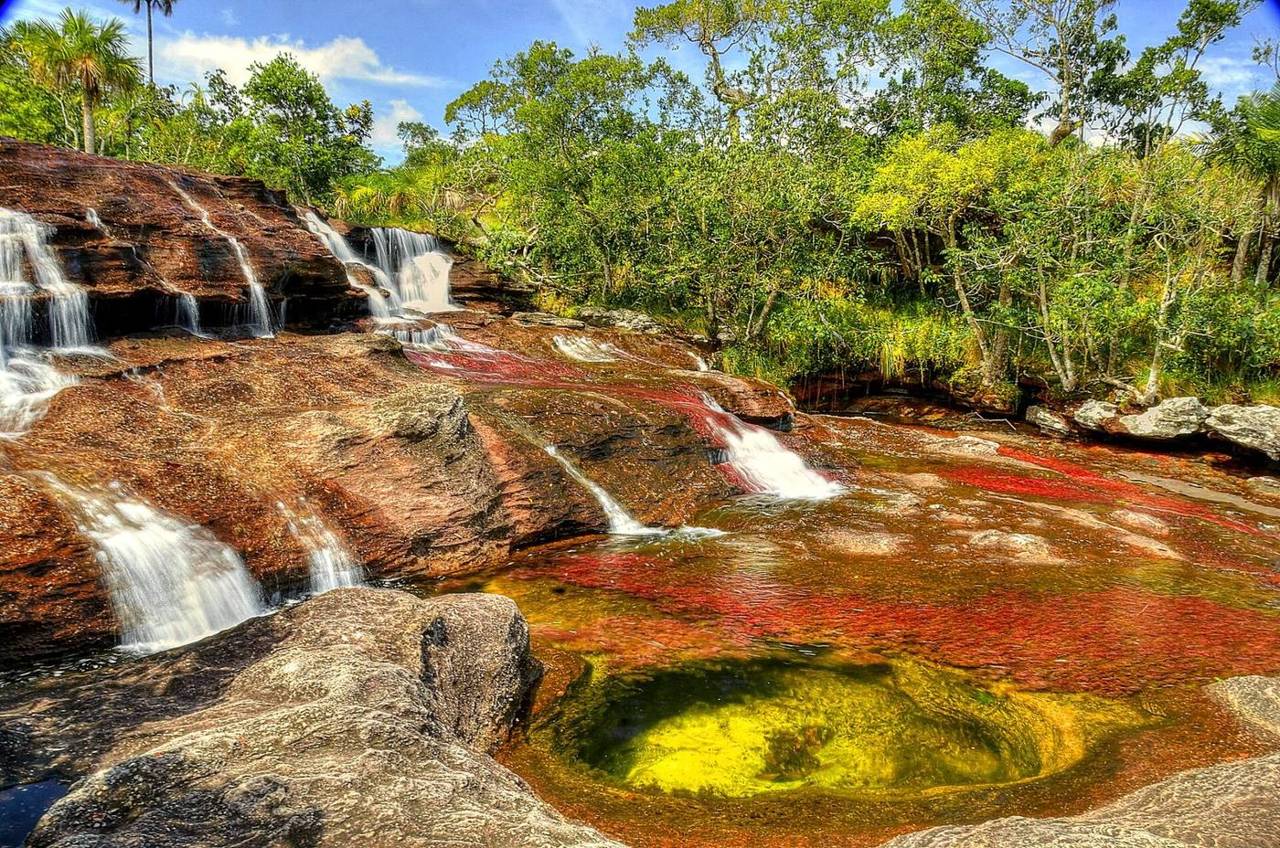
Caño Cristales, the river of five colours
In the Serranía de La Macarena an aquatic plant turns the riverbed red, pink and purple between yellow rocks, green water and blue sky: reached by plane and on foot with local guides, among waterfalls, pools and savannah trails.
- Bogotá
- Villavicencio
- La Macarena
- Caño Cristales
Day by day
- Day 1
The flight to La Macarena and the compulsory briefing
Caño Cristales is a river in the Serranía de la Macarena, in central Colombia, where the Amazon, the Andes and the Orinoco plains meet. For a few months a year its rocky bed turns red, pink, yellow, green and black, thanks to an aquatic plant that grows on the bottom and turns red when the water is low and the sun is strong. That is why it is called the river of five colours, or the liquid rainbow. For many years the area was inaccessible because of the armed conflict; today it is open to visitors, with strict rules to protect the river.
La Macarena, the village where the excursions start, has no safe road link to the rest of the country: you arrive by air, on small flights from Bogotá or Villavicencio. From above you see the plains, winding rivers and forests.
On arrival, all visitors attend a compulsory briefing, a short presentation by the national parks about the rules: what you can do, what is forbidden, how to behave in the river. After the briefing you receive the wristband that lets you enter the area.
In the afternoon, if there is time, take a walk in the village or a short boat trip on the Guayabero river, where you see birds, turtles and sometimes pink river dolphins. On the bank there are rocks with ancient paintings.
In the evening, sleep in La Macarena, in a simple village guesthouse.
Practical tip: sunscreen, insect repellent and chemical products are forbidden in the river, because they damage the plant that gives the colour. Protect yourself with long clothes, a hat and sunglasses.
- Day 2
The Los Ochos sector and the first coloured pools
Early in the morning, with your authorised guide, you cross the Guayabero river by boat and then continue by four-wheel drive or on foot to the start of the trails. Each group follows a different route, assigned by the authorities so as not to put too many people in the same place.
One of the finest sectors is Los Ochos, where the water flows over rock terraces and forms small waterfalls and round holes carved by the current, like a series of figure eights. In the sunniest areas the bottom is covered with the red and pink plant, swaying in the clear water, while elsewhere yellow sand, green algae and black rock complete the colours. The effect changes with the light: in mid-morning, with the sun high, the colours are most intense.
The walk also crosses a savannah of flat rocks, with low plants, orchids and cacti, and some stretches of forest. Along the path you see colourful birds, butterflies and lizards.
At midday, at some authorised points, you can swim in the natural pools, where the water is cool and clear. Swimming is only allowed in specific areas, pointed out by the guide.
In the afternoon, return to La Macarena for dinner.
Practical tip: you walk a lot, sometimes for six or seven hours, in the sun and on slippery rocks. Bring shoes that can get wet with a good sole, water and a rain poncho.
- Day 3
A second sector and the waterfalls
Today you visit another sector of the river, chosen by the guide among those open, to see other waterfalls, pools and colours. Some routes lead to the upper part of Caño Cristales, with a larger waterfall and a viewpoint over the serranía, others to quieter areas where the river widens and the colours spread over hundreds of metres.
Along the way the guide explains the geology of the serranía, one of the oldest rock formations in South America, and the life of the plant that colours the water, a species found only in these rivers. The guide also explains the history of the region and its difficult past, and how tourism has become one of the main sources of work for the local people.
At midday, make another stop at the authorised pools. Be careful not to walk on the red plant: it is delicate, and the guides show you where to put your feet.
In the afternoon, return to the village. If you still have energy, take a sunset boat trip on the Guayabero river, when the light colours the rocks and the birds come back to roost in the trees.
In the evening, at dinner, try the grilled meat of the plains, cooked slowly over the fire, a typical dish of the Llanos region.
Practical tip: the colour season usually runs from June to November, with the best period between July and October. Outside the season the river may be closed or show few colours.
- Day 4
A morning by the river and the flight back
On your last morning, depending on your flight time, you can take a short excursion in a sector near the village, such as the rock paintings on the banks of the Guayabero, a walk along the river or a visit to a local farm.
In the late morning or early afternoon, take the flight back to Bogotá or Villavicencio. Flights depend on the weather: with low cloud or heavy rain they may be delayed. For this reason it is best not to book an international flight on the same day.
If you return to Villavicencio, you can stay a night in this city of the plains, the gateway to the Llanos, with llanera music, the harp and traditional dances. From Villavicencio to Bogotá the mountain road takes about two to three hours.
Caño Cristales combines well with other parts of Colombia: Bogotá and its surroundings, the coffee region, Cartagena and the Caribbean coast, or the Colombian Amazon around Leticia.
Practical tip: to enter Colombia, Italian citizens do not need a visa for up to 90 days and must fill in the Check-MIG form online in the 72 hours before the flight. The United States keeps Colombia at level 3: the La Macarena area is open to visitors today, but go only with authorised guides and check the advice before you leave. The yellow fever vaccine is recommended for this region: ask your doctor.
The colours only show when the river is neither too high nor too low, usually from June to November; the park closes in the dry season. Entry is only with authorised guides, without sunscreen or repellent, to protect the plant. Book with an operator that includes flights and permits. EU citizens enter without a visa for up to 90 days with a passport and must fill in the Check-MIG migration form online before the flight. The US keeps Colombia at level 3 and advises against all travel to Arauca, Cauca (except Popayán), Valle del Cauca (except Cali), Norte de Santander and the 10 km strip along the Venezuelan border: this itinerary stays outside those areas.
Before you go
- Documents and visa
- Valid passport; no visa for tourism up to 90 days for EU citizens. Before the flight, between 72 hours and one hour before departure, you fill in the no-cost Check-MIG form online.
- Health and vaccines
- No compulsory vaccines arriving from Europe; yellow fever is recommended for forest areas and some parks. Protect yourself against mosquitoes because of dengue. In Bogotá, at 2,600 metres, the altitude is noticeable. Emergencies: 123.
- Money and payments
- Colombian peso. Cards work in cities; use cash machines inside banks or shopping centres, by day.
- Power sockets
- Types A and B, 110 volts: you need an adapter and devices must accept 110 volts.
- Time zone
- UTC-5 all year: Colombia does not use daylight saving time.
- Safety
- The United States rates Colombia level 3 for crime and terrorism, with level 4 for Arauca, Cauca except Popayán, Valle del Cauca except Cali, Norte de Santander and 10 km from the Venezuelan border. Use app taxis and never accept drinks from strangers. Official advice: GOV.UK.
Information checked in November 2026 for Italian and EU citizens. Rules change: always check before you travel.
Variations
In 3 days: flight to La Macarena, a full day in the Los Ochos sector, flight back.
In 8 days: after Caño Cristales, Bogotá, the colonial village of Villa de Leyva and the coffee region.
Frequently asked questions
When can you see the colours?
Usually from June to November, with the best period between July and October. It depends on the rains and the water level, so check before booking.
Can I go on my own?
No: entry is only allowed with authorised guides and operators, after the compulsory briefing. The number of visitors is limited.
Is it safe?
The area is open to visitors today, but the United States keeps Colombia at level 3. Go only with authorised operators, do not leave the routes and check the advice before you leave.
Indicative itinerary written by World Atlas. Before booking, check timetables, seasonal openings, documents and safety.
 5 daysModerate
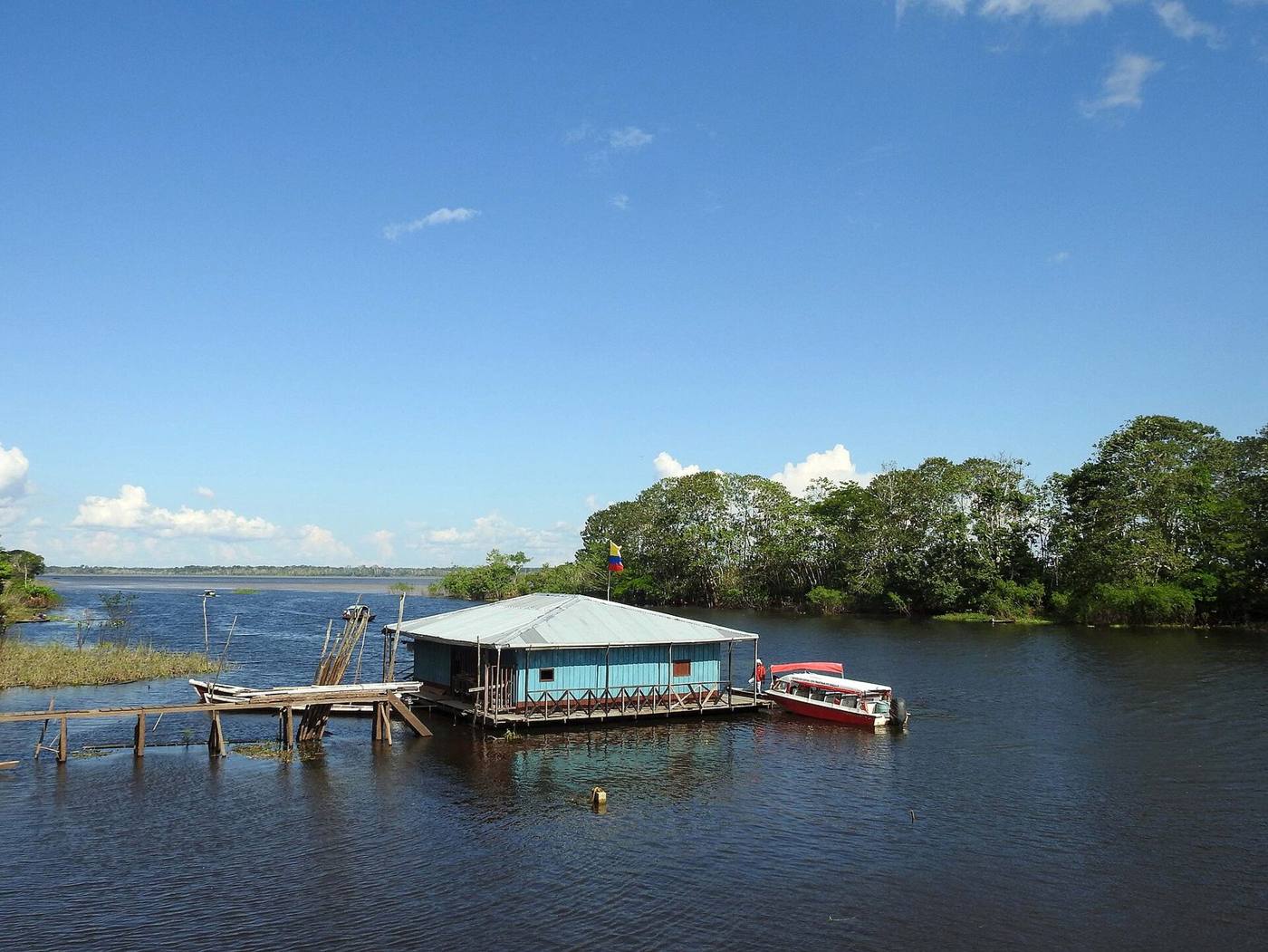
The Amazon: Leticia and Puerto Nariño
Colombia's southern tip on the Amazon, where Colombia, Brazil and Peru meet: Monkey Island, pink river dolphins in the Tarapoto lakes, the village closed to cars of Puerto Nariño, night walks in the forest and the Tikuna communities.
 4 daysEasy
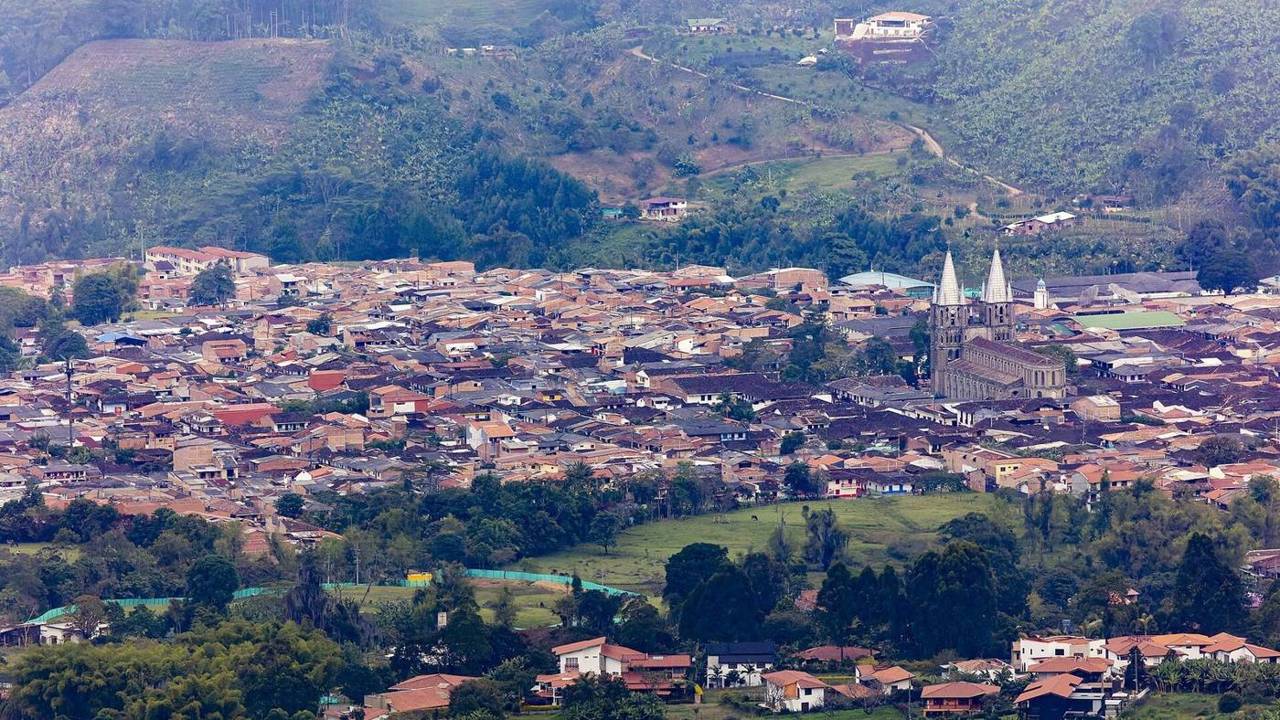
Jardín and Jericó in Antioquia
The coffee towns south of Medellín: Jardín with its square of colourful balconies, the neo-Gothic basilica, the cable car up the mountain and the Retiro waterfall, then Jericó, with its painted houses, leather workshops and the Morro El Salvador viewpoint.
 5 daysEasy
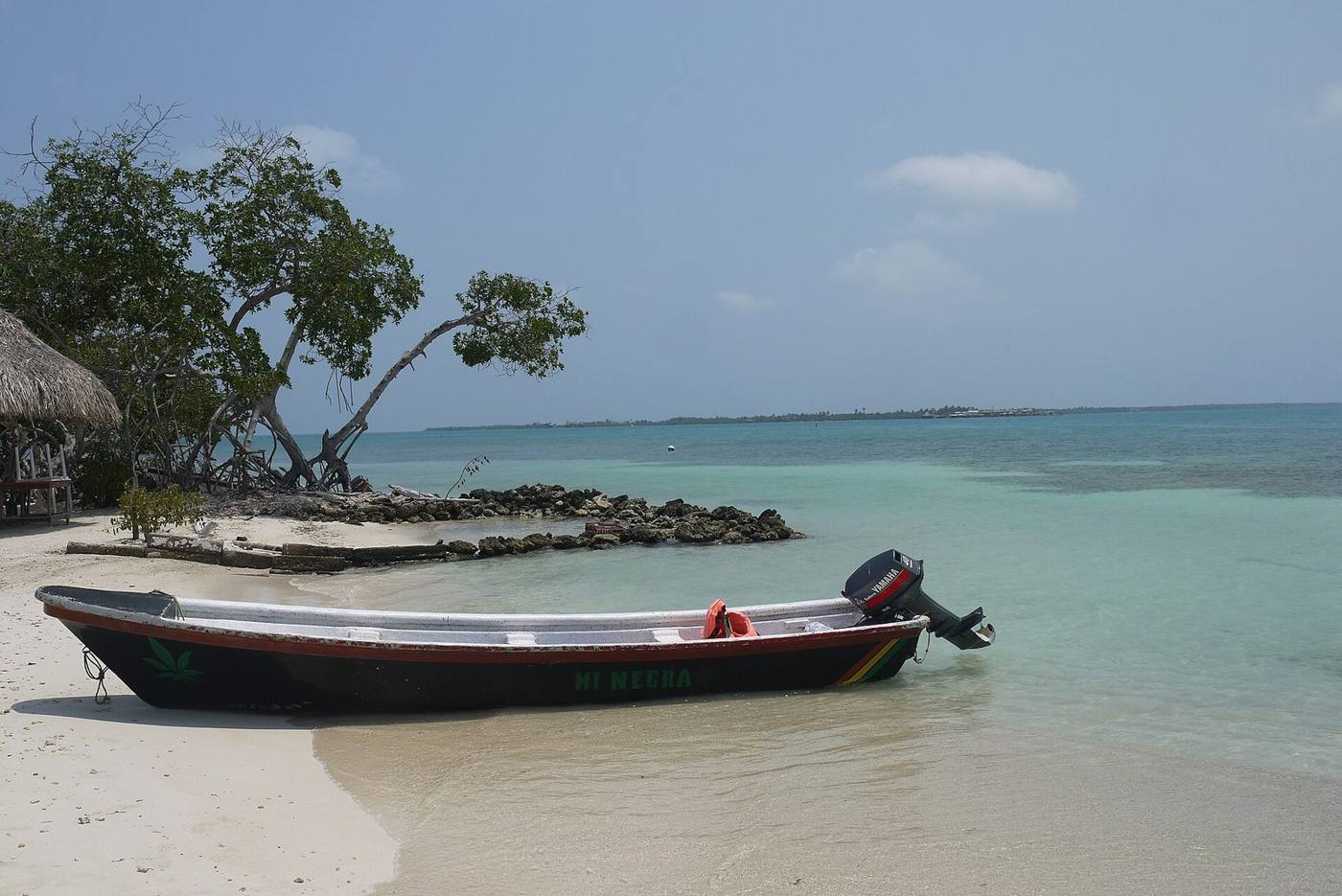
Tolú and the San Bernardo islands
The quiet Caribbean of the Gulf of Morrosquillo: the town of Tolú with its seafront and the mangroves of the Ciénaga de La Caimanera by canoe, the San Bernardo islands with Múcura and Tintipán, and Santa Cruz del Islote, one of the most densely populated islands in the world.