The Kvarner islands: Krk, Cres and Lošinj
Rijeka and Opatija, the island of Krk with Baška, the griffon vultures of Cres, Lošinj with its dolphins and the medieval villages of Lubenice and Veli Lošinj.
- Rijeka
- Opatija
- Krk
- Baška
- Cres
- Lubenice
- Lošinj
Day by day
- Day 1
Rijeka and the Opatija seafront promenade
The Kvarner is the great gulf of northern Croatia, between Istria and the Dalmatian coast. It has green, rocky islands, clear water, old Venetian towns and a history linked to Austria Hungary and Italy. Over seven days you see Rijeka and Opatija, then the islands of Krk, Cres and Lošinj. It is an easy area to reach by car from Italy and central Europe.
Rijeka is the country's largest port. The centre has a long pedestrian avenue, the Korzo, lined with nineteenth century buildings and a clock tower. On the hill above the city stands Trsat castle, with a Marian sanctuary and a wide view over the gulf and the islands. You climb up a long stairway or take a bus.
In the afternoon go to Opatija, about twenty minutes west. In the late nineteenth century it was one of the most elegant resorts of the Austro Hungarian empire, popular with aristocrats and artists. Villas, gardens and grand historic hotels still overlook the sea.
The finest walk is the Lungomare, a path of about twelve kilometres along the coast from Volosko, a small fishing village, to Lovran, passing through Opatija. You walk between rocks, small beaches, laurel and gardens. In front of the harbour stands the statue of the maiden with the seagull, the town's symbol.
Spend the night in Opatija or Rijeka.
Practical tip: Croatia is in the Schengen area and uses the euro. EU citizens can travel with a valid national identity card. In summer, traffic on coastal roads and at ferry ports can be heavy: set off early.
- Day 2
Krk: the town, Vrbnik and žlahtina wine
Today you cross to the island of Krk, linked to the mainland by a long arched bridge, about half an hour from Rijeka. Together with Cres it is the largest island in the Adriatic, and one of the easiest to visit.
Krk town, on the west coast, keeps its medieval walls and gates, a Romanesque cathedral with its bell tower and a castle of the Frankopans, the noble family who ruled the island for centuries. The stone lanes open onto small squares and terraces above the harbour.
In the afternoon cross the island to Vrbnik on the east coast. The village sits on a rocky spur almost fifty metres above the sea, with stone houses and narrow alleys. One of them is said to be among the narrowest streets in the world: two people can barely pass.
Around Vrbnik grow the vineyards of žlahtina, a white grape native to the island that makes a fresh, light wine. Many family cellars open for tastings, often with island sheep's cheese and ham.
At sunset watch the light on the mainland coast and on the Velebit mountains as they turn pink.
Spend the night in Krk or Vrbnik.
Practical tip: if you go wine tasting, choose a driver. Croatia's drink driving limit is low, and zero for young newly qualified drivers.
- Day 3
Baška, the beach and the Glagolitic tablet
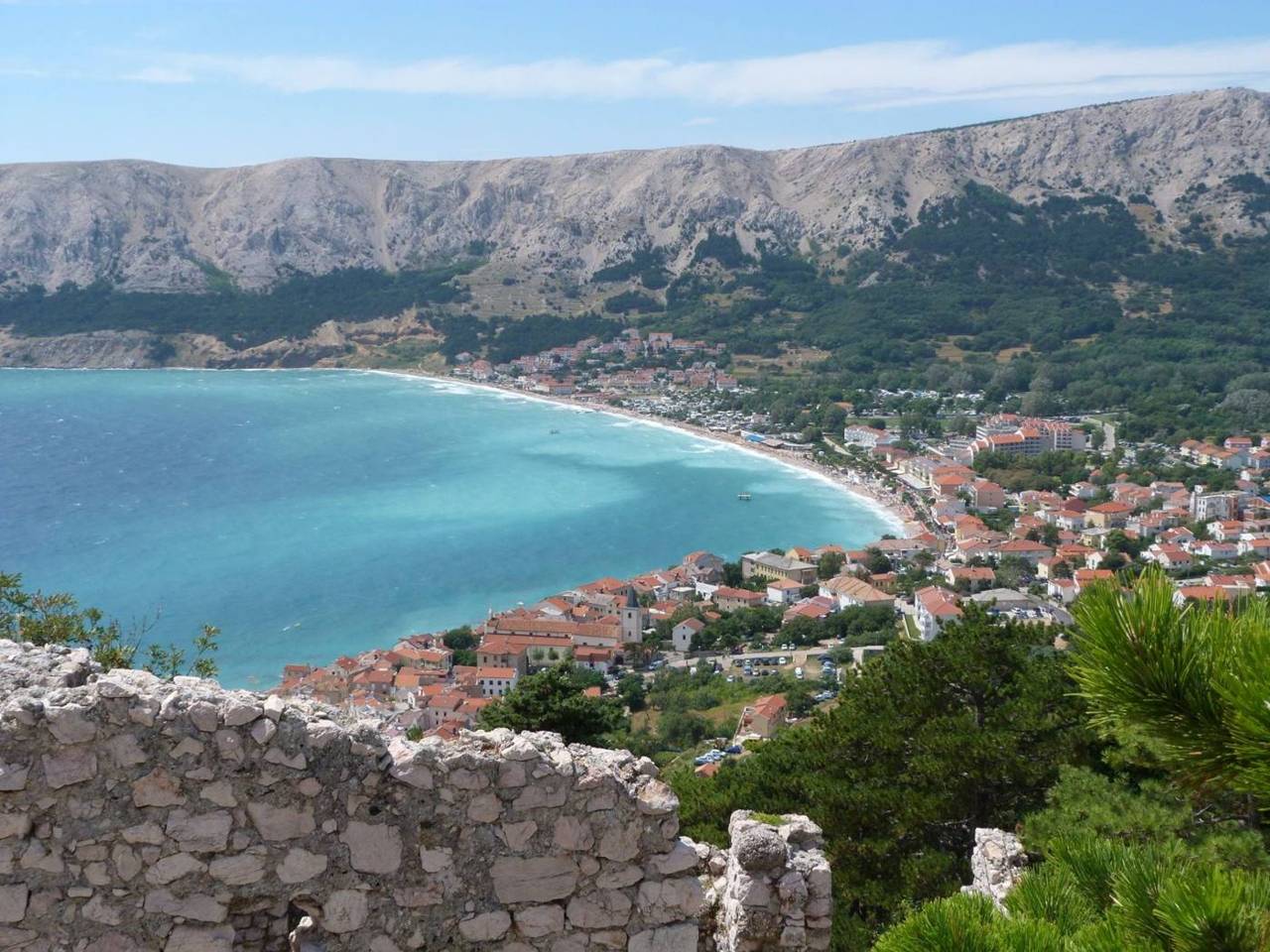
Today you head to the south of the island, to Baška, about half an hour from Krk. The road drops into a valley between bare, stony mountains, with views over the sea and the island of Prvić.
Baška has one of the longest and most beautiful beaches in Croatia, Vela Plaža, about two kilometres of small pale pebbles, with clear water and a village of colourful houses behind. It is very busy in summer; in May, June and September it is quieter.
In nearby Jurandvor, in the small church of St Lucy, there is a copy of the Baška Tablet, a stone slab inscribed around the year 1100 in Glagolitic, the old Slavic script. It is one of the oldest documents in the Croatian language and is greatly valued by Croatians. The original is kept in Zagreb.
In the afternoon walkers can follow one of the trails above Baška, which climb through the rocks to viewpoints and small hidden coves reachable only on foot or by boat. The almost lunar landscape recalls the coastal mountains. Otherwise swim and relax on the beach.
In the evening return towards Krk or stay in Baška for a seafood dinner on the waterfront.
Spend the night on Krk.
Practical tip: there is no shade on the trails above Baška. Walk early in the morning or late in the afternoon, with water, a hat and hiking shoes, as the rocks are sharp.
- Day 4
The ferry to Cres and the Beli griffon vulture centre
Today you take the ferry from Valbiska, on Krk's west coast, to Merag on the island of Cres. The crossing is short, under half an hour. Cres is a long, narrow island, wilder and less populated than Krk, with oak woods in the north, sheep pastures enclosed by dry stone walls and high cliffs above the sea.
Head straight north to the village of Beli, on a hilltop overlooking the gulf. Here there is a rescue centre for griffon vultures, large birds with a wingspan that can exceed two and a half metres. One of the last colonies of these birds in Croatia lives on the island's cliffs. The centre cares for young vultures that fall into the sea on their first flights and explains how to protect the species. You see the birds up close in large aviaries.
Trails lead from Beli into the ancient forest, with stone walls, oaks and old Roman roads. Going down you reach a white pebble beach below the village.
In the afternoon head back to the middle of the island and visit Cres town, with its Venetian harbour, colourful houses, loggia and clock tower.
Spend the night in Cres.
Practical tip: ferries between the islands are frequent in summer, but in high season there are long queues of cars. Arrive at the port well ahead and check the timetables, which differ between summer and winter.
- Day 5
Lubenice on the cliff and the beach below the village
Today you visit Lubenice, one of the most spectacular places in the Kvarner. It is a small stone village on top of a cliff, almost four hundred metres above the sea on the west coast of Cres. It has existed for thousands of years: first a prehistoric hillfort, then a fortified village. Today very few people live here, among stone houses, a small church and narrow lanes where sheep graze.
From the edge of the village the view over the open sea and distant islands is immense. At sunset the light turns the village stones orange.
Below the village, reachable only on foot or by boat, lies the beach of Sveti Ivan, a bay of white pebbles and turquoise water. The trail goes down for about an hour through rocks and shrubs; the climb back is tiring and best done in the cooler hours.
In the afternoon, if you do not go down to the beach, drive south to Osor, a small village where a narrow canal, crossed by a swing bridge, separates Cres from Lošinj. Osor was an important town in Roman and medieval times. Today it has quiet squares, a cathedral and modern sculptures in the streets.
Spend the night in Cres or near Osor.
Practical tip: for the descent to Sveti Ivan beach take plenty of water, as there is nothing at the bottom. Wear proper shoes and do not go down in the hottest hours in summer.
- Day 6
Lošinj: Mali and Veli Lošinj, the Apoxyomenos and the dolphins
Today you cross to the island of Lošinj over the bridge at Osor. The island is known for its mild climate, pine woods, gardens and the villas of nineteenth century sea captains, when it was an important shipping centre.
Mali Lošinj is the main town, at the end of a long sheltered bay, with a harbour full of boats and colourful houses. It is home to the Apoxyomenos museum, devoted to a Greek bronze statue of an athlete found in the sea near the island in the late 1990s after two thousand years underwater. The statue stands alone in a white, silent room, at the end of a route that tells the story of its discovery.
In the afternoon go to Veli Lošinj, a few kilometres away, smaller and more romantic, with a narrow bay, captains' houses and a large baroque church. It is home to a dolphin research centre that studies the group of bottlenose dolphins living around the island. Its visitor centre explains their lives and how to watch them without disturbing them.
If you want to try to see them at sea, choose a boat trip with an operator who follows the rules for respecting the animals: distance, low speed, no chasing.
In the evening walk the path through the pine woods along the coast.
Spend the night in Mali Lošinj.
Practical tip: the rules for dolphin watching forbid swimming with them, feeding them or getting too close. If a trip promises swimming with dolphins, choose another one.
- Day 7
Back towards Rijeka and departure
The last day is for the journey back. From Lošinj there are two ways to return to Rijeka. The first goes back through Cres and takes the ferry from Merag to Krk, then the bridge to the mainland. The second runs the length of Cres to Porozina in the north and takes the ferry to Brestova in Istria, from where you follow the coast to Rijeka. Either way it takes a few hours, including the ferry.
If you have time on the way, stop for a last swim in one of the bays of Cres, or for a coffee in Cres harbour.
Rijeka airport is actually on the island of Krk, near the bridge: convenient if you return that way. Otherwise, if you are driving, Italy is a few hours away through Slovenia or Istria.
Before leaving, buy something from the islands: olive oil, sage honey, sheep's cheese or a bottle of žlahtina. They are simple but genuine products made by small local producers.
Practical tip: on days of bora, the strong north east wind, the ferries and the Krk bridge may be closed or restricted, especially for high vehicles. Check the weather and traffic news before you leave and allow a margin of time for your flight.
The Croatian sea easiest to reach from northern Italy, with islands greener and quieter than Dalmatia. Cres and Lošinj are ideal for families and those seeking calm. Krk is linked by a bridge and is busier. In high season car queues for the ferries are long.
Before you go
- Documents and visa
- EU citizens need a valid identity card or passport: Croatia has been in the Schengen area since 2023. Other nationalities should check the Schengen rules.
- Health and vaccines
- No vaccines required. EU citizens should bring their EHIC. Emergencies: 112.
- Money and payments
- Euro since 2023. Cards are accepted almost everywhere, but carry some cash on small islands. Every accommodation charges a tourist tax per person per night.
- Power sockets
- Types C and F, 230 volts.
- Time zone
- Central European Time (UTC+1, summer UTC+2).
- Safety
- A very safe country. In remote inland areas some minefields from the 1990s war remain, marked with signs: stay on the paths. Official advice: GOV.UK.
Information checked in November 2026 for Italian and EU citizens. Rules change: always check before you travel.
Variations
In 4 days: Rijeka, Opatija and the island of Krk, without Cres and Lošinj.
In 10 days: add the island of Rab and the Plitvice Lakes inland.
Frequently asked questions
When is the best time to go?
May to September for the sea. June and September are quieter and the sea is already warm.
Do I need a car?
Yes, it is the easiest way to get between the islands by ferry. There are buses too, but less frequent.
Are the beaches sandy?
Almost all are pebble or rock. Water shoes make swimming more comfortable.
Indicative itinerary written by World Atlas. Before booking, check timetables, seasonal openings, documents and safety.
 6 daysModerate
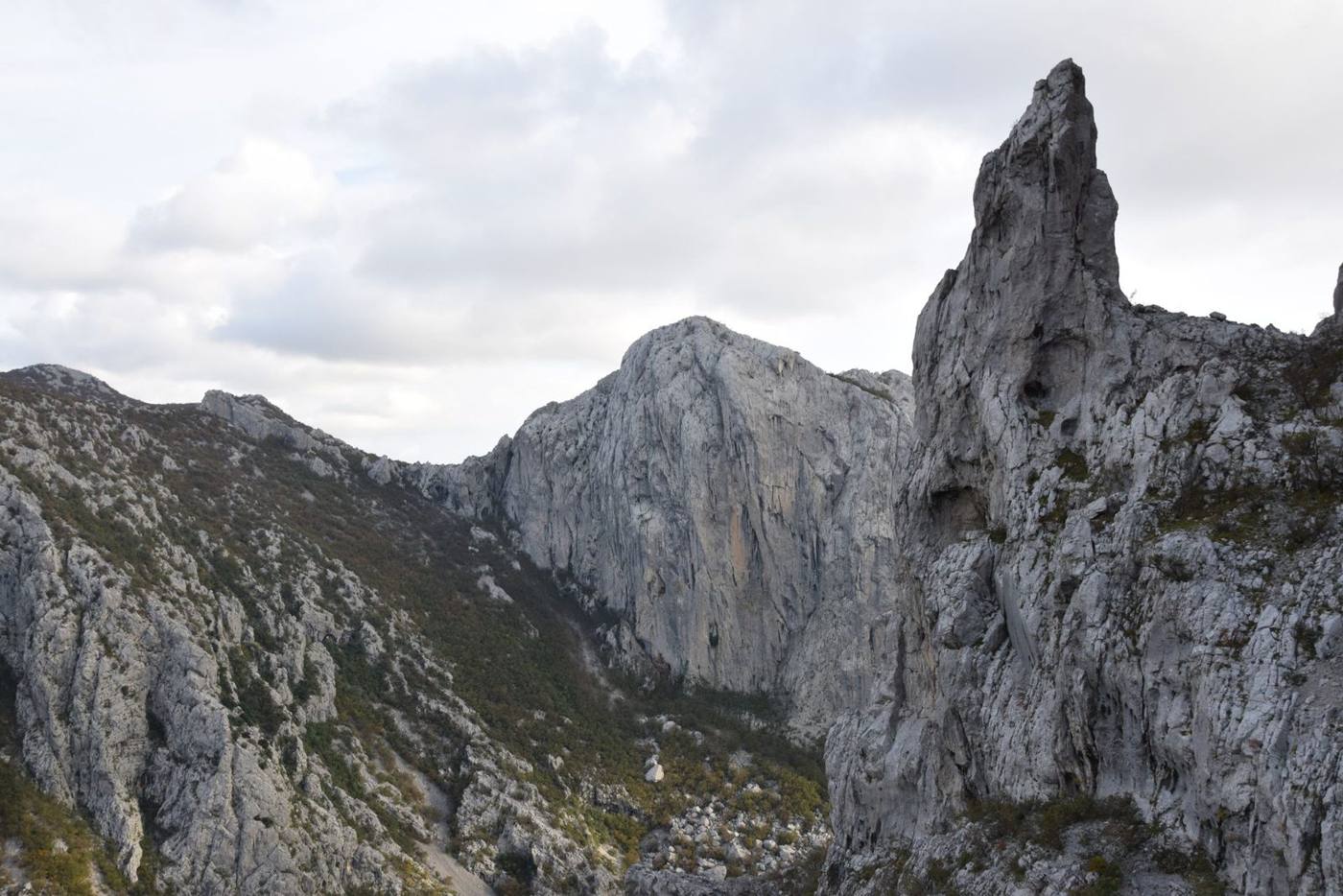
Velebit and Paklenica
The mountain above the sea: the canyons of Paklenica, the refuges of northern Velebit and the Premužić trail with views over the islands.
 14 daysEasy
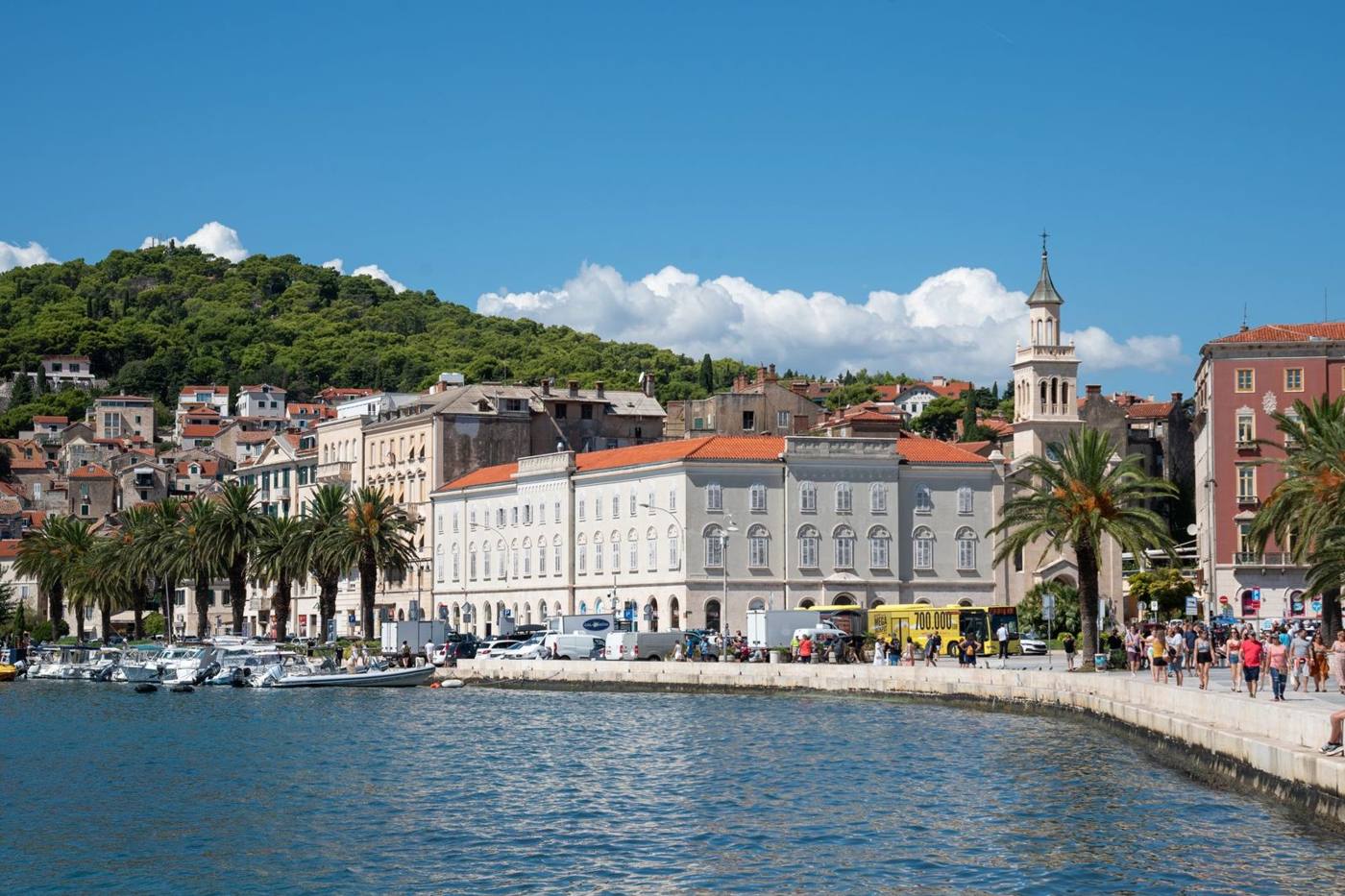
The complete Croatia
From Zagreb to Dubrovnik in two weeks: Plitvice, Istria, Zadar, Krka, Split, Hvar and Korčula.
 7 daysEasy
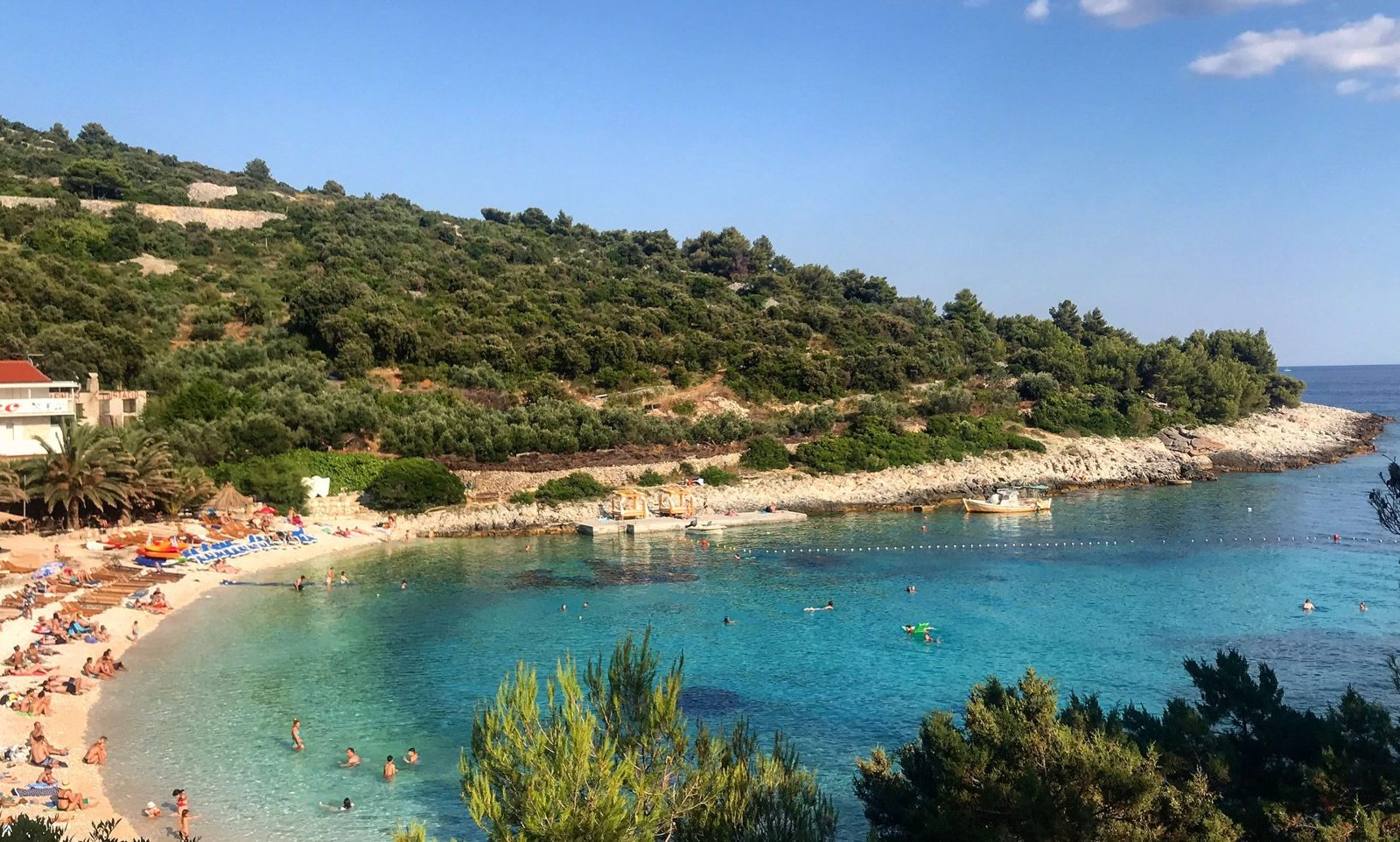
The far islands: Vis and Lastovo
Dalmatia's most remote islands, closed to foreigners until 1989: the Blue Cave of Biševo, Stiniva cove and the dark skies of Lastovo.