The New Valley oases and the White Desert
From Luxor into the Western Desert: Kharga, Dakhla and its mud villages, Farafra, the White Desert and Bahariya, through to Cairo.
- Aswan
- Luxor
- Kharga
- Dakhla
- Farafra
- White Desert
- Bahariya
- Cairo
Day by day
- Day 1
Arrival in Aswan
This eleven-day trip starts on the Nile and then heads into the Western Desert: after Aswan and Luxor you cross the oases of Kharga, Dakhla, Farafra and Bahariya, sleep one night in the White Desert and finish in Cairo, in front of the pyramids. You travel by car with a driver, and in the desert by four-wheel drive.
Before you go: to enter Egypt, Italian citizens need a passport valid for at least six months and a tourist visa. It can be requested online before departure on the official portal or on arrival at the airport, at the bank counters before passport control, payable in cash. Other nationalities should check their own rules. Some areas on this trip are close to borders or places where the situation changes often: check your government's travel advice before booking and again before you leave.
You land in Aswan, the southernmost city of tourist Egypt, where the Nile flows between dark granite rocks, green islands and golden dunes. Life here is slower than in Cairo and the climate is dry and hot for most of the year.
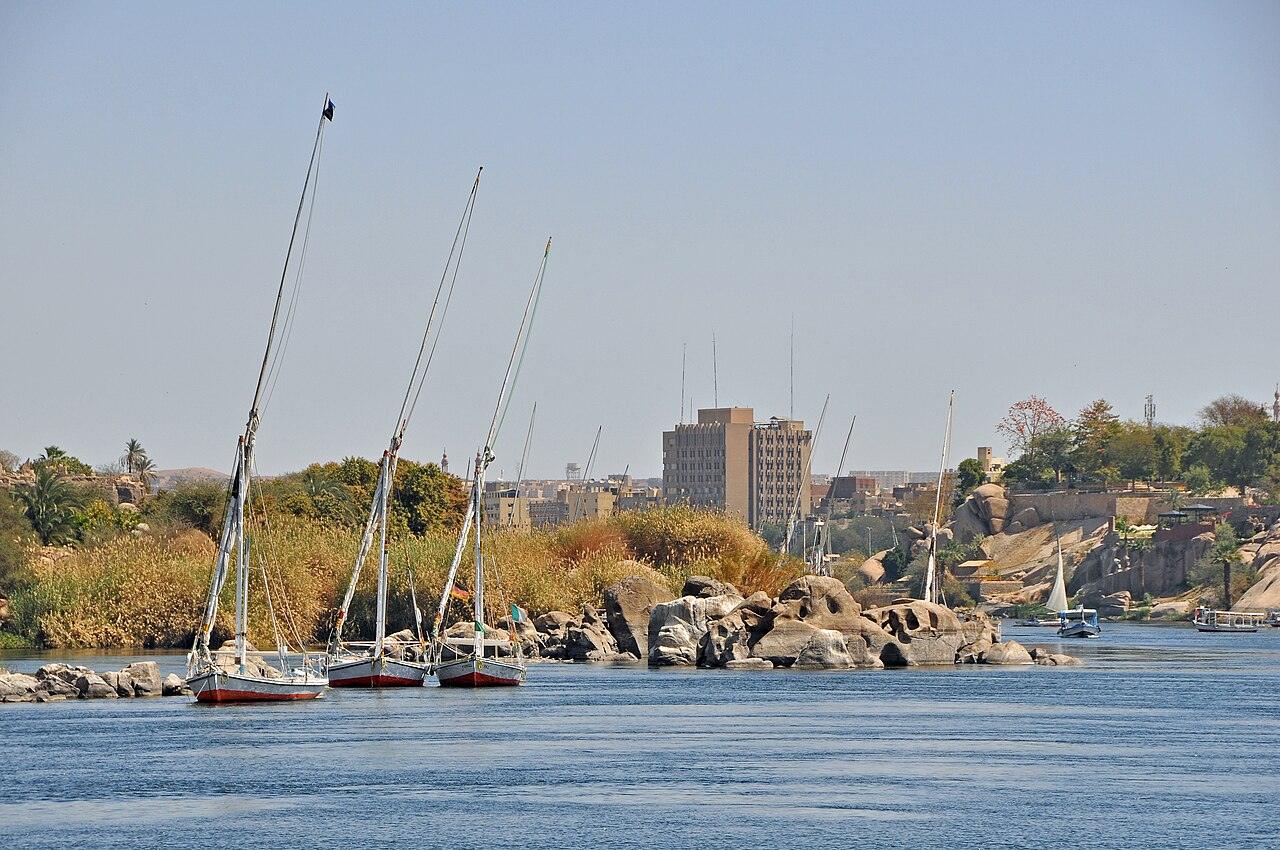
In the late afternoon walk along the corniche, the riverside promenade, and watch the feluccas, the white-sailed boats, gliding past Elephantine Island. Then wander through the souk, the market along a street parallel to the river, among spices, dried hibiscus for karkadè, baskets and Nubian fabrics.
In the evening have a simple Egyptian dinner: foul, the fava bean purée, falafel and warm bread.
Practical tip: carry Egyptian pounds in small notes for tips and small purchases, because many sellers have no change.
- Day 2
Philae and the felucca
Today you discover the temple of Philae and sail on the Nile as people did in the past.
In the morning go to the landing stage on the lake between the two Aswan dams and take a motorboat to Agilkia Island. This is where the temple of Philae stands, dedicated to the goddess Isis. In the 1960s and 1970s, when the building of the High Dam threatened to flood it, it was dismantled stone by stone and rebuilt on this higher island, with the help of UNESCO. Walk among the decorated pylons, the colonnaded courtyard and Trajan's Kiosk, which overlooks the water. Check prices and times before you go.
On the way back you can stop at the Unfinished Obelisk, in the granite quarries: it stayed in the rock because it cracked while it was being carved, and it shows clearly how the ancient stonemasons worked.
In the afternoon board a felucca for a trip among the islands. You pass Elephantine Island, with its Nubian villages and ancient ruins, and Kitchener's Island, the botanical garden full of tropical trees. At sunset the light turns pink on the dunes of the west bank, where you can see the Aga Khan's mausoleum on top of the hill.
If you still have energy, visit a Nubian village on the west bank, with houses painted blue and yellow.
Practical tip: always agree the price of the felucca and the length of the trip before boarding, and make clear whether the price is per person or for the whole boat.
- Day 3
Luxor, the city of temples
Today you leave Aswan and travel up the Nile to Luxor, ancient Thebes.
In the morning drive north along the Nile valley, between sugar cane fields, palm trees and brick villages. The journey takes about three and a half hours. Along the way you can stop at the temple of Kom Ombo, dedicated to two gods, the crocodile god Sobek and the falcon god Horus, or at the temple of Edfu, one of the best preserved in Egypt.
In the afternoon you reach Luxor and visit the Karnak complex, the largest sanctuary of ancient Egypt, built and enlarged over about two thousand years. Go into the great hypostyle hall, a forest of enormous columns covered in hieroglyphs, and look at the obelisks and the sacred lake. Take your time: it is a very large site.
At sunset go to Luxor Temple, in the centre of the city. In the evening it is lit up and the atmosphere is wonderful. From the temple runs the Avenue of Sphinxes, the long road lined with statues that once linked it to Karnak, and some stretches can be walked again today.
In the evening have dinner near the Nile with a view of the west bank, where tomorrow you will visit the tombs of the pharaohs.
Practical tip: visit Karnak in the early afternoon only in winter; from April to October the heat is strong, so go in when it opens in the morning and keep the afternoon for rest. Check prices and times before you go.
- Day 4
The Valley of the Kings
Today you cross to the west bank of Luxor, the world of the dead of the ancient Egyptians.
Set off at dawn to avoid the heat and the crowds. If you like, you can start the day with a hot-air balloon flight over the temples and the green fields, one of the best-known experiences in Luxor: choose carefully and check the safety conditions.
Then go into the Valley of the Kings, a dry, rocky valley where the pharaohs of the New Kingdom had deep tombs cut into the mountain. The basic ticket lets you visit a few tombs; others, such as those of Tutankhamun or Seti I, need a separate ticket. Inside, the corridors are covered with paintings whose colours are still bright, with gods, stars and texts about the journey to the afterlife.
Afterwards go to the temple of Queen Hatshepsut at Deir el-Bahari, built in terraces at the foot of a pale rock face. It is one of the most photographed places on the west bank.
On the way back stop in front of the Colossi of Memnon, two great seated statues of Amenhotep III, standing alone in the middle of the fields.
In the afternoon rest and get ready for the desert: from tomorrow the hotels are simpler and services are rarer.
Practical tip: flash is forbidden in the tombs; bring a hat, water and closed shoes, because you walk a lot on hot, dusty ground. Check prices and times before you go.
- Day 5
Kharga, the gateway to the desert
Today you leave the Nile and enter the Western Desert.
In the morning drive west from Luxor. The road climbs onto the limestone plateau and then drops into the great Kharga depression, a completely different world: plains of sand and rock, long low dunes, not a single tree for dozens of kilometres. It takes several hours. Along the route there are police checkpoints, where foreigners sometimes have to show their passports or travel with an escort.
You arrive in Kharga, the capital of the New Valley governorate, a modern town among palm trees. In the afternoon visit the temple of Hibis, dedicated to the god Amun and built mostly in the Persian period, one of the few Egyptian temples from that time.
A little further north lies the Bagawat necropolis, one of the oldest Christian cemeteries in the world. Hundreds of mud-brick chapels with small domes line the hillside. Inside some of them, paintings of Bible scenes survive, such as the Exodus, Noah, and Adam and Eve. The guardian opens the finest chapels.
At sunset climb to the edge of the necropolis: the orange light on the domes and on the desert is beautiful.
In the evening have a simple dinner in town.
Practical tip: keep your passport and a few photocopies always within reach in the car for the checkpoints, and follow police instructions on times and roads.
- Day 6
Dakhla and the village of al-Qasr
Today you reach Dakhla, the greenest oasis in the Western Desert.
The road from Kharga runs west for a few hours, between dunes and plateaus of dark rock. Then, all of a sudden, rice fields, vegetable gardens, palm groves and orchards appear: this is Dakhla Oasis, with dozens of villages scattered around springs and wells.
The finest spot is al-Qasr, a medieval village built of mud bricks in the north of the oasis. Walk through its narrow covered lanes, which stay cool even in the hot hours. Look at the wooden doors with lintels carved with names and dates in Arabic, the old mud minaret, the madrasa, the olive press and the potter's workshop. Many houses are empty, some have been restored: ask a village guide to show you round.
In the afternoon explore the surroundings: the Roman temple of Deir el-Hagar, dedicated to the Theban triad, and the tombs of al-Muzawwaqa, on the nearby hills, when they are open.
At sunset climb one of the sandy hills around the fields to watch the oasis grow dark and the sky change colour.
In the evening eat bread baked in a mud oven and the dates of Dakhla, famous all over Egypt.
Practical tip: Dakhla is a conservative oasis; dress with shoulders and knees covered, ask permission before photographing people, especially women, and take off your shoes if you enter a mosque.
- Day 7
Farafra and the hot springs
Today you cross the longest and emptiest stretch of desert on the trip, all the way to Farafra.
In the morning leave Dakhla heading north. The road runs for hours through a landscape of sand, pale rocks and distant plateaus, with very few villages and the odd isolated petrol station. This is the real desert: silent, flat and bright.
Around midday you reach Farafra, the smallest and most isolated of the New Valley oases. The main village, Qasr Farafra, is built around the remains of an old mud fortress, where people once took shelter from raids. All around there are palm groves, gardens of olive and apricot trees and small irrigation channels.
In the village you can see the small museum of a local artist, who has told the story of oasis life in sculptures and paintings made with sand and mud.
In the afternoon go to the hot springs outside the village. The water rises from underground, warm and rich in minerals, and fills small pools among the palm trees. Bathing at sunset, with the desert all around, is one of the pleasures of this trip.
In the evening pack your bag for the night in a tent: sleeping bag, warm jacket and head torch.
Practical tip: at the hot springs local people bathe clothed; bring a modest swimming costume or a T-shirt, and a towel, because there are no facilities here.
- Day 8
The White Desert
Today is the finest day of the trip: you enter the White Desert and sleep under the stars.
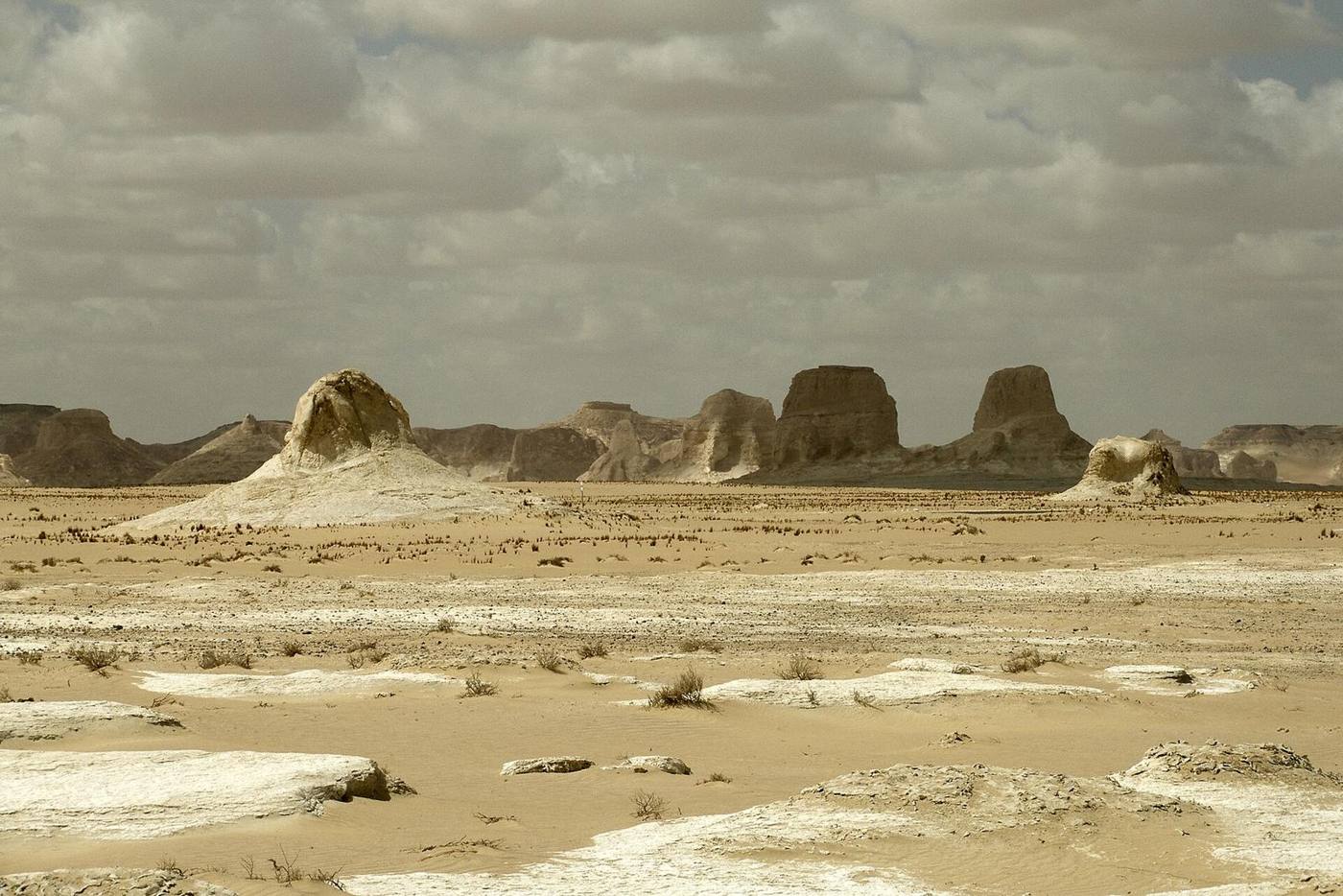
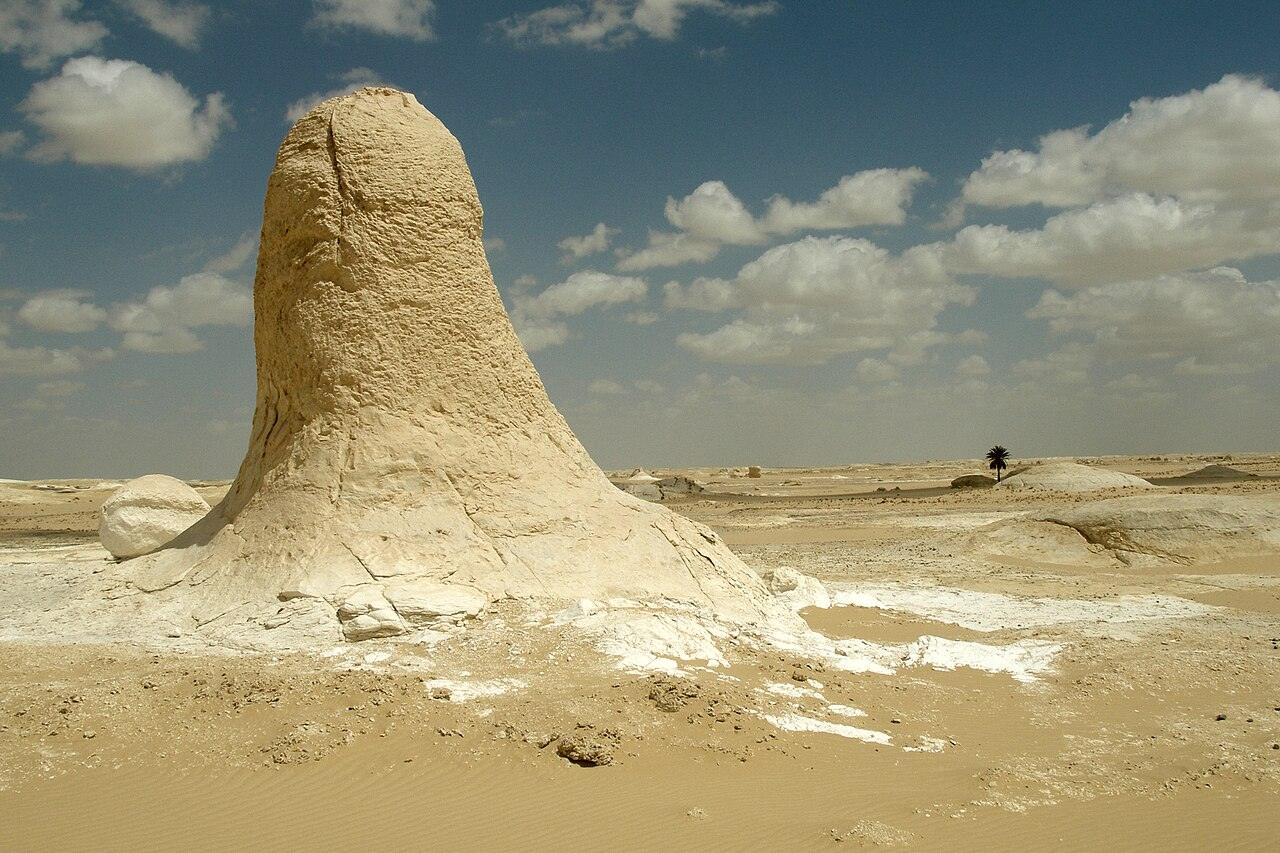
In the morning climb into the four-wheel drive with the driver and the guide. After Farafra you leave the tarmac and enter the White Desert National Park. The landscape changes: the sand turns pale and white rocks of chalk and limestone rise from the plain, shaped by the wind into strange forms. Some look like mushrooms, others like animals, others again like pinnacles and towers. The best known are the Mushroom and the Chicken.
In the afternoon walk among these natural sculptures. Look closely at the rock: in some places there are fossil shells, because millions of years ago the sea covered this land. Further north lie the Agabat, valleys with white peaks and golden sand, one of the finest viewpoints.
At sunset the rocks turn from white to pink and then to orange. Camp is set up in a sheltered spot among the formations. The guide cooks dinner on the fire: chicken, rice, vegetables and sweet tea.
At night the sky is full of stars and you can see the Milky Way. Sometimes the desert fox, the fennec, comes close to the camp looking for food.
Practical tip: nights in the desert are cold, even below freezing in winter; bring warm layers, a hat and a heavy sleeping bag, and leave no rubbish: everything you bring into the park must be taken out again.
- Day 9
The Black Desert and Bahariya
Today you wake up in the White Desert and move on towards Bahariya, the last oasis.
Watch the sunrise over the white rocks, as the light paints the formations pink and gold. After breakfast around the fire, the four-wheel drive sets off north again.
The first stop is Crystal Mountain, a small ridge of rock full of quartz and calcite crystals that sparkle in the sun. It is close to the road and takes only a few minutes to see.
Then the landscape changes again: you enter the Black Desert, where the sand-coloured hills are covered with small dark stones. From a distance they look like extinct volcanoes. Walk up one of the lower hills to see the plain dotted with black cones as far as the horizon.
In the afternoon you reach Bahariya, in the oasis around the town of Bawiti. Here you can visit the museum that holds some of the golden mummies, found in a large necropolis from Greek and Roman times, with gilded masks and decorations. Check prices and times before you go.
At sunset relax in one of the hot springs around Bawiti, or climb the hill near the town to look over the palm groves and the dunes.
In the evening take a long shower: after a night in the desert it is a real pleasure.
Practical tip: do not leave the main road and the visited areas, follow your guide's instructions and do not take stones or crystals as souvenirs, because the park is protected.
- Day 10
Back to Cairo and the pyramids
Today you leave the desert and return to the world of big cities.
In the morning set off early from Bahariya heading north-east. The tarmac road crosses a few more hours of flat desert, then the first factories, motorways and new districts on the edge of Cairo appear.
You drive straight to Giza, on the pyramid plateau. The three great pyramids of Khufu, Khafre and Menkaure have risen above the city for more than four thousand years. The pyramid of Khufu is the only one of the seven wonders of the ancient world still standing. Walk around its base, look closely at the size of the stone blocks and then go to the viewpoint in the desert, from where you can see all three together.
Then go down to the Sphinx, the great statue with a lion's body and a human head, carved from the rock of the plateau.
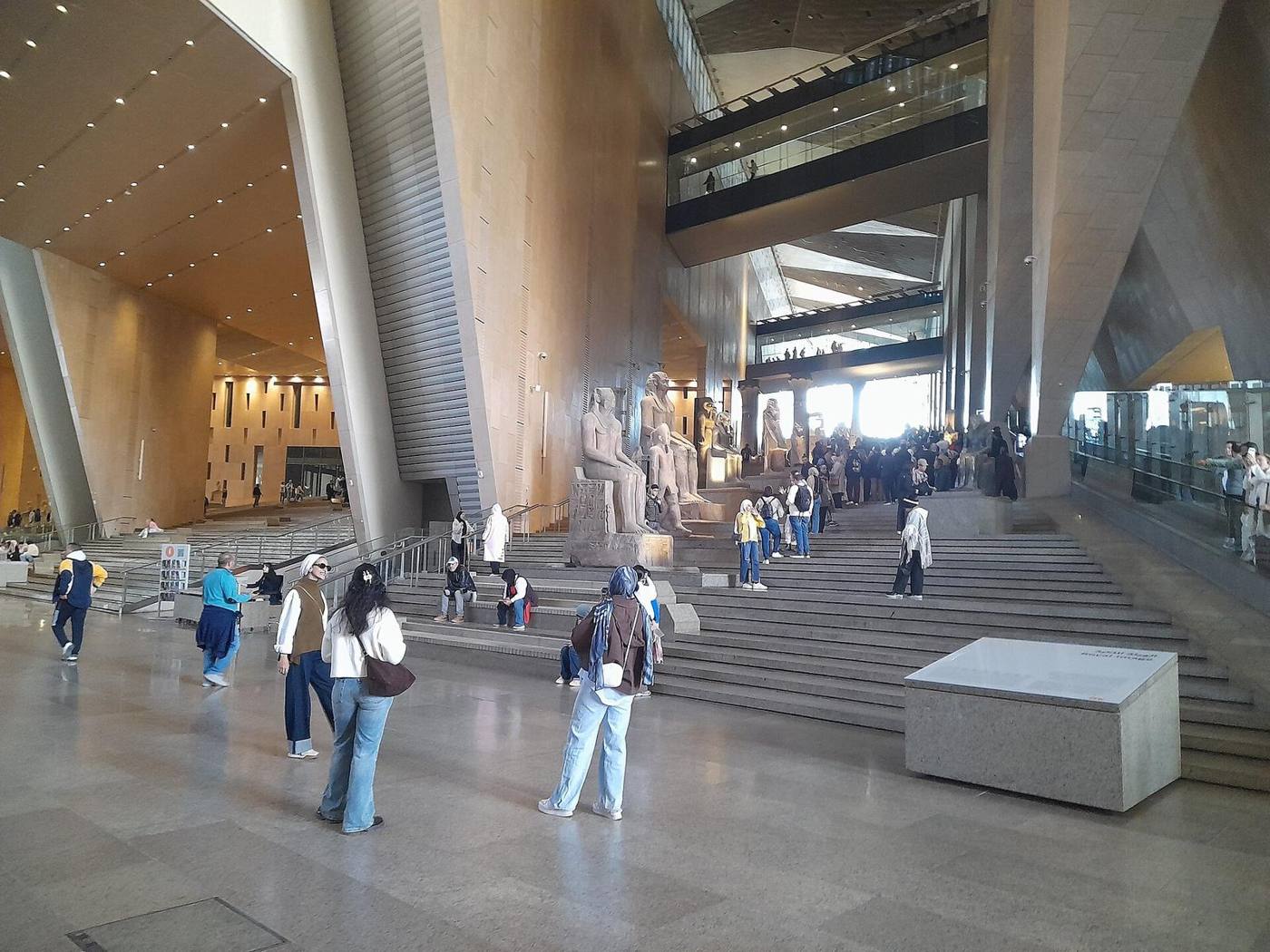
If you have time, visit the Grand Egyptian Museum, near the pyramids, which holds thousands of objects from ancient Egypt, including the treasure of Tutankhamun. Check prices and times before you go.
In the evening have koshari for dinner, Cairo's popular dish of rice, pasta, lentils, chickpeas, tomato sauce and fried onions.
Practical tip: at Giza many sellers and camel drivers are pushy; say no politely and firmly, and if you want a horse or camel ride, agree the total price and the route first.
- Day 11
Departure
Today is the last day: you leave Egypt from Cairo.
If your flight leaves late, use the morning for a last walk in Islamic Cairo, among the mosques, the minarets and the great Khan el-Khalili market, or for a coffee downtown. Then head to the airport in good time, because Cairo traffic is unpredictable.
In eleven days you have seen two different Egypts. The first is the Egypt of the Nile, with the temple of Philae in Aswan, the feluccas, Karnak and the Valley of the Kings in Luxor. The second is the Egypt of the Western Desert, which few visitors know: the Christian chapels of Bagawat in Kharga, the mud village of al-Qasr in Dakhla, the hot springs of Farafra, the night among the white rocks of the White Desert, the dark hills of the Black Desert and the golden mummies of Bahariya. At the end, the pyramids of Giza close the circle.
It is a trip with many hours of driving through empty land, simple hotels and checkpoints, but it shows you that Egypt is not only the river.
When to go: the best period is from October to April, when the days are mild and the desert nights are cool, sometimes cold. From May to September the heat in the desert and in Luxor is very strong and nights in a tent are less pleasant. In December and January there are more visitors in Aswan and Luxor.
Practical tip: keep a small amount of Egyptian pounds for the last tips and for the taxi to the airport.
The trip that shows Egypt isn't only the Nile. A night in the White Desert is one of the finest experiences in the whole country. There are many hours of road through nothing: bring patience and good music. Right months: October-April.
Before you go
- Documents and visa
- Passport valid for at least six months and a tourist visa, obtained online on the official portal or on arrival at the airport, where since 1 March 2026 it costs 30 dollars in cash.
- Health and vaccines
- No compulsory vaccines for travellers from Europe. Drink only bottled water and take out travel health insurance. Emergencies: 122 police, 123 ambulance.
- Money and payments
- Egyptian pound. Cards work in hotels and larger shops, but for tips, taxis and markets you need cash in small notes.
- Power sockets
- Types C and F, 220 volts.
- Time zone
- UTC+2 in winter; Egypt uses daylight saving time in summer.
- Safety
- Tourist areas along the Nile and the Red Sea are busy and well policed. Governments advise against North Sinai, the Libyan border strip and much of the Western Desert off the main roads. Official advice: GOV.UK.
Information checked in November 2026 for Italian and EU citizens. Rules change: always check before you travel.
Variations
Shorter version: in eight days you skip Aswan and set off from Luxor towards the oases.
Longer version: add two days in Cairo for Islamic Cairo, the museum and Saqqara.
Frequently asked questions
Can you do this trip alone by public transport?
There are buses between the oases, but they are slow and their times are uncertain; for the desert and the night in the White Desert you need a four-wheel drive and a local guide.
Is it cold at night in the White Desert?
Yes, in winter the night temperature can drop close to or below freezing. Bring warm layers, a hat and a good sleeping bag.
Are there cash machines in the oases?
There are some in Kharga, Dakhla and Bahariya, but they sometimes do not work. Carry enough cash in Egyptian pounds, especially for Farafra and the desert.
Indicative itinerary written by World Atlas. Before booking, check timetables, seasonal openings, documents and safety.
 7 daysEasy
Cairo and a Nile cruise
The pyramids of Giza and the Grand Egyptian Museum, then four days sailing between Luxor and Aswan.
 15 daysModerate
Complete Egypt: the Nile, the desert and the Red Sea
The pyramids, the Nile from Aswan to Luxor, a night in the White Desert and a finale on the Red Sea reef.
 6 daysEasy
Cairo and Alexandria
A long weekend among the pyramids, the new Grand Egyptian Museum, Islamic Cairo and Alexander's city on the Mediterranean.