The whole Caucasus: Azerbaijan, Georgia and Armenia
Three countries in sixteen days, from Baku to Yerevan by way of Kazbegi, Svaneti and Vardzia, ending with Lake Sevan and Armenia's monasteries.
- Baku
- Sheki
- David Gareja
- Tbilisi
- Kazbegi
- Kutaisi
- Ushguli
- Vardzia
- Yerevan
- Lake Sevan
Day by day
- Day 1
Arrival in Baku and the walled city
This trip crosses the three countries of the Caucasus in sixteen days: Azerbaijan with Baku, Gobustan and Sheki, Georgia with Tbilisi, Kazbegi, Svaneti and Vardzia, and Armenia with Yerevan, Geghard and Lake Sevan. You travel with a flight between Baku and Tbilisi and then by car with a driver.
Before you go: for Azerbaijan Italian citizens need a passport and an e-visa, applied for only on the official website evisa.gov.az. Today you can only enter and leave by air: the land border with Georgia is closed, which is why this trip flies from Baku to Tbilisi. For Georgia the recommended document is a passport, valid for at least six months, with no visa; since 2026 health and accident insurance with cover of at least 30,000 lari has been compulsory. For Armenia you need a passport, with no visa. Other nationalities should check their own rules. The border between Armenia and Azerbaijan is closed and advised against; in Armenia Italy's travel advice warns against the regions of Syunik and Vayots Dzor and the south and east of Gegharkunik, which this route does not touch. In Georgia, Abkhazia and South Ossetia are advised against, far from here.
You land at Baku airport, about half an hour from the centre. Change or withdraw some manat, the Azerbaijani currency.
In the afternoon enter Icherisheher, the walled old town, a UNESCO World Heritage Site with the Palace of the Shirvanshahs and the Maiden Tower. Walk through the lanes, the caravanserais and the mosques. Check prices and times.
At sunset stroll along the Caspian seafront.
In the evening have plov for dinner, saffron rice with meat.
Sleep in Baku.
Practical tip: print your e-visa and keep it with your passport: you will be asked for it at the arrival check.
- Day 2
The Heydar Aliyev Centre, Gobustan and the fire temple
Today you see modern Baku and the Absheron peninsula, with prehistoric carvings and fires rising from the earth.
In the morning go to the Heydar Aliyev Centre, the white building with curved lines designed by the architect Zaha Hadid, with exhibitions on the culture of Azerbaijan. Even from outside, from the lawn in front, it is one of the most photographed buildings in the country. Check prices and times.
At midday head south, about an hour away, to Gobustan, a park in the steppe above the Caspian, a UNESCO World Heritage Site. On the rocks there are thousands of prehistoric carvings: men with bows, boats, horses, oxen and dancing scenes. The museum at the entrance explains the site well. Check prices and times. Nearby there are also the mud volcanoes, small grey cones bubbling on the plain: only go with a driver who knows the track, because in rain it becomes impassable.
In the afternoon head back towards the Absheron peninsula and visit the Ateshgah of Surakhani, the fire temple, a stone enclosure with pilgrims' cells around an altar where natural gas once burned. Then go to Yanar Dag, the hillside where a flame burns constantly along a rock face. Check prices and times.
At sunset return to the city and look at the Flame Towers, the three flame-shaped towers that light up in the evening.
In the evening have dushbara for dinner, small dumplings in broth, and black tea with jam.
Sleep in Baku.
Practical tip: at Yanar Dag the fire is best seen after sunset: plan the day so that you arrive there after dark.
- Day 3
Shamakhi and the road to Sheki
Today you leave Baku and cross Azerbaijan to the north-west, to the foot of the Greater Caucasus.
In the morning set off early from Baku. The landscape changes slowly: from the dry steppe around the capital the first green hills rise.
After about two hours you reach Shamakhi, the old capital of the Shirvanshahs. Visit the Friday Mosque, one of the oldest in the Caucasus, founded according to tradition in the 8th century, destroyed and rebuilt several times, with its domes and large courtyard. Go in with shoulders and legs covered, and women with a headscarf. Check times and rules.
At midday climb the hill of Yeddi Gumbaz, the seven domes, the mausoleums of the khans of Shirvan, with carved stone tombs around them and a view over the valley. Then have lunch in town.
In the afternoon carry on to Sheki, through woods, villages and hazelnut orchards, with the Caucasus mountains getting closer on your right. It is about three hours by road.
You arrive in Sheki, a small town on the slopes, with houses with iron roofs and gardens, famous for silk and sweets.
In the evening try piti, the lamb and chickpea soup cooked in a clay pot, and Sheki halva, a sweet made with rice, hazelnuts and syrup.
Sleep in Sheki.
Practical tip: piti is eaten in two stages: first break the bread into the broth, then eat the meat and chickpeas. Ask whoever serves you how to do it.
- Day 4
The Palace of the Sheki Khans and back to Baku
Today you visit the jewel of Sheki and then return to Baku, because the land border with Georgia is closed from here.
In the morning enter the Palace of the Sheki Khans, from the 18th century, the rulers' summer residence, in a historic centre on the UNESCO World Heritage list. The walls are covered in paintings of flowers, birds and hunting scenes, and the windows are made of thousands of pieces of coloured glass fitted into wood, without nails or glue: this is the shebeke technique. In the morning sun the coloured light falls on the floors. Check prices and times.
Then walk to the old caravanserai, a large stone building with a courtyard and arcades, where Silk Road merchants once stopped.
If you have time, go to Kish, a few kilometres away, to see the small stone church of ancient Caucasian Albania, now a museum. Check prices and times.
At midday have lunch in Sheki, then leave for Baku: it is about five hours by road, with a stop along the way.
In the afternoon you cross the hills and the steppe again, and reach the city in the evening.
In the evening take a last walk in the old town, with its lanes lit up.
Sleep in Baku.
Practical tip: buy a silk scarf in Sheki, the kelaghayi, from the workshops in the old town: it is the town's traditional fabric, on UNESCO's intangible heritage list.
- Day 5
The flight to Tbilisi and David Gareja monastery
Today you cross into Georgia by plane and visit a monastery in the desert, on the border.
Early in the morning take the flight from Baku to Tbilisi, about an hour. On arrival show your passport and proof of insurance; withdraw some lari, the Georgian currency. Your driver waits for you at the airport.
At midday head south-east, about two and a half hours away, and cross the semi-desert steppe to the village of Udabno. You reach the David Gareja complex, founded in the 6th century by the monk David, one of the Syrian fathers who brought monasticism to Georgia. Visit the Lavra, the main monastery, with cells and churches carved into red and yellow sandstone. Go in with shoulders and legs covered. Check prices and times.
If you have the energy, climb for about an hour on the hill path to Udabno monastery, with its frescoed caves and views over the plains of Azerbaijan. Here the border is not marked and is partly disputed: stay on the main path and follow the instructions of the border guards, if there are any.
In the afternoon head back towards Tbilisi, across the empty hills of the steppe.
In the evening, in Tbilisi, have khinkali for dinner, large dumplings filled with meat and broth, and khachapuri, cheese bread.
Sleep in Tbilisi.
Practical tip: at David Gareja it is very hot in summer, there is no shade and there are snakes among the rocks: bring water and a hat and watch where you step.
- Day 6
Tbilisi, the old town and the sulphur baths
Today you discover Tbilisi, the capital of Georgia, among houses with wooden balconies and ancient churches.
In the morning walk through the old town, along steep lanes, past colourful houses with carved wooden balconies and courtyards. Visit Sioni Cathedral and the small Anchiskhati church, the oldest in the city. Go in with shoulders and legs covered; women with a headscarf.
At midday climb to Narikala fortress, above the city, on foot or by cable car from Rike park, for the view over the Mtkvari river, the rooftops and the statue of Mother Georgia. Check prices and times.
In the afternoon go down to Abanotubani, the sulphur baths district, with brick domes rising from the ground, and try a hot bath in one of the rooms. Then walk to the waterfall hidden in the Leghvtakhevi gorge, a few minutes away.
Towards evening visit the Georgian National Museum, on Rustaveli Avenue, with the ancient gold treasure of Colchis. Check prices and times.
In the evening have pkhali for dinner, vegetable and walnut balls, badrijani, aubergine with walnut paste, and a glass of Kakheti amber wine made in clay jars.
Sleep in Tbilisi.
Practical tip: on Rustaveli Avenue, in front of Parliament, there are often protests, especially in the evening: check the news and take another street if there is a demonstration.
- Day 7
Jvari, the military road and Kazbegi
Today you climb towards the Greater Caucasus along the Georgian Military Road and return to Tbilisi in the evening.
Early in the morning head north. After about twenty minutes climb to Jvari monastery, from the 6th century, above Mtskheta, the ancient capital, a UNESCO World Heritage Site, with the view over the meeting of two rivers.
Then take the Georgian Military Road: you skirt the Zhinvali reservoir and Ananuri fortress, with its towers and churches, and climb past Gudauri to the Jvari pass, at over 2,300 metres, among meadows and mountains. Stop at the viewpoint with the large friendship mosaic, above the valley.
At midday you reach Stepantsminda, the village everyone calls Kazbegi, and go up to the Gergeti Trinity Church, from the 14th century, at about 2,170 metres. It is the most famous image of Georgia: the stone church alone on the meadow, with the Kazbek glacier behind it. You can walk up in about an hour and a half or go by 4x4. Go in with shoulders and legs covered.
Do not carry on north along the road beyond Stepantsminda: it leads to the Dariali gorge and the border with Russia, which is not part of this trip.
In the afternoon you return to Tbilisi, in about three hours.
In the evening have mtsvadi for dinner, grilled meat skewers, and lobio, bean soup.
Sleep in Tbilisi.
Practical tip: in winter and early spring the road over the Jvari pass can close because of snow: check the morning news with your driver.
- Day 8
Kutaisi and Prometheus Cave
Today you cross Georgia from east to west, to Imereti, the region of Kutaisi.
In the morning leave Tbilisi heading west, on the motorway through the Mtkvari valley, then cross the Rikoti pass, which divides eastern Georgia from the west. The landscape becomes greener and more humid. It is about four hours by road.
At midday you reach Prometheus Cave, near Kutaisi, discovered in the 1980s. Follow the walking route, more than a kilometre long, through halls full of stalactites, stalagmites and rock columns, lit with coloured lights, and small underground lakes. Inside it is cool all year round. Check prices and times.
In the afternoon enter Kutaisi, the country's second historic capital. Climb to Bagrati Cathedral, built at the beginning of the 11th century by King Bagrat III, the first king of a united Georgia, on the hill above the Rioni river. Then walk through the covered market, among spices, cheeses and churchkhela, walnuts coated in grape juice.
If you have time, visit Gelati monastery, about twenty minutes away, a UNESCO World Heritage Site, with gold mosaics and medieval frescoes.
In the evening try imeruli khachapuri, the cheese bread of Imereti, and the region's white wine.
Sleep in Kutaisi.
Practical tip: in the cave the floor is damp and there are many steps: wear shoes with a good grip and bring a sweatshirt.
- Day 9
The climb to Mestia, in Svaneti
Today you climb into Svaneti, the region of medieval towers, at the foot of the highest peaks of the Georgian Caucasus.
In the morning leave Kutaisi early for Zugdidi, on the plain of Mingrelia, in about two hours. From here the mountain road to Mestia begins: it climbs along the gorge of the Enguri river, passes above the large reservoir and then enters narrow valleys, among woods and villages. It is about three and a half hours of bends. Stay on the road to Mestia: the bridge over the Enguri, west of Zugdidi, leads to Abkhazia, an area advised against.
At midday you reach Mestia, the main village of Svaneti, at about 1,500 metres. Upper Svaneti is a UNESCO World Heritage Site, for its villages with stone towers built in the Middle Ages by families to defend themselves from attacks and feuds.
In the afternoon visit the Svaneti Museum of History and Ethnography, with medieval icons, silver and gold crosses and manuscripts kept for centuries in churches and towers. Check prices and times. Then enter one of the towers open to visitors and climb the wooden ladders to the top.
At sunset walk among the towers of the oldest quarter, with the light on the snowy mountains.
In the evening try kubdari, bread filled with spiced meat, the typical dish of Svaneti, and Svan salt, with mountain herbs.
Sleep in Mestia.
Practical tip: the road between Zugdidi and Mestia has many bends and stretches with landslides: stop regularly and, if you get car sick, sit in the front.
- Day 10
Ushguli by 4x4
Today you go to Ushguli, the group of villages below Shkhara, the highest peak in Georgia.
In the morning leave Mestia by 4x4. The road, partly paved and partly dirt, climbs for about two and a half hours along the Enguri valley, among woods, meadows and villages with towers.
At midday walk among the four villages of Ushguli, at about 2,100 metres, one of the highest year-round settlements in Europe. The stone towers rise among the houses, stables and barns, with pigs and cows wandering freely in the streets. Climb to the church of Lamaria, medieval, on a hill above the village, with its tower beside it and the great white wall of Shkhara in front.
In the afternoon, if you feel like it, take a short walk along the river towards the glacier, to see the mountain closer, or onto the ridge above the villages, to see them from above. Then return to Mestia on the same road.
In the evening try chvishtari, cornbread with cheese, and tashmijabi, mashed potatoes with stretchy cheese, with a glass of chacha, grape brandy.
Sleep in Mestia.
Practical tip: between Mestia and Ushguli the road can be closed for a few hours by landslides or roadworks, and in snow it becomes uncertain: leave early and ask your driver for the morning news.
- Day 11
Zugdidi and Ubisa monastery
Today you leave Svaneti and cross western Georgia to the south-east: it is a long day, with many hours on the road.
In the morning leave Mestia early and go back down the Enguri gorge and the road along the reservoir, with last views of the snowy peaks. It is about three and a half hours to Zugdidi.
In Zugdidi, if it is open, visit the Dadiani palace, the family of princes who ruled Mingrelia for centuries, now a museum, with the botanical park around it. Check prices and times. Stay in the centre and on the main road: the bridge over the Enguri, west of the town, leads to Abkhazia, an area advised against, and is not part of this trip.
At midday set off again eastwards, past Kutaisi, on the road that climbs among the wooded hills of Imereti.
In the afternoon you reach Ubisa monastery, a small medieval complex with a stone defensive tower and a church covered in 14th-century frescoes, colourful and well preserved. It sees few visitors and is very peaceful. Go in with shoulders and legs covered.
Towards evening carry on to Borjomi, the town of mineral water, in the green Mtkvari valley, and taste the salty, sparkling water at the spring in the park.
In the evening have chakapuli for dinner, lamb stew with herbs and white wine.
Sleep in Borjomi.
Practical tip: today's driving times are long: set off with water and something to eat and stop every two hours to stretch your legs.
- Day 12
The cave city of Vardzia
Today you visit Vardzia, the city carved into the rock, one of the most spectacular places in Georgia.
In the morning leave Borjomi heading south and in about an hour you reach Akhaltsikhe. Visit Rabati fortress, a large restored complex with walls, towers, a mosque and a church, which tells the story of centuries of Georgian and Ottoman rule. Check prices and times.
Then carry on along the Mtkvari gorge, between rock walls and fields, and stop at Khertvisi fortress, on a spur above the meeting of two rivers.
At midday you reach Vardzia. This cave city was carved in the 12th century, under King George III and Queen Tamar, into the face of a mountain above the river: hundreds of rooms, churches, cellars and tunnels on several levels. An earthquake in the 13th century brought down the outer part of the mountain and left the caves exposed. Climb the paths and steps among the caves and enter the Church of the Dormition, with its frescoes and the portrait of Queen Tamar. Some tunnels are low and narrow. Check prices and times.
In the afternoon rest near the river, with the view of the cave wall, which turns golden at sunset.
In the evening have grilled river fish for dinner with the local wine.
Sleep near Vardzia or in Akhaltsikhe.
Practical tip: Vardzia is hot in summer and has little shade: visit the caves early in the morning or late in the afternoon, and bring water and a torch.
- Day 13
The Armenian border, Gyumri and Yerevan
Today you cross into Armenia by land, cross the plateau and reach the capital.
In the morning set off early heading south through Javakheti, a high, bare plateau with lakes and villages, to the border crossing between Georgia and Armenia, which is open. Show your passport and, if you are travelling with a Georgian driver, ask beforehand whether the car can cross or whether you need to change vehicle at the border. Withdraw or change some dram, the Armenian currency: in Armenia you cannot pay in other currencies.
At midday you reach Gyumri, Armenia's second city. Walk through the historic Kumayri district, with houses of black and red tuff, churches and 19th-century streets. In 1988 a huge earthquake destroyed much of the city: in some places the signs can still be seen.
In the afternoon carry on to Yerevan, in about two hours, across the plateau, with Mount Aragats on your left. On clear days, as you approach the capital, you also see Ararat, the sacred mountain of the Armenians, now in Turkey.
In the evening, in Yerevan, walk around Republic Square, with its pink tuff buildings and fountains, and along Northern Avenue.
Have khorovats for dinner, barbecued meat, lavash, thin bread, and a glass of Armenian brandy.
Sleep in Yerevan, for three nights.
Practical tip: the border between Armenia and Turkey is closed, like the one with Azerbaijan: for the next few days stay on the routes around Yerevan and Lake Sevan.
- Day 14
Garni, Geghard and Lake Sevan
Today you visit the pagan temple of Garni, the rock-cut monastery of Geghard and Lake Sevan.
In the morning leave Yerevan heading east and in about forty minutes you reach Garni. The temple, from the 1st century, in Hellenistic style, with columns and a pediment, stands on a spur above the gorge of the Azat river. It is the only temple of its kind in the country and was rebuilt in the 20th century with the original stones. Check prices and times. Then go down into the gorge to see the basalt columns, known as the symphony of stones.
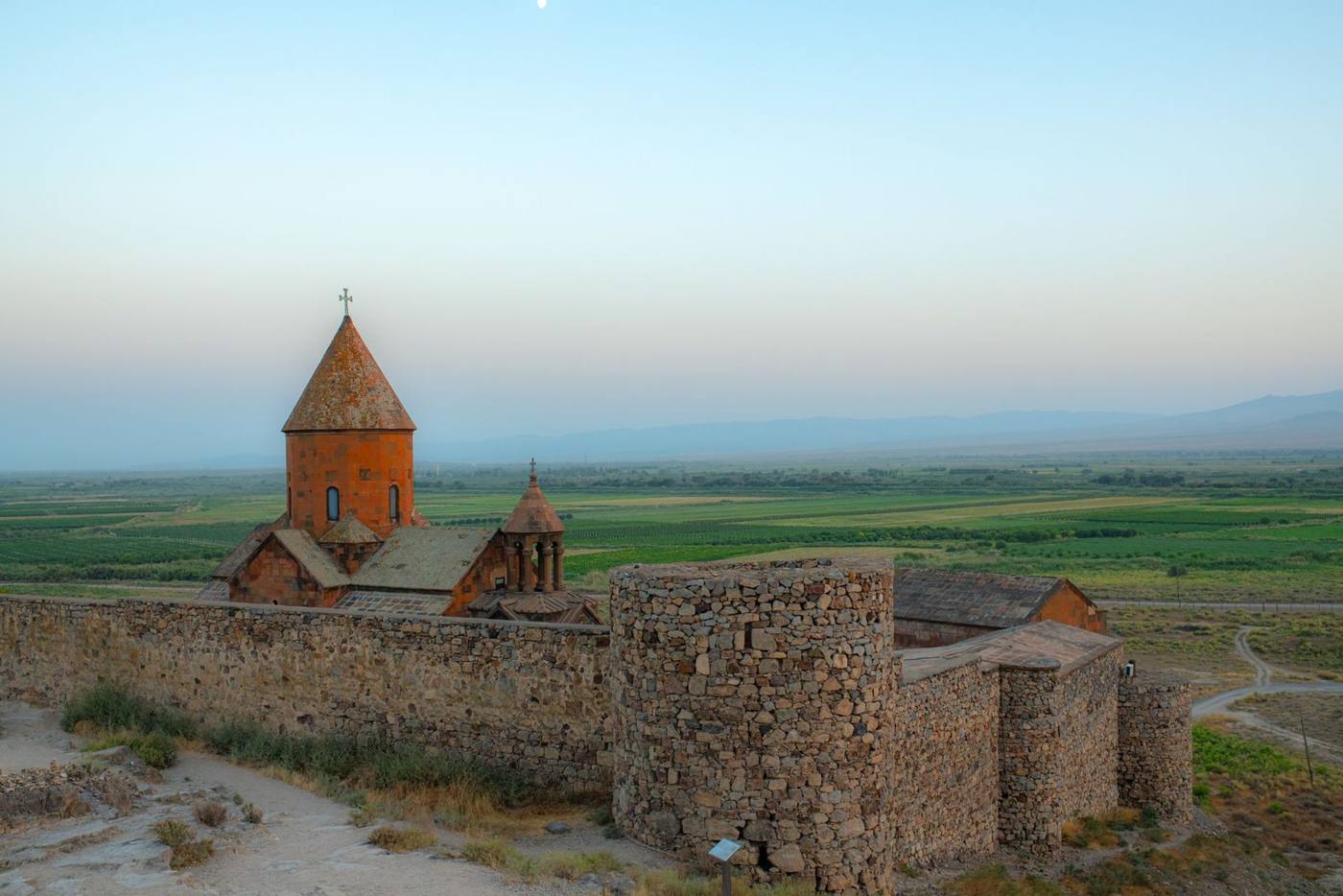
At midday you reach Geghard monastery, a few kilometres away, a UNESCO World Heritage Site, at the end of the valley. Part of the churches is carved directly into the rock of the mountain, with dark halls, carved crosses and a spring. Go in with shoulders and legs covered. If a choir is singing, listen: the sound under the rock is magnificent.
In the afternoon head north, in about an hour, to Lake Sevan, at about 1,900 metres, one of the great mountain lakes of the Caucasus. Visit Sevanavank monastery, with two dark stone churches from the 9th century on a peninsula above the blue water. Stay on the north-west shore, around the town of Sevan: the south and east of Gegharkunik, near the border with Azerbaijan, are advised against.
In the evening, back in Yerevan, have ishkhan for dinner, Sevan trout, or dolma.
Sleep in Yerevan.
Practical tip: at Lake Sevan the wind often blows and it is cooler than in Yerevan: bring a jacket even in summer.
- Day 15
Etchmiadzin and the Genocide Museum
Today you visit the spiritual centre of Armenia and the country's most important memorial.
In the morning leave Yerevan heading west and in about half an hour you reach Etchmiadzin, the seat of the Armenian Apostolic Church. The cathedral, founded at the beginning of the 4th century, when Armenia became the first Christian kingdom, is considered one of the oldest churches in the world and is a UNESCO World Heritage Site. Walk around the complex, among the churches, the gardens and the carved stone crosses, the khachkars. Go in with shoulders and legs covered.
On the way back stop at the ruins of Zvartnots, a large round church from the 7th century, now collapsed, with its columns and carved capitals and Ararat in the background. Check prices and times.
At midday return to Yerevan.
In the afternoon go up the hill of Tsitsernakaberd, with the memorial and museum of the Armenian genocide of 1915, when hundreds of thousands of Armenians in the Ottoman Empire were killed or died during the deportations. The memorial has an eternal flame, inside a circle of sloping stone slabs, and a tall stele. The museum tells the story with photos, documents and testimonies. It is a powerful visit, to be done slowly. Check prices and times.
In the evening, for a change of mood, climb the Cascade, the great stairway with sculptures and terraces above the city.
Sleep in Yerevan.
Practical tip: bring a flower to the memorial, as Armenians do, and keep silent near the flame.
- Day 16
Last hours in Yerevan and flight home
Today is departure day.
In the morning, if you have time, visit the Matenadaran, the institute of ancient manuscripts, with illuminated Armenian books, or the Vernissage market, open mainly at weekends, with carpets, woodwork, jewellery and paintings. Check prices and times. Buy a bottle of Armenian brandy or some dried apricots. Then go to Zvartnots airport, about half an hour from the centre, and take your flight home.
In these sixteen days you have seen the three countries of the Caucasus: Baku with its walled city, the Heydar Aliyev Centre, Gobustan and the fires of Absheron, Shamakhi and the Palace of the Sheki Khans; then Georgia with David Gareja, Tbilisi, Jvari and Gergeti, Kutaisi and Prometheus Cave, Mestia and Ushguli, Ubisa monastery and Vardzia; and finally Armenia with Gyumri, Garni, Geghard, Lake Sevan, Etchmiadzin and the genocide memorial.
The limit of this trip is the pace: three countries, two borders and many hours on the road, especially for Svaneti and for the return from Sheki to Baku, which is unavoidable because the land border is closed. In exchange, in just over two weeks you get a clear picture of the whole region.
When to go: May to June and September to October, with mild temperatures and the mountain roads open. In high summer Baku, David Gareja and Vardzia are very hot; in winter snow can close the roads to Kazbegi and Ushguli.
Practical tip: before leaving, register your trip on Dove Siamo Nel Mondo, the Italian foreign ministry's service, with the dates for each country and the flight between Baku and Tbilisi.
The right trip for anyone who wants all three Caucasus countries in one go and accepts seeing them in outline. Its strength is ending in Armenia, with Geghard and Sevan, after the best of Georgia. The drawback is the number of borders and hours on the road, especially the detour to Svaneti. AnM also runs it in December, but snow makes Ushguli and Kazbegi uncertain, so spring or autumn is the better choice.
Before you go
- Documents and visa
- Passport valid for the whole stay. British citizens can visit without a visa for up to one year. Since 1 January 2026 health and accident insurance is compulsory, valid for the whole stay, with cover of at least 30,000 lari: you may be asked for proof on arrival. Some British citizens have been refused entry or had trouble leaving, apparently linked to taking part in demonstrations or to unpaid fines.
- Health and vaccines
- No compulsory vaccinations. Medical facilities in remote areas are limited: you need insurance covering medical costs and repatriation. Georgia has strict rules on medicines: some products sold over the counter in the UK, such as those containing codeine, are illegal. Carry prescription medicines with the prescription and original packaging. Emergencies: 112.
- Money and payments
- Georgian lari. Withdrawing cash and changing euros or dollars is easy in Tbilisi and the main towns; carry cash in mountain villages.
- Power sockets
- Types C and F, 230 volts: you need an adapter for British plugs.
- Time zone
- UTC+4 all year, four hours ahead of the UK in winter, three in summer.
- Safety
- The UK advises against all travel to the Russian occupied regions of Abkhazia and South Ossetia, and against all but essential travel to the areas immediately next to the administrative boundary lines, which are generally unmarked. Protests have taken place in Tbilisi almost every day for nearly two years, centred on Parliament on Rustaveli Avenue, and some have turned violent: avoid demonstrations and large gatherings. At the Udabno caves of David Gareja, take care not to cross the unmarked border with Azerbaijan; the land border with Azerbaijan is closed. Mountain rescue can be limited. Official advice: GOV.UK.
Information checked in November 2026 for Italian and EU citizens. Rules change: always check before you travel.
Variations
In 12 days: only Georgia and Armenia, without Azerbaijan, arriving in Tbilisi and leaving from Yerevan.
In 19 days: add Kakheti with its wine cellars and Signagi after Tbilisi, and an extra day in Mestia for the Chalaadi glacier.
Frequently asked questions
Can you drive from Azerbaijan to Georgia?
No, Azerbaijan's land borders are closed today and you can only enter and leave by air. That is why the trip returns from Sheki to Baku and flies to Tbilisi.
Is the border between Georgia and Armenia open?
Yes, you cross by land with your passport. Ask your driver beforehand whether the car can enter Armenia or whether you need to change vehicle at the border.
Does the trip go through areas advised against?
No. Avoid the border areas between Armenia and Azerbaijan, the regions of Syunik and Vayots Dzor and the south and east of Gegharkunik, and in Georgia Abkhazia and South Ossetia: the route stays well away from these areas.
Indicative itinerary written by World Atlas. Before booking, check timetables, seasonal openings, documents and safety.
 10 daysChallenging
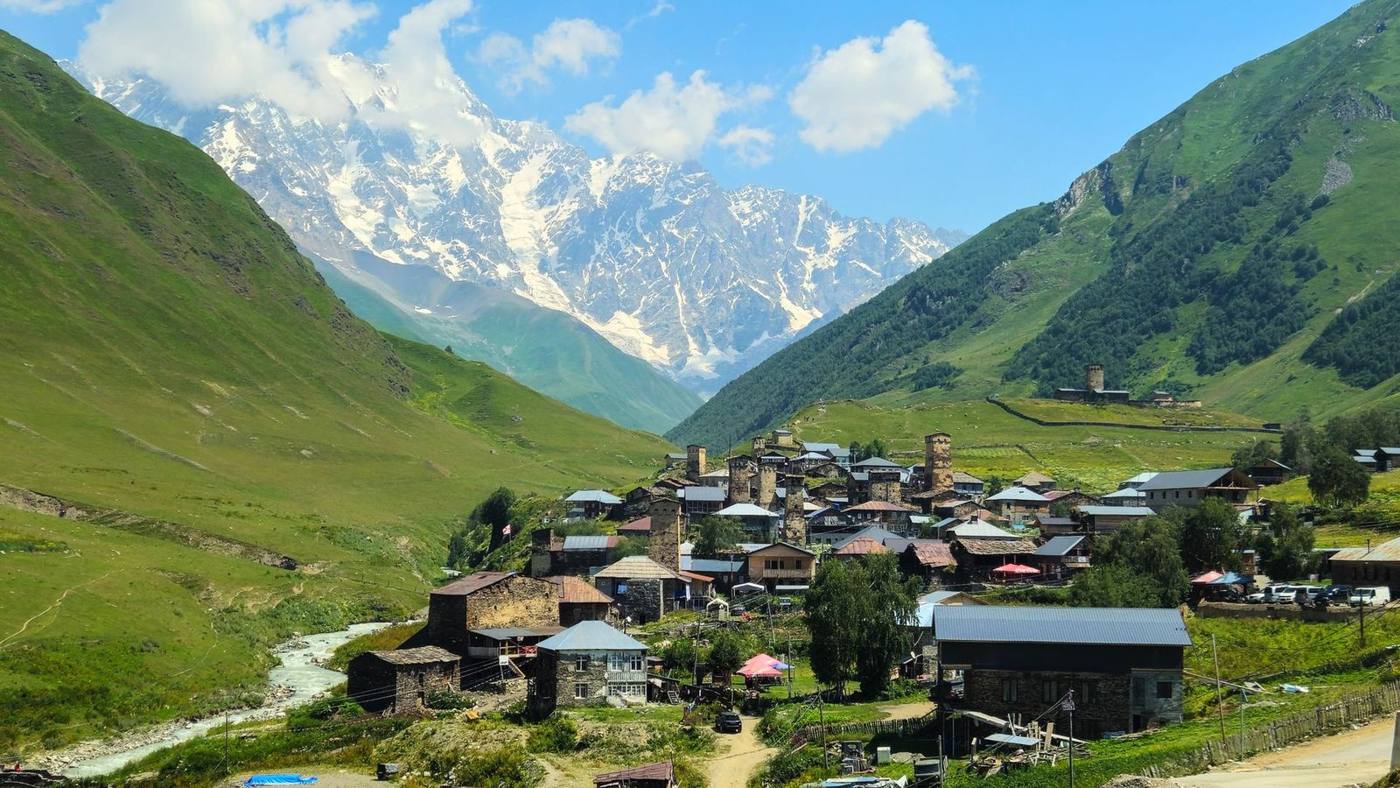
Trekking Upper Svaneti, from Mestia to Ushguli
Ten days on foot among medieval towers, passes above 2,700 metres and the glaciers of the Greater Caucasus, flying in and out of Kutaisi.
 10 daysChallenging
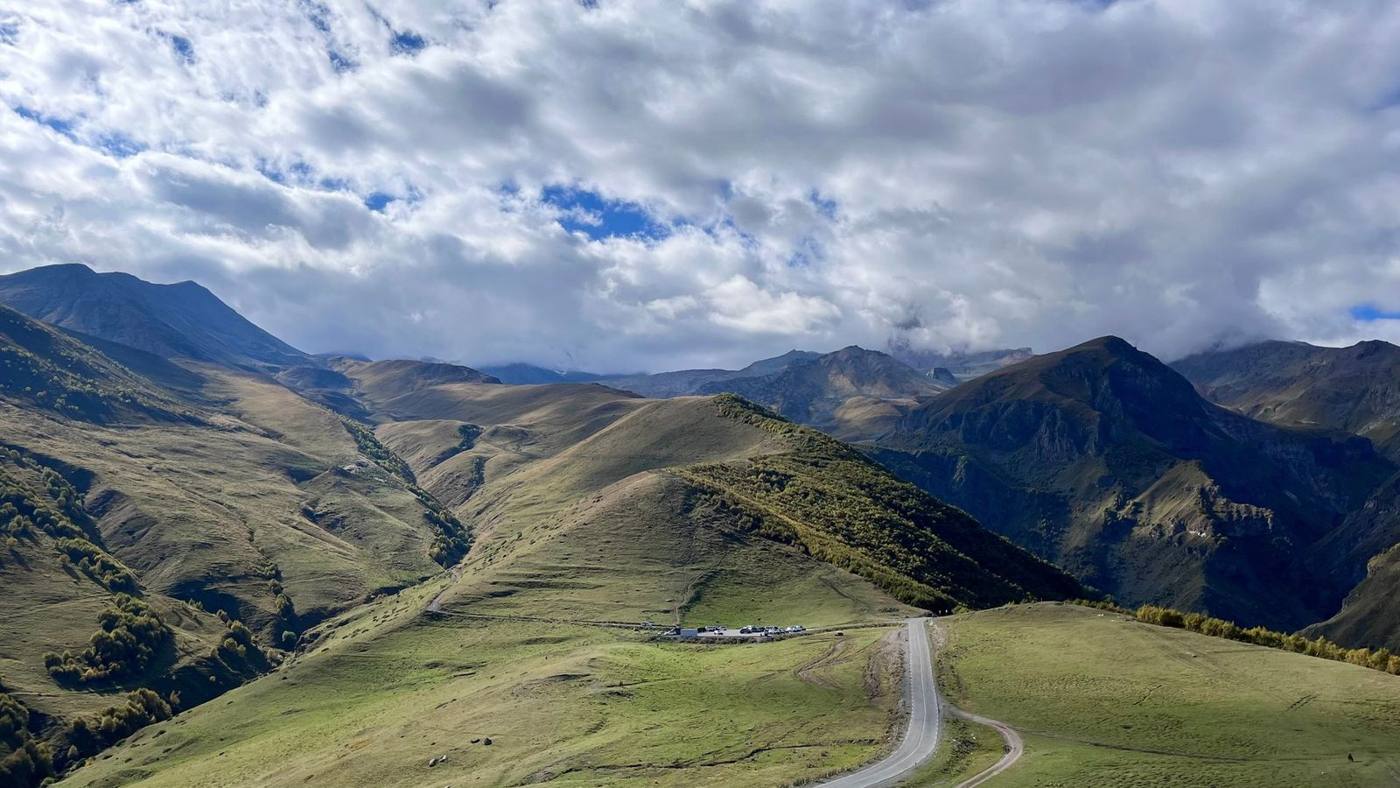
Across Tusheti and Khevsureti
From Omalo to Stepantsminda on foot, over the Atsunta and Chaukhi passes, with two nights under canvas in the most isolated valleys of the Georgian Caucasus.
 15 daysModerate
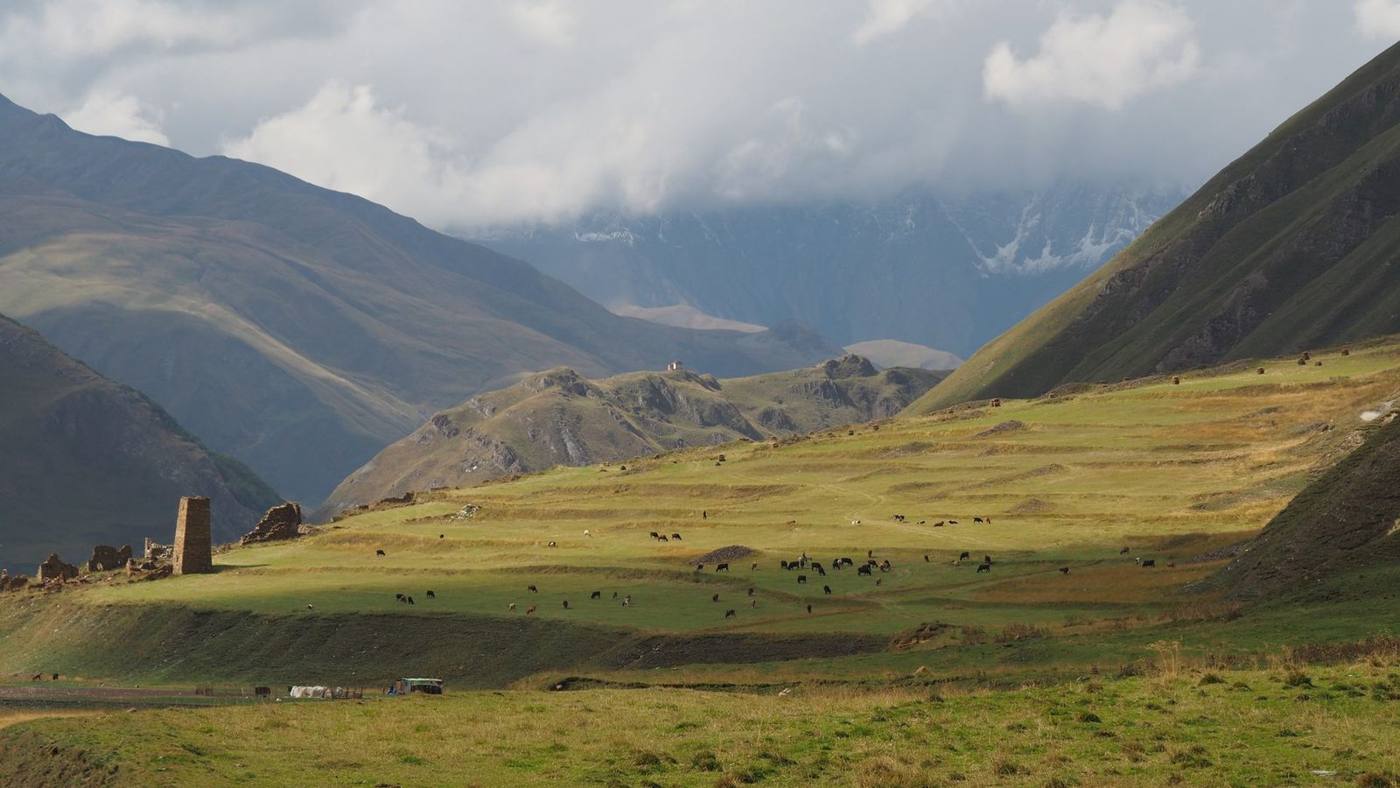
Kazbegi and Tusheti at an easy pace
Day hikes from Kazbek to the valleys of the Bats people, with nights in villages and the longer distances covered by 4x4.