The Volta region
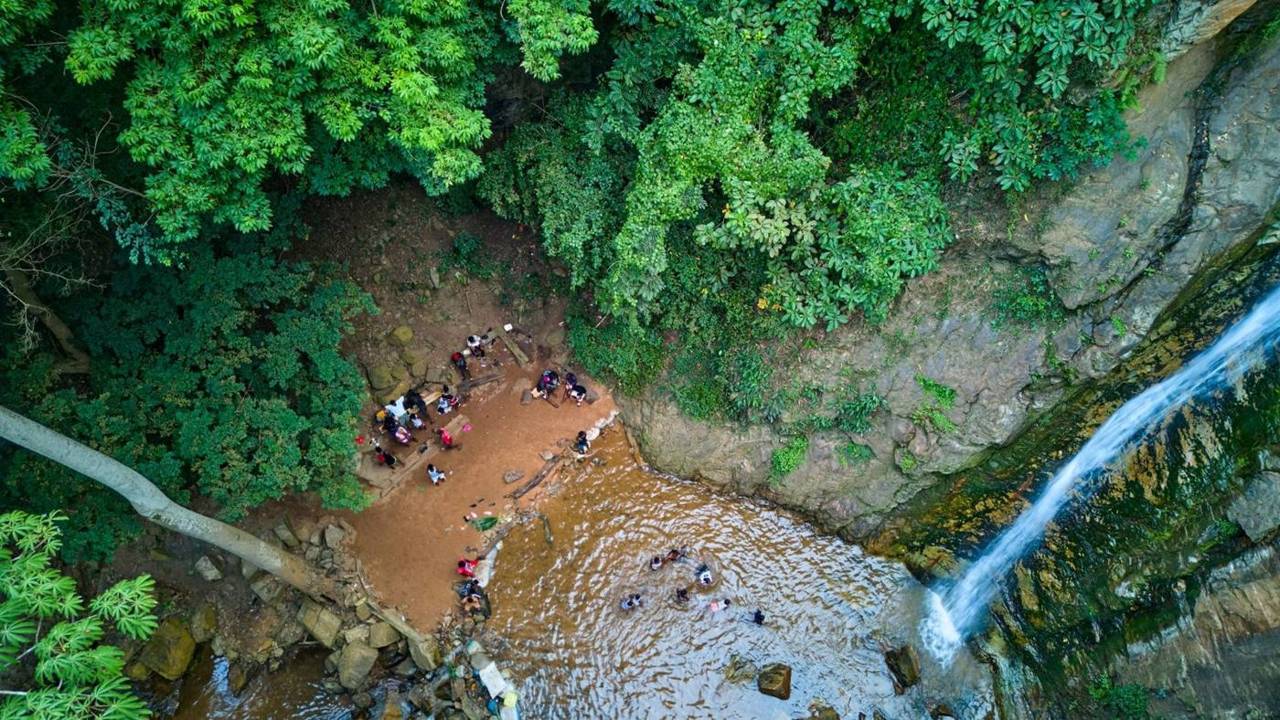
Wli waterfall, the highest in West Africa, Mount Afadjato, the Tafi Atome monkey sanctuary and Lake Volta.
- Accra
- Aburi
- Akosombo
- Hohoe
- Wli
- Afadjato
- Tafi Atome
Day by day
- Day 1
The Aburi hills and Lake Volta at Akosombo
This trip takes you to green and hilly Ghana, east of the capital: the botanical garden of Aburi, the Akosombo dam on Lake Volta, the Wli waterfall, considered the highest in West Africa, the climb of Mount Afadjato and the monkey sanctuary of Tafi Atome. You travel by car with a driver.
Before you go: Italian citizens enter Ghana with a passport and a visa, to be obtained before departure; since May 2026 it is requested online on the official electronic visa portal of the Ghana Immigration Service, without going through intermediary websites. Yellow fever vaccination is compulsory for all travellers over nine months old and the certificate is checked on arrival. Since November 2026, as a precaution against Ebola, a health declaration and a temperature check are required at airports. Talk to your doctor about malaria prevention. Other nationalities should check their own rules. The UK advises against all but essential travel only to the Bawku area, in the far north-east. Wli and Afadjato are close to the border with Togo, which is not among the areas advised against, but Togo requires a separate visa: do not cross the border on the trails.
Leave Accra early and climb into the Aburi hills, less than an hour away by road. Here the air is cooler. The botanical garden, opened at the end of the nineteenth century, has avenues of palms, giant trees and tropical plants from all over the world. Check prices and times.
Then go down east to Akosombo, where the great dam on the Volta river, finished in the 1960s, created Lake Volta, one of the largest artificial lakes in the world by surface area. From the viewpoint you see the dam and the water fading into the horizon.
Sleep in Akosombo, for one night.
Practical tip: the dam is a guarded area, so always ask first whether you may take photos.
- Day 2
The Wli waterfalls
Today you cross the Volta Region to the north and walk to the Wli waterfall.
In the morning leave Akosombo and cross the Volta river on the Adomi suspension bridge, then continue north along roads through hills, cocoa plantations and Ewe villages. After about four hours you reach Hohoe, the main town of the area, and then the village of Wli, a few kilometres from the border with Togo.
At the office of the Agumatsa sanctuary, the protected area around the waterfall, you pay the entrance fee and meet your guide. Check prices and times.
The walk to the lower falls takes about three quarters of an hour, on an almost flat path through the forest, crossing a stream several times on small wooden bridges. At the end the woods open up and the water falls from a very high rock face into a pool where you can swim. Thousands of fruit bats live on the cliffs and at sunset they fly out all together.
If you are fit, you can also climb to the upper falls, on a steep and slippery path that takes a few hours there and back. Do it only with the guide, early in the morning and with good shoes.
In the afternoon rest in the village and have dinner with akple, a maize porridge, and okra soup, a typical Ewe dish.
Sleep in Wli, for two nights.
Practical tip: in the rainy season the waterfall is more powerful but the path becomes muddy, so bring shoes with a good sole and a waterproof bag for your phone.
- Day 3
The climb of Mount Afadjato
Today you climb Mount Afadjato, one of the highest mountains in Ghana, and discover another waterfall in the forest.
Leave early by car to the south, to the village of Liati Wote, at the foot of the mountain, less than an hour from Wli. Tourism here is organised by the community: at the village office you pay the entrance fee and the guide. Check prices and times.
Afadjato is 885 metres high. The path climbs steeply through the forest, at times with earth steps and roots, then comes out onto the tall grass of the summit. In about an hour or an hour and a half you reach the top. From up there you see the green hills of the Volta, the villages, the fields and, to the east, the mountains of Togo. On harmattan days, between December and February, the view is often hazy with dust.
Come down slowly, because the descent is harder on the knees.
In the afternoon, again with the village guide, walk to the Tagbo waterfall, about an hour along a path through fields of cocoa, coffee and bananas. The waterfall drops down a rock face covered in moss, in a very quiet corner of forest where you often meet nobody.
Return to Wli towards evening, tired but satisfied, and watch the fruit bats rising into the air above the trees.
Sleep in Wli.
Practical tip: carry at least two litres of water each and set off early in the morning, because there is no shade on the summit and the heat comes quickly.
- Day 4
Tafi Atome and the mona monkeys
Today you visit a sanctuary where the monkeys are protected by village tradition.
In the morning leave Wli and drive south, beyond Hohoe, to Tafi Atome, about an hour and a half by road. A group of mona monkeys lives here, small monkeys with brown fur and a white belly, which the inhabitants have considered sacred for generations and do not hunt. The forest around the village has been protected precisely because of them, and today the sanctuary is run by the community.
At the village office you pay the entrance fee and the guide, who takes you along a short path through the woods. Check prices and times. Early in the morning and in the late afternoon the monkeys are more active: they often come down from the trees to take a banana from the visitors' hands, under the guide's supervision.
After the visit, if you like, go to the nearby village of Tafi Abuipe, where the Ewe weave their own kente, with colours and patterns different from the Ashanti ones. You watch the weavers at work on outdoor looms and you can buy a small strip directly from them.
In the afternoon rest in the village. Tafi Atome offers simple accommodation in the forest, and in the evening you listen to the sounds of the animals among the trees.
Sleep in Tafi Atome, for one night.
Practical tip: give the monkeys only the food the guide shows you and do not touch them, because they can bite and pass on diseases.
- Day 5
Return to Accra
Today you return to Accra, crossing the Volta Region once more.
Get up early to see the mona monkeys at dawn, when they move through the trees near the village. Then have breakfast and leave to the south.
The road passes through Ho, the regional capital, and then goes back towards the Volta river. If the journey goes well, stop again near the Adomi bridge for a break by the river and to try grilled lake fish, sold at the roadside.
The journey to Accra usually takes between four and six hours, depending on the traffic at the entrance to the capital. Try to arrive before dark.
In five days you have seen green and hilly Ghana: the botanical garden of Aburi, the dam and Lake Volta at Akosombo, the Wli waterfall with its bats, the view from the summit of Afadjato, the Tagbo waterfall, the mona monkeys of Tafi Atome and the Ewe kente of Tafi Abuipe.
When to go: from October to March, in the dry season, when the paths are dry and safer. The waterfalls are at their most spectacular between June and September, in the rainy season, but the paths become muddy and slippery. Between December and February the harmattan can make the sky hazy.
Practical tip: always keep a few small cedi notes for the entrance fees and the village guides, because community centres often do not accept cards.
Green, hilly Ghana, a few hours from the capital. Wli falls are fullest in the rainy season, but trails are muddy. Community tourism makes guides and lodging easy.
Before you go
- Documents and visa
- Valid passport and a compulsory visa, to be obtained before departure. Since May 2026 the visa is requested online on the official electronic visa portal of the Ghana Immigration Service: beware of unofficial websites.
- Health and vaccines
- Yellow fever vaccination is compulsory for all travellers over nine months old: the certificate is checked on arrival. Since November 2026, as a precaution against Ebola, international airports require a health declaration and a temperature check. Malaria prevention is recommended, after medical advice. Drink only bottled water.
- Money and payments
- Ghanaian cedi. Mobile payment is everywhere; cards work in large hotels and shopping centres in Accra, outside the cities you need cash.
- Power sockets
- Type G, 230 volts, the same as in the UK.
- Time zone
- UTC+0 all year.
- Safety
- The UK advises against all but essential travel to the Bawku Municipal area in the Upper East region, and reports attacks on some northern roads and clashes in the western part of the Savannah region, near the borders with Côte d'Ivoire and Burkina Faso. In Accra robbery and bag-snatching are increasing: avoid walking alone at night and taking a taxi alone after dark. On southern beaches currents are dangerous. Avoid roads outside towns after dark. Official advice: GOV.UK.
Information checked in November 2026 for Italian and EU citizens. Rules change: always check before you travel.
Variations
In 3 days: Akosombo, the Wli waterfall and Mount Afadjato, returning to Accra on the evening of the third day.
In 7 days: add a boat trip on Lake Volta and the beaches of Ada, at the mouth of the river.
Frequently asked questions
How hard is the climb of Afadjato?
The path is short but steep, through the forest and then on grass. In about an hour or an hour and a half you reach the summit. Leave early and bring plenty of water.
Is the border with Togo dangerous?
The UK does not advise against the area of Wli and Afadjato, near the border. To enter Togo, however, you need a separate visa: do not cross the border on the trails.
What documents do I need for Ghana?
Italian citizens enter with a passport and a visa, to be requested online on the official portal of the immigration service. Yellow fever vaccination is compulsory. Other nationalities should check their own rules.
Indicative itinerary written by World Atlas. Before booking, check timetables, seasonal openings, documents and safety.
 2 daysEasy
Kakum and the canopy walkway
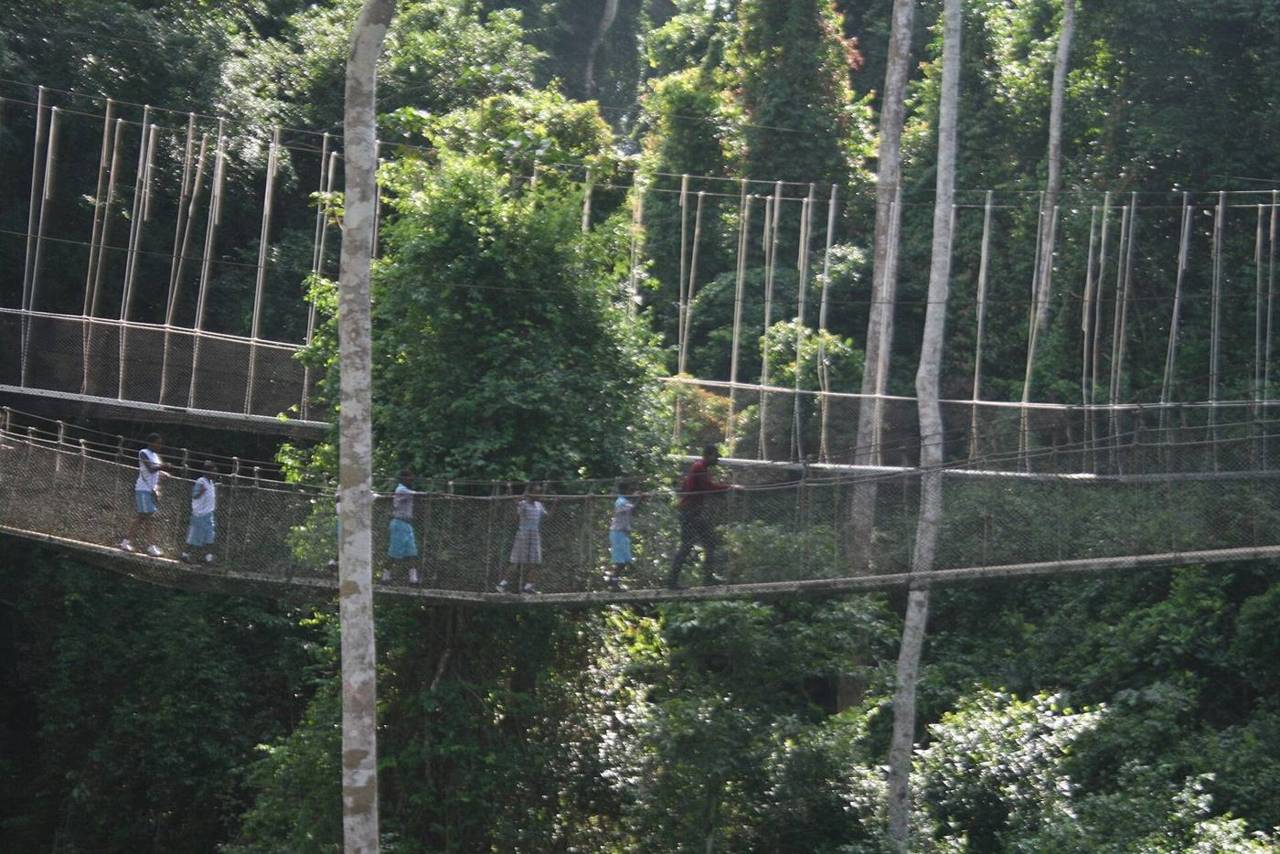
Kakum rainforest from above, with suspension bridges 40 metres up, and a night on stilts at Hans Cottage next to the crocodiles.
 4 daysEasy
Busua and Cape Three Points
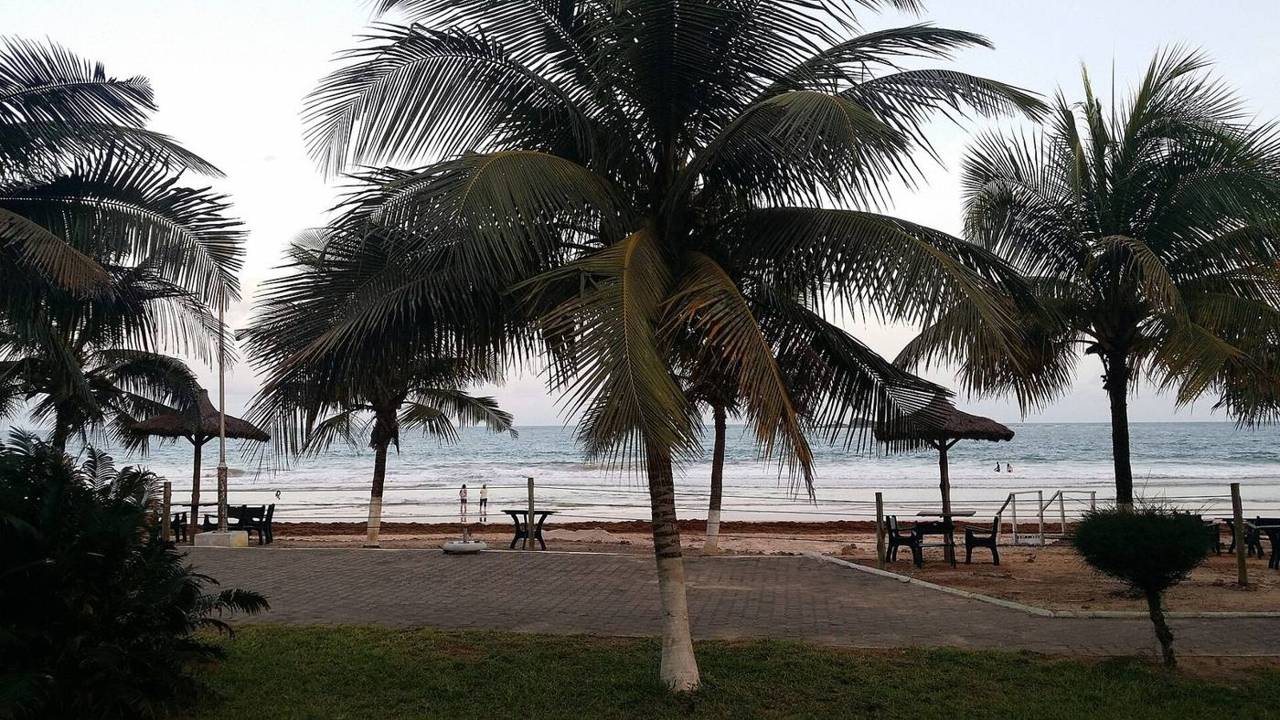
The quieter western coast: surfing at Busua, the Dutch fort at Dixcove, the palm beaches of Akwidaa and the lighthouse at Cape Three Points, Ghana's southernmost tip.
 3 daysModerate
Nzulezo and Ankasa
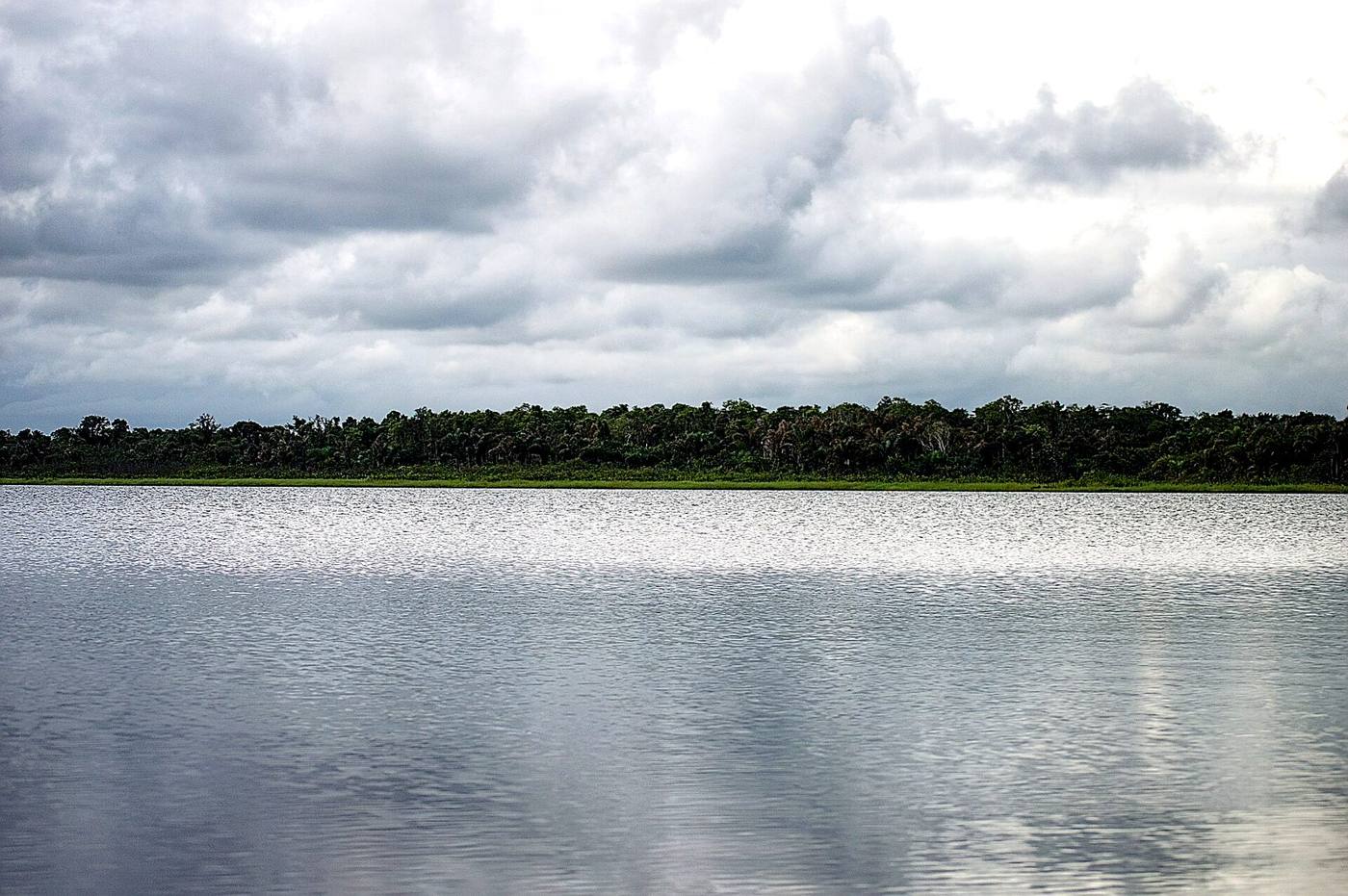
The stilt village of Nzulezo on Lake Amansuri, reached by canoe through raffia palms, and the primary forest of Ankasa, among West Africa's richest.