Byzantine Greece: Thessaloniki, Halkidiki and Kavala
A loop through northern Greece among Byzantine churches, mountain monasteries and the outline of Mount Athos seen from the sea, designed for the colder months.
- Athens
- Termopili
- Meteore
- Veria
- Calcidica
- Alistrati
- Kavala
- Thessaloniki
- Mount Olympus
Day by day
- Day 1
Arrival in Athens and heading north
This trip discovers northern Greece, less well known than the islands, following the traces of the Byzantine Empire: the suspended monasteries of Meteora, the small churches of Veria, the Mount Athos peninsula, the seaside town of Kavala and finally Thessaloniki, Greece's second city, with its Byzantine churches listed by UNESCO. It is a journey of mountains, mosaics, icons, monasteries, sea and good food.
For EU citizens a valid identity card is enough, as Greece is in the Schengen area. Accommodation charges a tax per room per night, varying with category and season. You need a car.
You fly into Athens. On the first day, on arrival, pick up the car and head north on the motorway across central Greece, among mountains, cotton and wheat plains and olive groves.
If you arrive early you can spend the first night in Athens and set off the next day, or stop along the way at Delphi, the sanctuary of Apollo on the slopes of Mount Parnassus, one of the most important places of ancient Greece, a UNESCO World Heritage Site.
In the evening sleep in a town along the way, such as Lamia, or in Athens if you preferred to stay.
Dinner is your first taste of Greek food: mezedes, small plates for sharing, Greek salad with feta and olives, souvlaki, meat skewers, and a glass of local wine.
Spend the night in Lamia or Athens.
Practical tip: the best time is April to June and September to October. In summer the plains are very hot and the north is crowded with Balkan tourists on the beaches of Halkidiki.
- Day 2
Thermopylae and Kalambaka
Today continue north to Kalambaka, at the foot of Meteora.
In the morning stop at Thermopylae, the pass between the mountains and the sea where, in 480 BC, King Leonidas of Sparta with three hundred Spartans and a few thousand other Greeks held off the huge Persian army of Xerxes for three days. Today the coastline has moved and the pass is no longer narrow, but there is a monument to Leonidas, with a bronze statue, and a visitor centre that tells the story of the battle with images and films. You can climb the hill of Kolonos, where the last Greeks fought, with a plaque recalling the epitaph of Simonides.
In the afternoon cross the Thessalian plain, one of the largest farming plains in Greece, to Kalambaka, a small town at the foot of enormous rock pillars.
At sunset go to one of the viewpoints over Meteora to watch the sun go down behind the rocks and the monasteries perched on top, turning red and orange.
In the evening have dinner in Kalambaka or in the village of Kastraki, right below the rocks.
Spend the night in Kalambaka or Kastraki.
Practical tip: the Thermopylae visitor centre charges entry: check opening times. In Kastraki there is accommodation with direct views of the Meteora rocks.
- Day 3
The monasteries of Meteora
Today visit the monasteries of Meteora, a UNESCO World Heritage Site and one of the most spectacular places in Greece.
Meteora is a group of enormous rock pillars of sandstone and conglomerate, rising up to about four hundred metres above the plain. From the fourteenth century Orthodox monks built monasteries on their summits, to live in isolation and safe from invasions. At first they climbed rope ladders and were hauled up in nets by winches; today there are steps cut into the rock and roads. Of the twenty four original monasteries, six are now inhabited by monks and nuns and open to visitors.
In the morning visit the Great Meteoron, the largest and oldest monastery, with a church with Byzantine frescoes, the old kitchen, the cellar and a museum. Then the monastery of Varlaam, with a frescoed church and a great water barrel.
In the afternoon visit the monastery of Roussanou, on a narrow rock, home to nuns, and the monastery of the Holy Trinity, reached by a long flight of steps, with a spectacular view over the valley. Then St Stephen's, the easiest to reach, by a bridge.
At sunset return to the viewpoints, or walk the old monks' paths among the rocks.
Spend the night in Kalambaka or Kastraki.
Practical tip: in the monasteries women must wear a long skirt, sometimes lent at the entrance, and everyone must cover their shoulders. Each monastery has a different closing day and a small ticket: check.
- Day 4
Veria and its small Byzantine churches
Today go to Veria, about two and a half hours north east of Kalambaka, across the mountains of Macedonia.
Veria is an ancient town on the slopes of Mount Vermio, with more than two thousand years of history. According to tradition the apostle Paul preached here on his second journey, and in the centre there is a small monument called St Paul's Steps. Veria is famous for its small Byzantine and post Byzantine churches, about forty of them, hidden among the houses, some with fourteenth century frescoes.
In the morning walk through the Jewish quarter of Barbouta along the Tripotamos river, with restored Ottoman houses and a synagogue. Then visit the fourteenth century church of the Resurrection of Christ, Anastasis Christou, with frescoes by painters of the Thessaloniki school, among the finest of the Palaiologan period.
In the afternoon, if you have time, visit Vergina, about twenty minutes away, ancient Aigai, the first capital of the kingdom of Macedon, a UNESCO World Heritage Site, with the underground museum of the royal tombs built inside the great mound, where the tomb attributed to Philip II, father of Alexander the Great, is displayed with gold and silver objects.
Then go up to the monasteries on the slopes of Mount Vermio, such as Panagia Soumela, rebuilt by refugees from Pontus.
Spend the night in Veria.
Practical tip: many of Veria's churches are locked and open on request or at limited hours: ask at the tourist office. The Vergina museum charges entry and closes on some days: check.
- Day 5
Halkidiki to the border of Mount Athos
Today go to the Halkidiki peninsula, south east of Thessaloniki, with three fingers of land stretching into the Aegean: Kassandra, Sithonia and Athos.
In the morning drive to Ouranoupoli at the start of the third peninsula, about three hours from Veria, through the countryside, pine forests and hills of Halkidiki. Along the way you pass near Stagira, birthplace of the philosopher Aristotle, with a park dedicated to him.
Mount Athos is an autonomous monastic republic within the Greek state, inhabited only by Orthodox monks, with twenty great monasteries founded from the tenth century onwards, a UNESCO World Heritage Site. To enter you need a special permit, the diamonitirion, issued in limited numbers, and a booking in the monasteries. Women may not enter the monastic republic, under a rule more than a thousand years old: this is why the monasteries are viewed from the sea.
In the afternoon, from Ouranoupoli, take a cruise along the western coast of Mount Athos. The boat keeps its distance from the shore but passes the great monasteries, such as Dochiariou, Xenophontos, Panteleimonos, the Russian monastery with green domes, and Simonopetra, built on a rock high above the sea.
In the evening have dinner in Ouranoupoli, with its Byzantine tower by the sea.
Spend the night in Ouranoupoli.
Practical tip: men who want to enter Mount Athos must apply for a permit well in advance: check the rules. The coastal cruise is paid: check times and prices.
- Day 6
The Alistrati caves and Kavala
Today head east into eastern Macedonia, to Kavala.
In the morning drive towards Serres, a town in the Strymonas river plain, then to the Alistrati caves, about two and a half hours from Ouranoupoli. The caves are a long system of karst galleries, with stalactites, stalagmites and white, red and brown crystal formations, including rare helictites, which grow in all directions. You follow a route of about a kilometre on lit walkways.
In the afternoon continue to Kavala, about an hour away, a seaside town built like an amphitheatre around its harbour, where according to tradition St Paul landed in 49 AD, bringing Christianity to Europe.
Visit the old town, the Panagia, on the headland, with paved lanes, colourful Ottoman houses, the Byzantine castle at the top with a view over the harbour and the island of Thasos, and the Imaret, a large nineteenth century Ottoman complex with domes built by Muhammad Ali, the pasha of Egypt, who was born in Kavala and whose birthplace can be visited. Then look at the great sixteenth century stone aqueduct with its arches crossing the town.
In the evening have dinner with fresh fish by the harbour.
Spend the night in Kavala.
Practical tip: the Alistrati caves charge entry and are visited with a guide at set times: check. Near Kavala is the site of Philippi, a UNESCO World Heritage Site, where St Paul preached.
- Day 7
Thessaloniki: Agia Sofia and the Rotunda of Galerius
Today go to Thessaloniki, about two and a half hours from Kavala, Greece's second city, on the Thermaic Gulf.
Thessaloniki was founded in 315 BC and was one of the most important cities of the Byzantine Empire after Constantinople. It has a unique group of early Christian and Byzantine monuments, a UNESCO World Heritage Site, with churches from the fourth to the fourteenth century.
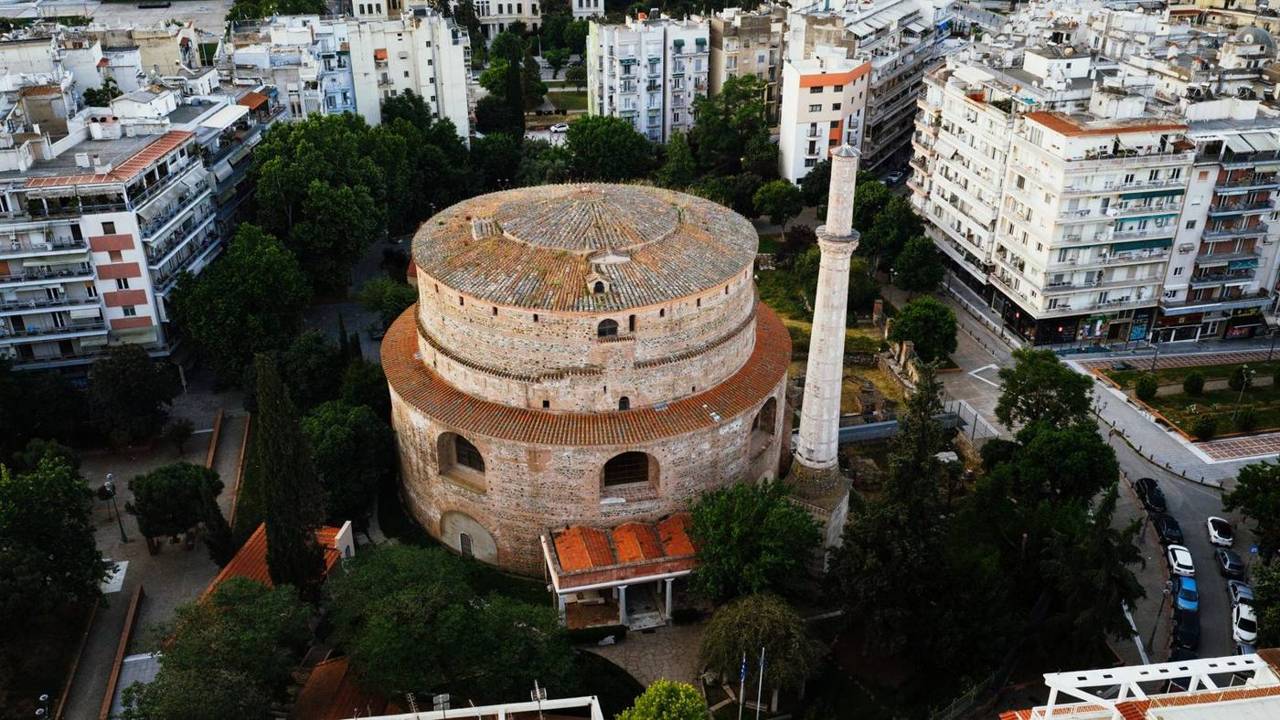
In the afternoon visit the Rotunda of Galerius, a huge circular building put up in the early fourth century by the Roman emperor Galerius, perhaps as a mausoleum, later turned into a church and then a mosque, with a minaret still standing. Inside are fourth or fifth century gold mosaics, among the oldest in Christendom. Nearby is the Arch of Galerius, with reliefs of his victories over the Persians.
Then visit the eighth century church of Agia Sofia, with its dome decorated with a great mosaic of the Ascension, and the basilica of St Demetrius, patron saint of the city, one of the largest churches in Greece, with seventh century mosaics and a crypt with the saint's tomb.
In the evening have dinner in Ladadika, near the harbour, an area of old nineteenth century warehouses turned into tavernas, with mezedes, fish, grilled meat and ouzo, the aniseed spirit.
Spend the night in Thessaloniki.
Practical tip: the churches are active places of worship: enter with shoulders and knees covered and respect services. The Rotunda charges entry: check opening times.
- Day 8
Thessaloniki: the walls of the upper town and the White Tower
Today discover more of Thessaloniki.
In the morning climb to the upper town, Ano Poli, the hillside quarter that survived the great fire of 1917, with steep lanes, colourful Ottoman and Macedonian houses, small churches and a view over the whole city and the gulf. Walk along the Byzantine walls up to the Heptapyrgion, a fortress with seven towers used as a prison until 1989. Also visit the fourteenth century Vlatadon monastery, still home to monks, and the small church of St Nicholas Orphanos, with very well preserved frescoes.
In the afternoon go down towards the sea and visit the archaeological museum, with gold objects from ancient Macedonia, or the Museum of Byzantine Culture, which tells of life in the Byzantine Empire through icons, mosaics, jewellery and everyday objects.
Then stroll along the seafront, the Nea Paralia, to the White Tower, the symbol of the city, a sixteenth century Ottoman tower with a museum on the history of Thessaloniki and a terrace at the top, and on to the great equestrian statue of Alexander the Great.
At sunset watch the sun go down over the gulf, with Olympus on the horizon on clear days.
Spend the night in Thessaloniki.
Practical tip: Thessaloniki is a university city with very lively nightlife: restaurants fill up late, after nine in the evening. The museums charge entry and close on some days: check.
- Day 9
Along the coast below Olympus and home
On the last day drive south along the coast below Mount Olympus to Athens, about five and a half hours, or fly home directly from Thessaloniki.
If you drive back, in the morning follow the coast of Pieria with its long beaches and stop at the archaeological site of Dion at the foot of Olympus, the sacred city of the Macedonians, dedicated to Zeus, with temples, baths, mosaics and a sanctuary of Isis in the woods, near springs and small ponds.
Then look up at Olympus, the highest mountain in Greece at 2,918 metres, home of the gods in mythology, its summits often wrapped in cloud.
In the afternoon continue through the Vale of Tempe, a narrow gorge between Olympus and Mount Ossa, with the Pineios river and a small church on the bank, then across Thessaly and central Greece to Athens.
Before leaving buy some souvenirs: olive oil, thyme honey, Macedonian wine, tsipouro, the northern spirit, Thessaloniki sweets such as bougatsa, filo pastry filled with custard, or a hand painted icon.
From Athens or Thessaloniki airports there are direct flights to many European cities.
Practical tip: if you fly from Thessaloniki, you can return the car there and avoid the long drive to Athens, checking the one way rental fee. The Dion site charges entry: check.
Right for travellers who already know Athens and the islands and want a different Greece, Orthodox and Ottoman, in the months when the south is shut for the season. Thessaloniki alone justifies the trip. The drawbacks are long hours on the road and the Meteora stop, which anyone who has done classical Greece will repeat; in winter pack a down jacket, it snows up north.
Before you go
- Documents and visa
- EU citizens need a valid identity card or passport, including on ferries, where ID may be checked at boarding. Other nationalities should check the Schengen rules.
- Health and vaccines
- No vaccines required. EU citizens should bring their EHIC; in summer protect yourself from the sun and drink plenty. Emergencies: 112.
- Money and payments
- Euro. Cards are accepted almost everywhere; every accommodation charges a fee per room per night, often paid on departure.
- Power sockets
- Types C and F, 230 volts.
- Time zone
- Eastern European Time (UTC+2), summer time (UTC+3) from late March to late October.
- Safety
- A safe country. In summer watch for wildfires and 112 alerts; in Athens, for pickpockets on the metro. Official advice: GOV.UK.
Information checked in November 2026 for Italian and EU citizens. Rules change: always check before you travel.
Variations
In 5 days: Thessaloniki, Veria and Vergina only, with a trip to Halkidiki.
In 12 days: add the island of Thasos from Kavala, or the Prespa lakes and Kastoria.
Frequently asked questions
Can women visit Mount Athos?
No, women may not enter the monastic republic. The monasteries can be seen from the sea on coastal cruises. Men need a special permit, issued in limited numbers.
Do I need a passport?
No: for EU citizens a valid identity card is enough, as Greece is in the Schengen area.
When is the best time to go?
April to June and September to October. In summer the plains are very hot and the Halkidiki beaches are crowded.
Indicative itinerary written by World Atlas. Before booking, check timetables, seasonal openings, documents and safety.
 10 daysEasy
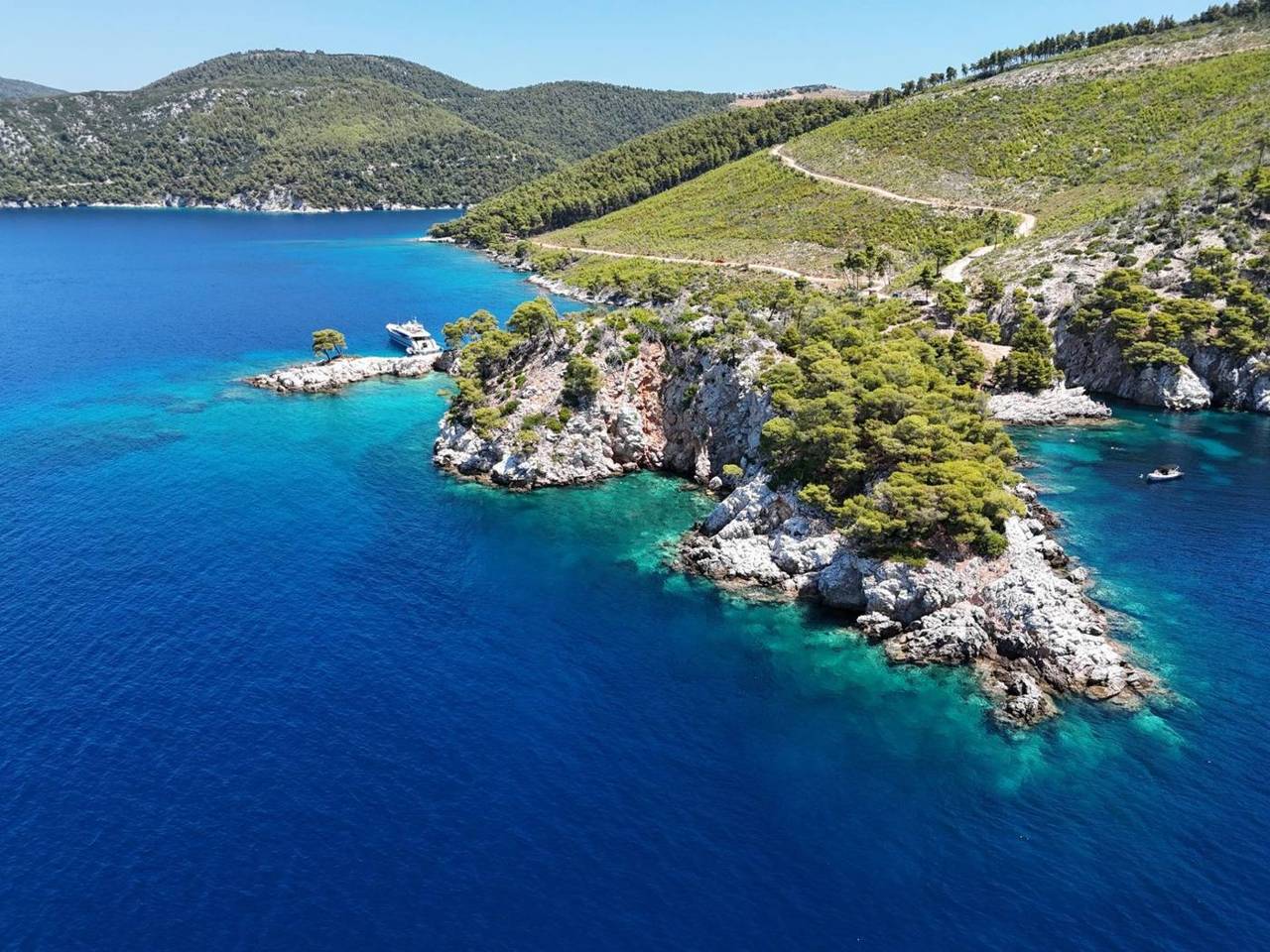
The Sporades: Alonissos, Skiathos and Skopelos
Three green islands in the western Aegean, with pine woods running down to the water, a marine park and a few trails up to the monasteries.
 8 daysEasy
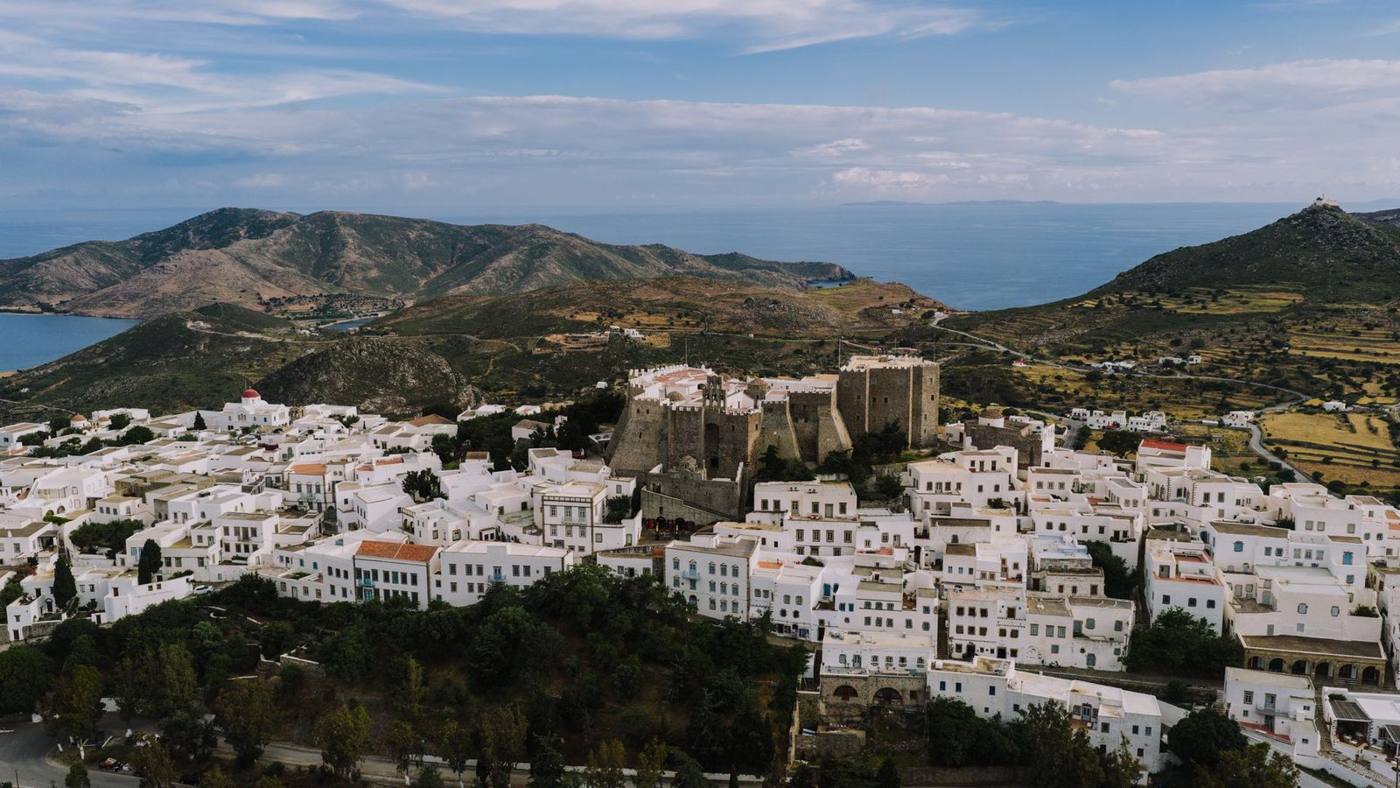
The Dodecanese by Gulet: Kos, Leros, Patmos and Kalymnos
A week aboard a wooden gulet sailing from Bodrum, among the smaller islands, roadless bays and the monastery of Patmos.
 9 daysEasy
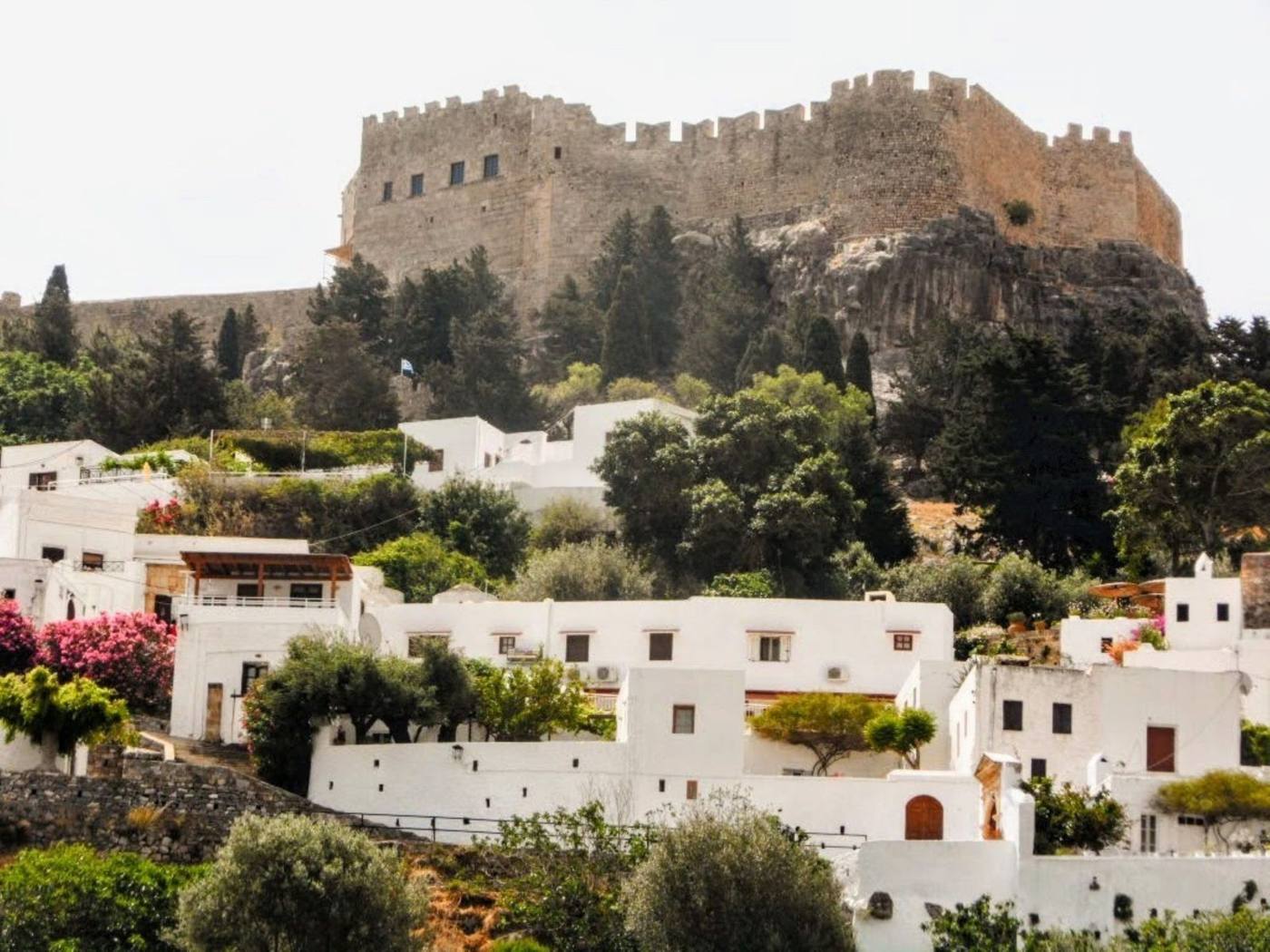
Rhodes by Car: Lindos, Kameiros and the South
One island explored at an easy pace, from the city of the Knights to the inland villages, with a hire car as the base.