The Lesser Cyclades: Sifnos, Milos, Folegandros, Amorgos and Paros
Two weeks of ferries through the less trodden Cyclades, leaving Mykonos and Santorini aside, with three nights on the islands that deserve it.
- Athens
- Sifnos
- Milos
- Folegandros
- Amorgos
- Paros
- Antiparos
- Athens
Day by day
- Day 1
Arrival in Athens, the Plaka and the Acropolis at sunset
This trip crosses five of the quieter Cyclades in two weeks, leaving out Mykonos and Santorini: Sifnos for its cooking and footpaths, Milos for its rocks and the boat trip, Folegandros for the Chora on the cliff, Amorgos for the monastery in the rock face, and Paros with nearby Antiparos. You travel only by ferry, with three nights on the islands that deserve them.
Before you go: for Italian citizens an electronic identity card valid for travel abroad is enough; the paper card is no longer valid since 3 August 2026. Other nationalities should check their own rules. In Greece accommodation charges a nightly tax that varies with category and season: check the amount when you book. In summer the wildfire risk is high: keep your phone's location services on to receive GR-alert warnings and, in an emergency, call 112.
From the airport the centre is reached by metro line 3 to Syntagma. Stay between Plaka, Monastiraki and Koukaki: from here the port of Piraeus is half an hour away on metro line 1.
In the afternoon walk through the Plaka and climb to Anafiotika, the white houses beneath the walls of the Acropolis. At sunset go up the rock of the Areopagus or Philopappos Hill to watch the Parthenon light up; the stone is smooth, so wear shoes with a good grip.
Practical tip: buy the tickets for every ferry on the route today, at least for July and August, and save the boarding passes on your phone. Check the departure gate number on each one, because Piraeus has many.
- Day 2
Ferry to Sifnos, Kamares and Apollonia
Leave early for Piraeus. Ferries for the western Cyclades leave from the quays near the metro station, but the port is huge: check the gate number on your ticket and arrive at least an hour before. The crossing takes a few hours, depending on the ship. Fast boats arrive sooner but roll more in the wind; conventional ferries have outside decks where you can sit in the open air.
You land at Kamares, the port of Sifnos, at the end of a long, narrow bay, with a sandy beach and terraced hills all around. Go up by bus or taxi to Apollonia, the main village, in the centre of the island: it is the most convenient place to stay, because buses leave from here for almost every village.
In the afternoon walk along the main street, the Steno, a paved lane with white houses, blue-domed churches and terraces. Carry on on foot to Artemonas, the next village, with its grand houses and windmills on the hill.
Sifnos is famous all over Greece for its cooking. The classic dish is revithada, chickpea soup cooked for hours in a clay pot in a wood oven, traditionally on Sundays. Also try mastelo, lamb or kid cooked with red wine, and the local cheeses.
Practical tip: on Sifnos buses are few and taxis even fewer; download the timetables when you arrive and, if you want more freedom, hire a scooter or a small car for a day.
- Day 3
Sifnos on foot: Kastro, the Seven Martyrs and Chrysopigi
Today is a day for footpaths. Sifnos has a network of old waymarked mule tracks that link the villages between dry stone walls, olive groves and white chapels. The finest leaves Apollonia and heads east down to Kastro, the old capital, in about an hour of downhill walking.
Kastro is a fortified village built on top of a rock above the sea: the houses form a continuous wall, with narrow lanes inside, arches, outside staircases and Venetian coats of arms over the doors. Walk to the edge of the village and look down: on an isolated rock in the sea stands the little church of the Seven Martyrs, reached by steps cut into the stone. In summer many people swim from the rocks below the church.
After lunch take the bus or a taxi to the south coast and the monastery of Chrysopigi, a white church built on a small rocky peninsula joined to the shore by a little bridge. It is the symbol of the island. Nearby are the beaches of Apokofto and Faros, quiet and sheltered.
Sifnos is also the island of pottery: in the villages of Kamares, Vathi and Platis Gialos potters' workshops still operate, with kilns and wheels. Step in to watch and, if you want a souvenir, choose a pot for revithada.
Practical tip: carry water and a hat even on short paths, because there is almost no shade and in summer the sun is strong by mid morning.
- Day 4
From Sifnos to Milos, Plaka and the catacombs
In the morning take the ferry from Kamares to Milos, a short crossing. You arrive at Adamas, the main port, in one of the largest natural bays in the Mediterranean, which is in fact an ancient volcanic crater flooded by the sea. Milos is a volcanic island: that is why its coasts have white, red, yellow and grey rocks, caves and arches carved by the sea.
For three nights choose Adamas, handy for boats and buses, or Pollonia, a quieter fishing village in the north-east. To get around it is worth hiring a car or a quad: many beaches are at the end of dirt roads.
In the afternoon go up to Plaka, the main town, on the hill above the bay. Just below the village are the early Christian catacombs, cut into the rock in the first centuries after Christ: check prices and times. Nearby is the spot where in 1820 a farmer found the statue of the Venus de Milo, now in the Louvre in Paris, and the remains of the Roman theatre, with a view over the bay.
At sunset climb to the castle of Plaka, at the top of the hill, to watch the sun go down over the gulf. Then have dinner in one of the lanes of the village: try pitarakia, small fried cheese pies, and the fish caught that day.
Practical tip: sunset from the castle of Plaka is very popular; go up at least half an hour early and bring a light jacket, because it is often windy up there.
- Day 5
Milos by car: Sarakiniko, Klima and Firopotamos
Start early at Sarakiniko, on the north coast, before the coaches arrive. Here the volcanic rocks are brilliant white, smoothed by the wind into waves and curves: it looks like a lunar landscape ending in a deep blue sea. You walk over the rocks to a small inlet where you can swim. There is no shade, so early morning is the best time.
Not far away is Papafragas, a narrow channel between rock walls that leads to a tiny beach: look at it from above, because the way down is steep. Carry on to Mandrakia, a small fishing harbour with boat shelters cut into the rock.
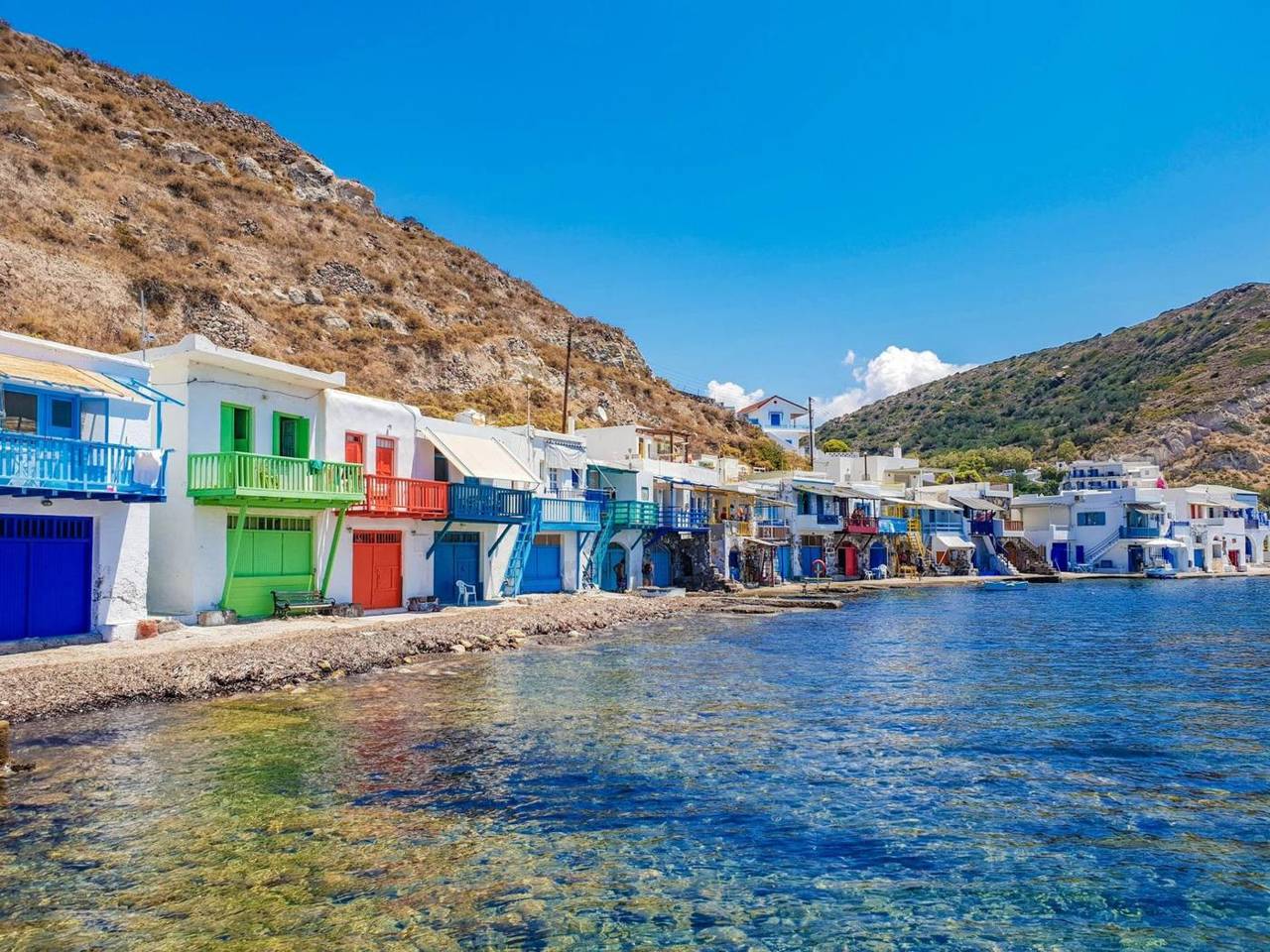
In the afternoon go to the west side of the bay, to Klima, the most photographed fishing village on the island. The houses are built on the water: on the ground floor are the syrmata, boathouses with doors painted red, blue, green and yellow, and above them the living quarters. Walk along the lane behind the houses and look at the clear water beneath the doors.
Finish at Firopotamos, a small sheltered bay with a white church on a headland and old boathouses. The water is calm and clear, good for swimming even when the wind blows.
Practical tip: families still live in Klima; do not go into the boathouses or onto private terraces for photos, and park in the space at the top of the village. Walk down from there, it only takes a few minutes.
- Day 6
Around Milos by boat to Kleftiko
Today you go out by boat around the island, the best way to see the south-west coast, the wildest part. Almost all boats leave Adamas in the morning and return in the late afternoon; there are traditional caiques, sailing boats and faster RIBs. Choose the pace you prefer and check prices and times the day before.
The main stop is Kleftiko, a bay of white sea stacks, arches and caves that can only be reached from the sea. The name comes from kleftes, the pirates and rebels who, according to tradition, hid here. The boats stop for a long time: you swim between the rocks, pass under the arches and go into the caves with their turquoise water.
On the way the boat follows other beaches that cannot be reached by land or only with difficulty, such as Gerakas, and passes Sykia, a cave with a collapsed roof where the light falls onto the water. Many boats also stop for lunch on board and for a second swim in a sheltered bay.
In the evening return to Pollonia or Adamas for your last dinner on the island. If you still have energy, take a stroll along the harbour front as the lights come on.
Practical tip: the trip depends on the wind; with a strong meltemi from the north the boats change course or stay in port. That is why you should book the boat for your second full day on Milos, so you can move it to the day before or after.
- Day 7
From Milos to Folegandros, the Chora on the cliff
Take the ferry from Adamas to Folegandros, one of the smallest and most authentic of the Cyclades. You land at Karavostasis, the port, a bay with a few houses, and go up by bus to the Chora, the main village, in a few minutes. Buses usually wait for the ships to arrive.
The Chora of Folegandros is one of the most beautiful villages in the Cyclades. It is built on the edge of a cliff that drops sheer into the sea, high and vertical. There are no cars in the centre: the white houses look onto three little squares in a row, shaded by large trees, with churches, bougainvillea and tables outside.
The oldest quarter is the Kastro, the medieval castle: it is not a fortress but a group of houses joined to one another, forming an outer wall facing the sea. Inside are narrow lanes and stone stairways with colourful wooden balconies.
For three nights stay in the Chora: everything can be done on foot and in the evening it is the liveliest place on the island, though it stays calm compared with the famous islands. Otherwise choose Karavostasis, handy for boats and the sea.
For dinner try matsata, handmade pasta served with rooster or rabbit stew, the island's typical dish. Practical tip: on the small islands cash machines are few and in summer they can run empty, so arrive on Folegandros with some cash in your pocket.
- Day 8
The climb to the Panagia and the village of Ano Meria
Start the day by climbing to the church of the Panagia, the white church of the Virgin on the hill above the Chora. The path zigzags up, well kept, and takes about twenty minutes. From the top you can see the whole Chora, the cliff and the open sea; early in the morning the light is softer and it is cooler.
Then take the bus or walk along the main road to Ano Meria, in the north-west. It is not a real village but a string of farms scattered along the ridge of the island, among terraced fields, dry stone walls, round threshing floors and small chapels. Here you understand how the families of Folegandros lived, from farming and herding.
In Ano Meria there is a small folk museum in a farmhouse, with tools, furniture and everyday objects: check prices and times, because it opens only in the summer months.
In the afternoon walk down from Ano Meria to one of the beaches below the road, such as Angali or Agios Georgios, or return to the Chora to rest. At sunset walk along the edge of the cliff, where there are small viewpoints with benches. In the evening the Chora fills with people again, and the squares are the place to be.
Practical tip: the road to Ano Meria has no pavement and cars drive fast; if you walk, use the waymarked paths that run parallel to the road. They are quieter and the views are better.
- Day 9
The beaches of Folegandros on foot and by caique
Today is for the sea. Folegandros has few roads and many beaches can only be reached on foot or by caique, the scheduled boat that shuttles along the coast. This keeps the crowds away even in high season.
From Karavostasis the boat leaves for Katergo, the finest beach on the island, a strip of white shingle below a small peninsula, with turquoise water and an islet opposite. There is a path overland, but it is long and shadeless, so the boat is better. There are no facilities: bring water, food and an umbrella if you have one.
Otherwise take the bus to Angali, on the west coast, a bay with a few tavernas. From here a coastal path leads in about twenty minutes to Agios Nikolaos, with a chapel above the beach and tamarisks giving shade, and then to Livadaki. Other boats sail round the island and stop at the coves of the south coast.
In the late afternoon return to the Chora for your last evening. Sit in one of the squares and watch the evening stroll: on Folegandros evening life happens entirely here, among families, young people and travellers.
Practical tip: tomorrow morning, before you leave, check the exact time of the ferry to Amorgos, because there is often a change and times can shift at the last minute; the port agencies send updates by text message.
- Day 10
The journey to Amorgos and Katapola
Today is a transfer day. Direct links between Folegandros and Amorgos are rare: you usually change ship at Naxos or Santorini, or take a ship that calls at many islands. The journey can take most of the day; treat it as a cruise through the Cyclades, with the outside deck and the islands sliding past.
Amorgos is the easternmost of the Cyclades, long and narrow, with mountains plunging into the sea. It has two ports: Katapola, in the south-west, the larger one, and Aegiali, in the north. Stay in Katapola or the Chora for the first nights, because they are close to the monastery and the southern paths.
If you arrive in the afternoon, walk along the harbour of Katapola, a deep bay with three small villages around it and fishing boats. On the hill above the village are the remains of ancient Minoa, one of the island's three ancient cities, reached on foot in about an hour along an old path.
In the evening go up to the Chora, the main village, high on the mountain: it is a white village with narrow lanes, windmills on the ridge and a Venetian fort in the middle. For dinner try patatato, kid stew with potatoes, and rakomelo, warm spirit with honey.
Practical tip: if the stopover is long, leave your bag at the port's left luggage and take a walk round the town, but be back at least half an hour early. Ships sometimes arrive ahead of schedule.
- Day 11
The monastery of Hozoviotissa and Agia Anna
Start early in the morning with the monastery of Panagia Hozoviotissa, the symbol of Amorgos. It is a slender white building, long and narrow, wedged into the rock face about three hundred metres above the sea, on the east coast. It was founded in the eleventh century and keeps an icon of the Virgin that, according to tradition, arrived by sea from Palestine.
From the car park on the road you climb on foot up a long stairway of a few hundred steps. Inside, the monks welcome visitors in a small sitting room and offer rakomelo and loukoumi. The rooms are cramped, so people enter in small groups. The rules are strict: long trousers for men, long skirts for women and covered shoulders. Check the opening hours, which are short and vary through the day.
Then go down to the bay of Agia Anna, below the monastery, with a small white chapel on the rock and deep blue water. It became famous because Luc Besson's film Le Grand Bleu was shot here in 1988. There is no sand: you get into the water from the rocks, wearing water shoes.
In the afternoon return to the Chora and walk through the lanes to the windmills. If you still have energy, walk part of the old path that leaves the Chora and drops towards the monastery, with views of the sea.
Practical tip: go to the monastery as soon as it opens, before the heat, and carry a scarf or light trousers in your bag: there are sometimes clothes to borrow at the entrance, but it is not guaranteed.
- Day 12
Northern Amorgos: Aegiali, Langada and Tholaria
Today move to the north of the island, around the bay of Aegiali, by bus or hire car. The road runs along the ridge, with the sea on both sides. Aegiali is the island's second port, with the longest beach on Amorgos, sand and shallow water, good for a quiet swim.
Above Aegiali are two mountain villages, Langada and Tholaria, linked by a loop path between walls, terraces and chapels. Langada is a village of white houses and flowery lanes clinging to the mountain; from here a path also leads to the church of Theologos and to the summit of Mount Krikelas, the highest on the island. Tholaria sits on a saddle, with views of the coast on both sides.
The loop between Aegiali, Langada and Tholaria takes half a day, with stops in the villages for a coffee or lunch. The paths are waymarked and well kept, but stony, so you need light walking shoes.
Amorgos is also known for psimeni raki, spirit cooked with honey and spices, drunk warm in winter and at room temperature in summer. Also try the goat's cheeses and the rusks with tomato, served as a starter.
If you prefer the sea, on the south-west coast is the bay of Kalotaritissa, with the wreck of the ship Olympia, which also appears in the film. Practical tip: get a map of the Amorgos footpaths at the start of your stay, because some junctions are unclear.
- Day 13
From Amorgos to Paros, Parikia and the evening in Naoussa
In the morning take the ferry to Paros, often calling at Naxos. Paros is a larger and livelier island than the previous ones, in the centre of the Cyclades: after so many quiet villages, here you find bustle, shops and places to go out in the evening.
You land at Parikia, the main town and port. A few minutes from the quay is the church of Panagia Ekatontapyliani, the Virgin of a Hundred Doors, one of the oldest churches in Greece, with origins that tradition dates to the fourth century and an early Christian baptistery. Inside it is cool and silent. Check prices and times for the small Byzantine museum next door.
Then walk through the lanes of the old town to the Venetian castle, built with pieces of marble from ancient temples: columns and capitals can still be seen in the walls. In antiquity Paros was famous for its white marble, used for celebrated sculptures.
In the evening take the bus to Naoussa, the fishing port on the north coast. The little harbour with its coloured boats and the remains of a small Venetian castle on the water is one of the most beautiful places on the island at sunset. The lanes around it are busy until late.
For two nights stay in Parikia, for the convenience of the port and buses, or in Naoussa if you prefer a livelier atmosphere.
Practical tip: buses on Paros are frequent, but in the evening there are fewer; check the time of the last bus from Naoussa to Parikia before you sit down to dinner.
- Day 14
Lefkes, the Byzantine path and Antiparos
In the morning go up inland to Lefkes, the island's old capital, built on the hill for protection from pirates. It is a village of white houses and lanes paved in marble, with a large church and views over the olive groves to the sea.
From Lefkes the Byzantine path sets off, an old paved mule track that drops towards the east coast to Prodromos, through fields, olive groves and small churches, in about an hour. It is one of the finest paths in the Cyclades and is easy to walk. From Prodromos take the bus back to Parikia.
In the afternoon go to Antiparos, the small island opposite Paros. From the port of Pounta the car ferry crosses in a few minutes; in summer there are also direct boats from Parikia. Antiparos has a single village, with one main street, white houses and the remains of the Venetian castle, where the houses form a ring around a courtyard.
If you have time, take the bus or a taxi to the cave of Antiparos, in the middle of the island, with stalactites, stalagmites and a long stairway going down into the rock: check prices and times. Otherwise stay on the beach near the port and watch the sunset over the shallow water.
Return to Paros in the evening on the last boat for your final dinner on the islands. Practical tip: the stairway in the cave of Antiparos is long and damp; wear closed shoes and bring a sweater, because it is cool underground even in August.
- Day 15
Back to Piraeus and a last evening in Athens
Take the ferry from Parikia to Piraeus. Ships usually leave in the morning and arrive in the early afternoon. With rough seas the journey can take longer, which is why it matters not to have your flight home the same day: you have a whole day of margin before going home.
From Piraeus take metro line 1 to Monastiraki or Thissio and leave your bags at the hotel. In the afternoon visit the Acropolis Museum, one of the finest in Greece, at the foot of the hill: it holds the original statues and reliefs of the Parthenon and of the Erechtheion temple, with the Caryatids. On the top floor the Parthenon frieze is laid out as on the temple, with glass walls looking straight at the Acropolis. Check prices and times.
Towards evening walk along the pedestrian promenade of Dionysiou Areopagitou, which curves around the Acropolis, and carry on to Thissio, with terraces and views of the floodlit temple.
For your last dinner go to the Psyrri or Koukaki district: order meze, small plates to share, such as tzatziki, meatballs, squid and aubergines, and finish with Greek yoghurt with honey and walnuts.
Practical tip: if you want to climb the Acropolis tomorrow, buy your ticket online today with an entry time on the official Ministry of Culture website and book the first morning slot, to avoid the heat and the queues.
- Day 16
The Acropolis in the morning and the flight home
If your flight leaves in the afternoon, climb the Acropolis at opening time. You enter through the Propylaea, the monumental gateway, and reach the Parthenon, the temple dedicated to Athena in the fifth century BC, then the Erechtheion with the porch of the Caryatids. From the rock you see all of Athens down to the sea. An hour and a half gives you time to see everything calmly. Remember shoes with a good grip, because the marble is slippery.
From the Acropolis walk down to the metro station and take line 3 to the airport. Allow at least three hours between leaving the centre and your flight.
In these sixteen days you have seen the Cyclades as they used to be, one at a time: the cooking and footpaths of Sifnos, the white rocks of Sarakiniko and the caves of Kleftiko on Milos, the Chora on the cliff of Folegandros, the monastery in the rock face on Amorgos, the marble villages of Paros and the quiet village of Antiparos. The trip is made only by ferry: you need flexibility, because times change and the wind can cancel sailings.
When to go: the best time is from late April to June and in September, with the sea already warm, the islands in flower and fewer crowds. In July and August the meltemi blows, the strong north wind that whips up the sea and can stop the boats, and prices rise. From November to March many lodgings and tavernas on the small islands are closed and ships are few.
Practical tip: always keep a day of margin between the last ferry and your international flight, as in this programme.
This is the trip for those who have already seen Santorini and want the Cyclades as they used to be, with good food on Sifnos and the strongest landscapes on Milos and Amorgos. The AnM programme leaves the choice of islands to the group, and this is one possible combination. The drawback is the ferries: changing timetables, long stopovers and the meltemi in July and August, so flexibility and a spare day before the flight are needed.
Before you go
- Documents and visa
- EU citizens need a valid identity card or passport, including on ferries, where ID may be checked at boarding. Other nationalities should check the Schengen rules.
- Health and vaccines
- No vaccines required. EU citizens should bring their EHIC; in summer protect yourself from the sun and drink plenty. Emergencies: 112.
- Money and payments
- Euro. Cards are accepted almost everywhere; every accommodation charges a fee per room per night, often paid on departure.
- Power sockets
- Types C and F, 230 volts.
- Time zone
- Eastern European Time (UTC+2), summer time (UTC+3) from late March to late October.
- Safety
- A safe country. In summer watch for wildfires and 112 alerts; in Athens, for pickpockets on the metro. Official advice: GOV.UK.
Information checked in November 2026 for Italian and EU citizens. Rules change: always check before you travel.
Variations
In 10 days: Athens, three nights on Milos, three on Folegandros and two on Paros, leaving out Sifnos and Amorgos.
In 20 days: add Serifos between Athens and Sifnos and the Small Cyclades, such as Koufonissi, between Amorgos and Paros, with two extra nights on Naxos.
Frequently asked questions
Do you need to book the ferries?
In July and August yes, at least for routes with few sailings, such as Folegandros and Amorgos. In spring and September you can often find a place a few days ahead, but there are fewer sailings. Summer timetables usually come out in spring and can change, so check again the day before.
Do you need a car on the islands?
It is not essential. On Sifnos, Folegandros and Paros buses link the main villages. On Milos, however, a car or quad helps a lot, because the beaches are scattered and many roads are unpaved. Hire locally, only for the days you need.
What happens if the wind stops the ferries?
With a strong meltemi, especially in July and August, some ships are cancelled or delayed. The company moves you onto the first available sailing. That is why the programme leaves a day in Athens before the flight; do not cut that margin.
Indicative itinerary written by World Atlas. Before booking, check timetables, seasonal openings, documents and safety.
 6 daysEasy
Corfu and Paxos
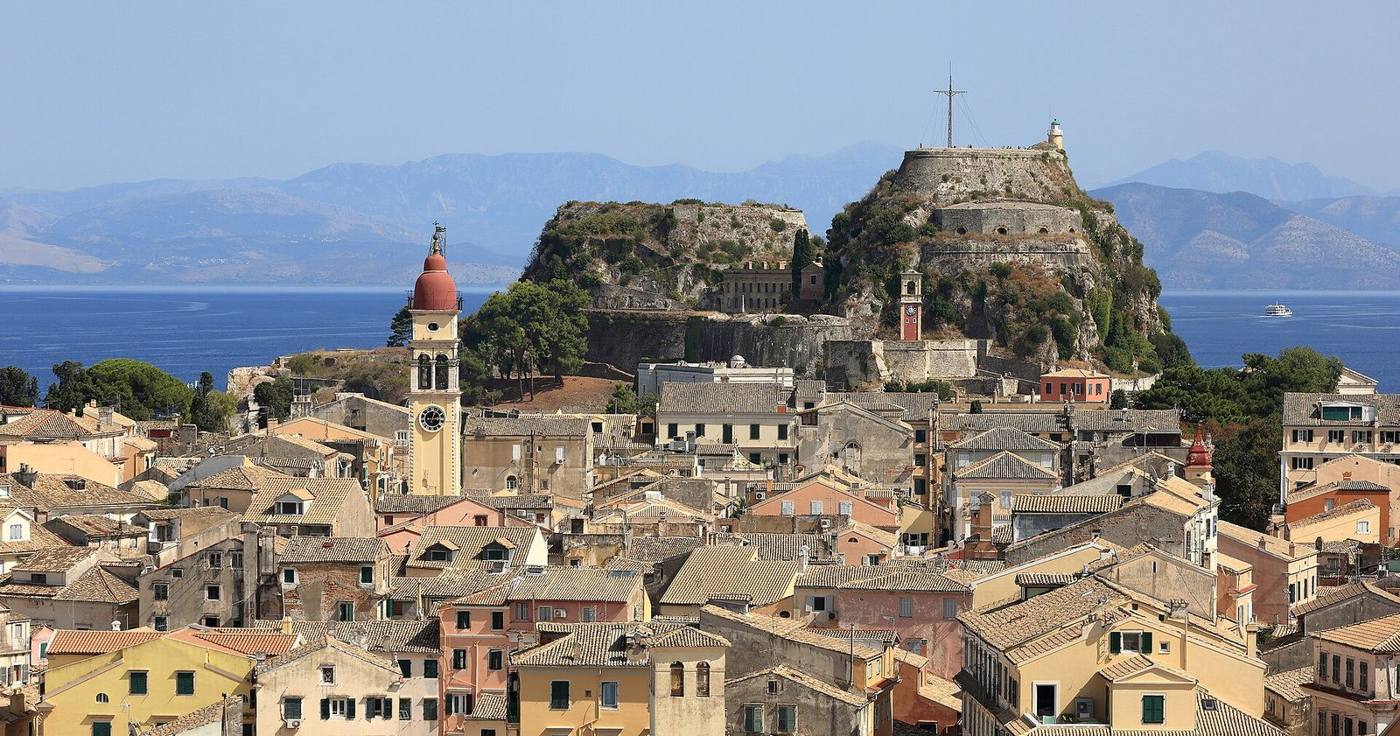
The greenest Ionian islands: Corfu old town (UNESCO) with its two Venetian fortresses and the Liston, the Achilleion palace, the bays of Paleokastritsa, the north-east coast up to Kassiopi, then Paxos with its olive groves and the white beaches of Antipaxos.
 5 daysEasy
Mount Pelion, mountain villages and beaches
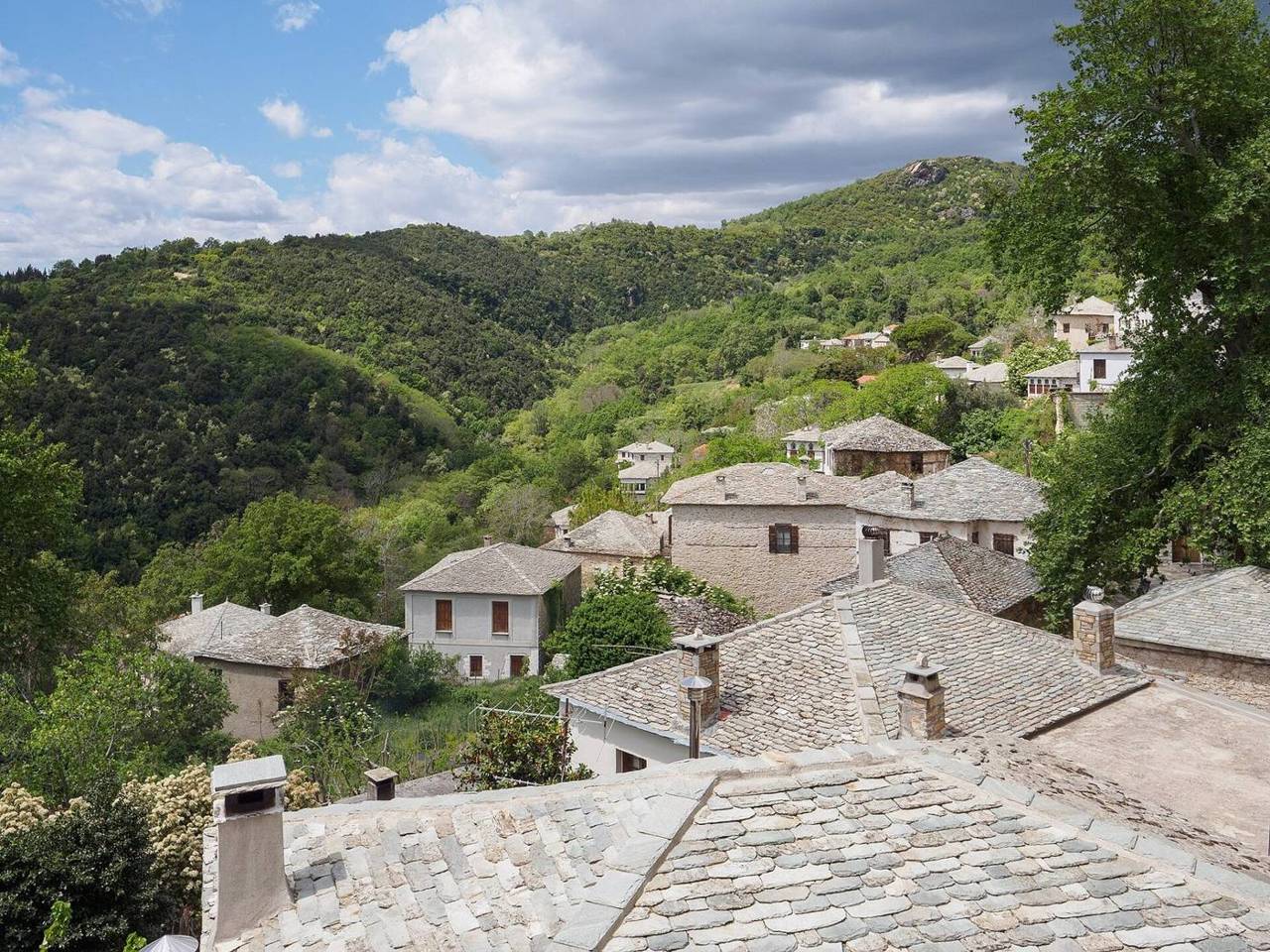
The mountain of the centaurs between the Gulf of Volos and the Aegean: the stone villages of Makrinitsa and Portaria, chestnut and beech woods, old cobbled mule tracks, Tsagarada and the beaches of Damouchari and Mylopotamos, and the little steam train to Milies.
 7 daysEasy
Lefkada and the Epirus coast: Parga and Sivota
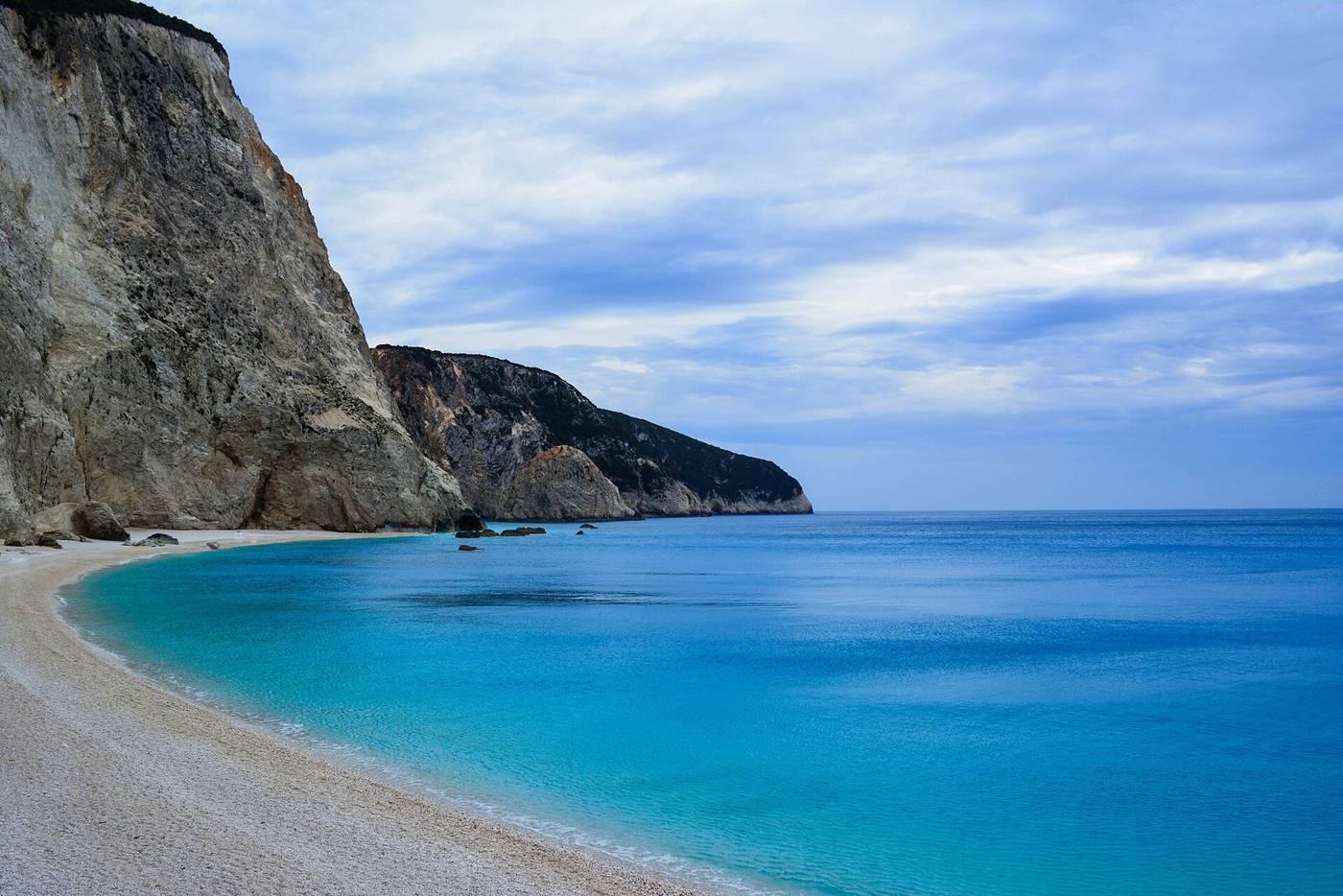
The turquoise sea of western Greece by car: Lefkada, linked to the mainland by a bridge, with Porto Katsiki and Egremni below the white cliffs, the islands of Meganisi and Kalamos by boat, then Parga with its Venetian castle, Sivota and the springs of the Acheron river.