Lefkada and the Epirus coast: Parga and Sivota
The turquoise sea of western Greece by car: Lefkada, linked to the mainland by a bridge, with Porto Katsiki and Egremni below the white cliffs, the islands of Meganisi and Kalamos by boat, then Parga with its Venetian castle, Sivota and the springs of the Acheron river.
- Preveza
- Lefkada
- Porto Katsiki
- Nydri
- Meganisi
- Parga
- Sivota
- Acheron
Day by day
- Day 1
Arriving in Preveza and Lefkada town
This trip takes you to the Ionian coast of mainland Greece and the island of Lefkada, which you reach by car without a ferry. It is an area of turquoise sea, white cliffs, olive covered hills and small harbours, with cold rivers flowing down from the mountains of Epirus. Over seven days you see the beaches of Lefkada's west coast, the island of Meganisi, Cape Lefkatas, Parga, the springs of the River Acheron and Sivota.
Preveza airport, known as Aktion, has flights from Italy and other European cities in summer. From here Lefkada is about half an hour's drive. The island is linked to the mainland by a short causeway and a small swing bridge that opens to let boats through.
At the entrance to the island you see the fortress of Santa Maura, built in the Middle Ages and later strengthened by the Venetians and Turks, with walls rising from the water. Soon after you reach Lefkada town, with a marina full of sailing boats and a centre of pedestrian lanes.
The houses here have an unusual look: the ground floor is masonry, while the upper floors are often clad in coloured metal sheeting, a way of building light to withstand the frequent earthquakes in the area. The churches have iron bell towers for the same reason.
In the evening stroll along the main street and have dinner by the harbour.
Spend the night in Lefkada.
Practical tip: Greece is in the Schengen area and EU citizens can travel with a valid national identity card. Accommodation charges a nightly tax that varies with season and category: check the amount when you book.
- Day 2
The west coast: Kathisma, Egremni and Porto Katsiki
Today you discover Lefkada's west coast, the most spectacular on the island. The road runs high along the hills, with constant views of the open sea, and drops to long beaches of white sand and pebbles framed by limestone cliffs. The water ranges from turquoise to deep blue.
The first stop is Kathisma, a long, easily reached beach where the sea deepens quickly. It suits a morning of swimming and relaxing, with plenty of facilities and, on windy days, paragliders floating down from the hills above.
Then continue south to Egremni, one of the most beautiful beaches in Greece, at the foot of a very high cliff. After the 2015 earthquake the long staircase down was damaged, and in some years the beach is only reachable by boat: check the situation before you go.
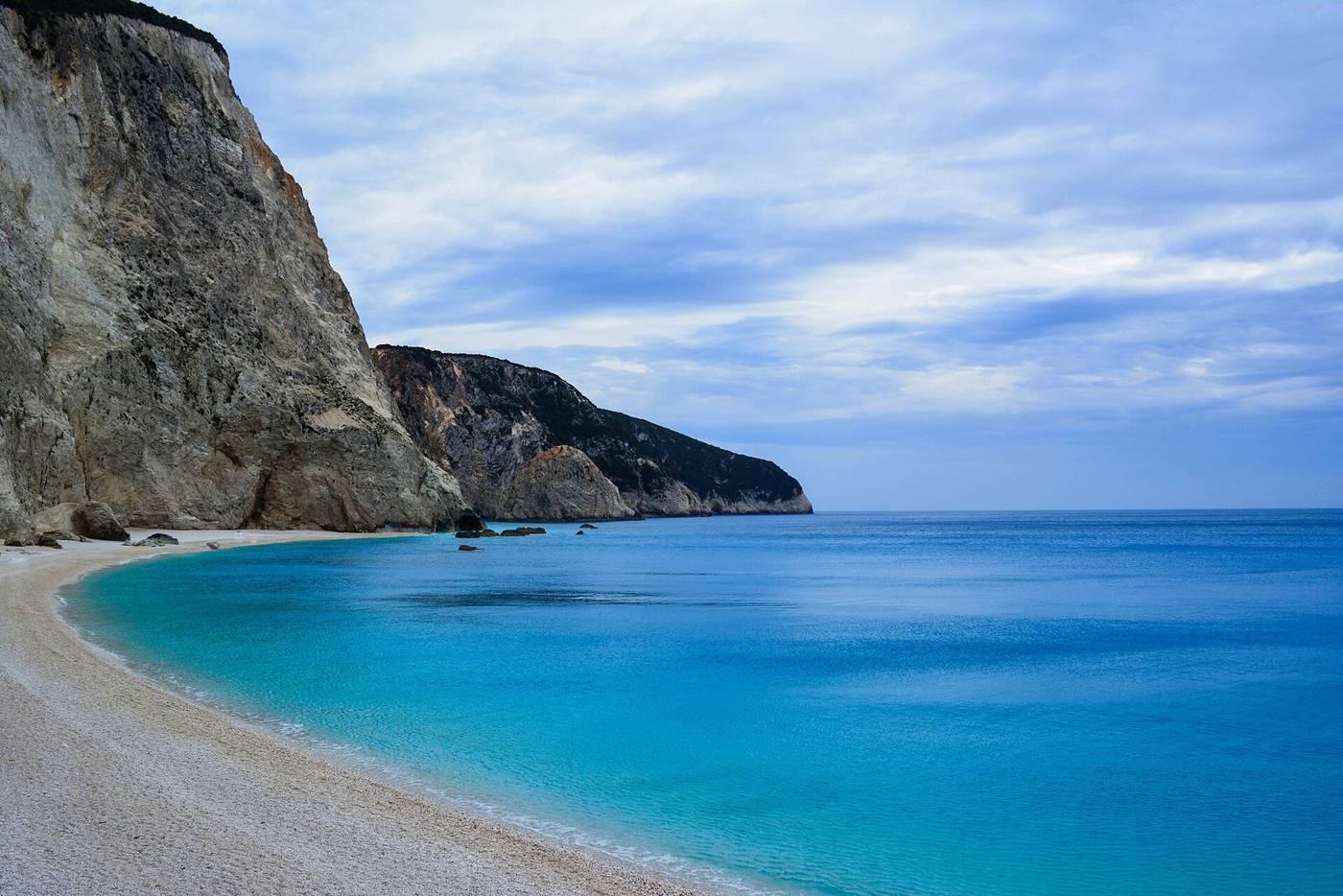
In the afternoon reach Porto Katsiki, at the south west tip of the island. A wooden staircase leads down the cliff to a beach of white pebbles beneath pale rock walls tens of metres high. The colour of the sea is incredible, especially late in the afternoon.
In the evening return to town or stay in one of the hillside villages on the west coast, such as Agios Nikitas, a small seaside village.
Practical tip: in summer the west coast beach car parks fill up early. Set off early, take water and a parasol, and on days of strong north westerly wind choose the more sheltered east coast beaches.
- Day 3
By boat from Nydri to Meganisi
Today you go to Nydri, on the east coast of Lefkada, about half an hour from town. It is the main harbour for boat trips among the small islands of the inland sea, a stretch of calm water between Lefkada and the mainland, with green hills and sheltered bays.
Boats and small private craft leave the harbour for Meganisi, a quiet island with three villages, deep bays and crystal clear water. Along its coast you visit the Papanikolis cave, a large sea cave where, according to tradition, a Greek submarine hid during the Second World War. There are then swimming stops in coves reachable only from the sea.
The boat also passes close to small private islands such as Skorpios, covered in pines, and Madouri, with a neoclassical villa on the shore. You cannot land, but you see them well from the boat.
If you prefer freedom, you can hire a small motorboat in Nydri that does not require a licence, to explore the inland sea's bays on your own, respecting the rules and the weather.
In the afternoon return to Nydri and take a short walk to the Dimosari waterfalls, a few kilometres inland, with a pool of cool water among the trees.
Spend the night in Nydri or nearby.
Practical tip: if you hire a boat without a licence, ask for a clear briefing on the area and the weather, stay close to the coast and return before the wind picks up, usually in the afternoon.
- Day 4
The south of the island, Vasiliki and the Cape Lefkatas lighthouse
Today you head to the south of Lefkada. The road crosses olive covered hills and small mountain villages such as Karya, known for hand embroidery, and Englouvi, one of the highest villages on the island, where lentils are grown.
The first stop is Vasiliki, a fishing village at the end of a wide bay. In the afternoon a steady wind blows here almost every day, making the bay one of the best known windsurfing spots in Europe. Even if you do not windsurf, it is lovely to watch the coloured sails on the water. In the morning, when the wind is light, there are lessons for beginners.
Boats leave Vasiliki for beaches on the south west coast, such as Agiofili, a small cove of white pebbles also reachable on foot.
In the late afternoon drive to Cape Lefkatas, the southern tip of the island, where a white lighthouse stands on top of a very high white cliff. Legend says the poet Sappho threw herself into the sea here for love. In ancient times there was a temple of Apollo, and priests leapt into the sea in a purification rite.
Watch the sunset from the lighthouse: the sun sinks into the open sea, with the islands of Kefalonia and Ithaca on the horizon.
Spend the night in Vasiliki.
Practical tip: the road to the lighthouse is narrow and shadeless. Return before dark and watch out for goats on the road.
- Day 5
To Parga: the castle and the beaches of Lichnos and Valtos
Today you leave Lefkada and drive north along the coast, through Preveza and the Epirus coast, to Parga, about an hour and a half to two hours away. The landscape changes: the mountains come closer to the sea, covered in olives and forest.
Parga is one of the prettiest towns on the Ionian coast. Colourful houses climb a hill above a small harbour, with an islet and a little white church just offshore. For centuries it was a Venetian possession, isolated in an Ottoman region, and it keeps that atmosphere.
At the top of the hill stands the Venetian castle, with walls, towers and large trees. From above the view takes in the town, the harbour and the beaches. You walk up through the lanes in a few minutes.
Small boats leave the harbour for nearby beaches. Lichnos, east of town, is a sandy bay with clear water and sea caves in the cliff. Valtos, to the west on the other side of the castle, is a long beach also reachable on foot by a stairway and path.
In the afternoon swim and relax. In the evening Parga is lively, with a lit up seafront and small tavernas in the lanes.
Spend the night in Parga.
Practical tip: Parga is built on a hill and the central streets are narrow and steep. Leave the car in the car parks outside the centre and walk. In summer traffic is heavy: arrive early.
- Day 6
Walking up the Acheron springs in the river, and Sivota
Today you go to the springs of the Acheron, about half an hour from Parga, near the village of Glyki. In Greek mythology the Acheron was the river of the underworld, which the souls of the dead crossed in Charon's boat.
The route is unusual: you walk in the river itself, up a narrow gorge between tall green rock walls. The water is clear and very cold, even in summer, and in places it comes up to your knees or waist. After an hour or a little more you reach the springs, where the water flows out of the rock. You return the same way, with the current.
On the road towards the sea, near the village of Mesopotamos, is the Necromanteion, the oracle of the dead, an ancient sanctuary where people came to seek advice from the souls of the departed. Walls of large stones and an underground crypt remain.
In the afternoon continue to Sivota, a seaside village with a small harbour, olive covered hills and small islands off the coast. The water between the islands is shallow and pale blue, so much so that one bay is called the blue lagoon. You can reach them by boat or by swimming from some beaches.
Spend the night in Sivota.
Practical tip: for the Acheron bring closed water shoes or sports sandals, a swimsuit and a dry bag. After heavy rain the water rises and the route may be inadvisable: ask locally.
- Day 7
Back to Preveza and departure
Spend your last morning slowly in Sivota. Take a last swim at one of the village beaches, such as Bella Vraka, with sand and shallow water, or hire a kayak to paddle around the islets.
Then head south to Preveza, about an hour and a half away. If you have time before your flight, stop at the ruins of Nikopolis, just north of the town. It was founded by the emperor Augustus to celebrate his victory at the Battle of Actium against Antony and Cleopatra, fought in these very waters. Walls, a theatre, baths and large mosaics in early Christian basilicas remain, and a museum tells the city's story.
Preveza is a quiet town on the strait leading into the Ambracian Gulf, with a pleasant waterfront and small fish tavernas. Dolphins and sea turtles live in the gulf, and with luck you see them from the shore.
Aktion airport is on the other side of the strait, linked to Preveza by a tunnel under the sea.
Practical tip: in summer the risk of wildfires in Greece is high. Follow the authorities' instructions, do not light fires and do not throw away cigarette ends. Before leaving check that summer flights are confirmed, as many routes to Preveza only run in certain months.
Preveza airport is 20 minutes from Lefkada. Porto Katsiki and Egremni are reached by long flights of steps; after earthquakes some access points have been closed or changed, so check locally. The Acheron water is icy even in August: water shoes help. A valid identity card is enough for EU citizens. Accommodation charges a nightly tax that varies with season and category. In summer the wildfire risk is high: on alert days some forest areas and trails may be closed, and lighting fires outdoors is forbidden.
Before you go
- Documents and visa
- EU citizens need a valid identity card or passport, including on ferries, where ID may be checked at boarding. Other nationalities should check the Schengen rules.
- Health and vaccines
- No vaccines required. EU citizens should bring their EHIC; in summer protect yourself from the sun and drink plenty. Emergencies: 112.
- Money and payments
- Euro. Cards are accepted almost everywhere; every accommodation charges a fee per room per night, often paid on departure.
- Power sockets
- Types C and F, 230 volts.
- Time zone
- Eastern European Time (UTC+2), summer time (UTC+3) from late March to late October.
- Safety
- A safe country. In summer watch for wildfires and 112 alerts; in Athens, for pickpockets on the metro. Official advice: GOV.UK.
Information checked in November 2026 for Italian and EU citizens. Rules change: always check before you travel.
Variations
In 4 days: just the island of Lefkada, with the west coast, Meganisi and Cape Lefkatas.
In 10 days: add the island of Paxos, by boat from Parga, and Zagori with the Vikos gorge, inland in Epirus.
Frequently asked questions
When is the best time to go?
June to September for the sea. June and September are quieter and cheaper.
Do I need a car?
Yes, it is the most convenient option. Lefkada is reached by road, without a ferry.
Is the Acheron suitable for children?
Yes, in the shallower stretches and when the current is weak. The water is very cold: better in the warm hours.
Indicative itinerary written by World Atlas. Before booking, check timetables, seasonal openings, documents and safety.
 6 daysEasy
The Saronic islands: Aegina, Poros, Hydra and Spetses
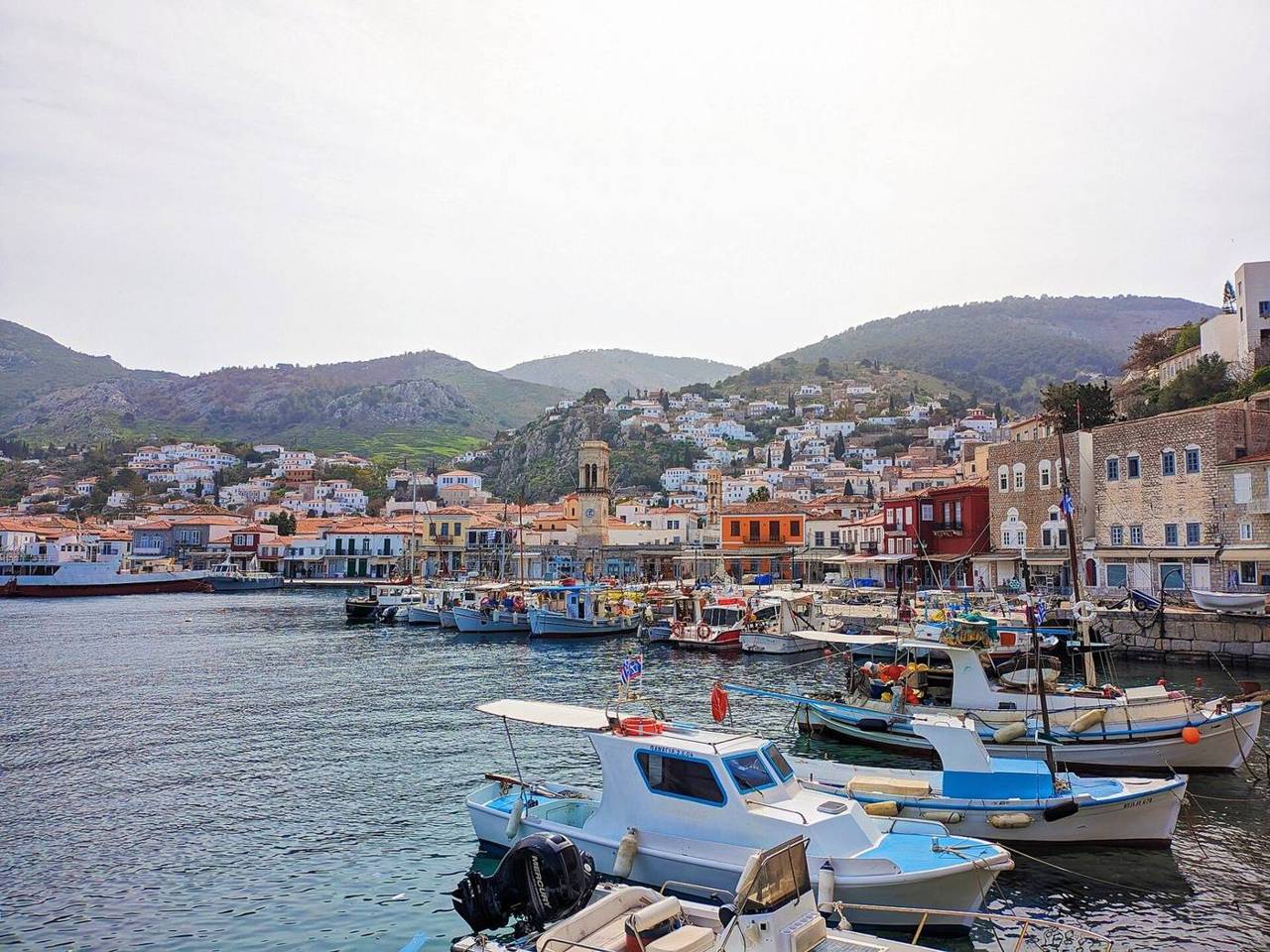
Four islands a few hours from Piraeus: Aegina with the temple of Aphaia and its pistachios, Poros with its clock tower above the channel, Hydra closed to cars, where you get around on foot, by boat or by mule, and Spetses with its captains' mansions and horse carriages.
 8 daysEasy
Lesbos and Chios
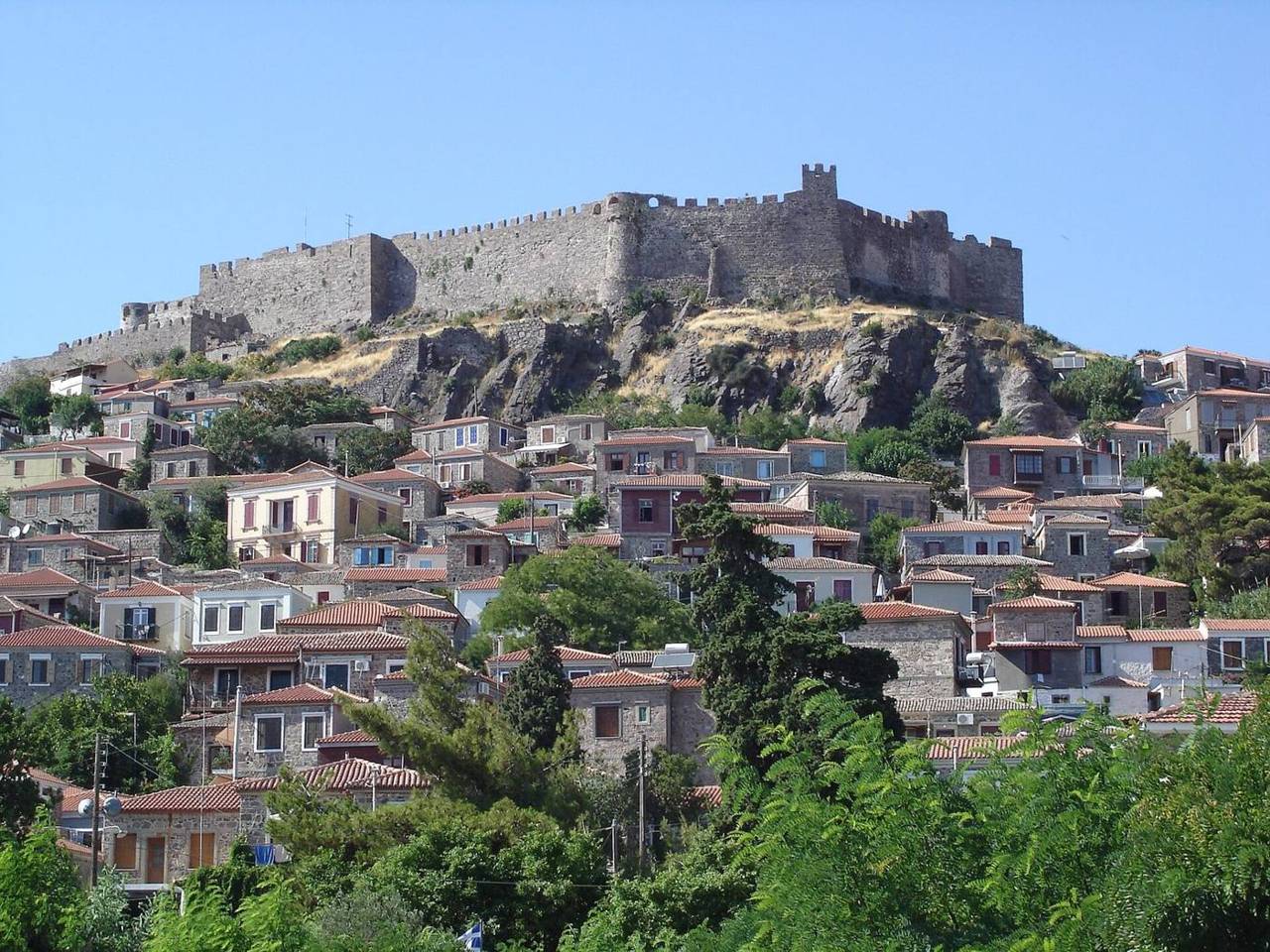
The north-eastern Aegean, far from the crowds: Lesbos with Mytilene, the village of Molyvos below its castle, the petrified forest at Sigri and the ouzo of Plomari, then Chios with the mastic villages, Pyrgi with its sgraffito facades, Mesta and the monastery of Nea Moni (UNESCO).
 7 daysEasy
Syros, Tinos and Andros
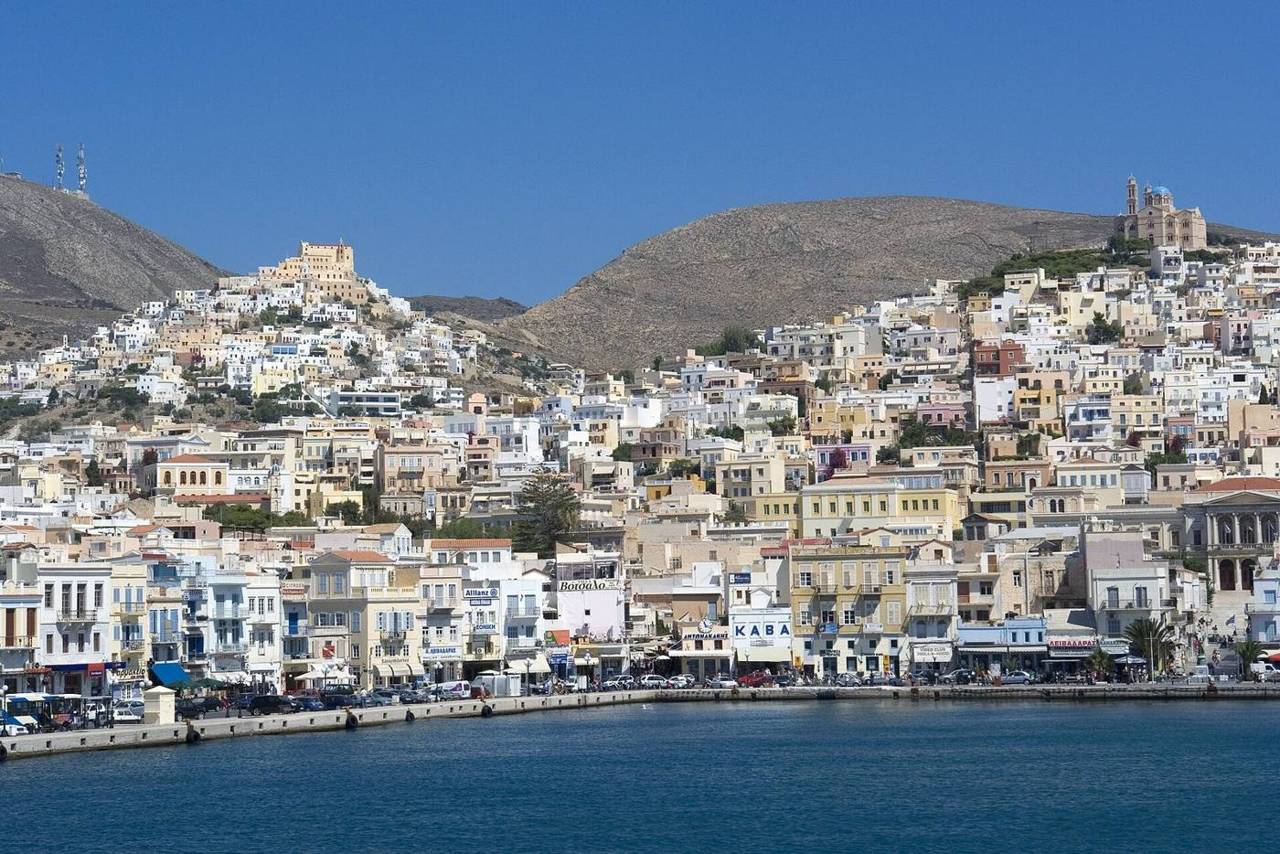
The northern Cyclades, authentic and close to Athens: Ermoupoli, the neoclassical capital of the Cyclades, and the Catholic quarter of Ano Syros, Tinos with the shrine of the Panagia, its marble villages and dovecotes, and Andros with waymarked trails between waterfalls, villages and beaches.